Slight of Hand and Wires and Mirrors; No Accountability
Our leader announced a speech to the nation, which turned out to be nothing but repeats of “Truth” social posts and comments previously made. A boring, disjointed 19 minutes of nothing credible. Credibility is stating a mission and following through. Chaos is changing the mission and its achievements every ten minutes or so. If you don’t believe me, watch the stock market.
Meanwhile, behind the curtain, The Great Oz and his handlers are changing how our democracy operates. The failed military officer, Pete Hegseth is examining and removing African Americans, females, and especially African American Females from promotion lists. He is firing the top general who questions his judgement in toying with a time honored system where the military chooses its leaders based on performance and leadership abilities, not their gender nor their color.
Does Hegseth understand demographics? Does he understand that military recruitment is problematic these days days, that the pool of recruits has shrunk dramatically? Does he understand that brawn no longer wins wars, but fighter planes, drones, new ideas and weapon development are fighting a new kind of war, where every gender and color contributes the the nuances of creative strategies available to a commander in chief who genuinely understands how to function in the fog of war?
Today Heather Cox Richardson alerts us to another slight of hand, the kind of small change the controllers hope will go unnoticed: The challenge of ACCOUNTABILITY and how it impedes a sitting President. She quotes the following, and it quite takes my breath away:
Yesterday Assistant Attorney General T. Elliot Gaiser, of the Office of Legal Counsel, published an opinion for the White House that claims the Presidential Records Act, which requires that presidents keep records of their official business and turn them over at the end of their term, is unconstitutional. Gaiser clerked for Supreme Court Justice Samuel Alito.
“The PRA is not a valid exercise of Congress’s Article I authority and unconstitutionally intrudes on the independence and autonomy of the President guaranteed by Article II. The Act establishes a permanent and burdensome regime of congressional regulation of the Presidency untethered from any valid and identifiable legislative purpose,” the memo reads. “For these reasons, the PRA is unconstitutional, and the President need not further comply with its dictates.”
(taking a moment to catch my breath)
We burden our elected president with the requirement that we know what he does and why he is doing it?
How can anyone believe this lunacy? Any person in a position of responsibility has to answer to his polity! Elected politicians all the more. He answers to us, the voters.
Our leader has a lot to answer for. We can’t trust anything he says, from minute to minute. Our treasury has been declared insolvent. He is sending our children off to war with unclear orders and insufficient leadership.
He has hired a confederacy of ignorant, greedy sycophants. He has gutted our diplomatic service. He has gutted Consumer Oversight. He has gutted the Environmental Protection Agency. He has corrupted the Department of Education.
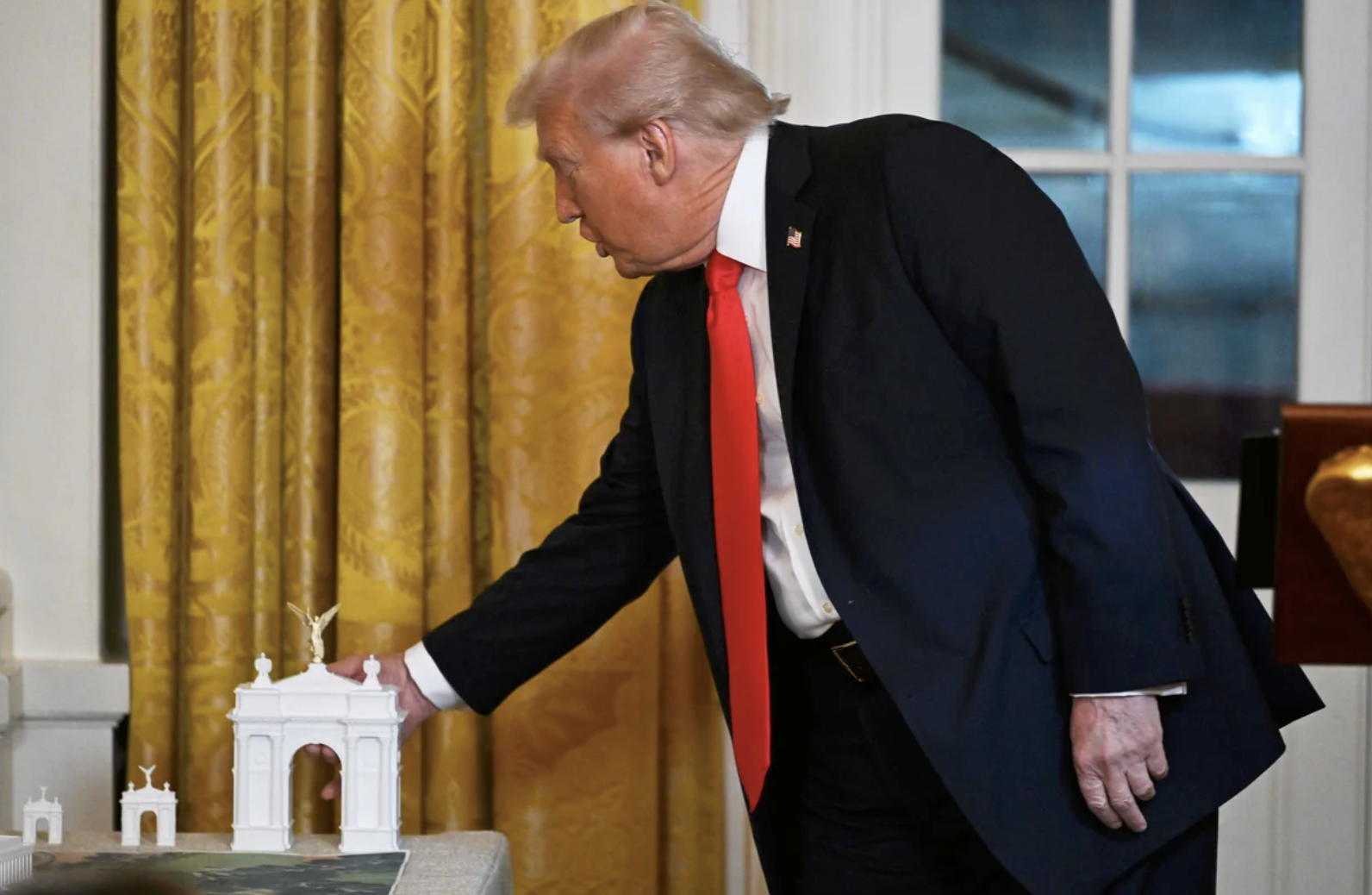
He is terrified he cannot win and is attempting to take over national elections. Meanwhile, he is bankrupting our country with garish monuments and wars we never agreed to fight.
He is subjecting women to outdated standards and taken away their rights to make decisions for their own bodies.
He is corrupting our social system, taking medical care away from those who need it most, and callously neglecting the veterans who have served our country so loyally.
He has made agreements with other countries that we only learn about by accidental comments.
This can’t go on. Give us Accountability. Oversight. Congressional Approval. Fair and Free Elections. Constitutional Restraints!
Even Fox News?
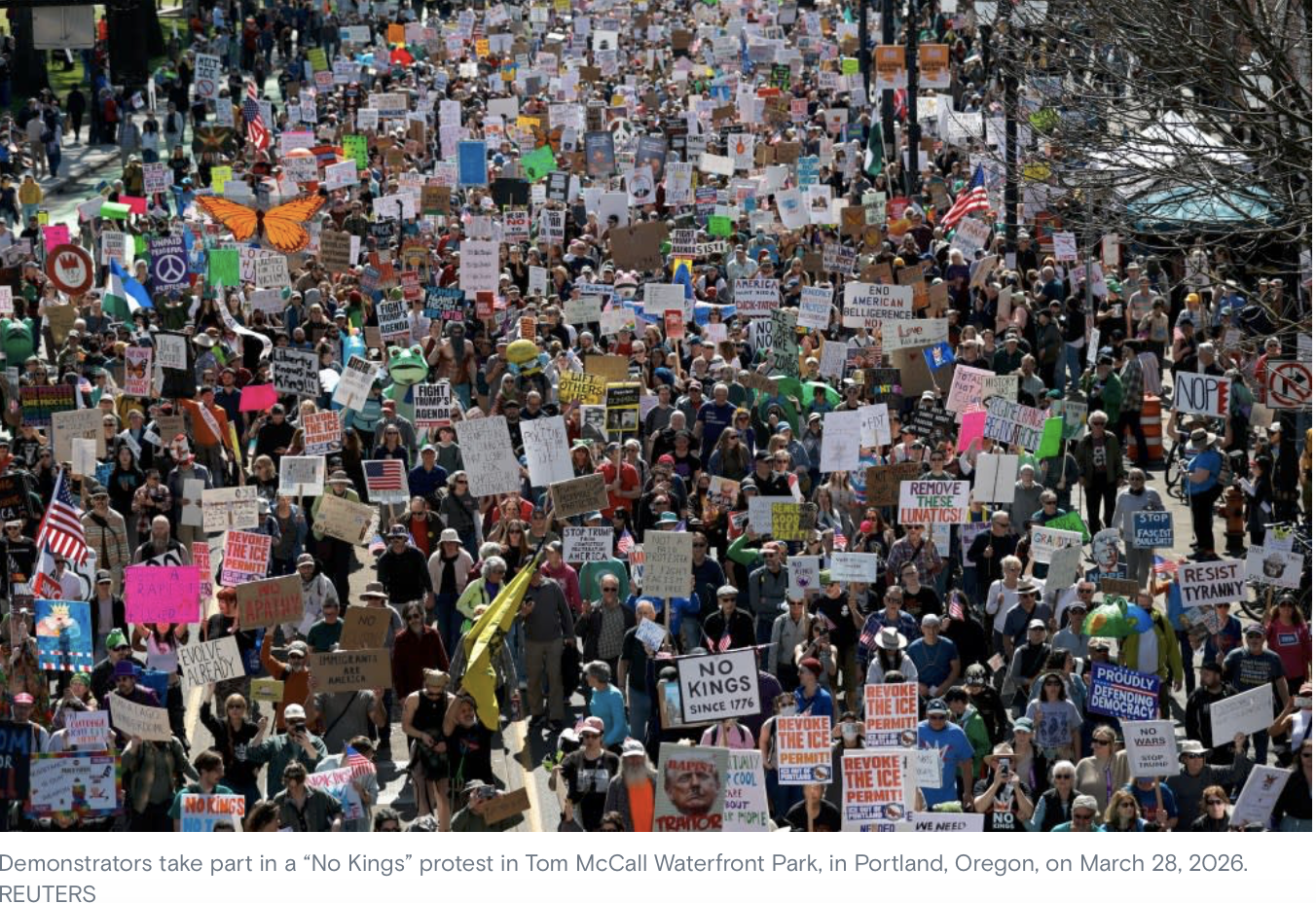
From Robert Reich’s post of March 29, Trump’s ratings continue to tank. The relevance? Most presidents get a bump with a war, people tend to back their leader. Then again, when most country leaders start a war, they consult with allies, and give their population a clue about what is about to happen and why. Failing to do that results in lack of enthusiasm by former friends, treated rudely, and a population treated as irrelevant to the needs and goals of the leader.
Meanwhile, Trump’s polls continue to tank. In the new Reuters/Ipsos poll, only 36 percent approve of his performance while 62 percent disapprove, a new record low for Trump. In the latest Quinnipiac poll, 38 percent approve of him; 56 percent disapprove. Even the latest Fox News poll shows Trump approval at only 41 percent; disapproval at 59 percent; and fully 58 percent of Americans opposing U.S. military action in Iran.
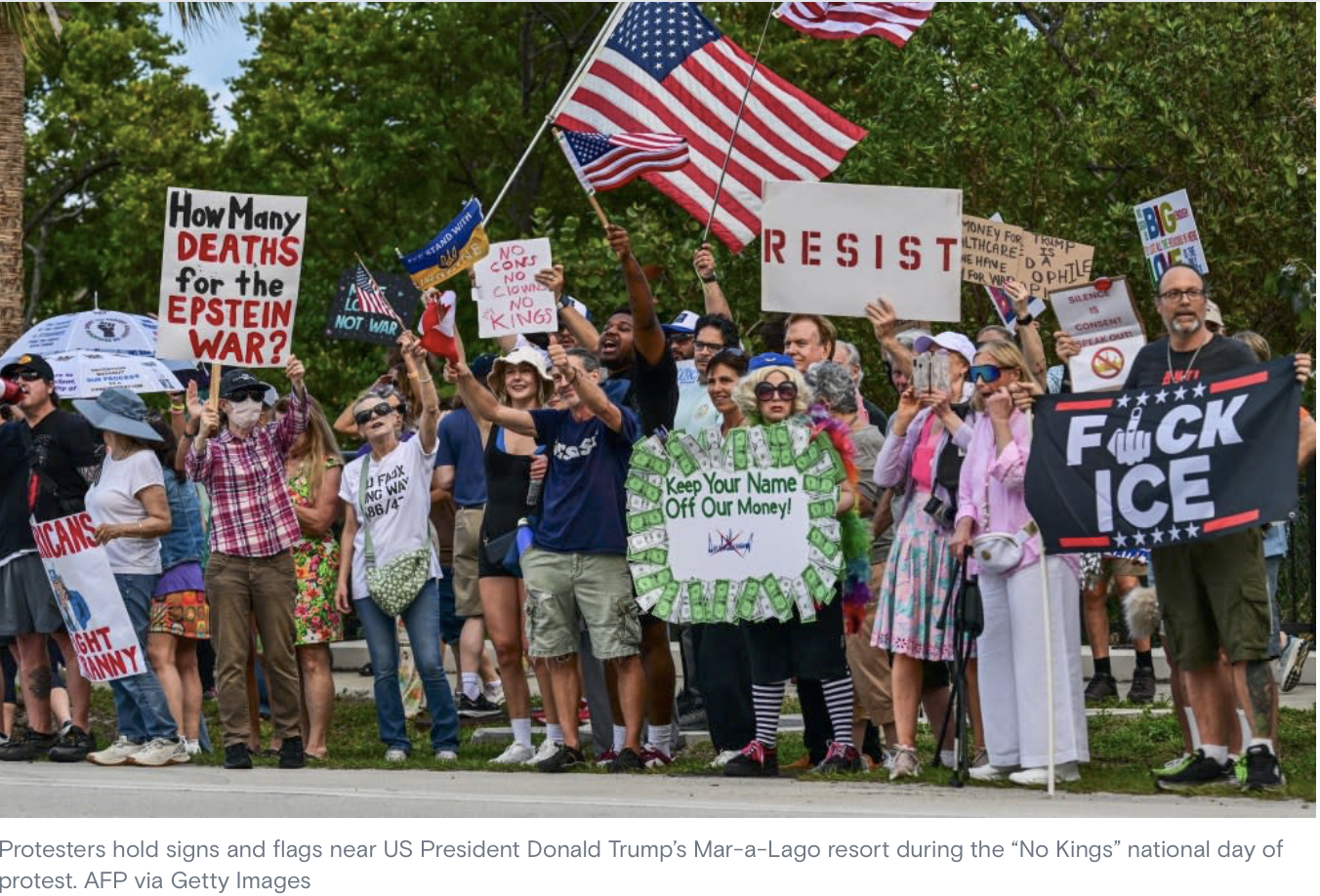
“I Have No Need of You”
From this morning’s Lectionary Readings:
1 Corinthians 12:12-26
12 For just as the body is one and has many members, and all the members of the body, though many, are one body, so it is with Christ.13For in the one Spirit we were all baptized into one body—Jews or Greeks, slaves or free—and we were all made to drink of one Spirit.
14 Indeed, the body does not consist of one member but of many. 15If the foot were to say, ‘Because I am not a hand, I do not belong to the body’, that would not make it any less a part of the body. 16And if the ear were to say, ‘Because I am not an eye, I do not belong to the body’, that would not make it any less a part of the body. 17If the whole body were an eye, where would the hearing be? If the whole body were hearing, where would the sense of smell be?
18But as it is, God arranged the members in the body, each one of them, as he chose. 19If all were a single member, where would the body be? 20As it is, there are many members, yet one body. 2
1The eye cannot say to the hand, ‘I have no need of you’, nor again the head to the feet, ‘I have no need of you.’ 22On the contrary, the members of the body that seem to be weaker are indispensable, 23and those members of the body that we think less honourable we clothe with greater honour, and our less respectable members are treated with greater respect; 24whereas our more respectable members do not need this. But God has so arranged the body, giving the greater honour to the inferior member, 25that there may be no dissension within the body, but the members may have the same care for one another. 26If one member suffers, all suffer together with it; if one member is honoured, all rejoice together with it.
Hope is Not a Strategy
Our leader has said other nations will come to escort ships through the Strait of Hormuz.
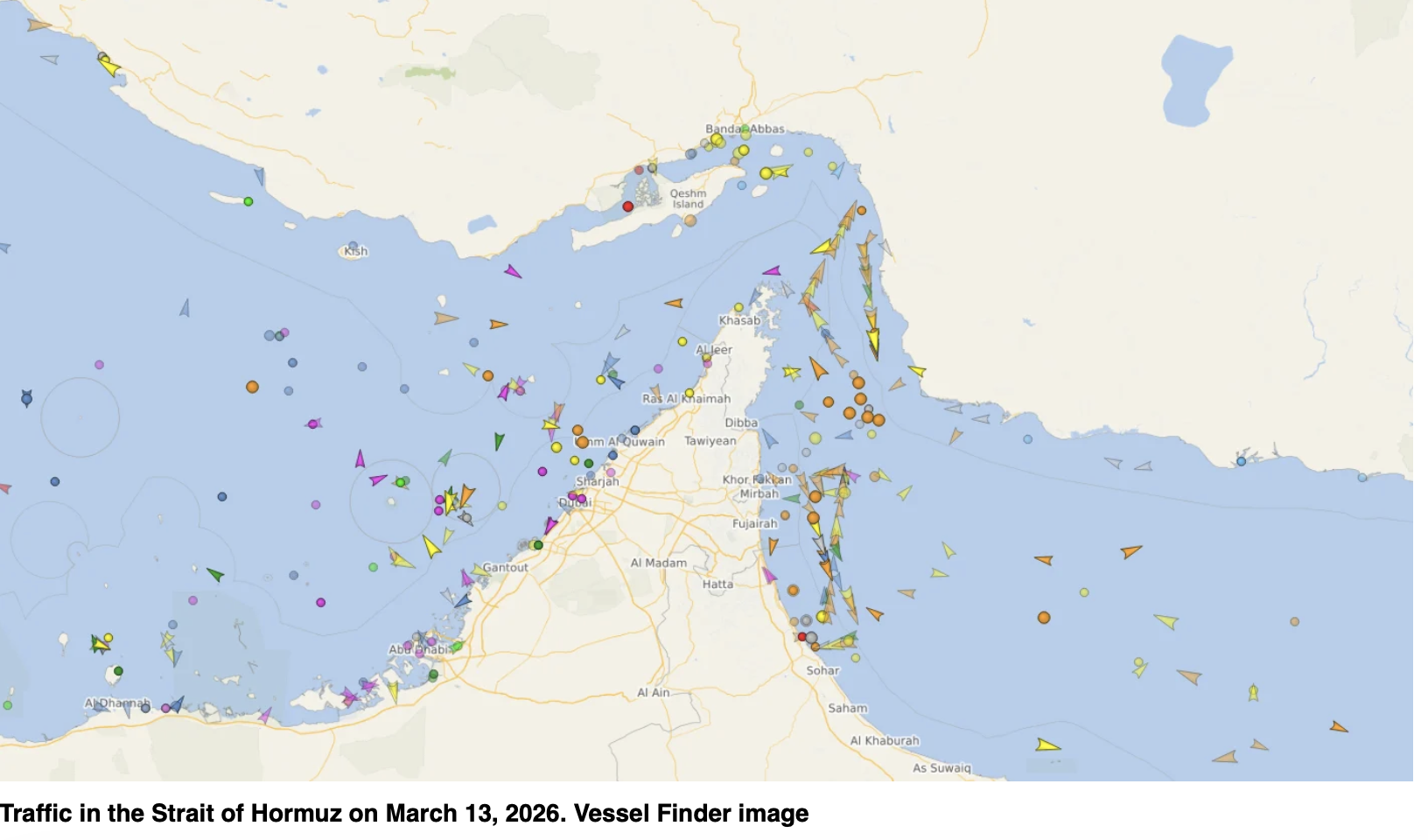
Trump last week first raised the idea of naval escorts for tankers in the strait “if necessary,” but on Monday, he hoped they wouldn’t be needed.
“When the time comes the U.S. Navy and its partners will escort tankers through the strait if needed. I hope it’s not going to be needed, but if it’s needed, we’ll escort them right through,” he said.
But even with Naval escorts, an expensive and time-consuming mission, it’s “not necessarily a guaranteed success,” according to Kirby.
“Drones can fly low and slow, they can fly fast and low, and they can do a lot of damage even to one ship with the Navy not being able to knock it out of the sky,” he said. (From TheHill.com)
And then this, from Associated Press:
“Many Countries, especially those who are affected by Iran’s attempted closure of the Hormuz Strait, will be sending War Ships, in conjunction with the United States of America, to keep the Strait open and safe,” Trump wrote on Saturday, later adding, “this should have always been a team effort.”
It was not clear if that multi-nation push was set to begin or if Trump only hoped it might, however. That’s because he also wrote: “Hopefully China, France, Japan, South Korea, the UK, and others, that are affected” will “send Ships to the area so that the Hormuz Strait will no longer” be threatened by Iran.
The normal route for declaring war is to communicate your intentions to your allies before you attack. It is to prepare and coordinate with your own national institutes before you attack. And, when you are going to seek assistance, it is a really good thing if you have not insulted your allies in numerous ways before asking for their help, especially when it involves great risking expensive ships, aircraft and lives.
“Hope” and “Hopefully” are not good substitutes for steady, consistent diplomatic relations and providing reliable, honorable leadership on the international level. This would-be war eagle has soiled his nest.
What Country am I Living In?
As an American, I’ve lived in a lot of countries, often countries that controlled news coverage and punished those who reported news the leaders found embarrassing.
Many experienced people found ways around it. They phrased their reports carefully, leaving the reader to read behind the lines.
It’s not what you expect in a Democratic Republic. It’s not what I expect in the United States of America, where the very first amendment to our Constitution verified our right to have our own opinions and our freedom to state them (given that they were not, of course, a threat against someone else, or shouting “Fire” in a crowded theatre.)

And now the elected leader of the United States is trying to control any negative reporting about his War, a war that surprised his own country, his own people. A War which has not been supported by Congress, which has the right to declare War. As billions go up, literally, in smoke, or down in flames, Trump and Hegseth want the FCC to pull the broadcasting license of anyone reporting the events that are really happening. Trump has a long history of calling reality “false news” and claiming his big fat lies are truth. Like his endless whining about the election he lost to Joe Biden by more than 8 million votes. And he claims it was a fraudulent loss, a rigged election.
How on earth could that ever be a secret if it were to have happened? Crazy, delusional, whoppers!
And now he wants people whose reputations are on the line, newsmakers, journalists, photographers, soldiers, sailors – people who can see what is happening with their own eyes, hear the blasts and report the damages, and hold those accountable for their actions – he wants them to toe the party line? He wants the TRUTH to be what he pretends it is?
George Orwell got it right, he just got the year wrong. With this administration, we no longer have guarantees of personal privacy. We no longer have guarantees guaranteed by our Constitution. The Police are no longer our friends.
The president believes the truth is what he says it is and that the rights of the people are those he says they have. How have we allowed this to happen?
He CREATES situations, or makes them up, and then creates an oppressive measure to deal with it – look at what ICE, once respectable, has become. An entity protecting our entry points has become a gang of thugs who operate outside the law. When courts rule against them, they ignore the rulings.
When Trump looks at the polls and sees that he cannot win an election, he creates the “SAVE” act to deter, discourage and delete voter’s rights. Both ICE and “SAVE” address problems which do not exist, other than as avenues to giving this monster greater and greater power to feed his endless greed.
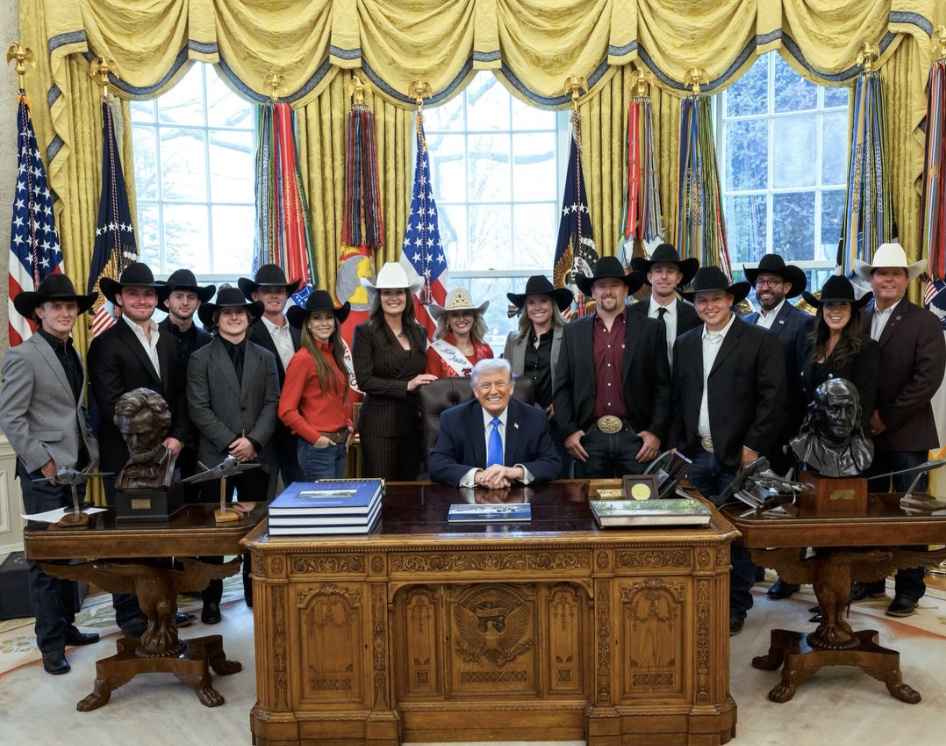
Do not listen to this man. Do not believe a word he says. Look, instead, at his actions. He fires the watchdogs. He fires those who would limit his power. He is what he always has been, a fraud, a con man, a liar, and altogether a very flawed man. He piles up wealth by making agreements that fill his pockets, his family’s pockets, and his cronies’. He bullies those who stand up to him. This is not a man of strong character; this is a human wrecking ball.
Unintended Consequences
It is rare that I am stunned into silence.
This is not the world I grew up in. This is not the country I served. These are not the values we were taught as children, in a United States full of post WWII optimism, as we allied with other nations for the greater good.
I am a blessed woman. I have what I need, and my son married a woman with deeply perceptive insights. An environmental specialist, she taught me the concept of Unanticipated Consequences. We are witnessing a host of unanticipated consequence unrolling by the minute, consequences which will have reverberations far into the future – not forseeable consequences but lasting.
Our current Administration is whacko. They command the mightiest military on earth, and they hold the keys to nuclear weapons. I have a friend who says “We’re Doomed,” only he uses a stronger, vulgar word I don’t want to use here.
Anna Julia Haywood Cooper
Today the church honors Anna Julia Haywood Cooper, an extraordinary woman who prevailed against prejudice.
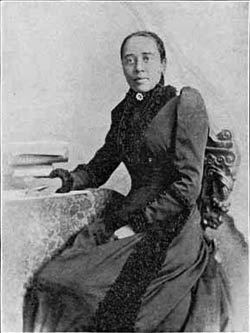
ANNA JULIA HAYWOOD COOPER
EDUCATOR
(1964)
Anna Julia Haywood Cooper (August 10, c1859- February 27, 1964). Educator, advocate and scholar. Born in Raleigh, North Carolina to an enslaved woman and a white man, presumably her mother’s master, Anna Julia was an academically gifted child and received a scholarship to attend St. Augustine Normal School and Collegiate Institute, a school founded by the Episcopal Church to educate African-American teachers and clergy. There she began her membership in the Episcopal Church. After forcing her way into a Greek class designed for male theology students, Anna Julia later married the instructor, George A.C. Cooper, the second African-American ordained to the Episcopal priesthood in North Carolina.
After her husband’s death in 1879, Cooper received degrees in mathematics from Oberlin College, and was made principal of the only African American high school in Washington D.C.. She was denied reappointment in 1906 because she refused to lower her educational standards.
Throughout her career, Cooper emphasized the importance of education to the future of African Americans, and was critical of the lack of support they received from the church. An advocate for African-American women, Cooper assisted in organizing the Colored Women’s League and the first Colored Settlement House in Washington, D.C. She wrote and spoke widely on issues of race and gender, and took an active role in national and international organizations founded to advance African Americans.
At the age of fifty-five she adopted the five children of her nephew. In 1925, Cooper became the fourth African-American woman to complete a Ph.D degree, granted from the Sorbonne when she was sixty-five years old. From 1930-1942, Cooper served as president of Frelinghuysen University.
from the Episcopal Women’s History Project
Bored of Peace
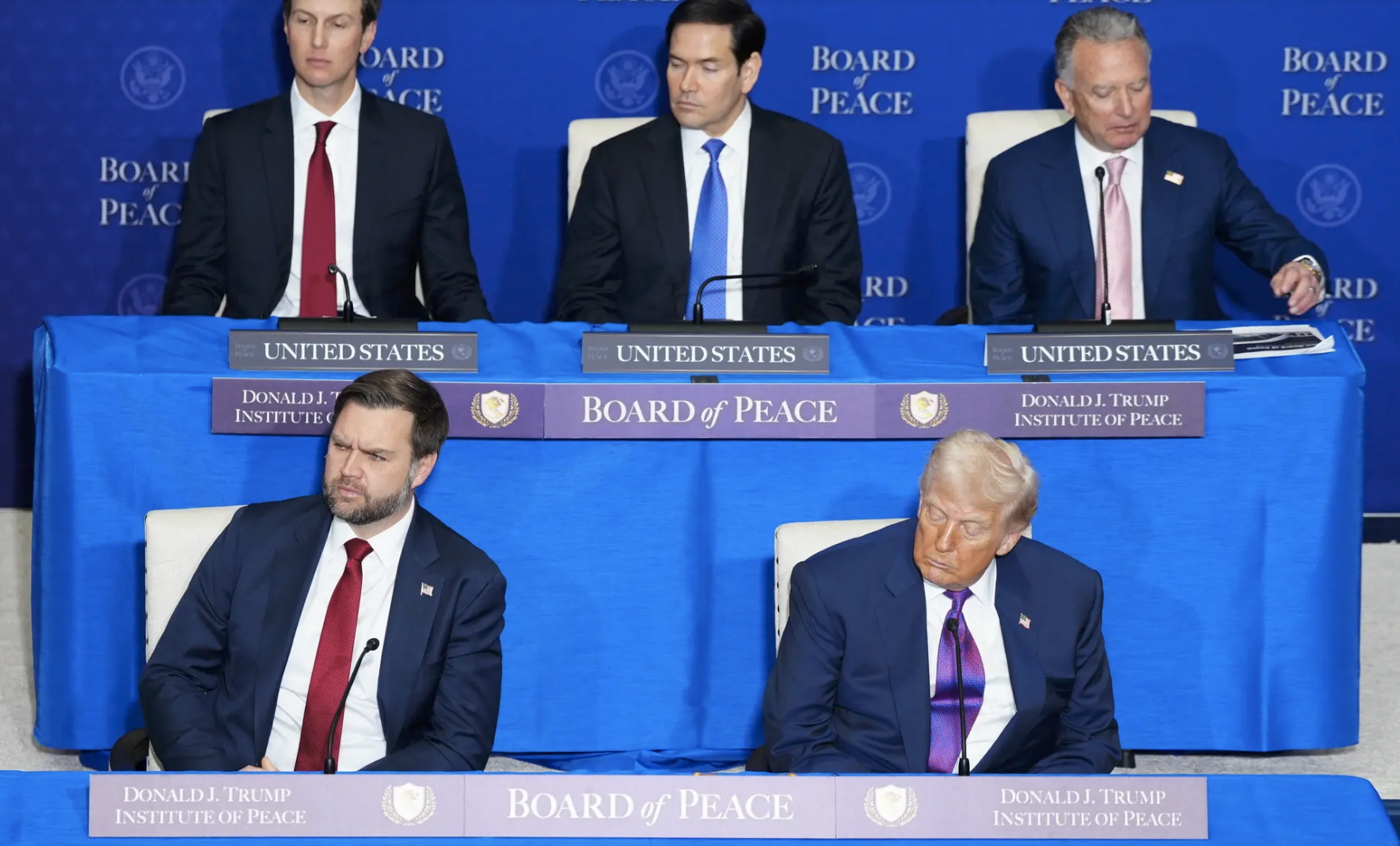
The man who mercilessly called Joe Biden “Sleepy Joe” dozes through his own “Peace” meeting. Pony up a billion dollars and anyone can join. Maybe his son-in-law gets in for free.
What will greed and corruption contribute to the Palestinian situation in Israel? When Trump talks of villas and high rises facing a Mediterranean basin, is he talking about housing for Palestinians? Is he talking about establishing a beautiful Palestinian state on the Gaza strip?
Or is he seeking to monetize and take advantage of a political void to eliminate the Palestinian inhabitants and create a sleazy nouveau riche community a la Mar-a-Lago?
A Tale of Grace
For perspective, this is the legendary acquisition by Father Abraham of the first Jewish purchase of land. It is a tale of grace, hospitality, and sharing between two cultures:
Genesis 23:1-20
23
Sarah lived for one hundred and twenty-seven years; this was the length of Sarah’s life. 2And Sarah died at Kiriath-arba (that is, Hebron) in the land of Canaan; and Abraham went in to mourn for Sarah and to weep for her.
3Abraham rose up from beside his dead, and said to the Hittites, 4‘I am a stranger and an alien residing among you; give me property among you for a burying-place, so that I may bury my dead out of my sight.’
5The Hittites answered Abraham, 6‘Hear us, my lord; you are a mighty prince among us. Bury your dead in the choicest of our burial places; none of us will withhold from you any burial ground for burying your dead.’
7Abraham rose and bowed to the Hittites, the people of the land. 8He said to them, ‘If you are willing that I should bury my dead out of my sight, hear me, and entreat for me Ephron son of Zohar, 9so that he may give me the cave of Machpelah, which he owns; it is at the end of his field. For the full price let him give it to me in your presence as a possession for a burying-place.’ 10Now Ephron was sitting among the Hittites; and Ephron the Hittite answered Abraham in the hearing of the Hittites, of all who went in at the gate of his city,
11‘No, my lord, hear me; I give you the field, and I give you the cave that is in it; in the presence of my people I give it to you; bury your dead.’ 12Then Abraham bowed down before the people of the land. 13He said to Ephron in the hearing of the people of the land, ‘If you only will listen to me! I will give the price of the field; accept it from me, so that I may bury my dead there.’ 14Ephron answered Abraham,
15‘My lord, listen to me; a piece of land worth four hundred shekels of silver—what is that between you and me? Bury your dead.’ 16Abraham agreed with Ephron; and Abraham weighed out for Ephron the silver that he had named in the hearing of the Hittites, four hundred shekels of silver, according to the weights current among the merchants.
17 So the field of Ephron in Machpelah, which was to the east of Mamre, the field with the cave that was in it and all the trees that were in the field, throughout its whole area, passed 18to Abraham as a possession in the presence of the Hittites, in the presence of all who went in at the gate of his city. 19After this, Abraham buried Sarah his wife in the cave of the field of Machpelah facing Mamre (that is, Hebron) in the land of Canaan. 20The field and the cave that is in it passed from the Hittites into Abraham’s possession as a burying-place.
Recent Comments
Kitchen on Isiais: Winding Down intlxpatr on Shampoo Ginger tigerbutterya0c5ff1d… on Shampoo Ginger intlxpatr on British Soldier Kidnapped, Esc… John on British Soldier Kidnapped, Esc… Wikipedia Donate Button

Amazina


Early Voting in Florida


