MERS Found in Saudi Arabian Camel
RIYADH, Saudi Arabia (AP) — The Saudi Health Ministry says it has discovered a deadly virus in a camel in Jiddah province, on the western coast of Saudi Arabia.
The ministry’s statement released Monday is considered an important development in the search for the origin the deadly illness. There have been more than 60 deaths from the virus known as Middle East respiratory syndrome, or MERS, with all but a handful of the fatalities in Saudi Arabia.
The ministry said a sample from the camel was tested near the home of a patient infected with the virus.
An international research team in August found the mysterious virus that is related to SARS in a bat in Saudi Arabia. They suspected it was perhaps another animal that was spreading the virus directly to humans.
Expat Teacher Murdered In Qatar After Night of Clubbing?
Qatar expats shocked after UK teacher’s suspected murder
 By Yolande KnellBBC News, Doha, Qatar
 Lauren Patterson had gone to a nightclub with a friend before she went missing
The suspected murder of a young primary school teacher from south-east London has deeply upset British expatriates living in the Gulf state of Qatar.
However, two weeks after Lauren Patterson disappeared following a night out in the capital, Doha, officials have given few details about her disappearance.
DNA tests have been carried out on the remains of a body found in a remote area of desert but the results have not yet been released.
At the Newton British School, where Ms Patterson worked, one mother paid tribute to a talented teacher who she said had been a favourite of her little son.
However, staff refused to comment, saying they had been advised not to.
“We’re a small, close-knit community and we’re all in deep shock,” explained headteacher Katherine Dixon. “We are dealing with small children here.”
Security camerasWhen 24-year-old Ms Patterson went out on 11 October she had just returned from a trip home to the UK for her grandmother’s funeral.
She and a female friend decided to go to Club 7 on the seventh floor of the luxury La Cigale Hotel.
It is a popular venue where all nationalities mingle on the dance floor as DJs play ambient house music.
Groups sip cocktails around low tables decorated with colourful, illuminated ice buckets.
Everyone entering the club has their ID checked and they are watched by burly bouncers and security cameras.
It is believed that in the early hours of the morning, the two women left with two local men they knew who had offered to drive them home.
Ms Patterson’s companion was dropped off safely but she went missing.
The alarm was raised by her friend who called the police the next day.
Arrests
Reports say a falconer found a badly burnt corpse shortly afterwards. Two suspects were detained although no details about them have been confirmed.
 Public prosecutor Mohammed Rashed al-Binali says violent crime is “very rare” in Qatar
The case has been referred to the attorney general.
“Violent crime is very rare in Qatar,” public prosecutor, Mohammed Rashed al-Binali told me in his smart office surrounded by shining skyscrapers in central Doha.
“We are continuing to investigate the case. We cannot give more details at the moment but the Ministry of Interior did arrest the suspects within 24 hours.”
Alison Patterson has flown to Doha and is awaiting further news about her daughter.
She told the BBC she would only make a statement “when I feel the time is right and I have received all the information concerning Lauren”.
Meanwhile, the British Foreign Office says it is providing the family with consular assistance.
Qatar, which will host the 2022 World Cup, is generally considered one of the safest places in the Middle East for Westerners.
The tiny, but very wealthy Gulf state, which is the biggest exporter of natural gas in the world, relies heavily on its growing foreign workforce.
It now has some 17,500 British residents. Most are attracted by the high living standards and high tax-free salaries.
Yet work permits can be easily revoked and this makes employees from overseas very wary of upsetting the authorities.
While Qatar has recently supported opposition movements pushing for greater freedom across the Arab world, the nation itself remains very conservative and tightly controlled.
Where is Terekeka, South Sudan?

Today the church prays for the diocese of Terekeka, in the South Sudan. I have never heard of Terekeka – have you?
When I looked for it on Google Maps, it didn’t have any information. When I went to The South Sudan and then googled Terekeka, it came up with a reference, and I had to go to this website to find it – they had a map.
The organization who put up the map, Harvesters Reaching Nations, has two locations in the southernmost part of South Sudan, the newest nation on earth. They are building hospitals, and taking in orphans. If I hadn’t gone looking, I would never have heard of the good works they are doing, saving lives, changing lives.
This is what they say:
We currently serve more than 190 orphans in two locations in South Sudan – Yei and Terekeka. Our school in Yei provides a Christian education to more than 500 students. In addition to our school-age orphans, more than 400 children from surrounding villages attend our school.
The Harvesters campus in Yei consists of 90 acres of land donated by the South Sudan government. Since our beginning in 2001, we have built homes, dorms, classrooms and other facilities within a fenced-in campus. We use the land we own beyond the fencing for planting and growing corn, tomatoes and other vegetables for use in the orphanage.
Harvesters’ campus in Terekeka, South Sudan opened in 2010. At this campus, we currently provide care for 44 orphans, but will grow to 80 in the near future. We have built homes, dorms and a clinic within a five acre, fenced-in campus. Additional facilities, including a church and school classrooms, will be built in the near future as the needs and resources dictate.
To do this, they sold everything they owned, and moved to the South Sudan, and used the proceeds from selling everything to build the hospitals and schools. I bet they are the happiest they have ever been, and the most thoroughly engaged in life they have ever been.
Not The Day We Expected . . .
And once again, we have to laugh at God’s perfect timing.
I love Thursdays. Thursdays are the only day I have unscheduled. Once a month on a Thursday I have a meeting, but other than that, Thursdays are mine, and I luxuriate in them.
This morning I slept in an hour, then went leisurely through my Lectionary readings and scanned my e-mail. AdventureMan had other plans, but as we talked over our day, decided he wanted to come with me to the commissary. It’s fine with me. We have always had some of our best conversations in the car, and he doesn’t follow me around in the commissary asking questions like “do we really need this?” the kinds of questions that drive wives to homicidal thinking. There are some benches in the commissary, AdventureMan calls them the Old Farts benches, and he picks up his specialty bird seeds and supplies, then settles in to watch for me coming down the last lane.
Four minutes after we left the house, we got a call from our son, tied up on a case, that little Q broke his arm on the playground, could we go pick him up? We were only about five minutes from his school and were there in a flash. AdventureMan/BaBa rode in the ambulance while I drove over to our son’s home to care for the baby while Q’s Mom zipped to meet them at the hospital emergency room.
It took all day. Between the transporting and the paperwork and the x-rays and the setting of the bones (yep, two bones broken), by the time we all met up again, I no longer had any interest in hitting the commissary. I will try again tomorrow, God willing.
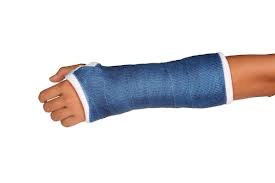
Meanwhile, we marvel at how wonderful it is to be here in Pensacola, to be on call for emergencies like this, and that we were just minutes from his school when our son’s call came. We love it that we can be useful in these emergencies, that we are here to help and that we can be helpful. Once again, we thank God for his perfect timing.
Meanwhile, Mom called and gave me no sympathy whatever. She laughed! “Remember your sister broke both her arms before she was six, and you both broke legs skiing!” she chortled. Ouch! I guess little boy Q comes from a family of risk-takers. His dad broke exactly the same arm in the same place jumping to grab on to a high bar once. His son said “I thought I could fly. . . but I can’t.” It’s in the genes. :-}
Gospel for 9/11

Are we who we say we are?
Do we follow the spirit of The Word? Do we as believers pick and choose from our holy book(s) or do we humble ourselves, as Christ did, and do as he commands?
The Lord Jesus Christ commanded a very difficult life style. I have met holy people among all religions; I am forced to believe that “the way and the truth and the light” are behavioral, and that there will be many surprises when we get to the last days.
September 11th is a difficult day. This is a difficult Gospel reading for a difficult day:
Matthew 5: 38 – 47
Eye for Eye
38 “You have heard that it was said, ‘Eye for eye, and tooth for tooth.’h 39 But I tell you, do not resist an evil person. If anyone slaps you on the right cheek, turn to them the other cheek also. 40 And if anyone wants to sue you and take your shirt, hand over your coat as well. 41 If anyone forces you to go one mile, go with them two miles. 42 Give to the one who asks you, and do not turn away from the one who wants to borrow from you.
Love for Enemies
43 “You have heard that it was said, ‘Love your neighbori and hate your enemy.’ 44 But I tell you, love your enemies and pray for those who persecute you, 45 that you may be children of your Father in heaven. He causes his sun to rise on the evil and the good, and sends rain on the righteous and the unrighteous. 46 If you love those who love you, what reward will you get? Are not even the tax collectors doing that? 47 And if you greet only your own people, what are you doing more than others? Do not even pagans do that? 48 Be perfect, therefore, as your heavenly Father is perfect.
One New MERS Death in Saudi Arabia; One in Qatar
New in from Reuters, via AOL news:
DUBAI, Sept 8 (Reuters) – The MERS coronavirus has killed two more people in the Gulf, one in Saudi Arabia where the strain emerged last year, and one in neighbouring Qatar, health authorities said.
The death of a 74-year-old man in the Medinah region of western Saudi Arabia was the 45th fatality in the kingdom from Middle East Respiratory Syndrome Coronavirus (MERS-CoV) which can cause coughing, fever and pneumonia.
The Saudi Health Ministry also said on Sunday that three women aged between 64 and 75 had contracted the disease.
A 29-year-old Qatari admitted to hospital on Aug. 17 has died, Qatar’s Supreme Council of Health said in a statement dated Sept. 6, adding that another citizen who had contracted the disease while abroad had recovered.
The World Health Organization said last month the number of confirmed infections worldwide in the past year was 102, of whom almost half had died.
In a study into what kind of animal “reservoir” may be fuelling the outbreak, scientists said this month they had found strong evidence it is widespread among dromedary camels in the Middle East.
The virus has been reported in people in Tunisia, France, Germany, Italy, and Britain. (Reporting by Sami Aboudi in Dubai and Amena Bakr in Qatar; Editing by Robin Pomeroy)
Presenter Ses Condoléances
Some things you do. Some things are hard, and you do them anyway. I always think of them in the formal – pour prendre conge’, respondez, pour rendre petite assistance . . . must do’s, societal niceties, the grease that keeps civilization running, never mind smoothly.
I had to call a friend this morning to tell her how sorry I am that her husband had died. When she came to the phone, I was initially shocked. For months, since her husband’s stroke, she has been subdued and tired, but this morning she sounded happy and energetic.
“He’s free!” she said to me. “”As it says in the Bible, his passing was a breath; if I hadn’t been holding his hand and paying attention, I wouldn’t have known he was gone. It was so easy.” She was joyful. We wept together, for joy. He was free of the burden his life had become.
What I thought was going to be a sad call turned out to be a joyful call. She loves her husband still. They had years and years and children and grandchildren together, and she let him go with joy because he was ready.
Thanks be to God.
For Unto Us a Child is Given . . .
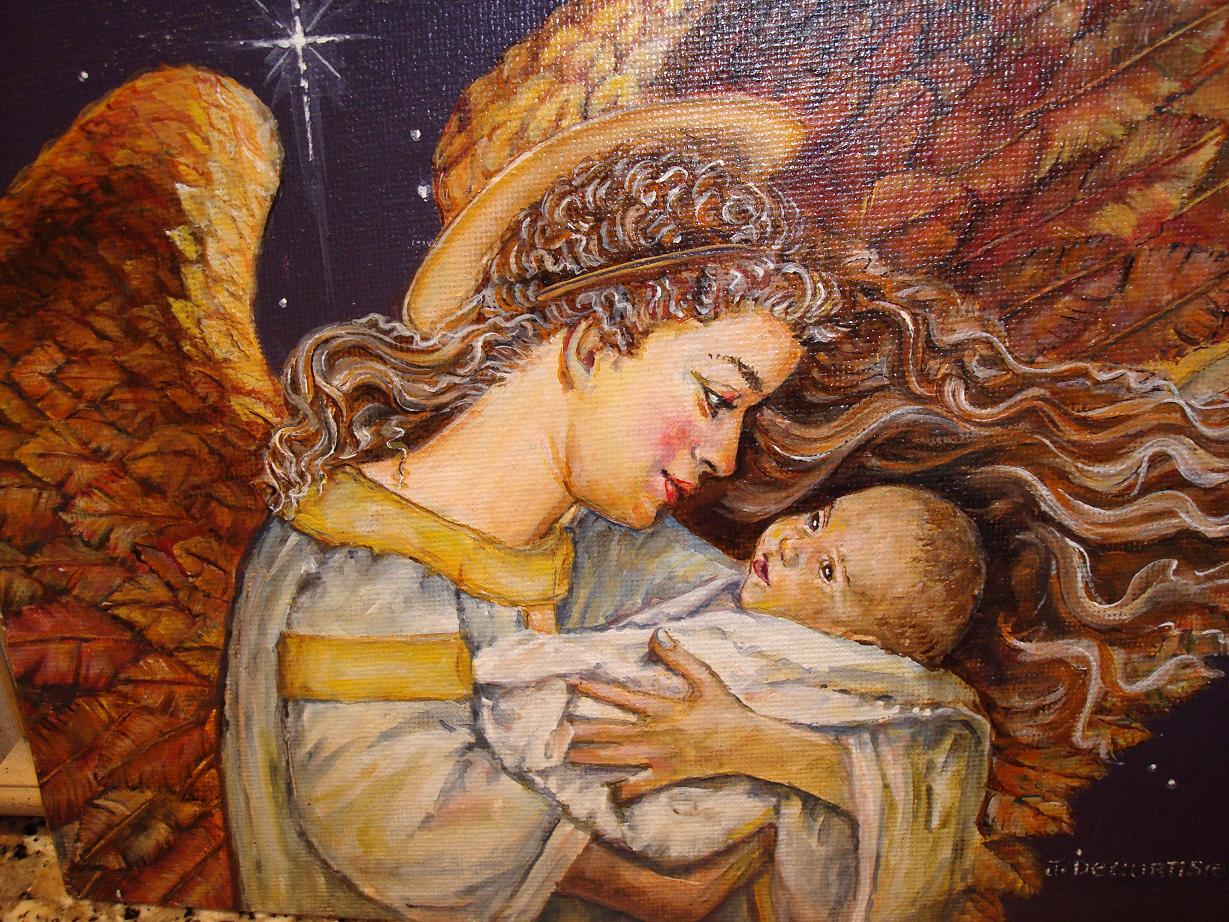
I am hearing those wonderful lines from Handel’s Messiah, because on this wonderful day, just after noon, a new child came into this world, a treasured girl-child, a warrior-princess is born. Thanks be to God, al hamd’allah!
Her Mother’s prayer for her is that she be the child that God created her to be. She hopes her daughter has courage, and a heart for adventure. When we met her, this amazing daughter-in-law, she played rugby, and she went off to France for a year to teach English.
We all pray that she will be healthy, and compassionate, with a heart for others. Courageous and passionate, and a woman of strength who will, like her Father, “give voice to those who have no voices.”
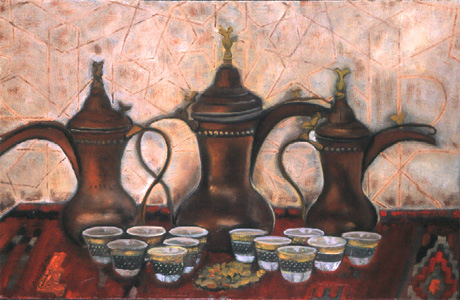
It is taking all our strength not to run to the hospital to visit. We feel very Middle-Eastern at this time; I am remembering my friend who went to Hamad hospital to have her babies. I took her daughters there the next morning, laden with canisters of coffee to serve guests.
“Guests?” I thought to myself. I had NO idea. Our Western idea is to give the new parents and their new baby time to recover from the physical and mental exertion of giving birth, time to bond as a small family unit.
When we got to Hamad Hospital, my friend had a huge suite, like a hotel suite, and her hospital bed was maybe King sized, with a curtain that could be drawn around it. She had a wall of mirrored closets and a seating area for about twenty people. No. I am not kidding.
We got there around seven in the morning, and within fifteen minutes, guests started arriving, all women, of course, come to give congratulations to the new Mom. Each came, greeted the new Mother, sat and drank a couple cups of coffee served by the delighted older daughters, greeted their friends, cousins and new arrivals, and then departed. Waves of guests arrived, and, thank God, waves of re-inforcing coffee pots.
So so different from our own customs, but today, oh, how I would love to fill a canister or two and be at the hospital sooner, rather than later, to greet the parents and to meet my new little lion-hearted grand-daughter, who insisted she would arrive when SHE wanted, LOL, not on schedule.
Here is the quilt I made for her:
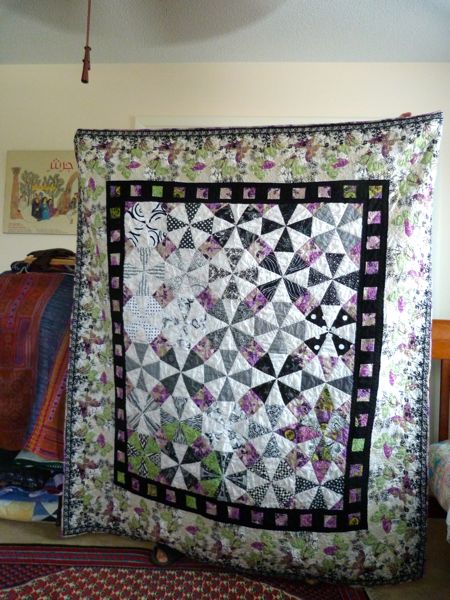
And here is the guide to the colors; I bought the border five years ago:

When AdventureMan say it, he said “that doesn’t look like a baby quilt” because it is so black and white, but, if you have eyes to see, it isn’t all black and white, it also has shades of purple, fuchsia, and a celery Spring green. I made the center Kaleidoscope pieces with a variety of blacks and whites, because babies LOVE black and white, and it can fascinate them and calm them.
I call it “I See Things Differently” because no, it doesn’t look like a baby quilt, but it is very much a baby quilt, it just doesn’t meet our cultural expectations. The longer I live, the less I meet any one’s expectations, LOL!
Thanks be to God! Thanks be to God for the safe delivery of this precious baby!
Uwem Akpan and Say You’re One of Them

This is a very troubling book, and, for me, a difficult book to read. It has taken me weeks, and I will admit I have often interrupted the reading of it to read other, easier books. This book makes me very uncomfortable. The stories and images trouble my sleep.
Uwem Akpan is of the tribe of Annang, from Nigeria, and has committed to an even larger tribe, the Catholic Church, of which he is a priest, and this gives him a unique perspective. The stories in this book often focus on tribal differences, including religious differences, and although they are set in different African states, have parallels in lives lived elsewhere. Those tribal differences are between Moslem and Christian, but also between Pentecostal and Catholic, Tutsi and Hutu, and, most significantly, the differences between to tribe of the very poor and the very rich.
Each story is told through the eyes of a child living in a different African state – Kenya, Benin, Ethiopia, Nigeria, Rwanda.
In one of my favorite segments of the book, strife has broken out in Nigeria, strife between the Moslems and the Christians, but also throw in the Pentecostals and the Pagans and really mix it up. A bus is waiting in the bus station to take people back to the southern part of Nigeria, and on this bus is a young man, half Moslem, half Christian. The bus stands idle for hours, while the bus driver seeks fuel to make the trip. During this time on the bus, many conversations take place, and what I loved was how alliances shifted with each conversation. The people on the bus were from different traditions, but came together as a community. No community is without arguments and dissensions, however, and consensus builds, diminishes, shifts – it is a microcosm of the tensions and stressors pulling apart the Nigerian nation state.
Uwem Akpan treats the children in each story lovingly, treasuring their innocent perspective and the sweetness of their hearts and vision. The adults don’t come off so well, passing their days in drug-induced stupors, drunk, selling children into slavery and prostitution, chopping off their limbs with machetes, and closing themselves off into groups which protect themselves and exploit others.
It would be an easier book to read if it were about aliens, or if these stories were confined to Africa, but the stories of these abused, neglected and exploited children echo in every continent, country and city in the world.
Uwem Akpan writes prose that is poetry; the surroundings are described with such detail that you feel in the moment, you see through the eyes of each child, and you see things that are beautiful as well as scenes you did not want to see. As you can see, I have a lot of ambiguous feelings about this book. At the same time I can admire the writing, the stories have left images in my mind that cannot be erased. Dark images. There is hope in the persistence and resilience of many of the children, but concern about their long term survival. It leaves a heavy weight on my heart.
The Official Worst Drivers in America: Miami
Slate.com has figured out which city has the worst drivers in America: Miami, Fla.
Slate looked at years of data about traffic accidents, automotive fatalities, alcohol-related driving deaths and pedestrian strike rates as indicators of bad driving.
Three out of the five cities with the worst drivers are found in the Sunshine State, with Miami topping the list as the absolute worst. Miami is first in auto fatalities and pedestrian strikes and, according to Slate, first in “obscenity-lace tirades of their fellow driver”. Fellow Floridian cities Hialeah, which comes in at number three, and Tampa at number four also seem to host a populace with a passion for running down pedestrians and fatal car accidents.
Miami shows up on more than just Slate.com’s worst list. The Huffington Post reported that Miami also had the most hit-and-runs in Florida last year, an incredible 35 a day. Transportation for America also ranked the most dangerous cities in America to drive in, with the top four all in Florida. Maybe Floridians should look into buying heavy-duty trucks and steering clear of sidewalks.
From the original report at Slate.com where you can read the entire article:
Adjusting the Allstate rankings for mileage this way has significant effects. Washington, D.C. remains the worst driving city using the insurance claims data, but Philadelphia surges to second worst. Hialeah drops seven places, from fourth to 11th.
Next we consider additional indicators. Car crashes are bad, but some accidents are worse than others. In July 2012, the Centers for Disease Control and Prevention published automobile fatality data for major cities and metropolitan statistical areas from the year 2009. It’s useful for our purposes, but it comes with a couple of caveats. The researchers didn’t publish data for some of the smaller cities on our list. In those cases, we’ll use data from the larger metropolitan area. In addition, three cities (Boston, Newark, N.J., and Providence) had fewer than 20 fatalities, but the precise number is unpublished. We’ll assume that each of these cities had 10 fatalities, so we have a number to enter into the calculations.
Drunk drivers are bad drivers, and some cities have far more of them than others. Not all locales publish reliable data on drunk driving fatalities, so we’ll turn to the Century Council, an association of distillers organized to combat drunk driving. The group published the number of fatalities from alcohol-related car accidents in 2011. The data are, unfortunately, broken down by state rather than city. So, for our purposes, the sins of the state will be visited upon the cities. (New York City has reliable data, so we can use city-specific data in that instance.) We can’t adjust the statewide data for mileage, because our mileage numbers relate only to cities themselves. So DWI fatalities will have to be computed per capita, unadjusted for how many miles residents of a city drive.
Pedestrian strikes are another key metric. For this indicator we turn to the CDC’s WONDER, a searchable database of morbidity and mortality statistics. It’s a priceless epidemiological tool as well as a bottomless source of trivia. The most granular data on pedestrian injuries and deaths is by county.
You might object to the use of pedestrian injuries as a metric of driver incompetence, because some cities have far more pedestrians than others. That’s a fair point, but consider New York City. It is, by far, the most walked city in the United States. Two-thirds of New Yorkers either walk or use public transit to get to work. According to the website WalkScore.com, only 2 percent of New Yorkers live in neighborhoods where cars are necessary. While every pedestrian strike is a tragedy, there are fewer in New York than you might expect. Miami-Dade County, a significantly less walked city, had 20 percent more pedestrian strikes per mile driven between 2006 and 2010 than New York.
. . . . .
And now, America, on to the cities with your worst drivers.
No. 5: Baltimore. Baltimoreans just can’t keep from running into each other. They were outside the top 10 in fatalities, DWI deaths, and pedestrian strikes, but their rate of collision couldn’t keep them out of the top five overall.
No. 4: Tampa, Fla. Tampa doesn’t do any single thing terribly, but it is consistently poor: 18th worst in years between accidents, fifth in traffic fatalities, tied for 11th in DWI fatalities, and 10th in pedestrian strikes. If the city had managed to get outside the bottom half in any individual category, Tampa residents might have avoided this distinction.
No. 3: Hialeah. The drivers of Hialeah get into a middling number of accidents, ranking 11th among the 39 candidates. But when they hit someone, they really mean it. The city finished third for fatalities. They also have a terrifying tendency to hit pedestrians.
No. 2: Philadelphia. Drivers in the city of brotherly love enjoy a good love tap behind the wheel. Second-places finishes in collisions and pedestrian strikes overwhelm their semi-respectable 16th-place ranking in DWI deaths.
No. 1: Miami. And it’s not even close. First in automotive fatalities, first in pedestrian strikes, first in the obscenity-laced tirades of their fellow drivers.
A couple of other noteworthy findings: Californians did reasonably well. Although the Golden State had seven cities among our 39 candidates, only Glendale finished in the top half of the table. Louisiana’s two entries, Baton Rouge and New Orleans, finished 6th and 15th, owing to the state’s terrible record of drunk driving fatalities.
Washington, D.C., the whipping boy of the Allstate rankings, dropped to 16th, owing to low numbers of DWI fatalities. Boston drivers don’t deserve the torment they receive. They have few automotive fatalities and rarely kill people in alcohol-related accidents. It goes to show how flawed opinion polls can be.
Recent Comments
intlxpatr on Shampoo Ginger tigerbutterya0c5ff1d… on Shampoo Ginger intlxpatr on British Soldier Kidnapped, Esc… John on British Soldier Kidnapped, Esc… intlxpatr on British Soldier Kidnapped, Esc… Wikipedia Donate Button

Amazina


Early Voting in Florida


