Yemeni Girl Escapes Child Marriage
This little girl is lucky; she has a sympathetic uncle who protected her when her own mother, twice, tried to sell her into marriage.
She is an amazingly articulate and resourceful little girl. I look forward to seeing the woman she grows into, safe under her uncle’s care. I love it that he convinced one prospective husband that she was not modest enough to be his bride 🙂
In a bone-chilling three minutes, a young girl who evaded child marriage tells the world that she would “rather die,” than be forced to undergo an arranged marriage.
After learning that her parents had plans to marry her off to a wealthy suitor, brave Nada al-Ahdal of Yemen risked her life and fled to the refuge of her uncle. The precocious little girl, who saw how her teenage aunt took her own life after being abused in an arranged marriage, shared in a harrowing translated video the cruelty of the child bride practice.
“I would have had no life, no education. Don’t they have any compassion?,” Nada asks. “I’m better off dead. I’d rather die [than be forced into a marriage].”
According to NOW News, Nada’s uncle, Abdel Salam al-Ahdal, a montage and graphics technician at a TV station, has protected his niece from being married off twice. Nada’s parents first accepted an offer from a wealthy expatriate, but al-Ahdel intervened and told the prospective groom that Nada was not nearly modest enough for him, in order to “scare him off.”
“When I heard about the groom, I panicked,” he told NOW. “Nada was not even 11 years old; she was exactly 10 years and 3 months. I could not allow her to be married off and have her future destroyed.”
When Nada’s mother tried once again to marry off her daughter against her will, Nada — despite threats that she could be killed — fled to her uncle’s once more, and filed a complaint with the police. She’ll now be living with al-Ahdal permanently.
But such forced marriages, like Nada’s, are on the rise across the globe.
According to a World Vision study released in March, more child brides are being led into arranged marriages due to an increase in global poverty and crises. Parents who live in fear of natural disasters, political instability and financial ruin look to arranged marriages as a way to save their struggling families.
Every day, 39,000 girls, younger than 18, will marry, according to the World Health Organization.
“Women have no rights to give an opinion in the family,” Humaiya, a 16-year-old from Bangladesh who managed to escape marriage, told The Huffington Post in March. “My father didn’t listen.”
Nada, whose video on YouTube has already garnered more than 2 million hits, hopes that the world will hear her message loud and clear.
“They have killed our dreams. They have killed everything inside us,” Nada said in the video. “This is no upbringing. This is criminal, simply criminal.”
Pacific Northwest Natives Have DNA Link 5,000 years
Don’t you love technology? It’s like working on a complex puzzle, and all of a sudden seeing how disparate pieces relate 🙂 This is a fascinating discovery from AOL/Huffpost:
Ancient DNA Linked To Living Descendants In Genetic Study
The Huffington Post | By Macrina Cooper-White Posted: 07/09/2013 2:24 pm EDT | Updated: 07/09/2013 9:12 pm EDT
What if you could trace your ancestry back to around 5,000 years ago? Researchers were able to do just that in a fascinating new DNA study, which found adirect genetic link between the ancient remains of Native Americans and their living relatives.
“It’s very exciting to be able to have scientific proof that corroborates what our ancestors have been telling us for generations,” study co-author and participant Joycelynn Mitchell said in a written statement. “It’s very amazing how fast technology is moving to be able to prove this kind of link with our past.”
In the study, U.S. and Canadian researchers used mitochondrial genome (mitogenome) sequencing to analyze DNA inherited exclusively through mothers. Looking at the mitogenome is cheap, easier to sequence than nuclear DNA, and skirts around the problem that European men mixed with Native American women.
The researchers collected DNA from 60 living indigenous people belonging to the Tsimshian, Haida and Nisga’a tribes in the northern coast of British Columbia. The tribes’ oral histories and archaeological sites indicate they have lived in the region for generations, which made them good candidates for tracing their lineage back so many years.
Complete mitogenomes were extracted from the remains of four Mid-Holocene individuals found in British Columbia’s Lucy Islands and Dodge Island, and then that information was compared to the DNA of the study participants.
What was found? The research team discovered one of the living individuals carried this same “mitogenomic signature” as a young adult female who lived on Dodge Island 2,500 years ago — which also matched the mitogenome of the remains of a woman who lived in the Lucy Islands 5,500 years ago. Wow.
Three other living participants had mitogenomes that linked back to the remains of another individual found on Dodge Island, who may have lived around 5,000 years ago.
“This is the beginning of the golden era for ancient DNA research because we can do so much now that we couldn’t do a few years ago because of advances in sequencing technologies,” study co-author Dr. Ripan Malhi, an anthropology professor at the University of Illinois and Institute for Genomic Biology professor, said in a written statement. “We’re just starting to get an idea of the mitogenomic diversity in the Americas, in the living individuals as well as the ancient individuals.”
The new study was published online on June 3, 2013 in the journal PLoSONE.
World War Z
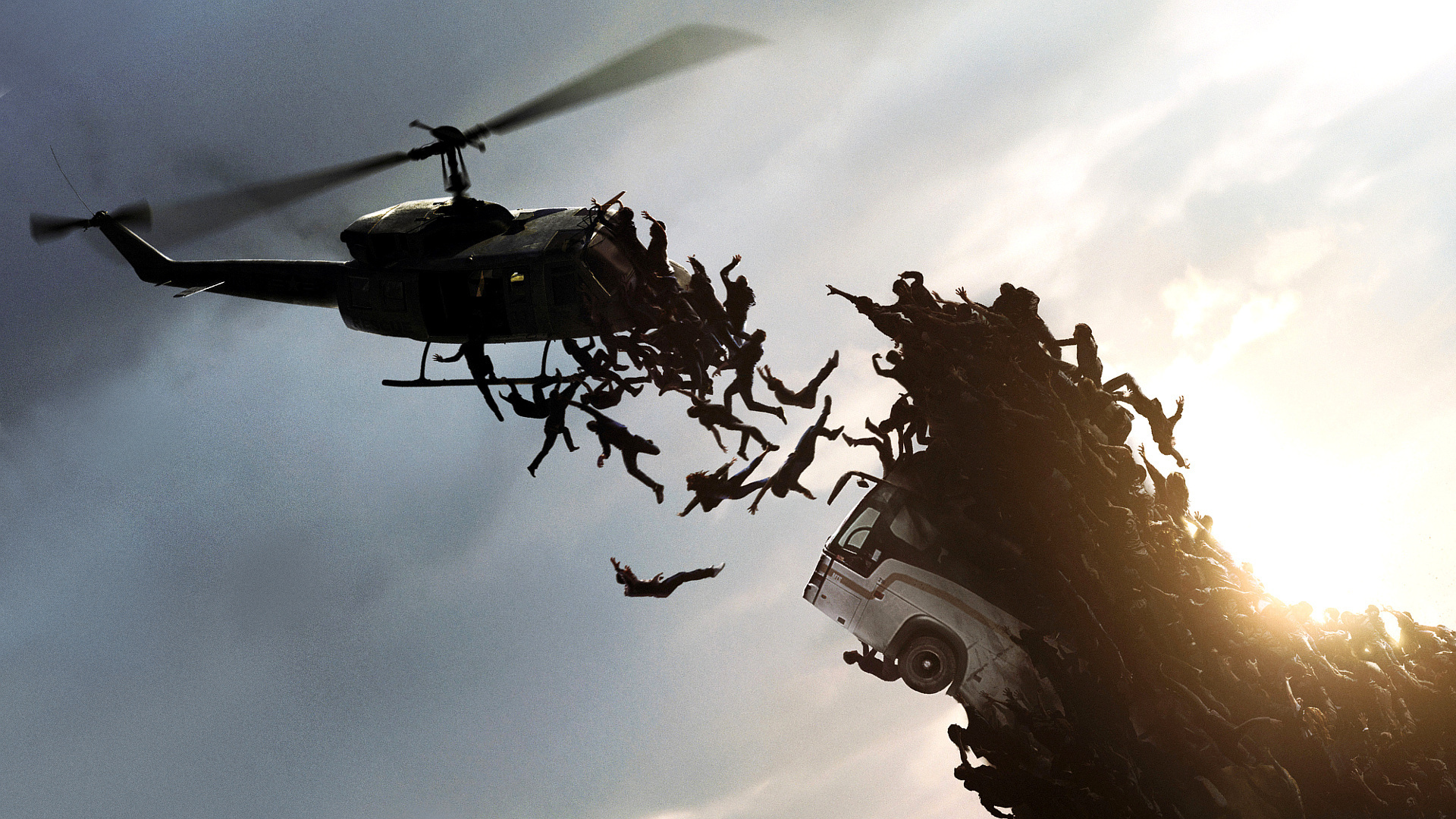
I talked AdventureMan into going to see World War Z with me – us and half of Pensacola showed up for the early matinee, and we got the last two seats. I had thought it’s been out for a while and people would be going to see something else, but all the theaters showing it in Pensacola are selling out every show. That doesn’t mean every seat was already filled – a lot of people had bought tickets online but weren’t there. On the other hand, while we got two good seats – they were – LOL – at opposite ends of the row!
World War Z is not a movie where you want to be sitting on opposite ends of the row.
World War Z is Contagion on steroids.
Did you ever see Romero’s 1968 Night of the Living Dead? I used to love scary movies, until I saw that movie. The scary movies were funny, not so scary at all – and George Romero changed all that with this low-budget horror classic. I think I liked it because it had a scientific kind of origin – a virus.
World War Z takes a similar approach, a scientific approach, and it is also very scary because it is hard, very hard, to be scientific and observant when your entire world becomes unsafe, when everything you known has turned to chaos. The zombies aren’t so damaged and tattered as Romero’s zombies, but they have the same herd mentality, a frenzied mob mentality, and an Alien-like skittering and swarming that makes my skin crawl.
I love seeing Brad Pitt as a responsible family man. He does it well. He has to make some very tough decisions in this movie, and you get to see that this sweet family man has another, tougher side.
AdventureMan was glad we went; he also thinks this will be a great computer game. We agreed it was scary because it had some things in it that truly can make life dangerous – you know, political leaders dying en masse, political and social systems dissolving and life becoming a brute struggle for survival with scarce resources . . . having swarming zombies kicks all that up a notch.
Not a movie for anyone under five. Maybe not even ten, if the kids are sensitive, or prone to bad dreams . . .
Our son said we need to read the book; it’s only sort-of like the movie, and has a lot of very edgy things to say about our current political system and leaders. Hmmmm. . . might have to do that.
Language of Flowers by Vanessa Diffenbaugh
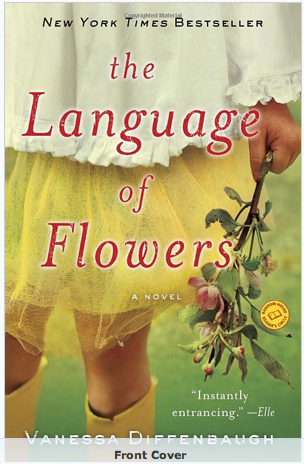
I didn’t expect to like this book as much as I did; from the first chapter I was hooked, so hooked I didn’t want to go to water aerobics of go to sleep until I had finished it. The title sounds girly and romantic, big yawn, but the book is anything but. The book is tough, and edgy, and tackles the foster care system without using sexual assault or out-of-the-ordinarily-cruel foster parents to bludgeon the point. She botches her one great chance at happiness when she sabotages her adoption by Elizabeth, who loves her dearly. The system can even be caring, but the effect of warehousing unwanted and neglected children damages their ability to trust, and to form relationships. We watch her as a child, self-destructive, angry, undermining her own chances of happiness.
Victoria even has a girly name to go with the title, but she is tough, and self-reliant, and very, very vulnerable, in spite of her toughness. Aging out of the system, she emerges a waif, with a hunger that stems more from emotional needs than physical.
She is greatly blessed to cross paths with people who look at her and truly see her, see her possibilities and her vulnerabilities, people who are willing to work with her, even to love her patiently, in spite of her prickliness and tendency to push people away. One of these is a florist, Renate, who recognizes in Victoria a gift for floral arrangement and is willing to work around her eccentricities. She gives Victoria a part-time job, in which Victoria flourishes.
In her emotional life, however, Victoria still has a lot of unresolved issues, stemming back to the very beginning when she was given up by a mother who, for whatever reason, didn’t want her. While she is hungry for love, she fears it as much as she wants it. Relationships overwhelm her. She abandons the love of her life, and then has to live with the consequences.
Watching her resolve her issues is cliff-hanging. You can’t stop reading. It’s not like watching a train-wreck; you know this girl has inner resources she has not yet tapped; you can read it in the loving evaluation of those who surround her. Every page of the way you are rooting for her to succeed.
“So There We Were, Two Naked Guys in the Shower and . . . . “
LOL, no, no, this is not going where you think it might go, but it got my attention, too!
AdventureMan was in the locker room with one of his exercise/aerobics buddies, cooling down from his water aerobics class when this story started, and was sharing the story with me later, at lunch, as we exchangin details of our mornings.
“. . . And he asked ‘do you know what today is?’ and I said ‘Yes! It’s the 63th anniversary of the beginning of the Korean War,” AdventureMan responded.
Guy talk. Guys discuss their combat experience in different wars. Combat is so intense, it imprints memories the way childbirth does in women, or a huge traumatic event, like the Iraqi invasion of Kuwait, or 9-11, or the Kennedy assassination, or the Tsunamis that hit Japan and washed entirely over the Maldives – experiences when the earth beneath your feet shifts, and things you once took for granted are shaken forever.
Who said guys don’t connect? AdventureMan has another old friend he needs to get in touch with today, to tell him he is thinking of him; Korean War veterans are largely forgotten in the tallying of combat in our country.
Pensacola is a wonderful place to be a military veteran. There is a Veteran’s hospital, and veteran-friendly policies at the clinics, commissaries and BX/PXx. Today we had lunch at Mellow Mushroom, where every Tuesday they give 20% off to all active duty and retired servicemen and women. Home Depot and Lowe’s give 10% off on every purchase, even plumbers, electricians, contractors, banks, theaters and many stores often give military discounts. And they thank us for our service. :0
To those of you who served in the Korean conflict: Thank you for your service.
Countdown
“We’ve started the count-down calendar,” said my beautiful and very pregnant daughter-in-law, “We have so many things we want to get done before the baby comes.”
We were gathered at one of our favorite casual lunch places, a place where we could eat well and our 3 year old could be both free to roam a little, and safe to roam, while the grown-ups talked.
“We’ve started, too,” I smiled at her, “I need to finish up her baby quilt, and two quilts for the homeless project I have due in September. And of course, we will be out of the loop the last two weeks before she is born, so I need to keep motivated now.” I know she will call on me once the new baby is here; I am the back-up, the “can you fix dinner / wash the dishes / hold the baby while I shower / clean up the baby spit / run to the grocery store/ feed the cats” person. I love it. It’s why we moved here, to be here when they need us, when they need the help. Being close to family, being there to help when they need the help – this is one of the great lessons we learned from our friends in Amman, in Kuwait, in Doha, in Tunis.
We also have an Alaska adventure in store, planned before any of us knew the new baby was en route. It’s not Africa, but we aren’t up for another of those 17 hour rides from Atlanta to Johannesburg this year. Alaska will be fun, a sentimental journey back to my origins for me, and a whole new environment for AdventureMan.
“We’ll also have the school break to cover,” beautiful D-I-L added, “but I know there is going to be a cousin’s camp; I just don’t know when it is going to be.”
Cousins camp – oh what fun. All the little like-aged cousins get together for a week of hell-bent-for-leather activities, from water parks to fire departments to scavenger hunts, they keep those little rascals so busy that they just fall into bed at night. It’s all good.
“I know it’s all going to fall into place,” she sighed, smiling at our son, “but we need that calendar to keep us on track.”
Yeh. Us too!
And The Mountains Echoed by Khaled Hosseini
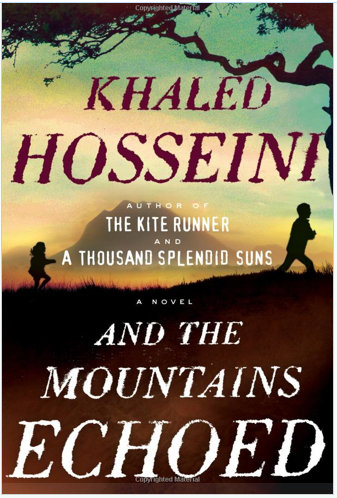
I danced when I saw the Amazon box; rarely do I buy hardcover (hurts too much when they fall over if I fall asleep reading, too bulky to carry on planes) but this one I was on the waiting list for, mail it as soon as it is published! Khaled Housseini, author of Kite Runner and A Thousand Splendid Suns has a new runaway best-seller; thanks to him I’ve just spent three days in Afghanistan, Paris and Los Angeles.
As the book opens, I am big brother to a baby sister whose Mom died in childbirth, living in a remote village in Afghanistan. Life is tough, but through the eyes of these children, life is idyllic, even though food is scarce and winters are cold. We have a huge oak tree with a swing, we play with the other children, and we have each other. Our father’s new wife is kind enough, but is busy with her own children, and the drudgery of cooking, cleaning and making do in a very small, poor Afghan village.
Later, I am Pari, living in Paris with an alcoholic, self-absorbed mother, making a life for myself, but always with a nagging feeling of something just outside my peripheral vision, another life . . .
The tale is told through the eyes of many, and on the way to the end of the tale we meet a wide spectrum of humanity, suffer the ills of war, callousness and unintended cruelties. We find that the man with superficial charm also saves and changes the lives of many, we find a doctor who finds fulfillment serving in the poorly resourced hospitals of Afghanistan, and we feel the agonies of a dutiful daughter watching her father fade into the world of Alzheimer’s.
It’s a wonderful, wild ride, richly textured, and when it finishes, you are not ready for it to end.
“We’re Moving On . . . ” at Pensacola Beach
Night before last, night a man was shot at the beach at 3:45 in the morning. According to the (very sketchy) details in the Pensacola News Journal, he had been having a fight with his girlfriend, had finished his fight and was then shot three times by a man he doesn’t know and who has no relationship to him. (This is what I understand from reading the paper; it doesn’t make sense to me, but it also says alcohol was involved.)
I only knew about the shooting because I saw a tiny little article about it on the AOL Local news section. When I went to look at it, it was gone.
In this morning’s paper, there is this sketchy description, and then – in several different sections – local are people quoted as saying “we’re moving on.”
OK I get it. We’re a beach community, and this is peak tourist season as folks pour in here from all the Southern states and other countries to enjoy our fabulous sugar-white sand beaches.
Before the tourists had hit the beach, the crime scene tape was down and a beach excavator had carted off the bloody sand.
I do get it. I really do. The season is short and we don’t want to be known as a beautiful beach where people can get shot. It’s a marketing problem.
There is something, however, that sticks in my craw about the swiftness of the moving on, and the barely there press coverage. A man was killed. Maybe he had been drinking. Maybe he had a fight with his girlfriend. Maybe he was at the beach very late (or very early) in the morning. None of these things seem to have anything to do with him having been shot, other than maybe being in the wrong place at the wrong time and the wrong person had a gun and shot him. It seems a little disrespectful, to me, to move on quite so swiftly. A man lost his life. We don’t know why. Maybe we could just take a little time to figure out what happened and to acknowledge his loss?
The Secret Lives of Baba Segi’s Wives by Lola Shoneyin

I don’t know what it is about summer reading, but now and then I go on a theme-fest; a couple years ago it was Nigerian literature, and, once hooked . . . when my friend who is now living in Lagos recommended The Secret Lives of Baba Segi’s Wives, I ordered it right away, thinking from the title it would be maybe light and sweet and humorous.
From the start, that assumption was blown. This is a direct and edgy Nigeria, darker, rougher and full of family secrets, domestic details and messy relationships.
It is a very Nigerian book – this is a good thing. There are cultural things that are not explained, but it all ends up making sense in the end. There are foods I have never heard of – ekuro with shrimp sauce, asun. There is a rudeness in the way they speak to one another, (“Is this a parking lot?” “Do I look like a parking attendant?”), a crudeness in the constant need to carry small bills for bribes, even on public streets. People speak their minds, with little or no mitigation, depending on the status of the person and their own personal goals and agendas.
At the weekly meeting of wives, the senior wife, Iya Segi, doles out rations of household supplies to the other wives, including chocolate powder and hair conditioner . . . and as the senior wives complain about the new wife thrown in their midst, she says:
“You will trip over in your hate if you are not careful, woman. Your mouth discharges words like diarrhea. Let Bolanle draw on every skill she learned in her university! Let her employ every sparkle of youth! Let her use her fist-full breasts. Listen to me, this is not a world she knows. When she doesn’t find what she came looking for, she will go back to wherever she came from.”
There is a whole other world in that one paragraph – a whole other way of seeing life and expressing thoughts. The culture may be alien, but I thoroughly enjoyed being a tiny mouse in the corner at that meeting – and others – and inside the minds of the wives, of Baba Segi, of the driver – so many good stories, so many points of view, and I learned things from behind those high compound walls and closed and locked doors that I might never otherwise have learned. Alien as it was, for me, this was a very good book, new ways of looking at things, and a great recommendation from my friend in Lagos.
Men Cause Menopause?
I don’t know that this has been studied closely, or that there is any evidence supporting the theory, but it is a hilarious theory – blame men for menopause!
By: Tia Ghose, LiveScience Staff Writer
Published: 06/13/2013 05:04 PM EDT on LiveScience
Ladies, here’s one more thing you can blame on men: menopause. At least, that’s according to a new theory.
Women go through menopause because men have consistently preferred younger women in recent evolutionary history, according to a study published today (June 13) in the journal PLOS Computational Biology.Thus, menopause is not evolutionarily advantageous and may be the result of a series of random, harmful mutations that accumulated in women but weren’t acted on by evolution because the women had already reproduced by the time the mutations affected them.
“Our first assumption is that mating in humans is not random with respect to age, which means men of all ages prefer to mate with younger women,” said study co-author Rama Singh, an evolutionary biologist at McMaster University in Canada. “If mating is with younger women, any deleterious mutations which affect women’s reproduction later in life will accumulate because they are not being acted on by natural selection.”
Menopausal mystery
Menopause, in which women stop menstruating and become infertile, has been a long-standing puzzle for biologists: Why would evolution have led to a trait that essentially reduces the reproductive potential of an animal?
Most other animals don’t go through menopause (although killer whales do). Even chimpanzees, humans’ closest living relatives, seem to reproduce into old age in the wild, and males even prefer older females.
Biologists have proposed the grandmother hypothesis to explain the conundrum. The hypothesis holds that menopause allows a grandmother who is done rearing her own kids to help rear the young of her children, thereby increasing the survival odds of her grandkids, and therefore, her genes.
But grandchildren and grandparents share just a quarter of their genes, versus half for children and their parents, so menopause would have to dramatically boost survival of grandchildren to be evolutionarily advantageous. Past studies have shown that maternal grandmothers boost their grandkids’ survival rates, though exactly how much depends on the society.
Younger women
For thousands of years (at least), men have, on average, mated with younger women, Singh said.
That’s because, if all else is equal, “those who reproduce earlier, their genes are passed on faster,” Singh told LiveScience.
So the researchers created a computer simulation to model that preference.
Early on, both men and women in the model reproduced until death. But over time, the model found, men’s preference for youth reduced older women’s odds of reproducing.
Simultaneously, people accumulated random mutations, some of which decreased later-life reproductive ability. But since older women were left out in the cold anyways, those mutations didn’t impact their reproductive success, whereas mutations in men that could reduce late-life reproduction were weeded out. (Men who stopped reproducing at some point in life would produce fewer offspring than those who didn’t, and the late reproducers would outcompete those who stopped breeding earlier.)
Over 50,000 to 100,000 years, the accumulation of all those mutations could have led to universal menopause, the researchers suggest. Menopause would then be another form of aging akin to graying hair or wrinkles.
If later childbearing becomes the norm, as current societal trends suggest, women who can reproduce at older ages might gain an evolutionary advantage, and menopause could, in theory be pushed later, Singh said.But it’s more plausible that technological changes such as fertility treatments will artificially extend women’s ability to reproduce, Singh said.
Questionable assumptions
But the new model might have the causation reversed, wrote Kristen Hawkes, an anthropologist at the University of Utah, who was not involved in the study, in an email to LiveScience.
As human life spans increased, women might have had many healthy years after fertility. As a result, men grew to prefer younger women because older women couldn’t reproduce.
Supporting that hypothesis, female chimpanzees see their egg reserves decline around the same age as human females, Hawkes noted. But unlike humans, they die shortly after this age, whereas humans have decades of healthy life left.
“The preference men have for young partners is a striking contrast with other primates,” Hawkes said. “My guess about that has been it’s a consequence of our life history.”
Recent Comments
intlxpatr on Shampoo Ginger tigerbutterya0c5ff1d… on Shampoo Ginger intlxpatr on British Soldier Kidnapped, Esc… John on British Soldier Kidnapped, Esc… intlxpatr on British Soldier Kidnapped, Esc… Wikipedia Donate Button

Amazina


Early Voting in Florida


