Round-Up Herbicide Tied to Serious Health Deterioration
Shocking news for everyone with grounds and gardens – we’ve all been using this, not knowing its long term impact on our environment – and on us.
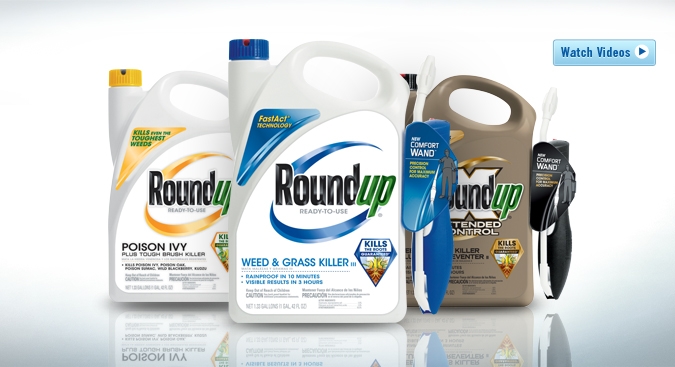
Roundup, An Herbicide, Could Be Linked To Parkinson’s, Cancer And Other Health Issues, Study Shows

The peer-reviewed report, published last week in the scientific journal Entropy, said evidence indicates that residues of “glyphosate,” the chief ingredient in Roundup weed killer, which is sprayed over millions of acres of crops, has been found in food.
Those residues enhance the damaging effects of other food-borne chemical residues and toxins in the environment to disrupt normal body functions and induce disease, according to the report, authored by Stephanie Seneff, a research scientist at the Massachusetts Institute of Technology, and Anthony Samsel, a retired science consultant from Arthur D. Little, Inc. Samsel is a former private environmental government contractor as well as a member of the Union of Concerned Scientists.
“Negative impact on the body is insidious and manifests slowly over time as inflammation damages cellular systems throughout the body,” the study says.
We “have hit upon something very important that needs to be taken seriously and further investigated,” Seneff said.
Environmentalists, consumer groups and plant scientists from several countries have warned that heavy use of glyphosate is causing problems for plants, people and animals.
The EPA is conducting a standard registration review of glyphosate and has set a deadline of 2015 for determining if glyphosate use should be limited. The study is among many comments submitted to the agency.
Monsanto is the developer of both Roundup herbicide and a suite of crops that are genetically altered to withstand being sprayed with the Roundup weed killer.
These biotech crops, including corn, soybeans, canola and sugarbeets, are planted on millions of acres in the United States annually. Farmers like them because they can spray Roundup weed killer directly on the crops to kill weeds in the fields without harming the crops.
Roundup is also popularly used on lawns, gardens and golf courses.
Monsanto and other leading industry experts have said for years that glyphosate is proven safe, and has a less damaging impact on the environment than other commonly used chemicals.
Jerry Steiner, Monsanto’s executive vice president of sustainability, reiterated that in a recent interview when questioned about the study.
“We are very confident in the long track record that glyphosate has. It has been very, very extensively studied,” he said.
Of the more than two dozen top herbicides on the market, glyphosate is the most popular. In 2007, as much as 185 million pounds of glyphosate was used by U.S. farmers, double the amount used six years ago, according to Environmental Protection Agency (EPA) data.
Farewell Annette Funicello
We all wanted to be her 🙂
Ezekiel Prophesies to Bare Bones in the Desert
When I read a segment like this in the daily Lectionary Readings, I wonder what happens next? What a great science fiction/fantasy story this would make, writing from the point of view of a newly raised newly re-fleshed person – like would they have their former memories? Would they remember their deaths? Or would they come into the world with the blank unfilled minds of babies, but in grown bodies? Did the Lord God just revive them and set them on their way? We know he was making a point to the prophet Ezekiel, but you have to wonder . . . what came next?

Ezekiel 37:1-14
37The hand of the Lord came upon me, and he brought me out by the spirit of the Lord and set me down in the middle of a valley; it was full of bones. 2He led me all round them; there were very many lying in the valley, and they were very dry. 3He said to me, ‘Mortal, can these bones live?’ I answered, ‘O Lord God, you know.’ 4Then he said to me, ‘Prophesy to these bones, and say to them: O dry bones, hear the word of the Lord. 5Thus says the Lord God to these bones: I will cause breath* to enter you, and you shall live. 6I will lay sinews on you, and will cause flesh to come upon you, and cover you with skin, and put breath* in you, and you shall live; and you shall know that I am the Lord.’
7 So I prophesied as I had been commanded; and as I prophesied, suddenly there was a noise, a rattling, and the bones came together, bone to its bone. 8I looked, and there were sinews on them, and flesh had come upon them, and skin had covered them; but there was no breath in them. 9Then he said to me, ‘Prophesy to the breath, prophesy, mortal, and say to the breath:* Thus says the Lord God: Come from the four winds, O breath,* and breathe upon these slain, that they may live.’ 10I prophesied as he commanded me, and the breath came into them, and they lived, and stood on their feet, a vast multitude.
11 Then he said to me, ‘Mortal, these bones are the whole house of Israel. They say, “Our bones are dried up, and our hope is lost; we are cut off completely.” 12Therefore prophesy, and say to them, Thus says the Lord God: I am going to open your graves, and bring you up from your graves, O my people; and I will bring you back to the land of Israel. 13And you shall know that I am the Lord, when I open your graves, and bring you up from your graves, O my people. 14I will put my spirit within you, and you shall live, and I will place you on your own soil; then you shall know that I, the Lord, have spoken and will act, says the Lord.’
Distracted Driving #1 Killer of U.S. Teens
Horrifying article. I would have thought they would be talking about texting, which we can see for ourselves has people, young and old, swerving all over the highway, but no – the culprit is PASSENGERS! The death rate for teens in cars increases with each additional passenger!
The papers are full of heartbreaking obituaries, young people, men and women, who had so much potential, so much life ahead of them, and now they are gone. Heartbroken parents think of the years of joy they will miss.
Fatal Distraction: Teen Drivers And Passengers Are A Deadly Mix
Studies show that one passenger in a teen driver’s car increases fatality risk by 44%, two passengers doubles the risk
Sharon Silke Carty
AOL Auto News
Teen driving safety is one of those problems that is easy to ignore: So often the tragedies are spread out throughout small towns around the country. One lost life here, two lost there. We don’t often piece all those crashes together and realize what’s happening to our children.
Sometimes to get change, you need a tipping point. Maybe this week will be it: Since Sunday, 15 teenagers have died in major car accidents around the U.S. Six died after crashing into a pond in Ohio. Five died when they crashed into a tanker truck in Texas. Four died when they crashed into a creek in Illinois.
And that’s just the crashes that were major and notable enough to make national news. One teen in Colorado died Sunday when the teen driver of a car he was in crashed into the side of a mobile home. Three died in Indiana when the drivers, in two trucks, ran stop signs and collided head-on. A 15-year-old driver in Maryland died when he was fleeing police in a car. And there are others, many which don’t make the news. Crashes that don’t end in fatalities but left serious damage: traumatic brain injuries, crippling spinal cord issues.
“The numbers are so small and spread out geographically,” said Timothy Hollister, a teen driving safety advocate in Connecticut whose book, “Not So Fast: Parenting Teen Drivers Before They Get Behind The Wheel”, comes out in September. “It’s only when you put the numbers together nationally that people even begin to take notice.”
Driving is the No. 1 killer of teens in this country, accounting for about 25 percent of teen deaths each year. About 3,000 to 5,000 teens die annually in car wrecks, enough to fill the halls of a large high school. Or two.
Recently, the Governor’s Highway Safety Association release preliminary figures for 2012 that show a troubling trend: After 10 years of declining, teen driving deaths are on the rise.
Although teen crashes seem random and unpredictable, they actually often follow a predictable pattern: It’s likely a group of teens heading nowhere in particular, probably late at night, and going fast. Often, they’re not wearing seatbelts.
Researchers have identified the dangerous habits of young drivers, who can’t ever be considered safe behind the wheel because they are simply too novice. There’s a common thread for many fatal crashes: More than one passenger in the car, especially if those passengers are male.
The Passenger Effect
A study released last year by AAA said passengers have a huge impact on fatalities: Fatality rates went up 44 percent with one passenger under 21 years old, doubled with two passengers, and quadruples when carrying three or more passengers who are under 21 years old.
Many graduated drivers license (GDL) laws regulate how many passengers teens can have in the car before they are awarded a full license. Parents who are concerned about their teens behind the wheel want to pay close attention to this rule: Make sure your teens are driving alone mostly, with no more than one passenger. Don’t let them carpool to and from school events. Don’t let them head out for the evening with a bunch of other kids teens in one car. Remember that other passengers are a huge distraction that can turn into a fatal distraction.
Laws regarding passengers in vehicles driven by teens are “the single least enforced and most ignored rule,” Hollister said. “It’s the one piece that could make a difference. That’s parents putting convenience ahead of safety, and not understanding the dangers that every passenger in a teen driver’s car adds an additional risk.”
Long Term Care Insurance: Buy it Young
I have a whopping bill to pay, and while I hate to do it, it is necessary. Women in my family live a long time. People in America are living longer. While retirement funds can look generous at the time you retire, health care costs and late-life care can eat those funds down to nothing . . . and then what?
It’s not like the old days. There was a time when we didn’t live so long, and women didn’t work. Who, these days, has time to stay home and care for the ailing elderly? Because we live longer, by the time we become ailing-elderly, our children are borderline elderly themselves, unable to do the heavy lifting that comes with helping the elderly do even the smallest of everyday tasks, bathing, grooming, eating, dressing – it takes strength.
I found this article on AOL’s Daily Finance page.
Long-Term Care Insurance Should Be Part of Your Financial Plan
by Michele Lerner, Mar 12th 2013 5:00AM
In the world of insurance products, long-term care insurance is a relative newcomer. It was introduced in the late 1970s, but in recent years, it has become a much more important element of retirement planning thanks to twin rises in health care costs and longevity. (Life expectancy in 1930 was just 59.7; in 2010 life expectancy for Americans was 78.7.)
Many people associate long-term care insurance with nursing homes, but it also pays for in-home care and assisted living facilities. According to the American Association for Long-Term Care Insurance, 50 percent of long-term care insurance benefits in 2011 went to pay for in-home care, 31 percent for nursing home care, and 19 percent for an assisted living facility.
How Long-Term Care Insurance Works
Each long-term care insurance policy is slightly different, but most benefits kick in based on a similar definition of “disability”: either you have severe cognitive impairment or you need help with at least two daily living activities. These activities include bathing, dressing, eating or using the bathroom.
In other words, you don’t just automatically receive the benefits when you think you could use some help or when you move into a retirement community. Policies are typically purchased with fixed daily benefits for a fixed period of time such as three years or five years.
Can You Cover These Costs Without It?
On an hourly, daily and monthly basis, the cost of the kinds of services covered by long-term care insurance really add up.
A 2012 MetLife Survey of Long-term Care Costs found:
The national average monthly base rate in an assisted living community cost $3,550 in 2012.
The national average daily rate for a private room in a nursing home cost $248; a semi-private room ran $222 per day.
The national average daily rate for adult day services was $70.
The national average for hourly rates for home health aides was $21.
While many people recognize the value of having insurance coverage to help pay for their care when they age, not everyone purchases it.
A 2012 Generational Research project by Financial Finesse showed that just 10 percent of people age 45 to 54 have purchased long-term care insurance, and only 16 percent of people age 55 to 64 have it.
Why are people forgoing coverage? It comes down to cost, according to the AARP.
How Much Does Coverage Cost?
Long-term care insurance can vary widely depending on your age at the time of purchase, the length and amount of coverage, and policy characteristics including whether your benefits are adjusted for inflation and the length of any waiting period before benefits are paid, among other things.
According to the American Association for Long-Term Care Insurance, the average annual premium for long-term care insurance in 2012 for a policy for a 50-year old with a daily benefit of $200 for three years of coverage and a 3 percent automatic compound inflation coverage was $2,235. Your policy can’t be cancelled (except for non-payment) and premiums for long-term care insurance cannot be increased on an individual basis for your age or health reasons. Still, insurance companies can raise the premiums for an entire class of policyholders (such as everyone age 75 and older).
Obviously, the older you are when you purchase long-term care insurance, the more expensive the policy and the higher the likelihood that you will be turned down for the coverage. Underwriters look at your health records as well as mortality risk to determine your eligibility for coverage.
Some companies give you a discount if you’re married because they assume spouses are likely to take care of each other longer before resorting to a nursing home.
Four Reasons You Need Long-Term Care Insurance
So how do you know if you need this kind of insurance? If you have more limited retirement savings, long-term care insurance should probably be part of your financial plan. And even if you have $2 million or $3 million in the bank for your retirement and future health care needs, don’t dismiss these policies before you examine the benefits more closely. Consider, for example:
How much longer we’re living these days. The longer you live, the higher your chances of needing some type of long-term care, either in your home, in a nursing home or in an assisted living facility.
Rising health care costs. AARP says that health care costs have historically outpaced the overall rate of inflation. If you need to live in a nursing home for more than a year or two, you could need $250,000 or more to pay for it.
How far your retirement investments will really take you. Your 401(k) may look good when you retire at 65, but if you need to pay for assisted living or even a home health aide the income generated by your retirement investments could get eaten away very quickly. If one spouse needs to live in a nursing home but the other can stay at home, you’ll need enough savings to cover two separate living expenses.
Your family’s emotional and financial health. Even wealthy families often choose to purchase long-term care insurance because the policy can make decisions about how to care for loved ones easier by giving them more options. Instead of draining their inheritance, your family members can use insurance benefits to pay for home health care or to cover some of the expense of a more costly nursing home.
Financial experts suggest purchasing long-term care insurance between age 55 and 64, but remember that the younger you are when you buy it, the lower your premiums will be. If you or your parents are 50 or 55, it’s time to discuss your options with an insurance agent.
New Virus in Middle East Kills 50% Victims
I found this on WeatherUnderground News this morning. What scares me is that there may be more victims, many more, shepherds who work with goats, laborers, people thought to have very bad colds, maybe even pneumonia, who don’t have the kind of money to fly to London to be diagnosed. If one man spread it to two family members, imagine how many people he had contact with on that airplane flying to London.
LONDON, Feb 27 (Reuters) – The emergence of a deadly virus previously unseen in humans that has already killed half those known to be infected requires speedy scientific detective work to figure out its potential.
Experts in virology and infectious diseases say that while they already have unprecedented detail about the genetics and capabilities of the novel coronavirus, or NCoV, what worries them more is what they don’t know.
The virus, which belongs to the same family as viruses that cause the common cold and the one that caused Severe Acute Respiratory Syndrome (SARS), emerged in the Middle East last year and has so far killed seven of the 13 people it is known to have infected worldwide.
Of those, six have been in Saudi Arabia, two in Jordan, and others in Britain and Germany linked to travel in the Middle East or to family clusters.
“What we know really concerns me, but what we don’t know really scares me,” said Michael Osterholm, director of the U.S.-based Center for Infectious Disease Research and Policy and a professor at the University of Minnesota.
Less than a week after identifying NCoV in September last year in a Qatari patient at a London hospital, scientists at Britain’s Health Protection Agency had sequenced part of its genome and mapped out a so-called “phylogenetic tree” – a kind of family tree – of its links.
Swiftly conducted scientific studies by teams in Switzerland, Germany and elsewhere have found that NCoV is well adapted to infecting humans and may be treatable medicines similar to the ones used for SARS, which emerged in China in 2002 and killed a tenth of the 8,000 people it infected.
“Partly because of the way the field has developed post-SARS, we’ve been able to get onto this virus very early,” said Mike Skinner, an expert on coronaviruses from Imperial College London. “We know what it looks like, we know what family it’s from and we have its complete gene sequence.”
Yet there are many unanswered questions.
Spotlight on Saudi Arabia, Jordan
“At the moment we just don’t know whether the virus might actually be quite widespread and it’s just a tiny proportion of people who get really sick, or whether it’s a brand new virus carrying a much greater virulence potential,” said Wendy Barclay, a flu virologist, also at Imperial College London.
To have any success in answering those questions, scientists and health officials in affected countries such as Saudi Arabia and Jordan need to conduct swift and robust epidemiological studies to find out whether the virus is circulating more widely in people but causing milder symptoms.
This would help establish whether the 13 cases seen so far are the most severe and represent “the tip the iceberg”, said Volker Thiel of the Institute of Immunobiology at Kantonal Hospital in Switzerland, who published research this month showing NCoV grows efficiently in human cells.
Scientists and health officials in the Middle East and Arab Peninsular also need to collaborate with colleagues in Europe, where some NCoV cases have been treated and where samples have gone to specialist labs, to try to pin down the virus’ source.
“One Big Virological Blender”
Initial scientific analysis by laboratory scientists at Britain’s Health Protection Agency (HPA) – which helped identify the virus in a Qatari patient in September last year – found that NCoV’s closest relatives are most probably bat viruses.
It is not unusual for viruses to jump from animals to humans and mutate in the process – high profile examples include the human immunodeficiency virus (HIV) that causes AIDS and the H1N1 swine flu which caused a pandemic in 2009 and 2010.
Yet further work by a research team at the Robert Koch Institute at Germany’s University of Bonn now suggests it may have come through an intermediary – possibly goats.
In a detailed case study of a patient from Qatar who was infected with NCoV and treated in Germany, researchers said the man reported owning a camel and a goat farm on which several goats had been ill with fevers before he himself got sick.
Osterholm noted this, saying he would “feel more comfortable if we could trace back all the cases to an animal source”.
If so, it would mean the infections are just occasional cross-overs from animals, he said – a little like the sporadic cases of bird flu that continue to pop up – and would suggest the virus has not yet established a reservoir in humans.
Yet recent evidence from a cluster of cases in a family in Britain strongly suggests NCoV can be passed from one person to another and may not always come from an animal source.
An infection in a British man who had recently travelled to Saudi Arabia and Pakistan, reported on Feb. 11, was swiftly followed by two more British cases in the same family in people who had no recent travel history in the Middle East.
The World Health Orgnisation says the new cases show the virus is “persistent” and HPA scientists said the cluster provided “strong evidence” that NCoV, which like other coronaviruses probably spreads in airborne droplets, can pass from one human to another “in at least some circumstances”.
Despite this, Ian Jones, a professor of virology at Britain’s University of Reading, said he believes “the most likely outcome for the current infections is a dead end” – with the virus petering out and becoming extinct.
Others say they fear that is unlikely.
“There’s nothing in the virology that tells us this thing is going to stop being transmitted,” said Osterholm. “Today the world is one big virological blender. And if it’s sustaining itself (in humans) in the Middle East then it will show up around the rest of the world. It’s just a matter of time.”
Season Finales Downton Abbey and Suits
How can it be? How can “seasons” be so short?? Last Sunday, we had an unexpected thrill as Downton Abbey went TWO hours instead of one, and then we had the unexpected downer of hearing that this week, tomorrow, will be the season finale.
Finale?
Downton Abbey just started it’s new season! What is a season? Eight hours? Ten hours? No! No! We want more!
We watched Suits Thursday night, only to learn that this coming week is the finale episode of Season 3. Aarrgh! It seems like it’s only been on three weeks, but the website says 16 episodes . . . that cannot be!
AdventureMan asked me why some shows and not others? Why do we clear our schedules for Downton Abbey? Our recent houseguests were overjoyed to know we follow DA – as they do – and we happily tucked in Sunday night to watch the review of the last week’s episode along with this week’s two hours of Downton Abbey, oh, we were in heaven. 🙂 Downton Abbey is the big topic at aqua aerobics; Downton Abbey is the big topic at the women’s church circles . . . how does Downton Abbey create so many fans?
We have consolation to the loss of Suits and Downton Abbey; Survivor just started up again and we enjoy that on Wednesday nights, Southland just started up again on TNT and . . . “winter is coming.” We are holding our breath for the new Game of Thrones March 31st. 🙂

I’m guessing that the common thread that ties all these shows together is that 1) they succeed IMMEDIATELY in grabbing and holding our attention 2) they are filled with unpredictability; the unexpected happens all the time and 3) the main characters are flawed, and their flaws leave them vulnerable to the kinds of unpredictabilities that hold us enthralled.
What are your favorite shows – and why?
Relationship Anxiety Hard on Your Immune System
Relationship Anxiety Is Hard On The Immune System, Study Says
Katherine Bindley
katie.bindley@huffingtonpost.com
This is from AOL News/Huffpost:
Relationship anxiety is known to be tough on a person’s mental well-being, but a new study suggests that fear of rejection — and worry that someone doesn’t love you enough — can also serve as chronic stressors that tax the immune system.
In a study of 85 couples who’d been married for an average of 12 years, a team of researchers led by Lisa Jaremka with Ohio State University College of Medicine examined the level of anxiety participants had about close relationships, as well as samples of their blood and saliva.
They found that the levels of cortisol — a hormone associated with stress — were on average 11 percent higher in people with higher levels of attachment anxiety than those who were less anxious. In addition, the more anxious people had between 11 percent and 20 percent fewer T-cells, which help the body to fight off disease.
“The thing that was surprising was the magnitude of the difference, especially in the immune cells that we saw,” Jaremka told The Huffington Post. “Some of the differences in the immune cell numbers, between the higher and the less high anxious attached people, were on the magnitude of what you’d see between obese and non-obese people.”
Attachment styles are believed to be derived from the type of caregiving people experienced in childhood, but the effects extend to, and impact, relationships in adulthood.
Most people are bound to have some level of concern and stress during the ups and downs of a relationship, Jaremka explained to HuffPost. But those with higher levels of attachment anxiety are hypersensitive to signs that a person they’re close to will leave them on a regular basis. They’re also more likely to seek reassurance and interpret their partner’s behaviors in a negative way.
Because the team did not include study participants who fell on the very high end of the anxiously attached spectrum, it’s possible that the effects of relationship anxiety could be even greater than the study suggests. Incidentally, while more women in the study suffered from higher levels of attachment anxiety, the researchers saw the same elevated levels of cortisol and lower T-cells in the men who were anxious.
Previous research had already established that relationship anxiety can have negative effects on a person’s physical health, but less was known about how exactly the anxiety and the health effects related to one another.
According to the Wall Street Journal, it’s believed that about 20 percent of the population falls on the anxious side of the anxiously attached spectrum. Another 25 percent fall into the avoidant category, which means those people may not get close to their partner out of fear that it could lead to a loss of autonomy.
Experts told the Journal that emotional opposites are often initially attracted to one another, but they may eventually face obstacles if they exacerbate one other’s attachment tendencies. For example, an anxious person might push for more affection and attention. This behavior might make an avoidant partner pull further away, in turn, making the anxious person even more insecure.
Despite the negative effects that attachment styles can have on a person’s relationships and physical health, Jaremka explained these traits are not inalterable.
“Anybody that is experiencing something that feels like high levels of attachment anxiety would think, ‘Oh great I’m doomed, but I think it’s important to acknowledge the fact that just because you are highly anxiously attached now doesn’t mean you have to be that way forever,” Jaremka told HuffPost. “We do know based on research that people can change and people can be very anxiously attached in one relationship and not at all in a different relationship.”
So what kind of relationship can serve as an antidote to pre-existing anxiety? One with a secure partner.
“If they are a very caring and loving and responsive partner, who attends to your needs when you need them, who is there for you when you’re stressed…Those relationships seem to be the types of relationships that people are able to feel secure in and are able to overcome anxieties in, if they have them,” Jaremka said.
The study, titled “Attachment Anxiety Is Linked to Alterations in Cortisol Production and Cellular Immunity,” is slated to be published in the journal Psychological Science.
Music Brings Alzheimer’s Patients Into the Moment
I saw this video over the Christmas holiday, and I can’t forget it. I know one of the reasons I love water aerobics is that they play all this rock music of my generation, and it gets us working hard, some even sing along, belting out the lyrics, LLOOLLL, I’m sure we look ridiculous, but oh, we have a great time and it makes exercise time pass more quickly.
This video shows the dramatic effect familiar music has on Alzheimer’s patients, bringing them out of their fog, however briefly, and animating them once again:
Recent Comments
ExpatAlien on What Country am I Living … intlxpatr on Yellowstone: Old Faithful to C… Michelle on Yellowstone: Old Faithful to C… Cathy on No Grown-Ups in Charge intlxpatr on Waiting for Snow Wikipedia Donate Button

Amazina


Early Voting in Florida


 Here There and Everywhere