Demolish Tariq Rajab Museum?
I am horrified. Blogger Hanan reports that there are rumors that the Tariq Rajab Museum has received a warning to close or be demolished, that they have no permit to run a museum.
This family has two museums, two fine, fabulous museums, and admission to the public is free of charge. It is a bright spot in Kuwaiti Culture. (I thought there was a movement out there to encourage tourism? This is where I take my guests! This is where we tell tourists to go!)
I have no WASTA my friends. First, can you confirm that the museum has indeed been warned? Can you make this go away?
What Poverty Does to US (Blog Action Day 2008)
Today, Blog Action Day 2008, we are to write about poverty.
There are many levels of poverty, and I have seen the worst. I have seen people without the very most basic necessities of life, without enough food, without a safe place to spend the night, people who would sell their baby for another fix, people who live in filth. The very worst thing about poverty is what it does to those who see it, but are not poor – it hardens our hearts.

The overwhelming nature of poverty, the knowledge that we can only do so much, that our efforts are like little drops in a great sea, it can make you turn away from doing anything at all. Afraid to feel to much, we build a wall around our hearts, so we won’t have to feel. We judge, we walk away.
So who is poor? Does not God look at our hearts? He teaches us that the poorest of the poor, who shares one crust of bread with another, is more merciful than the donor who gives generously out of abundance. If we harden our hearts, if we turn away from these problems, who then is poor? Do we not have a deep inner problem, a severe inner poverty, a poverty of spirit?
One of the great God-jokes I see as I live my life is how what we see and what we learn is often the opposite of what God teaches us. He tells us not to put our faith on earthly treasures, our cars, our houses, our material possessions. He tells us the greatest wealth of all is in giving it all away and serving him.
As the financial markets dip and twirl on the roller coaster of doubts and fears and perceptions, as people watch their life savings dwindle, will we learn our lesson? (Can you hear God laughing?)
One of the great secrets of wealth is giving it away – ask Warren Buffet, the richest man in the world, or Bill Gates. They have made fortunes, walked away and given abundantly of their wealth to make the world a better place. God smiles on them. They learned the secret.
When you help the poor, you are blessed.
There is a story we tell volunteers about a little boy along the seashore. Thousands of starfish are stranded on the shore as the tide recedes and a man watches as the little boy picks up starfish and throws them out into the ocean, one at a time. After watching a while, he shouts at the boy “Give it up! There are so many starfish! You can’t save them all!” and the little boy, without pausing, shouts back “But I can save THIS one!”
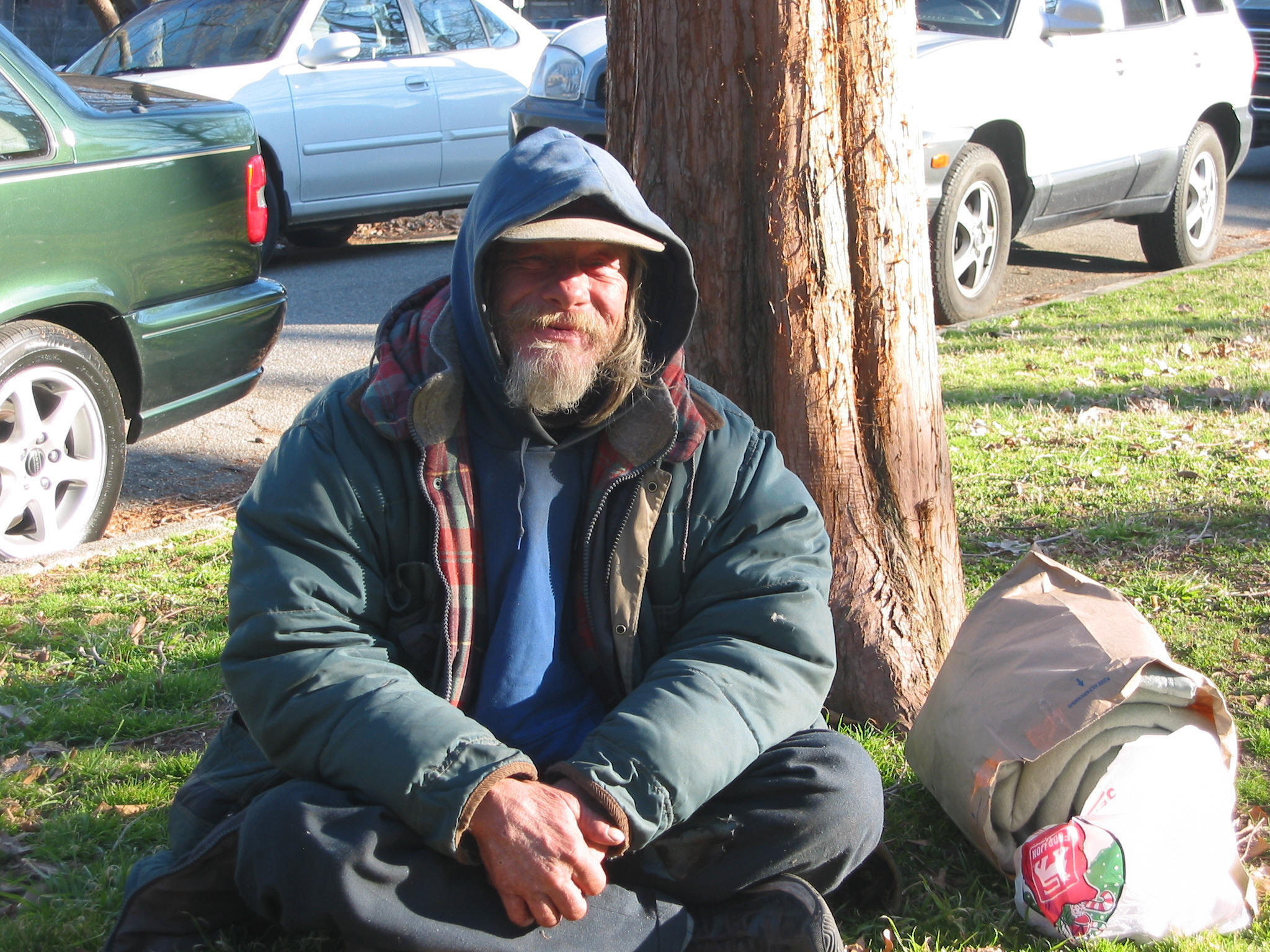
I worked for a year with homeless families. As I worked with them, I found myself learning from their stories, and from their determination to make a better life for their children. Working with the homeless is like throwing starfish back into the sea. Some might make it and others won’t. There are dark days, days when you feel overwhelmed by the sheer numbers of those who need your help. By focusing on what you CAN do, you hope to make a difference, even in the life of just THIS family, or that child.
We need to ask ourselves, those of us who live in abundance, how can we receive this blessing, the blessing of working with and/or giving to the poor? Is there a food closet that needs your donations and your weekly volunteer effort? Is there a mosque or church that uses volunteers to serve a daily meal to the poorest of the poor? Is there a sandwich delivery to the street poor? Is the Salvation Army active in your area? Are there decent clothes in your closet which you have outgrown? Are there pillows or blankets you could donate to Operation Hope Kuwait? How can you serve the poor? How can you receive this blessing?
Donations of your time, your energy, your vision will not only be a small contribution towards improving the world one small act at a time, it will also lessen the soul-deadening impact of poverty, it will be a blessing to YOU. Working together, people can make a difference. You can make a difference in the life of the poor. You can make a difference, by serving, in your own life.
Q8 Geek Updates Submissions
Here’s the spirit! Q8Geek submitted some brand new photos trying to capture the Great Kuwait Sunset Challenge bragging rights:
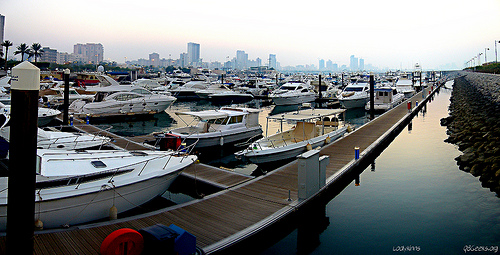

I really love the way he has the Kuwait skyline in the background, and the way the foreground swoops! One tiny little flaw, and it’s just a personal thing . . . streetlights. AAARRGH!
You Be the Judge – Hilaliya
My good friend Amer bashfully submitted some sunset shots, saying that they aren’t as good as some he had already seen posted. I wasn’t expecting much. When I opened them, I gasped!
Look at those clouds! How often do you see cloud action like that at sunset in Kuwait? Most of the sunset photos I see are the sun going down in a thick haze – sometimes a yellow haze, sometimes a ferocious red haze – but these! Well, you be the judge:



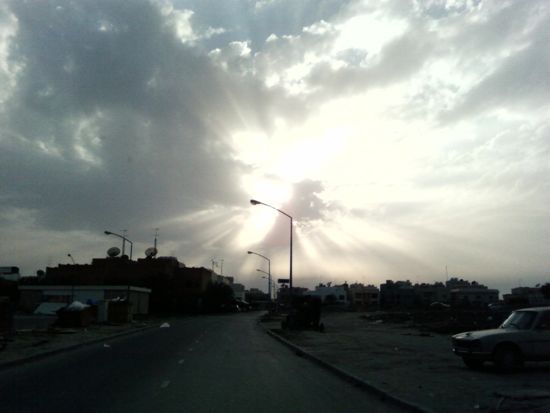
Aren’t they fabulous? Wooo Hoooo, Hilaliya!
For Expats: Understanding Kuwait Issues
I am reprinting this entire article from today’s Arab Times because it covers so much ground and gives those of us with little understanding of Kuwait issues a lot of background. It is an interview done with Osama Al-Sayegh, head of the Ja’ffery Department at Kuwait Awqaf Public Foundation.
Sectarian animosity between Shias and Sunnis in the region had mellowed down since the beginning of the last century, but has been revived following the Iran-Iraq war in the 80’s. Though the sectarian feelings are not allowed to override national sentiments in Kuwait, the fires burning in our close neighborhood could spread into our country. Osama Al-Sayegh, head of the Ja’ffery Department at Kuwait Awqaf Public Foundation, was sharing some of the deep concerns of his community in Kuwait with the Arab Times, alongside putting the community’s spiritual and political relations with Iran in the right perspective.
Q: Elections took place, and some months have gone by since the new government and Parliament took office. How do you assess the situation in Kuwait?
A: From my point of view, Kuwait has been affected by the meltdown in the US economy, and the worldwide repercussions because of it. Most of the countries are affected by this turn of events, and Kuwait cannot be isolated.
Probably, as of now it is not that bad, but in future Kuwait will also be hit hard, I fear. The price of oil is coming down, as consumers around the world are beginning to rationalize their consumption, while inflation is still high. These factors will affect the people of Kuwait, creating a financial squeeze, which in turn will have political fallouts.
Q: What do you think about the composition of the new Parliament and the cabinet? Are they efficient enough to tackle these crises?
A: That’s a real problem in Kuwait. While all these crises are looming large over Kuwait, our Parliament members seem too apathetic, and are only worried about grinding their personal axes. Each member has a set of personal agendas divorced from national interests, which he tries to fulfill using his office. This attitude is inimical to the country.
Q: Do you think this situation is peculiar to the current Parliament only, or has it been the trend of the Parliament for long?
A: The situation has become so worse only in the last 15 years. Before that we had good government and parliamentarians who worked for national interest. The results were palpable in the health and educational sectors. However, now it seems there is a disjuncture between the Parliament and the cabinet, and so even if the latter come up with a good vision, the MPs don’t give due support. Sometimes, it seems to me that both the government and the Parliament are in cahoots with each other in scuttling good projects for the nation. Finally, it’s the people who are suffering from all these petty politics.
Q: One common reason ascribed to this lack of cooperation between the executive and legislative bodies in Kuwait is sectarian division. How strong is the Shia-Sunni division in politics?
A: The division between Shias and Sunnis dates back to 1400 years. And the rivalry had been acerbic through out the centuries. However, towards the beginning of the last century, the lines had blurred and the intensity of the differences had waned between the two sects. But with the coming of the Iranian revolution in the late 70’s and the ensuing Iran-Iraq war, the clock has been turned back, and the sectarian spirit among people in the Middle East has been revived.
Now, in that context, Kuwait is a tiny country wedged between a Shiite Iran, a Sunni Saudi Arabia and a mixed Iraq, where an intense battle is raging still, with a marked sectarian perspective. We shall be very careful, as the fire in our neighborhood can spread to us also. And going by the size of our country, even a minor spark can burn down the nation.
We have to focus on factors that unite the two sects and stay away from getting deep into our differences. The basics are all the same between us. Our God is Allah, our Prophet is Mohammed (PBUH), our book is the Holy Quran and our Qibla (the direction of prayer) is the Kabah. Other peripheral things have to be kept on the sidelines.
We have to understand that we are a very small country, and we shouldn’t let petty sectarianism destroy our social fabric. We have only our country, and we shall preserve it in our best interest.
Q: How alive are these sectarian tendencies in Kuwait?
A: As I said things were quite normal until the late 70’s. When the revolution swept through Iran, the government of Kuwait feared that the revolution might get imported into Kuwait through sectarian influences. And therefore to counterbalance Shias in the society, the government allowed Sunni foreign nationals to immigrate into Kuwait. However, some of these new immigrants came from very fundamentalist schools of thought. In reaction to these events some Shias in Kuwait took to extreme ideologies, giving rise to sectarian tensions in the society. Fanatical groups in both these sects are only a small minority and not mainstream. Yet, in a small country like Kuwait, it is enough to start a communal conflagration.
We have to understand that Islam is a religion of peace. Its fundamental aim is peace, and there is no force in religion. Yes, there are principles and practices, which we believe have to be followed and adhered to. For example issues like segregation in educational institutions and so on … we believe these have to be followed, but we should not force them on anyone. These have to be abided out of one’s own will.
Q: The government of Kuwait once feared that Iran might influence Shias in Kuwait, and we see such ideas still current in the society at least when some MPs make veiled statements of Shiite politicians taking orders from their “foreign masters.” What’s the truth of the matter?
A: This is not true, because Shias here are Arabs and not Persians. Our Arab identities are very strong. Similarly, it is also wrong to accuse Sunni MPs of loyalty to Saudi Arabia.
Q: The question of loyalty is an important issue in all societies which have minority communities in them on the basis of nationality, ethnicity or religion. During World War II, Japanese in America were targeted; similarly Muslims in India often face charges of being loyal to Pakistan. So, it is only natural that such questions of belongingness are also faced by Shias in Kuwait. Your comments.
A: Yes, there may be one or two misguided currents, like in all communities, who may have wrong ideas of allegiance and patriotism. However, this is only a very insignificant fringe that wields no influence over the mainstream community in any terms. But for such minor aberrations, the rest of the community is very clear and proud about its Kuwaiti identity. This is our soil and our roots are here, and we belong here and our allegiance is only to this country.
Q: Generally speaking, what is the Kuwaiti identity? Is there such a strong national identity in Kuwait that is free from any religious or sectarian taint?
A: Yes. There is a strong national identity. But this is not something we wear on our sleeves and strut around. We live our normal lives, but whenever there is a crisis we unite as one. For example, look what happened during the invasion. All Kuwaitis, from wherever they were, fought in their own ways for our freedom. It was this collective will and ambition that got us our freedom.
Q: Spiritually do you look up to Iran in any way? Are the Fatwas passed by Ayatollahs applicable to you also?
A: No. May be such things happen in Lebanon, where the Shiite community looks to Iran or Syria for support. But here in Kuwait, we have a very strong sense of national identity and we act as Kuwaitis at times of crisis.
Q: I was referring to spiritual matters, not political. For example, when Ayatollah Khomeini passed a Fatwa demanding the death of Salman Rushdie for authoring the controversial book “Satanic Verses” demeaning Islam’s Prophet (PBUH), did Shias here feel that it was a universal call and accept it as binding on them as well?
A: There were many Fatwas regarding Salman Rushdie that came from Iran and Saudi Arabia. But Kuwait’s mainstream community, be it Sunnis or Shias, were not affected by those Fatwas. Yes, there might have been a small group in both communities who might have been very emotionally moved by those Fatwas and even wanted to act on it. But by and large, Kuwaitis did not react to these Fatwas.
Q: What do you think of tribal primaries, especially those that have a strongly sectarian character?
A: The law should be strictly implemented to stop such tribal primaries. This is a very unhealthy practice and can hurt the very fundamental objectives of democracy. It violates the fundamental rights of the people to elect their representative, as primaries preempt elections and decide winners beforehand. So I am strongly against primaries.
Q: Will political parties help the situation in any way, because then you will have people grouping under parties based on larger manifestoes?
A: May be yes. But we have to make sure the country is ready for such a transformation. Otherwise, we may not be able to realize the benefits of change.
Q: Is the presence of such a large number of Islamists in the Parliament positive for the nation or is it negative?
A: Going by the current trend, it is negative. However, I attach this negativism not to their ideologies, but their greed and manipulation of ideologies for personal ends. From history we know that all major conflicts happen when religion is exploited by opportunists. Religion, be it Islam, Christianity or any other religion for that matter, is never the actual cause behind conflicts.
Q: Islamists are clamoring to make Sharia the only source of law in Kuwait. Do you agree with them?
A: Sharia is indeed the best source of legislation. But before enforcing it, we should have pure intentions and we should raise ourselves to those high standards instigated by Sharia. But with our tainted lawmakers it is impossible to apply true Sharia, and so I don’t go for it currently.
Q: But Islamically speaking is that the correct approach, because as against God’s law you are asking for man-made laws?
A: Of course God’s law is most superior. But how to apply this law in our lives is the question, and there are differences of opinion.
Q: Does the Awqaf have any strategy for the right application of Sharia?
A: The Awqaf deals not with matters of legislation. We are focused on charitable works and on social issues, such as raising the standard of education and healthcare in Kuwait and tackling unemployment and so on.
Q: You seem to be adopting a very soft stance even in matters of religion, for example, while you were talking about segregation you said it should not be enforced but only offered as a choice. Are you taking religion too lightly?
A: See, the religion is very clear; there are ‘do’s’ and ‘don’ts’ that have been spelt out very clearly. Basic principles of religion such as the ban on drinking, where there is consensus, have to be enforced. But in matters where there are differences of opinion, and where we engage with other people as humans, we have to be soft. We should not think ourselves morally superior to judge others; it is only Allah who has the right to judge humans, because only he knows what is in their hearts.
Q: Is this your personal stance, or is this the general stance of all Shias in such matters?
A: This is the general stance of Shias. That’s why here in Awqaf, it is customary for us to pay visits to centers of other people’s faiths. We went to Vatican and visited Pope Benedict XVI.
I believe there is much to learn from each other. The Vatican church is known for its charities all over the world across religious or ethnic divides. For example, Christian charities worth millions of dollars poured into disaster areas like Indonesia during Tsunami, Iran during the Bam earthquake or Lebanon during the recent war, and so on. Though the motive behind these charities is often alleged to be religious conversion, we cannot deny the fact that those acts of kindness draw sympathy towards the Christian faith.
Though we don’t believe in such conversions, acts of charities like these will definitely help in breaking the ice with other communities and making them open to the message of Islam.
Q: How do you, given your sectarian orientations, look at broader international issues related to Iran such as the country’s nuclear ambitions and its standoff with the US?
A: This is a political issue. Iran claims that it requires nuclear energy for civilian purposes, while America alleges that Iran has ulterior motives of building nuclear weaponry. And sitting here we can’t be sure who is lying. May be both parties are lying.
Q: Both parties are lying. Can you explain more?
A: What I mean is that when politics is involved, religious principles are sidelined. Do you know that Iran gives financial aid to al-Qaeda though they are ideologically opposed to Iran?
Iran has also supplied money to Taleban, who are antagonistic to Shias and have even conducted targeted killings of Shias in Afghanistan. So all this is politics. The current government of Iraq comprises more of Shias, and logically speaking Iran should be supporting this government. But they are against Iraq’s government because of political reasons. So, in most cases, politics takes precedent over religion, and the political equations are often too complicated to be made sense out of.
Q: How do you look at Hezbollah?
A: The only group that is sincere to the cause that they set out to accomplish in the Arab world is the Hezbollah, at least as of now. Every other organization has veered off from its main objectives.
While all the mighty Arab nations are keeping mum over Israel’s illegal occupation of Palestine, only Hezbollah has been offering a stiff resistance, despite the smallness of their means as against a mighty power like Israel — we shall bear in mind that Hezbollah is not even a nation, they are only a small group, and in the recent war broke the myth of Israel’s invincibility.
Q: Moughniya was a controversial figure in Kuwait for his alleged connections with Hezbollah and a hijack drama many years ago. When he died there were new controversies raised when some MPs hailed him as a martyr and extolled his virtues during his funeral. Is Moughniya the victim of a slur campaign because he belonged to the minority community?
A: The greatest tragedy regarding Moughniya is that his story is shrouded in mystery and people have never been given a clear picture of what he actually was. The government is to be blamed for this, and this led to mixed opinions with some lionizing him and some demonizing him.
Until now there has not been any clear verdict on him. Nobody knows whether he is guilty or not. If he is guilty, he should have been punished, or if he is innocent, he should be cleared of all charges and acquitted. Neither of this has happened in clear terms.
Q: So do you think it is a crime to praise a person whose credentials are in doubt? The MPs were only expressing their opinion on an issue that lies in the grey area. Do you think it’s proper to incriminate them for that?
A: It is not about expressing opinions. As members of the Parliament, these two MPs should have shown greater discretion in indulging in controversies that rake up sectarian turmoil. Sentiments of the people should also be taken into consideration, especially while involving in deeply controversial issues such as these, where much of the truth lies in the realm of the unknown.
Q: Are you scared this could spill into Kuwait also?
A: Yes, the fire is very close by. It can easily spread. It would only take a small band of misguided youth to spark off a conflagration. There are extremists on both sides, who are of course small in number, but Kuwait is a small country and even such ragtag groups are enough to upset the harmony of our nation.
Q: Is Kuwait sitting on a time bomb? Can there be an outbreak of a sectarian violence any time?
A: No, no. The situation is very much under control. The government is doing an extremely good job on that front. They are acting prudently, and making sure no community is made to feel deprived of justice. Whenever there are any communal embers flaring, they put it off with iron hands, and do not allow such things to spread.
Q: What in your opinion are the priorities of the government?
A: I think Kuwait should focus on education and health. We shall think of improving our infrastructure and manpower in the health sector, so that we wouldn’t have to spend millions of dinars in sending our patients to Europe or America for better treatment. Let’s bring experts from outside, I think even that will work out much cheaper.
By Valiya S. Sajjad
Arab Times Staff
No Kuwaitization for Ministry of Public Works?
When I saw this article in this morning’s Al Watan I thought about garbage trucks. In Seattle, when I was there last summer, the garbage trucks seemed to be run mainly by great big East Europeans. I also thought of how in some big cities, the people who own the garbage removal contracts are making a fortune. Everyone has to start somewhere!
Municipality wants out of Kuwaitization
Al Watan staff
KUWAIT: Minister of Public Works and Minister of State for Municipal Affairs Dr. Fadhil Safar has formally asked the Civil Service Commission to exempt Kuwait Municipality from the Kuwaitization policy which has been enacted to replace nonـKuwaiti employees in the public sector with citizens.
The request was reportedly contained in a letter the minister addressed to the Head of the Civil Service Commission Abdulaziz AlـZebin.
It has been gathered that the minister asked the commission to exempt the municipality from the Kuwaitization policy for at least two years starting from 2009 – ـ2011 during which the local labor force can be sufficiently trained.
He went on to say that the municipality has terminated the contracts of at least 500 nonـKuwaitis, which has had an adverse impact on the overall performance of the municipality.
Minister Safar underscored that the municipality”s work involves tasks which citizens are not interested in taking over.
Happy (Canadian) Thanksgiving
Tomorrow is the official Canadian Thanksgiving, although our Canadian friends have been partying and dining in splendor throughout the weekend. If you have any Canadian friends, be sure to greet them on their special holiday.
Wikipedia says:
Thanksgiving, or Thanksgiving Day (Canadian French: Action de grâce), is an annual one-day holiday to give thanks to God for the things one has at the close of the harvest season. The holiday is celebrated on the second Monday in October.
While the actual Thanksgiving holiday is on a Monday, Canadians might eat their Thanksgiving meal on any day of the three day weekend. Thanksgiving is often celebrated with family, it is also often a time for weekend getaways for couples to observe the autumn leaves, spend one last weekend at the cottage, or participate in various outdoor activities such as hiking, fishing, and hunting.
I saw several references to the Canadian Thanksgiving deriving from the American Thanksgiving, but Wikipedia says otherwise:
The history of Thanksgiving in Canada goes back to an explorer, Martin Frobisher, who had been trying to find a northern passage to the Orient. In the year 1578, he held a formal ceremony, in what is now the province of Newfoundland and Labrador, to give thanks for surviving the long journey.
This feast is considered by many to be the first Thanksgiving celebration in North America, although celebrating the harvest and giving thanks for a successful bounty of crops had been a long-standing tradition throughout North America by various First Nations and Native American groups. First Nations and Native Americans throughout the Americas, including the Pueblo, Cherokee, Cree and many others organized harvest festivals, ceremonial dances, and other celebrations of thanks for centuries before the arrival of Europeans in North America [2]. Frobisher was later knighted and had an inlet of the Atlantic Ocean in northern Canada named after him — Frobisher Bay.
At the same time, French settlers, having crossed the ocean and arrived in Canada with explorer Samuel de Champlain, also held huge feasts of thanks. They even formed ‘The Order of Good Cheer’ and gladly shared their food with their First Nations neighbours.
The centerpiece of the Canadian Thanksgiving is the turkey and stuffing, surrounded by dishes made of root vegetables and gourds – beets, turnips, pumpkin, squashes, etc.
Those Canadians with French roots add special dishes to the mix:
Tortiere (a fabulous meat pie)

Maple Syrup Pie

I grabbed these photos from a fabulous Quebec blogger page where she has included recipes for the above, and for many other Canadian specialties. I wish One Whole Clove were still blogging. In the meanwhile, visit her pages for some delicious and out-of-the-ordinary delights.
Wishing all of our Canadian friends a delicious and delightful Thanksgiving, with many many blessings for which to be thankful, and for an abundant year to come.
Pollution Invading Kuwait Hospitals
Thanks to long time Kuwaiti-blogger Hilaliya who alerts us to this article from Al Watan.
Americans put this same granite in their kitchens, and are now paying to have their beautiful granite countertops radon tested – and pulled out. Imagine preparing food on countertops that emit radiation! Imagine inviting patients into a hospital emitting radiation! Some granites emit more radiation than others – these need to be radon tested.
Pollution is invading our hospitals
Dr. Essam Abdullatif AlـFulaij
It seems that we need an uprising at the Ministry of Health. Patients as well as doctors and staff are at risk because of the use of inappropriate construction materials which cause pollution. Despite the warnings of some engineers, the officials at the ministry neglected the issue and concealed the facts so as not to get involved.
In August 2008, Amar magazine published a report by engineer Fotouh AlـAsfour in which she strenuously rang the alarm over what is happening at our hospitals. She submitted the report to two former health ministers and the Ministry of Health”s Engineering Department, members of the Municipal Council and the Parliament but no action was taken.
In her report, Fotouh said: “Having designed and supervised the construction of hospitals and medical centers for the health sector, I know the standards and specifications for materials used in hospitals to protect patients, visitors and hospital staff from microbial contamination. The project to renew hospitals, which began several years ago, has largely contributed to the deterioration of health conditions of both citizens and residents and the mortality rate has increased due to the high level of pollution caused by microbial contaminated materials that were used in the modernization of these hospitals in the absence of proper guidance and control.”
She added: “The use of granite in hospitals is not recommend at all as it is the second biggest cause of lung cancer after smoking, as reported by the American Lung Association. Granite radiates “radon gas” and its impact is worse when using the kind produced by China. It is really strange that granite has been used to decorate the entrance and most wings at the Hussein Makki Jumaa Center for Cancer Treatment.”
Engineer Fotouh stressed the importance of urgent attention saying: “In conclusion, the main reason behind writing this report is not criticism or accusation, but to attract officials” attention to urgently deal with the issue. Reform is not costly and should not be postponed, because the price of further delay is the loss of more lives. A specialized committee must be formed to follow up the issue and replace these materials with medical materials, especially in the Operating Rooms, Intensive Care Units and premature babies wards, causalities, and then in other awards.”
We hope that the report will be considered by officials to protect our patients and hospital staff. It”s time to stop these deadly dangers that are even affecting doctors. The lives of human beings are precious.
Last updated on Friday 10/10/2008
Great Kuwait Sunset Challenge Deadline
So here is how it is going to work. I am going to give you this one last weekend and one last week to come up with your sunset photo. Bu Yousef, AbdulAziz and Someday have shown us that yes, it is possible to find a sunset in Kuwait without streetlights and electrical wires, even a sunset over the water.
I haven’t seen a sunset behind a mosque, or behind one of the fabulous dhows or . . . Liberation Tower, Kuwait Towers. There are still a lot of options out there, and you have ONE WEEK. One week, today, I will post a series of photos narrowed down – some have already been disqualified, because although they were beautiful, they were not Kuwait.
YOU will vote. For one week, bloggers and commenters can vote. Together, we will choose the one we think wins the Great Kuwait Sunset Challenge.
(I already know what the next challenge is going to be. 🙂 )
Millions Lost Trillions
I used to finish my assignements early in grade school. Mostly I always had a book with me to read, but one teacher challenged me to write all the numbers to 1 million.
“Piece of cake” I thought. (Arrogant little brat!)
I learned my lesson. It took me forever. I wouldn’t give up, and I filled sheets and sheets of paper with numbers, all the way to one million.
It’s a lesson I won’t forget.
But a billion? A trillion? Those are numbers that boggle my mind. I can’t think that big.
So far, the losses are mostly on paper – they won’t be real losses until investors go to sell, or cash in.
It’s a huge demographic, the baby-boomers getting ready to retire – or as this article from the Washington Post states – maybe not so fast:
Retirement Savings Lose $2 Trillion in 15 Months
By Nancy Trejos
Washington Post Staff Writer
Wednesday, October 8, 2008; Page A01
The stock market’s prolonged tumble has wiped out about $2 trillion in Americans’ retirement savings in the past 15 months, a blow that could force workers to stay on the job longer than planned, rein in spending and possibly further stall an economy reliant on consumer dollars, Congress’s top budget analyst said yesterday.
For many Americans, pensions and 401(k) plans are their only form of savings. The dwindling of these assets — about a 20 percent decline overall — is another setback just as many people are grappling with higher gas and food prices, more credit card debt, declining home values and less access to loans.
You can read the entire article in the Washington Post, here.
Recent Comments
tigerbutterya0c5ff1d… on “Who Would Do Such a… intlxpatr on A Lawless, Authoritarian … Kuwait Someday on A Lawless, Authoritarian … intlxpatr on Oh Thank You, Amazon! Rivergirl on Oh Thank You, Amazon! Wikipedia Donate Button

Amazina


Early Voting in Florida


 Here There and Everywhere