Kuwait Media Legislation Harms Standing in Transparency?
When I lived in Kuwait, many reporters self-censored, but there was still a lively – and, in relative terms, relative to the rest of the Gulf, free press. The Kuwait Legislature is going loony tunes with this proposed legislation. This, from the Kuwait Times:
Media draft law under fire for stiff penalties
KUWAIT: Former opposition MPs, writers, journalists and activists have strongly lashed out at a new media draft law that stipulates unprecedented hefty penalties against violators. The new draft law was approved earlier this week by the Cabinet but must pass the National Assembly to be effective. The 99-article draft law stipulates a 10 year sentence for insulting the Almighty, prophets, companions, relatives and wives of Prophet Muhammad (PBUH). It also stipulates a fine of between KD 50,000 and KD 300,000 for those convicted of insulting the Amir.
The draft law gives the Information Ministry the right to shut down with an administrative decision any publication for up to three years even without a court ruling, a key article in the current law. Former liberal opposition MP Abdulrahman Al-Anjari described the draft legislation as a “stigma” for the government which is “suffering from psychological disorders”. Former MP Obaid Al-Wasmi described it as the “capital punishment law” while former MP Jamaan Al-Harbash said it belongs to the old ages and will send too many people to jail.
Meanwhile, the criminal court yesterday issued a two-year jail term against opposition tweeter Hijab Al-Hajeri for writing tweets deemed offensive to HH the Amir in yet another verdict targeting activists. But the court asked the convict to pay a bail of KD 100 to suspend the implementation of the imprisonment until the appeals court issues its verdict on the case. Like several opposition tweeters, Hajeri was charged of insulting the Amir and undermining his status. Several tweeters and former opposition MPs have been handed several years in prison over the same charge and some of them have been sent to jail.
In another case, the criminal court postponed the case of Al-Youm Television to May 8. Two announcers for the pro-opposition station, its chairman and a director are facing charges of violating the law by reading a statement issued by the opposition several weeks ago. Another court also set May 1 as the date to issue its verdict on opposition tweeter Abdulaziz Al-Mutairi on charges of insulting the Amir.
In a related development, the public prosecution released well-known Islamist thinker and university professor Abdullah Al-Nafisi on a KD 5,000 bail after interrogating him on accusations of threatening national unity. Nafisi had reportedly undermined Shiites at a diwaniya meeting about two weeks ago which was held to highlight the dangers Iran was posing against the Gulf states including Kuwait. During the speech, Nafisi was cited as saying that some of the 17 Shiite MPs in the Assembly have links with Iran and claimed that one of them had taken part in a suicide car bombing on the life of the late former Amir Sheikh Jaber Al-Ahmad Al-Sabah in May 1985. He also claimed that another MP was involved in the hijacking of a Kuwaiti passenger plane in 1988 that was blamed on Shiite militias.
Meanwhile, Islamist MP Hamed Al-Dossari called yesterday on the ministries of interior and foreign affairs to follow the footsteps of Bahrain and treat the Lebanese Shiite militia Hezbollah as a terrorist organisation. He also charged that Iran has ambitions in the Gulf and is inciting discord in Bahrain and the rest of the Gulf Arab states.
By B Izzak, Staff Writer
Pierre Teilhard de Chardin
Today in our Lectionary, the church honors Pierre Tielhard do Chardin, a man who thought about God and the nature of the world and tried to figure out a logical explanation for the state of the world. He was condemned by the church for some of this thoughts, which were not in line with Catholic dogma. I’ve always thought that people who, like the Apostle Thomas, need to seek an explanation and need to see the evidence, are at pondering God and his ways, and in my mind, God must dance with joy – or with amusement – to be so pondered.
PRAYER
Eternal God, the whole cosmos sings of your glory, from the dividing of a single cell to the vast expanse of interstellar space: We bless you for your theologian and scientist Pierre Teilhard de Chardin, who perceived the divine in the evolving creation. Enable us to become faithful stewards of your divine works and heirs of your eternal kingdom; through Jesus Christ, the firstborn of all creation, who with you and the Holy Spirit lives and reigns, one God, for ever and ever. Amen.

PIERRE TEILHARD DE CHARDIN
SCIENTIST AND MILITARY CHAPLAIN, 1955
Pierre Teilhard de Chardin (May 1, 1881 – April 10, 1955) was a French philosopher and Jesuit priest who trained as a paleontologist and geologist and took part in the discovery of Peking Man. His theological and philosophical works came into conflict with the Catholic Church and several of his books were censured.
Pierre Teilhard de Chardin was born in Orcines, close to Clermont-Ferrand, in France on May 1, 1881. When he was 12, he went to the Jesuit college of Mongré, in Villefranche-sur-Saône, where he completed baccalaureates of philosophy and mathematics. Then, in 1899, he entered the Jesuit novitiate at Aix-en-Provence where he began a philosophical, theological and spiritual career. Teilhard studied theology in Hastings, in Sussex (UK), from 1908 to 1912. There he synthesized his scientific, philosophical and theological knowledge in the light of evolution. From 1912 to 1914, Teilhard worked in the paleontology laboratory of the Musée National d’Histoire Naturelle, in Paris, studying the mammals of the middle Tertiary period.
Mobilised in December 1914, Teilhard served in World War I as a stretcher-bearer in the 8th Moroccan Rifles. For his valour, he received several citations including the Médaille militaire and the Legion of Honour.
In 1923 he traveled to China with Father Emile Licent, who was in charge in Tianjin of a laboratory collaborating with the Natural History Museum in Paris. Licent carried out considerable basic work in connection with missionaries who accumulated observations of a scientific nature in their spare time. Teilhard would remain there more or less twenty years. From 1926 to 1935, Teilhard made five geological research expeditions in China. They enabled him to establish a first general geological map of China. He joined the ongoing excavations of the Peking Man Site at Zhoukoudian as an advisor in 1926 and continued in the role for the Cenozoic Research Laboratory of the Geological Survey of China following its founding in 1928. During this tima and after, he also made a great number of travels throughout the world, studying and lecturing.
Teilhard died on April 10, 1955 in New York City, where he was in residence at the Jesuit church of St Ignatius of Loyola. He is buried on what is now the grounds of the Culinary Institute of America, in Poughkeepsie, NY.
In 1925, Teilhard was ordered by the Jesuit Superior General Vladimir Ledochowski to leave his teaching position in France and to sign a statement withdrawing his controversial statements regarding the doctrine of original sin. Rather than leave the Jesuit order, Teilhard signed the statement and left for China. This was the first of a series of condemnations by certain ecclesiastical officials that would continue until long after Teilhard’s death. The climax of these condemnations was a 1962 monitum (reprimand) of the Holy Office denouncing his works. It states:
“The above-mentioned works abound in such ambiguities and indeed even serious errors, as to offend Catholic doctrine… For this reason, the most eminent and most revered Fathers of the Holy Office exhort all Ordinaries as well as the superiors of Religious institutes, rectors of seminaries and presidents of universities, effectively to protect the minds, particularly of the youth, against the dangers presented by the works of Fr. Teilhard de Chardin and of his followers.”.
Teilhard’s writings, though, continued to circulate — not publicly, as he and the Jesuits observed their commitments to obedience, but in mimeographs that were circulated only privately, within the Jesuits, among theologians and scholars for discussion, debate and criticism. As time passed, it seemed that the works of Teilhard were gradually becoming viewed more favourably within the Church. However, the 1962 statement remains official Church policy to this day.
In his posthumously published book, The Phenomenon of Man, Teilhard writes of the unfolding of the material cosmos, from primordial particles to the development of life, human beings and the noosphere, and finally to his vision of the Omega Point in the future, which is “pulling” all creation towards it. He was a leading proponent of orthogenesis, the idea that evolution occurs in a directional, goal driven way, argued in terms that today go under the banner of convergent evolution. Teilhard argued in Darwinian terms with respect to biology, and supported the synthetic model of evolution, but argued in Lamarckian terms for the development of culture, primarily through the vehicle of education.
Teilhard makes sense of the universe by its evolutionary process. He interprets complexity as the axis of evolution of matter into a geosphere, a biosphere, into consciousness (in man,) and then to supreme consciousness (the Omega Point.)
Teilhard himself claimed his work to be phenomenology. Teilhard studied what he called the rise of spirit, or evolution of consciousness, in the universe. He believed it to be observable and verifiable in a simple law he called the Law of Complexity / Consciousness. This law simply states that there is an inherent compulsion in matter to arrange itself in more complex groupings, exhibiting higher levels of consciousness. The more complex the matter, the more conscious it is. Teilhard proposed that this is a better way to describe the evolution of life on earth, rather than Herbert Spencer’s “survival of the fittest.” The universe, he argued, strives towards higher consciousness, and does so by arranging itself into more complex structures.
Teilhard here proposed another level of consciousness, to which human beings belong, because of their cognitive ability; i.e. their ability to ‘think’, and to set things to purpose. Human beings, Teilhard argued, represent the layer of consciousness which has “folded back in upon itself”, and has become self-conscious. So in addition to the geosphere and the biosphere, Teilhard posited another sphere, which is the realm of human beings, the realm of reflective thought: the noosphere. The noosphere has been compared to C. G. Jung’s theory of the collective unconscious.
Finally, the keystone to his phenomenology is that because Teilhard could not explain why the universe would move in the direction of more complex arrangements and higher consciousness, he postulated that there must exist ahead of the moving universe, and pulling it along, a higher pole of supreme consciousness, which he called Omega Point.
Teilhard re-interpreted many disciplines, including theology, sociology, metaphysics, around this understanding of the universe. A main focus of his was to re-assure the converging mass of humanity not to despair, but to trust the evolution of consciousness as it rises through them.
The Prophet Jeremiah Ponders the Ways of the Wicked
Today the prophet Jeremiah sounds like a modern man – asking why, when we know what is good and what is bad, that some choose bad, and seem to do just fine – even better than the rest of us?
From the Holy Week readings in The Lectionary:
Jeremiah 12:1-16
12You will be in the right, O Lord,
when I lay charges against you;
but let me put my case to you.
Why does the way of the guilty prosper?
Why do all who are treacherous thrive?
2 You plant them, and they take root;
they grow and bring forth fruit;
you are near in their mouths
yet far from their hearts.
3 But you, O Lord, know me;
You see me and test me—my heart is with you.
Pull them out like sheep for the slaughter,
and set them apart for the day of slaughter.
4 How long will the land mourn,
and the grass of every field wither?
For the wickedness of those who live in it
the animals and the birds are swept away,
and because people said, ‘He is blind to our ways.’*
Mobile Museum of Art
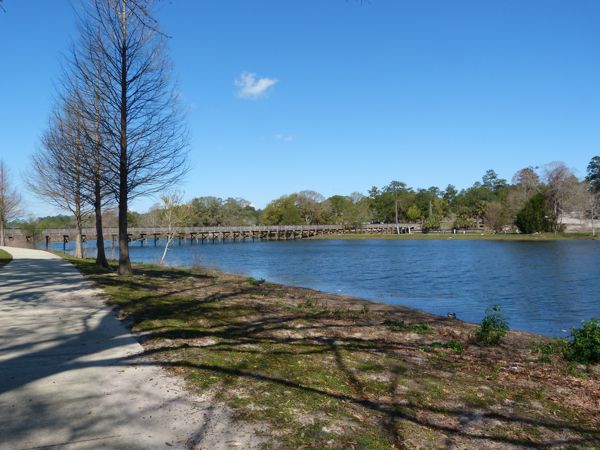
We were so efficient at the Mobile Botanical Garden that we had plenty of time to hit the nearby Mobile Museum of Art. Actually, we loved the whole park area; there is the Botanical Garden, the Museum of Art, also walking paths, a huge water . . . something, it might be a river or a large lake with a dam in it, I don’t know what it is, but it is a large amount of water. There are athletic fields and even some offices, not large office buildings but some smaller outlying kinds of state or county offices. It’s a nice park, it has a nice feeling, a lot going on.
It doesn’t hurt that it is one of the prettiest days of the year, not hot, not humid, and no mosquitos!



I love it that not all the art is inside the building. There is statuary outside, along the walking path, and this huge made-from-found-objects butterfly at the entrance. It is wonderful. As you enter the museum, looking through miles of glass out through trees at the water, you immediately think “what a place for an event!” thinking wedding, reception, small chamber group performance, etc. Truly beautiful spaces; I would show you but they have a really strict policy about photographing inside the building, so I didn’t.
They have some surprising pieces, surprisingly good for a small museum. They have some very odd pieces, par for the course in a small museum. They have an amazing art glass collection, beautifully displayed in a room with gorgeous natural light that allows each piece to shine. They had an exquisite visiting exhibit based on a Vietnamese classic, with intricate, ethereal pieces.
Too much to take in on one visit! I think our favorite piece in the exhibit were some gorgeous silvery angel wings on a wall near the gallery entrance on the top floor. When you get closer to the exhibit, you see it really, REALLY is silvery – it is silver spoons! The bowls of the spoons form the outer part of the feathers, hundreds of spoons, and the base of the spoon the lower part. It is whimsical and surprising, and made me whoop a little (trying to be respectful in a museum 🙂 ) with delight. We are eager to go back and to take our little grandson, as he gains in ability to focus his attention 🙂

Driving Directions From I-65
From I-65, take the Springhill Avenue Exit (Exit 5) and head west on Springhill Avenue. Go approximately 1 1/2 miles and turn left on John D. New Street (traffic signal). Take an immediate right onto Museum Drive. The Museum is the first building on the right.

Native Cafe at Pensacola Beach

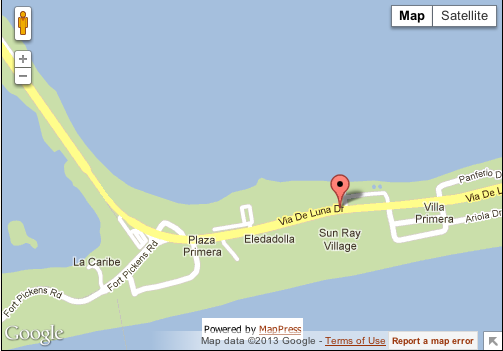
Just when we think we know all the restaurants in town, Urban Spoon comes up with a Pensacola restaurant we didn’t even know existed. It’s getting a big buzz, too, listed as one of the most talked about restaurants in Pensacola. Hoping it is too early for the Spring Break crowd, we head for the Native Cafe after early church. OOps!Too late! And it’s not the spring breakers, at least I don’t think so, these look like locals.
We wait for maybe thirty minutes on one of the sweetest Sundays of the year, not too hot, not too cold, a tiny bit breezy – perfect beach day, and we don’t mind at all sitting outside, waiting for a table or booth.
Once we’re in, we can see why people like it. It’s not so original as Andy’s Flour Power in Panama City Beach, but they have original art on the walls, a funky decor, and a LOT of customers.


We see a lot of huge breakfasts being delivered. The Crab Cake Benedict seems to be a big hit, all the platters look huge. People are digging right in and look happy. Service is quick and efficient.
AdventureMan has been dying for some Biscuits and Gravy. His favorite place for biscuits and gravy, Adonna’s, in downtown Pensacola on Palafox, no longer serves biscuits and gravy. He says these are pretty good!

The little Alaska girl who lives inside me wanted crab cakes, but not all the bread and sauce that comes with the Crab Cake Benedict, so I asked, and was able to order the appetizer Crab Cakes, which was perfect. It came with Remoulade Sauce – yummm.

LOL, you can see, as usual, I forgot to take a photo before I started eating. There were three complete crab cakes; just be glad I remembered when I did!
The food was good, but we probably won’t go back until October or so, when the tourist season dies down. The Native Cafe has been FOUND! Too many people, too long a waiting line. We have the luxury of being able to go when no one else is around except those of us who live here. (You can live here thirty or forty years and you are still not a local; local is people who grew up and went to school in Pensacola 🙂 )



Mobile Botanical Garden Plant Sale: Plantasia
AdventureMan and I had one of the sweetest days of the year – nice cool sunny morning, heading into a warm afternoon as we got up early to head over to the Mobile Botanical Gardens Annual Plant Sale.
They do a GREAT job. Starting with publicity, ads in the Pensacola News Journal and information sent out to all the regional gardening clubs and extension centers raising the level of awareness and creating a buzz. Everyone wants to go.

You get there, and parking is well organized and handy to the sales area. Signage is great – ENTER HERE! EXIT ONLY! PERRENIALS! ROSES! SHADE PLANTS! TREES! And great signs telling you how each plant is color coded and you know immediately what the price is:

Lots and lots of healthy looking plants. We knew what we wanted and found it quickly, except for the ones that were already sold out. Check-out was friendly – and fast. There was an exit strategy; people with large purchases could leave plants, drive into a pick up zone and have them loaded up. It was an amazingly efficient and well-run operation. Perfect weather, great selection of healthy plants, well-organized and efficient – it doesn’t get much better.
Well done, Mobile.
It’s Your Fault if You Assume You Are Safe: Indian Officials
Horrifying. Disgusting. At the very least, if you are an official and tourists are gang raped in your area, keep your mouth shut. If you must say something, tell the visitors how sorry you are this happened to them. Never, never, never suggest that they should have ASKED if they were safe, NEVER blame the victim for being in the wrong place at the wrong time. You just look really, really ignorant.
These crimes will keep happening as long as there is such a preference for male children that there are not enough mates for the males once they mature. They will keep happening as long as men are not taught, as children, that women are to be equally respected.
Swiss Gang Rape Victim, Husband Partially To Blame For Attack, Indian Officials Suggest
The Huffington Post | By Cavan Sieczkowski
Posted: 03/18/2013 12:13 pm EDT
Officials in India suggested that a Swiss tourist and her husband are partially to blame for an alleged attack and gang rape in a remote wooded area in Madhya Pradesh last week. They said the couple did not inquire about the safety of the region.
On Friday, a Swiss woman and her husband pitched a tent in a forest in Madhya Pradesh while on a three-month cycling excursion, according to the Associated Press. Around 9:30 p.m. a group of men attacked the couple, beat up the husband, tied him to a tree, gang raped the wife and robbed the pair, police said.
During a press conference on Sunday, police spokesperson Avnesh Kumar Budholiya suggested the tourists are partially to blame for the assault because they chose to travel that area without speaking to local police, the Independent reports.
“No one stops there,” Budholiya said. “Why did they choose that place? They were in the wrong place at the wrong time. They would have passed a police station on the way to the area they camped. They should have stopped and asked about places to sleep.”
Another official also appeared to place blame on the victim and her husband.
“The rape of the Swiss national is unfortunate but foreign travelers should inform the police about their movement so they can be provided with adequate protection,” said Umashankar Gupta, the Home Minister of Madhya Pradesh, according to The Times. “They often don’t follow the state’s rules.”
Madhya Pradesh reportedly has one of the highest rates of crimes against women in the country, a fact the Swiss tourists were unaware of, according to the Times of India.
“They apparently lost track and took a wrong turn and decided to halt for the night by the side of a village brook little realizing that the district with 85:100 men to women ratio is not the safest place for women,” a senior official from the region told the newspaper.
Six men have been arrested in connection with the most recent reported gang rape, CNN reports. The victim, who was hospitalized after the attack, claims four of the men raped her. The other two reportedly robbed her and her husband. All six appeared in court Monday.
The most recent attack comes just three months after a 23-year-old woman was gang raped and beaten on a public bus by five men in New Delhi. The defense lawyer for three of the accused placed some of the blame on the now-deceased victim, saying a “respected lady” does not get raped.
Blaming a female victim of a sex crime is common in India because of a woman’s role in society, according to the Sydney Morning Herald.
“This is the mentality which most Indian men are suffering from unfortunately,” Ranjana Kumari, director for the New Delhi-based Centre for Social Research, told the newspaper. “That is the mindset that has been perpetrating this crime because they justify it indirectly, you asked for it so it is your responsibility.”
Long Term Care Insurance: Buy it Young
I have a whopping bill to pay, and while I hate to do it, it is necessary. Women in my family live a long time. People in America are living longer. While retirement funds can look generous at the time you retire, health care costs and late-life care can eat those funds down to nothing . . . and then what?
It’s not like the old days. There was a time when we didn’t live so long, and women didn’t work. Who, these days, has time to stay home and care for the ailing elderly? Because we live longer, by the time we become ailing-elderly, our children are borderline elderly themselves, unable to do the heavy lifting that comes with helping the elderly do even the smallest of everyday tasks, bathing, grooming, eating, dressing – it takes strength.
I found this article on AOL’s Daily Finance page.
Long-Term Care Insurance Should Be Part of Your Financial Plan
by Michele Lerner, Mar 12th 2013 5:00AM
In the world of insurance products, long-term care insurance is a relative newcomer. It was introduced in the late 1970s, but in recent years, it has become a much more important element of retirement planning thanks to twin rises in health care costs and longevity. (Life expectancy in 1930 was just 59.7; in 2010 life expectancy for Americans was 78.7.)
Many people associate long-term care insurance with nursing homes, but it also pays for in-home care and assisted living facilities. According to the American Association for Long-Term Care Insurance, 50 percent of long-term care insurance benefits in 2011 went to pay for in-home care, 31 percent for nursing home care, and 19 percent for an assisted living facility.
How Long-Term Care Insurance Works
Each long-term care insurance policy is slightly different, but most benefits kick in based on a similar definition of “disability”: either you have severe cognitive impairment or you need help with at least two daily living activities. These activities include bathing, dressing, eating or using the bathroom.
In other words, you don’t just automatically receive the benefits when you think you could use some help or when you move into a retirement community. Policies are typically purchased with fixed daily benefits for a fixed period of time such as three years or five years.
Can You Cover These Costs Without It?
On an hourly, daily and monthly basis, the cost of the kinds of services covered by long-term care insurance really add up.
A 2012 MetLife Survey of Long-term Care Costs found:
The national average monthly base rate in an assisted living community cost $3,550 in 2012.
The national average daily rate for a private room in a nursing home cost $248; a semi-private room ran $222 per day.
The national average daily rate for adult day services was $70.
The national average for hourly rates for home health aides was $21.
While many people recognize the value of having insurance coverage to help pay for their care when they age, not everyone purchases it.
A 2012 Generational Research project by Financial Finesse showed that just 10 percent of people age 45 to 54 have purchased long-term care insurance, and only 16 percent of people age 55 to 64 have it.
Why are people forgoing coverage? It comes down to cost, according to the AARP.
How Much Does Coverage Cost?
Long-term care insurance can vary widely depending on your age at the time of purchase, the length and amount of coverage, and policy characteristics including whether your benefits are adjusted for inflation and the length of any waiting period before benefits are paid, among other things.
According to the American Association for Long-Term Care Insurance, the average annual premium for long-term care insurance in 2012 for a policy for a 50-year old with a daily benefit of $200 for three years of coverage and a 3 percent automatic compound inflation coverage was $2,235. Your policy can’t be cancelled (except for non-payment) and premiums for long-term care insurance cannot be increased on an individual basis for your age or health reasons. Still, insurance companies can raise the premiums for an entire class of policyholders (such as everyone age 75 and older).
Obviously, the older you are when you purchase long-term care insurance, the more expensive the policy and the higher the likelihood that you will be turned down for the coverage. Underwriters look at your health records as well as mortality risk to determine your eligibility for coverage.
Some companies give you a discount if you’re married because they assume spouses are likely to take care of each other longer before resorting to a nursing home.
Four Reasons You Need Long-Term Care Insurance
So how do you know if you need this kind of insurance? If you have more limited retirement savings, long-term care insurance should probably be part of your financial plan. And even if you have $2 million or $3 million in the bank for your retirement and future health care needs, don’t dismiss these policies before you examine the benefits more closely. Consider, for example:
How much longer we’re living these days. The longer you live, the higher your chances of needing some type of long-term care, either in your home, in a nursing home or in an assisted living facility.
Rising health care costs. AARP says that health care costs have historically outpaced the overall rate of inflation. If you need to live in a nursing home for more than a year or two, you could need $250,000 or more to pay for it.
How far your retirement investments will really take you. Your 401(k) may look good when you retire at 65, but if you need to pay for assisted living or even a home health aide the income generated by your retirement investments could get eaten away very quickly. If one spouse needs to live in a nursing home but the other can stay at home, you’ll need enough savings to cover two separate living expenses.
Your family’s emotional and financial health. Even wealthy families often choose to purchase long-term care insurance because the policy can make decisions about how to care for loved ones easier by giving them more options. Instead of draining their inheritance, your family members can use insurance benefits to pay for home health care or to cover some of the expense of a more costly nursing home.
Financial experts suggest purchasing long-term care insurance between age 55 and 64, but remember that the younger you are when you buy it, the lower your premiums will be. If you or your parents are 50 or 55, it’s time to discuss your options with an insurance agent.
Strangers in America; No American Friends
This article is so sad, and I have also seen it the other way around, hoardes of American students abroad, hanging out with other Americans, then other ex-pats, and lastly, the local inhabitants. It IS hard. The differences can seem overwhelming. (That is my very first blog entry, and it had to do with the risks you expose yourself to when you open yourself to a cross cultural relationship 🙂 ) Overcoming those differences makes life so much richer.
Thank you, Professor John Mueller, for forwarding this fascinating article:
Strangers in a Strange Land
March 4, 2013 – 3:00am
By
Elizabeth Redden
In interviews with 40 international students at four research universities, Chris R. Glass was struck by the relative absence of Americans from his subjects’ stories. The interviewees, half undergraduate and half graduate students, described close relationships with their international peers, including those coming from countries other than their own. But while they frequently characterized their American classmates as friendly or helpful, only rarely did they seem to play a significant role in their lives.
“Only one student has described a significant relationship with a U.S. peer and that student was from Western Europe and that peer was her boyfriend,” said Glass, an assistant professor of educational foundations and leadership at Old Dominion University. “That to me is a striking omission from the stories that they’re telling.”
As the number of international students at U.S. colleges continues to rise — and as the mix of international students has shifted in favor of undergraduates — there are increasing concerns as to how well they’re being integrated into campus life. There have been periodic reports of racist incidents and – overt discrimination aside – there is the question of disconnection raised by Glass’s research. Another study authored by Elisabeth Gareis, a communication studies scholar at Baruch College, found that nearly 40 percent of international students reported having no close American friends. In explanation, many of the students cited “internal factors” such as limited language proficiency or shyness, but they also described a perceived lack of interest on the part of American students.
At the recent Association of International Education Administrators annual conference, a roundtable session on the integration of international students (co-moderated by this Inside Higher Edreporter) drew a standing-room only crowd, as attendees discussed the difficulties they’ve encountered in encouraging and equipping American and international students to (productively) interact. Domestic students are not necessarily cross-culturally competent – a point made lucidly when one audience member described the tendency of American study abroad students to request compatriots as roommates. At the same time, international students may not always be interested in initiating contact. An audience member from a Midwestern institution shared his observation that a fair number of students from China – a rapidly growing and by far the biggest group of international undergraduates on U.S. campuses – seem to be more interested in interacting with one another than with their American classmates.
Yet, even those students who are interested may find social structures on campus to be exclusionary or mystifying or both. On American campuses dominated by fraternity and sorority life, or obsession over intercollegiate athletics, or where everyone seems to have gone to the same high school, international students may feel foreign in ways that go beyond their nationality. “The lack of interaction is as much due to individual attributes as it is to social context,” said Glass, who is conducting his qualitative research in collaboration with Rachawan Wongtrirat, the assistant director of Old Dominion’s international initiatives office. Given the natural tendency of people to gravitate toward others who are like them (what social psychologists call the “similarity-attraction effect”), “are universities creating contexts where these interactions can happen?” he asked.
In interviews with Inside Higher Ed, researchers and professionals in international education spoke about the challenges in this regard and their efforts to create opportunities for meaningful interactions between domestic and international students through programming. It seems that many universities have a long way to go in living up to the promise presented by increasing numbers of international undergraduates – the promise being increased opportunities for sustained and meaningful cross-cultural interactions in classrooms, dorm rooms, and so forth.
‘Encounters With Difference That Make a Difference’
“It’s a combination of factors that have made this issue so salient,” said Larry A. Braskamp, the president of the Global Perspective Institute and a professor emeritus at Loyola University Chicago. “One is there are just a lot more international students on campus now, particularly at institutions that have not historically had a lot. The second is that everybody is interested in global learning: we know we need to prepare students to be more globally competent. And the third is that these students represent on some campuses a fairly significant contribution to the bottom line. Most of these students pay full tuition and as a result a lot of institutions see them as one way to balance the budget. So they have to make sure that the retention rate is high; they have to develop a good reputation so that other students will come.”
In Braskamp’s research, he’s found that entering American freshmen do not tend to think complexly, are not comfortable amidst difference and do not typically have friends who are unlike them. “We’ve said, O.K., the implication of all this is we need to create ‘encounters with difference that make a difference,’ ” he said. “I’ve thought of it as students being on a journey: they start with rather simplistic views of themselves, of their social interactions and the ways in which they understand the world around them. So in some ways what we need to do in college is increasingly provide them opportunities for encounters to get them to rethink who they are, how they think, and how they relate to others. In many ways, international students coming on campus is an opportunity for students, faculty members, and international administrators to take advantage of that difference and that diversity. But it’s really hard work.”
Such encounters can be curricular, co-curricular or informal: in fact, Braskamp’s research suggests that informal encounters such as discussion of current events with other students may be the most impactful. Still, he emphasized that there’s much more that can be done in the classroom to facilitate such encounters. In a sample of about 48,000 undergraduates at more than 140 four-year colleges, he found that about one-third report never having taken a course that “focuses on significant global/international issues or problems” or that “included opportunities for intensive dialogue among students with different backgrounds and beliefs.”
As one audience member at the AIEA conference said, unless faculty members are on board, all the student services programs in the world won’t be enough: “Students really look to their professors to give them direction and advice and deepen their conversations, so if faculty were taught to embrace these conversations about ‘difference’ and ‘other’ and ‘cross-cultural competencies’ and international challenges in engineering, then those conversations would take on meaning for the students,” she said. Participants in the session described the value of professional development programs such as Duke University’s Intercultural Skills Development Program for faculty and staff.
Case Western Reserve University is another institution that has begun to offer training designed to help professors better serve international students and integrate them into the classroom: according to Molly Watkins, the university’s director of international affairs, the first two trainings focused on Chinese students and attracted 60 to 70 faculty members each. “There’s obviously a need,” Watkins said.
Opportunities for Meaningful Interaction
At the AIEA session, audience members discussed co-curricular strategies such as peer mentoring or “buddy” programs, living-learning communities and other residence life initiatives, and more robust orientations for international students. Many universities have some iteration of one or all of the above: Mount Holyoke College, for example, has a new “Global Partners” program that pairs returning study abroad students with new international students and holds “re-orientation” events for international students during the academic year. The University of Iowa is launching a new required online orientation program that will begin in the summer before the students arrive and continue with five to eight small-group sessions throughout the fall semester.
The University of Arkansas at Fayetteville, which had 611 international undergraduates last fall, has a host of programs with alliterative names like Campus Cousins, Friendship Families and Global Greeks, which pair international students with American students, local families and fraternity or sorority members, respectively. Wesleyan University is “trying to capitalize on the idea of roommates,” hosting a dinner for first-year international students and their roommates at the beginning of the fall semester, according to Alice Hadler, the associate dean for international student affairs and an instructor of English. St. Norbert College, a Roman Catholic institution in Wisconsin, has a living-learning community with 25 international and domestic students (international students are the resident advisers) and a 10-member interfaith group consisting of Muslim students from Saudi Arabia and domestic Christian students. Initiatives such as these reach only a small number of students, concedes Marcy O’Malley, St. Norbert’s director of international programming, but, she said, “What I’ve seen work is one-on-one.”
“Instead of superficial contact with a lot of people, do more meaningful contact with a smaller number, and let them be your ambassadors to the larger student body,” she said.
Christopher J. Viers, the associate vice president for international services at Indiana University at Bloomington, has used theInternational Student Barometer to survey students about their experiences, and cited the surprising finding that international students rate their relationships with American students as those that are most important to them (as compared to relationships with other students from their home country or international students in general). “In looking at the feedback that came in we thought very critically about what we could do to help facilitate opportunities for international and domestic students to interact in meaningful ways to hopefully have conversations and potentially build relationships,” Viers said.
In talking with colleagues across the country, Viers said he’s come to the conclusion that “too often our programming is limited to the one-time, big, annual event.” This event, which often takes the form of an international student fair or show, can be good in celebrating international students’ contributions to campus and perhaps can help a domestic student learn a bit about another culture or cultures, but, he said, “opportunities for meaningful transformative learning are pretty limited.” As such, he continued, “We work hard to provide the big annual event that helps to showcase the contributions of our students and the diversity of the population with the excitement and food and entertainment, but not a week goes by when we’re not putting together, hand-in-hand with students, small, highly interactive opportunities for domestic and international students to get together. We run a weekly noon concert series, for example, where students from our Jacobs School of Music perform classical music or folk music from their home country and then there’s a free lunch that’s provided. That regularly gets people who have an interest in music together.”
“It’s absolutely essential as colleges are putting in place plans to actively grow international enrollment that appropriate levels of service and support are put in place, and then the students have responsibilities as well,” Viers said. “So much of just about anything in life in terms of what you gain from an experience has much to do with what you put into it yourself. This is where at times perhaps those of us in the field of international education are not vocal about some of the very real, very significant additional hurdles and challenges that students from other countries face while they’re here: the enormous pressures that they’re under to succeed academically and to move as quickly as possible though a program. It’s very expensive to come to the U.S. to pursue an undergraduate degree. There are often major expectations from family members and others; there’s a lot of pressure to succeed and do well.” And then there are the extra academic challenges inherent in pursuing a degree in a non-native language. Is it any wonder that not every student will want to come out for mixers and “cultural coffee hours”?
“I think that sometimes we underestimate that pressure, and apply a different kind of meaning to the experience that we perceive a student is having,” Viers said.
Recent Comments
ExpatAlien on What Country am I Living … intlxpatr on Yellowstone: Old Faithful to C… Michelle on Yellowstone: Old Faithful to C… Cathy on No Grown-Ups in Charge intlxpatr on Waiting for Snow Wikipedia Donate Button

Amazina


Early Voting in Florida


 Here There and Everywhere