Dubai Flash Mob – And I MIssed It!
Looks to me like maybe the Dubai Airport had a part in this . . . 🙂
Eid Mubarak

So alike, but a jarring difference . . .
Our Moslem friends are celebration the Great Eid, when God / Allah (remember, the Hebrew word is Yah’weh, sounds a lot alike, doesn’t it?) told Abraham not to kill his son, as his son was lying on the altar, trusting his father – and provided a ram stuck in the nearby bushes. We Christians say that son was was Isaac, son of Sarah; our Moslem friends say it was Ishmael, Abraham’s first born son by Hajar, banished to the desert.
Right now, millions of Moslems from all over the world are making the Hajj. The men are dressed in two snowy white large cotton towels, symbolizing purity. The women are dressed plainly. I think the rules are no veils and no hair coverings, all just as they are, but it may be that the rules are changing from what I have observed and overheard on blogs.
Millions of Moslems, from all over the globe, gathered to fulfill one of the pillars of Islam, to make the Hajj at least once in one’s life. It is a very holy time for our Moslem friends, a time of forgiveness and purity and spiritual renewal.
May you find peace in your hearts, love for your fellow beings, and an overwhelming sense of joy and gratitude for God’s unfathomable mercy.
Eid Mubarak.
Evangeline, and St. Martinsville, LA
At some point in their schooling, most American children are exposed to the legend of Evangeline, and the plight of the Acadian (Cajun) people as they were expelled from New Brunswick, Prince Edward Island and Nova Scotia, where they had settled. Legend says the British expelled them because they were afraid of the French influence, but most of the Acadians had fled France because of religious persecution.
The Cajuns have maintained a loving hold on their French traditions, and have, in addition, created a culture very much their own where their Acadian ancestors settled.
St. Martinsville, south of Breaux Bridge, claims to be the site where the real Evangeline united with her true love. Whether or not this is true hardly matters; the place is beautiful. They have created a park on the Bayou Teche, with the ‘real’ Evangeline Oak. It is purely lovely.



Here is a beautiful boutique hotel right next to the park and the bayou, where you can stay, called the Castillo Hotel:

Here is the (very long) poem Evangeline, by Longfellow, which I have reprinted courtesy of the Gutenberg Project, which I greatly admire:
Evangeline.
A Tale of Acadie.
by
Henry Wadsworth Longfellow.
THIS is the forest primeval. The murmuring pines and the hemlocks,
Bearded with moss, and in garments green, indistinct in the twilight,
Stand like Druids of eld, with voices sad and prophetic,
Stand like harpers hoar, with beards that rest on their bosoms.
Loud from its rocky caverns, the deep-voiced neighboring ocean
Speaks, and in accents disconsolate answers the wail of the forest.
This is the forest primeval; but where are the hearts that beneath it
Leaped like the roe, when he hears in the woodland the voice of the huntsman?
Where is the thatch-roofed village, the home of Acadian farmers,—
Men whose lives glided on like rivers that water the woodlands,
Darkened by shadows of earth, but reflecting an image of heaven?
Waste are those pleasant farms, and the farmers forever departed!
Scattered like dust and leaves, when the mighty blasts of October
Seize them, and whirl them aloft, and sprinkle them far o’er the ocean.
Naught but tradition remains of the beautiful village of Grand-Pré.
Ye who believe in affection that hopes, and endures, and is patient,
Ye who believe in the beauty and strength of woman’s devotion,
List to the mournful tradition still sung by the pines of the forest;
List to a Tale of Love in Acadie, home of the happy.
PART THE FIRST.
I
IN the Acadian land, on the shores of the Basin of Minas,
Distant, secluded, still, the little village of Grand-Pré
Lay in the fruitful valley. Vast meadows stretched to the eastward,
Giving the village its name, and pasture to flocks without number.
Dikes, that the hands of the farmers had raised with labor incessant,
Shut out the turbulent tides; but at stated seasons the flood-gates
Opened, and welcomed the sea to wander at will o’er the meadows.
West and south there were fields of flax, and orchards and cornfields
Spreading afar and unfenced o’er the plain; and away to the northward
Blomidon rose, and the forests old, and aloft on the mountains
Sea-fogs pitched their tents, and mists from the mighty Atlantic
Looked on the happy valley, but ne’er from their station descended.
There, in the midst of its farms, reposed the Acadian village.
Strongly built were the houses, with frames of oak and of chestnut,
Such as the peasants of Normandy built in the reign of the Henries.
Thatched were the roofs, with dormer-windows; and gables projecting
Over the basement below protected and shaded the door-way.
There in the tranquil evenings of summer, when brightly the sunset
Lighted the village street, and gilded the vanes on the chimneys,
Matrons and maidens sat in snow-white caps and in kirtles
Scarlet and blue and green, with distaffs spinning the golden
Flax for the gossiping looms, whose noisy shuttles within doors
Mingled their sound with the whir of the wheels and the songs of the maidens.
Solemnly down the street came the parish priest, and the children
Paused in their play to kiss the hand he extended to bless them.
Reverend walked he among them; and up rose matrons and maidens,
Hailing his slow approach with words of affectionate welcome.
Then came the laborers home from the field, and serenely the sun sank
Down to his rest, and twilight prevailed. Anon from the belfry
Softly the Angelus sounded, and over the roofs of the village
Columns of pale blue smoke, like clouds of incense ascending,
Rose from a hundred hearths, the homes of peace and contentment.
Thus dwelt together in love these simple Acadian farmers,—
Dwelt in the love of God and of man. Alike were they free from
Fear, that reigns with the tyrant, and envy, the vice of republics.
Neither locks had they to their doors, nor bars to their windows;
But their dwellings were open as day and the hearts of the owners;
There the richest was poor, and the poorest lived in abundance.
Somewhat apart from the village, and nearer the Basin of Minas,
Benedict Bellefontaine, the wealthiest farmer of Grand-Pré,
Dwelt on his goodly acres; and with him, directing his household,
Gentle Evangeline lived, his child, and the pride of the village.
Stalworth and stately in form was the man of seventy winters;
Hearty and hale was he, an oak that is covered with snow-flakes;
White as the snow were his locks, and his cheeks as brown as the oak-leaves.
Fair was she to behold, that maiden of seventeen summers.
Black were her eyes as the berry that grows on the thorn by the wayside,
Black, yet how softly they gleamed beneath the brown shade of her tresses!
Sweet was her breath as the breath of kine that feed in the meadows.
When in the harvest heat she bore to the reapers at noontide
Flagons of home-brewed ale, ah! fair in sooth was the maiden.
Fairer was she when, on Sunday morn, while the bell from its turret
Sprinkled with holy sounds the air, as the priest with his hyssop
Sprinkles the congregation, and scatters blessings upon them,
Down the long street she passed, with her chaplet of beads and her missal,
Wearing her Norman cap, and her kirtle of blue, and the ear-rings,
Brought in the olden time from France, and since, as an heirloom,
Handed down from mother to child, through long generations.
But a celestial brightness—a more ethereal beauty—
Shone on her face and encircled her form, when, after confession,
Homeward serenely she walked with God’s benediction upon her.
When she had passed, it seemed like the ceasing of exquisite music.
Firmly builded with rafters of oak, the house of the farmer
Stood on the side of a hill commanding the sea; and a shady
Sycamore grew by the door, with a woodbine wreathing around it.
Rudely carved was the porch, with seats beneath; and a footpath
Led through an orchard wide, and disappeared in the meadow.
Under the sycamore-tree were hives overhung by a penthouse,
Such as the traveller sees in regions remote by the roadside,
Built o’er a box for the poor, or the blessed image of Mary.
Farther down, on the slope of the hill, was the well with its moss-grown
Bucket, fastened with iron, and near it a trough for the horses.
Shielding the house from storms, on the north, were the barns and the farm-yard,
There stood the broad-wheeled wains and the antique ploughs and the harrows;
There were the folds for the sheep; and there, in his feathered seraglio,
Strutted the lordly turkey, and crowed the cock, with the selfsame
Voice that in ages of old had startled the penitent Peter.
Bursting with hay were the barns, themselves a village. In each one
Far o’er the gable projected a roof of thatch; and a staircase,
Under the sheltering eaves, led up to the odorous corn-loft.
There too the dove-cot stood, with its meek and innocent inmates
Murmuring ever of love; while above in the variant breezes
Numberless noisy weathercocks rattled and sang of mutation.
Thus, at peace with God and the world, the farmer of Grand-Pré
Lived on his sunny farm, and Evangeline governed his household.
Many a youth, as he knelt in the church and opened his missal,
Fixed his eyes upon her, as the saint of his deepest devotion;
Happy was he who might touch her hand or the hem of her garment!
Many a suitor came to her door, by the darkness befriended,
And, as he knocked and waited to hear the sound of her footsteps,
Knew not which beat the louder, his heart or the knocker of iron;
Or at the joyous feast of the Patron Saint of the village,
Bolder grew, and pressed her hand in the dance as he whispered
Hurried words of love, that seemed a part of the music.
But, among all who came, young Gabriel only was welcome;
Gabriel Lajeunesse, the son of Basil the blacksmith,
Who was a mighty man in the village, and honored of all men;
For, since the birth of time, throughout all ages and nations,
Has the craft of the smith been held in repute by the people.
Basil was Benedict’s friend. Their children from earliest childhood
Grew up together as brother and sister; and Father Felician,
Priest and pedagogue both in the village, had taught them their letters
Out of the selfsame book, with the hymns of the church and the plain-song.
But when the hymn was sung, and the daily lesson completed,
Swiftly they hurried away to the forge of Basil the blacksmith.
There at the door they stood, with wondering eyes to behold him
Take in his leathern lap the hoof of the horse as a plaything,
Nailing the shoe in its place; while near him the tire of the cart-wheel
Lay like a fiery snake, coiled round in a circle of cinders.
Oft on autumnal eves, when without in the gathering darkness
Bursting with light seemed the smithy, through every cranny and crevice,
Warm by the forge within they watched the laboring bellows,
And as its panting ceased, and the sparks expired in the ashes,
Merrily laughed, and said they were nuns going into the chapel.
Oft on sledges in winter, as swift as the swoop of the eagle,
Down the hillside bounding, they glided away o’er the meadow.
Oft in the barns they climbed to the populous nests on the rafters,
Seeking with eager eyes that wondrous stone, which the swallow
Brings from the shore of the sea to restore the sight of its fledglings;
Lucky was he who found that stone in the nest of the swallow!
Thus passed a few swift years, and they no longer were children.
He was a valiant youth, and his face, like the face of the morning,
Gladdened the earth with its light, and ripened through into action.
She was a woman now, with the heart and hopes of a woman.
“Sunshine of Saint Eulalie” was she called; for that was the sunshine
Which, as the farmers believed, would load their orchards with apples;
She, too, would bring to her husband’s house delight and abundance,
Filling it full of love and the ruddy faces of children.
II.
NOW had the season returned, when the nights grow colder and longer,
And the retreating sun the sign of the Scorpion enters.
Birds of passage sailed through the leaden air, from the ice-bound,
Desolate northern bays to the shores of tropical islands.
Harvests were gathered in; and wild with the winds of September
Wrestled the trees of the forest, as Jacob of old with the angel.
All the signs foretold a winter long and inclement.
Bees, with prophetic instinct of want, had hoarded their honey
Till the hives overflowed; and the Indian hunters asserted
Cold would the winter be, for thick was the fur of the foxes.
Such was the advent of autumn. Then followed that beautiful season,
Called by the pious Acadian peasants the Summer of All-Saints!
Filled was the air with a dreamy and magical light; and the landscape
Lay as if new-created in all the freshness of childhood.
Peace seemed to reign upon earth, and the restless heart of the ocean
Was for a moment consoled. All sounds were in harmony blended.
Voices of children at play, the crowing of cocks in the farm-yards,
Whir of wings in the drowsy air, and the cooing of pigeons,
All were subdued and low as the murmurs of love, and the great sun
Looked with the eye of love through the golden vapors around him;
While arrayed in its robes of russet and scarlet and yellow,
Bright with the sheen of the dew, each glittering tree of the forest
Flashed like the plane-tree the Persian adorned with mantles and jewels.
Now recommenced the reign of rest and affection and stillness.
Day with its burden and heat had departed, and twilight descending
Brought back the evening star to the sky, and the herds to the homestead.
Pawing the ground they came, and resting their necks on each other,
And with their nostrils distended inhaling the freshness of evening.
Foremost, bearing the bell, Evangeline’s beautiful heifer,
Proud of her snow-white hide, and the ribbon that waved from her collar,
Quietly paced and slow, as if conscious of human affection.
Then came the shepherd back with his bleating flocks from the seaside,
Where was their favorite pasture. Behind them followed the watch-dog,
Patient, full of importance, and grand in the pride of his instinct,
Walking from side to side with a lordly air, and superbly
Waving his bushy tail, and urging forward the stragglers;
Regent of flocks was he when the shepherd slept; their protector,
When from the forest at night, through the starry silence, the wolves howled.
Late, with the rising moon, returned the wains from the marshes,
Laden with briny hay, that filled the air with its odor.
Cheerily neighed the steeds, with dew on their manes and their fetlocks,
While aloft on their shoulders the wooden and ponderous saddles,
Painted with brilliant dyes, and adorned with tassels of crimson,
Nodded in bright array, like hollyhocks heavy with blossoms.
Patiently stood the cows meanwhile, and yielded their udders
Unto the milkmaid’s hand; whilst loud and in regular cadence
Into the sounding pails the foaming streamlets descended.
Lowing of cattle and peals of laughter were heard in the farm-yard,
Echoed back by the barns. Anon they sank into stillness;
Heavily closed, with a jarring sound, the valves of the barn-doors,
Rattled the wooden bars, and all for a season was silent.
In-doors, warm by the wide-mouthed fireplace, idly the farmer
Sat in his elbow-chair; and watched how the flames and the smoke-wreaths
Struggled together like foe in a burning city. Behind him,
Nodding and mocking along the wall, with gestures fantastic,
Darted his own huge shadow, and vanished away into darkness.
Faces, clumsily carved in oak, on the back of his arm-chair
Laughed in the flickering light, and the pewter plates on the dresser
Caught and reflected the flame, as shields of armies the sunshine.
Fragments of song the old man sang, and carols of Christmas,
Such as at home, in the olden time, his fathers before him
Sang in their Norman orchards and bright Burgundian vineyards.
Close at her father’s side was the gentle Evangeline seated,
Spinning flax for the loom, that stood in the corner behind her.
Silent awhile were its treadles, at rest was its diligent shuttle,
While the monotonous drone of the wheel, like the drone of a bagpipe,
Followed the old man’s song, and united the fragments together.
As in a church, when the chant of the choir at intervals ceases,
Footfalls are heard in the aisles, or words of the priest at the altar,
So, in each pause of the song, with measured motion the clock clicked.
Thus as they sat, there were footsteps heard, and, suddenly lifted,
Sounded the wooden latch, and the door swung back on its hinges.
Benedict knew by the hob-nailed shoes it was Basil the blacksmith,
And by her beating heart Evangeline knew who was with him.
“Welcome!” the farmer exclaimed, as their footsteps paused on the threshold,
“Welcome, Basil, my friend! Come, take thy place on the settle
Close by the chimney-side, which is always empty without thee;
Take from the shelf overhead thy pipe and the box of tobacco;
Never so much thyself art thou as when through the curling
Smoke of the pipe or the forge thy friendly and jovial face gleams
Round and red as the harvest moon through the mist of the marshes.”
Then, with a smile of content, thus answered Basil the blacksmith,
Taking with easy air the accustomed seat by the fireside:—
“Benedict Bellefontaine, thou hast ever thy jest and thy ballad!
Ever in cheerfullest mood art thou, when others are filled with
Gloomy forebodings of ill, and see only ruin before them.
Happy art thou, as if every day thou hadst picked up a horseshoe.”
Pausing a moment, to take the pipe that Evangeline brought him,
And with a coal from the embers had lighted, he slowly continued:—
“Four days now are passed since the English ships at their anchors
Ride in the Gaspereau’s mouth, with their cannon pointed against us,
What their design may be is unknown; but all are commanded
On the morrow to meet in the church, where his Majesty’s mandate
Will be proclaimed as law in the land. Alas! in the mean time
Many surmises of evil alarm the hearts of the people.”
Then made answer the farmer:—”Perhaps some friendlier purpose
Brings these ships to our shores. Perhaps the harvests in England
By untimely rains or untimelier heat have been blighted,
And from our bursting barns they would feed their cattle and children.”
“Not so thinketh the folk in the village,” said, warmly, the blacksmith,
Shaking his head, as in doubt; then, heaving a sigh, he continued:—
“Louisburg is not forgotten, nor Beau Séjour, nor Port Royal.
Many already have fled to the forest, and lurk on its outskirts,
Waiting with anxious hearts the dubious fate of to-morrow.
Arms have been taken from us, and warlike weapons of all kinds;
Nothing is left but the blacksmith’s sledge and the scythe of the mower.”
Then with a pleasant smile made answer the jovial farmer:—
“Safer are we unarmed, in the midst of our flocks and our cornfields,
Safer within these peaceful dikes, besieged by the ocean,
Than our fathers in forts, besieged by the enemy’s cannon.
Fear no evil, my friend, and to-night may no shadow of sorrow
Fall on this house and hearth; for this is the night of the contract.
Built are the house and the barn. The merry lads of the village
Strongly have built them and well; and, breaking the glebe round about them,
Filled the barn with hay, and the house with food for a twelvemonth.
René Leblanc will be here anon, with his papers and inkhorn.
Shall we not then be glad, and rejoice in the joy of our children?”
As apart by the window she stood, with her hand in her lover’s,
Blushing Evangeline heard the words that her father had spoken,
And, as they died on his lips, the worthy notary entered.
III.
BENT like a laboring oar, that toils in the surf of the ocean,
Bent, but not broken, by age was the form of the notary public;
Shocks of yellow hair, like the silken floss of the maize, hung
Over his shoulders; his forehead was high; and glasses with horn bows
Sat astride on his nose, with a look of wisdom supernal.
Father of twenty children was he, and more than a hundred
Children’s children rode on his knee, and heard his great watch tick.
Four long years in the times of the war had he languished a captive,
Suffering much in an old French fort as the friend of the English.
Now, though warier grown, without all guile or suspicion,
Ripe in wisdom was he, but patient, and simple, and childlike.
He was beloved by all, and most of all by the children;
For he told them tales of the Loup-garou in the forest,
And of the goblin that came in the night to water the horses,
And of the white Létiche, the ghost of a child who unchristened
Died, and was doomed to haunt unseen the chambers of children;
And how on Christmas eve the oxen talked in the stable,
And how the fever was cured by a spider shut up in a nutshell,
And of the marvellous powers of four-leaved clover and horseshoes,
With whatsoever else was writ in the lore of the village.
Then up rose from his seat by the fireside Basil the blacksmith,
Knocked from his pipe the ashes, and slowly extending his right hand,
“Father Leblanc,” he exclaimed, “thou hast heard the talk in the village,
And, perchance, canst tell us some news of these ships and their errand.”
Then with modest demeanor made answer the notary public:—
“Gossip enough have I heard, in sooth, yet am never the wiser;
And what their errand may be I know not better than others.
Yet am I not of those who imagine some evil intention
Brings them here, for we are at peace; and why then molest us?”
“God’s name!” shouted the hasty and somewhat irascible blacksmith;
“Must we in all things look for the how, and the why, and the wherefore?
Daily injustice is done, and might is the right of the strongest!”
But, without heeding his warmth, continued the notary public:—
“Man is unjust, but God is just; and finally justice
Triumphs; and well I remember a story, that often consoled me,
When as a captive I lay in the old French fort at Port Royal.”
This was the old man’s favorite tale, and he loved to repeat it
When his neighbors complained that any injustice was done them.
“Once in an ancient city, whose name I no longer remember,
Raised aloft on a column, a brazen statue of Justice
Stood in the public square, upholding the scales in its left hand,
And in its right a sword, as an emblem that justice presided
Over the laws of the land, and the hearts and homes of the people.
Even the birds had built their nests in the scales of the balance,
Having no fear of the sword that flashed in the sunshine above them.
But in the course of time the laws of the land were corrupted;
Might took the place of right, and the weak were oppressed, and the mighty
Ruled with an iron rod. Then it chanced in a nobleman’s palace
That a necklace of pearls was lost, and erelong a suspicion
Fell on an orphan girl who lived as maid in the household.
She, after form of trial condemned to die on the scaffold,
Patiently met her doom at the foot of the statue of Justice.
As to her Father in heaven her innocent spirit ascended,
Lo! o’er the city a tempest rose; and the bolts of the thunder
Smote the statue of bronze, and hurled in wrath from its left hand
Down on the pavement below the clattering scales of the balance,
And in the hollow thereof was found the nest of a magpie,
Into whose clay-built walls the necklace of pearls was inwoven.”
Silenced, but not convinced, when the story was ended, the blacksmith
Stood like a man who fain would speak, but findeth no language;
All his thoughts were congealed into lines on his face, as the vapors
Freeze in fantastic shapes on the window-panes in the winter.
Then Evangeline lighted the brazen lamp on the table,
Filled, till it overflowed, the pewter tankard with home-brewed
Nut-brown ale, that was famed for its strength in the village of Grand-Pré;
While from his pocket the notary drew his papers and inkhorn,
Wrote with a steady hand the date and the age of the parties,
Naming the dower of the bride in flocks of sheep and in cattle.
Orderly all things proceeded, and duly and well were completed,
And the great seal of the law was set like a sun on the margin.
Then from his leathern pouch the farmer threw on the table
Three times the old man’s fee in solid pieces of silver;
And the notary rising, and blessing the bride and the bridegroom,
Lifted aloft the tankard of ale and drank to their welfare.
Wiping the foam from his lip, he solemnly bowed and departed,
While in silence the others sat and mused by the fireside,
Till Evangeline brought the draught-board out of its corner.
Soon was the game begun. In friendly contention the old men
Laughed at each lucky hit, or unsuccessful manoeuver,
Laughed when a man was crowned, or a breach was made in the king-row.
Meanwhile apart, in the twilight gloom of a window’s embrasure,
Sat the lovers, and whispered together, beholding the moon rise
Over the pallid sea and the silvery mist of the meadows.
Silently one by one, in the infinite meadows of heaven,
Blossomed the lovely stars, the forget-me-nots of the angels.
Thus passed the evening away. Anon the bell from the belfry
Rang out the hour of nine, the village curfew, and straightway
Rose the guests and departed; and silence reigned in the household.
Many a farewell word and sweet good night on the door-step
Lingered long in Evangeline’s heart, and filled it with gladness.
Carefully then were covered the embers that glowed on the hearth-stone;
And on the oaken stairs resounded the tread of the farmer.
Soon with a soundless step the foot of Evangeline followed.
Up the staircase moved a luminous space in the darkness,
Lighted less by the lamp than the shining face of the maiden.
Silent she passed the hall, and entered the door of her chamber.
Simple that chamber was, with its curtains of white, and its clothes-press
Ample and high, on whose spacious shelves were carefully folded
Linen and woollen stuffs, by the hand of Evangeline woven.
This was the precious dower she would bring to her husband in marriage,
Better than flocks and herds, being proofs of her skill as a housewife.
Soon she extinguished her lamp, for the mellow and radiant moonlight
Streamed through the windows, and lighted the room, till the heart of the maiden
Swelled and obeyed its power, like the tremulous tides of the ocean.
Ah! she was fair, exceeding fair to behold, as she stood with
Naked snow-white feet on the gleaming floor of her chamber!
Little she dreamed that below, among the trees of the orchard,
Waited her lover and watched for the gleam of her lamp and her shadow.
Yet were her thoughts of him, and at times a feeling of sadness
Passed o’er her soul, as the sailing shade of clouds in the moonlight
Flitted across the floor and darkened the room for a moment.
And, as she gazed from the window, she saw serenely the moon pass
Forth from the folds of a cloud, and one star follow her footsteps,
As out of Abraham’s tent young Ishmael wandered with Hagar!
IV.
PLEASANTLY rose next morn the sun on the village of Grand-Pré.
Pleasantly gleamed in the soft, sweet air the Basin of Minas,
Where the ships, with their wavering shadows, were riding at anchor.
Life had long been astir in the village, and clamorous labor
Knocked with its hundred hands at the golden gates of the morning.
Now from the country around, from the farms and neighboring hamlets,
Came in their holiday dresses the blithe Acadian peasants.
Many a glad good morrow and jocund laugh from the young folk
Made the bright air brighter, as up from the numerous meadows,
Where no path could be seen but the track of wheels in the greensward,
Group after group appeared, and joined, or passed on the highway.
Long ere noon, in the village all sounds of labor were silenced.
Thronged were the streets with people; and noisy groups at the house-doors
Sat in the cheerful sun, and rejoiced and gossiped together,
Every house was an inn, where all were welcomed and feasted;
For with this simple people, who lived like brothers together,
All things were held in common, and what one had was another’s.
Yet under Benedict’s roof hospitality seemed more abundant:
For Evangeline stood among the guests of her father;
Bright was her face with smiles, and words of welcome and gladness
Fell from her beautiful lips, and blessed the cup as she gave it.
Under the open sky, in the odorous air of the orchard,
Bending with golden fruit, was spread the feast of betrothal.
There in the shade of the porch were the priest and the notary seated;
There good Benedict sat, and sturdy Basil the blacksmith.
Not far withdrawn from these, by the cider-press and the beehives,
Michael the fiddler was placed, with the gayest of hearts and of waistcoats.
Shadow and light from the leaves alternately played on his snow-white
Hair, as it waved in the wind; and the jolly face of the fiddler
Glowed like a living coal when the ashes are blown from the embers.
Gayly the old man sang to the vibrant sound of his fiddle,
Tous les Bourgeois de Chartres, and Le Carillon de Dunkerque,
And anon with his wooden shoes beat time to the music.
Merrily, merrily whirled the wheels of the dizzying dances
Under the orchard-trees and down the path to the meadows;
Old folk and young together, and children mingled among them.
Fairest of all the maids was Evangeline, Benedict’s daughter!
Noblest of all the youths was Gabriel, son of the blacksmith!
So passed the morning away. And lo! with a summons sonorous
Sounded the bell from its tower, and over the meadows a drum beat.
Thronged erelong was the church with men. Without, in the churchyard,
Waited the women. They stood by the graves, and hung on the headstones
Garlands of autumn-leaves and evergreens fresh from the forest.
Then came the guard from the ships, and marching proudly among them
Entered the sacred portal. With loud and dissonant clangor
Echoed the sound of their brazen drums from ceiling and casement,—
Echoed a moment only, and slowly the ponderous portal
Closed, and in silence the crowd awaited the will of the soldiers.
Then uprose their commander, and spake from the steps of the altar,
Holding aloft in his hands, with its seals, the royal commission.
“You are convened this day,” he said, “by his Majesty’s orders.
Clement and kind has he been; but how you have answered his kindness,
Let your own hearts reply! To my natural make and my temper
Painful the task is I do, which to you I know must be grievous.
Yet must I bow and obey, and deliver the will of our monarch;
Namely, that all your lands, and dwellings, and cattle of all kinds
Forfeited be to the crown; and that you yourselves from this province
Be transported to other lands. God grant you may dwell there
Ever as faithful subjects, a happy and peaceable people!
Prisoners now I declare you; for such is his Majesty’s pleasure!”
As, when the air is serene in the sultry solstice of summer,
Suddenly gathers a storm, and the deadly sling of the hailstones
Beats down the farmer’s corn in the field and shatters his windows,
Hiding the sun, and strewing the ground with thatch from the house-roofs,
Bellowing fly the herds, and seek to break their enclosures;
So on the hearts of the people descended the words of the speaker.
Silent a moment they stood in speechless wonder, and then rose
Louder and ever louder a wail of sorrow and anger,
And, by one impulse moved, they madly rushed to the door-way.
Vain was the hope of escape; and cries and fierce imprecations
Rang through the house of prayer; and high o’er the heads of the others
Rose, with his arms uplifted, the figure of Basil the blacksmith,
As, on a stormy sea, a spar is tossed by the billows.
Flushed was his face and distorted with passion; and wildly he shouted,—
“Down with the tyrants of England! we never have sworn them allegiance!
Death to these foreign soldiers, who seize on our homes and our harvests!”
More he fain would have said, but the merciless hand of a soldier
Smote him upon the mouth, and dragged him down to the pavement.
In the midst of the strife and tumult of angry contention,
Lo! the door of the chancel opened, and Father Felician
Entered, with serious mien, and ascended the steps of the altar.
Raising his reverend hand, with a gesture he awed into silence
All that clamorous throng; and thus he spake to his people;
Deep were his tones and solemn; in accents measured and mournful
Spake he, as, after the tocsin’s alarum, distinctly the clock strikes.
“What is this that ye do, my children? what madness has seized you?
Forty years of my life have I labored among you, and taught you,
Not in word alone, but in deed, to love one another!
Is this the fruit of my toils, of my vigils and prayers and privations?
Have you so soon forgotten all lessons of love and forgiveness?
This is the house of the Prince of Peace, and would you profane it
Thus with violent deeds and hearts overflowing with hatred?
Lo! where the crucified Christ from his cross is gazing upon you!
See! in those sorrowful eyes what meekness and holy compassion!
Hark! how those lips still repeat the prayer, ‘O Father, forgive them!’
Let us repeat that prayer in the hour when the wicked assail us,
Let us repeat it now, and say, ‘O Father, forgive them!'”
Few were his words of rebuke, but deep in the hearts of his people
Sank they, and sobs of contrition succeeded the passionate outbreak,
And they repeated his prayer, and said, “O Father, forgive them!”
Then came the evening service. The tapers gleamed from the altar.
Fervent and deep was the voice of the priest, and the people responded,
Not with their lips alone, but their hearts; and the Ave Maria
Sang they, and fell on their knees, and their souls, with devotion translated,
Rose on the ardor of prayer, like Elijah ascending to heaven.
Meanwhile had spread in the village the tidings of ill, and on all sides
Wandered, wailing, from house to house the women and children.
Long at her father’s door Evangeline stood, with her right hand
Shielding her eyes from the level rays of the sun, that, descending,
Lighted the village street with mysterious splendor, and roofed each
Peasant’s cottage with golden thatch, and emblazoned its windows.
Long within had been spread the snow-white cloth on the table;
There stood the wheaten loaf, and the honey fragrant with wild-flowers;
There stood the tankard of ale, and the cheese fresh brought from the dairy,
And, at the head of the board, the great arm-chair of the farmer.
Thus did Evangeline wait at her father’s door, as the sunset
Threw the long shadows of trees o’er the broad ambrosial meadows.
Ah! on her spirit within a deeper shadow had fallen,
And from the fields of her soul a fragrance celestial ascended,—
Charity, meekness, love, and hope, and forgiveness, and patience!
Then, all-forgetful of self, she wandered into the village,
Cheering with looks and words the disconsolate hearts of the women,
As o’er the darkening fields with lingering steps they departed,
Urged by their household cares, and the weary feet of their children.
Down sank the great red sun, and in golden, glimmering vapors
Veiled the light of his face, like the Prophet descending from Sinai.
Sweetly over the village the bell of the Angelus sounded.
Meanwhile, amid the gloom, by the church Evangeline lingered.
All was silent within; and in vain at the door and the windows
Stood she, and listened and looked, till, overcome by emotion,
“Gabriel!” cried she aloud with tremulous voice; but no answer
Came from the graves of the dead, nor the gloomier grave of the living.
Slowly at length she returned to the tenantless house of her father.
Smouldered the fire on the hearth, on the board stood the supper untasted,
Empty and drear was each room, and haunted with phantoms of terror.
Sadly echoed her step on the stair and the floor of her chamber.
In the dead of the night she heard the whispering rain fall
Loud on the withered leaves of the sycamore-tree by the window.
Keenly the lightning flashed; and the voice of the echoing thunder
Told her that God was in heaven, and governed the world he created!
Then she remembered the tale she had heard of the justice of Heaven;
Soothed was her troubled soul, and she peacefully slumbered till morning.
V.
FOUR times the sun had risen and set; and now on the fifth day
Cheerily called the cock to the sleeping maids of the farm-house.
Soon o’er the yellow fields, in silent and mournful procession,
Came from the neighboring hamlets and farms the Acadian women,
Driving in ponderous wains their household goods to the sea-shore,
Pausing and looking back to gaze once more on their dwellings,
Ere they were shut from sight by the winding road and the woodland.
Close at their sides their children ran, and urged on the oxen,
While in their little hands they clasped some fragments of playthings.
Thus to the Gaspereau’s mouth they hurried; and there on the sea-beach
Piled in confusion lay the household goods of the peasants.
All day long between the shore and the ships did the boats ply;
All day long the wains came laboring down from the village.
Late in the afternoon, when the sun was near to his setting,
Echoed far o’er the fields came the roll of drums from the churchyard.
Thither the women and children thronged. On a sudden the church-doors
Opened, and forth came the guard, and marching in gloomy procession
Followed the long-imprisoned, but patient, Acadian farmers.
Even as pilgrims, who journey afar from their homes and their country,
Sing as they go, and in singing forget they are weary and wayworn,
So with songs on their lips the Acadian peasants descended
Down from the church to the shore, amid their wives and their daughters.
Foremost the young men came; and, raising together their voices,
Sang they with tremulous lips a chant of the Catholic Missions:—
“Sacred heart of the Saviour! O inexhaustible fountain!
Fill our hearts this day with strength and submission and patience!”
Then the old men, as they marched, and the women that stood by the wayside
Joined in the sacred psalm, and the birds in the sunshine above them
Mingled their notes therewith, like voices of spirits departed.
Half-way down to the shore Evangeline waited in silence,
Not overcome with grief, but strong in the hour of affliction,—
Calmly and sadly she waited, until the procession approached her,
And she beheld the face of Gabriel pale with emotion.
Tears then filled her eyes, and, eagerly running to meet him,
Clasped she his hands, and laid her head on his shoulder and whispered,—
“Gabriel! be of good cheer! for if we love one another,
Nothing, in truth, can harm us, whatever mischances may happen!”
Smiling she spake these words; then suddenly paused, for her father
Saw she slowly advancing. Alas! how changed was his aspect!
Gone was the glow from his cheek, and the fire from his eye, and his footstep
Heavier seemed with the weight of the heavy heart in his bosom.
But with a smile and a sigh, she clasped his neck and embraced him,
Speaking words of endearment where words of comfort availed not.
Thus to the Gaspereau’s mouth moved on that mournful procession.
There disorder prevailed, and the tumult and stir of embarking.
Busily plied the freighted boats; and in the confusion
Wives were torn from their husbands, and mothers, too late, saw their children
Left on the land, extending their arms, with wildest entreaties.
So unto separate ships were Basil and Gabriel carried,
While in despair on the shore Evangeline stood with her father.
Half the task was not done when the sun went down, and the twilight
Deepened and darkened around; and in haste the refluent ocean
Fled away from the shore, and left the line of the sand-beach
Covered with waifs of the tide, with kelp and the slippery sea-weed.
Farther back in the midst of the household goods and the wagons,
Like to a gypsy camp, or a leaguer after a battle,
All escape cut off by the sea, and the sentinels near them,
Lay encamped for the night the houseless Acadian farmers.
Back to its nethermost caves retreated the bellowing ocean,
Dragging adown the beach the rattling pebbles, and leaving
Inland and far up the shore the stranded boats of the sailors.
Then, as the night descended, the herds returned from their pastures;
Sweet was the moist still air with the odor of milk from their udders;
Lowing they waited, and long, at the well-known bars of the farm-yard,—
Waited and looked in vain for the voice and the hand of the milkmaid.
Silence reigned in the streets; from the church no Angelus sounded,
Rose no smoke from the roofs, and gleamed no lights from the windows.
But on the shores meanwhile the evening fires had been kindled,
Built of the drift-wood thrown on the sands from wrecks in the tempest.
Round them shapes of gloom and sorrowful faces were gathered,
Voices of women were heard, and of men, and the crying of children.
Onward from fire to fire, as from hearth to hearth in his parish,
Wandered the faithful priest, consoling and blessing and cheering,
Like unto shipwrecked Paul on Melita’s desolate sea-shore.
Thus he approached the place where Evangeline sat with her father,
And in the flickering light beheld the face of the old man,
Haggard and hollow and wan, and without either thought or emotion,
E’en as the face of a clock from which the hands have been taken.
Vainly Evangeline strove with words and caresses to cheer him,
Vainly offered him food; yet he moved not, he looked not, he spake not,
But, with a vacant stare, ever gazed at the flickering fire-light.
“Benedicite!” murmured the priest; in tones of compassion.
More he fain would have said, but his heart was full, and his accents
Faltered and paused on his lips, as the feet of a child on a threshold,
Hushed by the scene he beholds, and the awful presence of sorrow.
Silently, therefore, he laid his hand on the head of the maiden,
Raising his eyes full of tears to the silent stars that above them
Moved on their way, unperturbed by the wrongs and sorrows of mortals.
Then sat he down at her side, and they wept together in silence.
Suddenly rose from the south a light, as in autumn the blood-red
Moon climbs the crystal walls of heaven, and o’er the horizon
Titan-like stretches its hundred hands upon mountain and meadow,
Seizing the rocks and the rivers, and piling huge shadows together.
Broader and ever broader it gleamed on the roofs of the village,
Gleamed on the sky and the sea, and the ships that lay in the roadstead.
Columns of shining smoke uprose, and flashes of flame were
Thrust through their folds and withdrawn, like the quivering hands of a martyr.
Then as the wind seized the gleeds and the burning thatch, and, uplifting,
Whirled them aloft through the air, at once from a hundred house-tops
Started the sheeted smoke with flashes of flame intermingled.
These things beheld in dismay the crowd on the shore and on shipboard.
Speechless at first they stood, then cried aloud in their anguish,
“We shall behold no more our homes in the village of Grand-Pré!”
Loud on a sudden the cocks began to crow in the farm-yards,
Thinking the day had dawned; and anon the lowing of cattle
Came on the evening breeze, by the barking of dogs interrupted.
Then rose a sound of dread, such as startles the sleeping encampments
Far in the western prairies or forests that skirt the Nebraska,
When the wild horses affrighted sweep by with the speed of the whirlwind,
Or the loud bellowing herds of buffaloes rush to the river.
Such was the sound that arose on the night, as the herds and the horses
Broke through their folds and fences, and madly rushed o’er the meadows.
Overwhelmed with the sight, yet speechless, the priest and the maiden
Gazed on the scene of terror that reddened and widened before them;
And as they turned at length to speak to their silent companion,
Lo! from his seat he had fallen, and stretched abroad on the sea-shore
Motionless lay his form, from which the soul had departed.
Slowly the priest uplifted the lifeless head, and the maiden
Knelt at her father’s side, and wailed aloud in her terror.
Then in a swoon she sank, and lay with her head on his bosom.
Through the long night she lay in deep, oblivious slumber;
And when she woke from the trance, she beheld a multitude near her.
Faces of friends she beheld, that were mournfully gazing upon her,
Pallid, with tearful eyes, and looks of saddest compassion.
Still the blaze of the burning village illumined the landscape,
Reddened the sky overhead, and gleamed on the faces around her,
And like the day of doom it seemed to her wavering senses.
Then a familiar voice she heard, as it said to the people,—
“Let us bury him here by the sea. When a happier season
Brings us again to our homes from the unknown land of our exile,
Then shall his sacred dust be piously laid in the churchyard.”
Such were the words of the priest. And there in haste by the seaside,
Having the glare of the burning village for funeral torches,
But without bell or book, they buried the farmer of Grand-Pré.
And as the voice of the priest repeated the service of sorrow,
Lo! with a mournful sound, like the voice of a vast congregation,
Solemnly answered the sea, and mingled its roar with the dirges.
‘Twas the returning tide, that afar from the waste of the ocean,
With the first dawn of the day, came heaving and hurrying landward.
Then recommenced once more the stir and noise of embarking;
And with the ebb of the tide the ships sailed out of the harbor,
Leaving behind them the dead on the shore, and the village in ruins.
PART THE SECOND.
I.
MANY a weary year had passed since the burning of Grand-Pré,
When on the falling tide the freighted vessels departed,
Bearing a nation, with all its household gods, into exile,
Exile without an end, and without an example in story.
Far asunder, on separate coasts, the Acadians landed;
Scattered were they, like flakes of snow, when the wind from the northeast
Strikes aslant through the fogs that darken the Banks of Newfoundland.
Friendless, homeless, hopeless, they wandered from city to city,
From the cold lakes of the North to sultry Southern savannas,—
From the bleak shores of the sea to the lands where the Father of Waters
Seizes the hills in his hands, and drags them down to the ocean,
Deep in their sands to bury the scattered bones of the mammoth.
Friends they sought and homes; and many, despairing, heart-broken,
Asked of the earth but a grave, and no longer a friend nor a fireside.
Written their history stands on tablets of stone in the churchyards.
Long among them was seen a maiden who waited and wandered,
Lowly and meek in spirit, and patiently suffering all things.
Fair was she and young; but, alas! before her extended,
Dreary and vast and silent, the desert of life, with its pathway
Marked by the graves of those who had sorrowed and suffered before her,
Passions long extinguished, and hopes long dead and abandoned,
As the emigrant’s way o’er the Western desert is marked by
Camp-fires long consumed, and bones that bleach in the sunshine.
Something there was in her life incomplete, imperfect, unfinished;
As if a morning of June, with all its music and sunshine,
Suddenly paused in the sky, and, fading, slowly descended
Into the east again, from whence it late had arisen.
Sometimes she lingered in towns, till, urged by the fever within her,
Urged by a restless longing, the hunger and thirst of the spirit,
She would commence again her endless search and endeavor;
Sometimes in churchyards strayed, and gazed on the crosses and tombstones,
Sat by some nameless grave, and thought that perhaps in its bosom
He was already at rest, and she longed to slumber beside him.
Sometimes a rumor, a hearsay, an inarticulate whisper,
Came with its airy hand to point and beckon her forward.
Sometimes she spake with those who had seen her beloved and known him,
But it was long ago, in some far-off place or forgotten.
“Gabriel Lajeunesse!” they said; “O yes! we have seen him.
He was with Basil the blacksmith, and both have gone to the prairies;
Coureurs-des-Bois are they, and famous hunters and trappers,”
“Gabriel Lajeunesse!” said others; “O yes! we have seen him.
He is a Voyageur in the lowlands of Louisiana.”
Then would they say: “Dear child! why dream and wait for him longer?
Are there not other youths as fair as Gabriel? others
Who have hearts as tender and true, and spirits as loyal?
Here is Baptiste Leblanc, the notary’s son, who has loved thee
Many a tedious year; come, give him thy hand and be happy!
Thou art too fair to be left to braid St. Catherine’s tresses.”
Then would Evangeline answer, serenely but sadly, “I cannot!
Whither my heart has gone, there follows my hand, and not elsewhere.
For when the heart goes before, like a lamp, and illumines the pathway,
Many things are made clear, that else lie hidden in darkness.”
Thereupon the priest, her friend and father-confessor,
Said, with a smile, “O daughter! thy God thus speaketh within thee!
Talk not of wasted affection, affection never was wasted;
If it enrich not the heart of another, its waters, returning
Back to their springs, like the rain, shall fill them full of refreshment;
That which the fountain sends forth returns again to the fountain.
Patience; accomplish thy labor; accomplish thy work of affection!
Sorrow and silence are strong, and patient endurance is godlike.
Therefore accomplish thy labor of love, till the heart is made godlike,
Purified, strengthened, perfected, and rendered more worthy of heaven!”
Cheered by the good man’s words, Evangeline labored and waited.
Still in her heart she heard the funeral dirge of the ocean,
But with its sound there was mingled a voice that whispered, “Despair not!”
Thus did that poor soul wander in want and cheerless discomfort,
Bleeding, barefooted, over the shards and thorns of existence.
Let me essay, O Muse! to follow the wanderer’s footsteps;—
Not through each devious path, each changeful year of existence;
But as a traveller follows a streamlet’s course through the valley:
Far from its margin at times, and seeing the gleam of its water
Here and there, in some open space, and at intervals only;
Then drawing nearer its banks, through sylvan glooms that conceal it,
Though he behold it not, he can hear its continuous murmur;
Happy, at length, if he find the spot where it reaches an outlet.
II.
IT was the month of May. Far down the Beautiful River,
Past the Ohio shore and past the mouth of the Wabash,
Into the golden stream of the broad and swift Mississippi,
Floated a cumbrous boat, that was rowed by Acadian boatmen.
It was a band of exiles: a raft, as it were, from the shipwrecked
Nation, scattered along the coast, now floating together,
Bound by the bonds of a common belief and a common misfortune;
Men and women and children, who, guided by hope or by hearsay,
Sought for their kith and their kin among the few-acred farmers
On the Acadian coast, and the prairies of fair Opelousas.
With them Evangeline went, and her guide, the Father Felician.
Onward o’er sunken sands, through a wilderness somber with forests,
Day after day they glided adown the turbulent river;
Night after night, by their blazing fires, encamped on its borders.
Now through rushing chutes, among green islands, where plumelike
Cotton-trees nodded their shadowy crests, they swept with the current,
Then emerged into broad lagoons, where silvery sand-bars
Lay in the stream, and along the wimpling waves of their margin,
Shining with snow-white plumes, large flocks of pelicans waded.
Level the landscape grew, and along the shores of the river,
Shaded by china-trees, in the midst of luxuriant gardens,
Stood the houses of planters, with negro-cabins and dove-cots.
They were approaching the region where reigns perpetual summer,
Where through the Golden Coast, and groves of orange and citron,
Sweeps with majestic curve the river away to the eastward.
They, too, swerved from their course; and, entering the Bayou of Plaquemine,
Soon were lost in a maze of sluggish and devious waters,
Which, like a network of steel, extended in every direction.
Over their heads the towering and tenebrous boughs of the cypress
Met in a dusky arch, and trailing mosses in mid-air
Waved like banners that hang on the walls of ancient cathedrals.
Deathlike the silence seemed, and unbroken, save by the herons
Home to their roosts in the cedar-trees returning at sunset,
Or by the owl, as he greeted the moon with demoniac laughter.
Lovely the moonlight was as it glanced and gleamed on the water,
Gleamed on the columns of cypress and cedar sustaining the arches,
Down through whose broken vaults it fell as through chinks in a ruin.
Dreamlike, and indistinct, and strange were all things around them;
And o’er their spirits there came a feeling of wonder and sadness,—
Strange forebodings of ill, unseen and that cannot be compassed.
As, at the tramp of a horse’s hoof on the turf of the prairies,
Far in advance are closed the leaves of the shrinking mimosa,
So, at the hoof-beats of fate, with sad forebodings of evil,
Shrinks and closes the heart, ere the stroke of doom has attained it.
But Evangeline’s heart was sustained by a vision, that faintly
Floated before her eyes, and beckoned her on through the moonlight.
It was the thought of her brain that assumed the shape of a phantom.
Through those shadowy aisles had Gabriel wandered before her,
And every stroke of the oar now brought him nearer and nearer.
Then in his place, at the prow of the boat, rose one of the oarsmen,
And, as a signal sound, if others like them peradventure
Sailed on those gloomy and midnight streams, blew a blast on his bugle.
Wild through the dark colonnades and corridors leafy the blast rang,
Breaking the seal of silence, and giving tongues to the forest.
Soundless above them the banners of moss just stirred to the music.
Multitudinous echoes awoke and died in the distance,
Over the watery floor, and beneath the reverberant branches;
But not a voice replied; no answer came from the darkness;
And, when the echoes had ceased, like a sense of pain was the silence.
Then Evangeline slept; but the boatmen rowed through the midnight,
Silent at times, then singing familiar Canadian boat-songs,
Such as they sang of old on their own Acadian rivers,
And through the night were heard the mysterious sounds of the desert,
Far off,—indistinct,—as of wave or wind in the forest,
Mixed with the whoop of the crane and the roar of the grim alligator.
Thus ere another noon they emerged from the shades; and before them
Lay, in the golden sun, the lakes of the Atchafalaya.
Water-lilies in myriads rocked on the slight undulations
Made by the passing oars, and, resplendent in beauty, the lotus
Lifted her golden crown above the heads of the boatmen.
Faint was the air with the odorous breath of magnolia blossoms,
And with the heat of noon; and numberless sylvan islands,
Fragrant and thickly embowered with blossoming hedges of roses,
Near to whose shores they glided along, invited to slumber.
Soon by the fairest of these their weary oars were suspended.
Under the boughs of Wachita willows, that grew by the margin,
Safely their boat was moored; and scattered about on the greensward,
Tired with their midnight toil, the weary travellers slumbered.
Over them vast and high extended the cope of a cedar.
Swinging from its great arms, the trumpet-flower and the grape-vine
Hung their ladder of ropes aloft like the ladder of Jacob,
On whose pendulous stairs the angels ascending, descending,
Were the swift humming-birds, that flitted from blossom to blossom.
Such was the vision Evangeline saw as she slumbered beneath it.
Filled was her heart with love, and the dawn of an opening heaven
Lighted her soul in sleep with the glory of regions celestial.
Nearer and ever nearer, among the numberless islands,
Darted a light, swift boat, that sped away o’er the water,
Urged on its course by the sinewy arms of hunters and trappers.
Northward its prow was turned, to the land of the bison and beaver.
At the helm sat a youth, with countenance thoughtful and care-worn.
Dark and neglected locks overshadowed his brow, and a sadness
Somewhat beyond his years on his face was legibly written.
Gabriel was it, who, weary with waiting, unhappy and restless,
Sought in the Western wilds oblivion of self and of sorrow.
Swiftly they glided along, close under the lee of the island,
But by the opposite bank, and behind a screen of palmettos,
So that they saw not the boat, where it lay concealed in the willows,
And undisturbed by the dash of their oars, and unseen, were the sleepers,
Angel of God was there none to awaken the slumbering maiden.
Swiftly they glided away, like the shade of a cloud on the prairie.
After the sound of their oars on the tholes had died in the distance,
As from a magic trance the sleepers awoke, and the maiden
Said with a sigh to the friendly priest, “O Father Felician!
Something says in my heart that near me Gabriel wanders.
Is it a foolish dream, an idle and vague superstition?
Or has an angel passed, and revealed the truth to my spirit?”
Then, with a blush, she added, “Alas for my credulous fancy!
Unto ears like thine such words as these have no meaning.”
But made answer the reverend man, and he smiled as he answered,—
“Daughter, thy words are not idle; nor are they to me without meaning.
Feeling is deep and still; and the word that floats on the surface
Is as the tossing buoy, that betrays where the anchor is hidden.
Therefore trust to thy heart, and to what the world calls illusions.
Gabriel truly is near thee; for not far away to the southward,
On the banks of the Têche are the towns of St. Maur and St. Martin.
There the long-wandering bride shall be given again to her bridegroom,
There the long-absent pastor regain his flock and his sheepfold.
Beautiful is the land, with its prairies and forests of fruit-trees;
Under the feet a garden of flowers, and the bluest of heavens
Bending above, and resting its dome on the walls of the forest.
They who dwell there have named it the Eden of Louisiana.”
With these words of cheer they arose and continued their journey.
Softly the evening came. The sun from the western horizon
Like a magician extended his golden wand o’er the landscape;
Twinkling vapors arose; and sky and water and forest
Seemed all on fire at the touch, and melted and mingled together.
Hanging between two skies, a cloud with edges of silver,
Floated the boat, with its dripping oars, on the motionless water.
Filled was Evangeline’s heart with inexpressible sweetness.
Touched by the magic spell, the sacred fountains of feeling
Glowed with the light of love, as the skies and waters around her.
Then from a neighboring thicket the mockingbird, wildest of singers,
Swinging aloft on a willow spray that hung o’er the water,
Shook from his little throat such floods of delirious music,
That the whole air and the woods and the waves seemed silent to listen.
Plaintive at first were the tones and sad; then soaring to madness
Seemed they to follow or guide the revel of frenzied Bacchantes.
Single notes were then heard, in sorrowful, low lamentation;
Till, having gathered them all, he flung them abroad in derision,
As when, after a storm, a gust of wind through the tree tops
Shakes down the rattling rain in a crystal shower on the branches.
With such a prelude as this, and hearts that throbbed with emotion,
Slowly they entered the Têche, where it flows through the green Opelousas,
And, through the amber air, above the crest of the woodland,
Saw the column of smoke that arose from a neighboring dwelling;—
Sounds of a horn they heard, and the distant lowing of cattle.
III.
NEAR to the bank of the river, o’ershadowed by oaks, from whose branches
Garlands of Spanish moss and of mystic mistletoe flaunted,
Such as the Druids cut down with golden hatchets at Yule-tide,
Stood, secluded and still, the house of the herdsman. A garden
Girdled it round about with a belt of luxuriant blossoms,
Filling the air with fragrance. The house itself was of timbers
Hewn from the cypress-tree, and carefully fitted together.
Large and low was the roof; and on slender columns supported,
Rose-wreathed, vine-encircled, a broad and spacious veranda,
Haunt of the humming-bird and the bee, extended around it.
At each end of the house, amid the flowers of the garden,
Stationed the dove-cots were, as love’s perpetual symbol,
Scenes of endless wooing, and endless contentions of rivals.
Silence reigned o’er the place. The line of shadow and sunshine
Ran near the tops of the trees; but the house itself was in shadow,
And from its chimney-top, ascending and slowly expanding
Into the evening air, a thin blue column of smoke rose.
In the rear of the house, from the garden gate, ran a pathway
Through the great groves of oak to the skirts of the limitless prairie,
Into whose sea of flowers the sun was slowly descending.
Full in his track of light, like ships with shadowy canvas
Hanging loose from their spars in a motionless calm in the tropics,
Stood a cluster of trees, with tangled cordage of grape-vines.
Just where the woodlands met the flowery surf of the prairie,
Mounted upon his horse, with Spanish saddle and stirrups,
Sat a herdsman, arrayed in gaiters and doublet of deerskin.
Broad and brown was the face that from under the Spanish sombrero
Gazed on the peaceful scene, with the lordly look of its master.
Round about him were numberless herds of kine, that were grazing
Quietly in the meadows, and breathing the vapory freshness
That uprose from the river, and spread itself over the landscape.
Slowly lifting the horn that hung at his side, and expanding
Fully his broad, deep chest, he blew a blast, that resounded
Wildly and sweet and far, through the still damp air of the evening.
Suddenly out of the grass the long white horns of the cattle
Rose like flakes of foam on the adverse currents of ocean.
Silent a moment they gazed, then bellowing rushed o’er the prairie,
And the whole mass became a cloud, a shade in the distance.
Then as the herdsman turned to the house, through the gate of the garden
Saw he the forms of the priest and the maiden advancing to meet him.
Suddenly down from his horse he sprang in amazement, and forward
Rushed with extended arms and exclamations of wonder;
When they beheld his face, they recognized Basil the blacksmith.
Hearty his welcome was, as he led his guests to the garden.
There in an arbor of roses with endless question and answer
Gave they vent to their hearts, and renewed their friendly embraces,
Laughing and weeping by turns, or sitting silent and thoughtful.
Thoughtful, for Gabriel came not; and now dark doubts and misgivings
Stole o’er the maiden’s heart; and Basil, somewhat embarrassed,
Broke the silence and said, “If you came by the Atchafalaya,
How have you nowhere encountered my Gabriel’s boat on the bayous?”
Over Evangeline’s face at the words of Basil a shade passed.
Tears came into her eyes, and she said, with a tremulous accent,
“Gone? is Gabriel gone?” and, concealing her face on his shoulder,
All her o’erburdened heart gave way, and she wept and lamented.
Then the good Basil said,—and his voice grew blithe as he said it,—
“Be of good cheer, my child; it is only to-day he departed.
Foolish boy! he has left me alone with my herds and my horses.
Moody and restless grown, and tried and troubled, his spirit
Could no longer endure the calm of this quiet existence.
Thinking ever of thee, uncertain and sorrowful ever,
Ever silent, or speaking only of thee and his troubles,
He at length had become so tedious to men and to maidens,
Tedious even to me, that at length I bethought me, and sent him
Unto the town of Adayes to trade for mules with the Spaniards.
Thence he will follow the Indian trails to the Ozark Mountains,
Hunting for furs in the forests, on rivers trapping the beaver.
Therefore be of good cheer; we will follow the fugitive lover;
He is not far on his way, and the Fates and the streams are against him.
Up and away to-morrow, and through the red dew of the morning
We will follow him fast and bring him back to his prison.”
Then glad voices were heard, and up from the banks of the river,
Borne aloft on his comrades’ arms, came Michael the fiddler.
Long under Basil’s roof had he lived like a god on Olympus,
Having no other care than dispensing music to mortals.
Far renowned was he for his silver locks and his fiddle.
“Long live Michael,” they cried, “our brave Acadian minstrel!”
As they bore him aloft in triumphal procession; and straightway
Father Felician advanced with Evangeline, greeting the old man
Kindly and oft, and recalling the past, while Basil, enraptured,
Hailed with hilarious joy his old companions and gossips,
Laughing loud and long, and embracing mothers and daughters.
Much they marvelled to see the wealth of the ci-devant blacksmith,
All his domains and his herds, and his patriarchal demeanor;
Much they marvelled to hear his tales of the soil and the climate,
And of the prairies, whose numberless herds were his who would take them;
Each one thought in his heart, that he, too, would go and do likewise.
Thus they ascended the steps, and, crossing the airy veranda,
Entered the hall of the house, where already the supper of Basil
Waited his late return; and they rested and feasted together.
Over the joyous feast the sudden darkness descended.
All was silent without, and, illuming the landscape with silver,
Fair rose the dewy moon and the myriad stars; but within doors,
Brighter than these, shone the faces of friends in the glimmering lamplight.
Then from his station aloft, at the head of the table, the herdsman
Poured forth his heart and his wine together in endless profusion.
Lighting his pipe, that was filled with sweet Natchitoches tobacco,
Thus he spake to his guests, who listened, and smiled as they listened:—
“Welcome once more, my friends, who long have been friendless and homeless,
Welcome once more to a home, that is better perchance than the old one!
Here no hungry winter congeals our blood like the rivers;
Here no stony ground provokes the wrath of the farmer.
Smoothly the ploughshare runs through the soil, as a keel through the water.
All the year round the orange-groves are in blossom; and grass grows
More in a single night than a whole Canadian summer.
Here, too, numberless herds run wild and unclaimed in the prairies;
Here, too, lands may be had for the asking, and forests of timber
With a few blows of the axe are hewn and framed into houses.
After your houses are built, and your fields are yellow with harvests,
No King George of England shall drive you away from your homesteads,
Burning your dwellings and barns, and stealing your farms and your cattle.”
Speaking these words, he blew a wrathful cloud from his nostrils,
While his huge, brown hand came thundering down on the table,
So that the guests all started; and Father Felician, astounded,
Suddenly paused, with a pinch of snuff halfway to his nostrils.
But the brave Basil resumed, and his words were milder and gayer:
“Only beware of the fever, my friends, beware of the fever!
For it is not like that of our cold Acadian climate,
Cured by wearing a spider hung round one’s neck in a nutshell!”
Then there were voices heard at the door, and footsteps approaching
Sounded upon the stairs and the floor of the breezy veranda.
It was the neighboring Creoles and small Acadian planters,
Who had been summoned all to the house of Basil the Herdsman.
Merry the meeting was of ancient comrades and neighbors:
Friend clasped friend in his arms; and they who before were as strangers,
Meeting in exile, became straightway as friends to each other,
Drawn by the gentle bond of a common country together.
But in the neighboring hall a strain of music, proceeding
From the accordant strings of Michael’s melodious fiddle,
Broke up all further speech. Away, like children delighted,
All things forgotten beside, they gave themselves to the maddening
Whirl of the dizzy dance, as it swept and swayed to the music,
Dreamlike, with beaming eyes and the rush of fluttering garments.
Meanwhile, apart, at the head of the hall, the priest and the herdsman
Sat, conversing together of past and present and future;
While Evangeline stood like one entranced, for within her
Olden memories rose, and loud in the midst of the music
Heard she the sound of the sea, and an irrepressible sadness
Came o’er her heart, and unseen she stole forth into the garden.
Beautiful was the night. Behind the black wall of the forest,
Tipping its summit with silver, arose the moon. On the river
Fell here and there through the branches a tremulous gleam of the moonlight,
Like the sweet thoughts of love on a darkened and devious spirit.
Nearer and round about her, the manifold flowers of the garden
Poured out their souls in odors, that were their prayers and confessions
Unto the night, as it went its way, like a silent Carthusian.
Fuller of fragrance than they, and as heavy with shadows and night-dews,
Hung the heart of the maiden. The calm and the magical moonlight
Seemed to inundate her soul with indefinable longings,
As, through the garden gate, beneath the shade of the oak-trees,
Passed she along the path to the edge of the measureless prairie.
Silent it lay, with a silvery haze upon it, and the fire-flies
Gleaming and floating away in mingled and infinite numbers.
Over her head the stars, the thoughts of God in the heavens,
Shone on the eyes of man, who had ceased to marvel and worship,
Save when a blazing comet was seen on the walls of that temple,
As if a hand had appeared and written upon them, “Upharsin.”
And the soul of the maiden, between the stars and the fire-flies,
Wandered alone, and she cried, “O Gabriel! O my beloved!
Art thou so near unto me, and yet I cannot behold thee?
Art thou so near unto me, and yet thy voice does not reach me?
Ah! how often thy feet have trod this path to the prairie!
Ah! how often thine eyes have looked on the woodlands around me!
Ah! how often beneath this oak, returning from labor,
Thou hast lain down to rest, and to dream of me in thy slumbers!
When shall these eyes behold, these arms be folded about thee?”
Loud and sudden and near the note of a whippoorwill sounded
Like a flute in the woods; and anon, through the neighboring thickets,
Farther and farther away it floated and dropped into silence.
“Patience!” whispered the oaks from oracular caverns of darkness;
And, from the moonlit meadow, a sigh responded, “To-morrow!”
Bright rose the sun next day; and all the flowers of the garden
Bathed his shining feet with their tears, and anointed his tresses
With the delicious balm that they bore in their vases of crystal.
“Farewell!” said the priest, as he stood at the shadowy threshold;
“See that you bring us the Prodigal Son from his fasting and famine,
And, too, the Foolish Virgin, who slept when the bridegroom was coming.”
“Farewell!” answered the maiden, and, smiling, with Basil descended
Down to the river’s brink, where the boatmen already were waiting.
Thus beginning their journey with morning, and sunshine, and gladness,
Swiftly they followed the flight of him who was speeding before them,
Blown by the blast of fate like a dead leaf over the desert.
Not that day, nor the next, nor yet the day that succeeded,
Found they trace of his course, in lake or forest or river,
Nor, after many days, had they found him; but vague and uncertain
Rumors alone were their guides through a wild and desolate country;
Till, at the little inn of the Spanish town of Adayes,
Weary and worn, they alighted, and learned from the garrulous landlord,
That on the day before, with horses and guides and companions,
Gabriel left the village, and took the road of the prairies.
IV.
FAR in the West there lies a desert land, where the mountains
Lift, through perpetual snows, their lofty and luminous summits.
Down from their jagged, deep ravines, where the gorge, like a gateway,
Opens a passage rude to the wheels of the emigrant’s wagon,
Westward the Oregon flows and the Walleway and Owyhee.
Eastward, with devious course, among the Windriver Mountains,
Through the Sweet-water Valley precipitate leaps the Nebraska;
And to the south, from Fontaine-qui-bout and the Spanish sierras,
Fretted with sands and rocks, and swept by the wind of the desert,
Numberless torrents, with ceaseless sound, descend to the ocean,
Like the great chords of a harp, in loud and solemn vibrations.
Spreading between these streams are the wondrous, beautiful prairies,
Billowy bays of grass ever rolling in shadow and sunshine,
Bright with luxuriant clusters of roses and purple amorphas.
Over them wandered the buffalo herds, and the elk and the roebuck;
Over them wandered the wolves, and herds of riderless horses;
Fires that blast and blight, and winds that are weary with travel;
Over them wander the scattered tribes of Ishmael’s children,
Staining the desert with blood; and above their terrible war-trails
Circles and sails aloft, on pinions majestic, the vulture,
Like the implacable soul of a chieftain slaughtered in battle,
By invisible stairs ascending and scaling the heavens.
Here and there rise smokes from the camps of these savage marauders;
Here and there rise groves from the margins of swift-running rivers;
And the grim, taciturn bear, the anchorite monk of the desert,
Climbs down their dark ravines to dig for roots by the brookside,
And over all is the sky, the clear and crystalline heaven,
Like the protecting hand of God inverted above them.
Into this wonderful land, at the base of the Ozark Mountains,
Gabriel far had entered, with hunters and trappers behind him.
Day after day, with their Indian guides, the maiden and Basil
Followed his flying steps, and thought each day to o’ertake him.
Sometimes they saw, or thought they saw, the smoke of his camp-fire
Rise in the morning air from the distant plain; but at nightfall,
When they had reached the place, they found only embers and ashes.
And, though their hearts were sad at times and their bodies were weary,
Hope still guided them on, as the magic Fata Morgana
Showed them her lakes of light, that retreated and vanished before them.
Once, as they sat by their evening fire, there silently entered
Into the little camp an Indian woman, whose features
Wore deep traces of sorrow, and patience as great as her sorrow.
She was a Shawnee woman returning home to her people,
From the far-off hunting-grounds of the cruel Camanches,
Where her Canadian husband, a Coureur-des-Bois, had been murdered.
Touched were their hearts at her story, and warmest and friendliest welcome
Gave they, with words of cheer, and she sat and feasted among them
On the buffalo-meat and the venison cooked on the embers.
But when their meal was done, and Basil and all his companions,
Worn with the long day’s march and the chase of the deer and the bison,
Stretched themselves on the ground, and slept where the quivering fire-light
Flashed on their swarthy cheeks, and their forms wrapped up in their blankets,
Then at the door of Evangeline’s tent she sat and repeated
Slowly, with soft, low voice, and the charm of her Indian accent,
All the tale of her love, with its pleasures, and pains, and reverses.
Much Evangeline wept at the tale, and to know that another
Hapless heart like her own had loved and had been disappointed.
Moved to the depths of her soul by pity and woman’s compassion,
Yet in her sorrow pleased that one who had suffered was near her,
She in turn related her love and all its disasters.
Mute with wonder the Shawnee sat, and when she had ended
Still was mute; but at length, as if a mysterious horror
Passed through her brain, she spake, and repeated the tale of the Mowis;
Mowis, the bridegroom of snow, who won and wedded a maiden,
But, when the morning came, arose and passed from the wigwam,
Fading and melting away and dissolving into the sunshine,
Till she beheld him no more, though she followed far into the forest.
Then, in those sweet, low tones, that seemed like a weird incantation,
Told she the tale of the fair Lilinau, who was wooed by a phantom,
That, through the pines o’er her father’s lodge, in the hush of the twilight,
Breathed like the evening wind, and whispered love to the maiden,
Till she followed his green and waving plume through the forest,
And never more returned, nor was seen again by her people.
Silent with wonder and strange surprise, Evangeline listened
To the soft flow of her magical words, till the region around her
Seemed like enchanted ground, and her swarthy guest the enchantress.
Slowly over the tops of the Ozark Mountains the moon rose,
Lighting the little tent, and with a mysterious splendor
Touching the sombre leaves, and embracing and filling the woodland.
With a delicious sound the brook rushed by, and the branches
Swayed and sighed overhead in scarcely audible whispers.
Filled with the thoughts of love was Evangeline’s heart, but a secret,
Subtile sense crept in of pain and indefinite terror,
As the cold, poisonous snake creeps into the nest of the swallow.
It was no earthly fear. A breath from the region of spirits
Seemed to float in the air of night; and she felt for a moment
That, like the Indian maid, she, too, was pursuing a phantom.
With this thought she slept, and the fear and the phantom had vanished.
Early upon the morrow the march was resumed; and the Shawnee
Said, as they journeyed along, “On the western slope of these mountains
Dwells in his little village the Black Robe chief of the Mission.
Much he teaches the people, and tells them of Mary and Jesus;
Loud laugh their hearts with joy, and weep with pain, as they hear him.”
Then, with a sudden and secret emotion, Evangeline answered,
“Let us go to the Mission, for there good tidings await us!”
Thither they turned their steeds; and behind a spur of the mountains,
Just as the sun went down, they heard a murmur of voices,
And in a meadow green and broad, by the bank of a river,
Saw the tents of the Christians, the tents of the Jesuit Mission.
Under a towering oak, that stood in the midst of the village,
Knelt the Black Robe chief with his children. A crucifix fastened
High on the trunk of the tree, and overshadowed by grape-vines,
Looked with its agonized face on the multitude kneeling beneath it.
This was their rural chapel. Aloft, through the intricate arches
Of its aerial roof, arose the chant of their vespers,
Mingling its notes with the soft susurrus and sighs of the branches.
Silent, with heads uncovered, the travellers, nearer approaching,
Knelt on the swarded floor, and joined in the evening devotions.
But when the service was done, and the benediction had fallen
Forth from the hands of the priest, like seed from the hands of the sower,
Slowly the reverend man advanced to the strangers and bade them
Welcome; and when they replied, he smiled with benignant expression,
Hearing the homelike sounds of his mother-tongue in the forest,
And, with words of kindness, conducted them into his wigwam.
There upon mats and skins they reposed, and on cakes of the maize-ear
Feasted, and slaked their thirst from the water-gourd of the teacher.
Soon was their story told; and the priest with solemnity answered:—
“Not six suns have risen and set since Gabriel, seated
On this mat by my side, where now the maiden reposes,
Told me this same sad tale; then arose and continued his journey!”
Soft was the voice of the priest, and he spake with an accent of kindness;
But on Evangeline’s heart fell his words as in winter the snow-flakes
Fall into some lone nest from which the birds have departed.
“Far to the north he has gone,” continued the priest; “but in autumn,
When the chase is done, will return again to the Mission.”
Then Evangeline said, and her voice was meek and submissive,
“Let me remain with thee, for my soul is sad and afflicted.”
So seemed it wise and well unto all; and betimes on the morrow,
Mounting his Mexican steed, with his Indian guides and companions,
Homeward Basil returned, and Evangeline stayed at the Mission.
Slowly, slowly, slowly the days succeeded each other,—
Days and weeks and months; and the fields of maize that were springing
Green from the ground when a stranger she came, now waving above her,
Lifted their slender shafts, with leaves interlacing, and forming
Cloisters for mendicant crows and granaries pillaged by squirrels.
Then in the golden weather the maize was husked, and the maidens
Blushed at each blood-red ear, for that betokened a lover,
But at the crooked laughed, and called it a thief in the cornfield.
Even the blood-red ear to Evangeline brought not her lover.
“Patience!” the priest would say; “have faith, and thy prayer will be answered!
Look at this delicate plant that lifts its head from the meadow,
See how its leaves all point to the north, as true as the magnet;
This is the compass-flower, that the finger of God has suspended
Here on its fragile stock, to direct the traveller’s journey
Over the sea-like, pathless, limitless waste of the desert.
Such in the soul of man is faith. The blossoms of passion,
Gay and luxuriant flowers, are brighter and fuller of fragrance,
But they beguile us, and lead us astray, and their odor is deadly.
Only this humble plant can guide us here, and hereafter
Crown us with asphodel flowers, that are wet with the dews of nepenthe.”
So came the autumn, and passed, and the winter,—yet Gabriel came not;
Blossomed the opening spring, and the notes of the robin and bluebird
Sounded sweet upon wold and in wood, yet Gabriel came not.
But on the breath of the summer winds a rumor was wafted
Sweeter than song of bird, or hue or odor of blossom.
Far to the north and east, it said, in the Michigan forests,
Gabriel had his lodge by the banks of the Saginaw river.
And, with returning guides, that sought the lakes of St. Lawrence,
Saying a sad farewell, Evangeline went from the Mission.
When over weary ways, by long and perilous marches,
She had attained at length the depths of the Michigan forests,
Found she the hunter’s lodge deserted and fallen to ruin!
Thus did the long sad years glide on, and in seasons and places
Divers and distant far was seen the wandering maiden;—
Now in the Tents of Grace of the meek Moravian Missions,
Now in the noisy camps and the battle-fields of the army,
Now in secluded hamlets, in towns and populous cities.
Like a phantom she came, and passed away unremembered.
Fair was she and young, when in hope began the long journey;
Faded was she and old, when in disappointment it ended.
Each succeeding year stole something away from her beauty.
Leaving behind it, broader and deeper, the gloom and the shadow.
Then there appeared and spread faint streaks of gray o’er her forehead,
Dawn of another life, that broke o’er her earthly horizon,
As in the eastern sky the first faint streaks of the morning.
V.
IN that delightful land, which is washed by the Delaware’s waters,
Guarding in sylvan shades the name of Penn the apostle.
Stands on the banks of its beautiful stream the city he founded.
There all the air is balm, and the peach is the emblem of beauty,
And the streets still re-echo the names of the trees of the forest,
As if they fain would appease the Dryads whose haunts they molested.
There from the troubled sea had Evangeline landed, an exile,
Finding among the children of Penn a home and a country.
There old René Leblanc had died; and when he departed,
Saw at his side only one of all his hundred descendants.
Something at least there was in the friendly streets of the city,
Something that spake to her heart, and made her no longer a stranger;
And her ear was pleased with the Thee and Thou of the Quakers,
For it recalled the past, the old Acadian country,
Where all men were equal, and all were brothers and sisters.
So, when the fruitless search, the disappointed endeavor,
Ended, to recommence no more upon earth, uncomplaining,
Thither, as leaves to the light, were turned her thoughts and her footsteps.
As from a mountain’s top the rainy mists of the morning
Roll away, and afar we behold the landscape below us,
Sun-illumined, with shining rivers and cities and hamlets,
So fell the mists from her mind, and she saw the world far below her,
Dark no longer, but all illumined with love; and the pathway
Which she had climbed so far, lying smooth and fair in the distance.
Gabriel was not forgotten. Within her heart was his image,
Clothed in the beauty of love and youth, as last she beheld him,
Only more beautiful made by his deathlike silence and absence.
Into her thoughts of him time entered not, for it was not.
Over him years had no power; he was not changed, but transfigured;
He had become to her heart as one who is dead, and not absent;
Patience and abnegation of self, and devotion to others,
This was the lesson a life of trial and sorrow had taught her.
So was her love diffused, but, like to some odorous spices,
Suffered no waste nor loss, though filling the air with aroma.
Other hope had she none, nor wish in life, but to follow
Meekly, with reverent steps, the sacred feet of her Saviour.
Thus many years she lived as a Sister of Mercy; frequenting
Lonely and wretched roofs in the crowded lanes of the city,
Where distress and want concealed themselves from the sunlight,
Where disease and sorrow in garrets languished neglected.
Night after night, when the world was asleep, as the watchman repeated
Loud, through the gusty streets, that all was well in the city,
High at some lonely window he saw the light of her taper.
Day after day, in the gray of the dawn, as slow through the suburbs
Plodded the German farmer, with flowers and fruits for the market,
Met he that meek, pale face, returning home from its watchings.
Then it came to pass that a pestilence fell on the city,
Presaged by wondrous signs, and mostly by flocks of wild pigeons,
Darkening the sun in their flight, with naught in their craws but an acorn.
And, as the tides of the sea arise in the month of September,
Flooding some silver stream, till it spreads to a lake in the meadow,
So death flooded life, and, o’erflowing its natural margin,
Spread to a brackish lake, the silver stream of existence.
Wealth had no power to bribe, nor beauty to charm, the oppressor;
But all perished alike beneath the scourge of his anger;—
Only, alas! the poor, who had neither friends nor attendants,
Crept away to die in the almshouse, home of the homeless.
Then in the suburbs it stood, in the midst of meadows and woodlands;—
Now the city surrounds it; but still, with its gateway and wicket
Meek, in the midst of splendor, its humble walls seem to echo
Softly the words of the Lord:—”The poor ye always have with you.”
Thither, by night and by day, came the Sister of Mercy. The dying
Looked up into her face, and thought, indeed, to behold there
Gleams of celestial light encircle her forehead with splendor,
Such as the artist paints o’er the brows of saints and apostles,
Or such as hangs by night o’er a city seen at a distance.
Unto their eyes it seemed the lamps of the city celestial,
Into whose shining gates erelong their spirits would enter.
Thus, on a Sabbath morn, through the streets, deserted and silent,
Wending her quiet way, she entered the door of the almshouse.
Sweet on the summer air was the odor of flowers in the garden;
And she paused on her way to gather the fairest among them,
That the dying once more might rejoice in their fragrance and beauty.
Then, as she mounted the stairs to the corridors, cooled by the east wind,
Distant and soft on her ear fell the chimes from the belfry of Christ Church,
While, intermingled with these, across the meadows were wafted
Sounds of psalms, that were sung by the Swedes in their church at Wicaco.
Soft as descending wings fell the calm of the hour on her spirit;
Something within her said, “At length thy trials are ended”;
And, with light in her looks, she entered the chambers of sickness.
Noiselessly moved about the assiduous, careful attendants,
Moistening the feverish lip, and the aching brow, and in silence
Closing the sightless eyes of the dead, and concealing their faces,
Where on their pallets they lay, like drifts of snow by the roadside.
Many a languid head, upraised as Evangeline entered,
Turned on its pillow of pain to gaze while she passed, for her presence
Fell on their hearts like a ray of the sun on the walls of a prison.
And, as she looked around, she saw how Death, the consoler,
Laying his hand upon many a heart, had healed it forever.
Many familiar forms had disappeared in the night-time;
Vacant their places were, or filled already by strangers.
Suddenly, as if arrested by fear or a feeling of wonder,
Still she stood, with her colorless lips apart, while a shudder
Ran through her frame, and, forgotten, the flowerets dropped from her fingers,
And from her eyes and cheeks the light and bloom of the morning.
Then there escaped from her lips a cry of such terrible anguish,
That the dying heard it, and started up from their pillows.
On the pallet before her was stretched the form of an old man.
Long, and thin, and gray were the locks that shaded his temples;
But, as he lay in the morning light, his face for a moment
Seemed to assume once more the forms of its earlier manhood;
So are wont to be changed the faces of those who are dying.
Hot and red on his lips still burned the flush of the fever,
As if life, like the Hebrew, with blood had besprinkled its portals,
That the Angel of Death might see the sign, and pass over.
Motionless, senseless, dying, he lay, and his spirit exhausted
Seemed to be sinking down through infinite depths in the darkness,
Darkness of slumber and death, forever sinking and sinking.
Then through those realms of shade, in multiplied reverberations,
Heard he that cry of pain, and through the hush that succeeded
Whispered a gentle voice, in accents tender and saint-like,
“Gabriel! O my beloved!” and died away into silence.
Then he beheld, in a dream, once more the home of his childhood;
Green Acadian meadows, with sylvan rivers among them,
Village, and mountain, and woodlands; and, walking under their shadow,
As in the days of her youth, Evangeline rose in his vision.
Tears came into his eyes; and as slowly he lifted his eyelids,
Vanished the vision away, but Evangeline knelt by his bedside.
Vainly he strove to whisper her name, for the accents unuttered
Died on his lips, and their motion revealed what his tongue would have spoken.
Vainly he strove to rise; and Evangeline, kneeling beside him,
Kissed his dying lips, and laid his head on her bosom.
Sweet was the light of his eyes; but it suddenly sank into darkness,
As when a lamp is blown out by a gust of wind at a casement.
All was ended now, the hope, and the fear, and the sorrow,
All the aching of heart, the restless, unsatisfied longing,
All the dull, deep pain, and constant anguish of patience!
And, as she pressed once more the lifeless head to her bosom,
Meekly she bowed her own, and murmured, “Father, I thank thee!”
STILL stands the forest primeval; but far away from its shadow,
Side by side, in their nameless graves, the lovers are sleeping.
Under the humble walls of the little Catholic churchyard,
In the heart of the city, they lie, unknown and unnoticed.
Daily the tides of life go ebbing and flowing beside them,
Thousands of throbbing hearts, where theirs are at rest and forever,
Thousands of aching brains, where theirs no longer are busy,
Thousands of toiling hands, where theirs have ceased from their labors,
Thousands of weary feet, where theirs have completed their journey!
Still stands the forest primeval; but under the shade of its branches
Dwells another race, with other customs and language.
Only along the shore of the mournful and misty Atlantic
Linger a few Acadian peasants, whose fathers from exile
Wandered back to their native land to die in its bosom.
In the fisherman’s cot the wheel and the loom are still busy;
Maidens still wear their Norman caps and their kirtles of homespun,
And by the evening fire repeat Evangeline’s story.
While from its rocky caverns the deep-voiced, neighboring ocean
Speaks, and in accents disconsolate answers the wail of the forest.
“How Was Your Day?”
We were all standing in line, a very long line, at Pensacola’s Greek Festival at The Annunciation Greek Orthodox Church when my son asked how our day was. (AdventureMan and the Happy Baby were off exploring.)
“Oh, it was GREAT!” I enthused. “Time passes so much faster when you’re retired and you spend your time having fun!”
“So what did you do?” he asked.
“Oh! We went to water aerobics, and stopped by the bank to cash a check so we would have money for the weekend. Then your Dad vacuumed so I can mop the floors tomorrow, while I cleaned upstairs, dusted, did the bathrooms, etc. At lunch we went to Chow Time, and drove down here to check out parking, and then I had a quilting meeting this afternoon, and then we met you!”
As I finished, their faces were somewhere between blank and confused . . . and I realized my idea of fun was a relative thing.
Here is what is fun. Fun is getting to CHOOSE when you vacuum or mop the floors, or wipe down the blinds, or clean the bathrooms. Fun is having the time to do it even on a weekday, not having to scramble on Sundays to get it all done, like we used to. Fun is not having gobs of money, but having enough that we can go to the bank and take some out when we need it for the weekend. Fun is meeting up with our son and his wife and our grandson because our schedule isn’t full with business meetings, and working late at the office. Fun is having groups we belong to because we really want to.
The truth is, in many ways, we are busier than we ever have been, but it is busy-ness of our own choosing.
Fun is even babysitting your grandson when he gets sick, just because you can, or helping carry him around a big festival, taking turns, so everyone gets to eat. It’s fun because we can, and because this is what we have chosen.
EnviroGirl and I picked up the dinners while AdventureMan and L&O Man scouted for seats in the tent so we could sit and eat dinner – moussaka, chicken, lamb, all kinds of specialities. There was also a very long dessert line – this festival is all about the food, and the music and dancing. I’ve taken some photos for you, but once we had the food, I didn’t get a chance to get any more photos. We only had to stand in line about thirty minutes; although there is a huge crowd, there is also a system, and they get people in and through the serving lines very efficiently.


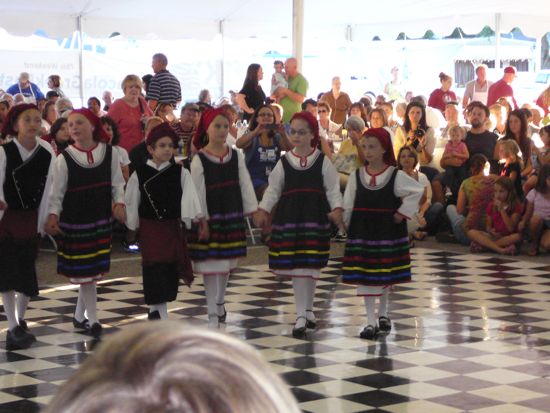
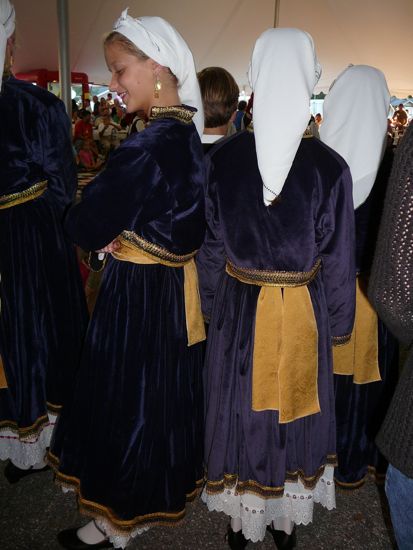


Non-Profits: Something From Nothing
Here is what I love – people who get an idea, and make the world a better place because they have a vision and make a plan so that the vision can become a reality.
The Gulf Coast Citizens Diplomacy Council
I volunteer for the Gulf Coast Citizens Diplomacy Council. The one in Pensacola was started from nothing by a young woman with a vision, Gina Melancon Gissendanner. Her organization, her Board of Directors, her members and her resources deep within the Pensacola community have welcomed several hundred of the US Department of States International Visitor’s Leadership program delegates, bringing awareness – and dollars – to Pensacola.
When the visitors come into town, they have activities, tours and visits with professional counterparts that give them new strategies and resources to take back with them to their home countries. While here, they meet local people, shop in local stores and dine in local homes.
I love this program. From nothing, this young woman has created an organization with a far-reaching legacy. Thanks to her innovative and relevant programs, the international delegates leave here with happy memories of their time in Pensacola, and they go home and tell their friends and neighbors about their time here.
This weekend, we crossed paths with three more organizations, creating a better world, each in their own way.
The Master Gardeners
“You have to come to the sale at the County Extension Office!” our aqua aerobics friends told us. “It is so much fun, and they have Florida-hardy plants available at really good prices.”
OK! Finding ourselves awake and ready to hit the road early on a Saturday morning, we headed for the County Extension office, and the Master Gardener’s Sale. Now, I may get some of the details in this story wrong, but this is what I think I have been told. . . Several years ago, county extension offices (who answer questions about soil and growing things) found themselves deluged with questions, with too few people to answer them. They started a program – and I believe it is nation wide – training people in all aspects of growing things in the local area.
People who signed up for the training also signed up for a commitment to volunteer, and pass their knowledge along. Slowly, slowly, we have begun to know these people.
The sale was a lot of fun. While gardeners love a challenge, like growing flowers in Florida that aren’t supposed to grow here (like me, I am trying to grow bougainvillea, which isn’t really good at getting through cold winters, but maybe if I find the right protected spot, I can get it going and keep it going until it develops a deep root system and an ability to withstand the minimally cold winters we have in Pensacola) and they also love to share their knowledge.
There was an experienced, knowledgeable and enthusiastic Master gardener about every ten steps at the sale, and we could ask all the questions we ever wanted, and they just loved talking with us and giving all the answers. Free! There was no admission charged, the plants were reasonably prices (and many were very cool plants) and it was just a great place to pass a Saturday morning.
We’ve been told the Spring Sale is THE best sale – we can hardly wait.
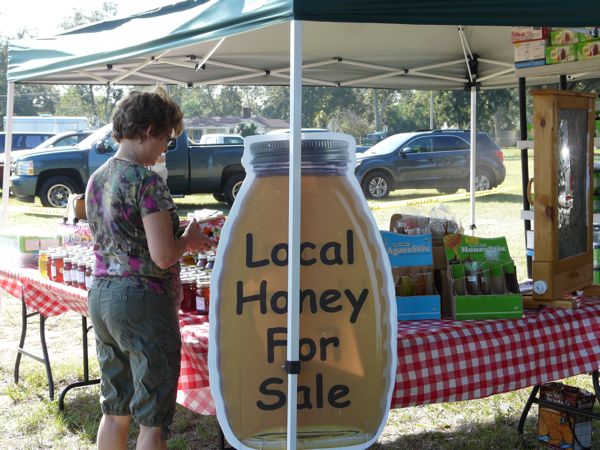
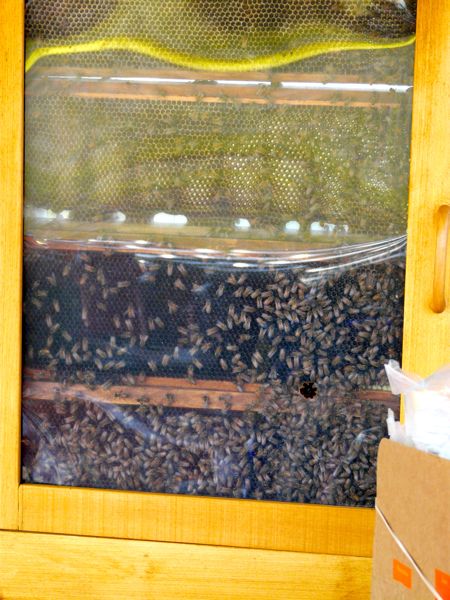

When we left, AdventureMan said “Every one of them seemed so comfortable in their own skin.” I think he is right. I think working in the earth with your hands helps ground you. 🙂
The Master Gardeners are those people you find in Home Depot and Lowes, giving information on gardening in Florida, and at special booths at Arts Fests, in the schools, and working the beds at the County Extension office. They are volunteers. They do this work for the love of making the world a more beautiful place.
The Butterfly House
Our next stop was the Monarch Madness festival at the Panhandle Butterfly House in Navarre, where there was also an Arts Fest in progress. The volunteers at the Butterfly House all wore these terrific T-shirts with a caterpiller on the front and Monarch butterfly on the back. They had a great system, too, for getting a lot of people through the butterfly house in an organized and civil way, still giving people a lot of time to ask questions, and with lots of really cool activities for children to do, to help them understand the life cycle of these beautiful and short-lived creatures.


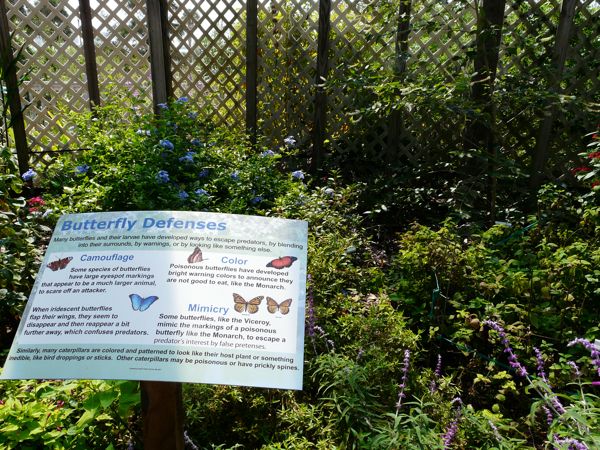



The Manna Food Pantries, Pensacola
I’m lucky. I work on a church committee where the chair brings in representatives from all the major charities in Pensacola to talk with us about what they do. The Manna Food Pantries is, in my humble opinion, a poster-child for how a non-profit should operate. Providing food for those who are hungry, for those going through tough times – and there are more than you might think – is truly part of God’s work for us here on earth. Manna Food Pantries collect and distribute food to the hungry. This morning, we had two Manna vans at the church and people were bringing in their full bags to donate.
It’s been a very tough year in Pensacola. The tough times just go on and on. You can prepare for tough times, save your money, gather your resources, but when tough times linger, sometimes those resources run dry. Manna has been faced with just such a time; resources are drying up, donations were down and the need is greater than ever. Manna hit the front page this week two days in a row, and is getting great coverage on radio, in the churches, in social groups – they are very very good at getting the message out, and the message is clear: We need your continued support, food, money, now more than ever.
They are brilliant at managing their volunteers, and many have been with them for years and years.
All these organizations are only able to exist because people believe in giving of their time and efforts in the hopes of making the world a little better, a little more beautiful, a little more peaceful, a little more hopeful – one person at a time.
Where are you going to put your efforts? What organizations do you support – and why?
Why I Love Reading James Lee Burke
For James Lee Burke, I make an exception to the paperback only rule. (Paperbacks are lighter, so if you fall asleep, they don’t hurt you when they fall over. They travel well on airplanes, and you can leave them behind when you finish them, and not feel bad. Yes, I have heard about Kindle. No, I don’t think it meets my needs. I like to pass books along.)
I was on the “mail it to me the day it comes out” list at Amazon for his newest book, a Hackberry Holland mystery set in the wilds of Texas. I hit page 2 and came across this:
“The sheriff had arrived at an age when he no longer speculated on the validity of a madman’s visions or, in general, the foibles of human behavior. Instead, Hackberry Holland’s greatest fear was his fellow man’s propensity to act collectively, in militaristic lockstep, under the banner of God and country. Mobs did not rush across town to do good deeds, and in Hackberry’s view, there was no more odious taint on any social or political endeavor than universal approval. . . “
His books transcend the banality of modern mysteries.
This book is Feast Day of Fools, and I’ll tell you more about it when I’ve finished.
Not-So-Real Housewives
Over Thai food, I confessed my guilty secret – I can’t help it, I watch the Real Housewives of Beverly Hills and the Real Housewives of New York. I expected a horrified response from my sweet smart niece, Professor Little Diamond, but she just laughed.

“Oh we all watch them,” she reassured me, “It’s like watching a train wreck, you are appalled, but you can’t look away.”
What makes me really, really nervous about these ‘real’ housewives is that I think that the Bravo station is carried in Qatar and Kuwait and Saudi Arabia. While the more educated have travelled, and know that these ‘real’ housewives are not the norm, there may be many who think that this is the life of the American female.

I remember when I shocked my Qatari friends as I told them I was going home to take care of my Dad while my Mom had a knee replacement and spent a few weeks in rehab. They didn’t know we take care of our parents; they thought we just put them in grim warehouse like nursing homes. How did they know? From television, of course.
So you can understand I have a major concern that these women are representing us normal people in the homes of our friends in the Middle East. These women spend a lot of money on scanty clothing, these women have people who come in and do their make-up before a dinner party, these people have nannies taking care of their children (many of whom are really bratty) and they all seem to be designing handbags or creating make-up lines or (oh-no!) cutting records to try to get a singing career started.
Ask yourself this – who do you know in your own circles who would agree to have camera crews follow them around in their lives, filming their most intimate conversations? Who do you know in your circle who creates drama and conflict? Who do you know who needs the affirmation of an audience to believe her life is worth living? Who in your circle is addicted to plastic surgery or throws charity events to get attention? Those are the women they are filming.
You never see these women go to church. You rarely see them cooking up a normal dinner for their family. You don’t see any of them heading off to an 8 – 5 job. You don’t see them doing all the normal things we normal American housewives do (a lot like our sisters do in every country of the world) like laundry, running the kids to school, doctors appointments, soccer matches, paying the bills, scrubbing the floor, making appointments at the veterinarian, getting the car serviced, buying groceries, going to PTA, or doing their volunteer work. You don’t see them running over to their children’s house to babysit, or going to their exercise classes.
But then again, if they were doing all these things that us REAL housewives do, who would watch, LLLLOOOOOLLLLLLL! I understand there may be some sister Real wives series coming up from foreign countries. It will be interesting to see how their lives look.
Male on Male Sexual Abuse on Law and Order
AdventureMan teases me about my loyalty to the Law and Order Series . . . “Ripped from the headlines!” he will taunt me, when I flip the channel. We often watch separate TV’s when he wants to watch one of his droning military history channels and I want to watch Law and Order re-runs. But tonight’s L&O will tackle a topic no-one talks about – male on male rape and abuse.
I was so naive. I thought it only happened in prisons. While I was living in Qatar, I started hearing horrific stories about young men abducted and taken to the desert, often gang raped. Most of them lived, but had to deal with the aftermath of the violence and humiliation. In Kuwait, it was reported almost weekly in the papers, it was so common. I had a friend whose son was abducted, and walked with her through the horrors of the aftermath. Her greatest fear was that her son would commit suicide. He overcame his abduction, and is happy now, but the path was long, and full of perils along the way.
Male on male rape, like male on female rape, or any kind of rape, is not about sex. It’s about power. It’s about humiliation. It’s bullying taken to the extreme. It’s just wrong.
From AOL TV:
The second episode of ‘Law & Order: SVU’ Season 13 is one for the TV history books. Not only does it feature guest stars Dan Lauria, Mechad Brooks, Carmelo Anthony and Chris Bosh, but it’ll also tackle the taboo issue of male-on-male sexual violence.
In ‘Personal Fouls,’ a basketball coach known as a trusted mentor and figure in the community comes under suspicion of molesting a number of his players.
“This script was very exciting and I think the cast felt honored and excited to be able to talk about this issue because obviously sexual violence is something people are scared to talk about,” series star Mariska Hargitay said at a recent press event on the ‘SVU’ set.
Hargitay’s The Joyful Heart Foundation, Wolf Films, NBC, 1in6 and A Call to Men are partnering in an effort to raise awareness about male-on-male sexual abuse.
“It takes so much courage to come forward and male-on-male sexual violence is even more swept under the carpet,” she said. “The statistics are frightening.”
According to statistics from 1in6, an organization that seeks to help male sexual abuse survivors, 19 million men in the United States are victims of sexual abuse.
“It’s exciting to do a show about it because obviously when things are on TV somehow they’re made OK to talk about and that’s been exciting.”
The partnerships between the organizations hope to spread awareness about the subject. Hargitay said one of the objectives is to “let male survivors know they’re not alone and there are so many people that want to help them.”
“It’s not a shameful secret that you should keep to yourself, that the blame belongs with the perpetrator, not the survivor,” she said.
Taste of India in Pensacola – They’re Back!
I didn’t want to say anything. There is only ONE Indian restaurant that I know of in Pensacola, and it is just a short drive from where we live. When we moved here, it was really really good, and we went there often. Then it changed hands, and it was still OK, but not the same. Then when we went in, it was all different, and the food was NOT spicy – they dumbed it down! We were disappointed, but we didn’t want there to be NO Indian restaurants in Pensacola.

We think maybe it changed hands a time or two. We wanted to go back, but had been so disappointed by the dumbing-down that we just couldn’t do it. Today, we had decided to give it one more try.
We are so glad we did. Once again under new management, the Taste of India is great tasting food once again. The buffet had a good assortment of tasty dishes, mostly veg, which we like, but so rich and flavorful that you don’t even miss the meat. There were also several really good condiments, home made and delicious.
Yes. It is a little spicy, meaning tasty. It is not bury-your-mouth spicy, only tasty spicy. Only go to Taste of India if you like REAL Indian tastes, fresh fresh fresh and delicately made. It was a delight to be able to eat there and enjoy the food once again. Lucky lucky us, and lucky lucky Pensacola to have Indian food of this calibre. 🙂
There is a lunch buffet, and there is a dinner and take out menu. It looks like they are doing some improvements to the building, too. Welcome back, Taste of India!
Anne Enright: The Gathering
What is it with my problem with Man Booker Award winners? The last one I remember is White Tiger, which we read in our Kuwait book group, and I hated. Actually, it was the main character I hated . . . and possibly that is what is happening with me and The Gathering, now that I think about it.

We meet Veronica, Irish, from a large Irish family, as she learns of the death of her brother Liam. Through claiming the body, preparing for the funeral, the funeral and the aftermath, we are there with Veronica as she whines and complains, as she disparages her family members while ignoring her own husband and family, and she drinks too much. She gets up at noon, and stays up all night, avoiding her husband. Her language is frightful, and her sexual episodes are crude and explicit . . . offensive, but maybe it is the utter distraught nature of a woman in the throes of the deepest grief?
Slowly, slowly, the story unfolds. For me, I was never sure what was truth and what was imagination, in terms of the story. Were the children abused, molested, neglected? Or are these the creative imaginings of a troubled woman? There seems to be a thread of insanity in the family – can we trust that she is a reliable narrator?
As little as I liked the main character – hmmmm, that seems to be a problem I am having a lot right now, or at least I’ve had a run of main characters I don’t like very well – I finished this book. I’m glad I read it so that I can talk about it if it comes up in a discussion, but it did not inspire or elevate me in any way, and I didn’t even feel a lot of compassion for the narrator.
Recent Comments
Kitchen on Isiais: Winding Down intlxpatr on Shampoo Ginger tigerbutterya0c5ff1d… on Shampoo Ginger intlxpatr on British Soldier Kidnapped, Esc… John on British Soldier Kidnapped, Esc… Wikipedia Donate Button

Amazina


Early Voting in Florida


