Peace on Earth, Good Will Towards Men
Today’s reading in Forward Day by Day is a difficult teaching from the prophet Amos, telling us that no, God isn’t on our side. God loves us, and he loves our allies as much as he loves us. And . . . he also loves our enemies – as much as he loves us.
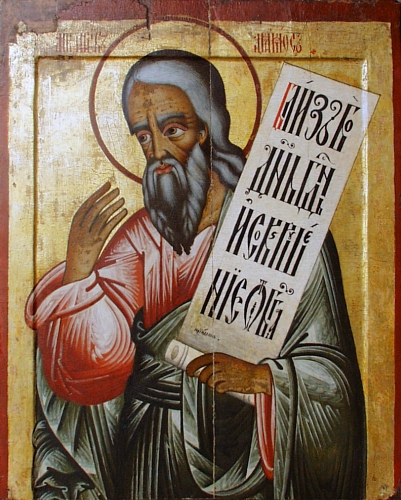
THURSDAY, December 10 International Human Rights Day
Amos 9:1-10. Are you not like the Ethiopians to me, O people of Israel?
Amos is the Bible’s first universalist. Gods in ancient times, including Israel’s god, were seen as localized deities, inhabiting a certain place and exercising power on behalf of the people who lived there, whom they favored over other people. A god’s authority was rather like that of a modern sheriff–one had to pay attention to it, but its jurisdiction was limited by geography.
Then Amos, speaking on behalf of Israel’s god, said the chosen people were no different in God’s eyes than the Ethiopians. If God had done something special for Israel, he had done something special for everyone else, too, including Israel’s sworn enemies. God has no favorites and his authority extends everywhere. In his brusque, in-your-face manner, Amos says one nation is no more precious than another.
In this day of immigration controversy, ethnic suspicion, religious absolutism, xenophobic frenzy, and false patriotism, Amos speaks a sobering word: “You’re no different from anyone else. I love you, but I love your enemy, too, and if you don’t also love your enemy, you are no friend of mine.”
Qatar National Day Locations
I am guessing that this map from the National Day Event Organizing Committee shows the locations of events which will take place on the actual National Day, December 18. I found it on their website.

The weather is great, and this is a cultural spectacle. Go, take your camera, for a day you will never forget.
By the way, if you look closely, it appears that a good part of the Corniche will be exclusively a pedestrian zone on Saturday, December 18. You might want to plan your travels accordingly. 🙂
Saturday Night Live Does Tiger Woods
There are mixed reviews on this hilarious Saturday Night Live take-off of the Tiger Woods situation. Some people feel it is tasteless, and that if the batterer were a man, it would be seriously unfunny.
They are right. And who on earth expects Saturday Night Live to stay within the boundaries of good taste? Or any boundaries at all?
As for me – I find it tastelessly hilarious.
( I will try to keep posting ones that work until they get taken off)
“Rain Lashes Doha!”
After lunch and a good visit, my friends were leaving. Sauntering to the car, the very few small raindrops didn’t even touch us, but we were exhilarated by the joy of these first drops, the first we had seen after long, dry months.

“Rain lashes Doha!” one of the quipped, parodying the local press, exaggerating the tiny things while leaving out major crimes. They danced toward their cars, yes, it’s a western compound and once in a while you might find one or two of us dancing in the street, we wild women of the West.
Cheaters Leave Digital Tracks
No, not another post about cheetahs – this is about cheaters.
Today in AOL: Sphere
(Dec. 3) — Tiger Woods has long since mastered the use of every club in his golf bag. Yet he, like many Americans, apparently is still learning the hazards of communicating too openly by modern methods such as text messaging.
Woods is certainly not alone. As communication technology continues to evolve, unfaithful partners are finding it easier to keep in touch with their illicit lovers — but it’s also a lot easier to get caught.
The golf champion has said only that “I have let my family down” through unspecified “transgressions.” But one of his alleged mistresses, Jaimee Grubbs, says she still has 300 text messages sent to her by Woods. In one, Grubbs tells RadarOnline.com, Woods says, “Send me something very naughty. … Go to the bathroom and take [a picture].”
Us Weekly magazine has also posted a voice mail Grubbs says is from Woods, warning that his wife has examined his cell phone and may have discovered the former cocktail waitress’ name via caller ID.
“Any electronic means of communication — a cell phone call, an e-mail or a text message — will leave some sort of trail behind,” said Ed Edmister, a private investigator and computer forensic expert at Integrity Security & Investigation Services, which has branches in California and Virginia. “Even if you toss your phone in an incinerator or dump your computer in a lake, there are still records kept by phone and Internet companies. Digital forensics has become a huge field.”
Of course, not every spouse needs to hire a private investigator, or send in a partner’s cell phone to one of the dozens of companies that specialize in recovering deleted text messages and call logs. Sometimes, the evidence is hiding in plain sight.
Take the case of Tony, a 38-year-old Jacksonville, Fla., man who did not want to use his real name for this article. After eight years of marriage, Tony began an affair with a younger woman. “We sent text messages to each other all the time,” Tony said. “I carried my cell phone with me wherever I went.”
After staying out late one night with his mistress, Tony slept in while his wife and two sons ate breakfast together in the kitchen. His cell phone, carelessly left in a coat pocket, chirped to indicate a text message had been received. “My 8-year-old son picked it up and read the message aloud,” Tony recalled. “It said, ‘Good morning, honey. Have a good day.'”
Tony’s wife snatched the phone from her son’s hand, headed into the bedroom and confronted her husband. Six months later, the couple divorced.
“Infidelity is so much easier today,” said Ruth Houston, author of “Is He Cheating on You? 829 Telltale Signs” and a widely cited infidelity expert. “In the past, a potential cheater would go to a bar or a nightclub — very risky stuff when you’re in a marriage. Now you can sit down in your home and click on a mouse and find willing partners.”
Thanks to unreliable self-reporting, trustworthy infidelity statistics are difficult to come by. But a recent study sponsored by the National Science Foundation, and reported in The New York Times, showed marked increases in infidelity among both men and women from 1991 to 2006.
“Infidelity is definitely on the rise because of technology,” Houston said.
Even in innocuous ways, the Internet can bring together aspiring adulterers. After all, the Web is quick to sort users into affinity groups. Two people who meet in a dedicated chat room already have some interest in common, and that can foster a rapid sense of intimacy.
“Women, especially, crave emotional intimacy,” Houston said. “E-mail or chatting can start off innocently, but if there are actual connections, relationships develop quickly.”
In any case, adulterers are slow to grasp that modern communication devices are not nearly as private and secure as many people believe. Just ask South Carolina Gov. Mark Sanford, whose e-mails to his mistress, Maria Belen Chapur, were first made public by The State, a Columbia, S.C., newspaper.
Kwame Kilpatrick, the former mayor of Detroit, suffered a similar turn in the electronic pillory. Some 6,000 text messages from his mistress’ pager were posted online by The Detroit Free Press and helped lead to his conviction on perjury charges.
Those politicians are certainly not the only ones to be caught with their virtual pants down. Digital technology, which has democratized almost everything it touches, is making adultery accessible to the masses.
St. Nicholas Eve
I’m putting out a little bit of Christmas, and came across these lovely, Palestinian embroidered towels. I’ve had them for around thirty years, and I still love them:

I’m also thinking – we in the west never hear about Palestinian Christians, of which there are / or used to be (?) many. I know there are groups in Jerusalem, working towards the use of Jerusalem as an inter-faith city, and I know they work closely with Palestinian Christians, but are the numbers of Palestinian Christians as large as they used to be?
Advent is a little like Ramadan, or it is supposed to be. The four weeks leading to Christmas are a time for thoughtful meditation, repentance of wrongful things we have done, and contemplating the birth of that special baby, the Gift of God, in Bethlehem. I love Advent; I love the whole peaceful focus and world-holding-its-breath-waiting-for-this-birth aspect.
A mosaic portrait of St. Nicholas:

Baby Shower Diaper Cake
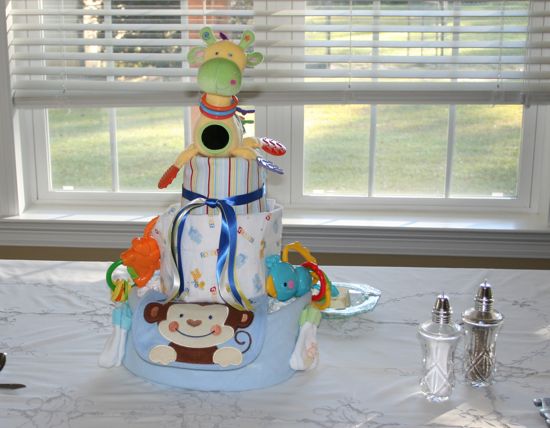
I wasn’t there. AdventureMan and I would have loved to be there, but it wasn’t possible. We spent Thanksgiving apart from our son and his wife. We also missed the BABY SHOWER! Her sweet aunts arranged a wonderful shower for them, and sent me a photo of the “diaper cake.” I don’t think this is a real cake . . . but I am not sure entirely what it is. I know only that it is adorable!
Al Shamal and Zubara – A Day Trip
A great day, temperatures down, a breeze blowing, a sky with clouds (Qatar sky is almost always flat blue), a perfect day for a trip to the north, Al Shamel and Fort Zubara:
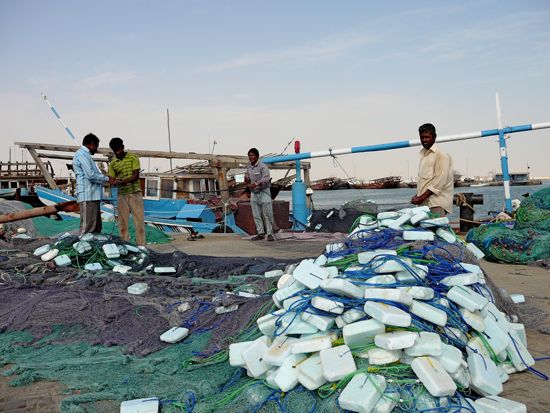

I had no idea the highway was torn up all the way from Landmark Mall to Al Shamel.
Aarrgh.
The old camel crossing sign we used to stop and take photos of our guests at was down.
And a great day altogether, anyway.
Turkey is Good For You
Last night, when I felt so bad, I wasn’t hungry. I know, go figure, surrounded by delicious food and the only thing that sounded good was a little turkey and gravy. Mostly, turkey is too dry for me, but the lady who cooked the turkey really knew what she was doing, and it was delicious. (I bet she used SALT!) And, actually, after eating a little turkey, I felt better.
So today, I know why. My health tip today – one of several, actually – from Real Age is about how good turkey is for you. Wooo HOO on me, patching up my DNA!
Who knew?
Feeling frazzled? Have another helping of the main course — if the main course is turkey.
Thankfully, skinless turkey is chock-full of B vitamins that help boost your energy and cinch stress — something many of us could probably use today. And every day.
Tallying the Talents
Think of the B vitamins in turkey — niacin, B6, and B12 — as your psyche’s little bodyguards. These nutrients also help patch up DNA and keep your cells in good repair. And best of all, with turkey, your B vitamins get served up in one of the leanest meat sources around. A 3-ounce portion of skinless turkey breast has just 0.2 grams of saturated fat. That’s nothing compared with the 4.5 grams found in the same amount of flank steak or the killer 5.5 grams found in 3 ounces of fresh ham.
Failproof Easy Pecan Pie From Quail Country
A long long time ago, in a country far away, we lived in one village and our friend lived in another, but we often visited back and forth. One day she called and said they were coming into town with her parents, and I said “oh, we won’t be here those dates, but I will leave the key with my friends down the street and you can stay here.”
Months later, a mysterious package arrived in the mail, from my friend’s parents, with a lovely, gracious note of thanks for letting us stay in our house, and one of the world’s greatest cookbooks, Quail Country, by the Junior League of Albany, Georgia. (Quail Country, Smith House Publications, 516 Flint Avenue, Albany, GA 31701)
One of my all time best recipes, Soused Apple Cake is from there.
Today, I am making pecan pies for Thanksgiving and giving thanks for the never fail Pecan Pie recipe, which I have printed before, but will print again because it is such a life saver.
Pecan Pie
3 eggs
1/2 cup sugar
1 cup light corn syrup
1/2 teaspoon salt
1 teaspoon vanilla extract
1/4 cup butter, melted
1 cup coarsely chopped pecans
1 9-inch deep dish pastryt shell, unbaked
Beat eggs slightly; add sugar, corn syrup, salt and vanilla. Blend well, but do not overbeat; add butter. Stir in pecans. Pour into pastry shell. Bake in preheated 350 F (180 C) oven about 50 minutes, or until a knife inserted in the center comes out clean. Six servings.
I actually cheat on pie crust. I use a Graham Cracker Crust, made with what are called digestive biscuits here in Qatar and in Kuwait. So a small package of digestive biscuits, crushed, add a little cinnamon and about 1/3 cup melted butter. Mix, and press into pie pan. Nothing could be easier. 🙂
And as I am making the pies, I also give thanks that our son found a wonderful woman to marry, and that his wife’s aunt has sent me some of the world’s best Texas pecans, which I hand carried when I moved from Kuwait to Qatar because I was NEVER going to leave them behind!
Recent Comments
intlxpatr on Shampoo Ginger tigerbutterya0c5ff1d… on Shampoo Ginger intlxpatr on British Soldier Kidnapped, Esc… John on British Soldier Kidnapped, Esc… intlxpatr on British Soldier Kidnapped, Esc… Wikipedia Donate Button

Amazina


Early Voting in Florida


 Here There and Everywhere