Greeting Your Enemies With a Feast (Elisha)
I love it when I come across a good story I haven’t heard before in my daily readings in The Lectionary and this one is a doozy. I didn’t hear a lot of bible stories about Elisha as I was growing up (Elisha followed Elijah) but this reading includes some amazing stories, including one of the first instances of turning away an enemy with a feast.
2 Kings 6:1-23
6Now the company of prophets* said to Elisha, ‘As you see, the place where we live under your charge is too small for us. 2Let us go to the Jordan, and let us collect logs there, one for each of us, and build a place there for us to live.’ He answered, ‘Do so.’ 3Then one of them said, ‘Please come with your servants.’ And he answered, ‘I will.’ 4So he went with them. When they came to the Jordan, they cut down trees. 5But as one was felling a log, his axehead fell into the water; he cried out, ‘Alas, master! It was borrowed.’ 6Then the man of God said, ‘Where did it fall?’ When he showed him the place, he cut off a stick, and threw it in there, and made the iron float. 7He said, ‘Pick it up.’ So he reached out his hand and took it.
8 Once when the king of Aram was at war with Israel, he took counsel with his officers. He said, ‘At such and such a place shall be my camp.’ 9But the man of God sent word to the king of Israel, ‘Take care not to pass this place, because the Arameans are going down there.’ 10The king of Israel sent word to the place of which the man of God spoke. More than once or twice he warned such a place* so that it was on the alert.
11 The mind of the king of Aram was greatly perturbed because of this; he called his officers and said to them, ‘Now tell me who among us sides with the king of Israel?’ 12Then one of his officers said, ‘No one, my lord king. It is Elisha, the prophet in Israel, who tells the king of Israel the words that you speak in your bedchamber.’ 13He said, ‘Go and find where he is; I will send and seize him.’ He was told, ‘He is in Dothan.’ 14So he sent horses and chariots there and a great army; they came by night, and surrounded the city.
15 When an attendant of the man of God rose early in the morning and went out, an army with horses and chariots was all around the city. His servant said, ‘Alas, master! What shall we do?’ 16He replied, ‘Do not be afraid, for there are more with us than there are with them.’ 17Then Elisha prayed: ‘O Lord, please open his eyes that he may see.’ So the Lord opened the eyes of the servant, and he saw; the mountain was full of horses and chariots of fire all around Elisha. 18When the Arameans* came down against him, Elisha prayed to the Lord, and said, ‘Strike this people, please, with blindness.’ So he struck them with blindness as Elisha had asked. 19Elisha said to them, ‘This is not the way, and this is not the city; follow me, and I will bring you to the man whom you seek.’ And he led them to Samaria.
20 As soon as they entered Samaria, Elisha said, ‘O Lord, open the eyes of these men so that they may see.’ The Lord opened their eyes, and they saw that they were inside Samaria. 21When the king of Israel saw them he said to Elisha, ‘Father, shall I kill them? Shall I kill them?’ 22He answered, ‘No! Did you capture with your sword and your bow those whom you want to kill? Set food and water before them so that they may eat and drink; and let them go to their master.’ 23So he prepared for them a great feast; after they ate and drank, he sent them on their way, and they went to their master. And the Arameans no longer came raiding into the land of Israel.
Closed Circuit TV in all Kuwait Schools
From today’s Al Watan:
CCTV cameras to be in place next school year
Staff Writer
KUWAIT: Former Minister of Education and Minister of Higher Education Dr. Nouriya AlـSubaih has confirmed that the ministry is finalizing the installation of CCTV cameras on school campuses and is expected to be fully and completely implemented by the beginning of the next school year.
AlـSubaih”s statement came during a press conference organized by the Teachers Society for its 38th Educational Conference, which was held under the title ”Excellent Training, Future in the Making”.
The minister stressed that all steps are being taken to provide students with a proper and adequate education and that their safety and security are equally prioritized.
She made reference to the recent abuse incidents in local schools and pointed out that contrary to popular belief, school incidents have taken place in the past with the only difference being that they were never reported to police and the press “because they were dealt with and tackled by the school management then.”
She recalled how when she was herself a teacher school problems were dealt with privately and discretely due to the sensitive nature of the problems.
AlـSubaih further pointed out that acquiring the correct specifications and right CCTV cameras to do the job adequately and comprehensively “requires careful consideration to check the right models types, otherwise we would have gone to the local market,” adding that there were some models which the ministry had acquired but due to poor quality was later decided to be dropped.
For his part, Teachers Union Director Ayed AlـSahli said that teachers play an essential role in education and upbringing and that “the idea of training fits perfectly with the requirements of this noble profession to ensure that teachers make the children they teach more useful and productive.
“There is a need for training while teaching and great consideration is being put into the latest training programs with an eye to the future, so that teachers” skills and abilities are enhanced adequately,” he remarked.
Last updated on Tuesday 24/3/2009
Kuwait Independence / Liberation Holiday Treat
My friends, run to the nearest newsstand and pick up a copy of today’s Arab Times. On page 3, one of Kuwait’s most eminent bloggers, Amer al Hilal, has a full page article; his diary as a soldier during the Liberation.
It is an awesome article. He brings the liberation period, with its thrills and challenges, to life. He is a very readable writer, and his story is compelling. Now! Right now! Go read the paper! Its YOUR history!
Kuwait Times on Morality Police
Wooo HOOOO on you, Jamie Etheridge; you bring grammar, tone and content to the Kuwait Times
Kuwait’s illegal morality police
Published Date: January 02, 2009
By Jamie Etheridge
Two female students were attacked by two youths this past week in Hawally, reportedly for not wearing the hijab. The girls were standing outside their school when two bearded young men jumped from an SUV, whacked them with a stick and then jumped back into their truck and took off. The incident sparked outrage and triggered discussions across Kuwait about the self-proclaimed morality police encouraged by a radical Islamist cleric Mubarak Al-Bathali.
In late December, Al-Bathali announced that he had established a voluntary committee for the “Promotion of Virtue and the Prevention of Vice” along the lines of the dreaded Saudi mutaween. The mutaween are a sort of religious police that patrol the streets in the villages and cities of Saudi Arabia, ensuring that women are covered from head to toe, that men go to the mosque to pray and that unmarried men and women do not mix in public. They also enforce other important moral strictures, like no mixed dancing or playing rock and roll music.
Al-Bathali said that his ‘vice’ squad will patrol the Sulaibikhat area first and then slowly spread out to other areas. It’s not clear who was behind the attacks in Hawally. Some have argued that it might have been just a couple of youths having fun and playing a trick on the girls by whacking them like the mutaween in Saudi do.
Let’s hope it was a bad joke by bored teens. God help us if random groups of men suddenly start forming ‘morality’ patrols and beating women on the streets of Kuwait. A Kuwaiti mutaween would create a host of problems.
First, the morality police would be trying to enforce a brand of radical Islam and ideology many in Kuwait – both citizens and expats – do not follow. Many Muslim women in this country do not wear hijab and there are no laws that require them to do so – despite the best efforts of the fundamentalists in parliament.
Second, Kuwaitis are highly protective of their female family members and few are likely to accept strange men whacking their mothers, sisters, daughters, wives and aunts in public areas. Following the 1990-1991 Iraqi invasion and occupation, some radical Islamists tried to establish a religious police and had begun even stationing ‘officers’ outside the Co-ops in Jabriya, Surra and elsewhere.
These mullahs carried short sticks and would strike women coming out of the Co-ops who they deemed to be dressed inappropriately. The women, of course, immediately called their male relatives who then rushed to the Co-ops and attacked the mullahs for attacking the women. The resulting chaos led to the banning of the self proclaimed morality cops.
Third, an ad hoc security force running loose around the country poses a real and present danger to the forces of the Interior Minister and by extension, the stability and security of Kuwait as a whole.
Nearly 20 years later, the radicals have reemerged and wider popularity – as evidenced by the fundamentalists victory in parliamentary polls – has encouraged them to reassert their plans for greater social control.
Success for the mullahs will mean failure for Kuwait’s experiment with democracy. Unlike the rest of the Gulf Arab states, Kuwait isn’t just beginning this experiment. For nearly half a century, this diminutive Muslim country has balanced tribal mores and religious identity with the Islamic and democratic ideals of freedom, dignity and self respect. Allowing roving bands of self appointed religious police to patrol the streets of Kuwait will undermine all of the country’s efforts toward balancing tradition
and modernity.
BBC 9-11 Third Tower
I am not much on conspiracy theories. This is on today’s BBC – a slow Saturday, I don’t imagine it will get a lot of attention.
9/11 third tower mystery ‘solved’ |
|
|
|
The final mystery of 9/11 will soon be solved, according to US experts investigating the collapse of the third tower at the World Trade Center.
The 47-storey third tower, known as Tower Seven, collapsed seven hours after the twin towers.
Investigators are expected to say ordinary fires on several different floors caused the collapse.
Conspiracy theorists have argued that the third tower was brought down in a controlled demolition.
Unlike the twin towers, Tower Seven was not hit by a plane.
The National Institute of Standards and Technology, based near Washington DC, is expected to conclude in its long-awaited report this month that ordinary fires caused the building to collapse.
That would make it the first and only steel skyscraper in the world to collapse because of fire.
The National Institute of Standards and Technology’s lead investigator, Dr Shyam Sunder, spoke to BBC Two’s “The Conspiracy Files”:
“Our working hypothesis now actually suggests that it was normal building fires that were growing and spreading throughout the multiple floors that may have caused the ultimate collapse of the buildings.”
‘Smoking gun’
However, a group of architects, engineers and scientists say the official explanation that fires caused the collapse is impossible. Architects and Engineers for 9/11 Truth argue there must have been a controlled demolition.
 |
The founder of the group, Richard Gage, says the collapse of the third tower is an obvious example of a controlled demolition using explosives.
“Building Seven is the smoking gun of 9/11… A sixth grader can look at this building falling at virtually freefall speed, symmetrically and smoothly, and see that it is not a natural process.
“Buildings that fall in natural processes fall to the path of least resistance”, says Gage, “they don’t go straight down through themselves.”
Conspiracy theories
There are a number of facts that have encouraged conspiracy theories about Tower Seven.
- Although its collapse potentially made architectural history, all of the thousands of tonnes of steel from the skyscraper were taken away to be melted down.
- The third tower was occupied by the Secret Service, the CIA, the Department of Defence and the Office of Emergency Management, which would co-ordinate any response to a disaster or a terrorist attack.
- The destruction of the third tower was never mentioned in the 9/11 Commission Report. The first official inquiry into Tower Seven by the Federal Emergency Management Agency was unable to be definitive about what caused its collapse.
- In May 2002 FEMA concluded that the building collapsed because intense fires had burned for hours, fed by thousands of gallons of diesel stored in the building. But it said this had “only a low probability of occurrence” and more work was needed.
But now nearly seven years after 9/11 the definitive official explanation of what happened to Tower Seven is finally about to be published in America.
The National Institute of Standards and Technology has spent more than two years investigating Tower Seven but lead investigator Dr Shyam Sunder rejects criticism that it has been slow.
My comment:
If you go to the BBC News Link (this if filed under Conspiracies) you can watch a video of the third tower going down. It looks pretty controlled to me, too.
Army Audits: Official Sites, Not Blogs, Breach Security
This report came out in August of 2007, on WIRED so it is not new news.
What it IS, is something for those who are considering monitoring blogs in Kuwait, to think about.
It isn’t bloggers complaining about roads, or complaining about a do-nothing-but-hold-a-grill-party Parliament, or about laws not being enforced. If bloggers are blogging and comlaining, people are grumbling. Bloggers might be considered a weather-vane, but bloggers are not creating the weather, if you catch my drift.
The US Army was blaming bloggers – until a study showed that it was their own OFFICIAL websites that gave away important information.
I used to ask AdventureMan about things and he would snap “Where did you hear that? It’s classified!” and I would tell him I read it in the New York Times – or in the Stars and Stripes.
We bloggers aren’t your problem. We bloggers are mostly geeks and nerds who love our computers, love thinking about things, and we are not out there rabble raising . . . we are sharing ideas. We don’t all agree. We are not your problem.
For years, members of the military brass have been warning that soldiers’ blogs could pose a security threat by leaking sensitive wartime information. But a series of online audits, conducted by the Army, suggests that official Defense Department websites post far more potentially-harmful than blogs do.
The audits, performed by the Army Web Risk Assessment Cell between January 2006 and January 2007, found at least 1,813 violations of operational security policy on 878 official military websites. In contrast, the 10-man, Manassas, Virginia, unit discovered 28 breaches, at most, on 594 individual blogs during the same period.
The results were obtained by the Electronic Frontier Foundation, after the digital rights group filed a lawsuit under the Freedom of Information Act.
“It’s clear that official Army websites are the real security problem, not blogs,” said EFF staff attorney Marcia Hofmann. “Bloggers, on the whole, have been very careful and conscientious. It’s a pretty major disparity.” The findings stand in stark contrast to Army statements about the risks that blogs pose.
More Airline Fees
I had total sticker shock when I bought my ticket to go home this summer – I paid for an economy class ticket what I used to pay for a business class ticket. Ulp. More money, less legroom, more headaches . . .
The Washington Post ways we have more unpleasant surprises in store:
Airline passengers, already enduring persistent flight delays and other customer service headaches, are confronting another aggravation: mounting fees for everything from checking a second bag to sending a child alone on a trip.
Carriers are turning to the fees and charges — some of which are built into the cost of a ticket — to help them cope with rising fuel costs, which account for increasing portions of their budgets.
Just in time for the summer travel season, airlines have tacked on a $25 fee to check a second bag, and yet another carrier announced last week that it was adding a fee for curbside baggage check-in. Others have steadily brought back pesky overnight-stay requirements to help them better separate business fliers from penny-pinching leisure travelers. Most have tried to slip fuel surcharges into the cost of tickets — fees that have climbed past $150 each way on some international flights.
Passengers won’t be feeling the squeeze just in their purses. Most major carriers have also announced reductions in flights by the fall to help improve efficiency, a move that will cram more passengers onto already crowded jets.
You can read the entire article HERE.
Three Years to Defeat Al Qaeda
I wish he wouldn’t say things like that. Robert Mueller told BBC News that he thinks we will see the end of Al Qaeda in three years.
To me, that is like waving a red flag in front of a bull. It’s a dare. I wish he would just go about defeating Al Qaeda in three years, and not talk about it until it’s done. Maybe it is superstitious; I prefer action to talk. When you talk about defeating someone, you might just be setting yourself up to eat humble pie.
The head of the FBI has said he believes the West can achieve victory over al-Qaeda within three-and-a-half years.
Robert Mueller described how his organisation is working closely with British intelligence to confront ever-more-complex plots.
Flanked by broad-shouldered security men with tell-tale bulges beneath their suits, the director of the FBI gave a rare public address in London.
As head of one of 16 US intelligence agencies, Mr Mueller is at the forefront of preventing a repeat of the September 11 attacks.
It was a task, he said, which could not be done without strategic partnerships with allies like Britain.
You can read the entire article HERE.
Bullying and 19 Minutes; Jodi Picoult
When my blogging friend Chirp makes a recommendation, I have learned to order the book and read it. She reads books that make you think! The latest book is Jodi Picoult’s 19 Minutes, a book about a kid who is sensitive and kind and funny, and plays by the rules – he is good at sharing, and listening and all the things we try to teach our children to be good at.
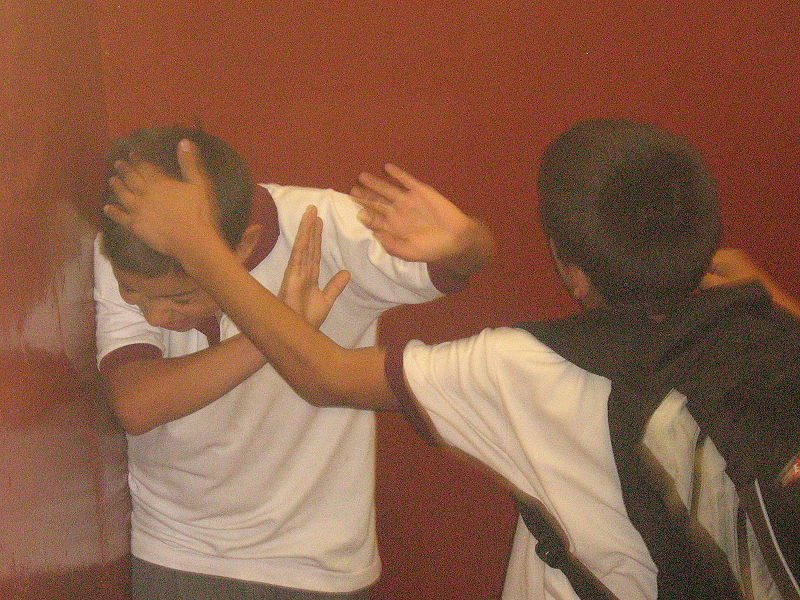
He gets bullied. From the time he starts school, he is bullied physically and mentally and emotionally. He does the right thing – he reports it. The schools do nothing, or so little that it only makes things worse for him. Pushed too far, one day snaps, he goes ballistic. He walks into the school and shoots 19 of his classmates.
One problem is access to weapons. Literally, physically teenagers have not yet developed the judgement areas of the brain. I am guessing in males it takes even longer, and I only guess that because of all the traffic fatalities and physical damage adolescent boys inflict upon themselves – and their victims. Maybe it is that fatal combination of poor judgement and testosterone that pushes them too far. Access to weapons – guns, knives, fast cars – makes them even more lethal.
Before I wrote this review, however, I had to do a lot of thinking. This book is about bullying, and even as adults we come across bullies. Our household helpers are terrified of the police – those who are here to protect us. The police use their position to try to bully phone numbers out of pretty Kuwaiti girls, and to exact sexual favors from the Asian domestics. Not all police are bullies, but if a person has that tendency, the position allows him/her to use that power wrongly.
And bullying doesn’t stop with graduation from high school. We are seeing the same kinds of behavior at universities – Virginia Tech – and in the workplace – “going postal” and GMAC just to name two. People who are bullied sometimes turn, they go out in a blaze of glory.
I’ve been bullied. People who are raised to have good manners are often victims of those who are willing to overstep the boundaries. We make excuses for them – we say they are oblivious. I am beginning to think that many a bully is NOT oblivious, but has learned to push to get his or her own way.
With men, the bullying is more physical, and it’s all about jockying for position – number one in the pecking order, the next promotion, the boss’s golf partner, etc. If you think women are gossips – you oughta hear the men! When I hear men “bantering” it’s all about who’s got the “biggest.” Or maybe, the devil whispers in my ear, it’s about who can make you THINK his is the biggest.
With women, in my experience, most of the bullies are physically bigger. They are women who – literally – throw their weight around. They are women who will interrupt anyone and override their suggestion with a loud voice. They are women who have temper tantrums, and hurt feelings, who go from person to person forming alliances that dissolve with the next disagreement. That’s the sad truth – a bully wants his or her own way – all the time. Once you go against them, you have to watch your back.
Picoult has done her homework. Bullies are often likeable enough people! A bully carries his/own burden, however – and that is a desperate need for popularity. You can see this in animal behavior; once a creature has achieved dominance, it takes enormous energy to maintain that position, so much energy that the rest of your life shrinks as your focus must be on maintaining dominance.
The UK, Canada, and the US all have websites about bullying, trying to put a stop to it in the schools. What do they define as bullying?
People calling you names
Making things up to get you into trouble
Hitting, pinching, biting, pushing and shoving
Taking things away from you
Damaging your belongings
Stealing your money
Taking your friends away from you
Posting insulting messages on the internet or by IM (cyberbullying)
Spreading rumours
Threats and intimidation
Making silent or abusive phone calls
Sending you offensive phone texts
Bullies can also frighten you so that you don’t want to go to school, so that you pretend to be ill to avoid them
What can people with manners do against a bully?
In general, the first thing to do is tell an adult – it doesn’t have to be your parents. Additonal suggestions suggest creating your own support network – create a wide network of friends. Join interest groups, in our out of school.
When our son was bullied in school, he worked hard and earned a black belt in karate, and then went on to earn further degrees, and to teach karate – while still in high school. Just knowing that he had a lethal skill made him walk differently, made the bullies afraid to target him. He went to a magnet school, where there was a high degree of chaos, and he sought out and made friends with the biggest people he could find. He used his head. He made it through. Of all his accomplishments, one of the things that made us most proud of him was his ability to stick it out and to prevail.
I worked in a high school. My office was a safe haven for many kids, kids who found high school dynamics pure hell. Most of them were emotionally years ahead of the crowds roaming the hallways, the cruel kids, for whom high school will probably be the highlight of their lives.
“You’re going to love being an adult,” I would tell them. “Hang in there. For them, this may be as good as it gets, but your life is going to get better and better.”
Geeks don’t always get a lot of respect. The two guys that graduated high school at the bottom of the class with my son already had a flourishing computer networking business going. If you haven’t noticed, most of the people who are making it big financially are people who have learned how to use their heads.
I have learned something else. You can beat a bully at his or her own game. Bullies usually rely on instilling fear in others, but rarely do they do their homework.
Choose your battles. Bullying hurts everyone. If you see someone being bullied and you can do something about it then and there, stand up for the person being bullied. All you have to do is say “that’s not funny, just stop.” Many times bullies are so shocked at being challenged, they will stop! If your judgement tells you it would be unsafe to say anything, quickly tell an adult, a supervisor, a manager, what you have seen.
If a bully is trying to push through something you believe is wrong, you can quietly discuss things one on one with others, and make a plan. You can call for a vote! You can quietly stand up to a bully. You can tell a bully “it’s my turn to talk” and they have to shut up! (When you do this, you have to be very careful to listen when the bully is speaking so that everyone knows it really IS your turn to talk.) You can use a little gentle humor – bullies usually only like humor when it is aimed at someone else. They haven’t a clue what to do when it is aimed at them!
If it is annoying, but not something worth fighting over, let the bully get his or her own way. They usually end up shooting themselves in the foot, self-destructing. The adult bully ends up driving people away, and then wondering why he/she has no friends?
Living your own life well is your best revenge!
Thank you, Chirp, for another book that really made me think!
Peacekeeping in Dharfur
From the New York Times
Peacekeeping in Darfur Hits More Obstacles
By LYDIA POLGREEN
Published: March 24, 2008
ABU SUROUJ, Sudan — As Darfur smolders in the aftermath of a new government offensive, a long-sought peacekeeping force, expected to be the world’s largest, is in danger of failing even as it begins its mission because of bureaucratic delays, stonewalling by Sudan’s government and reluctance from troop-contributing countries to send peacekeeping forces into an active conflict.
The force, a joint mission of the African Union and the United Nations, officially took over from an overstretched and exhausted African Union force in Darfur on Jan. 1. It now has just over 9,000 of an expected 26,000 soldiers and police officers and will not fully deploy until the end of the year, United Nations officials said.
Even the troops that are in place, the old African Union force and two new battalions, lack essential equipment, like sufficient armored personnel carriers and helicopters, to carry out even the most rudimentary of peacekeeping tasks. Some even had to buy their own paint to turn their green helmets United Nations blue, peacekeepers here said.
The peacekeepers’ work is more essential than ever. At least 30,000 people were displaced last month as the government and its allied militias fought to retake territory held by rebel groups fighting in the region, according to United Nations human rights officials.
For weeks after the attacks, many of the displaced were hiding in the bush nearby or living in the open along the volatile border between Sudan and Chad, inaccessible to aid workers. Most wanted to return to their scorched villages and rebuild but did not feel safe from roaming bandits and militias.
A week spent this month with the peacekeeping troops based here at the headquarters of Sector West, a wind-blown outpost at the heart of the recent violence, revealed a force struggling mightily to do better than its much-maligned predecessor, but with little new manpower or equipment.
Despite this, the force is managing to project a greater sense of security for the tens of thousands of vulnerable civilians in the vast territory it covers, mounting night patrols in displaced people’s camps and sending long-range patrols to the areas hardest hit by fighting. But these small gains are fragile, and if more troops do not arrive soon, the force will be written off as being as ineffective and compromised as the one before.
You can read the rest of the article HERE
Recent Comments
intlxpatr on Shampoo Ginger tigerbutterya0c5ff1d… on Shampoo Ginger intlxpatr on British Soldier Kidnapped, Esc… John on British Soldier Kidnapped, Esc… intlxpatr on British Soldier Kidnapped, Esc… Wikipedia Donate Button

Amazina


Early Voting in Florida


