Tel: 302-766-2673 IRS Lawsuit
“We had a phone call from the IRS,” I told AdventureMan as he headed upstairs for reading time with the Grandson.
“Oh, I forgot to tell you, I got one too, this morning,” he replied. “Is this about the lawsuit?”
“Yep.” I said calmly, continuing with my Honey Cake.
We’ve had a long relationship with the Internal Revenue Service. As with any long relationships, sometimes there are misunderstandings, miscommunications, even face-to-face meetings with questions, answers and resolutions. Our taxes are complicated by investments and a variety of retirement vehicles, and years and years of overseas living and earnings. It’s complicated. It’s a very normal long-term relationship.
I am posting this because this phone call is a SCAM. The phone call sounds very threatening:
THIS IS YOUR LAST WARNING. THE IRS WILL FILE A LAWSUIT AGAINST YOU IMMEDIATELY! YOU NEED TO CALL 302-766-2673 IMMEDIATELY!
This is not the way the IRS communicates with taxpayers.
Please warn those vulnerable to deception about this scam.
The Badass Librarians of Timbuktu
I saw this today on the NPR Books section, and as one great admirer of librarians, I wanted to share it with you. These librarians are my kind of badass! They are providing a service to humanity.
Timbuktu’s ‘Badass Librarians’: Checking Out Books Under Al-Qaida’s Nose

Handout picture dated 1997 and released in 2012 by the UN shows ancient manuscripts displayed at the library in the city of Timbuktu. Al-Qaeda has destroyed ancient texts it considers idolatrous.
Evan Schneider/AFP/Getty Images
For hundreds of years, Timbuktu has had a place in the world’s imagination. Located on the southern edge of the Sahara desert, the city flourished as a center of Islamic culture and scholarship in the 13th through 16th centuries. It was placed on the UNESCO World Heritage List in 1988, recognized for the University of Sankore, which had as many as 25,000 students who studied the Quran, as well as the historic Djingareyber and Sidi Yahia mosques.

The Bad-Ass Librarians of Timbuktu
And Their Race to Save the World’s Most Precious Manuscripts
Timbuktu was a center of the manuscript trade, with traders bringing Islamic texts from all over the Muslim world. Despite occupations and invasions of all kinds since then, scholars managed to preserve and even restore hundreds of thousands of manuscripts dating from the 13th century.
But that changed when militant Islamists backed by al-Qaida arrived in 2012. The hardline Islamists didn’t see these texts as part of their Islamic heritage, but as idolatry, contradicting their interpretation of Islam. They set about destroying important cultural icons, including 15th-century mausoleums of Sufi Muslim saints. Librarians feared the city’s prized medieval collections of manuscripts would be next.
Librarian Abdel Kader Haidara organized and oversaw a secret plot to smuggle 350,000 medieval manuscripts out of Timbuktu. Joshua Hammer chronicled Haidara’s story in the book The Bad-Ass Librarians of Timbuktu. Hammer spoke with NPR’s Michel Martin about how a librarian became an “operator.”
Interview Highlights
Why these manuscripts were so important
These volumes — and we’re talking hundreds of thousands of them — at the point at which al-Qaida invaded Timbuktu, there were something like 370,000 manuscripts amassed in libraries in Timbuktu. And they portrayed Islam as practiced in this corner of the world as a blend of the secular and the religious — or they showed that the two could coexist beautifully. And they did in this city.
So it was tremendously important for Haidara and those who supported him to protect and preserve these manuscripts as evidence of both Mali’s former greatness and the tolerance that that form of Islam encouraged.
On Abdel Kader Haidara’s background
Abdel Kader Haidara was a son of a scholar and he grew up in an intellectual environment in Timbuktu. He was not a wealthy person. After his father’s death in the early 1980s he inherited the family’s centuries-old manuscript collection.
So in 1984 the head of the Ahmed Baba Institute, the government-owned library in Timbuktu, called on Haidara and said, “Hey, we’re having trouble getting off the ground, we need to find manuscripts. We know they’re out there, they’re hidden away in the desert, in river towns. Can you undertake this job of traveling around northern Mali, tracking down these manuscripts that have been lost — buried, disappeared — over generations? Gather them up, we’ll give you money. And we want this library to be splendid. We want this to be something that people from all around the world will come to visit. So go out, do your best, find books for us.”
He was reluctant at first, but the call of duty and the curator’s constant pressure prevailed. And in 1984 he began this what turned into a 12-year really amazing quest to ferret out these manuscripts all across Mali.
How Libya changed Mali
In 2011, the Arab Spring breaks out. Gadhafi’s downfall, the arsenals of Libya — in the chaos of Gadhafi’s murder and the disintegration of the Libyan state — are opened for the taking. Then you’ve got these various rebel groups in Mali. You’ve got Islamic radicals all descending on Libya — on these arsenals. Walking in, loading up their pickup trucks with heavy weaponry, driving through the dust across the desert back to Mali. And so these heavily armed rebels sweep across the desert and in three months have captured two-thirds of the country.
Why he decided to do what he did
The first thing that Abdel Kader was worried about, frankly, was looting. In the first few days after the rebels took over Timbuktu and the army and the police had fled, there was total disorder. That’s when he kind of began to scheme — “Hey, the great treasures of Timbuktu are being held in these very ostentatious libraries.” He said, “These are going to be targets.”
The looting subsided pretty quickly. But as it subsided, you had this growing radicalism, you had Islamic police roaring through the streets, stopping people, throwing them in jail, grabbing cigarettes out of their mouths, whipping them in public. He just foresaw that this was going to get worse, and that the manuscripts, which as we already said expressed values that were anathema to fundamentalist Islam — to Wahhabi Islam — were in danger. That sooner or later, these manuscripts are going to be held hostage. They’re going to become political tools, they could be destroyed in an act of vengeance, caught up in military action. We’ve got to protect them.
So that’s when Abdel Kader and a small group of his supporters, friends, relatives got together and began what ended up being a three-stage effort to protect, and essentially smuggle to safety, all of these manuscripts.
Becoming a ‘badass’
Let’s remember that Abdel Kader was more than a librarian, this guy had spent 12 years as a badass explorer, as an adventurer. He was traveling on camels across the Sahara, on riverboats, going to small villages, finding these manuscripts. So he was an operator. So when the time came, he just knew what to do.
He said, “The first thing we’re going to do is get them out of these big libraries. We’re going to take trunks, we’re going to pack them into trunks at night when the rebels are asleep. And then we’re going to move them in the dead of night by mule cart to these various houses — safe houses, scattered around the city. We’re going to stick them in there and hopefully they’ll be safe for the duration of this occupation.” Which of course, nobody knew when that was going to end.
Why it’s important
One of the things that I think is important to draw from it is to realize that there is this whole strain of Islam that is moderate, that celebrates intellectuality, that celebrates culture, that celebrates diversity, secular ideas, poetry, love, human beauty. I think that is lost in this debate that’s going on. We tend to really kind of turn against Islam because of the actions of this particularly violent group.
But I think in fact that the Islam represented by those in Timbuktu and the badass librarians is in fact more representative of what Islam is. And these people [who] were the real victims of extremism in this part of the world are fellow Muslims. They were the ones who really suffered. They were the ones who had their hands and feet chopped off, who had to live through the horror of daily occupation.
For the most part, we see this from afar, but these people are on the front lines and they are living through the horror of radicalism every day and every minute.
Where the manuscripts are now
He hopes that he’ll be able to return them to Timbuktu. They are in about a dozen climate-controlled storage rooms in Bamako, the capital of Mali. And as far as moving them back, he’s waiting. I mean, these are very hard people to root out. But Timbuktu is a ghost town — tourists aren’t going there, flights aren’t going there. It’s very sad. And I don’t know and he doesn’t know if those glory days can ever be recaptured, given the strength of the Islamists — the terrorists in that area, in that part of the world.
Perfect Ending at Nuuanu Pali
We suddenly leave the noise and traffic of late afternoon Honolulu and head uphill on a narrow road, with trees creating a tunnel in places, and wild vines twining up into the trees to create walls of foliage.
“There’s something you have to see,” my friend tells us, and we head into this amazing canyon, sort of valley place, alternately dark with shadow and glowing with green light. “We hike up here all the time.”
She takes another tack, and we reach the top of a hill; she parks and we get out. It says we have to pay but she just laughs and says locals don’t have to pay. It’s late in the day and there is no problem finding a place to park, and the light is wonderful. There are more wild chickens, a strutting rooster, and lots of new chicks.

This is the story of Nuuanu Pali, and the great king, Kamehameha, who united the Hawaiian Islanders. He had to fight, he had to do terrible things to accomplish his goal. This was his last fight, where he forced 400 battling warriors off a cliff to their deaths.

And this is the view, late in the day with the sun behind us. Kailua, where we are staying in my friend’s beautiful happy place, is to our right, down on the coast.

I have never seen a “Beware of Bees” sign before.


HOME by Somali poet Warsan Shire
An old friend from high school posted this on FaceBook today, and I found it so moving and so true that I had to repost it here:
HOME
Warsan Shire
no one leaves home unless
home is the mouth of a shark
you only run for the border
when you see the whole city running as well
your neighbours running faster than you
breath bloody in their throats
the boy you went to school with
who kissed you dizzy behind the old tin factory
is holding a gun bigger than his body
you only leave home
when home won’t let you stay.
no one leaves home unless home chases you
fire under feet
hot blood in your belly
it’s not something you ever thought of doing
until the blade burnt threats into
your neck
and even then you carried the anthem under
your breath
only tearing up your passport in an airport toilets
sobbing as each mouthful of paper
made it clear that you wouldn’t be going back.
you have to understand,
that no one puts their children in a boat
unless the water is safer than the land
no one burns their palms
under trains
beneath carriages
no one spends days and nights in the stomach of a truck
feeding on newspaper unless the miles travelled
means something more than journey.
no one crawls under fences
no one wants to be beaten
pitied
no one chooses refugee camps
or strip searches where your
body is left aching
or prison,
because prison is safer
than a city of fire
and one prison guard
in the night
is better than a truckload
of men who look like your father
no one could take it
no one could stomach it
no one skin would be tough enough
the
go home blacks
refugees
dirty immigrants
asylum seekers
sucking our country dry
niggers with their hands out
they smell strange
savage
messed up their country and now they want
to mess ours up
how do the words
the dirty looks
roll off your backs
maybe because the blow is softer
than a limb torn off
or the words are more tender
than fourteen men between
your legs
or the insults are easier
to swallow
than rubble
than bone
than your child body
in pieces.
i want to go home,
but home is the mouth of a shark
home is the barrel of the gun
and no one would leave home
unless home chased you to the shore
unless home told you
to quicken your legs
leave your clothes behind
crawl through the desert
wade through the oceans
drown
save
be hunger
beg
forget pride
your survival is more important
no one leaves home until home is a sweaty voice in your ear
saying-
leave,
run away from me now
i dont know what i’ve become
but i know that anywhere
is safer than here.
“HOME,” by Somali poet Warsan Shire
Play Station, Romeo and Juliet, ISIS, and Syrian Refugee Discussions
I belong to a group that I can only describe as “thoughtful” Christians; it’s a church-related study group, and as everywhere else in the US of A, people are discussing recent events in Paris, and the related issue of resettling Syrian (and not only Syrian) refugees in the United States.
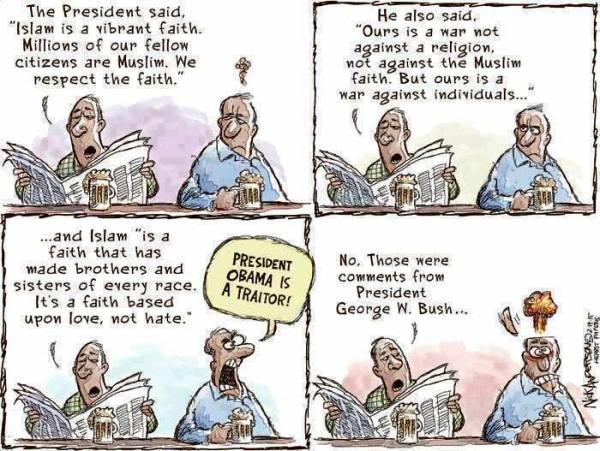
The same discussions are taking place on FaceBook. I’m inclined to think that those who are thinking lime me are measured, and thoughtful, and that those who disagree with me are overly emotional, even rabid, and that their attitudes might be Un-Christian as well as Un-American.
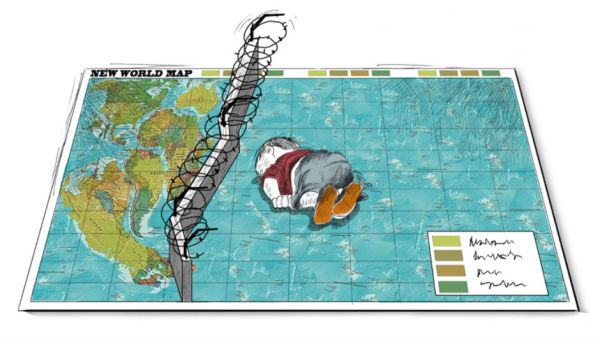
I am not so blind as to not see that they may see the exact same thing, in reverse. It’s the times, and the issues.

One very smart woman communicated something I haven’t heard anywhere else, that investigators believe these Paris murderers might have been communicating by creating a Play Station group, so you can message your group members, and your message disappears seconds later.

One neuron sparks, synapses connect and the outline of a picture emerges. Of course. This plot was not that complex. My major focus would be on how they got the weapons, but other friends tell me that now weaponry can be had very inexpensively on the dark market in Europe.
But what has puzzled me, until now, was the kind of thinking that would put this scenario together, and I have concluded that we did. By our entertainment technology, we have taught them to strategize. We have trained them to think through scenarios, and to have branching options. We have taught them to join forces. We have taught them to work in teams. Some may have had some training to operate the weapons so accurately, but this was the equivalent of a canned hunt, shooting fish in a barrel. They had rapid fire weapons, and rooms full of people expecting no more than a pleasant night out. Before they knew what was happening, the event had come and gone.
They are young. The so called “master-mind” (I really don’t like that label; I don’t think this took masterful planning, and they did not accomplish their major goal, which was terrorizing the soccer game) escaped, but not for long. They calculatedly and callously used expendables to accomplish their mission. There was no escape planned for most; give them suicide belts. Give them death. Did they know that the one pulling the strings had no intention of dying with them? So why on earth didn’t they question this plan?
When you are playing games on a Play Station, and you lose, you get another life. Hey, just like jihad! They are young, death means little, and they are easily manipulated. A glorious death, if you don’t look too closely. As I was in water aerobics this morning, we danced along to an old ditty called “Just Like Romeo and Juliet” and I thought how appropriate it was to these times and circumstances – a tradition of hatred between two groups, two young people who cross the lines, and then, their death rather than the hard work of trying to make changes in the real world.

Death isn’t romantic, and the God we share, the God of Father Abraham, hates the shedding of innocent blood, no matter by what name you call him. He tells us that only he knows the intentions of the human heart. When he chooses someone to do his work, it tends to be leaving this country and walking to another, leading a people out of slavery, bearing a child, or memorizing the words of an angel, not bombing, or shooting, or forcing others to worship in the way you believe everyone must worship.

The one true God also tells us, all of us, that we are to love our neighbor, and that our neighbor is that naked, helpless, beaten man lying by the side of the road that the fastidious religious men crossed the street to avoid helping. We are to take him in, pay for his care at the inn, tend to his wounds, not for any hope of gain, but because it is the right thing to do, the decent thing to do, for our fellow human being, our neighbor.

One final note, when we use the Statue of Liberty coming to the rescue of France, showing the colors of France, noting her origins in France to honor our own “Liberte” we most not fail to take note of the words at her base: Give me your tired, your poor; The huddled masses yearning to breathe free; The wretched refuse of your teeming shores; send these – the homeless, tempest tossed to me! I lift my lamp beside the golden door!”
Expendables; Pray for Paris

I have to take a break from my trip stories to express an opinion.
We are The People of the Book. Suicide is not an option. The most precious gift we are given, of the many gifts, is the gift of life. One of the most heinous crimes against God / Allah is to shed innocent blood.
A callous theocracy sends “inspired” martyrs, testosterone-hopped-up jihadists to kill themselves, and to take as many victims as they can with them.
By what stretch can they claim to do God’s will? Where is the submission to the word of God? Where is the peaceful Islam of the Prophet Mohammed?
My Passport and Donald Rumsfeld
It’s seven in the morning, I’ve fed the cat, made the coffee, fixed some cereal and taken care of first-thing-in-the-morning things so I can sit with my morning Lectionary readings, and as I start, the phone rings. It’s seven. In the morning. I figured it was an emergency grand-child babysit call, but the call is coming from New Orleans, an oh no. I know I need to answer it.
It’s the really nice lady who took care of me on Tuesday, and she says “We were putting together your new passport and we noticed you used the same photo you used on your last passport.”
“Why yes!” I said proudly, “when I had them taken, they gave me two, so I just used the second one.”
Big mistake. They needed a RECENT passport. My never-been-used-shiny-new passport was MONTHS ago and I need to get RECENT photos and send them immediately so they can compete the passport with the right photo.
I think about good old Donald Rumsfeld, with the things you know you know, the things you know you don’t know, the things you don’t know you know (love that one) and then – horrors – the things you don’t know you don’t know.
And then I head down first thing to UPS where the nice people took my photo and sent it off so that they will have it as soon as possible.
And . . . I am wondering what else is out there that I don’t know I don’t know.
American Heroes: “With Your Bare Hands”
I started this Monday with a great big smile. American Heroes! Our three young men, off to explore Amsterdam and Paris, and without giving it a second thought they tackle an armed man who has already shot and injured one passenger and intends to kill as many more as he can? They disarm him, and they tie him up, and deliver him, relatively unharmed, to the authorities.
They don’t behead him. They don’t beat him once they have him subdued. They don’t treat him with gratuitous cruelty. No. They turn him over to the authorities. One hero seeks out the Frenchman who has been shot and plugs his throat wounds with his own fingers to staunch the flow of blood until he can be treated by medical professionals.
And I love what French President says to these khaki and polo-shirt clad All-Americans (from The Guardian):
“Awarding them the Légion d’honneur, Hollande said: ‘The whole world admires your sangfroid. With your bare hands, unarmed, you were able to overcome a heavily armed individual, resolved to do anything.’
Hollande praised the soldiers, saying: “In France you behaved as soldiers but also as responsible men. You put your life in danger to defend the idea of freedom.”
Referring to the bravery of Sadler and Norman, he said they did not have military training and had “doubtless never seen a Kalashnikov in their life”. He added: “They stood up and fought, they refused to give in to fear or terrorism.”
Leaving the ceremony, Norman told TV crews: “I just did what I had to do.”
That’s exactly what true heroes say 🙂
I smile, too, seeing these young men being presented their medals with everyone else in dress uniforms and suits, and they are in their polos and Khakis; polos provided, I am guessing, by the US Embassy, with French and US flags intertwined.
I imagine they are going to have a wild time in France, and I can imagine they won’t be able to buy their own wine or meals. It all makes me smile.
Houseguests and Rabies and Wedding Anniversaries
We’ve had a lot of wedding anniversaries, AdventureMan and I. Some anniversaries we have sacrificed to national security, as AdventureMan would be called to go to the field, or head out on some exercise. There are a few which have been truly memorable. If you’ve been reading this blog for very long, you will know that the ones we remember are probably not those that include roses, or wine and a fine meal and a beautiful gift, although we have had those.
One, we remember because we ate at a very fine restaurant, very snooty, and the waiter made a big deal out of presenting us with chilled forks for our salad course. We could barely keep a straight face, it is so far from anything we would consider a priority.
Another, and we howl with laughter – now – was the wedding anniversary when we had just arrived in Germany from Saudi Arabia, and found a lovely apartment on the top floor of an old mansion in a village I loved. When we got back to the car, AdventureMan said “Did you notice it is not furnished?” and I said we can find what we need at the re-utilization office, which is alway selling off used furniture.
Indeed, two days later there was a huge sale at the re-utilization center and we bought a dining room set, living room chairs, three big cupboards for holding clothes and some lamps, etc – all for $53. We’ve always had great luck that way. I had a lot of fun re-upholstering the chairs, and the landlord threw in a bed for us.
But as we sat in the car, on our anniversary, I said “Now, you probably need to take me to the hospital so we can get my bite looked at.” A few hours before leaving Saudi Arabia, the cat I had been feeding bit me, hard, on the arm. It ws one of those bites where the incisors went deep. I’d have liked to ignore the bite, but rabies is an ugly way to die, and I sure didn’t want to stay in Saudi Arabia to be treated.
So we headed to the hospital, and the next few hours were excruciating. Then we went to a favorite old Mexican restaurant we had known from years before, and that was our anniversary, truly memorable. We still laugh; we remember finding that lovely old apartment, and then having to go to the emergency room.
As an aside, the landlord didn’t tell us he was trying to sell the mansion, and nine months later, we were looking again for an apartment. We became very good friends with the new owners, and are friends with them to this very day.
This wedding anniversary was a non-event, we had houseguests, and their customs and daily lives are so very different that celebrating a wedding anniversary would have been far outside their comfort zone. We had a friend from Saudi Arabia and his 10 year old son.
We received an e-mail from them saying (I will paraphrase a little here) ‘we have reservations to come to Pensacola for 26 days and we want to stay with you.’ There was more, but that was the essence. AdventureMan looked at me and said “I think we need to do this” and I was glad, because I had been thinking the same thing.
I think I have told you about our friends who welcome the stranger, so I think God had been preparing us for this visit, and for us to do it.
How did it go? It was challenging. There were times we just wanted it to be over, and there were times our friends must have found us to be very disappointing. There were continual clashes in expectations, and there was a very large well of good will out of which we continually drew. There were uncomfortable moments regarding meals, and meal times, and getting up times, and where we would go. There were also some fabulous meals and some truly wonderful conversations.
I know they were sorry to go. I know they want to come back again for another visit. We have no regrets; we are glad we did this, and we are also glad to have our very normal American lives back. We like this man very much, and we know this visit was a challenge for him, too.
But as we are hollering back and forth, we are laughing, this is one of those anniversaries we will never forget, the year we had our Saudi house guests.
We are aging, AdventureMan and I. We are no longer truly nomadic, living out of our suitcases. We have everything we own in this one house, except our other house. We no longer have other furniture in storage, and we have trimmed down a lot on the load of things we have collected. Maybe the one thing we truly fear is becoming too settled, and this visit was a wonderful way to shake things up a little bit, to force us out of our comfortable routines, and to force us to see our lives through the eyes of others.
It has given us a lot to think about.
Happy Anniversary, AdventureMan 🙂
Who Is My Neighbor?
We just finished our year in EfM, Education for Ministry, and the overall theme was a multi-cultural world, where we confront our own assumptions and prejudices. It has been a grand journey.
We have friends, friends whose son is our son’s best friend for lo, these many years, and they know how to be good neighbors. They are the soul of hospitality. They take in immigrants, fresh-off-the-boat, and teach them how to survive, help them find furniture, apartments, and a living. They welcome visitors, and care for them and their children. They are helpful. They do all this because it is the right thing to do, and they do it tirelessly. I am in awe of these friends; they are the essence of the Good Samaritan.
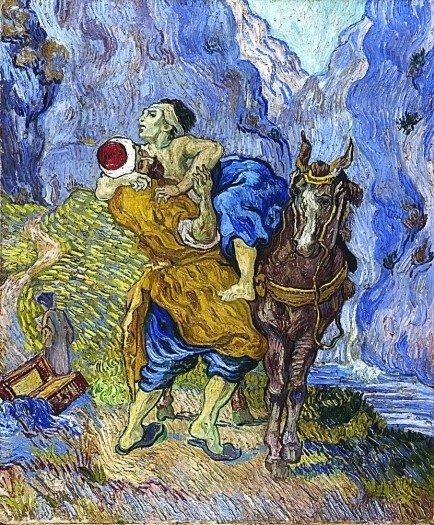
This is Vincent Van Gogh’s painting of The Good Samaritan
THURSDAY, May 21 (from Forward Day by Day)
Luke 10:29 And who is my neighbor?
This beloved parable is about more than being kind to our neighbor. It’s about the grace that is shared and the miracle that is manifested each time we help each other, and each time we allow ourselves to be helped. Both of the main characters in this story, the man who is beaten and left for dead and the man who rescues him and has him cared for, had to humble themselves in order to be in relationship.
Mutual distrust and mutual prejudice could have cost the injured man his life, either by the Samaritan refusing to stop, or in the injured man refusing help from such a suspicious source. Jesus asks us to look past the natural lines of religious creed, racial and ethnic identities, socioeconomic status, and all the other words we use to separate “us” from “them,” and to see his face in the man in the ditch. Jesus is asking us to look up and see his face in the man who is saving someone who cannot save himself.
We are invited to see the face of Jesus on each of these men—to realize that when we reach out in love or when we are being helped, Jesus is always present. Are you willing to be humbled in that way? Who or what can you help, today? Who or what can help you?
PRAY for the Diocese of North West Australia (Western Australia, Australia)
Ps 105:1-22 * 105:23-45; Ezekiel 18:1-4, 19-32; Hebrews 7:18-28; Luke 10:25-37
When I think of the Good Samaritan, I think too of a very pregnant friend, pregnant with triplets, a Jewish woman working in Qatar, whose car broke down. In this day of cell phones, she called her husband for help, but in the time she waited for him to arrive with help, many many Qatari men and families stopped to offer assistance, insisted on giving her bottles of cold water, stopped and waited with her until her husband came and she was safe. They saw a stranger in distress, and they didn’t hesitate, they stopped. Good neighbors 🙂
Recent Comments
intlxpatr on Yellowstone: Old Faithful to C… Michelle on Yellowstone: Old Faithful to C… Cathy on No Grown-Ups in Charge intlxpatr on Waiting for Snow intlxpatr on Waiting for Snow Wikipedia Donate Button

Amazina


Early Voting in Florida


 Here There and Everywhere