A New Twist on an Old Scam
Got this one – as Intlxpatr – today. Hee heee heee, I grinned thinking of a big check made out to “Intxlpatr” packed in a box marked “old African cloths.”
Good Day!
I have been waiting for you since to come down here and pick your Cashiers Cheque but did not hear from you since that time. So i went to the bank to confirm if the draft is getting close to expire and the Manager of the bank told me that before the draft will get to your address that it will expire. Then I told him to help me and cash the bank draft of $1.5 million to cash payment.
However, The Bank Manager have successfully cashed the draft and packaged your Cash in a Diplomatic Cargo box and had registered it in the FEDEX EXPRESS COURIER COMPANY here in Benin Republic because i am travelling to see my boss and will not come back soon.
You have to contact FEDEX EXPRESS COURIER COMPANY to know when they will deliver your package to your address.
CONTACT FEDEX EXPRESS COURIER COMPANY WITH THE INFORMATION BELOW/
NAME: DR UGO ODILI
CONTACT PHONE NUMBERS: +229-97555256
E-MAIL: ( fedex_ccltd@sify.com)
Please, Send them your contacts information to able them locate you immediately they arrived in your country with your Diplomatic BOX.
This is the information they need from you.
1. YOUR FULL NAME.
2. YOUR HOME ADDRESS.
3. YOUR CURRENT MOBILE NUMBER.
4. YOUR VERIFICATION CODE – (PX002)
Try to contact FEDEX EXPRESS COURIER COMPANY as soon as possible to enable them release your consignment to you. I gave them your delivering address but you have to reconfirm it to them again to avoid any mistake in the delivery.
I have paid for the delivering charges. Also ask them how much the insurance fees will cost you. The only money you have to send to them is their INSURANCE FEE to receive your package which will be a token. I could have paid for the insurance fees, but due to some prevailing circumstance beyond my control.
Note; I didn’t tell FEDEX EXPRESS COURIER COMPANY that it’s money inside the box, I registered it as a package of an African cloths/Family Valuables. This is to avoid delaying or any upfront problem during the delivery, So do not let them know that the package contents money inside until you have received it in your house address, this is the code which you will send to them for verifications (PX002).
You call the Director of the company with this line:+229-97555256
Do let me know as soon as you received your package. Contact me by email as i am travelling out side the country today.
Best Regards,
Mr Melvine Parker (ESQ)
Can You Help Animal Friends Kuwait?
Dear Friends of the Animals,
It is that time again, we are preparing 8 dogs to go to the US in the middle of September for their much deserved chance at a loving home. We are proud to report that in the month of June, we sent 21 dogs to their freedom. Without our transport program, we would not be able to help as many dogs as we do and our shelter would be crammed with adoptable dogs with less of a chance at adoption. For all of you that ask us for help, remember that the space made at the shelter to help you happens because of our transport program. It costs us 150KD per dog to send so we need your help. If you can sponsor one or more dogs to go to the US you will be saving not just that life but many more. Take the initiative and make a huge difference in the lives of many dogs.
You can either transfer the money directly into our bank account, drop it off at my house or we would be happy to come to you to collect your generous donation. Contact us if you can help!!
Humanely,
Ayeshah Al-Humaidhi
Animal Friends League of Kuwait
P.O. Box 26112
13122 – Safat
Kuwait
+965-6657-3430 (Kuwait)
+965-2244-3859 (Fax)
http://www.animalfriendskuwait.org
Lunch at Las Maracas in Ocean Shores
“I’ve never been to Ocean Shores!” my Mom says brightly. (I know what is coming.) “Have you ever been to Ocean Shores?”
Yes. oh yes. When I was at university, we would all rent a big chalet during Spring Vacation.
“Yeh . . . I don’t remember it being that great,” I reply.
She didn’t mention it again, but I knew she wanted to go, so yesterday we decided to take an excursion to go to Ocean Shores.
I remember back when there seemed to be a lot of (generated) excitement about Ocean Shores. It’s like someone had bought this big hunk of land and wanted to develop it and started making it sound like if you don’t buy a vacation lot at Ocean Shores, you are going to be really really sorry because ALL YOUR FRIENDS ARE GOING TO BE THERE!
I think mostly it was cold and rainy when we were there during Spring Break. What I remember the best was my friends taught me how to make a casserole out of taco chips and ground beef and taco sauce, with grated cheddar cheese. It tastes really good (all that salt) and it probably has zero redeeming nutritional value.
Holding that memory dear, after Mom and I toured the big nothing that is most of Ocean Shores (the entire “north beach” coast is pretty undeveloped, very old timey, honestly, I love it) and visited a schlock-shop, oops, tourist shop, so Mom could spend a little money, we found Las Maracas, which actually served very decent Mexican chow.

No, I didn’t drink beer – I’m driving, remember? And Mom would just fall asleep if she had a beer at noon.
I put my camera on the table so I would remember to take food photos, but not before I had taken a couple ‘location’ shots:

Someone had a ball with the upholstery:

And then the nacho chips came:

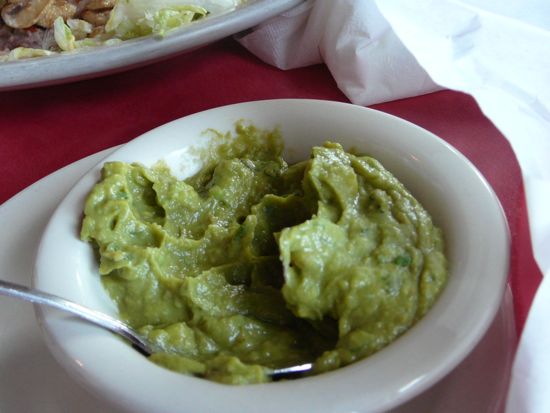
The servers yell “Salsa, por favor!” into the kitchen, and determinedly call us “Senyora” or “Senyoras,” out on this remote Washington State coastal resort area.
And then I totally forgot the camera on the table because my seafood tostada came, and it was so unbelievably delicious – shrimp, crab, fish – that I ate it all and then said “oh no! I forgot to take photos!”
Mom was still picking through her Camarones al mojo de ajo, so I got a shot of that:
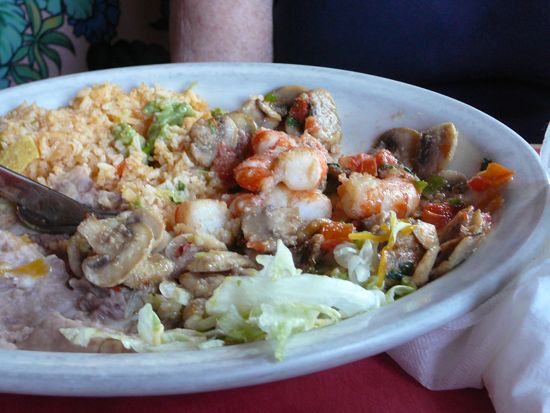
This restaurant was worth the drive to Ocean Shores.
St. David P. Oakerhater
Another ‘who knew? ‘ I found this in the Lectionary readings for today – a Native-American saint:
DEACON AND MISSIONARY (1 SEP 1931)
David P. Oakerhater (born around 1850) was a warrior and leader of the Cheyenne Indians of Oklahoma, and led a corps of fighters against the United States government in a dispute over Indian land rights. In 1875 he and 27 other military leaders were taken prisoner by the U S Army and sent to a military post in Florida. There, thanks to the efforts of a concerned Army captain, they learned English, were encouraged to earn money by giving art and archery lessons to visitors, and encountered the Christian faith. David and three others were moved to become Christians and to go north to study for the ministry. David was baptized in Syracuse, New York, in 1878, and ordained to the diaconate in 1881. He returned to Oklahoma and there founded schools and missions, and continued to work among his people until his death on 31 August 1931. When he first returned to Oklahoma in 1881, he said:
You all know me. You remember when I led you out to war I went first, and what I told you was true. Now I have been away to the East and I have learned about another captain, the Lord Jesus Christ, and he is my leader. He goes first, and all He tells me is true. I come back to my people to tell you to go with me now in this new road, a war that makes all for peace.
by James Kiefer
Note: the “military post in Florida” is Castillo de San Marcos in St. Augustine, now a National Monument. Should you go there, you can learn more about his imprisonment there.
Casper’s A Taste of the South
We had decided on one restaurant, an Italian restaurant we both like, and were on our way, when Mom thought of another restaurant we might like to try, but it was on the way, so we could look at it and decide whether we wanted to eat there or go on to the Italian one.
This is very normal for our family. Our son used to call it “bait and switch” because we would say “Hey! Do you want to go to Tortilla Gonzales?” and he would say “Yeah!” and we would all jump in the car and then on the causeway, AdventureMan would say “You know I really have a taste for Chinese . . . would anyone prefer Chinese?” and I would jump in and say “We’re really close to that sushi place we all love!” and then our son would have to rein us in “NO! You said we were going to Tortilla Gonzales!”
Once he went away to college, we switched all the time. Later, we learned that now he and his wife do the old switch-a-roo, too – family culture is a hard thing to shake.
So we are en route and Mom suddenly shouts “RIBS!” and I say “What??” and she said “We just passed a rib place!” We were at a stop light. “Mom,” I asked, “Do you want to go to that rib place?”
Silence.
Silence.
I pull into the U-turn lane and complain “You’ve got to start dealing with me directly; if you want to go to the rib place, you have to say so!” The complete irony being that I was already making the U-turn, which is what she wanted me to do. . . . Family culture being a hard thing to shake . . .
But as we pulled into the already crowded parking lot, the smell was absolutely divine. There was already a line. Good thing, too, it gave us time to read the menu and decide what we wanted.

We both ordered ribs. We are both forbidden to eat ribs. I eat ribs maybe one time each year, like once, at a buffet, I ate one small rib. It is so rare that I allow myself to eat a rib that I can remember even that one tiny rib. But this time, I ordered ribs, because my Mom did. She ordered Sweet Potato Fries and Cole Slaw and I ordered Hush Puppies and Cole Slaw.
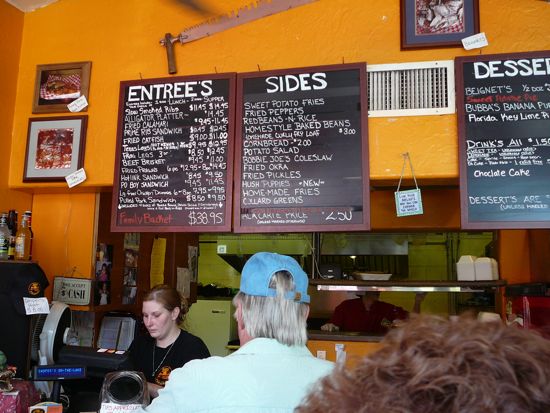
You are going to be so so proud of me. I took pictures before we ate the food this time, well, except for one tiny bite I took out of the hushpuppies, but that was to show you what they look like on the inside. (My Mom has NEVER had a hushpuppy in her life before having one of mine.)
We sat down in the large outside sitting place – I can’t help but wonder what they do in the winter time, because it can get really really cold and damp in Seattle, but I am guessing that they do a huge take-out business.

They have a map that they want people to put push-pins in to say where they are from:
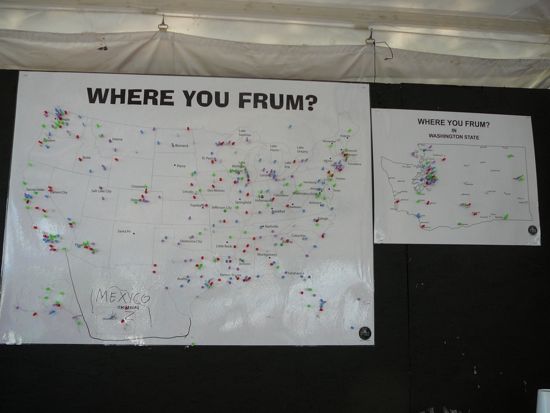
I made a little addition:

And, as I promised, here is the food. Actually, they gave Mom this HUGE portion, about double my portion, but since I got four ribs and only ate two, Mom took home a huge box of leftover ribs to package up and freeze and have a little at a time.

Did you know sweet potatoes are really really healthy for you?

(I think sweet potatoes are healthier for you when they have a lower surface/interior ratio and have absorbed less fat, but these are totally, incredibly delicious. That’s sugar on the sweet potato fries, not salt.) Mom took leftover sweet potato fries home, too.

I can’t even pretend that there is anything healthy about deep fried cornbread. I ate them all, except the one Mom ate. They . . . they were really really good. Yes, I am so ashamed, but I would do it again.
And no, I didn’t take a photo of the sweet potato pie, generously seasoned with fresh nutmeg, it was divine, or the key lime pie we couldn’t eat and Mom took that home, too.
Oh, this food was good. As we left, the line stretched way out to door and into the parking lot.
Casper’s Taste of the South
15030 Bothell Way
Lake Forest Park, WA
(206)268-0202
Their slogan is:
Put a Little South in Your Mouth. LLLOOOLLLL!
Thank you, KitKat (Really Bad Joke)
Two prawns were swimming around in the sea
One called Justin and the other called Kristian.
The prawns were constantly being harassed and threatened by sharks that inhabited the area.
Finally one day Justin said to Kristian, ‘I’m fed up with being a prawn;
I wish I was a shark, and then I wouldn’t have any worries about being eaten.’
A large mysterious cod appeared and said, ‘Your wish is granted’
Lo and behold, Justin turned into a shark.
Horrified, Kristian immediately swam away, afraid of being eaten by his old mate.
Time passed (as it does) and Justin found life as a shark boring and lonely.
All his old mates simply swam away whenever he came close to them.
Justin didn’t realize that his new menacing appearance was the cause of his sad plight.
While swimming alone one day he saw the mysterious cod again and he thought perhaps the mysterious fish could change him back into a prawn.
He approached the cod and begged to be changed back, and, lo and behold,
he found himself turned back into a prawn.
With tears of joy in his tiny little eyes Justin swam back to his friends and bought them all a cocktail.
(The punch line does not involve a prawn cocktail – it’s much worse).
Looking around the gathering at the reef he realized he couldn’t see his old pal.
‘Where’s Kristian?’ he asked.
‘He’s at home, still distraught that his best friend changed sides to the enemy & became a shark’, came the reply.
Eager to put things right again and end the mutual pain and torture, he set off to Kristian’s abode.
As he opened the coral gate, memories came flooding back.
He banged on the door and shouted, ‘It’s me, Justin, your old friend, come out and see me again.’
Kristian replied, ‘No way man, you’ll eat me. You’re now a shark, the enemy,
and I’ll not be tricked into being your dinner.’
Justin cried back ‘No, I’m not. That was the old me. I’ve changed.’………
.
.
.
.
.
.
.
‘I’ve found Cod. I’m a
Prawn again Kristian’
Ramadan Mubarak 2009

(image from Islam101/Ramadan)
Greetings and best wishes from AdventureMan and me to all of our Muslim friends, fasting and purifying themselves during the Muslim month of Ramadan. May your fasting and your prayers bless you abundantly, and may the month build your spiritual wholeness in every good way.
Friday, during our church service, our priest asked the congregation if any of us had literature explaining why the Muslim God was not the same as the Christian God. We all looked at him in shock. Not one person raised his or her hands.
Then he smiled, a great big broad grin and said “Good! There is only one God, and our Moslem brothers and sisters worship the same one-God we do.”
His sermon was on one of the “hard teachings” of Jesus, teachings even those closest to him had trouble understanding. That there are not exceptions to the rules, that the rules apply across the board, to us all, to all creatures God created. When the Jews, the chosen ones, rejected Jesus, they had allowed a focus on the laws to take the place of the spirit of the law – that we love God, and that as a part of loving God, we serve him by loving and serving one another, regardless of divisions, of denominations or sects.
May all the blessings of the true spirit of Ramadan be yours, my brothers and sisters.
(Yes, Purg, you ARE my brother. 🙂 )
Obama and Dreams From My Father
It took me 20 days, but I finished Barack Obama’s Dreams From My Father. I didn’t read it because he is President of the United States, although that would be a good reason, but I read it because our book club is reading it, and I know how busy the next few months are going to be, so I read ahead during the slower times of summer.
And the trick to finishing it was not allowing myself to read anything else until I had finished – I had a stack of really intriguing books to urge me on. “As soon as I finish, I can read . . . ” Even with all that incentive, Obama’s book is a slog.
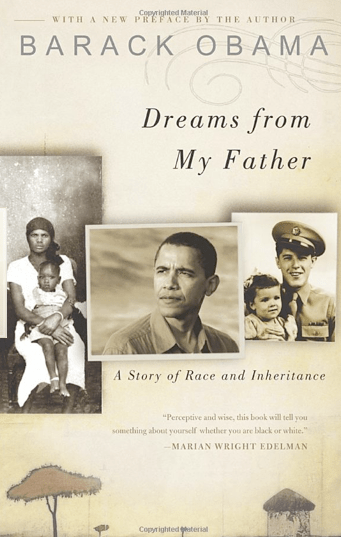
He is a gifted orator. He is a plodding writer. There is also a problem I find with autobiographies by anyone – we all fool ourselves, we all position ourselves in a better light, and we have no idea how transparent we are when we do so. Fellow bloggers, do you ever read anything you have written a couple years ago and squirm with embarrassment, or even delete? To be an author is a very very brave thing, when you have a book published, there is no going back, your transgressions are all right out there, and the public can be cruelly critical.
What I liked about the book is Obama-as-Third-Culture-Kid, a man of mixed identity. Most kids who have grown up moving or grown up in different countries from their own, or who have immigrated, can tell you, being an alien is no fun. Obama learns how to adapt, how to look for clues to fitting in, how to pass. It’s a common theme in Third-Culture-Kids.
My favorite part of the book was his return to Kenya, his openness to his African roots, the open-armed love with which his Kenyan half-brothers and sisters welcome him and his response. He had some truly extraordinary adventures, working out just who his father had been as a person. He was blessed to recognize the richness of his inheritance.
The book plods along, but it was worth the time. For all it’s flaws, I find I like that man, and I understand more about where he is coming from. (for grammarians, I understand more about from where the man is coming.) 🙂
Breakfast at the Beirut Restaurant, Suq al Waqif, Doha
“We want to take you for breakfast at the Beirut!” my friend said with enthusiasm, and I was shocked. She is totally covered. How could we eat at the Beirut? I remember her family loves the Beirut, and I remember lining up with all the other cars along Shar’aa al Karaba’a to buy felafel and foul and hummos, yes, oh yes, such good felafel. But it wasn’t really a place for ladies, especially covered ladies and their daughters.
As is usual with this friend, I never really have the complete picture. When my niece and I go to pick up my friend and her daughter, it is actually my friend and three daughters and we squeeze into my car and head – not to Karaba’a, but to the Suq al Waqif!
When I go to park in one of the new, tiny, narrow little parking spots, my friend laughs and says “You park like an American! I am going to show you how to park like us!” and she points to the one tree off in an unpaved area, and sure enough, there is one spot, not in the shade of the tree but in the shade of a large truck parked in the shade of the tree. “Now you are learning to park like we do!” she laughs, and I laugh too, I am always learning something from this friend.
We walk a short distance and she leads me into a restaurant which on the outside says Matam Beiroot, but it’s in Arabic. If you are walking from the upper parking lot, it is one of the very first buildings you come to, at the top of the street.
Inside, there are all kinds of tables and chairs, but my friend and her daughters lead us upstairs to the family section, where we sit off in the corner, so she and her daughters can sit with their backs to other customers while we eat. We are a strange group, two women covered head to toe, two younger girls in hijab, my blue-eyed-blonde niece and me, laughing and enjoying each other so much in the corner.
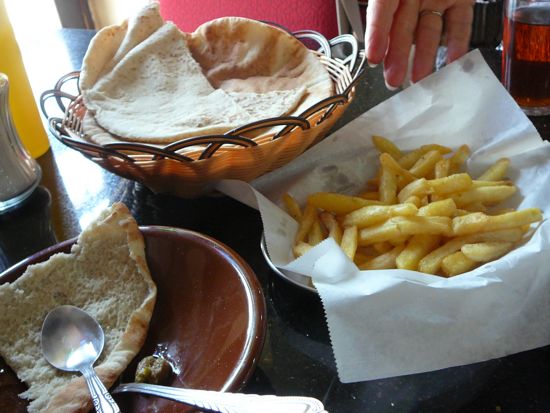
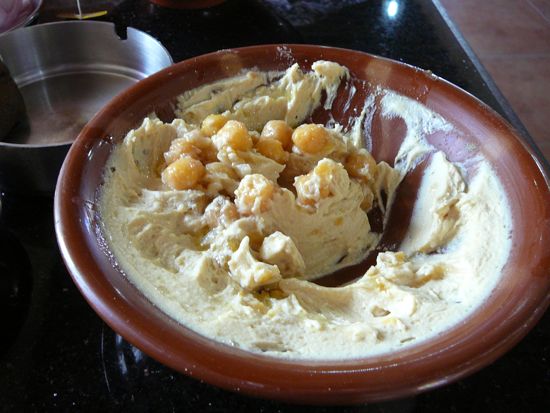
Since then, I have been back many times. The Beirut is a lot of fun for breakfast. They have wonderful felafel, and several different great hummos, and they have beans and the ubiquitous french fries, and tea. Grammy and I grabbed a quick bite there on our trip to the Suqs.
I really am so bad at remembering to take photos. This is where the felafel used to be, before we dipped them in the lemon juice and gobbled them all up:
here is what is left of the hummos:
And here is the traditional style ceiling with traditional style light fixtures:

Doha Ramadan Frenzy
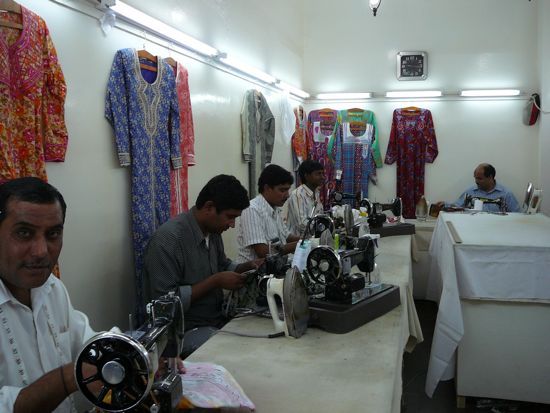
As my friend Grammy and I wandered through the back streets of Suq al Wa’ef 😉 yesterday, we came across this frenzied scene, all the machines humming, and new dresses for Ramadan being made. I asked if I could take a photo – I think it puzzles them that I would want to, but I loved watching them stitch away:
Recent Comments
intlxpatr on Shampoo Ginger tigerbutterya0c5ff1d… on Shampoo Ginger intlxpatr on British Soldier Kidnapped, Esc… John on British Soldier Kidnapped, Esc… intlxpatr on British Soldier Kidnapped, Esc… Wikipedia Donate Button

Amazina


Early Voting in Florida


 Here There and Everywhere