African Textiles at KTAA
If color, texture and weave are your kind of thing, there is a wonderful group in Kuwait for you. Before I even came to Kuwait, people told me about the Kuwait Textile Arts Association, and oh, what a trip.
A friend asked me if I were going to this month’s meeting. I hadn’t seen any announcements for it, and then she said “you ought to come! It’s African textiles.”
Magic words.
You know AdventureMan and I love going to Africa. And a meeting on African textiles? Woooo Hooooooo! Yes, I will admit it, I am totally a textile geek.
Africa is a huge subject to cover, when it comes to textiles, and the speaker did well – Nigeria, Tunisia, Cameroon, Mali, indigo dying, small loom weaving. . . You could teach an entire college level course on any one of those topics, and he gave a great overview.
You can join KTAA for 10KD per year, or you can attend each meeting for 2KD. Meetings are held once a month at the Sadu House, where they also have a fabulous collection of books on textiles.


Bowen: Cruzatte and Maria
Peter Bowen’s tales of Montana in transition are an acquired taste. When I first started reading them, at my sister’s recommendation, I had a hard time getting past the dialect. The main character, Gabriel DuPre, speaks English differently; he is Metis, a mixture of French, Indian and who knows what, here before America was America, as he says “long time gone.”
You get used to it. It still makes me think he should be in New Orleans, speaking as he does, it sounds very Cajun, but you get used to it.
Peter Bowen’s Gabriel DuPre is another treat to myself (like Donna Leon.) Reading the latest book I bought, saved for just this time, a cold wintery January, brightened my outlook considerably.
The first book I read, Wolf, No Wolf had to do with environmentalists putting wolves back into the mountains where once they had flourished, but where now, for a couple centuries, people have been raising cattle. Guess what? Hungry wolves love cattle. It makes for some very hostile feelings.
That theme – local culture against intruding environmentalists – continues in this book, where DuPre is hired as a consultant on a film being made about Lewis and Clark. The locals in the Coronado area are no happier with all the film crews and tourists than the ranchers were with the wolves – and people end up dead.
In addition, DuPre’s friend Benetsee and his daughter Maria spend time together in the sweat lodge, and later, his daughter, Marie, sees a mound and is revisited by a vision she had. She tells her dad, DuPre, to dig, and he uncovers a trove of treasures cached by the Lewis and Clark expedition. Partly, it is the incursion of the spiritual and supernatural that I find so intriguing in these books; there is a reality, and then a greater reality, and they co-exist. Bowen makes it seem and feel entirely natural. I love it.
The book has some highly entertaining, laugh-out-loud moments, takes great pokes at the eco-tourist, and at the same time deals with some serious issues. We get to hear DuPre fiddle his old Voyageur songs, we get to hear what people are saying at the local bar, where cheeseburgers are the plat du jour. It is a great way to pass a winter’s day.

Stop Means Stop!
From time to time, we can hear the police pulling people over outside our residence. It gives us a big grin. One of the things they say, in English, is:
“Hey Buddy! Pull over!”
And the other thing they say is:
“Stop means STOP!”
We hear these two phrases over and over, so it must be part of their training.

Hummos Wa Burghul

Do you see that black stone dish on the table, the one that has a dish in it called Hummos wa Burghul (Chickpeas and Cracked Wheat?)
I am trying to find a recipe to make it. Please, if you are Syrian or Jordanian, and you know how to make this, or maybe you have a mom or an aunt who knows how to make this, would you please share your recipe with me?
I found one recipe, for a Burghul Pilaf, from a 1959 Lebanese cookbook. It calls for 1 1/4 lbs of butter. (!!! AACK !!!) I remember it really did taste buttery, it was really yummy, but that sure seems like a lot of butter!
It was delicious. I’d really like to try to make it, if someone out there can help me out.
Berry and The Alexandrian Link
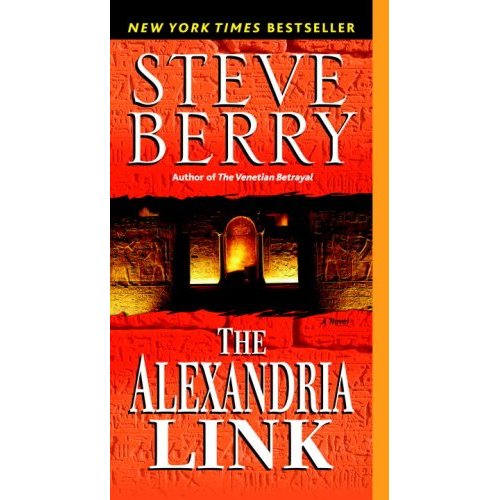
On his way back from a recent trip, AdventureMan bought a book in an airport, which he read and then asked me to read. Here is what he said:
“It’s not a great book, but I don’t know why I say that. It has an interesting idea and I want to know what you think.”
So just after I finished Inheritance of Loss I started in with this book, and it was the second book I will not recommend to you.
It is wooden. The characters are about a millimeter deep. The plot is unbelievable and doesn’t make sense and doesn’t hang together. It is full of adventure and travel and shoot-outs, which our “hero” miraculously comes through without a scratch while all around him his foes are dropping like flies.
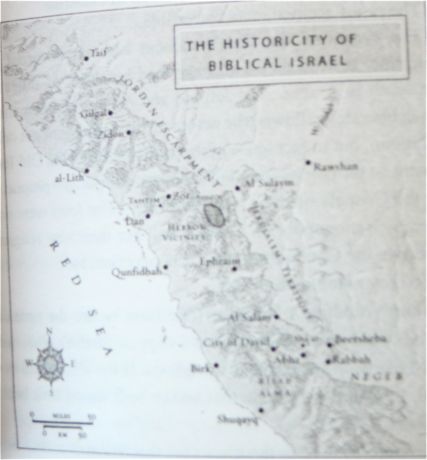
It DOES hinge on an interesting theory, one I had never heard before. There is a Lebanese historian and archaeologist, Kamal Salibi, who published a book called The Bible Came from Arabia. In this book Salibi makes his case for the “holy land” which was given to Abraham not being in Palestine at all, but rather in what is currently Saudi Arabia, along the western coast. He uses the utter lack of archeological findings in current day Israel/Palestine which support biblical accounts, and the plentitude of place names in the Asir region which closely resemble what the place names would have looked like and sounded like in ancient Hebrew, the language of the earliest biblical times.
The book, and the theory was, of course, controversial. If the contentions were true, it would undermine the foundation of the state of Israel in Palestine; it would mean that people have been fighting for the last 60 years over the wrong piece of land.
Here is a (very bad) photo of the map in the book which shows where Salibi believes the biblical cities were actually located. He believes “Jerusalem” was not a city, but an area within which were several cities. He believes “the Jordan” was not a river, but a mountain range, and that here, also, Moses and his refugees from Egypt wandered.
Unless you really love reading badly plotted books with cardboard characters, I would not recommend reading The Alexandrian Link. As a jumping off point for an interesting line of research – AdventureMan was right; this book gives you something new and different to contemplate.
Kuwaiti Women, Minors from Cradle to Grave
In an article in today’s Kuwait Times sure to raise discussions throughout Kuwait, staff writer Ahmad Al-Khaled brings up the laws requiring Kuwaiti women to have a husband /father/ guardian present to apply for a passport and other legal papers:
Published Date: January 15, 2008
By Ahmad Al-Khaled, Staff writer
KUWAIT: The issue of gender equality under the law has come under fire of late after an exasperated Kuwaiti woman wrote to a local Arabic newspaper telling the tale of her frustrated quest to renew her passport and was told the law required her to be accompanied by her male guardian. “It is frustrating that we are not considered equipped to act as our own guardians in 2008,” said a middle-aged Kuwaiti wife and mother of five, Um Talal, who read the woman’s letter describing how she was denied the right to renew her passport unless her husband accompanied her to the ministry.
While Kuwait is a Muslim nation, Kuwaiti law is not solely Sharia based, although it uses Sharia as a primary source of legislation according to the Constitution. Adult-aged Kuwaiti women are required under the law to be accompanied by their husband or father to renew their passports. If their father and husband are deceased or should they be divorced from their husband, they may be required to provide authorities with proof of their male guardian’s death or proof of their marital status.
“Why should we be required to offer such proof. It is insulting to be treated as if we Kuwaiti women are in need of guardianship. Shame on the government for continuing to allow such a law to remain in the books,” said a 30 something Fala Jassem. “It is not Islamic to treat women poorly, we are not children! Shame on anyone that calls this law Islamic,” said 65-year-old Bedour Bader.
While Kuwaiti women speaking to Kuwait Times were staunchly against the law, Kuwaiti men were divided with some going so far as to call the law a necessary requirement to keep their women protected. “It is a husband’s duty to act as a guardian for his wife. We must lead our families and this includes the wife,” said 53-year-old father of four Abdullah Nasser.
You can read the rest of the article HERE.
Inheritance of Loss
Most of the time, if I don’t like a book, I won’t even bother telling you about it. This book, The Inheritance of Loss, by Kiran Desai, is an exception for one reason – it IS worth reading.
Inheiritance of Loss showed up on the book club reading list for the year, and I ordered it. I read the cover when the book came, and it didn’t sound that good to me, so I read other books instead. The next time it came to mind was when a friend, reading the book, said she was having trouble with it, and asked me if I had started it. This friend is a READER, and a thinker. It caught my attention that she would have problems reading a book, so I decided to give it a try.
This is a very uncomfortable book. The characters live in the shadow of the Himalayan mountains. The most sympathetic character is a young orphaned girl, sent to live with her grandfather. With each chapter, we learn more about all the characters, how they came to be here, what they think, what their lives have looked like.
The author of this book has a very sour look on life. She has snotty things to say about every character. You can almost feel her peering around the corner, eyes slit with evil intent. She is that vicious neighbor who comes by and never says anything nice about anybody, and when you see her talking with your neighbor, you get the uneasy feeling she could be saying something mean about you, and she probably is.
The book covers a wide range of topics – Indian politics, Ghurka revolts, English colonization, Indian emigration to the US and UK, everyday vanities and pride in petty things, how people destroy their own lives, how people can be cruel to one another, oh it’s a great read (yes, that is sarcasm).
At the same time, this vicious unwelcome neighbor has a sharp eye for detail. You may not like what she is telling you, but you keep listening, because you can learn important tidbits of information from her. In my case, I learned a lot about how life is lived in a small mountain village in India, the struggles of illegals in America and how class lines are drawn, ever so finely, when people live together. I learned a lot about the legacy of colonialism, and the creep of globalization. This unwelcome neighbor has a sharp tongue, always complaining, and yet . . . some of her complaints have merit.
I don’t believe there was a single redeeming episode in the book. There was not a paragraph to feel good about. I am glad to be finished with the book – but, yes, I finished it, I didn’t just set it aside in disgust, or give it away without finishing.
Here is the reason I am telling you about this book – as uncomfortable as this book is to read, I have the feeling, upon finishing, that ideas and images from this book will stick with me for a long time. I have the feeling that it contributes to my greater understanding of how things work, how people think differently from other people, and on what levels we are very much the same.
Here is an excerpt from the book, at a time during which the Judge is a young Indian, studying in England:
The new boarding house boasted several rooms for rent, and here, among the other lodgers, he was to find his only friend in England: Bose.
They had similar inadequate clothes, similar forlornly empty rooms, similar poor native’s trunks. A look of recognition had passed between them at first sight, but also the assurance that they wouldn’t reveal one another’s secrets, not even to each other.
. . . Together they punted clumsily down the glaceed river to Grantchester and had tea among the jam sozzled wasps just as you were supposed to, enjoying themselves (but not really) as the heavy wasps fell from flight into their laps with a low battery buzz.
They had better luck in London, where they watched the changing of the guard at Buckingham Palace, avoided the other Indian students at Veeraswamy’s, ate shepherd’s pie instead, and agreed on the train home that Trafalgar Square was not quite up to British standards of hygiene – all those defecating pigeons, one of which had done a masala-colored doodle on Bose. It was Bose who showed Jemubhai what records to buy for his new gramophone: Caruso and Gigli. He also corrected his pronunciation: Jheelee, not Giggly. . . .
This it was that the judge eventually took revenge on his early confusions, his embarrassments gloved in something called “keeping up standards,” his accent behind a mask of a quiet. He found he began to be mistaken for something he wasn’t – a man of dignity. This accidental poise became more important than any other thing. He envied the English. He loathed Indians. He worked at being English with the passion of hatred and for what he would become, he would be despised by absolutely everyone, English and Indians both.
I consider this a review, and not particularly a recommendation. I read the book, I finished the book and I learned from the book. I didn’t like the book. I recommend it only as a challenge, for people who like to read and stretch their minds in new directions.
Jambalaya
We had friends in for dinner last night, and it was perfect Jambalaya weather. Nights are cold, and you want something that will warm you up and “stick to your ribs.”
“What is this?” my Kuwaiti friend asked, and I told him it was machboos if it were made in New Orleans, which made him laugh.
Like machboos, the recipe is infinitely variable. A lot of times, you put in what you have. Here is what I used, and it was delicious!
1 chopped onion
1 chopped green (or red) sweet pepper
Sautee together in olive oil and a little butter for richness.
Sautee 2.5 cups of rice in more olive oil and butter with 1 Tablespoon Tony Cochere’s Cajun Seasoning (available at the Sultan Center)
Add five cups liquid, made up of 3 packets of tomato paste (like the small cans we use in the US) plus chicken broth plus any liquid from the shrimp), bring to a boil, turn down and let simmer for 40 minutes or until rice has absorbed most of the liquid)
Add:
1 or 2 chopped tomatoes, for texture and color
1 cup chopped artichoke hearts
1 cup chopped chicken
1 smoked beef sausage (in the US this might be pork) chopped into pieces, or you could use a packet of the “Little Smokies” you can find at Sultan Center), pre-cooked
1 lb (500 grams) great big Kuwaiti shrimp
Stir in and let sit five minutes to heat all ingredients and so flavors blend.
Serve! This feeds six people generously, and up to twelve if other dishes are also served – salads, vegetables, etc.
Salary Belongs to Husband?
Muna al-Fuzai had a column yesterday in the Kuwait Times entitled Kuwaiti Women Accept Discrimination. (You can read the whole article by clicking on the blue type.)
In this article is one small paragraph that sends shivers down my spine:
A religious Islamic ruling was made recently to approve the husband’s right to take his wife’s salary because the time she spent outside was his own and thus he is entitled to take her salary, which she has worked so hard to earn.
It doesn’t sound to me as if it has the weight of law – like the first question I ask is:
• “do all Islamic religious rulers believe this to be true, or is this one guy’s opinion?”
• is it possible for this ruling to receive enough support to make it law?
• if it becomes law in Kuwait, does this law apply to all people living in Kuwait, or just to Kuwaitis?
This, to me, is a very scary ruling.
I’ve been married to AdventureMan for a long time. We’ve always discussed finances together, and we’ve both agreed on how to allocate our money and salaries. Sharing is very different from my earnings being controlled by someone else, no discussion. Or maybe discussion, but not necessarily.
But I am not Kuwaiti. If you are working, have ever worked, or intend to work, how does this ruling strike you?
Tagged by This Lady
Some tags are silly, but fun. This one . . . someone took some time. These questions are genuinely thought provoking. Thanks for tagging me, Lady.
*Do your closest friends have any nicknames for you? No. If they do, they don’t use it to my face! But when I have grandchildren, I am going to be called “Shisha.” I won’t tell you why, but it has nothing to do with smoking.
*What would your ex-(boyfriend/girlfriend/spouse) say about you in one sentence? “Life just isn’t the same without you.”
*What is the greatest achievement of your life so far? Staying married for years and years and years, and producing a son who is a successful adult. Sharing the triumphs of his graduation(s) and career and marriage with his father/ my husband.
*How should people think of sex in this, the 21st century? Often, and with joy.
*Where would you live if anywhere was possible? If anything were possible, I would live in a house with a view of the sea and mountains.
*Is there a religion that’s fulfilling for you and/or the masses? I am a Christian, and one who has come to believe that the ultimate truth will be a grand adventure. We all have glimpses, and we are limited. One day, we will see clearly, and not “through the glass, darkly.”
*What inspires awe in your life’s experience? People who create something out of nothing. People with vision who make things happen.
*What was/is your best pick-up line? The most interesting women don’t need a line; they are good listeners.
*What and when is the most potent emotion you’ve ever experienced and why? Anger. I am not an angry person, but once I knew I could kill to protect my son. On the very rare occasion when I get angry, my anger scares me, my primitive nature scares me.
*On what occasions do you act self-absorbed or just plain selfish? When I am tired past being able to sleep, or sick past being able to be gracious, or depressed beyond my ability to fight on. Then I need quiet, and rest, and miso soup, and to just curl into a ball until it’s passed.
*If someone assigned you a quest, or if you decided your own, what would you be looking to find? I would want to find the secret to helping us all just get along.
*If you had to choose between them, would you live in Hollywood, Washington D.C. or New York, and why? Oh please! Spare me. Neither!
*Who or what makes you feel “whole”? I feel whole when my spiritual life, my family life and my friend-life are all in order.
*Where is your greatest opportunity for change? I love living in places where my husband and I can walk. I feel the need for walking as exercise.
*What do you consider to be the greatest opportunity for humankind? To learn to live together, and to find a fair way to allocate resources.
*What surprises you about getting older? The betrayals of the body. Inside, you are still young!
*What or who makes you feel younger or rejuvenated? Walking, a good haircut, a great conversation.
*Where or when do you feel most alone? When my husband and I disagree.
*Where or how is society most ripe for change? When people are willing to step forward and take their part in making changes.
*Do you think of yourself as attractive to the opposite sex? 😉
*When or where do you feel the most free? In Seatttle, on the west coast, women are about as close to being equal people as I have ever hoped to see. I feel most free there.
*What is the greatest memory of your life to date? The night I discovered my brain had not turned to jello during childbirth and child-raising. You can read about it here.
*Where and when did you find out who you really are? A female mentor laughed and said “you have no idea yet what you are capable of” and I was so shocked I decided to start finding out.
*How and when do you collect your thoughts and why? I take a bath. I wash off any defilement and pray for discernment.
*If someone told you when and where you would die, what would you do immediately after being told? I would thank God for the many many blessings he has given me, especially seeing our son dance at his wedding, and living happily, and for the years I have had with my husband, and the lively and exciting life we have had together, then I would make lunch dates with my dearest friends one-on-one, to say goodbye and thank them for their contributions to my life.
*What are the best parts of being in love? Learning how many many kinds of love their are, and that love is a verb, and a choice.
*What’s your favorite libation (a drink offered to a god)? I really like coffee! And ginger beer (it is not really beer)
*What “life philosophies” have you adopted since you’ve become an adult? Serve God first, live life so that you have no regrets, stay out of debt, invest for the future, life’s true riches are the blessings of the angels God sends you in family and friends and even brief moments of connection with others.
*How would you like to be remembered? I would love for people to say “Whoa! She was a pistol!” 🙂
I TAG star blogger FONZY, Kuwait’s premier blogger Don Veto, sweet True Faith, Touche, who thinks outside the box, Chirp, because I want to know the answers, and a blogger I think is going to have a very interesting life, MirimtheMirim. I also tag my niece, Beiruti-blogger Little Diamond.
Recent Comments
ExpatAlien on What Country am I Living … intlxpatr on Yellowstone: Old Faithful to C… Michelle on Yellowstone: Old Faithful to C… Cathy on No Grown-Ups in Charge intlxpatr on Waiting for Snow Wikipedia Donate Button

Amazina


Early Voting in Florida


 Here There and Everywhere