Why I Love Reading James Lee Burke
For James Lee Burke, I make an exception to the paperback only rule. (Paperbacks are lighter, so if you fall asleep, they don’t hurt you when they fall over. They travel well on airplanes, and you can leave them behind when you finish them, and not feel bad. Yes, I have heard about Kindle. No, I don’t think it meets my needs. I like to pass books along.)
I was on the “mail it to me the day it comes out” list at Amazon for his newest book, a Hackberry Holland mystery set in the wilds of Texas. I hit page 2 and came across this:
“The sheriff had arrived at an age when he no longer speculated on the validity of a madman’s visions or, in general, the foibles of human behavior. Instead, Hackberry Holland’s greatest fear was his fellow man’s propensity to act collectively, in militaristic lockstep, under the banner of God and country. Mobs did not rush across town to do good deeds, and in Hackberry’s view, there was no more odious taint on any social or political endeavor than universal approval. . . “
His books transcend the banality of modern mysteries.
This book is Feast Day of Fools, and I’ll tell you more about it when I’ve finished.
Not-So-Real Housewives
Over Thai food, I confessed my guilty secret – I can’t help it, I watch the Real Housewives of Beverly Hills and the Real Housewives of New York. I expected a horrified response from my sweet smart niece, Professor Little Diamond, but she just laughed.

“Oh we all watch them,” she reassured me, “It’s like watching a train wreck, you are appalled, but you can’t look away.”
What makes me really, really nervous about these ‘real’ housewives is that I think that the Bravo station is carried in Qatar and Kuwait and Saudi Arabia. While the more educated have travelled, and know that these ‘real’ housewives are not the norm, there may be many who think that this is the life of the American female.

I remember when I shocked my Qatari friends as I told them I was going home to take care of my Dad while my Mom had a knee replacement and spent a few weeks in rehab. They didn’t know we take care of our parents; they thought we just put them in grim warehouse like nursing homes. How did they know? From television, of course.
So you can understand I have a major concern that these women are representing us normal people in the homes of our friends in the Middle East. These women spend a lot of money on scanty clothing, these women have people who come in and do their make-up before a dinner party, these people have nannies taking care of their children (many of whom are really bratty) and they all seem to be designing handbags or creating make-up lines or (oh-no!) cutting records to try to get a singing career started.
Ask yourself this – who do you know in your own circles who would agree to have camera crews follow them around in their lives, filming their most intimate conversations? Who do you know in your circle who creates drama and conflict? Who do you know who needs the affirmation of an audience to believe her life is worth living? Who in your circle is addicted to plastic surgery or throws charity events to get attention? Those are the women they are filming.
You never see these women go to church. You rarely see them cooking up a normal dinner for their family. You don’t see any of them heading off to an 8 – 5 job. You don’t see them doing all the normal things we normal American housewives do (a lot like our sisters do in every country of the world) like laundry, running the kids to school, doctors appointments, soccer matches, paying the bills, scrubbing the floor, making appointments at the veterinarian, getting the car serviced, buying groceries, going to PTA, or doing their volunteer work. You don’t see them running over to their children’s house to babysit, or going to their exercise classes.
But then again, if they were doing all these things that us REAL housewives do, who would watch, LLLLOOOOOLLLLLLL! I understand there may be some sister Real wives series coming up from foreign countries. It will be interesting to see how their lives look.
Male on Male Sexual Abuse on Law and Order
AdventureMan teases me about my loyalty to the Law and Order Series . . . “Ripped from the headlines!” he will taunt me, when I flip the channel. We often watch separate TV’s when he wants to watch one of his droning military history channels and I want to watch Law and Order re-runs. But tonight’s L&O will tackle a topic no-one talks about – male on male rape and abuse.
I was so naive. I thought it only happened in prisons. While I was living in Qatar, I started hearing horrific stories about young men abducted and taken to the desert, often gang raped. Most of them lived, but had to deal with the aftermath of the violence and humiliation. In Kuwait, it was reported almost weekly in the papers, it was so common. I had a friend whose son was abducted, and walked with her through the horrors of the aftermath. Her greatest fear was that her son would commit suicide. He overcame his abduction, and is happy now, but the path was long, and full of perils along the way.
Male on male rape, like male on female rape, or any kind of rape, is not about sex. It’s about power. It’s about humiliation. It’s bullying taken to the extreme. It’s just wrong.
From AOL TV:
The second episode of ‘Law & Order: SVU’ Season 13 is one for the TV history books. Not only does it feature guest stars Dan Lauria, Mechad Brooks, Carmelo Anthony and Chris Bosh, but it’ll also tackle the taboo issue of male-on-male sexual violence.
In ‘Personal Fouls,’ a basketball coach known as a trusted mentor and figure in the community comes under suspicion of molesting a number of his players.
“This script was very exciting and I think the cast felt honored and excited to be able to talk about this issue because obviously sexual violence is something people are scared to talk about,” series star Mariska Hargitay said at a recent press event on the ‘SVU’ set.
Hargitay’s The Joyful Heart Foundation, Wolf Films, NBC, 1in6 and A Call to Men are partnering in an effort to raise awareness about male-on-male sexual abuse.
“It takes so much courage to come forward and male-on-male sexual violence is even more swept under the carpet,” she said. “The statistics are frightening.”
According to statistics from 1in6, an organization that seeks to help male sexual abuse survivors, 19 million men in the United States are victims of sexual abuse.
“It’s exciting to do a show about it because obviously when things are on TV somehow they’re made OK to talk about and that’s been exciting.”
The partnerships between the organizations hope to spread awareness about the subject. Hargitay said one of the objectives is to “let male survivors know they’re not alone and there are so many people that want to help them.”
“It’s not a shameful secret that you should keep to yourself, that the blame belongs with the perpetrator, not the survivor,” she said.
Taste of India in Pensacola – They’re Back!
I didn’t want to say anything. There is only ONE Indian restaurant that I know of in Pensacola, and it is just a short drive from where we live. When we moved here, it was really really good, and we went there often. Then it changed hands, and it was still OK, but not the same. Then when we went in, it was all different, and the food was NOT spicy – they dumbed it down! We were disappointed, but we didn’t want there to be NO Indian restaurants in Pensacola.

We think maybe it changed hands a time or two. We wanted to go back, but had been so disappointed by the dumbing-down that we just couldn’t do it. Today, we had decided to give it one more try.
We are so glad we did. Once again under new management, the Taste of India is great tasting food once again. The buffet had a good assortment of tasty dishes, mostly veg, which we like, but so rich and flavorful that you don’t even miss the meat. There were also several really good condiments, home made and delicious.
Yes. It is a little spicy, meaning tasty. It is not bury-your-mouth spicy, only tasty spicy. Only go to Taste of India if you like REAL Indian tastes, fresh fresh fresh and delicately made. It was a delight to be able to eat there and enjoy the food once again. Lucky lucky us, and lucky lucky Pensacola to have Indian food of this calibre. 🙂
There is a lunch buffet, and there is a dinner and take out menu. It looks like they are doing some improvements to the building, too. Welcome back, Taste of India!
Uyen Nichole Duong: Mimi and Her Mirror
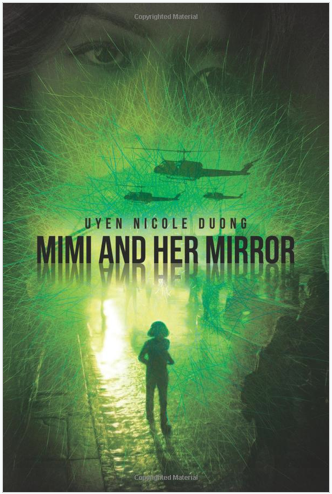
I must be on a streak. I really wanted to like this main character, Mi Chou (Mimi) but I found her obsessive, impulsive, overly emotional, self-absorbed and boastful. Her strongest relationship in the book is with her three way mirror. She specifically claims not to be narcissistic, and I think the story tells us otherwise.
The book is supposed to be fictional, and I truly hope some parts are fictional, but the strengths of the book lie in the ‘coming to America’ experience, which she captures well. She has a strong eye for ironies, hypocrisies and cultural differences. Her beginnings are vague, as is often the case when an immigrant goes through the shell-shock of being cut off from their own culture and grafted into another. I believe the author drew strongly on her own experiences to write this part of the book, and to me, it is the strongest part.
Mi Chau and her family leave Viet Nam during the great evacuation, and are given a spot on the planes that should have gone to someone else. Her entire family, mother, father, sister and brother all escape together, leaving behind a beloved grandmother who refuses to leave. Their entry into the US goes smoothly. They are the first wave of Vietnamese, the lucky ones. They have support, they have jobs. They have lost their own world, and they struggle. All this is part of the normal immigrant experience.
Neither is it abnormal that the children thrive through their struggles, and achieve excellent eduations. What is distracting to me in the book is how Mimi bases her self worth first on her academic excellence, and later in life on what she owns, and on her status. She has accomplished so much, she owns high-status symbols, but she is miserable and her life is empty.
Is it because of her experience as she evacuates out of Vietnam? Is it a character defect? There are no meaningful relationships in her life, she lives an empty and soulless existence, focusing on work and accomplishment and status symbols. Her major problem, as I see it, is an unwillingness to connect, to step out of herself and see through other’s eyes.
It’s an interesting book. There are, in my opinion, better books about the Vietnamese coming-to-America experience, and one is Anne Fadiman’s The Spirit Catches You and You Fall Down about immigrant Hmong, which is rich in cultural teachings, rich in relationships, and I still remember details more than ten years after I first read it. It is only available in Kindle format now, through Amazon, although they may have a used copy from time to time. Way better book than Mimi.

Anne Enright: The Gathering
What is it with my problem with Man Booker Award winners? The last one I remember is White Tiger, which we read in our Kuwait book group, and I hated. Actually, it was the main character I hated . . . and possibly that is what is happening with me and The Gathering, now that I think about it.

We meet Veronica, Irish, from a large Irish family, as she learns of the death of her brother Liam. Through claiming the body, preparing for the funeral, the funeral and the aftermath, we are there with Veronica as she whines and complains, as she disparages her family members while ignoring her own husband and family, and she drinks too much. She gets up at noon, and stays up all night, avoiding her husband. Her language is frightful, and her sexual episodes are crude and explicit . . . offensive, but maybe it is the utter distraught nature of a woman in the throes of the deepest grief?
Slowly, slowly, the story unfolds. For me, I was never sure what was truth and what was imagination, in terms of the story. Were the children abused, molested, neglected? Or are these the creative imaginings of a troubled woman? There seems to be a thread of insanity in the family – can we trust that she is a reliable narrator?
As little as I liked the main character – hmmmm, that seems to be a problem I am having a lot right now, or at least I’ve had a run of main characters I don’t like very well – I finished this book. I’m glad I read it so that I can talk about it if it comes up in a discussion, but it did not inspire or elevate me in any way, and I didn’t even feel a lot of compassion for the narrator.
Emergency Message for U.S Citizens: Demonstration Notice 14-2011
Emergency Message for U.S Citizens � Demonstration Notice 14-2011
September 20, 2011
Please circulate the following message without additions or omissions
immediately to all U.S. citizens within your area of responsibility.
An anti-corruption demonstration is planned for the early evening hours at
Determination Square on Wednesday, September 21 in downtown Kuwait City. An
increased police and security presence is expected in and around the capital.
There are also reports of possible demonstrations in support of Bidoon rights on
Wednesday, September 21 in the cities of Jahra, Al-Sulaibyah and Al-Ahmadi. An
increased police and security presence is also expected in these areas.
Spontaneous and planned demonstrations take place in Kuwait from time to time in
response to world events or local developments.
At times, even demonstrations intended to be peaceful can turn confrontational and possibly escalate into violence. Do not let curiosity get the best of you; avoid the areas of demonstrations and exercise caution if within the vicinity of any large gatherings. Please stay current with media coverage of local events, be aware of your surroundings, and practice personal security awareness at all times.
For the latest security information, U.S. citizens living and traveling abroad
should regularly monitor the Department of State’s Bureau of Consular Affairs
Internet website, where the current Worldwide Caution, Travel Warnings, Travel
Alerts, as well as the Country Specific Information for Kuwait can be found.
Up-to-date information on security can also be obtained by calling
1-888-407-4747 toll-free in the United States and Canada or, for callers outside
the United States and Canada, a regular toll line at 1-202-501-4444. These
numbers are available from 8:00 a.m. to 8:00 p.m. Eastern Time, Monday through
Friday (except U.S. federal holidays). You can also download our free Smart
Traveler App for travel information at your fingertips and follow us on Twitter
and the Bureau of Consular Affairs page on Facebook as well.
The U.S. Embassy is located at Al-Masjid Al-Aqsa Street, Block 6, Plot 14,
Bayan, Kuwait. If you are a U.S. citizen in need of emergency assistance in
Kuwait, you may reach the U.S. Embassy by calling +965-2259-1001 and requesting
the duty officer.
U.S. citizens living or traveling in Kuwait are encouraged to enroll in the
Department�s Smart Traveler Enrollment Program (STEP) so that they can obtain
updated information on travel and security. U.S. citizens without internet
access may enroll directly with the nearest U.S. Embassy or Consulate. By
enrolling, U.S. citizens make it easier for the Embassy or Consulate to contact
them in case of emergency. For additional information, please refer to “A Safe
Trip Abroad”.
This message may be accessed on the Embassy website, http://kuwait.usembassy.gov
Please note that the Consular Section is closed for U.S. and most local
holidays. The current holiday schedule for 2011 is posted on
http://kuwait.usembassy.gov/holidays.html
Emily Arsenault: In Search of the Rose Notes
I think I got this book because I saw some of my book-loving friends on Good Reads reading it. When I started reading it, I thought, “Hmmm, big print, short chapters and the main character is a pre-teen, hmmm, this has the feel of a teen-book,” but by then it was too late, I was already hooked, so I read the whole book and I am glad I did.
So the writing is not all that complex. I actually like teen books because teens and twenties deal so much with making moral choices. They are at that wonderful age when they think about things and decides what matters to them. There are many of those I would rather hang around than people my own age who want to talk about shopping or shoes or aches and pains.
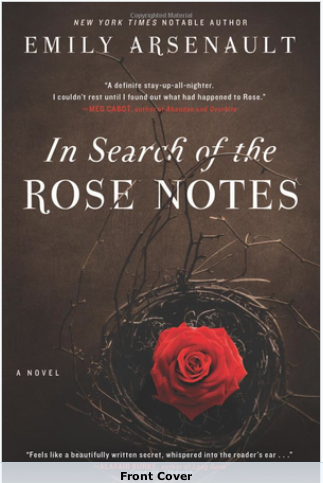
(You can find this book at Amazon.com)
Nora hangs out a lot with Charlotte, her best friend, while her single mother works full time. Charlotte is bossy, but never boring, as they explore the pre-teen world together. They have a babysitter, Rose, who watches over them and keeps them out of trouble. Until one day Rose disappears.
The book switches back and forth from these pre-teen experiences to a later time, maybe 15 years later, when Rose’s body is unearthed, and once again Nora experiences a lot of feelings she had buried. I loved the depiction of high school, where so many kids are suicidal, and life is cruel. High school just isn’t a kind place, even for those who look like they are having a great time.
At the same time, there were some good relationships, and you get to look back with Nora at people who were kind, but you were too absorbed in your own feelings to notice. It’s a complex world, and we get to go back and explore it once again through Nora’s eyes.
I’m glad I read it. This book did not change my life, but it is a great book for people who either are younger, or who like younger people, as I do.
Contagion
As we rushed into the house, we both headed immediately to our bathrooms to wash our hands. Twice. And I also washed my face.
Contagion is a very intelligent movie. It is scary, but not in the Friday the 13th kind of scary, or in the Night of the Living Dead kind of scary, although come to think of it, there were some elements in common with the original Night of the Living Dead. No, what makes Contagion scary is that it could happen so easily.

I had no idea that we touch our faces, on the average, of three to five times a minute, more than 3,000 times a day, and that with every surface we touch, we transfer (germs) (bacteria) (things that could make you sick) close to an entry to your body, like your nostrils and your mouth. Once you start thinking about NOT touching your face, you become aware of how often you touch your own face, unaware. Like flipping hair out of your eyes, or covering your mouth when you laugh, or a million other things like that. You become aware of all the things you touch between the time you wash your hands and touch your food. You think about who may have touched your fork, and how well it was washed.
For me, the scariest part of the movie, beyond how quickly the virus mutated and spread, was how quickly civil society broke down when cities were quarantined, when people were concerned food was growing scarce, when people thought they had to fight for survival. The rules for avoiding spreading the virus were not to meet, not to touch, to stay apart. It’s hard to help one another when those rules are in play, but those rules make it easier for those without rules to attack and take what they can.
I liked the music in the movie, too, very edgy.
Before I ever saw this movie, I heard an interview with the author on NPR. She was saying that when they came to her wanting to make this movie, she said “it cannot start in Africa. . . (there were a whole bunch of rules, which were hilarious because they were like every plot for a movie like this ever made) I knew I needed to see this movie, to see how it could be done and still be dramatic, and follow her rules.
There is one hilarious quote. A blogger in this movie gains enormous following. As he is tracking down one of the scientists for information, the scientist says to him:
Blogging is not writing. It’s just graffiti with punctuation.
Excuse me, gotta go wash my hands again.
Recent Comments
intlxpatr on Shampoo Ginger tigerbutterya0c5ff1d… on Shampoo Ginger intlxpatr on British Soldier Kidnapped, Esc… John on British Soldier Kidnapped, Esc… intlxpatr on British Soldier Kidnapped, Esc… Wikipedia Donate Button

Amazina


Early Voting in Florida


