Move 30 times? Check. Manage finances? Check. Buy or sell a house? Check. Buy a car? Check. It’s not that hard. You figure it out, you do it.
Every now and then you have a crisis that’s outside your comfort zone. This week we ran into one of those.
We’ve had a microwave, a wonderful huge microwave, with a platter that runs back and forth, instead of a circular revolving plate. About a year ago, it started stopping in mid-cook and the display would show “F9”, not a big deal, with a little jiggling, a little work around, we could get it working again and it worked most of the time.

We bit the bullet. OK, just time to get a new microwave, go somewhere where we can buy it and have it installed, because installing is outside of what we can do well.
We get to the store and discover that 36″ microwaves are very special. So special that the only one carried runs in the over $1000 range. We go to another store, same story. Evidently 36″ was to go over a 36″ range, which we have, but is no longer so trendy. Oh aarrgh. We decide to go home and do some online research, only to learn that the 36″ version for over $1000 has very poor ratings and the same problem that we currently have, made by the same manufacturer. Double aarrgh, and double aarrgh again because while AdventureMan and I are good problem solvers, we are out of our pay grade when it comes to kitchen design and installation, but we know enough to know that it has to look right.
(Does it seem to you like American appliances don’t last as long as they used to? Some old appliances I have had run forever, but I feel like I am constantly replacing or having repaired the newer appliances)
When we bought our house, we bought it from a man who has a lot of fun redesigning and remodeling and updating houses. The kitchen is small, but beautifully high end. Fortunately, he is local and I have his number so I called him and asked for his design input. He gave me several good ideas, and even better, we had a great, wonderful chat and I was able to tell him how much we enjoy the little touches he put in the house to make it special. By the time I finished, I had a plan, and it dovetails with some other work we have scheduled, to have a tankless water system put in.
Years ago, a friend gave me a book mark I still have, a quote from Bishop Sheen that says “All worry is atheism, because it is a want of trust in God” and while I believe that is true, and have greatly banished worry from my daily life, every now I find myself that squirrel running on that wheel of anxiety, knowing I am worrying for nothing, but unable, in my own strength, to get off the wheel. Thanks be to God, in his mercy, for leading me off that fruitless path!
April 25, 2014
Posted by intlxpatr |
Cultural, Customer Service, ExPat Life, Family Issues, Financial Issues, Florida, Home Improvements, Interconnected, Living Conditions, Pensacola, Shopping |
Leave a comment
“What will you be doing today?” asks AdventureMan as he heads out the door to the Extension Office gardens to work, helping get everything ready for the Great Spring Sale coming up the first weekend in May.
“Not much!” I grin in return.
I have always loved Thursdays, even when I was young. Thursday was always the day before Friday, a day to anticipate without feeling rushed. I am a planner. Planning takes time. You can’t plan well when you are rushed, you need quiet, uninterrupted TIME. (Have you noticed how precious time is, and we spend it like nothing?)
This week was a normal week – full. Monday we kept the grandkids because their school was closed;


Tuesday I volunteer, Wednesday I have a bible study . . . Fridays I have water aerobics and a trip to the commissary or whatever I need to do to prepare for the weekend, which tomorrow means commissary because we have guests again on Sunday. Dinners require planning, more so now that I don’t have people who help me get it all on the table, off the table, coffee and dessert served, leftovers into the refrigerator and dishes into the dishwasher or washed up. It used to be so easy. (sigh)
But today is my day. I can catch up, I can upload those photos, I can print them off for my upcoming visit to see my Mom for Mother’s Day, I can plan the menu for Sunday, check the pantry and freezer to see what I will need to pick up. I can catalog some photos, I can finish quilting one of the charity quilts. Today is sheer luxury, time!
I can even catch up with the blog a little 🙂
April 24, 2014
Posted by intlxpatr |
Aging, Circle of Life and Death, Community, Cultural, Family Issues, Interconnected, Living Conditions, Pensacola |
2 Comments
Today the church prays for the Diocese of Cashel and Ossory. Fascinating history these Irish people have, full of waves of immigrations and invaders and territorial squabbles. Here’s what Wikipedia had to say:
When the Church in England broke communion with the Roman Catholic Church, the Church of England was established by the state as the established church. Later, by decree of the Irish Parliament, a similar new body became the State Church in the Kingdom of Ireland. It assumed possession of most Church property (and so retained a great repository of religious architecture and other items, though some were later destroyed). The substantial majority of the population remained faithful to the Latin Rite of Roman Catholicism, despite the political and economic advantages of membership in the state church. They were obliged to find alternative premises and to conduct their services in secret. The English-speaking minority mostly adhered to the Church of Ireland or to Presbyterianism. In 1833, the two provinces of Dublin and Cashel were merged. Over the centuries, numerous dioceses were merged, in view of declining membership. The same is true for this diocese where it can be seen that each of the entities listed in the title would have been a diocese in its own right. It is for this reason that the united diocese has six cathedrals.
And the highlighted green is the diocese of Cashel and Ossary:
 When we visited Cashel, it was because of the legend of Saint Patrick, and it was one of the most beautiful and memorable places we have ever visited, lots of places to walk and see. Here’s more from Wikipedia:
According to local mythology, the Rock of Cashel originated in the Devil’s Bit, a mountain 20 miles (30 km) north of Cashel when St. Patrick banished Satan from a cave, resulting in the Rock’s landing in Cashel.[1] Cashel is reputed to be the site of the conversion of the King of Munster by St. Patrick in the 5th century.
The Rock of Cashel was the traditional seat of the kings of Munster for several hundred years prior to theNorman invasion. In 1101, the King of Munster,Muirchertach Ua Briain, donated his fortress on the Rock to the Church. The picturesque complex has a character of its own and is one of the most remarkable collections of Celtic art and medieval architectureto be found anywhere in Europe.[2] Few remnants of the early structures survive; the majority of buildings on the current site date from the 12th and 13th centuries

April 24, 2014
Posted by intlxpatr |
Arts & Handicrafts, Beauty, Cross Cultural, Cultural, ExPat Life, Faith, Ireland, Road Trips |
Leave a comment

“Ouch! Ouch, Chimanda! Stop!”
(Oh wait.)
Don’t stop.
It’s me who can’t stop. I read everything Chimamanda Ngozi Adichie writes. I only started reading her by accident, when I was facilitating the Kuwait Book Club I never intended to belong to, and found myself reading so many books by authors I had never heard of. We were reading Half Of a Yellow Sun and all of a sudden, I WAS Nigerian. She can do that. She uses the senses, she uses the thoughts in our head. We are really not so alien, us and the Nigerians I start to think. I have Nigerian friends, from the church. We all get along. We have a good time together.
“Not so fast!” Chimamanda tells me in Americanah, her newest book, which I put off buying until I could find it in paperback. “You are very different! You think differently! And growing up in a country where there are black and white, race becomes an issue that it is not when you are black, and everyone is black, and you are growing up in Nigeria.”
Hmmm. OK. That makes sense. I mean, I thought I was Nigerian because in Half of a Yellow Sun, I was Igbo, living in an academic community in Nigeria, and hmmmm. You’re right, Chimamanda, there were no white people around. Just us Nigerians.
Chimamanda, with her sharp, all-seeing eyes, her sharp ears and her sharp tongue make me cringe as she comes to the USA and comes up against assumptions many have about Africa. Do you even know where, exactly, Nigeria is? Do you know where Ghana is? Most Americans can find Egypt on a map of Africa, and MAYBE South Africa, but the rest is . . . mostly guesswork. Because we send clothing and food aid to African countries, we have the idea that all Africans are poor, but that is not so, and is insulting to the middle-class and upper class Africans who travel elsewhere for leisure – and education.
I don’t know how much of Chimamanda Ngozi Adichie’s book is autobiographical and how much is fiction. I know that her observations are acute, she nails expat friendships, she spotlights our blind spots and hypocricies, and she holds you in her grip because she is no less harsh with herself – if, indeed, her Ifemelu, the main character in Americanah, is reflecting Chimamanda’s own experience. The experiences, coming here, the overwhelming differences in manners and customs, even volume of voice and width of hand expression, are so immediate, so compelling, so well described that they have to have been experiences she herself had, and had the eyes to see. She must have taken notes, because she totally nails the expat experience.
Book ads and book reviews focus on Americanah as a book about being black in America, and it truly is that – as seen from the eyes of a non-American black, as she often reminds us.
She is hard on herself, returning to Nigeria, and quick to note that much of the change is in herself and her changed perspective. While I love the romantic storyline, I was disappointed by the fantasy ending, given how self-disciplined Adichie is at keeping it real in every other facet of the novel. On the other hand, I am still trying to think of an ending that would work for me, and I can’t. While her ending wraps it all up neatly, it’s the one part of the book where her sharpness dulls.
One of the things I liked best about the book was going behind the scenes, being Nigerian, going to school, having coffee, working, going to parties with other Nigerians, chatting with my girlfriends. We’ve done things with nationals of different countries before, but you know as soon as you walk in that your presence changes things. Chimamanda Ngozi Adichie takes me with her and no one knows I am there, observing, learning, figuring out how things are done when it’s “just us” Nigerians.
Here’s why I am a Chimamanda Ngozi Adichie addict. She keeps it real. She has eyes that see, and ears that hear, and a gift for capturing what she sees and hears and a gift for writing it down. She has insight, into herself, into others, into character and motivations. She is sophisticated and unpretentious, she admires and she mocks, but when she mocks, it is as likely to be self-mockery as mockery of another person, class, ethnicity or nation. Reading Adichie, I understand our similarities – and our differences. I believe she would be a prickly friend to have, but I would chose her as a friend.
Awards
● Winner of the 2013 National Book Critics Circle Award for Fiction
● One of The New York Times’s Ten Best Books of the Year
● Winner of the The Chicago Tribune 2013 Heartland Prize for Fiction
● An NPR “Great Reads” Book, a Washington Post Notable Book, a Seattle
Times Best Book, an Entertainment Weekly Top Fiction Book, a Newsday Top 10 Book, and a Goodreads Best of the Year pick.
April 17, 2014
Posted by intlxpatr |
Africa, Beauty, Books, Character, Civility, Community, Cross Cultural, Cultural, Customer Service, ExPat Life, Fiction, Interconnected, Kuwait, Living Conditions, Nigeria, Political Issues, Social Issues, Women's Issues | Chimamanda Ngozi Adichie, Igbo, Nigerian |
4 Comments
From todays Arab Times Kuwait:
‘Wasta’ Major Setback In Battle Against Crime; Some Police Not Keen To Tackle Issues
In this week’s online poll, the Arab Times probed the factors that are blunting the efforts to fight crime in Kuwait. A majority of the voters felt that Wasta is a major setback to the fight against crime. About 56% of the voters felt this way.
Speaking to the Arab Times, respondents said criminals use Wasta to escape the long arm of the law. “I know a citizen who routinely cuts red lights. He pats his back and says that he has Wasta to dodge penalties. This is a traffic offence, and may not be considered a crime. However, if this is possible in the case of traffic offences, it should be possible in major crimes too.” Another respondent shared a personal experience when one of his neighbors had a conflict with the landlord.
The neighbor decided to go to the court, and he was asked to pay the rent there. However, the person in charge of collecting the rent in the court gave lame excuses and avoiding collecting the amount in time. The landlord used this as a pretext to procure an ejection notice from the court. “It looks like some authorities in the court were in cahoots with the landlord to deny justice to my neighbor.”
About 13% of the voters felt that law keepers themselves become law breakers, and that’s why it becomes hard to fight crimes. Respondents cited the example of the recent case that made headlines when cops raped a woman in her flat, entering her flat under the pretext of looking for residence violators. “This is an example of policemen stooping to the lowest level, becoming worse than criminals.” Others brought up a report that Arab Times had published some time back about the ‘Trolley Mafia” in the airport. “The workers in the airport literally extort money from the passengers forcing the trolley service on them for a charge of 500 fils.
They do not let us take the trolley.” Respondents said it’s highly improbable for this mafia to work in this fashion without the knowledge and blessings of the concerned authorities in the airport, especially after the report coming in the newspapers several times. One of the respondents said that he had an altercation with one of the workers in the airport over the trolley. “I used an expletive in the course of the heated exchange, and the worker complained to a policeman in duty.
The cop came over to me to inquire if I had used the bad word, but as he didn’t speak our language I told him that it was only an impolite word, and not a bad word. The officer went to the extent of calling another passenger, who spoke our language, to verify if what I was saying was true. To my good luck, the passenger concurred with me.
The officer let me go, but then I complained to him about the worker who was trying to extort money from me. The officer walked away as if he couldn’t care less.” The trolley mafia is continuing to operate without any hassles, and people suspect the tacit support of the authorities.
About 16% of the voters said that the police are not very keen on solving crimes, and that is encouraging criminals. Other reasons for the increase in crime in the society, according to the poll, included unemployed youth wanting to make quick money, corrupt politicians and crime getting accepted as a part of life. However, these only won very small percentage of votes. A very tiny fraction of voters felt that criminals are getting smarter.
By: Valiya S Sajjad Arab Times Staff
April 11, 2014
Posted by intlxpatr |
Community, Crime, Cultural, ExPat Life, Kuwait, Law and Order, Living Conditions, Local Lore |
8 Comments
Abdullah Al Dawood, Saudi Islamic Cleric, Claims PE Classes For Girls Is First Step To Prostitution
Saudi Arabia is getting closer to adding physical education classes for girls to public schools, but some conservative Islamic clerics are slamming the move as a “Western innovation,” according to the Wall Street Journal.
After the kingdom’s advisory Shoura Council voted 92-18 on Tuesday to advise the Ministry of Education to look into girls’ P.E. classes, conservatives made their ire known on social media — and they got very dramatic.
“If we keep silent about the step of adding PE classes to girls’ schools then we are giving the Shoura Council a green light to continue the steps of Westernization and these steps will end in infidelity and prostitution,” tweeted Abdullah Al Dawood, according to WSJ.
Saudi Arabia is currently facing a health crisis, as a study found that a shocking 44% of Saudi women are obese.
Though gender roles remain traditional in the Islamic nation, Saudi Arabia made history two years ago when it included women on its Olympic team for the first time.
Reuters reports that the Shoura Council asked the Ministry of Education to look into gym for girls with the caveat that all classes conform to sharia regulations regarding attire and gender segregation.
April 11, 2014
Posted by intlxpatr |
Cultural, Exercise, ExPat Life, Health Issues, Living Conditions, Local Lore, Saudi Arabia, Women's Issues | Abdullah Al Dawood |
Leave a comment
Today the church prays for the diocese of Byumba, in Rwanda. There is Rwanda, below, right in the heart of Africa, nestled between the Democratic Republic of the Congo, Uganda, Kenya, Tanzania and Burundi.
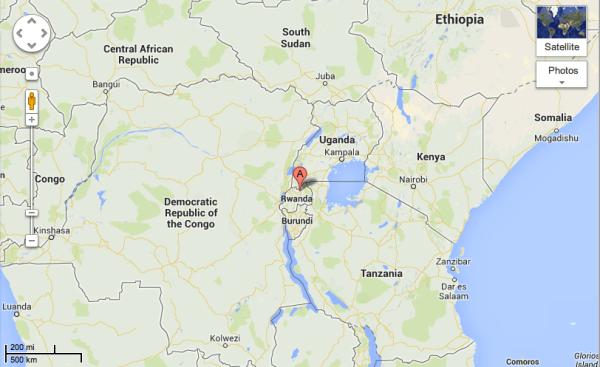 Rwanda was in the news this last week for something very special. Most of our western news stations gave it zero coverage, but you could catch a glimpse online. This, from the Christian Science Monitor: on an amazing event just twenty years after one of the worst genocides in my memory. To me, it is wonderful and inspiring that they forgive one another and love one another to live in peace with one another. It gives me hope for our world.
What to celebrate in Rwanda’s genocide anniversary
The 20th anniversary of the Rwanda genocide should focus as much on how the African nation worked toward reconciliation through forgiveness as on the mass slaughter itself.
This month, Rwanda marks the 20th anniversary of an event that its name is most associated with – the 1994 mass slaughter of the Tutsi minority and many in the majority Hutu. Over 100 days starting April 7, more than 800,000 people were killed, many by neighbors incited to ethnic hatred by a political elite. It is a genocide often cited since then to justify military intervention in similar ongoing atrocities.
But another lesson from Rwanda’s experience deserves to be remembered – an amazing reconciliation of killers and survivors through individual confession and forgiveness in nonjudicial village courts.
This type of reparative justice in an intimate setting could prove useful in countries that will need post-conflict healing, such as Syria, Colombia, andMyanmar (Burma). It might also help prevent a cycle of revenge and retribution in those countries, as it has in Rwanda.
Most of Rwanda’s main perpetrators in the genocide have been tried in regular courts, either in Rwanda, Europe,, or the International Criminal Tribunal for Rwanda, set up by the United Nations. But for hundreds of thousands of others who were charged with killing, the Rwandan criminal-justice system was too weak and its jails too full. Legal trials would have taken decades. The country had to fall back on a form of community-based traditional justice known asgacaca.
Other post-conflict countries in transition, notably South Africa, have relied on a similar process with their truth-and-reconciliation commissions. But the bodies have usually been more formal and national in scope. Rwanda’s gacaca are far more personal, designed to achieve the end result of allowing people who knew each other to resume living in the same community. They also bring together an entire village to witness a confession, attest to its sincerity, encourage forgiveness by the victim, and agree on some reparation, such as helping till a victim’s fields for a time.
It hasn’t worked in every case. Many Tutsis who killed Hutus have not been tried. Many victims could not bear the trauma of hearing how their loved ones had died. And many Hutus disappeared or were able to hide from the truth.
The government under President Paul Kagame, despite its drift toward authoritarian rule, has encouraged the process by outlawing formal use of ethnic identities. “The divisionism of before is gone. All of us now have equal access to opportunities,” a young Rwandan told The Christian Science Monitor.
The gacaca rely on the guilty to listen to the stories of their victims with empathy, admit their acts with repentance, and rethink their self-identity within the community. For the victims who forgive, the process can lift feelings of rage and bitterness. Much of the justice lies in the restoration of relationships as much as in material reparations.
Rwanda is not yet a “post-ethnic” African nation. But the possibility of a future political class inciting Hutus and Tutsis to take up violence now seems slim. More Rwandans have a higher sense of identity.
As the world helps Rwanda mark the 1994 genocide, it should also spread the lessons of this post-genocide reconciliation. Dispute resolution is a common technique in every society, whether in families or courts. But when almost every village in an entire nation goes through it, the lesson is worth repeating elsewhere.
April 11, 2014
Posted by intlxpatr |
Africa, Charity, Circle of Life and Death, Civility, Cultural, Events, Faith, Leadership, Living Conditions, Political Issues, Relationships, Social Issues, Values | Genocide, Rwanda |
Leave a comment
From Doha News:

At this time last year, Alison Patterson was celebrating Mother’s Day in the UK with two of her three children. Her eldest daughter Lauren was working in Qatar, and sent a gift and a card home, as she always did when she was away.
Today, things are very different for the Patterson family. Daughter Lauren was killed in October by acquaintances in Doha, and on Thursday, a criminal court here found two Qatari men responsible for the 24-year-old teacher’s murder.
One of the defendants, 22-year-old Badr Hashim Khamis Abdullah Al-Jabar, was given a death sentence.

The other, 24-year-old Muhammad Abdullah Hassan Abdul Aziz, was handed a three-year jail term for helping Al-Jabar burn Patterson’s body, which was considered damaging and erasing evidence.
At the time of the sentencing, Alison Patterson told media that “justice was served” in the case of Al-Jabar, but that she was deeply upset with Abdul Aziz’s lighter sentence.
In an interview with Doha Newstoday, Patterson said she is worried that neither of the convicted men will pay for what they did to her daughter.
“Is it something that’s just been said – and that’s never going to happen?” she asked.
At the root of her doubts is a scene she witnessed after Thursday’s verdict inside the courthouse. Patterson had gone in search of her two younger children, and ended up passing a sitting area where the defendants were being held.
“They were just laughing and joking with each other,” she said. “It just almost makes me feels that they were laughing at what happened. They have no respect for the sentence they’ve been given.”
Another issue that troubles her is that Qatar has not executed any prisoners in more than a decade, according to Amnesty International.
Prior to her daughter’s death, Patterson said she never gave the death penalty much thought. But after being told that Al-Jabar sexually assaulted her daughter, stabbed her to death and then attempted to burn her remains at a farm outside of Doha, she said she supported the punishment.
“Lauren came home in a box the weighed 7 kilos,” Patterson said with regards to her daughter’s remains. “She weighed 50 kilos when she died.”
Other questions
Patterson has also been unable to shake an argument she read on a recent blog post about her daughter’s case on “Muslims Worldwide,” which she found while googling Lauren’s name.
The site appears to be full of hate speech about Islam and its adherents, but the post on Patterson struck a chord with Lauren’s mother because it questioned whether the quick sentencing of Al-Jabar was done so that officials could close the book on this crime, which the prosecutor called “heinous, foreign and shocking to a society as conservative as Qatar’s.”
The blog post reads:
“Sharia gives no justice to a kafir (non-Muslim/non-believer). And it never gives a death sentence to a Muslim over a crime committed against a non-Muslim…
So why would they announce the ‘death penalty’ if it is not given out? To appease the media. This case has been circulating all over the world. Arabs can’t stand negative media attention…These Arab countries make bogus claims of justice only to get the media off their back. In reality they keep them in prison and release them after 1-2 years.”
The last sticking point is that the verdicts must pass through two appellate courts here before they’re officially final, meaning closure could be some ways off for Patterson and her family.
Waiting
Speaking to Doha News, Patterson’s partner Kevin Crotty said they were grateful for all the Qatari government has done to ensure a speedy trial.
“They’ve been more than generous and more than reasonable,” he said. “Everything’s been done that should have been done. But them (the defendants) smiling – and the lighter sentence for the second one… Ultimately, we’ve always felt the political angle was there. Is there something that we should worry about?”
The Pattersons’ lawyer, Sami Abu Shaikha, has said he plans to appeal Abdul Aziz’s three-year sentence, asking for a more severe penalty.
Meanwhile, Alison Patterson, who has started smoking again after 15 years due to the stress of all that’s happened, said she knows that whatever the outcome, the pain will likely never go away.
“There will never be peace. (But) I just really don’t want to be let down,” she said.
April 6, 2014
Posted by intlxpatr |
Crime, Cultural, Doha, ExPat Life, Law and Order, Living Conditions, Safety |
12 Comments
Yesterday we had a crew at our house helping us get the gardens cleared out and some replacements put in. Most of our plants had survived the first great freeze, but the second freeze did them in – or so we thought.
Even the bougainvillea, which people assured me would not thrive in Pensacola, shows signs of coming back. The Plumbago, originally a native of South Africa, is showing some tiny signs of resilience. The grasses survived; we even took part of the Pampas grass and started a new area elsewhere. The mints, the lavender, the thyme, oregano, cilantro, the parsleys, the rosemarys – they thrived. The sages are coming back with a vengence. The drift roses are blooming early. It is truly a fabulous Spring, full of hope and a little replanting.
One of our very favorites, the Mona Lavender (which is not a lavender at all, but a gorgeous shrubby plant) totally bit the dust. My cherished begonia looks melted. I have accepted that it’s not coming back.


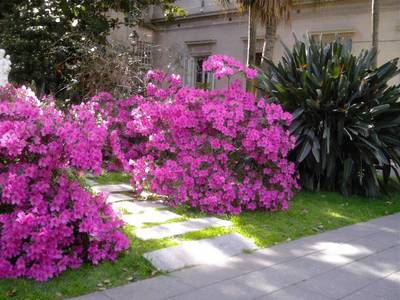
Pensacola this week is a sea of azaleas. Who knew azaleas came in so many vibrant colors? While many yards are that intense fuchsia, there are also yards full of white, pink, deep coral, light coral, deep burgundy azaleas. I smile every time I see them and think of our Saudi friend living here, who called them Ah-za-LEE-as. We call them that now, too, just between AdventureMan and me. 🙂
I can only guess that something in the great Pensacola freeze ignited in the azaleas an urge toward survival that resulted in the most amazing display of luxurious, abundant blossoms I have ever seen.



April 4, 2014
Posted by intlxpatr |
Beauty, Cultural, ExPat Life, Florida, Gardens, Living Conditions, Pensacola, Weather |
Leave a comment
Yesterday I had my annual eye exam. This is the South. I could hear them all talking in the back, talking about personal things, and OTHER PEOPLE! I used to run a library, and one of the very very first things I would tell my library workers was NO PERSONAL CONVERSATIONS when we had the library open. Keep your private life private! I’m not all about the library being quiet, but I am about it being not-annoying. Hearing gossip, hearing details of your last medical procedure, hearing about Maizie, bless her heart, who just lost another husband – these things are not my business, nor the library customer and are not appropriate for a discussion where the public may be listening in, even when they don’t want to be.
OK, OK, I know these are dated professional standards, but I can’t help it. Please. Do not burden me with overhearing your latest disaster unless we are friends and sitting down together over a cup of coffee.
At 30 minutes past my appointment time, I went back to see if my paperwork had been misplaced only to be told they were just a little behind and I would be taken soon. Fifteen minutes later I was in the office.
Now, when they dilate your eyes, you can still drive yourself home. It was a little bright, but I managed. Things are a little blurry.
Fast forward to last night, driving home, WOW. Every streetlight, every headlight, even the beautiful thin crescent moon had a spiky halo. It was like I had that sparkle lens you can put on your camera, only this was on my eyes.

This morning when I got up, I thought it would be all over, but my eyes are still dilated, and still sensitive. They must have given me a wallop of a dose.
But for the drive home, it was all Lucy in the Sky with Diamonds . . . it was so incredibly beautiful, it felt sort of surreal.

April 4, 2014
Posted by intlxpatr |
Adventure, Beauty, Bureaucracy, Cultural, Customer Service, Health Issues, Living Conditions, Pensacola, Privacy, Rants | Eye exam, optical exam |
Leave a comment







 Here There and Everywhere