The Little Mermaid; One of the Best Restaurants in Homer
The last time we were in Homer, we tried to get into The Mermaid, which was near the Driftwood Inn, but it was full, and worse – fully reserved. We had not made reservations. I wasn’t going to make the same mistake this year, but as they do, things had changed, The Mermaid was under new management and the people who had created it’s huge success were at another restaurant, The Little Mermaid. So we made a reservation at The Little Mermaid and hoped for the best.
Oh my.
It is about as opposite to Captain Patties as can be. While both emphasize great fresh seafood, The Little Mermaid is more experimental.
We were really glad we had made reservations. There is a bar, very small, and then there are like four booths and maybe three more bar stools at a counter in the room to the right.
This is the exterior:

This is the blackboard, posted to the left as you enter, actually in the bar area which overlooks the harbor:

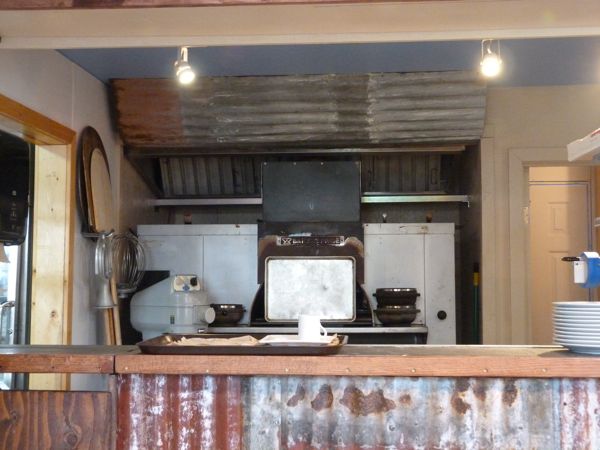
And this is a view into the kitchen:
A view of the interior where the booths are:

Our appetizer, Halibut Balls with Teriyaki Sauce. This was absolutely delicious, and I have never seen halibut presented this way before:

Now the sad part. When our meals came, I forgot to take any more photos. AdventureMan had Kodiak Scallops, which were very simple and absolutely delicious. I had a Brazilian Stone Bowl, a big (stone) bowl of Alaskan seafood in a coconut milk liquid, boiling hot and it stayed hot; it was novel and unforgettable and delicious. As we were waiting for our meals, the waitress came and asked me if we could wait just a couple minutes more; they had a fresh batch of mussels in and would like to throw a few into my dish, would I mind waiting?
We had seen the man walk from the harbor into the restaurant, carrying a big bag of freshly caught mussels. Of course I would wait!
For me, this was one of our best meals of the trip, and if you go to Homer, be sure to make a reservation at The Little Mermaid, out on Homer Spit. This is also where the locals go; it is a very popular place, deservedly.
The Pratt Museum: A Gem in Homer, AK
It’s our last day in Homer, and we are going to the Pratt Museum
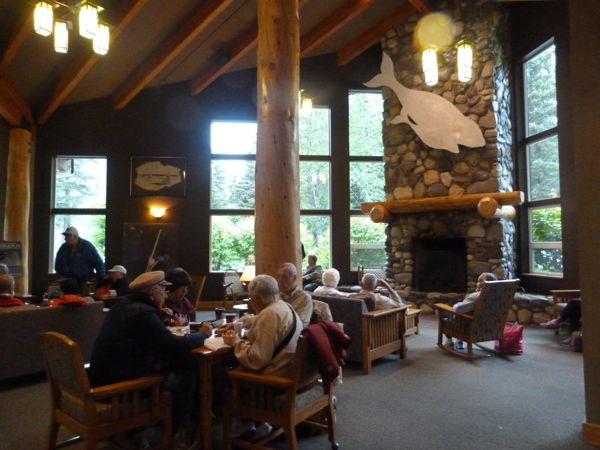
The Pratt Museum is a WOW. It is beautiful, for one thing, all woods and stone, a beautifully crafted, cared for museum. We happened in at a relatively quiet time and had time to talk with the volunteer at the desk, who sold me several raffle tickets for this year’s quilts. I really want to win it; it has blueberries all over it. I suppose I could do a blueberry quilt, but this one is already done!
They also have a super gift shop, with lots of gift ideas, many locally produced by local artists. You know how it is with tourists, there are a lot of places that sell schlock. When you want a step up, go to a museum gift shop. I used to buy my blank cards at the Tarek Rajab museum in Kuwait, beautiful cards with silver bedouin and Arabic jewelry, or doors of old Kuwait, old Oman, etc. Lovely, artistic cards.
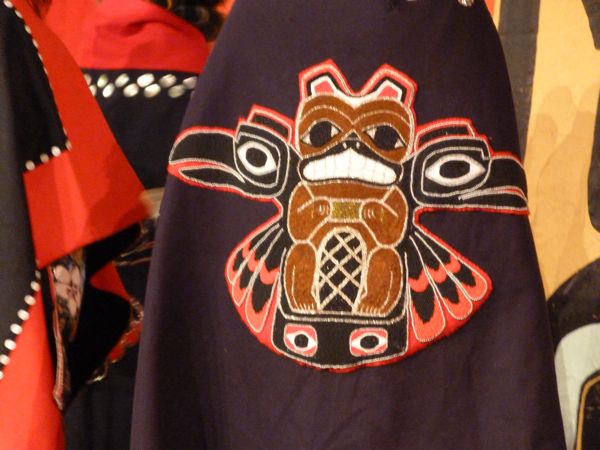
This is one of the permanent exhibit quilts. It may have been on the bottom floor, with the marine exhibits. Things got crazy after our quiet visit with the volunteer; a large group of students came in, maybe eighth grade, with all the chaos and laughter kids that age engender. We hurried ahead of them to the exhibits, and there are a LOT of exhibits.

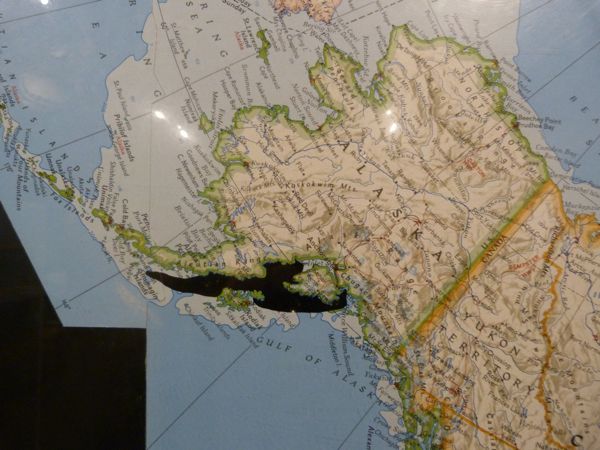
This was a map of the Exxon Valdez oil spill, from which Alaska is still recovering. We learned something interesting, and that is that as horrible as the spill has been for the environment, it put Alaska on the map, raised awareness, and that is when the tourists really started pouring in, maybe like to see the splendors of Alaska before they are destroyed by oil spills or climate change.
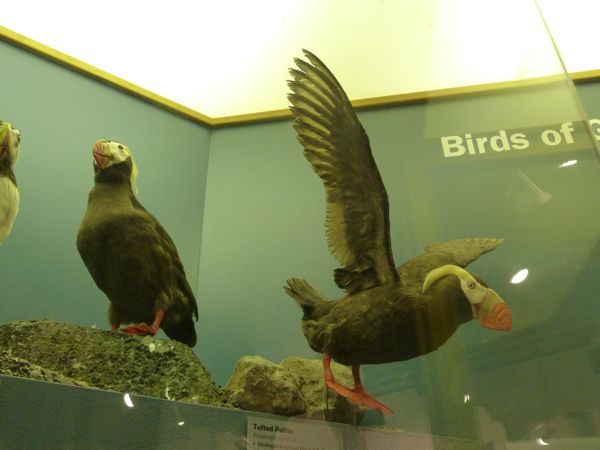
These are some of the Alaska birds you can see on the Kenai peninsula, including, I think, a puffin 🙂
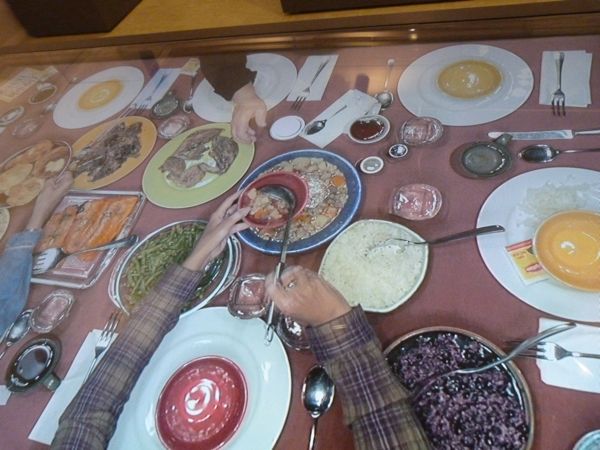
The Pratt has so many clever and original exhibits. I loved the film presentation on how the First Nation peoples catch, smoke and store salmon. If there is ever a zombie apocolypse and I have to survive, now I know how to prepare and keep salmon over long stretches of time by smoking it and drying it in strips. And protecting it from bears, who love salmon.
This presentation was like a table, but the movie was on the table. There were foods, and it was like we were the people eating. Someone would pass a dish and explain a little about what it was, like whale blubber or seaweed something. As much as I like to try new things, some of what they had on the table was stuff I would cut into very tiny pieces and push around the plate so it looked like I had tried some but I didn’t. I loved the presentation; so interactive.
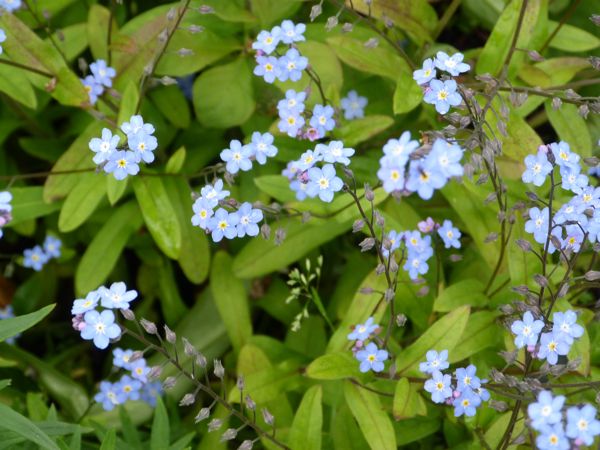
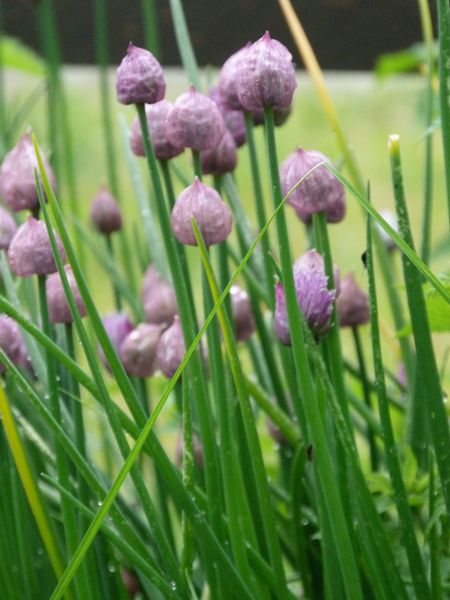
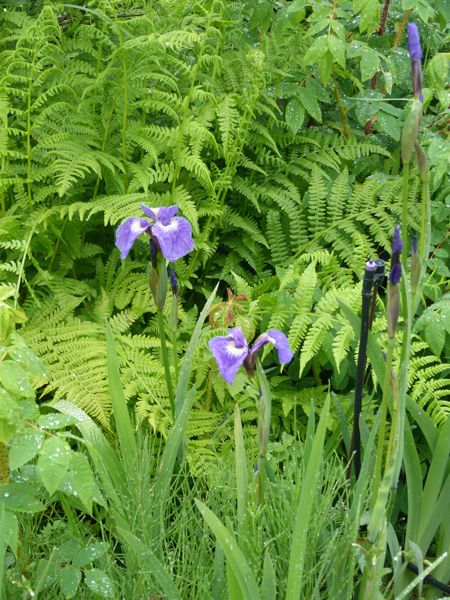
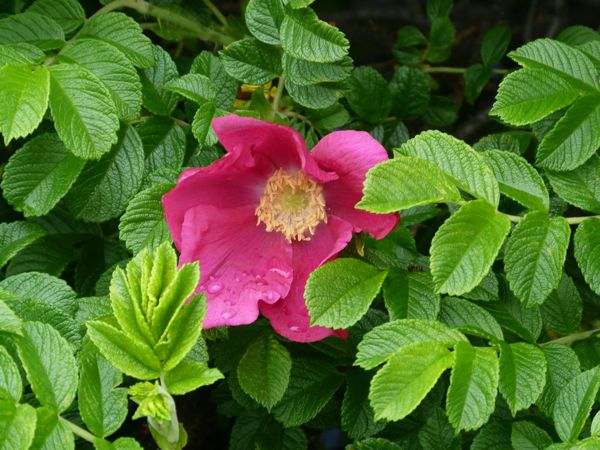
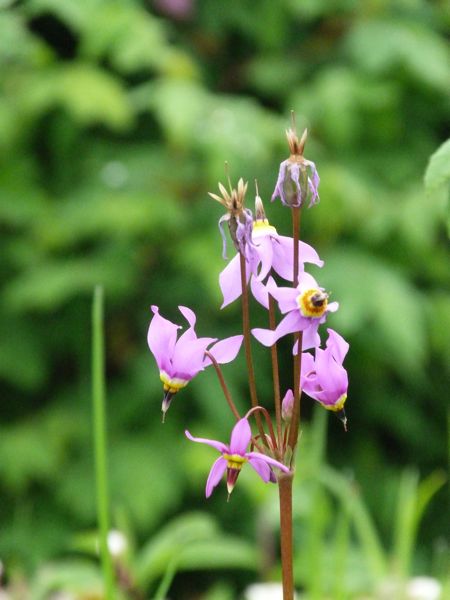
Although there were a lot of really good exhibits, we sort of hurried through once the crowd arrived. We did spend a good amount of time in the garden outside, where I laughed at myself. I learned a lot about myself this trip, why I love the colors I love (mostly greens – blues – purples and why I don’t like a lot of yellow or red in a garden. Almost everything in this garden was blue -purple – fuchsia with just a smattering of tiny yellow flowers, not a speck of red, except muted in some of the foliage, which was mostly shades of green. AdventureMan laughed, too, as it is the bane of his gardening existence that I want the bright red Turk’s Heads and the big yellow Cassia where I can’t see them.



All Who Exalt Themselves Will Be Humbled
Today’s Gospel reading makes me squirm; it does not come naturally to me, a first-born, to be humble. I love being special. I love to be honored, to be given a seat of honor, to get that upgrade. And I think I am very human, so I imagine the reaction this radical teaching received among his own people, and among the scribes and Pharisees who also loved being special . . .
Matthew 23:1-12
23Then Jesus said to the crowds and to his disciples, 2‘The scribes and the Pharisees sit on Moses’ seat; 3therefore, do whatever they teach you and follow it; but do not do as they do, for they do not practise what they teach. 4They tie up heavy burdens, hard to bear,* and lay them on the shoulders of others; but they themselves are unwilling to lift a finger to move them. 5They do all their deeds to be seen by others; for they make their phylacteries broad and their fringes long. 6They love to have the place of honour at banquets and the best seats in the synagogues, 7and to be greeted with respect in the market-places, and to have people call them rabbi. 8But you are not to be called rabbi, for you have one teacher, and you are all students.* 9And call no one your father on earth, for you have one Father—the one in heaven. 10Nor are you to be called instructors, for you have one instructor, the Messiah.* 11The greatest among you will be your servant. 12All who exalt themselves will be humbled, and all who humble themselves will be exalted.
Dawn Sunrise in Homer, Alaska
Our first morning in Homer is a flashback to the perfect weather we had there last August, a total change from the previous drizzly day. This is what sunrise looks like in Homer:
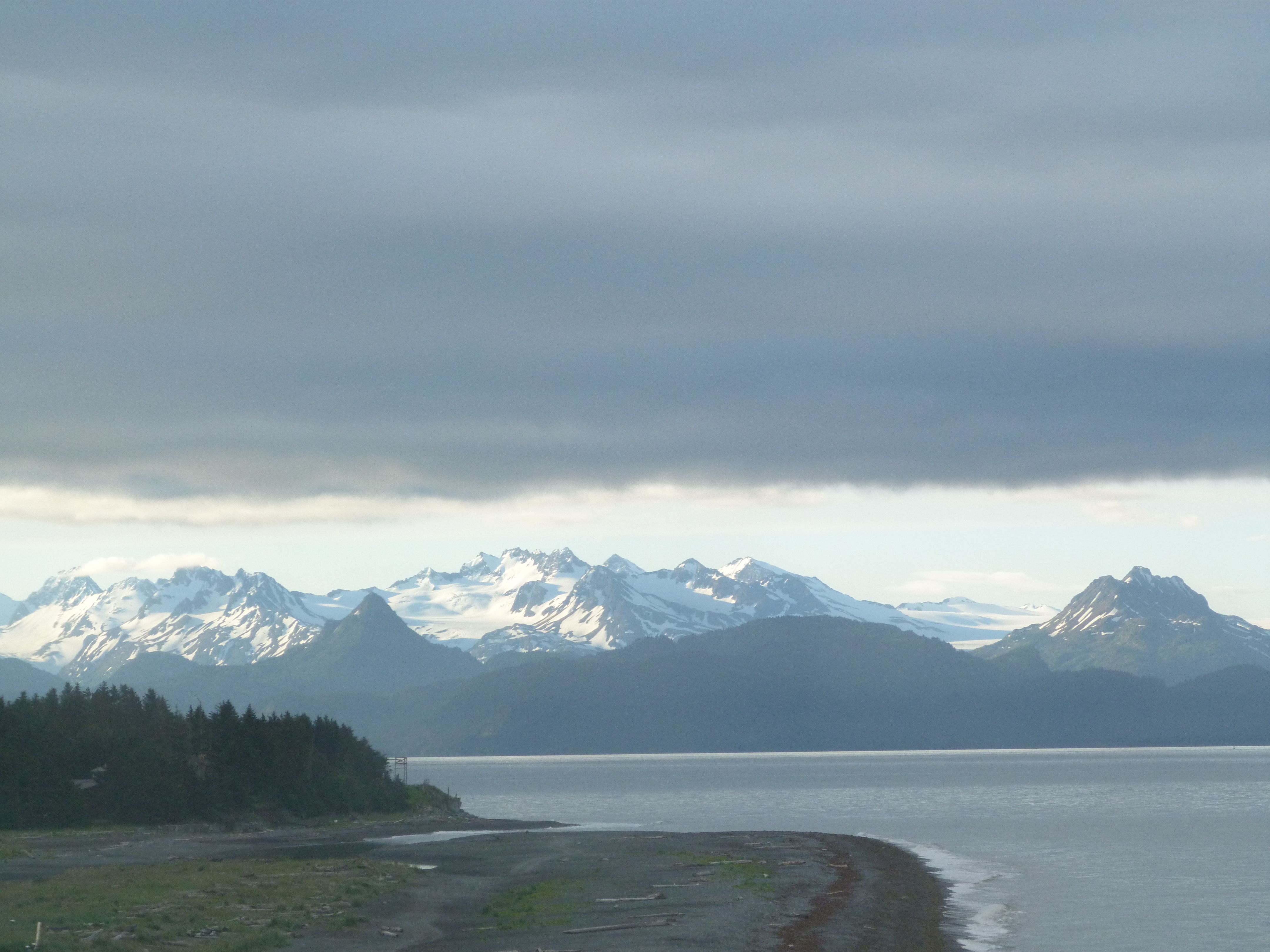
Those mountains and glaciers thrill my heart.
AdventureMan was instructed to have a good breakfast; they won’t be back until late afternoon, so we head to Dunken Inn, where we had such a good breakfast last year. We get there just in time – there is no line, and there is a table waiting for us, but five minutes later, there is a line.

AdventureMan has stick-to-your-ribs-while-bear-hunting biscuits and gravy:
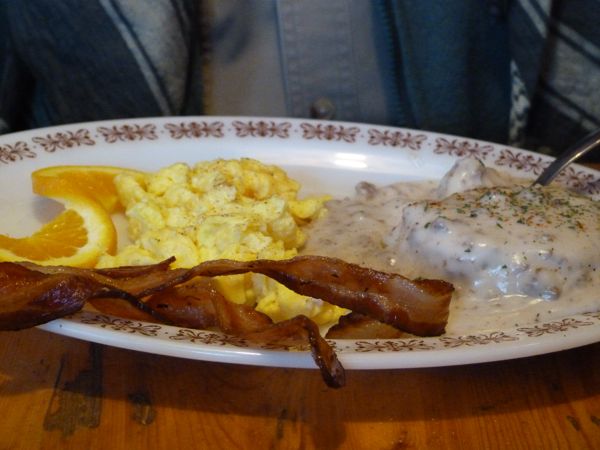
And I have the 2 – 2 – 1, which is two eggs, two slices bacon and one blueberry pancake. I don’t even really like pancakes, but these blueberry pancakes are SO good 🙂

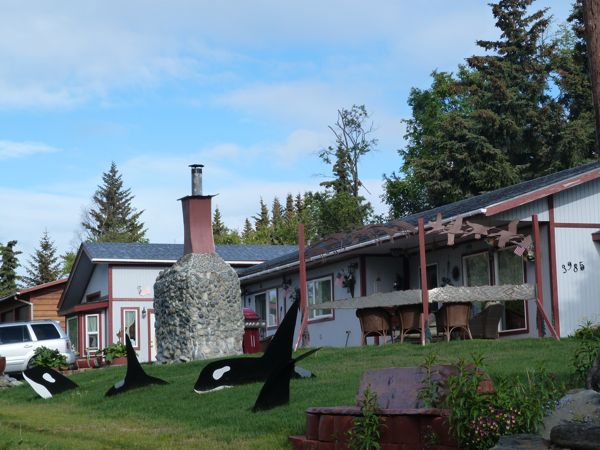
We drove around a little until drop off time; AdventureMan spotted a Sandhill Crane and this wonderful local yard art:

Alaska Bear Adventures and K-Bay Air
The other thing we do immediately upon arrival in Homer is to go down to the Homer Spit and check in to Alaska Bear Adventures, to confirm AdventureMan will be on the next day’s bear trip. He signed up for this months ago, and he is PUMPED!
“Dad’s going bear hunting?” our son texts, and we can ‘hear’ the incredulity in his text.
“With his camera” I text back. AdventureMan is getting his instructions and stepping on the scales. They are going out in small planes, and they need to know what weight they are carrying to balance the loads and plan for enough gas. He is told to be at the K Bay hanger at seven the next morning, and I wander off to make a dinner reservation at one of our favorite restaurants anywhere in the world, Captain Patti’s.

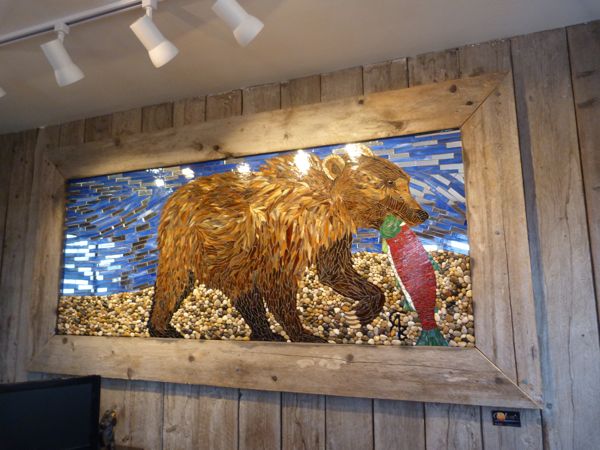
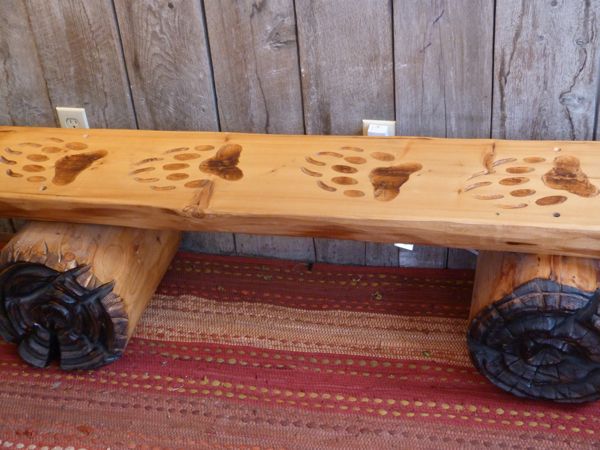
I think I told you earlier, this is my day off. I will do a little laundry and goof around in Homer and have a day to myself. I grew up with bear on the mountain in our back yard. I don’t go looking for bear. I don’t think bear are cute. Have fun, AdventureMan!
Ramadan Kareem and Ramadan for Non-Muslims

I wrote this post in 2007, when I was living in Kuwait. It has become an annual tradition to repeat it.
Ramadan will start soon; it means that the very thinnest of crescent moons was sighted by official astronomers, and the lunar month of Ramadan might begin. You might think it odd that people wait, with eager anticipation, for a month of daytime fasting, but the Muslims do – they wait for it eagerly.
A friend explained to me that it is a time of purification, when your prayers and supplications are doubly powerful, and when God takes extra consideration of the good that you do and the intentions of your heart. It is also a time when the devil cannot be present, so if you are tempted, it is coming from your own heart, and you battle against the temptations of your own heart. Forgiveness flows in this month, and blessings, too.
We have similar beliefs – think about it. Our holy people fast when asking a particular boon of God. We try to keep ourselves particularly holy at certain times of the year.
In Muslim countries, the state supports Ramadan, so things are a little different. Schools start later. Offices are open fewer hours. The two most dangerous times of the day are the times when schools dismiss and parents are picking up kids, and just before sunset, as everyone rushes to be home for the breaking of the fast, which occurs as the sun goes down. In olden days, there was a cannon that everyone in the town could hear, that signalled the end of the fast. There may still be a cannon today – in Doha there was, and we could hear it, but if there is a cannon in Kuwait, we are too far away, and can’t hear it.
When the fast is broken, traditionally after the evening prayer, you take two or three dates, and water or special milk drink, a meal which helps restore normal blood sugar levels and takes the edge off the fast. Shortly, you will eat a larger meal, full of special dishes eaten only during Ramadan. Families visit one another, and you will see maids carrying covered dishes to sisters houses and friends houses – everyone makes a lot of food, and shares it with one another. When we lived in Tunisia, we would get a food delivery maybe once a week – it is a holy thing to share, especially with the poor and we always wondered if we were being shared with as neighbors, or shared with as poor people! I always tried to watch what they particularly liked when they would visit me, so I could sent plates to their houses during Ramadan.
Just before the sun comes up, there is another meal, Suhoor, and for that meal, people usually eat something that will stick to your ribs, and drink extra water, because you will not eat again until the sun goes down. People who can, usually go back to bed after the Suhoor meal and morning prayers. People who can, sleep a lot during the day, during Ramadan. Especially as Ramadan moves into the hotter months, the fasting, especially from water, becomes a heavier responsibility.
And because it is a Muslim state, and to avoid burdening our brothers and sisters who are fasting, even non-Muslims refrain from eating, drinking, touching someone of the opposite sex in public, even your own husband (not having sex in the daytime is also a part of fasting), smoking is forbidden, and if you are in a car accident and you might be at fault, the person might say “I am fasting, I am fasting” which means they cannot argue with you because they are trying to maintain a purity of soul. Even chewing gum is an offense. And these offenses are punishable by a heavy fine – nearly $400 – or a stay in the local jail.
Because I am not Muslim, there may be other things of which I am not aware, and my local readers are welcome to help fill in here. As for me, I find it not such a burden; I like that there is a whole month with a focus on God. You get used to NOT drinking or eating in public during the day, it’s not that difficult. The traffic just before (sunset) Ftoor can be deadly, but during Ftoor, traffic lightens dramatically (as all the Muslims are breaking their fast) and you can get places very quickly! Stores have special foods, restaurants have special offerings, and the feeling in the air is a lot like Christmas. People are joyful!
There were many comments on the original post, and, as usual in the history of Here There and Everywhere, the commenters taught us all more about Ramadan than the original post. If you want to read the original post and comments, you can click HERE.
This year, Ramadan in the Northern Hemisphere will be one of the hottest, least comfortable ever. Imagine, having to refrain from all food and drink, from swimming, from smoking, from dawn to dusk for an entire month. People still have to work, although at some work sites, hours are reduced. Driving will be horrible, especially toward dusk when people are starving and eager to break the fast.
May God grant his mercy to all those fasting in 2014, may your fast be blessed. may the All Merciful and All Generous listen to your prayers; may the hours of fasting pass quickly and pleasantly, and may you enjoy the blessings of family closeness and religious insights.
The Windsong Lodge in Seward, Alaska
The Windsong Lodge home page shows happy happy people having lunch on a sunny outdoor terrace overlooking a sparkling river. I looked at a lot of different Seward Hotels, but oh, the thought of a balcony overlooking the river just drew me in.
This is what the description of the Lodge says:
Just outside the city of Seward, travel down the winding road to Exit Glacier and you’ll find your paradise away from home, Seward Windsong Lodge. The towering mountains, fragrant spruce trees and the rush of the Resurrection River awaken your senses on arrival.
I could hardly wait to see those towering mountains and fragrant spruce trees from my balcony.
There was nothing wrong with our room. It was spacious, and had furniture made from logs, all rustic and sparkling clean. There was a microwave, a refrigerator, a hair dryer, all the amenities.

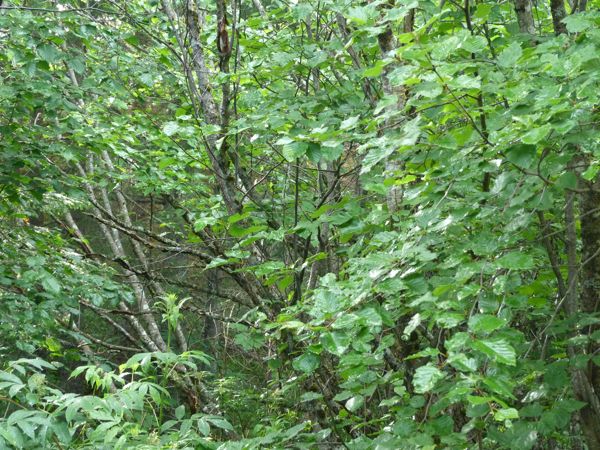
This was the view from my balcony.
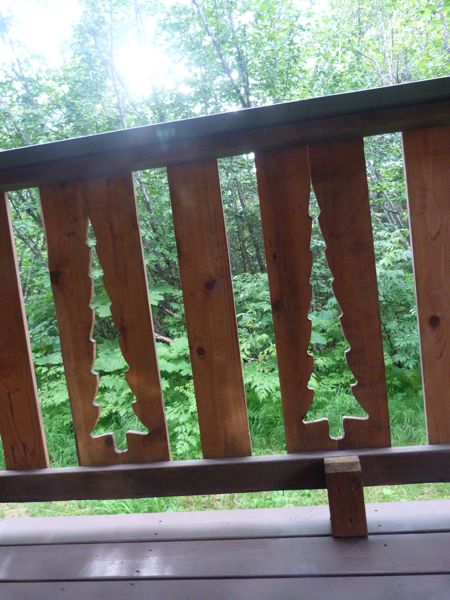
I did love the cut outs in the balcony railing.
The Lodge offers a coffee bar and pastries, but when we were checking out we saw huge lines waiting for coffee and pastries, and although they had about ten computers, there were lines waiting to use their computers, too. Most of these people were off the cruise ships. We thanked God to have a car, and to know where we could get good coffee and breakfast goodies. We don’t mind paying. We don’t much like standing in a long line for breakfast.

Nice lodge, every seat taken.
Juneau to Anchorage on Alaska Airlines

I have such mixed feelings towards Alaska Airlines. I am about to vent, so if venting bores you, just skip down to the pictures.
I love that Alaska Airlines is truly Alaskan, formed of a conglomeration of smaller companies that used to fly Alaska, and that they truly serve Alaskans well. Alaskans get all kinds of perks on Alaskan airline. So when they board, it’s like “these special people, and then these special people, and these special people, and all the rest of you” and like there are six of us not-so-special people still standing there waiting to get on. After my first flight with Alaska, I learned not to carry any carry on baggage; just a large handbag I can tuck under the seat in front of me; all the overhead compartments are full.
Yes. I know. It sounds like sour grapes, and it is a little bit. I’ve been special too, on other airlines, and you get so you kind of like being treated special. I just take a deep breath and tell myself that old saw “every monkey gets his turn in the barrel” which is sort of a karma thing, everybody gets lucky some time and other times everyone has to take a turn in the barrel.
Here’s where the grapes really got sour. I am a cherry picker when it comes to trip planning. I don’t always get it right, but I put a lot of planning into finding the right small tours, the right schedule, the right seats, the right accommodations. I love the special details, and I take pride in juggling all the factors and getting a strategic plan together.
I found the perfect reservations, reservations that got us from Pensacola to Juneau in one day, and then from Anchorage back to Pensacola in one day. For three months, I gloried in the perfection of those reservations, until Chelsea called me and said they had changed everything.
It was horrible. I had to make decisions I wasn’t prepared to make. Chelsea did her best, but I was no longer in control (OH NO!) and I just did the best I could. She really did work with me. I was mad about the circumstances, but she did her best to find a solution. Just about every change cost me money, including the worst of all, because I am not special on Alaskan Airlines or American Airlines, we had to pay $25 every time we checked a bag, and every time we had a (mandatory) overnight, we had to pick up our bags and PAY AGAIN THE NEXT DAY! It irked me because I had us starting off with Delta originally, where our bags go free. Hey, these $50 (for two people) charges add up fast!
Of course, any seasoned traveller will laugh at “perfect” travel plans. It is a set-up. There is no perfect; God-with-a-sense-of-humor will always humble our human arrogance when we think we have achieved perfection.
So you know our trip started badly with the continuing weather delays in Dallas Fort Worth, and that was not American Airlines fault, but even so, neither was it a fun way to start our vacation.
Now, leaving Juneau for Anchorage, it’s a piece of cake. The hotel is five minutes from the airport and car rental drop-off is just out the back door. Juneau airport is small, and friendly feeling. The Alaska Airlines baggage check-in was compassionate. She looked at our trip history so far and said “you guys don’t have to pay today” and that small gesture really made us feel good.
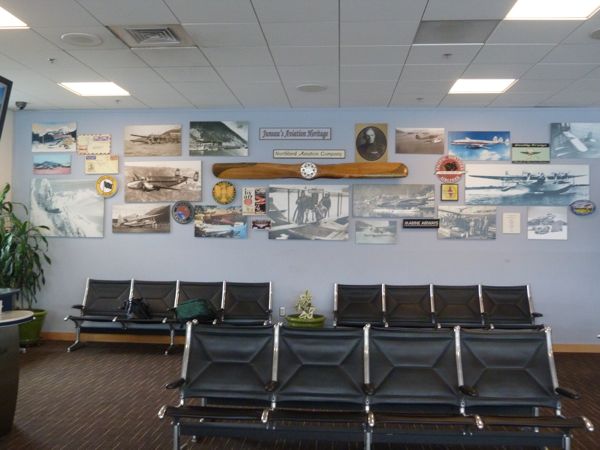
At our gate, I took a photo of the entire upstairs waiting room. This is the whole Juneau airport:

At our gate is a pictorial history of Alaska aviation, but it doesn’t answer my question: What was the other airline that flew alongside Coastal Airlines out of the downtown amphibious airport?
The plane we are on is kind of old-timey, and it is stopping in Yakutat and Cordova, two fishing villages, en route to Anchorage. There is no first class on this flight, but there is freight, and evidently a whole lot of freight. I have never seen this before, but the front part of the airplane is all blocked off with this black curtain/built-in thing for freight:

Sitting next to me is a man exactly my age who grew up across the channel from me. We were the same year in school, and he is cousin to the girls I played with when I was a kid. We didn’t know each other. As a grown-up, he piloted ferries for the Alaskan Marine Highway System and now does special contracts, guiding the large cruise ships through the various ice fields. And, he tells me, the other airline flying out of Juneau when we were kids, the one with the green planes, is Ellis Airlines. Wooo HOOOO! He tells me before we take off so I quickly text my Mom’s old friend because she was stumped, too! I knew it started with an “S”, LOL. Isn’t life funny, how you can end up sitting next to the right person at the right time and place, and ask the right question?
Anchorage airport is much larger than Juneau, but as we pick up our rental car, the man behind the counter learns we are former military and gives us a great car, and map, and lots of good directions to get us headed towards Seward. Life is sweet, in spite of all my griping and sour grapes.
Celebration 2014: Friday Afternoon Dancing
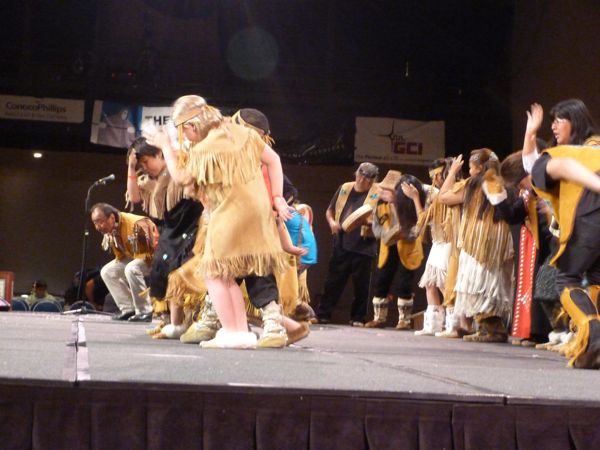
For the first time ever, the announcer tells us, the groups are all ready on time and the dancers ready to go – they are astonishingly ahead of schedule.
We return as a group of mixed dancers, from many Alaskan tribes, and some dancers with roots in classic “lower 48” tribes, so they all respect one another’s traditions, share, and do a little bit of everything. I kind of like this kind of flexibility. Some of the female costumes are a little ummm . . . skimpy . . . for the cold Alaskan climate, LOL, and some of the tattoos a little un-Alaskan and it doesn’t matter, they make it work.
The Celebration Hall is full and brimming over, dancers and their families in the waiting rooms, behind stage, in the halls, in the gift stores, children wailing for their Moms or Dads, it is totally a family affair. Grandma’s step in and help, and the dance goes on.


Recent Comments
intlxpatr on Shampoo Ginger tigerbutterya0c5ff1d… on Shampoo Ginger intlxpatr on British Soldier Kidnapped, Esc… John on British Soldier Kidnapped, Esc… intlxpatr on British Soldier Kidnapped, Esc… Wikipedia Donate Button

Amazina


Early Voting in Florida


