Christ Church Antique Fair 2013
More people attending the Preview, more tickets sold, more people buying up antique linens, jewelry and silver . . . I think we’ve turned a corner on the economy. People seem to be feeling more optimistic, seem to be less concerned about buying a small luxury 🙂 I never see any pearling boxes, or Arabic calligraphy . . .
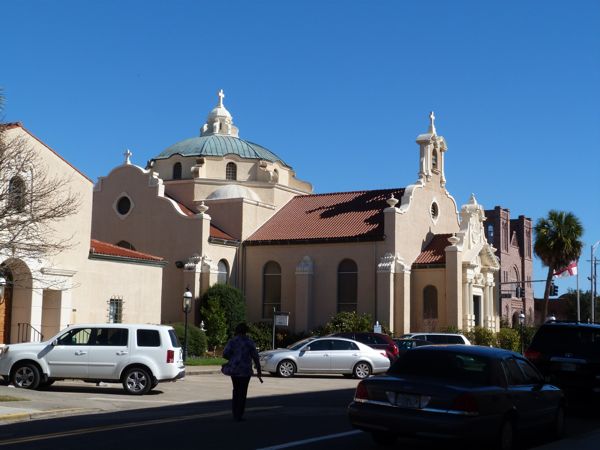

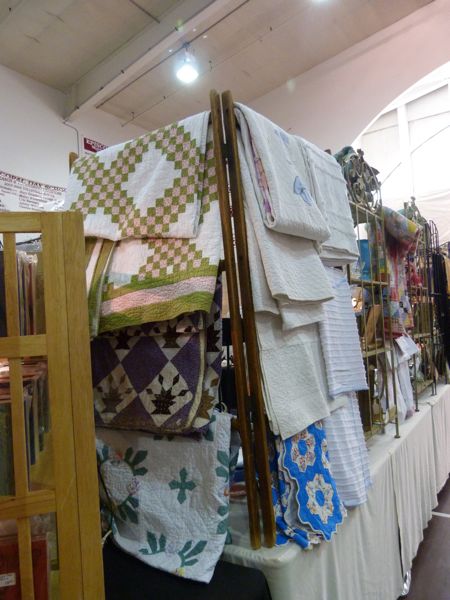


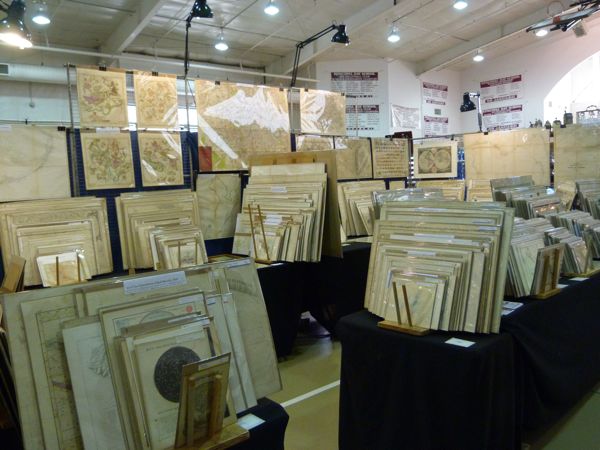

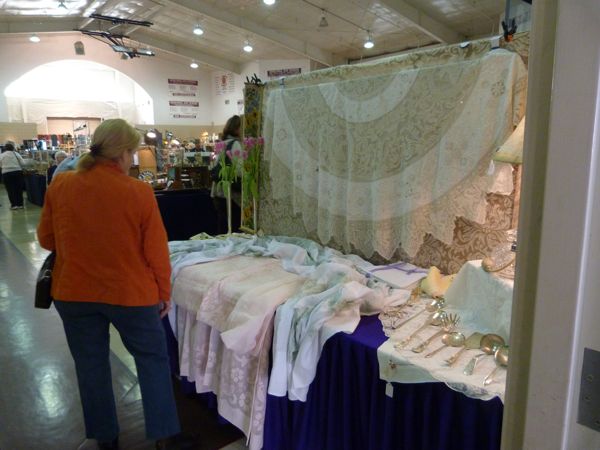
Christ Church has sponsored this Antique Fair for 56 years now; it is well-respected and well-attended by antique-loving Pensacolians. It raises a majority of the money the church uses to support charities in the communities, and all the labor is lovingly performed by the Episcopal Church Women, who toil and prepare for this event for months. It is open today (Saturday) until five, and from 11 – 3 on Sunday, February 3rd. Admission is $7.
Two New Restaurants to Open on Palafox Place, Pensacola
Woooo HOOOOO, Carleton Proctor at the PNJ just tweeted there will be two new restaurants, one Italian, opening this year on Palafox Place in downtown Pensacola:
The menu of downtown Pensacola’s restaurants is about to add another entree.
David Hambrick, owner and manager of Jaco’s Bayfront Bar & Grille, has reached an agreement with Durnford Enterprises Inc. to lease the former Distinctive Kitchens property on Palafox Place.
Hambrick said Thursday he plans to open an Italian-themed restaurant in one half of the 11,000-square-foot building, and eventually will open a second adjacent restaurant within that space at a later date.
“We’ve been talking to them (Durnford) since October when he heard the property had become available,” Hambrick said. “We’ve verbally agreed to a lease and now we’re just waiting for incorporation papers and a name for the restaurant.”
“The core menu will be modern Italian,” he said.
The deal and lease is expected to close March 1, Hambrick said.
Durnford Manager Frank Webb confirmed the agreement with Hambrick. Durnford owns the building, which has addresses of 29 and 31 Palafox Place.
First opened in 2004, Distinctive Kitchens and Culinary Arts Center closed late last summer, and the building has been unused since then.
Hambrick said he is working with Pensacola architect Brian Spencer on the interior design of the proposed restaurant.
Hambrick and business partner Paul Bruno will design the entirely rebuilt kitchen area, which eventually will serve both proposed restaurants.
Follow Carlton Proctor at twiter.com/CarltonProctorPNJ.
Al Qaeda in Maghreb Spends Last Night in Timbuktu Destroying Ancient Manuscripts
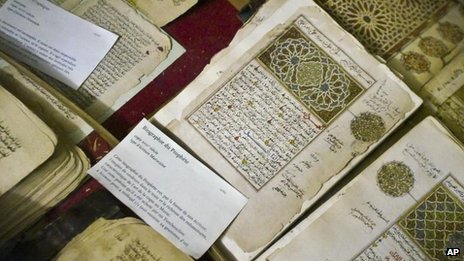
Ignorant militants destroy ancient Islamic documents and writings; from yesterday’s BBC News:
A group of jihadis came knocking at the gate late on Wednesday night last week. But the Ahmed Baba centre in the Malian city of Timbuktu is not the kind of library that would accept visitors after dark.
The Islamist militants tricked the guard and said they were coming to secure the place. But once inside, they ransacked the centre’s reading room.
When historian Abdoulaye Cisse arrived early in the morning, the pile of ashes was still warm.
“They probably spent most of the night in there,” he said.
Dozens of empty handcrafted boxes still litter the floor of the hallway. Ashes haven’t been removed yet either.
A few people come in and out surveying the irreparable damage and lament the remains of a cultural trove kept in Timbuktu for centuries.
Treasure trove of African history
At least 2,000 manuscripts were stored in this centre that was opened in 2009, funded by the South African government.
The project was meant to catalogue and preserve the city’s historical documents, many of which continue to be held by families or smaller libraries.
Another 28,000 were due to be transferred to the Ahmed Baba premises but were instead sent to the capital after al-Qaeda militants arrived in the city last year.
Each box is tagged with a reference number and if the search is properly done, these tags should reveal the full extent of the damage.
It could also reveal how many were simply stolen.
“These fighters know too well how much these papers are valued, it’s a huge wealth that will be impossible to replace,” Mr Cisse told the BBC.
The Institute’s manuscripts date back to the 13th century (file image)
“When I surveyed the reading room, I found about 30 left so I brought them home to secure them,” he said.
The offending texts ranged from history to geography and astronomy, medicine and Islamic law; writings dating back in some cases as far as the 13th Century.
In the reading room, shelves were emptied and the desk equipped with a magnifying glass vandalised.
Named after a saint of the ancient city who wrote many manuscripts himself, the Ahmed Baba centre stands out for its modernity but was designed to echo the famous Timbuktu style of dry-mud walls.
The Islamist militants prepared to flee last week knowing that an assault by the French-led forces on their positions here was imminent.
But in their haste, they took the time to commit one last act of vengeance.
They had sparked worldwide condemnation last year when they destroyed sacred tombs and shrines designated as Unesco World Heritage sites on the pretext that they violated principles of Islamic law.
Timbuktu was a centre of Islamic learning from the 13th to the 17th Centuries
700,000 manuscripts had survived in public libraries and private collections
Books on religion, law, literature and science
Elhadj Djitteye, who used to guide visitors in town, reckons that the fighters linked to al-Qaeda carried out the attack on the library in response to the French military intervention ordered earlier in January by President Francois Hollande.
Noting that the jihadis hadn’t touched the manuscripts in 10 months of occupation, Mr Djitteye sadly comments that they “hit Timbuktu straight at its heart”.
The militants’ destructive parting gesture left many residents feeling that another part of their celebrated city’s history had just been erased.
The people of Timbuktu have been anxious to return to some kind of normal life since the French and Malian troops entered they city and were hailed as “liberators”.
Reminders of the extremists, like the black banners proclaiming sharia at the city gates, are being removed.
But in just under a year, the Islamist militants have inflicted lasting damage on Mali’s most renowned cultural centre. The scars left by Timbuktu’s occupation are likely to take much longer to heal.
• Timbuktu was a centre of Islamic learning from the 13th to the 17th Centuries
700,000 manuscripts survive in public libraries and private collections, books on religion, law, literature and science
• Added to Unesco world heritage list in 1988 for its three mosques and 16 cemeteries and mausoleums
• They played a major role in spreading Islam in West Africa; the oldest dates from 1329
• Islamists destroyed mausoleums after seizing the city
Amitav Ghosh and River of Smoke

The National Public Radio website recommended this book as one of the best historical fiction reads, and I had never heard of it, so I ordered it. I ordered it in spite of the little voice I had in my head reminding me that this was the second in a trilogy, that the first is Sea of Poppies. I was too eager. I wanted to jump right in, and the review said it could be read stand-alone. I had read Ghosh’s Glass Palace a couple years ago for book club, loved it, and was eager to read this one.
With a raging cold and no possible way I can be around humanity, it was a good time to start. Just picking up the book, it has a dense feel. Once you start, it is like being suddenly in a whirlpool, drowning in new words, characters who have more than one name and more than one identity, whirling between England, Mauritius, Hindustan, Gujerat, Hong Kong, Macau and China, whirling between cultures and professions and trades, but oh, what a ride.

It would have been helpful to be reading River of Smoke on an iPad, where I could poke at a new word and it would give me the meaning, but in truth, you can guess a lot of the meaning of the vocabulary from the context. The seafarers all speak a language sort of like Jack Sparrow, a pidgen language filled with simplified grammar and with words from many nations and cultures. It forces you to slow down. It’s worth it. It would also be nice if you could poke on a place-name and have Google Earth show you where it is. There used to be a website called Google Books, and you could put in a book and it would show you the places in which actions in the book took place; that would be particularly handy reading this book, provide context in place-relations.
But reading slowly is it’s own reward. This book has depth, depth of character, depth of textures and senses, and depth of morality. I love a book like this where you can smell the smoke drifting over the water, where you can smell the sewer and bloated animal corpses floating outside the foreign hongs of the Canton traders, you can feel the textures of the textiles and see their colors, you can taste the exquisiteness of Macau cuisine and you can hike in a Hong Kong not yet settled by anyone, Chinese or foreign.
The scope of time covered by the major part of the story is short, although there are years of back-stories for several characters. The period is 1837-8, during which the Chinese Emperor decides to put teeth in the long established edict against opium trade to China. The edict had been in place, but not enforced, and China watched her citizens sink into opium addiction and lowered productivity. The traders were making fortunes – shiploads of money. Opium was grown in India and shipped from there to China.
When the ban against shipping opium into China is announced, many traders believe it is just another attempt to attain greater bribes on the part of the mandarins, and decline to obey. There is great debate, and while it is lively in the book, it is based on documents from that era, many of the arguments word for word. Traders stood to loose a great deal of money, in truth, it would ruin most of them to lose their shipments.
There is a side story I also like, that of the botanical trade between China and England, and the importation of many of the garden plants we take for granted today, which were unknown until sent from China. Camellia – one of which is the plant for tea, did you know that? Roses, azaleas, orchids – many many familiar plants would be missing from our gardens were it not for their introduction during this period.
Ghosh gives us disparate characters of many cultures and upbringings, and slowly weaves them together, each one tangential to all the others, some closely interwoven. It is a fascinating read, and I can’t wait for the next volume. I may have to go back and read Sea of Poppies while I am waiting.
Saudi Arabian Court Refuses to Charge Saudi Blogger
Raif Badawi: Court refuses to charge Saudi blogger
By Sebastian Usher
Arab affairs editor, BBC News
It is unclear what Mr Badawi’s fate will be now the court has refused to charge him
A court in Saudi Arabia has found that a liberal blogger accused of apostasy has no case to answer.
The court had the power to sentence Raif Badawi to death had it found him guilty.
But it refused to charge him, referring his case back to a lower court.
Mr Badawi, the young co-founder of a website called the Liberal Saudi Network, was arrested last year and accused of insulting Islam and showing disobedience.
His lawyer, Waleed Abu Alkhair, says he became a target for Saudi authorities after declaring 7 May last year a “day for Saudi liberals” – in order to have more open discussion about social and religious issues.
The evidence against him included the fact that he pressed the ‘Like’ button on a Facebook page for Arab Christians”
His wife, Ensaf, has stood by him but told the BBC of the personal cost of the case, with friends and family distancing themselves or even turning against them.
She now lives in Lebanon, but says she has received threatening messages.
“Two or three days after Raif’s hearing, I started to receive phone calls from unknown people, saying ‘we are going to kill your husband’. But I didn’t respond to them.”
This was after a judge in a lower court recommended that Mr Badawi should be tried for apostasy – for which he could have faced the death penalty – if the higher court had backed the charges.
The evidence against him included the fact that he pressed the “Like” button on a Facebook page for Arab Christians.
It is unclear what happens next, but sources close to Mr Badawi say he believes he will now be shuttled between various courts to keep him in prison without attracting the further international criticism that a guilty verdict might bring.
Mr Badawi’s case is not unique. It highlights the constant push and pull between reformist and deeply conservative forces in Saudi Arabia.
A prominent writer, Turki al-Hamad, is currently under a form of house arrest for recent tweets criticising Islamists – he, too, could be charged with apostasy.
Another writer and blogger, Hamza Kashgari, was extradited from Malaysia to Saudi Arabia almost a year ago on similar charges. He has repented in court, but remains in jail.
Morocco Rape Victims Will No Longer Be Required to Marry Rapist
Morocco To Change Law That Allowed Rapists To Avoid Punishment By Marrying Their Victims
By SMAIL BELLAOUALI 01/23/13 09:46 AM ET EST
RABAT, Morocco — Nearly a year after Morocco was shocked by the suicide of a 16-year-old girl who was forced to marry her alleged rapist, the government has announced plans to change the penal code to outlaw the traditional practice.
Women’s rights activists on Tuesday welcomed Justice Minister Mustapha Ramid’s announcement, but said it was only a first step in reforming a penal code that doesn’t do enough to stop violence against women in this North African kingdom.
A paragraph in Article 475 of the penal code allows those convicted of “corruption” or “kidnapping” of a minor to go free if they marry their victim and the practice was encouraged by judges to spare family shame.
Last March, 16-year-old Amina al-Filali poisoned herself to get out of a seven-month-old abusive marriage to a 23-year-old she said had raped her. Her parents and a judge had pushed the marriage to protect the family honor. The incident sparked calls for the law to be changed.
The traditional practice can be found across the Middle East and in places like India and Afghanistan where the loss of a woman’s virginity out of wedlock is a huge stain on the honor of the family or tribe.
While the marriage age is officially 18, judges routinely approve much younger unions in this deeply traditional country of 32 million with high illiteracy and poverty.
“Changing this article is a good thing but it doesn’t meet all of our demands,” said Khadija Ryadi, president of the Moroccan Association for Human Rights. “The penal code has to be totally reformed because it contains many provisions that discriminate against women and doesn’t protect women against violence.”
She singled out in particular outmoded parts of the law that distinguish between “rape resulting in deflowering and just plain rape.” The new article proposed Monday, for instance, gives a 10-year penalty for consensual sex following the corruption of a minor but doubles the sentence if the sex results in “deflowering.”
Fouzia Assouli, president of the Democratic League for Women’s Rights, echoed Ryadi’s concerns, explaining that the code only penalizes violence against women from a moral standpoint “and not because it is just violence.”
“The law doesn’t recognize certain forms of violence against women, such as conjugal rape, while it still penalizes other normal behavior like sex outside of marriage between adults,” she added. Recent government statistics reported that 50 percent of attacks against women occur within conjugal relations.
The change to the penal code has been a long time in coming and follows nearly a year of the Islamist-dominated government balking at reforming the law.
The Justice Ministry at the time argued that al-Filali hadn’t been raped and the sex, which took place when she was 15, had been consensual. The prime minister later argued in front of parliament that the marriage provision in the article was, in any case, rarely used.
“In 550 cases of the corruption of minors between 2009 and 2010, only seven were married under Article 475 of the penal code, the rest were pursued by justice,” Prime Minister Abdelilah Benkirane said on Dec. 24.
While Morocco updated its family code in 2004, a comprehensive law combating violence against women has been languishing in Parliament for the past eight years.
Social Development Minister Bassima Hakkaoui, the sole female minister in Cabinet, said in September she would try to get the law out of Parliament and passed.
Changing Face of the Worlds Families

I had always assumed a two parent family provided the best support for a child. It never occurred to me there may be situations where the single-parent model could focus more resources on the child . . . It doesn’t matter what we believe; the face of families around the world is changing, and we will need to be dealing with the realities.
Marriage is a struggle. Raising children is a struggle. The more help, the better, I think!
The structure of families is changing worldwide, and based on a new report, some children are better off living with one parent than two.
According to the 2013 World Family Map report by non-profit research centre Child Trends, children living in two-parent families did better in school in higher-income countries, but children in lower-income regions did better with one parent.
“In some single parenting examples, resources were controlled by the mother of the household, ensuring these resources went to the well-being of children,” says Laura Lippman, senior program area director, education, and co-investigator of the World Family Map. “It suggests that some single-parent families may not benefit from a second parent who might be taking these resources away.”
Using 10 different data sources and partnering with universities around the world, Child Trends looked at the well-being of families in both low-income and high-income countries and the outcome on their children’s education. Based on the research, two-parent families are becoming less common, marriage rates are falling and a majority of children under 17 still live at home.
Significant Statistics From The Study
Two Parents vs. Single Parent:
DID YOU KNOW? Children in Asia and the Middle East under the age of 18 are more likely to live in two-parent families, compared to other regions in the world. Also, children are more likely to live with one or no parent in the Americas, Europe, Oceania, and Sub-Saharan Africa than other regions, according to the report.
Extended Family:
DID YOU KNOW? Living with extended family, which includes parents and other relatives outside the immediate family, is more common in Asia, the Middle East, South America, Sub-Saharan Africa and not any other part of the world.
Marriage:
DID YOU KNOW? Marriage rates are declining in many regions. Adults are most likely to be married in Africa, Asia and the Middle East.
Childbearing:
DID YOU KNOW? Childbearing rates are also declining, according to the report. The highest fertility rates are in Sub-Saharan Africa — a woman in Nigeria gives birth to an average of 5.5 children.
Living Together:
DID YOU KNOW? There have also been dramatic increases in cohabitation, divorce, and non-marital childbearing in the Americas, Europe, and Oceania over the last four decades, according to the report.
Population:
DID YOU KNOW? In the Americas and Oceania countries, women in these regions were having enough children for the population to replace itself from one generation to the next, or were slightly below these “replacement levels,” according to the report.
Non-Martial Childbearing:
DID YOU KNOW? In South America, over half of all children were born to unmarried mothers — Colombia had the highest rate at 85 per cent.
Poverty:
DID YOU KNOW? The report also looked extensively at rates of children and absolute poverty around the world. Absolute poverty was measured as the percentage of the population living below $1.25 a day. The report found Nigeria had the highest absolute poverty rate at 64 per cent.
Employment:
DID YOU KNOW? Between 45 and 97 per cent of parents polled were employed worldwide, and the highest employment rate was in Asia.
Family Life:
DID YOU KNOW? Between 31 per cent (in Russia) and 74 per cent (in Chile) of adults around the world are completely or very satisfied with their family life.
Household Work:
DID YOU KNOW? Approximately 55 per cent of couples in Russia and 88 per cent of couples in Philippines reported low levels of disagreement around household work.
Eating Together:
DID YOU KNOW? In Italy, 94 per cent of 15-year-old kids eat meals with their families regularly.
Family Structure:
DID YOU KNOW? In a majority of countries polled, respondents felt children were more likely to flourish in a home with a mother and a father. However, in Sweden, only 47 per cent of adults shared this belief compared to 99 per cent in Egypt, suggesting to World Family Map surveyors a more liberal attitude to changing family structures in certain countries.
Pensacola Saturday, January 19th
This was a busy and fun Saturday, starting off with a productive and satisfying meeting for AdventureMan, followed by a chat in my office, during which he drifted off and snoozed for an hour while I culled my iPhoto program. Then we headed for the Fill a Bowl for Manna event, where you pay your $30 entry, pick a hand crafted bowl and proceed to eat soups from a great variety of generous Pensacola supporters. Such a wonderful variety of soups, and also – such a great support from the Pensacola community:
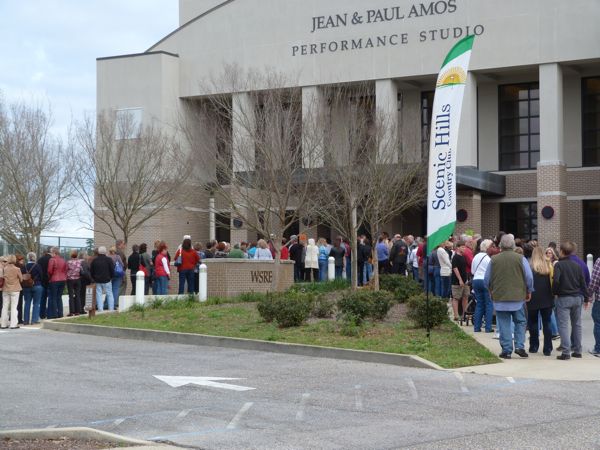
The lines were long, even if you had tickets in advance, but everyone was patient and good humored about waiting their turn.
From soup, we headed downtown to visit the African Art collection on display at the Pensacola Art Museum. First, we had to dodge all the colorful walkers in the Mardi Gras Run, Walk, DRAG with Color, people colored green, gold, and/or purple like the folk in the festival in India, then we had to find a parking place, dodging the police and fire people busy cleaning the streets from the chalk. The water was running green!

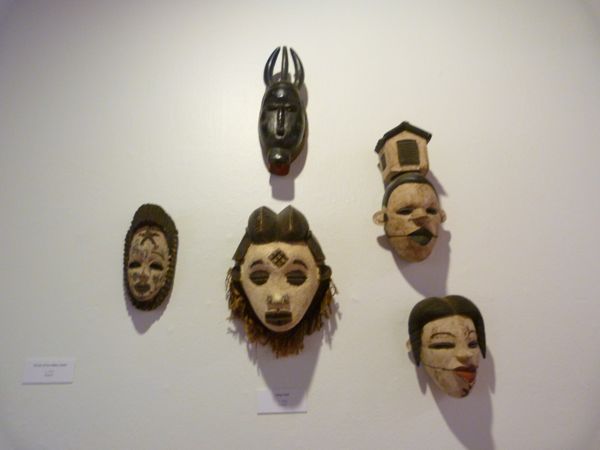
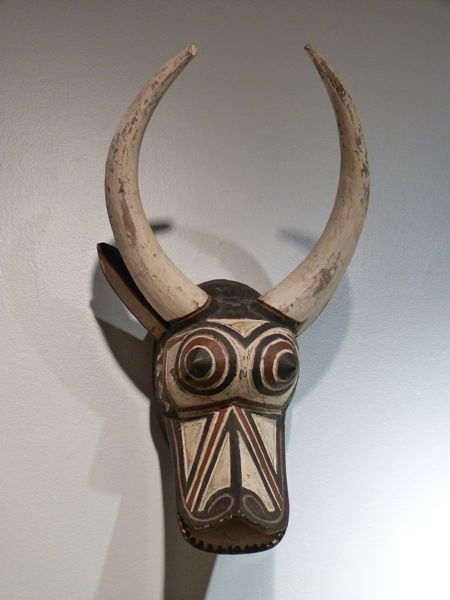
The African Art exhibit was a collection from a family who had lived in Western Africa and brought back fabulous pieces. Truly, the detail and artistry we were able to see close-up just blew us away:
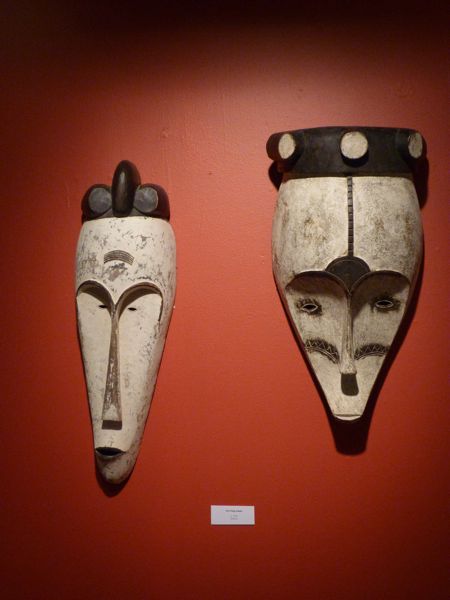
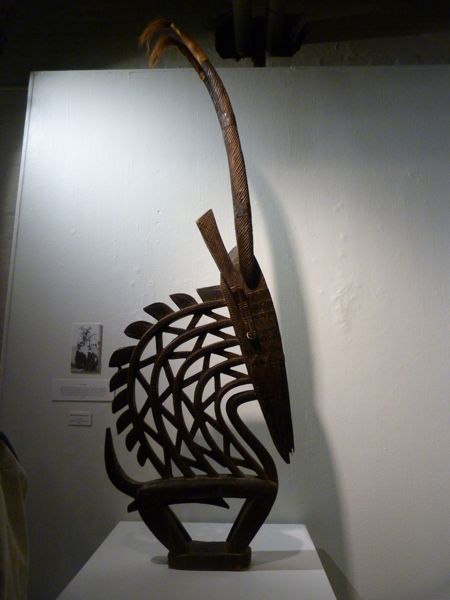
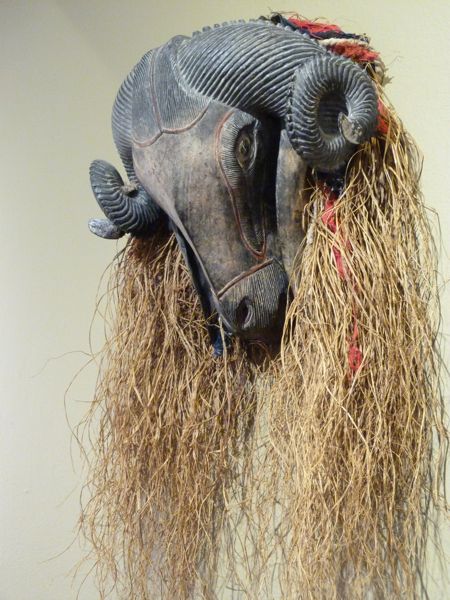
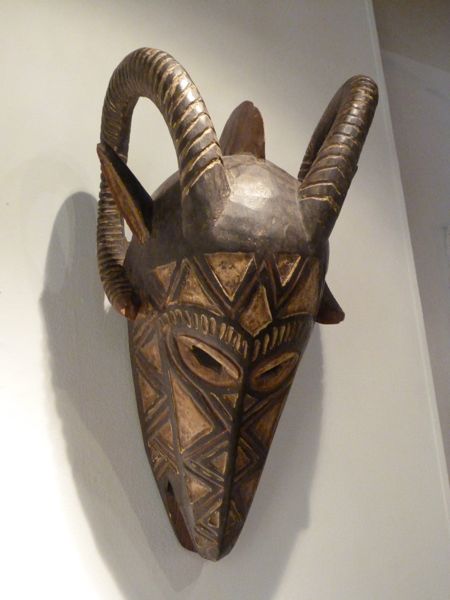
These were so different from the other masks presented, clearly a different tribal group, different aesthetics. I called them the zombie masks for their very grey, formless, chaotic nature, and the black circle eyes:
The textiles on the walls were not identified, but we immediately recognized this sizzling textile as identical to a bedspread we had on our bed at the Grumeti Camp when we were there on the Following the Great Migration trip we took with CC Africa, now called And Beyond:

(This is not in the Pensacola Art Museum; this is our bed in the Grumeti Camp, where you can see the bedcover folded at the end; same amazing cloth:)


Late lunch at our favorite go-to local deli, the East Hill Market, and home – a very satisfying day altogether.
Obama and US Politics Today
LOL! This week’s New Yorker Magazine cover:

Online at the New Yorker you will also find this hilarious article by Andy Borowitz:
JANUARY 15, 2013
REPUBLICANS ACCUSE OBAMA OF USING POSITION AS PRESIDENT TO LEAD COUNTRY
POSTED BY ANDY BOROWITZ
Read more: http://www.newyorker.com/online/blogs/borowitzreport/2013/01/republicans-accuse-obama-of-using-position-as-president-to-lead-country.html#ixzz2IRa0GZf7
WASHINGTON (The Borowitz Report)—Responding to reports that President Obama is considering signing as many as nineteen executive orders on gun control, Republicans in Congress unleashed a blistering attack on him today, accusing Mr. Obama of “cynically and systematically using his position as President to lead the country.”
Spearheading the offensive was Rep. Steve Stockman (R-Texas), who charged the President with the “wanton exploitation of powers that are legally granted to him under the U.S. Constitution.”
Calling him the “Law Professor-in-Chief,” Rep. Stockman accused Mr. Obama of “manipulating a little-known section of the Constitution,” Article II, which outlines the power of the President.
“President Obama looks down the list of all of the powers that are legally his and he’s like a kid in a candy store,” Rep. Stockman said. “It’s nauseating.”
The Texas congressman said that if Mr. Obama persists in executing the office of the Presidency as defined by the Constitution, he could face “impeachment and/or deportation.”
Noting that the President has not yet signed the executive orders on gun control, Rep. Stockman said that he hoped his stern words would serve as a wake-up call to Mr. Obama: “Mr. President, there’s still time for you to get in line. But if you continue to fulfill the duties of President of the United States that are expressly permitted in the Constitution, you are playing with fire.”
Possible Symmetry at Pensacola Ballet Feb 14 – 17
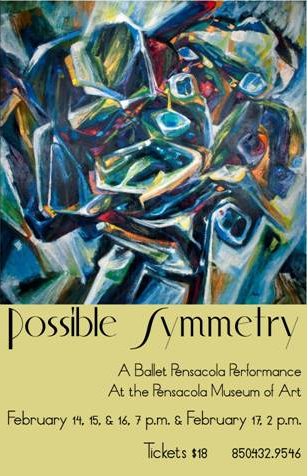
Possible Symmetry
A Ballet Pensacola Performance at the Pensacola Museum of Art
Thursday, February 14, 7 p.m.
Friday, February 15, 7 p.m.
Saturday, February 16, 7 p.m.
Sunday, February 17, 2 p.m.
Watch visual art come to life in this first-time collaboration with the Pensacola Museum of Art. Choreographers Richard Steinert and Christine Duhon will present works based on contemporary art from the collection of the Anna Lamar Switzer Center for Visual Arts. The works of art will be on view from February 14 – April 6 as part of the Pensacola Museum of Art’s exhibition “Possible Symmetry: Pensacola State College Permanent Collection.” Single ticket prices are $18 and are available now by calling Ballet Pensacola at 850.432.9546.
Generously sponsored by the McKenzie Law Firm.
Recent Comments
ExpatAlien on What Country am I Living … intlxpatr on Yellowstone: Old Faithful to C… Michelle on Yellowstone: Old Faithful to C… Cathy on No Grown-Ups in Charge intlxpatr on Waiting for Snow Wikipedia Donate Button

Amazina


Early Voting in Florida


 Here There and Everywhere