The Baboon Coughed
We’ve had three sets of houseguests in a very short time span, and today is our first day of ‘normal.’ We saw our friends off at 0430 (we used to call it oh-dark-hundred) and I couldn’t get back to sleep, so by the grace of God (and I mean that literally) I got up and walked.
I know I need to walk. I’ve always walked. I used to run, but I suffered for it – the knees – and decided I didn’t want to pay that price. But when my sister was here, we decided to take a walk and I said “don’t worry, I walk fast” and she said “I don’t, I am so slow now, my body has to warm up.” Confidently I started – and starting is uphill from my house. Very shortly, I discovered my fast was her slow, and I was HUFFING and puffing, and so embarrassed because I guess it’s been a while since I did this walk . . . but we did it. It felt good. And I was happy for a nice cool morning so I could do it again.
I ran into a neighbor, ignored that she was in her nightgown, we both pretended she was as fully dressed as I, had a brief conversation and she went inside with her newspaper and I carried on. About halfway through my walk, as I puffed along, I heard it.
The baboon coughed.
I could even smell a faint drift of wood burning fire. I could hear the doves. But it was only very briefly, very intangential, and I quickly realized it must have been a dog barking distantly; I could still hear him. For one brief moment I was back in Zambia, and while I love the magic of Zambia, I would not be out for a mile long hike early in the morning while the lions prowl for a last meal before they settle down for their day-long snooze.
We are off this morning to a grand plant sale across the bay in Milton. Symphony tonight. Back to “normal” for Pensacola.
A Woman Scorned
I subscribe to a website called GoodReads.com, where I keep track of the books I read and get great recommendations from seeing what my GoodReads friends are reading. They also send me a newsletter a couple times a month, one a general newsletter, and one customized based on authors it sees me reading regularly. This morning, I got the general newsletter (which I actually do skim) and when I reached the end, I read this chilling poem.
Chilling?
When we lived in Kuwait, the first two lines of the poem were a reality. A first wife whose husband was taking a second wife set fire to the celebration tent where the women were celebrating. While the bride escaped, several lives were lost in a horrifying fire, fed by an accelerant.
Joan Colby captures the power and rage of the woman, scorned, in every culture.
A Woman Scorned
by Joan Colby (Goodreads Author)
A woman scorned sets fire to the tent
Where the new wife is celebrating.
Carves her name and yours into a tree
Then chops that tree down with her nail file.
Cages a bird and teaches it to speak
In a language where every verb is an obscenity.
Combs her hair with broken glass until
It glitters like a million diamonds
That you stroke until your hands bleed rubies.
Watches how you sit quietly near the water
While she poisons the tea she is about to serve.
Drives a team of black horses down the avenue
Of your lovers whipping them white as judges.
Climbs through the window that you forgot to secure
Wearing a burglar suit sewn of her eyelashes.
Picks a bouquet of jimson weed, hydrangea,
Lily of the valley, poison ivy, rhododendron
To prove the base and beautiful can both be lethal.
Paints graffiti on the wall of your Facebook
And for good measure stamps a letter with your heartsblood.
Enters your dream unbidden
Wearing the scarlet dress you once admired.
Paces up and down, up and down
Before your place of business.
Removes all the signposts pointing to
The street you used to live on when you were happy.
Sunset Dolphin Cruise with Olin Marler in Destin
We did this same cruise with the same house guests two years ago, and . . . we never get tired of it. We don’t do it that often, and it is always fresh and relaxing.
We booked with Olin Marler Charters out of Destin. Fortuitously, we had a Groupon. It was so easy, buy the tickets online, call for a reservation, be at the dock at 5 p.m. for boarding.
Yes, it can be a crowd. Yes, you always have to know where you want to be and head directly there so you will have a good view, although people do wander. Yes, you have to hope that people who take young children aboard will be responsible and watch them like hawks. Other than that, these cruises are fun and easy.
There are other cruises. The others that we saw were all very crowded, people packed like sardines on little barge-like boats. We like a boat with a couple levels and lots of places where you can take photographs without having to crawl over anyone – or having people crawl over us! – to get a photo. This is our second time with Olin Marler, and I expect it will not be our last – it’s just so much fun.
We saw lots of dolphins. Dolphins are not so easy to photograph as they surface and dive, oh aaargh. If you want to see dolphins from our last trip, click on the blue hypertext in the first paragraph.
Also lots of seagulls and lots of sunset 🙂 Great times with special old friends from Germany, our sons have been best of friends for years, too.
This is the boat they took us out on, the yellow one:

Sunset is nearing:

Can’t get a good shot of the dolphins so might as well see if I can get something interesting with the seagulls and sunset:

When the sun actually sets, it gets cold quickly. We had a very warm day, maybe 80 degrees F. and it dropped almost immediately by 30 degrees. Fortunately, we knew this happens and came prepared this time 🙂

Great way to end a day, followed by dinner with the same good friends.
Stranger in a Stranger Land
. . . . And the land I am talking about is utility bills, water and sewage bills to be specific.

This month we got a very low water-related utilities bill. I say this in relative terms, for about a year, we have been paying huge bills, bills which, to my perception, seemed out of proportion with the water we have been using. AdventureMan called the utilities company and they explained that the averages are measured in certain winter months, and then you are charged for that usage.
So this time, I called, because I didn’t understand the explanation. A very patient, very kind customer service representative explained it again to me. They send notices, she explained, saying they are about to monitor the water usage, and your sewage will be charged accordingly. “We can measure how much water you are receiving,” she explained, “but we don’t really know what is going down the pipes as sewage or waste water (laundry, etc) or going into the ground, which is not sewage. So we measure intake during three – four winter months when people are NOT watering, and guesstimate (my word, not hers, this is a sort of paraphrase, even with the quotes) what your sewage rate is.”
It’s still a little vague to me, but just clear enough for me to understand that just when we should have been NOT watering the year before, we installed a large new planted area and watered generously while the plants settled in. We watered generously during the exact time we were to be not watering at all and using water conservatively.
For a year, I have been calling in plumbers and asking them to look for a leak, fixing every kind of water problem I could find, not understanding how we were being charged so much.
We saw a program on 60 minutes, a follow up to the “Lost Boys” segment they did years ago on groups of Sudanese men who came to the US as the Janjaweed marauded through there villages, killing, raping, destroying everything in sight. It showed their disorientation as they learned how things are done here; I feel their pain. I can identify with their confusion. My next monster to tackle is COX cablevision; they keep raising my rates, it is all totally arbitrary, and I want to find an alternative. Our son – and many others – have explained different avenues, but until you actually do it, it seems complicated. I like to understand what I am doing, and I am not ready to just throw up my hands and give up; I insist on understanding! There must be some rationality (except for Cox’s mendacious billing) and we will prevail!
But for now, through no understanding on our part, we did not water during the measuring months this last year, and now have a very reasonable water bill. Ahhhhhhh. Life is sweet.
The Week Flew By
Yesterday when I got home from a day-long seminar on Heirloom Feathers (a follow up to another one earlier in the week on making quilts from Heirloom linens), with Cindy Needham, well-known expert and instructor, (that’s Cindy giving us an extra demo during lunch on how to do beading embellishments while on an airplane)

I found a huge bouquet of flowers from my sister and her husband, who had been house guests this week. It’s one of those gorgeous days we have a few of in Spring, warm and sunny, not too hot, and oh, this bouquet looks like Spring. Arriving home and finding this gorgeous bouquet just made my heart laugh. Can you see the Easter Bunny? We had time to walk and talk, to laugh and share stories, and we were able to take them to Five Sisters. We hope they come back soon 🙂

We’ve had a busy week. AdventureMan is getting ready for the big Expo and garden sale in May, we expect our next set of house guests tomorrow morning, and meanwhile, we have our normal daily busy lives to follow. Tonight we meet up with friends we love, people who spend their lives doing good for others, and with whom we always have great conversations, and tomorrow, early, we pick up the house guests, get them settled in, and share an Easter banquet with them, and with our son, his wife, our sweet little grandson and her mother and her husband.
I found a wonderful new Spring salad recipe to share with you 🙂 Very easy, very good:
Spring Asparagus Salad
Ingredients
1 tablespoon rice vinegar
1 teaspoon red wine vinegar
1 teaspoon soy sauce
1 teaspoon white sugar
1 teaspoon Dijon mustard
2 tablespoons peanut oil
1 tablespoon sesame oil
1 1/2 pounds fresh asparagus, trimmed and cut into 2-inch pieces
1 tablespoon sesame seeds
Directions
1. Whisk together the rice vinegar, red wine vinegar, soy sauce, sugar, and mustard. Drizzle in the peanut oil and sesame oil while whisking vigorously to emulsify. Set aside.
2. Bring a pot of lightly-salted water to a boil. Add the asparagus to the water and cook 3 to 5 minutes until just tender, but still mostly firm. Remove and rinse under cold water to stop from cooking any further.
3. Place the asparagus in a large bowl and drizzle the dressing over the asparagus. Toss until evenly coated. Sprinkle with sesame seeds to serve.
Tomorrow is our happiest of holidays, the day that sin and death are defeated and HOPE for all mankind is welcomed joyfully into the world. Happy Easter, my friends.
The Church Remembers Saint Gregory The Illuminator
From today’s Forward Day by Day, information on St. Gregory the Illuminator

The Liturgical Calendar: The Church Remembers
Today the church remembers Gregory the Illuminator, Bishop and Missionary of Armenia, c. 332.
Armenia, the first Christian kingdom in history, was converted through the efforts of Gregory. This kingdom came to an unhappy end as an independent state in 430, yet some two and one-half million persons today are still culturally Armenians. They enjoy a racial, linguistic, and religious heritage which is one of the world’s oldest and richest. Their community has endured fifteen hundred years of dispersion, harassment, and often severe persecution.
The truly marvelous story of Christian Armenia began when the infant Gregory, who was a prince by birth, was exiled by enemies and reared by a compassionate Christian family in Cappadocia (modern central Turkey). As an adult and a Christian he returned to Armenia and converted the king, Tiridates, heir of Gregory’s old enemies. This was not done easily. Indeed, many legends have grown up around the tradition of Gregory’s great difficulties, hardships, and sufferings in effecting the conversion of the king and subsequently the kingdom. For this work he is called the “Illuminator.” Gregory was eventually consecrated Bishop of Echmiadzin and was the organizer of the Armenian Church.
The Episcopal Church has enjoyed a warm and friendly relationship with the Armenian Church for many years. Offer thanks for that friendship.
We thank you, O God, for the witness of Gregory the Illuminator and for the people of Armenia. Amen.
Almighty God, whose will it is to be glorified in all your saints, and who raised up your servant Gregory the Illuminator to be a light in the world, and to preach the Gospel to the people of Armenia: Shine, we pray, in our hearts, that we also in our generation may show forth your praise, who called us out of darkness into your marvelous light; through Jesus Christ our Lord, who lives and reigns with you and the Holy Spirit, one God, now and for ever. Amen.
Moorish Americans Claim Abandoned Properties
Fascinating situation. How do these nut cases convince one another that what they dream up is true??? Parents in nearby Navarre had a son killed, regretfully, by police because he claimed Sovereign Citizenship, and printed his own money. It would be funny, if the consequences were not so tragic. He’s dead and his parents are grieving. It’s not like the police LIKE shooting people; they have to live with the consequences, too. There are no winners when people try to claim these non-legal rights.
This is an AOL Original article by Graham Wood
Squatter Lamont Butler Puts Faith-Based Claim on Lavish Mansion
An interesting phenomenon has been popping up around the country: Squatters attempting to claim ownership of vacant or foreclosed homes because, they say, their religion gives them the right. That’s what 28-year-old Lamont Butler argued as he attempted to take over a gaudy $6 million home (pictured above and in the photo gallery at bottom) that, The Washington Post reported, was vacant and up for sale in Bethesda, Md. Butler (pictured below) said that he claimed the home as a Moorish American national and member of the Moorish Science Temple of America, a religious group founded in the early 20th century.
Some who say they follow its precepts preach that African-Americans lived in America before European settlement and so don’t need to abide by U.S. laws, such as those pertaining to property ownership. By this rationale, Butler claimed ownership of the Bethesda mansion.
“If only a palace will do,” the home’s listing says, “this is your home.” It’s a 35,000-square-foot juggernaut of a house with 12 bedrooms and 17 bathrooms, imported marble floors and limestone terraces. The home that once played host to political bigwigs such as Bill and Hillary Clinton, now was rightfully his, Butler said. According to the Post, Butler went to Maryland’s Department of Assessments and Taxation with a historic map and documents referencing peace treaties, then asked that tax records on the home be updated to reflect his ownership. The department refused to do so without a deed showing a transfer of ownership.
After that, Butler allegedly entered the empty home on two occasions. Neighbors alerted the home’s owner when they saw cars parked out front. When police arrived at the house after complaints, they found “No Trespassing” signs hanging in the windows, a stereo on full blast and food in the refrigerator. Butler sent emails to real estate agent Jordan Fainberg, who represents the home’s listing, stating: “Even though there was no false arrest made … by the Public Servant Trustee Police Enforcers for the private foreign corporate-for-profit entity styled as Montgomery County Police Department, and conversations ended on peaceable terms, I, as well as others, will be coming to the land property estate this week.”
Butler was eventually arrested, the Post said, and along with the case of breaking-and-entering against him in Bethesda, he’d already been charged elsewhere with identity theft and concealing a dangerous weapon. Authorities say that his claim on the Bethesda mansion holds no weight. But this very odd case is no isolated incident. People calling themselves Moorish Americans have been attempting to take over properties all over the country. “I can promise you that every state has had their challenges with these guys,” Carol Foglesong, a land records official in Orange County, Fla., told the Post. States including Virginia and Maryland are even passing laws to impose stricter penalties against those who attempt such property takeovers.
Earlier this month in Memphis, Tenn., a woman claiming to be a Moorish American was arrested after allegedly breaking into and squatting in a $3.1 million mansion, Memphis TV station WHBQ reported. In that incident, a SWAT team stormed the home to remove Tabitha Gentry and her teenage daughter. Gentry claimed that her status as a Moorish American national meant that the government could not control her.
Reports of Sexual Assault Increasing in India: Warning Issued
Another Woman Who Should Have Known She Was in the Wrong Place? She’s in her hotel room – near the Taj Mahal . . . is this another case of being in the wrong place in India? You’re not safe in your own hotel room? The manager of the hotel comes to your room to wake you for a wake-up call???
20 March 2013
Tourist balcony jump: Hotel manager and guard in court
A hotel manager and guard accused of sexually harassing a British tourist who jumped from a hotel balcony to escape have appeared in court in Agra.
A lawyer acting for hotel manager Sachin Chauhan said his client denied the charge and he had been trying to wake the woman up because she had asked for an early morning call.
The 31-year-old British woman was injured after jumping on Tuesday.
The Briton has been giving her statement at the court.
Initial reports suggested the woman told police she asked for a wake-up call at 04:00 local time and was offered a massage by the hotel owner when he knocked on her door.
She said the man would not leave so she locked the door and jumped from her balcony to the level below, injuring her leg, before fleeing the hotel.
On Tuesday, a spokesman for the British High Commission in India said UK consular officials in Delhi had spoken to the woman and local police.
The Foreign Office recently updated its advice for women visiting India, saying they should use caution and avoid travelling alone on public transport, or in taxis or auto-rickshaws, especially at night.
It added that reported cases of sexual assault against women and young girls were increasing and recent sexual attacks against female visitors in tourist areas and cities showed that foreign women were also at risk.
Police arrested six people following an alleged gang rape of a Swiss tourist in Madhya Pradesh state last week.
The woman was attacked with her husband as they camped in woodland near a village in Datia district.
The arrests came as India’s politicians prepared to debate a new law against rape, following the outcry over the fatal assault on a female Delhi student last year.
Mobile Museum of Art
We were so efficient at the Mobile Botanical Garden that we had plenty of time to hit the nearby Mobile Museum of Art. Actually, we loved the whole park area; there is the Botanical Garden, the Museum of Art, also walking paths, a huge water . . . something, it might be a river or a large lake with a dam in it, I don’t know what it is, but it is a large amount of water. There are athletic fields and even some offices, not large office buildings but some smaller outlying kinds of state or county offices. It’s a nice park, it has a nice feeling, a lot going on.
It doesn’t hurt that it is one of the prettiest days of the year, not hot, not humid, and no mosquitos!




I love it that not all the art is inside the building. There is statuary outside, along the walking path, and this huge made-from-found-objects butterfly at the entrance. It is wonderful. As you enter the museum, looking through miles of glass out through trees at the water, you immediately think “what a place for an event!” thinking wedding, reception, small chamber group performance, etc. Truly beautiful spaces; I would show you but they have a really strict policy about photographing inside the building, so I didn’t.
They have some surprising pieces, surprisingly good for a small museum. They have some very odd pieces, par for the course in a small museum. They have an amazing art glass collection, beautifully displayed in a room with gorgeous natural light that allows each piece to shine. They had an exquisite visiting exhibit based on a Vietnamese classic, with intricate, ethereal pieces.
Too much to take in on one visit! I think our favorite piece in the exhibit were some gorgeous silvery angel wings on a wall near the gallery entrance on the top floor. When you get closer to the exhibit, you see it really, REALLY is silvery – it is silver spoons! The bowls of the spoons form the outer part of the feathers, hundreds of spoons, and the base of the spoon the lower part. It is whimsical and surprising, and made me whoop a little (trying to be respectful in a museum 🙂 ) with delight. We are eager to go back and to take our little grandson, as he gains in ability to focus his attention 🙂

Driving Directions From I-65
From I-65, take the Springhill Avenue Exit (Exit 5) and head west on Springhill Avenue. Go approximately 1 1/2 miles and turn left on John D. New Street (traffic signal). Take an immediate right onto Museum Drive. The Museum is the first building on the right.

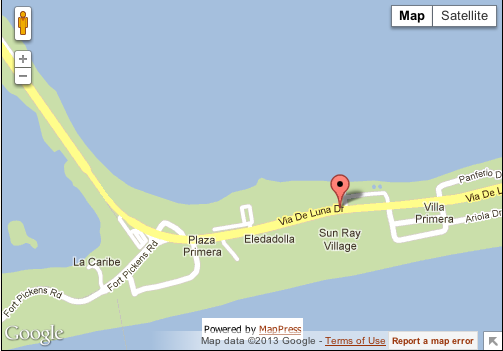
Native Cafe at Pensacola Beach

Just when we think we know all the restaurants in town, Urban Spoon comes up with a Pensacola restaurant we didn’t even know existed. It’s getting a big buzz, too, listed as one of the most talked about restaurants in Pensacola. Hoping it is too early for the Spring Break crowd, we head for the Native Cafe after early church. OOps!Too late! And it’s not the spring breakers, at least I don’t think so, these look like locals.
We wait for maybe thirty minutes on one of the sweetest Sundays of the year, not too hot, not too cold, a tiny bit breezy – perfect beach day, and we don’t mind at all sitting outside, waiting for a table or booth.
Once we’re in, we can see why people like it. It’s not so original as Andy’s Flour Power in Panama City Beach, but they have original art on the walls, a funky decor, and a LOT of customers.


We see a lot of huge breakfasts being delivered. The Crab Cake Benedict seems to be a big hit, all the platters look huge. People are digging right in and look happy. Service is quick and efficient.
AdventureMan has been dying for some Biscuits and Gravy. His favorite place for biscuits and gravy, Adonna’s, in downtown Pensacola on Palafox, no longer serves biscuits and gravy. He says these are pretty good!

The little Alaska girl who lives inside me wanted crab cakes, but not all the bread and sauce that comes with the Crab Cake Benedict, so I asked, and was able to order the appetizer Crab Cakes, which was perfect. It came with Remoulade Sauce – yummm.

LOL, you can see, as usual, I forgot to take a photo before I started eating. There were three complete crab cakes; just be glad I remembered when I did!
The food was good, but we probably won’t go back until October or so, when the tourist season dies down. The Native Cafe has been FOUND! Too many people, too long a waiting line. We have the luxury of being able to go when no one else is around except those of us who live here. (You can live here thirty or forty years and you are still not a local; local is people who grew up and went to school in Pensacola 🙂 )



Recent Comments
intlxpatr on Shampoo Ginger tigerbutterya0c5ff1d… on Shampoo Ginger intlxpatr on British Soldier Kidnapped, Esc… John on British Soldier Kidnapped, Esc… intlxpatr on British Soldier Kidnapped, Esc… Wikipedia Donate Button

Amazina


Early Voting in Florida


