The Water Street Hotel in Apalachicola
So after feeding the goats, LOL, we headed out for a very serene, very zen drive from Panama City to Apalachicola, arriving near lunch time. AdventureMan and I are on track in so many ways, one of which is that we like to have a place to stay before we eat, and the last few years, it’s been a piece of cake, no problem, people haven’t been filling the hotels and you can walk in almost anywhere and find a place to stay. Not so, this year.
First, there are a LOT of people in Apalachicola as we come in. And there is a lot of activity going on, Christmas lights going up, merchants decorating their stores, and SANTA is coming on on a BOAT!
We tried the first, obvious place, where the receptionist told us frankly she had a room but we wouldn’t like it and it is her last room, right next to the dining room. We found another likely place, and every room was taken. They told us to try down the street at the Water Street Hotel, which we did.
We got the last room.
“You’re going to love this room,” she said, and oh! We did!
One of the reviewers on TripAdvisor.com said “its like the (Marriott) Residence Inns, only nicer,” and that is exactly what we thought. The suites are all differently configured, and have beautiful finishes. For me, the best part is the view.
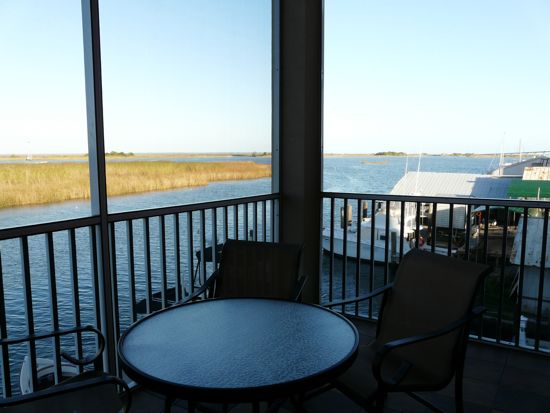
We’re still talking about the kind of house we want. We like the house we have, but we would like something a little more open-plan, and with a view of a bayou – or an estuary. The unit at the Water Street had a large screened in porch where I spent an hour watching boats go too and fro, and pelicans, and an entire flock of about 200 birds, and watching the grass wave in the breeze . . . it was heaven.
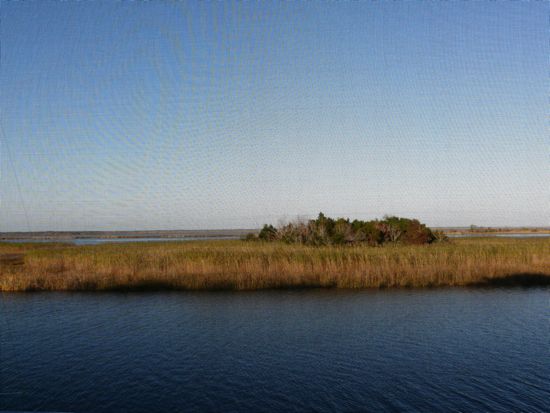
This was the view straight out from our unit:
And now looking up the channel:
The interior going out to the deck:

The Water Street Golf Cart that takes you on tours of Apalachicola 🙂

There was a huge master bedroom, and another bedroom with a daybed, two full bathrooms.
What we want is a place like this in Pensacola, same finishes, same kind of view where there is always something going on, birds, boats, nature happening. We love the attention to detail they put into this hotel. We’d like something a little bigger; we loved this place.
In The Middle of the Storm
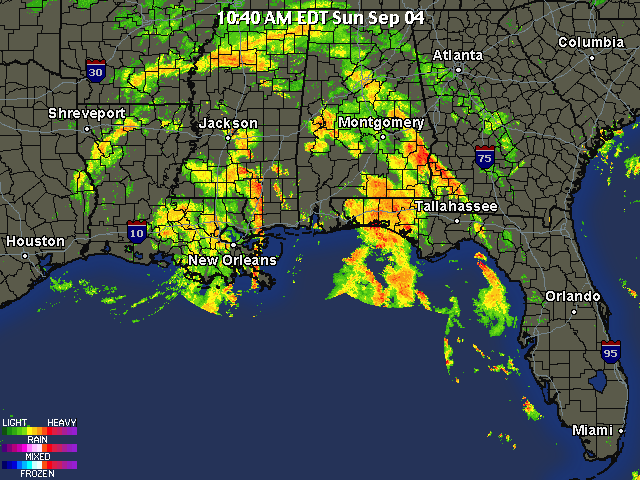
When you’re in the middle of the storm, it is hard to imagine just how BIG it is. It isn’t a hurricane, because the winds are not high enough, but oh man, the rain. Poor Pensacola has been about 10 – 15 inches short of its annual average, and I think we are getting all caught up this weekend.
AdventureMan is outside, picking up dead tree branches that came down last night. On our way to church, early this morning, we saw the electrical crews out trying to fix a line that went down. God bless these heroes who get out of bed on a national long weekend, early in the morning, so that people might have lights, and power, and air conditioning. We take them for granted, and yet they are everyday heroes.
Neighbors Key to Survival
“Americans don’t know their neighbors” my dinner guest said, in response to my asking him what surprises him most in his visit to this country. “In my country, we all know our neighbors. It’s important to know your neighbors.”
I agreed, and quoted him this article supporting his view that I heard on National Public Radio, one of those ideas I hear so often on NPR because they cover news other news sources ignore.
Below is just a portion of the story, which you can read in whole by clicking on this blue type. Even better, if you want, you can listed to the story yourself by clicking on the “Listen to the Story: All things Considered” button on this same page.

When Hurricane Katrina struck in 2005, one victim was political scientist Daniel Aldrich. He had just moved to New Orleans. Late one August night, there was a knock on the door.
“It was a neighbor who knew that we had no idea of the realities of the Gulf Coast life,” said Aldrich, who is now a political scientist at Purdue University in Indiana. He “knocked on our door very late at night, around midnight on Saturday night, and said, ‘Look, you’ve got small kids — you should really leave.’ ”
The knock on the door was to prove prophetic. It changed the course of Aldrich’s research and, in turn, is changing the way many experts now think about disaster preparedness.
Officials in New Orleans that Saturday night had not yet ordered an evacuation, but Aldrich trusted the neighbor who knocked on his door. He bundled his family into a car and drove to Houston.
“Without that information we never would’ve left,” Aldrich said. I think we would’ve been trapped.”
In fact, by the time people were told to leave, it was too late and thousands of people got stuck.
Because of his own experience in Katrina, Aldrich started thinking about how neighbors help one another during disasters. He decided to visit disaster sites around the world, looking for data.
Aldrich’s findings show that ambulances and firetrucks and government aid are not the principal ways most people survive during — and recover after — a disaster. His data suggest that while official help is useful — in clearing the water and getting the power back on in a place such as New Orleans after Katrina, for example — government interventions cannot bring neighborhoods back, and most emergency responders take far too long to get to the scene of a disaster to save many lives. Rather, it is the personal ties among members of a community that determine survival during a disaster, and recovery in its aftermath.
When Aldrich visited villages in India hit by the giant 2004 tsunami, he found that villagers who fared best after the disaster weren’t those with the most money, or the most power. They were people who knew lots of other people — the most socially connected individuals. In other words, if you want to predict who will do well after a disaster, you look for faces that keep showing up at all the weddings and funerals.
“Those individuals who had been more involved in local festivals, funerals and weddings, those were individuals who were tied into the community, they knew who to go to, they knew how to find someone who could help them get aid,” Aldrich says.
My visiting guest was from Lebanon, where neighbors have relied on one another for years as civil unrest rocks the country.
“I am guessing we move more often than your family and friends,” I ventured. “You are right, it is harder to establish long-lasting neighborly relations here where people come and go more often.”
Actually, we have settled in a fairly established neighborhood, where many people around us have lived for years and years, some all their lives. But we have only been here a year, and it takes time to build strong neighborly relations. But we are aware that connecting with our neighbors and staying connected is important in a part of the country vulnerable to life-threatening hurricanes and other natural emergencies.
You can listen to the entire report in 6 minutes and 3 seconds here.
Why I Love My Daughter-in-Law
“Can I come by?” she asked on a Saturday morning. “I have something for you.”
“Now? Sure! I’ve been working outside and I’m just cleaning up a little in the kitchen. It’s a great time.”
Moments later she was there, empty-handed. We hugged, but she laughed when she saw my puzzled face and said “it’s outside by your back gate.”
We walked back together, and there it was, just what I wanted:

She bought me a compost-maker!
I’ve got diamonds. I’ve got pearls. I’ve got everything I need to decorate myself and my house, too much even. But what I don’t have – or I didn’t until now – was a compost maker. This girl knows how to thrill my heart.
We spent a few minutes reading the instructions and putting it together. Wooo HOOOOO!
Don’t you hate to waste? I’ve been throwing out carrot peelings, and onion skins, and salad mix that’s gone a little gooey in my refrigerator, my coffee grounds, my newspapers – they are all fodder for making good compost, and good compost is desperately needed when your yard is greatly sand. Wooo HOOOO! Now, I can make my own compost!
I totally love it.
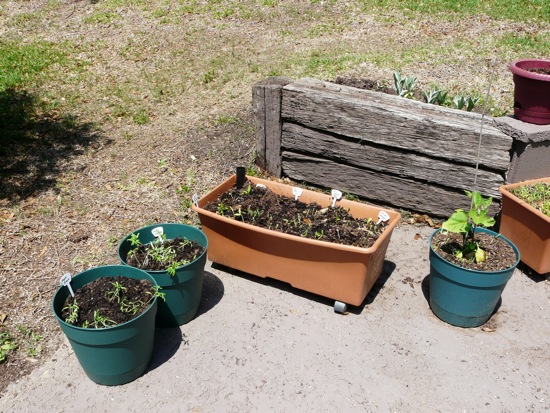
I decided to cut back this year, not to try to grow so many tomatoes and so many peppers. I don’t know what happened, but I had ordered some seeds, and I couldn’t let them go to waste, and I bought a couple tomatoes that are supposed to do well in this area, and we still have many nights with temperatures lower than 70 degrees (F) so I can still hope to have good tomatoes before the great heat sets in for the summer. Some people tell me that if I can keep the tomatoes going through the summer, just green, not setting tomatoes, some of them will start setting tomatoes again once the weather starts cooling once again. I also learned that the time to start your seedlings in Florida is like January or February, to get good tomato crops before the heat starts, so I got started about a month too late. On the other hand, they are doing great. We shall see.
This is what ‘cutting back’ looks like:

I found the Black Krims at the 14th Annual Emerald Coast Garden Show at the PSC Campus in MIlton last weekend. Mr. B’s Tomatoes was right where I bought them last year, and it was my first stop. I also bought one he said would also produce well for me, called Tommy Toe. It’s a weird name. Tomato people often give their tomatoes weird names.
My roses are growing like crazy, unfortunately, a week before Easter. I wonder if I will have any left to give to the church for the Easter services?
I planted tulips and Iris in the fall; the tulips are coming up but I have yet to see a real tulip bloom. The irises look good – I am thinking they may do well here, and that is a really good thing because I love iris. (I pulled the weed)

Three of my tomato plants have tomatoes on them!
Pensacola Visitors To Fort Pickens
You ask where I have been. We’ve just had two weeks and three weekends of house guests. Now, before you groan, I have to tell you that it was two different visits, with less than 24 hours in between, and both visits were old and dear friends. Our visitors are people we treasure and who are easy easy guests to have around. We’ve had two weeks of great visits and great conversations, and I apologize if you are feeling a little abandoned. I didn’t really abandon you; I checked the blog almost daily, but . . . I had a lot on my hands. I can only do a few things at a time, and do them well. I chose to focus on my guests. I hope you will forgive me. 🙂
So I am going to share with you some beautiful sights from nearby Fort Pickens. When we first went there, about a year ago, we discovered they have a Senior Lifetime Pass for only $20. There was only one Senior in the car at the time – me – so the pass is in my name, and gets us into every national park in the United States, me and up to eight people in the same car with me. How is that for a bargain? We’ve already used it four or five times worth the original payment of $20. What an amazing deal!
Fort Pickens is out along Pensacola Beach, and is a long narrow strip of land barely above sea-level. We could see it with our eyes, and when we measured it with our iPhones, it gave us a range from below sea level to 33 feet above sea level. (iPhones must be nearly out of fashion because all my friends have them and we are OLD! If we have them, there must be something out there newer and faster and better that all the trend-setting youngsters are buying . . . so what is it?)
Oops! I got distracted! What I want to do is share some photos of what a truly gorgeous place Fort Pickens is:
I think these are trilliiums:

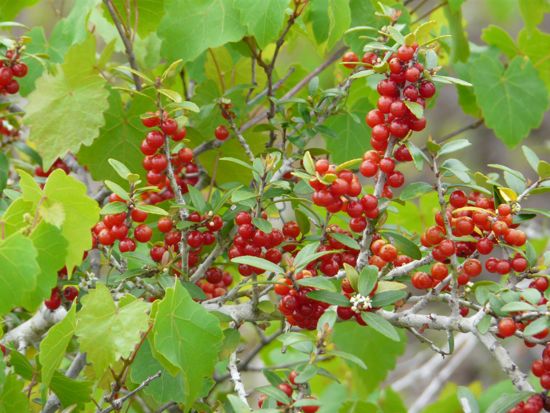
Aren’t these pretty berries? I don’t know if they are edible – or poisonous!
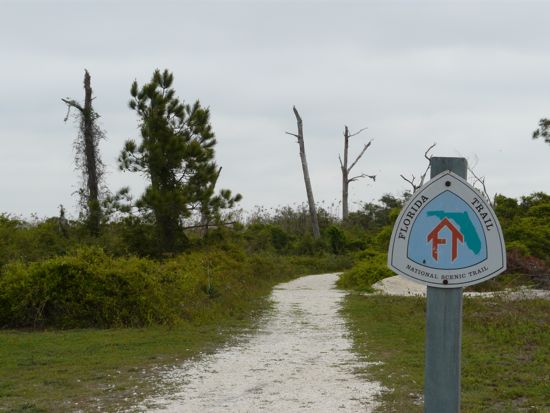
Perfect weather for a walk, and this is the walking trail, .7 miles each direction:
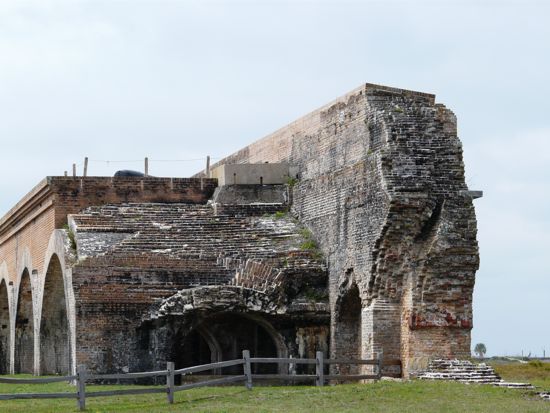
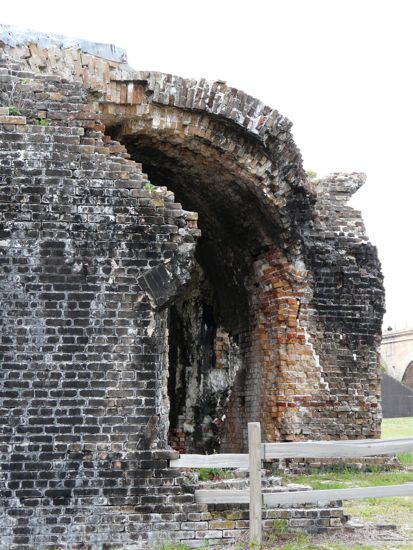
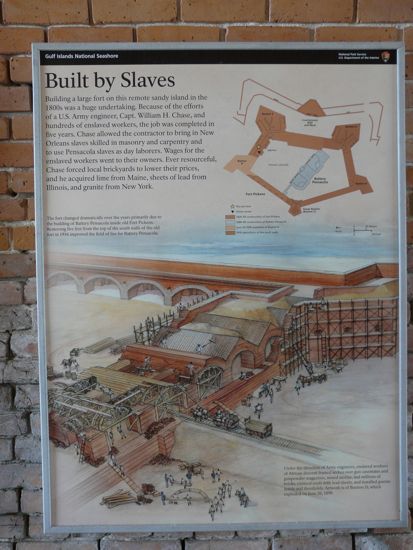
Fort Pickens was constructed to protect the shores from invaders, so this is one of the fortress walls”

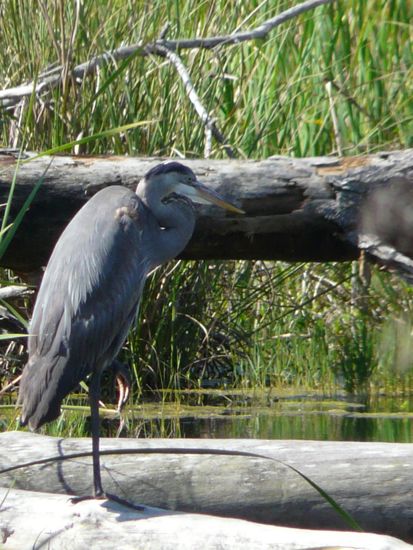
A Heron along the nature trail:
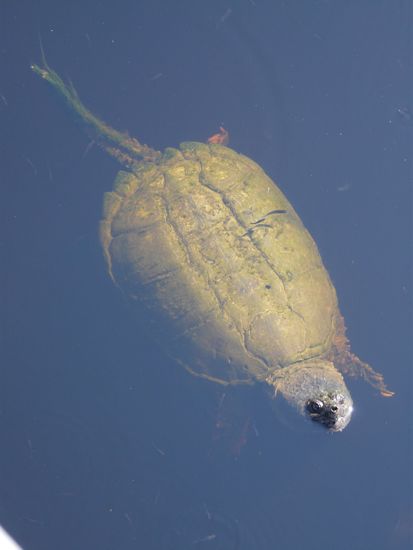
A Turtle (we can’t agree on whether it is a Gopher Turtle or a Snapping Turtle):
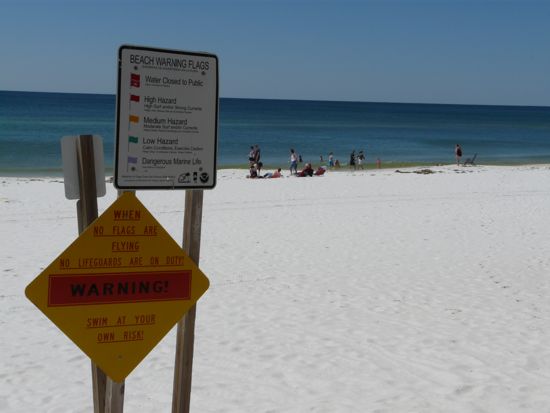
We finished up with a walk along the beach, where our visitors talked with the fishermen along the shore. These are the lines they have out trying to catch some fish, but I really want you to see how clean and beautiful the beach, sand and water are looking 🙂 :

This week, I need to get some things done in the garden, before the weather starts getting too hot!
EEEEWwWwwwwwwwwww
“Just get on 30 and head North,” my friend told me, and then proceeded to give me further directions. It’s really easy.”
My hands started sweating as soon as she mentioned 30, and I couldn’t even hear the rest of her instructions. I wasn’t ready. Even though I had driven in Qatar for three years, when I arrived in Kuwait, it was a whole new level of driving madness. My first trips were Saturday mornings to Fehaheel, when everyone else was sleeping. Slowly, slowly I built up my courage, and maybe a month or so later, I got on 30. Later, 40 and within a year, there wasn’t anyplace I couldn’t go.
Starting over, it isn’t taking me so long, but after being gone a year and a half, the aggressiveness of the driving in Kuwait is still a bit daunting. This morning, Friday morning, I did get on 30 and drove into Salwa to go to church.

EEEEEEWWWwwwwwwwwww!
How can you live like this???
The stink! The STINK!!
How long has it been? Hasn’t it been almost a year since the sewage plant stopped functioning? Where is the fix?? It must be murder on the beaches, and it is surely hell to have to get up to that STINK every morning.
What is the forecast for fixing this problem?
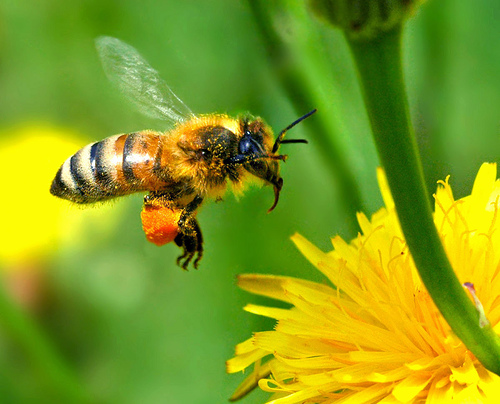
96% Decrease in Honeybees
This isn’t good. A new study shows a dramatic, continuing drop in honeybees, those honeybees which cross pollinate many of our food sources. This is an excerpt from AOL News and by clicking on the blue type, you can read the entire article.
Study: US Bumblebee Population in Sharp Decline
The population of bumblebees in the United States is in a kind of free fall, dropping 96 percent over the past two decades, according to a new study that has scientists alarmed.
Four species of bumblebees are in a rapid decline, possibly because of increased fungal infections and inbreeding. Researchers called the findings of the study, published in the Proceedings of the National Academy of Sciences, “disturbing” and said they were in line with findings in Europe.
“Disturbing reports of bumblebee population declines in Europe have recently spilled over into North America, fueling environmental and economic concerns of global decline,” the authors wrote.
The bumblebee population in the United States is in a steep decline.
The bumblebee is wild, but it pollinates commercial crops from tomatoes to coffee, and its disappearance could have a dire effect on food sources. “People need to know that wild bees are an enormously important ecosystem service, just like honeybees,” Sydney Cameron, the head author of the study and a professor at the University of Illinois, told AOL News by phone today.
To find and count the bees, teams of researchers across the United States visited fields of flowers where hives had historically been found and gently scooped up the insects in butterfly nets.
The disappearing bees have scientists somewhat perplexed. They think a disease-causing pathogen, Nosema bombi, as well as a “lack of genetic diversity” could be plaguing the insects, but they haven’t been able to prove it yet. Cameron said the Nosema bombi pathogen seems to make it difficult for queen bees to survive the winter so they can reproduce.
Honeybees in the United States are also in trouble. They are suffering from a phenomenon called “colony collapse,” a disorder that seems to kill massive numbers of a hive’s worker bees. Scientists aren’t entirely sure what’s causing the disorder, but they suspect a virus may be to blame.
FollowUp To Pensacola Christmas Parade
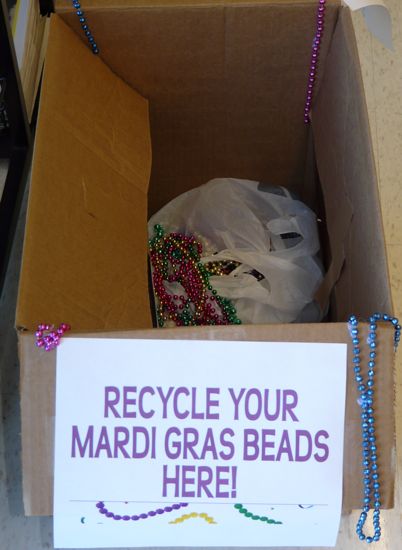
Seen in local Pensacola grocery store:
Zeitoun by Dave Eggers
Do you remember being in university, and how when it came time to buy textbooks, the new ones were really, really expensive, and sometimes you couldn’t find it used and you just had to bite the bullet? Especially in political science and international relations, it didn’t take me long to figure out that many of the authors had one little idea, and they stretched it, kneaded it, elaborated upon it, made each different iteration a new chapter – but essentially, they took this one little idea, stretched it into a book and charged $30-$40 bucks for what might have made a good essay in Foreign Affairs or the New Yorker.
I often felt so cheated. I often find that when I look at the New York Times list of Best selling Non Fiction, most of the books look just like that.
When I bought Zeitoun, that day I just needed an escape, I didn’t know it was non-fiction. I had seen Zeitoun mentioned, even advertised in my very favorite magazine, The New Yorker. I fell in love with The New Yorker when I was a kid, even though I didn’t understand half of the comics, I thought they were hilarious. I still do. 🙂 When my New Yorker arrives, I read it cover to cover, and I often order books reviewed or recommended there.

I started Zeitoun shortly after watching the HBO series Treme´ about life just after Hurricane Katrina, so this book was timely and relevant. Zeitoun, a Syrian immigrant to the US whose wife is a Moslem convert, has a thriving painting and contracting business. When Katrina threatens, his wife and kids leave town, but he stays to watch over his multiple properties and businesses.
He survives the hurricane, and actually finds the change of pace enjoyable. He has a canoe he bought at a yard sale, and he rows around the neighborhood feeding dogs locked inside his neighbors houses, checking on his friends, rescuing stranded people or notifying rescue services where people need their help – he has a feeling he is exactly where he is meant to be, that he stayed on in New Orleans as part of God’s purpose for his life. He feels valuable and useful.
Then, one day, as he is checking on one of his rental properties, he is arrested, along with three friends, in the one house they know has water for showers and a working land line, which they all use to call their families. It is Zeitoun’s property. They are arrested by the National Guard.
One of Zeitoun’s friends, Nassar, has ten thousand dollars with him. Any of us who are expats can laugh – every expat has his cache of emergency escape money. Nassar, on hearing the hurricane was coming, withdrew his savings from the bank so it would be safe. The National Guard arrests them and takes all their money, wallets, identification and sends them off to jail, and in the chaos of post-Katrina New Orleans/ Louisiana bureaucracy, there is no paperwork and their families have no idea where they are.
Nassar and Zeitoun come into the worst of it, because they have Arab names, because of the large amount of cash Nassar has, and Homeland Security advisory that terrorist organizations could try to take advantage of the post-disaster confusion. It is seriously Kafka-esque; they are good men who are just in the wrong place at the wrong time with the wrong last names. Most of the meals served in the prison contain ham or bacon or pork. The system just stops working, and they never even get to telephone people who could clear their names and get them out.
I couldn’t stop reading. Eggers captures the sensual aftermath, the sewage, the foul water, the stink of rotting food and rotting bodies, and the bureaucratic nightmare of trying to prove you are innocent when you don’t even know the charges against you, and people are being picked up on mere suspicions.
While Zeitoun is eventually released from prison, and his construction and painting business flourishes, his family is not left untouched by the post-traumatic stresses the events surrounding Katrina. Every life resounds with the impact of Katrina and the damage inflicted on New Orleans. His friend Nassar never got his ten thousand dollars back.
I love books about people who come to America, create a business, and make a go of it. Zeitoun is one of the best – he isn’t afraid of hard work, and he loves his life and family. His story is well worth a read.
Zeitoun is available from Amazon.com for a mere $10.85 plus shipping, and while I own stock in Amazon, I don’t get any kind of payment for mentioning them in reviews. 🙂
Tropical Storm Bonnie On the Horizon
Yesterday Little Diamond and I headed out to Fort Pickens, a long spit of land out on Pensacola Beach where there are old forts and batteries, campgrounds and hiking trails. The campgrounds looked heavily occupied, and there was a heavy surf – not to far from the road. In fact, although I am usually courageous, I felt uncomfortable about how close the surf was to the road. Out on this long, isolated spit, the land isn’t that much above sea level. It wouldn’t take much to wash right over the spit, and were that to happen, there is no place to run.
Personal security sort of becomes a way of life. It becomes second nature; you don’t even know you are constantly surveying your surroundings, looking for escape routes, keeping your back to the wall, facing the door, watching cars around you, etc. You don’t even know you are doing it, until you get that sort of choking sensation, knowing there is one way out and if that way is compromised, you might be sunk – in this case, literally.
On our way out and back, we saw mysterious activity, involving tents, lots of workers, surveyors and GPS systems. We speculated it might be movement of turtle eggs to avoid contamination from the oil spill, but we didn’t stop and ask – they seemed very intent and focused on their task.
We quickly toured and left for a nice lunch at Crabs – We Got ‘Em. DELICIOUS! We had the crab and spinach dip – oh Yummm. I had the crab cake sliders, which were so big I could only eat the crab cakes. Little Diamond had the Crab Ceasar. All in all, we were greatly pleased. Although yesterday was another hot hot hot and humid day, we ate outside in the shaded area, fanned by fans and Gulf breezes. Another day in Paradise. 🙂
(For those of you in the area, here is our review of our first visit to Crabs – We Got ‘Em several months ago.)
This morning, looking at the front page, we had confirmation of our fears – under the headline Bonnie Flies Over the Sea is a sub-headline “Ft. Pickens evacuates campers as storm enters Gulf, regains steam.”
A second article, above the line, is Sea Turtles Changing Shores and you can see a photo of a sea turtle nest full of eggs being moved to avoid damage from the oil spill.
Pensacola is actually just outside the projected path of Bonnie, but those storms are often known to veer from the projections. I have water and candles and matches and blankets, peanut butter and crackers stored in the closet of what Little Diamond calls the Fantasy Guest Suite. She is, as has become tradition, our first visitor. 🙂
Recent Comments
intlxpatr on Shampoo Ginger tigerbutterya0c5ff1d… on Shampoo Ginger intlxpatr on British Soldier Kidnapped, Esc… John on British Soldier Kidnapped, Esc… intlxpatr on British Soldier Kidnapped, Esc… Wikipedia Donate Button

Amazina


Early Voting in Florida


