Where is Kajo Keji, South Sudan?

Today the church is praying for Kajo Keji, South Sudan, the world’s newest country. While the world moves on, there is still so much unrest in a part of Africa that went barely noticed until oil was discovered there and the janjawi’in began systematically killing off villages and towns.
Today I pray for my friend Manyang, who visited us from South Sudan and who has rarely known a time in his life when the South Sudan was not being attacked.
Holly Beach and Hackberry, Louisiana
AdventureMan knows how to thrill my heart, and just down the road, we find Holly Beach.
“Do you want to walk on the beach?” he asks slyly. He knows the answer to that question will always be “YES!!”
Holly Beach is not Pensacola Beach. I don’t see a single restaurant, not a single hotel. I don’t see sugar white sand. The sand here is golden grey, and the beach is littered – with SEASHELLS! So many wonderful seashells! I could stay here for a long time!
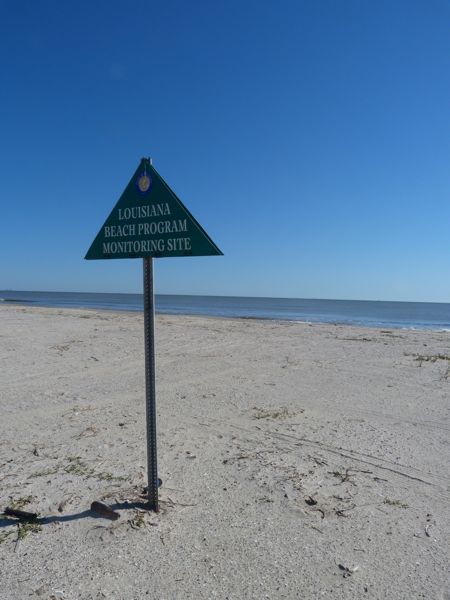

LOL, it’s also an Alaska kind of beach!

On our way into Lake Charles, we make a stop at Brown’s Market, in Hackberry, Louisiana, for a list of items, and they had every item on our list. It is a great little stop, and has clean restrooms, too 🙂

Gigi’s in Cameron, Louisiana
Our friend at the Wildlife Center, Sarah, highly recommended Gigi’s, and we were really really hungry when we got there, so it should have been a really good experience, and besides, Cameron is small and I didn’t see any other options.

Interior:

View out towards Gulf:

Have I mentioned, only a thousand times, how fabulous the weather is? It’s seventy-something and like zero humidity. It doesn’t even matter that we are eating outdoors; the weather is perfect.
We order.
Honestly, when did I become a squeamish woman? Certainly not my early years in Tunis, and Amman, when we had to strain the weevils out of our flour and pasta. But as I watched a fly try to get into the ketchup through the tip of the dispenser, I sort of lost my appetite. The other problem is that AdventureMan and I really try to eat sensibly; we’re not extreme, every now and then we have something fried, but the food in Louisiana is rich, we haven’t seen a lot of vegetables, and when our food arrived – so much food – I couldn’t begin to eat it all. I ate about half my shrimp and an onion ring. The shrimp was really fresh.

AdventureMan had fried shrimp and catfish. He said it was really good. He also couldn’t eat it all.

Cameron isn’t very big.

But this is really fun. A $1. ferry!

And guess which parking space we got? And when we got into the space, there were dolphins, lots and lots of dolphins, no, porpoises, and oh, they were having such a good time in the sunlight.

Dolphins are not that easy to photograph . . . .
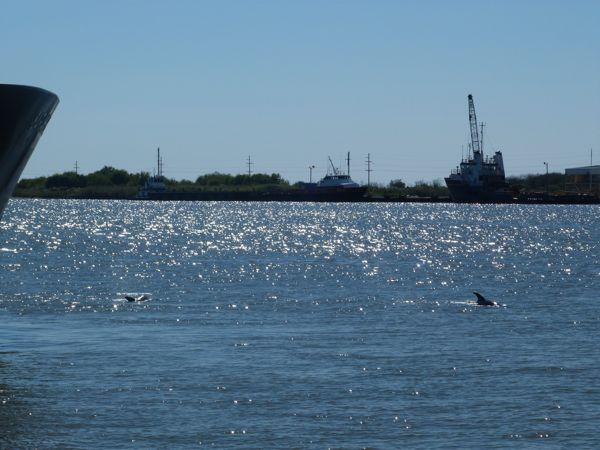
We keep seeing these wonderful signs to tell us we are still on the right trail 🙂 This ferry ride was a Louisiana Lagniappe (a little something extra!)

The Creole Nature Trail! At Last!

We were all ready to hit this trail once before, but weather forecasts for the week we had it planned were full of thunderous storms and lots of rain, so we postponed.
This time, circumstances all came together fortuitously. AdventureMan had a conference in nearby Baton Rouge, and the temperature and humidity dropped dramatically. We had clear skies, no mosquitos, and glorious weather. As we left the Coffee Call in Baton Rouge, we were grinning from ear to ear.
You gotta love these smart phones. Better than a map for letting you know where you are and where you can turn off to get where you want to go. We wanted the Creole Nature Trail, which is a loop, Louisiana Road 27.

Shortly after we started down LA 27, we came to a US Fish and Wildlife Station, and there we met Sarah, who was a Student Conservation Associate, working for several months at the site. She had all kinds of good information, and was delighted to share with us. We laughed; she told us she was from “the other LA”, Los Angeles, and she had experienced culture shock coming to the backroads of Louisiana, but she had adjusted, learned a lot, and she loves the place.
This is their website: Southwest Louisiana National Wildlife Refuge Complex.
We started at Cameron Prairie, which had a three mile drive and a stop with a one mile boardwalk. The boardwalk was gorgeous, and beautifully kept.
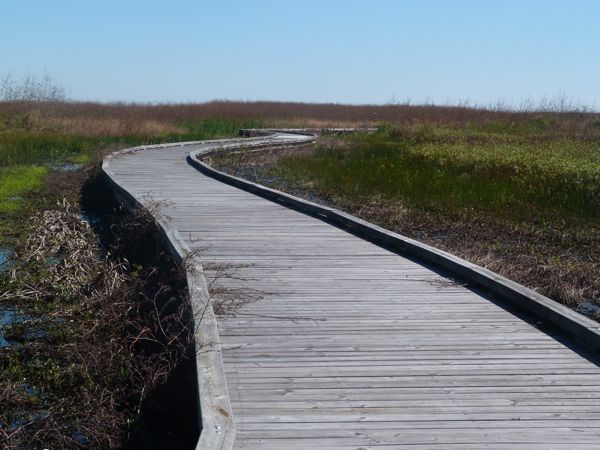
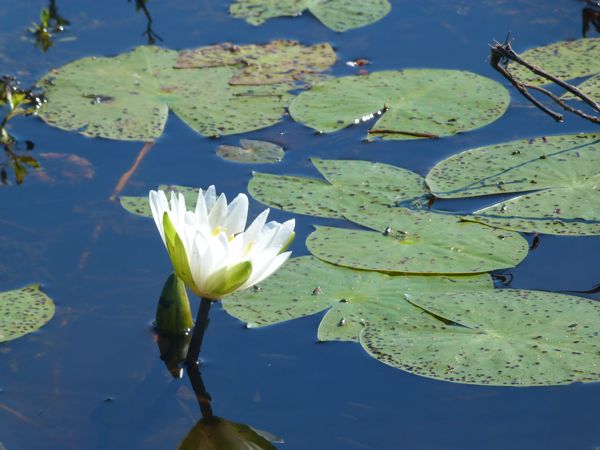
As AdventureMan focused on some alligators, I enjoyed the birds, and the colors:
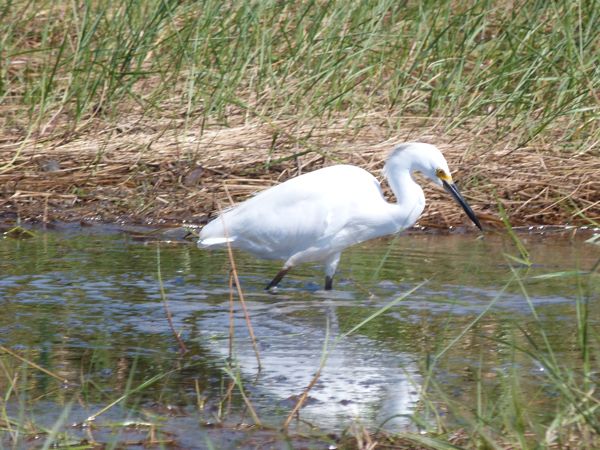


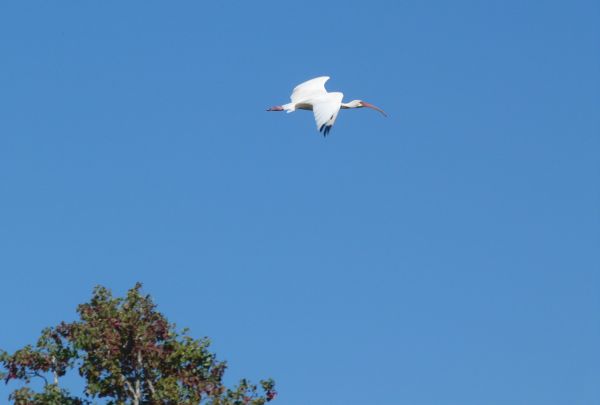

We don’t know what this bird might be. It was huge. Maybe a Red Shouldered Hawk.


We had the park entirely to ourselves, except for one car that came – and left! We could have spent hours, but it was after lunch time when we left, and we were hungry!
Trader Joe’s in Baton Rouge
I grew up in a family that loves Trader Joe’s. We spent so many years living in Germany, and I believe Trader Joe’s is owned and operated by Aldi’s, a large German chain. Trader Joe’s often has things no one else has, at reasonable prices. They encourage their customers to bring their own bags, and they print up a lot of very colorful and attractive Trader Joe’s bags to encourage them further.
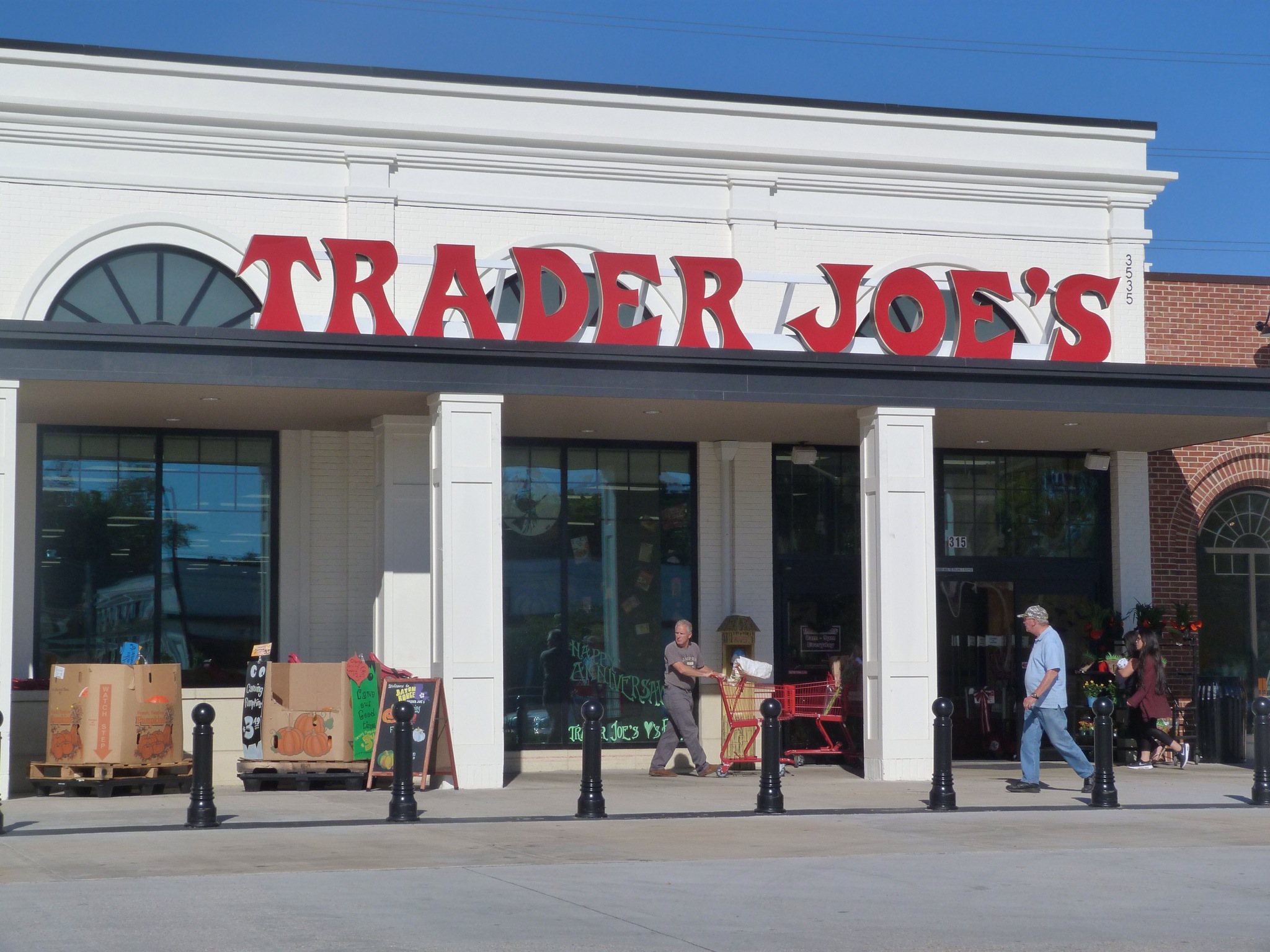
This Trader Joe’s is in a really cool shopping area, which some long-time Baton Rouge people laughed when they told me it used to be an ugly WalMart. It is fresh, and full of really cool shops, unique furniture, a vintage clothing shop, a Baton Rouge favorite restaurant.
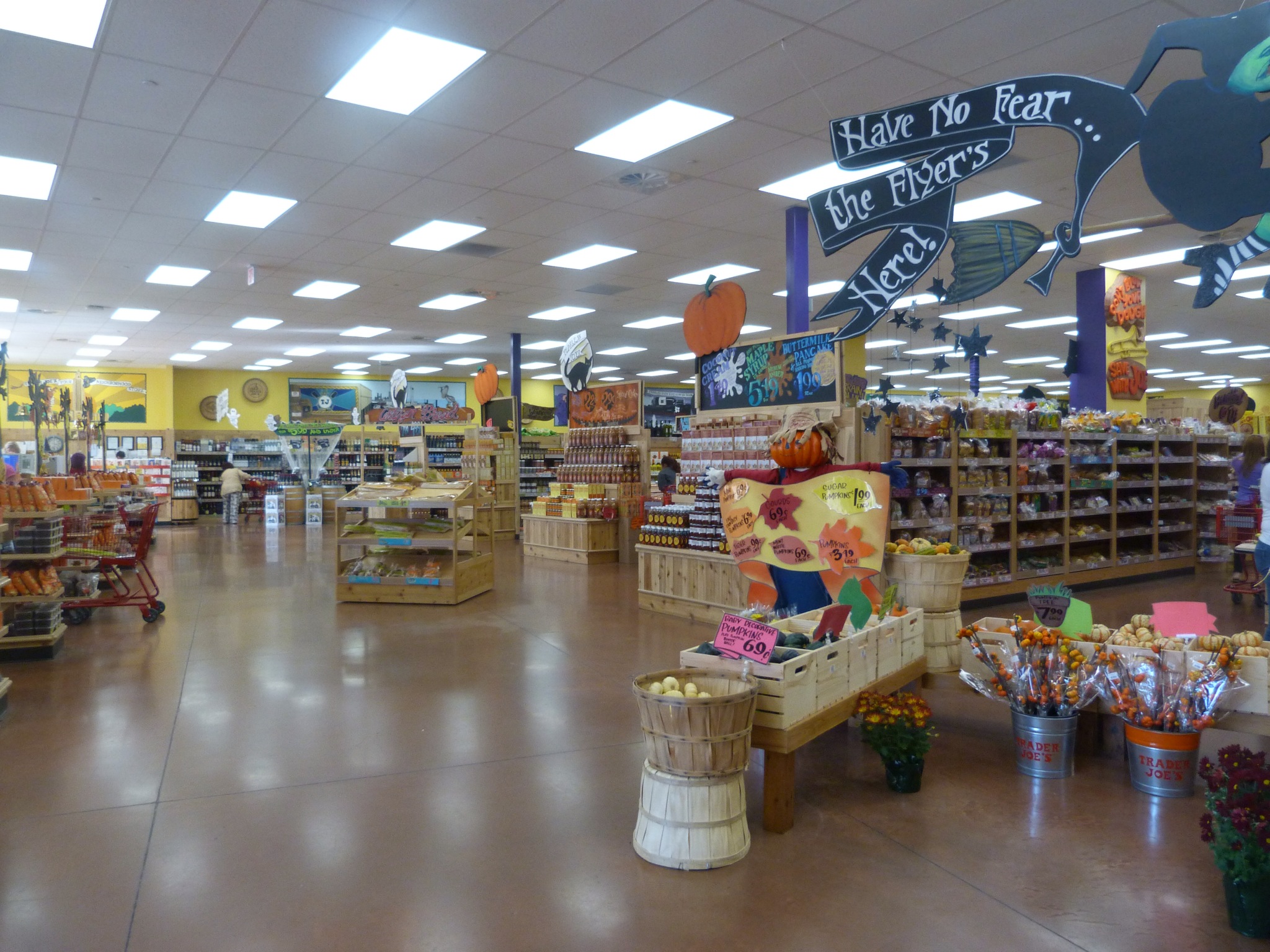
But this Trader Joe’s blew me away. I am used to little Trader Joe’s, no where near the size of a full service grocery store. Most Trader Joes are sort of like the size of a convenience market. This Trader Joe’s is HUGE, and was bustling with customers. I just wish Trader Joe’s would come to Pensacola.
Faithful Friends
Today’s reading in the Lectionary is from Sirach, one of the books of the Apocrypha, and features wisdom on faithful friends. I especially love “let your advisors be one in a thousand.” I have been greatly blessed to have found a few of those, and they stick with you for a lifetime.
Bless you, bless you, faithful friends!
Sirach 6:5-17
5 Pleasant speech multiplies friends,
and a gracious tongue multiplies courtesies.
6 Let those who are friendly with you be many,
but let your advisers be one in a thousand.
7 When you gain friends, gain them through testing,
and do not trust them hastily.
8 For there are friends who are such when it suits them,
but they will not stand by you in time of trouble.
9 And there are friends who change into enemies,
and tell of the quarrel to your disgrace.
10 And there are friends who sit at your table,
but they will not stand by you in time of trouble.
11 When you are prosperous, they become your second self,
and lord it over your servants;
12 but if you are brought low, they turn against you,
and hide themselves from you.
13 Keep away from your enemies,
and be on guard with your friends.
14 Faithful friends are a sturdy shelter:
whoever finds one has found a treasure.
15 Faithful friends are beyond price;
no amount can balance their worth.
16 Faithful friends are life-saving medicine;
and those who fear the Lord will find them.
17 Those who fear the Lord direct their friendship aright,
for as they are, so are their neighbours also.
Inequality: No Respect For Our First Nation Citizens (Blog Action Day)
I grew up in a small town, Juneau, Alaska, and not even in the main town, but on Douglas Island, across the Gastineau Channel from Juneau. My neighbors were fishermen, hunters, pilots, entrepreneurs and hard-working people struggling to make a living.
It was an upside down world. In most places, those who live there the longest are the leaders of society. In Southeast Alaska, those who lived there the longest were at the bottom of the heap, the Native Americans, the Tlingit, Haida and Tsimshian. I went to school with them. Yes, the boys carried knives. No, they were not dirty, and none of my little friends in elementary school were drunks. We were kids, we played together, we were all in the same classes all through elementary school – it was a small school.
Many of them did have family problems. There were problems of alcoholism, unemployment, domestic violence and hunger. They weren’t the only ones. The big problem was no respect. Although there were a few pieces of Native Art in the city museum, Native culture and Native craft were given little value. The Native way of life, living off the land, hunting and fishing, had greatly diminished as lands were apportioned off and hunting and fishing activities regulated.
In 1971 a huge lawsuit was settled and the Alaska Native Claims Settlement Act provided some restoration for the damaged peoples. Alaska Natives now have regional corporations to administer and grow funds to support the culture, to provide education for the children, to provide health clinics and hospitals. SEALASKA began to organize a biennial Celebration, a gathering of all the Alaska natives to share their stories, to celebrate their culture, to dance and to transmit culture to their children. It’s a great opportunity for people you might see every day in their western life to remember where they come from and to be proud of who they are. This Celebration is held every two years and includes Alaska Natives from all over Alaska who want to participate. It is a very inclusive Celebration. The next Celebration will be June 8 – 11, in 2016. You can read a little more about Celebration 2014 here.
They learn the legends of their clans – the Eagles, The Ravens, the Beavers, the Bears and a number of other clans. They spend the time between celebrations stitching together elaborate costumes for their parade and dance exhibitions, hollowing out canoes from trees, making elaborate hats and masks.
We first learned of the Celebration gathering in 2012, when we already had tickets to go back to Zambia at the exact time the Celebration was taking place, but my sweet husband promised we could go back for the 2014 Celebration. As we researched, we discovered just how much of Alaska we wanted to see, and did a reconnaissance trip in 2013. We loved our time there, and we were delighted to be able to return this last year for Celebration 2014.
It was one of the most thrilling moments of my life, to see the gathering, to see the old women cry as canoes came into sight full of young Alaskan natives, and say “I never thought I would see this again in my life”, to watch the exhilaration of the dancers, to feel the energy of the parade and especially – to see the children. To see the pride in marching, in dancing, to see the joy in being able to express who they are and to share that with others. I was moved beyond my ability to express in words; it was a feeling that in one small way, a train of events that had gone very off track had moved incrementally back in the right direction.
Here are some photos from the joyous Celebration of 2014:



Kuwait in Fight Against Money Laundering and Drugs
This from yesterday’s Arab Times Kuwait:

‘Kuwait In Fight With Drugs, Money-Wash’UN Briefed On Efforts
NEW YORK, Oct 10, (KUNA): A Kuwaiti diplomat has briefed a United Nations commission about the State of Kuwait efforts to combat money laundering and other illegal financial activities as well as menace of narcotics. Ibrahim Faisal Al-Da’ee, the third secretary serving with the permanent Kuwaiti mission at the UN, in an address to the UN Social, Cultural and Humanitarian Affairs Committee (SOCHUM), underscored necessity of taking effective action against crime and boosting coordination at the international and regional levels in this respect. As to combating “corrupt financial activities and funding from illegitimate resources,” the third diplomat noted that the State of Kuwait issued lawinto- decree number 23 in 2012, setting up the public authority for combating corruption and issuing special rules for financial assets’ disclosure, as well as the Ministerial Resolution No. 37 (2013), containing executive regulations for combating money laundering and terrorism funding.
Established
On basis of the above mentioned, diplomat Al-Da’ee continued, the national commission for combating money laundering and terrorism was established. Moreover, the Central Bank of Kuwait issued a number of decisions aimed at clamping down on money laundering, in tandem with Kuwait’s endorsement of the UN convention for combating corruption. Regarding the drugs, Kuwait urges for taking necessary precautions to resolve this international problem by means such as encouraging planting of legitimate crops and improving living conditions in rural regions. Also in this respect, he pointed out, Kuwait had signed international conventions concerning such issues. According to Kuwait’s Ministry of Interior, number of drug-related crimes, during 2010-2013, dropped 6.4 percent, drug dealing cases 7.2 percent and narcotics-linked deaths 30 percent. He concluded his address to the international commission, stressing on respect for human and basic rights, through action against crimes, urging for collective global efforts against narcotics.

So . . . now we have legislation and a decree. Does Kuwait have the resources and/or the will to go after those who are funneling the funds to ISIS? Legislations and decrees are great, but even greater is following through; it gives a government credibility.
Cash or Credit or Debit: Generational

AdventureMan and I are not even typical of our generation. Living overseas, living in so many countries, we just got used to paying in cash. In our early years, even countries like France had more places that didn’t take credit cards than places that did. When it comes to buying gas in France, you’d better have a bucketful of cash 😉
But even those in our generation tend to pull out their credit cards for meals out, so this week AdventureMan asked wait staff percentages of who paid cash and who paid with cards. The most common answer was around 85% paid with a card.
I can understand. The restaurants/stores don’t have to keep as much money on hand for change, so it is easier on them, and those who pay with a card can track their expenses. Part of me laughs and says I think we don’t want to track our eating-out expenses, and another part thinks that because we pay cash, we probably don’t indulge in extras so often, which, for us, is a good thing. If we have dessert, we normally split it.
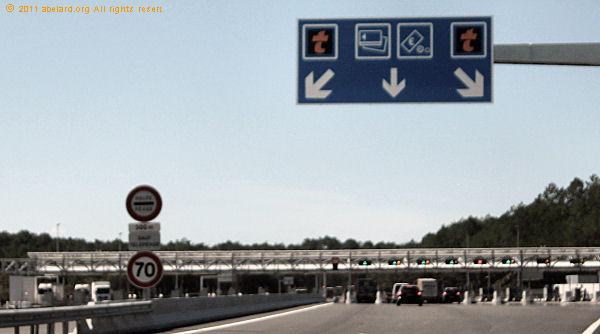
I do remember how wonderful it was to be able to pay all the tolls on the toll roads in France with a credit card, how wonderfully easy it was to use my credit card and the ATM’s in Kuwait and Qatar and Saudi Arabia – for some reason, it was like they were years ahead of the USA in banking technology, and banking by phone. But even there, in the smaller shops, you needed cash.
So I read with interest this column from The Motley Fool, on AOL News:
Pssst, Millennials! When You Pay, Choose Credit, Not Debit


Hey, millennial! Yes, you there, standing in line at the Starbucks (SBUX) counter, tapping away on your smartphone, with the button-like doodads growing into your earlobes — put away that debit card.
No, don’t worry. No one’s going to nag you about buying a cup of overpriced coffee. We all have our vices. And you’re still basking in the fresh glow of youth. At least your vices won’t hurt you as much as they’d hurt us old codgers.
But the way you’re buying your coffee — you’re doing it wrong. And you’re not alone.
Paper or Plastic?
According to a recent survey by CreditCards.com, only about 1 in 3 American consumers currently uses a plastic card — credit or debit — when buying something that costs $5 or less. Most folks still pay with cash for such small purchases, with folks ages 65 and up having the greatest fondness for paying with greenbacks (82 percent).
But when it comes to the Millennials, 51 percent use plastic to pay for such purchases.
On one hand, that’s not terribly surprising. The younger you are, the more comfortable you are paying with plastic, which didn’t gain widespread acceptance in America until the 1960s. Conversely, the older you are, the more likely you’ve been told, at some point in your life, that shopping with cash is a good way to limit your spending and encourage saving.
There’s only so much cash that will fit in your wallet, and if you limit yourself to paying in cash — you eventually run out. Old folks like me, whose memories aren’t what they used to be (and maybe never were), like this “automatic” check on spending. And as a result, CreditCards.com reports that the older a consumer is, the more likely he or she is to pay for small purchases in cash than to pull out a plastic card.
Not All Plastic Is Created Equal
Among plastic cards, nationally, consumers are about twice as likely (22 percent) to use a debit card to pay for a small purchase as to put the purchase on credit (11 percent). When the data is broken down by age group, it turns out that millennials are even more fond of debit cards than the average shopper. Consumers ages 18 to 29 use debit cards more often than any other age group when making small purchases.
But here’s the thing: Debit and credit cards may be nearly equal in their convenience of use when shopping for small items (eliminating the need to carry weighty pockets, jingling with unwanted coins). But they’re not at all equal in the financial benefits they convey to a consumer.
To cite the most obvious example, credit cards often offer you “rewards” for using them. With card companies charging retailers fat interchange fees for every transaction they process, they can afford to pay you generously when you “choose plastic.” Airline miles; “points” redeemable for cash back, account credits, merchandise, and gift cards; and just plain cash-back offers, as high as 5 percent, all make the choice between credit and debit a bit of a no-brainer. (Granted, some debit cards offer rewards of their own — but they’re rare, hard to find and usually much less generous.)
But rewards are only the most obvious monetary benefit of choosing credit over debit. Consider: When you pay for a purchase — large or small — with a debit card, that money is almost immediately deducted from your account.
What Warren Buffett Thinks
In contrast, a charge placed on a credit card is a debt that doesn’t come due — and needn’t be paid — until your credit card bill is sent to you. Depending on the date of purchase and the due date on your credit card bill, you may not have to pay that bill for as long as a month — which means you may be able to hang on to your money, and collect interest on it at your bank, for that time. (Super-investor Warren Buffett calls this concept of using someone else’s money, and collecting interest on it for your own benefit, “free float,” and deadpans that his business partner “Charlie and I find this enjoyable.”)
Granted, with the ultra-low interest rates that banks are paying on checking accounts these days, free float isn’t as profitable as it used to be — probably only pennies per credit card billing cycle. But still, free money is free money. Are you going to turn it down because you’re not being offered enough free money?
Of course, you do need to remember to pay your credit card bill on time, so as not to get hit by late fees. But as long as you can manage that, a credit card isn’t really a card you use for taking out long-term credit at all. It’s a pay-once-a-month debit card — that pays you free money every month.
The High Cost of Not Buying on Credit
Another advantage: CreditCards.com quotes Martin Lynch, director of education of the Cambridge Credit Counseling Corp. of Massachusetts, noting that “debit cards … can’t be reported to the credit bureaus and, thus, they don’t build [up] credit [ratings].” Building up a strong credit rating is crucial to a young person looking to buy his or her first car or to secure a mortgage on a starter home.
Getting charges and on-time payments, onto your credit report — to establish a track record as a reliable borrower — is therefore a good thing. It’s something you want to do as often as possible, and using a credit card to pay for small purchases is a great way to build up your credit report quickly.
Melinda Opperman, senior vice president of community outreach at Springboard Nonprofit Consumer Credit Management Inc., another expert interviewed by CreditCards.com, echoes the sentiment: “We like the idea of using credit cards frequently for small, manageable expenses. This gives users the benefit of an active credit history, but leaves them with monthly bills that are small enough to pay off in full, so they don’t have to pay any interest.”
Suffice it to say, any idea that’s supported by professional credit counselors, and by the world’s third richest man, is one that millennials would be well advised to take to heart.
Motley Fool contributor Rich Smith has no position in any stocks mentioned, and hasn’t used a debit card in years. The Motley Fool recommends and owns shares of Starbucks. To read about our favorite high-yielding dividend stocks for any investor, check out our free report.
Khons Asian Bistro on Palafox in Pensacola

One of America’s best streets just got better with the addition of another great eating adventure as Khons Asian Bistro on Palafox opened a month or so ago with Asian fusion cooking. While most of the diners there were ordering sushi, we opted for the miso soup and hot plates. The waiter particularly likes the fried rice dish, which we considered, but ended up ordering the Cambodian chicken, me in lettuce wraps and AdventureMan with rice.
When our main dishes arrived, he grumped – just a little – because he paid three dollars more, and the only difference was that his lettuce was chopped, and he got rice.
“I paid three more dollars for rice” he mourned.
Not for long. The food was delicious, all the tastes fresh and tasty. Just enough spice. In fact, while I really like spicy, I got a hunk of jalepeno in my soup that nearly took my breath away. Our very helpful waitress said next time she would personally make sure that all the seeds were removed. I don’t mind spicy; this just caught me by surprise.
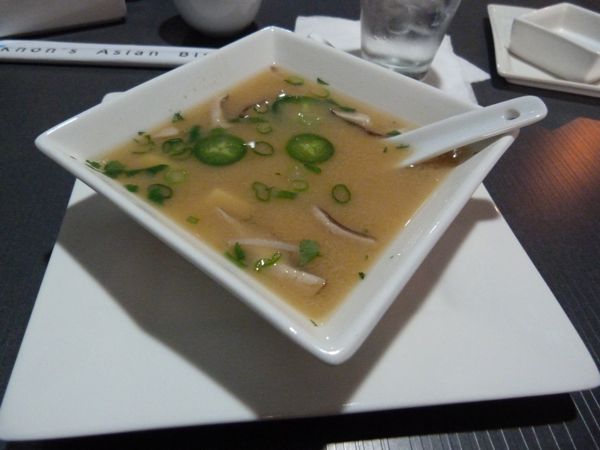
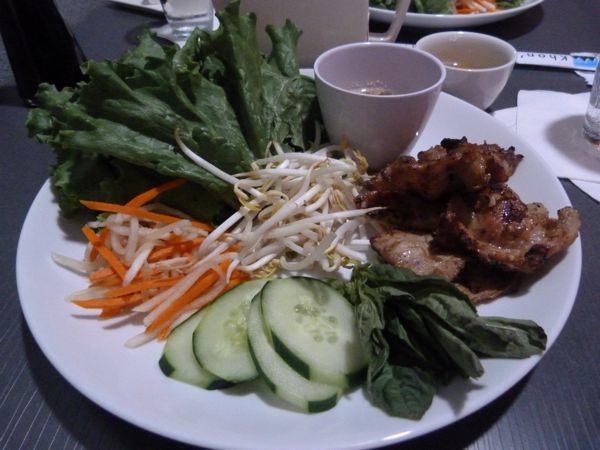
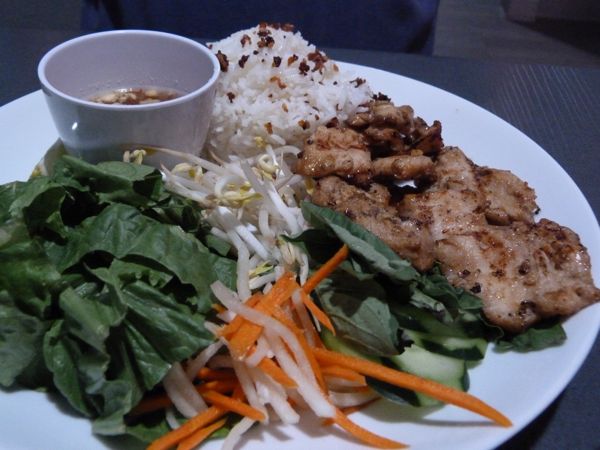
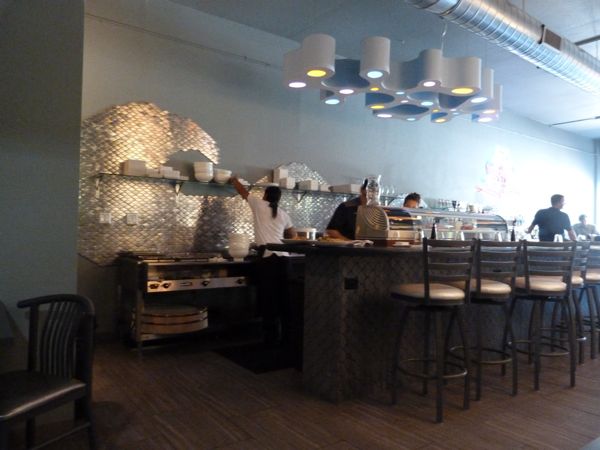
What I love, in addition to the fresh, healthy, tasty food, is the interior. Khon’s uses a deeply greyed blue, very undersea feeling, and silver. Even the chairs (which are comfortable) have silver seats, and that piqued my sense of fun. I love the scaly backdrop behind the sushi bar; the suggestion of a fish tail. We really enjoyed the entire experience, and we are glad they are there and doing so well. They have a brisk lunch crowd, so get there early.

Recent Comments
intlxpatr on Shampoo Ginger tigerbutterya0c5ff1d… on Shampoo Ginger intlxpatr on British Soldier Kidnapped, Esc… John on British Soldier Kidnapped, Esc… intlxpatr on British Soldier Kidnapped, Esc… Wikipedia Donate Button

Amazina


Early Voting in Florida


