Some Peeks in Edmonds, Washington
You would love Edmonds, Washington.
It is a picturesque village. Along Main Street, and Fifth Avenue there are corner gardens, maintained by the city. This year, they are planted primarily with white flowers, big, fluffy flowers which make all the other flowers POP! with color. Overhead, from the lamp posts, are huge hanging baskets, full of a variety of plants, mostly purples, blues and fuchsias. The overall effect is stunning.
On our way to her manicure-pedicure, I drove Mom around looking at the sights. Down at the Edmonds Beach, I was shocked to see an eagle, perched on a piling. The shot isn’t very good, I jumped out of the car in a hurry and snapped, not taking enough time, but I was so surprised – I had never seen an eagle there before.

After lunch, as we headed out, we saw people touching up one of the murals Edmonds has painted on the sides of buildings there:

Here is another one, nearby:

I love it that this sweet little town, with its ferry coming faithfully in and out, preserves its identity and character in the face of changing times.
Family Culture Early Rising

There are some great things about being with family. You know how things are done. You know what people mean when they say things. You exchange ‘looks.’
When I am with my family, there are some funny things that make me feel at home. Both my sisters have smashing views, one looking southeast at Lake Washington and Mt. Rainier and the other at Puget Sound and the Olympics. Growing up on the side of a mountain with a view of water, game and mountains, it just feels ‘right.’ Not a lot of mountains in Florida to build a house on the side of. Or to view . . . sigh.
Staying at my sister’s house, I was the last one up. My body time was two hours earlier then all of theirs, but I was the last one up. They are early-to-rise people. I totally love it – for so many years, I’ve been an early riser living in countries where the day starts around noon and runs well past midnight . . . especially during Ramadan. In Kuwait, I took photos of the sunrises for this blog; my friends told me it was the only sunrise they ever saw, LOL.
Being around other early risers – aw, what a joy. As I left the house for the airport, Little Diamond was already up eating breakfast and I was able to hug her one last time before departing.
The photo above is the view of the I-90 bridge crossing Lake Washington in a cool, breezy pre-dawn.
Non-Essential State Department Personnel Ordered to Leave Yemen
I know, I know, it is not a funny headline. But here is the thing. People have egos. You might wonder why anyone would stay in the face of a threat so grave. It isn’t by coincidence that so many prisoners were busted out of prison – hundreds in Iraq, in Yemen, also if I remember correctly, in Pakistan.
These countries, under international understandings and agreements, provide security for one another’s embassies. Like WE provide security for the Saudi and the Yemeni and French diplomats in the United States. When a country suffers massive prison breaks, it is only prudent to wonder how well they might be able to protect international diplomats – it’s all security.
But – and here is why a very serious headline can make me laugh so early in the morning – who wants to be “non-essential?” I’ve lived through similar situations; people want to think themselves important – you would be surprised how many people will choose to stay, knowing the dangers, because they want to consider themselves “mission-essential”. 🙂

WASHINGTON — The State Department on Tuesday ordered non-essential personnel at the U.S. Embassy in Yemen to leave the country following the threat by al-Qaida that has triggered temporary shutdowns of 19 American diplomatic posts across the Middle East and Africa.
The department said in a travel warning that it had ordered the departure of non-emergency U.S. government personnel from Yemen “due to the continued potential for terrorist attacks” and said U.S. citizens in Yemen should leave immediately because of an “extremely high” security threat level.
“As staff levels at the Embassy are restricted, our ability to assist U.S. citizens in an emergency and provide routine consular services remains limited and may be further constrained by the fluid security situation,” the travel warning said.
The U.S. Embassy is located in Sanaa, the capital of Yemen.
The State Department on Sunday closed a total of 19 diplomatic posts until next Saturday. They include posts in Bangladesh and across North Africa and the Middle East as well as East Africa, including Madagascar, Burundi, Rwanda and Mauritius.
This is only an excerpt from AOL/Huffpost World News where you can read the rest of the story by clicking the blue type here.
Breath of Fresh Air in Seattle
Miss me?
I’ve been in Seattle for a truly grand event, my Mother’s 90th Birthday. She was queen for almost a week, with visitors and well wishers and a smashing party with friends and family and faces she has known and loved for years – many many people.
When I arrived in Seattle it was cool and cloudy and everyone told me how sad it was that I had missed the glorious weather they have had for weeks. Coming in from the airport I was shocked to see all the scorched grass; it looked more like California than green green Seattle.
I wasn’t sad to miss the warm sunshine at all. I have all of that I need in Pensacola. What I loved, from the moment I arrived, was the fresh air.
Seattle smells good. Seattle smells like mown grass, and flowers, lush flowers everywhere. Youcan drive with your windows open. I slept with my window open, and when it got COLD in the middle of the night, I used a BLANKET! This is the best luxury for me, cool weather, fresh air, cool breezes, even a little thunder and lightning and rain.
The days were warm and sunny, and the nights were cool and fresh. I was in heaven.
It wasn’t that I forgot about you – I have all kinds of material – but blogging with the iPad just doesn’t work for me. It’s fine for picking up e-mail and checking the news and playing a game or two, but it isn’t a real computer, with real capabilities. If blogging gets to technical, I’m not going to do it, life is too short. I love WordPress for making life so easy, making it so easy to put in all the photos I want, easy easy easy. I just had too much going on, and didn’t have time to fiddle. The iPad just doesn’t do it for me. I wish I had a computer small enough to just stuff in my purse like the iPad, I wish I didn’t have to pull the computer out of my purse, like the iPad. The iPad is convenient, better than slogging a lot of books on the plane with me, but . . . What I really want is an iPad sized computer . . .
Home again, on the flight in the pilots must have mentioned the heat and humidity in Pensacola six times. Ahhh . . . .for those sweet cool breezes and cool nights . . .
Zemar Stranded in the Philippines!
LOL, I don’t have any friends named Zemar, and “all” she needs is $2550 wired to her as soon as possible!
Good morning,
I Hope you get this on time. I’m very sorry to bother you with my troubles but I’m in some terrible situation right now and need your urgent help, I know I didn’t mention anything about it to you but we are in trouble right now.
I’m stranded in Manila City, Philippines and need your help getting back home. I made a trip down here this past weekend but unfortunately for me, I was robbed at gunpoint at a taxi park. Everything I had on me including my phone, credit cards were all stolen, It was a terrible experience to go through but looking on the bright side, I wasn’t seriously hurt or injured and I’m still alive which is the most important thing. The good thing is that I still have my passport but I just don’t have enough money to sort my hotel bills and travel back home.
Unfortunately for me, I can’t have access to funds without my credit card since the robbers have my card now, I’ve made contact with my bank but it would take at least a week to get a new one to me. Please I would really appreciate if you could help me out here. I was wondering if you could help me with a quick Loan and I promise to refund you as I get back in two days time. All I really need is about $2,550 but if the whole amount can’t be covered, I would gladly appreciate any amount you can put in to help. Western union is the best way to get the funds to me. Please kindly let me know if this is possible so that I can provide my wiring details needed to make the transfer. Looking forward to hearing from you, I will check my email every 30 minutes for your reply because it’s the only way i can reach you.
Thank you
Zemar
Uwem Akpan and Say You’re One of Them

This is a very troubling book, and, for me, a difficult book to read. It has taken me weeks, and I will admit I have often interrupted the reading of it to read other, easier books. This book makes me very uncomfortable. The stories and images trouble my sleep.
Uwem Akpan is of the tribe of Annang, from Nigeria, and has committed to an even larger tribe, the Catholic Church, of which he is a priest, and this gives him a unique perspective. The stories in this book often focus on tribal differences, including religious differences, and although they are set in different African states, have parallels in lives lived elsewhere. Those tribal differences are between Moslem and Christian, but also between Pentecostal and Catholic, Tutsi and Hutu, and, most significantly, the differences between to tribe of the very poor and the very rich.
Each story is told through the eyes of a child living in a different African state – Kenya, Benin, Ethiopia, Nigeria, Rwanda.
In one of my favorite segments of the book, strife has broken out in Nigeria, strife between the Moslems and the Christians, but also throw in the Pentecostals and the Pagans and really mix it up. A bus is waiting in the bus station to take people back to the southern part of Nigeria, and on this bus is a young man, half Moslem, half Christian. The bus stands idle for hours, while the bus driver seeks fuel to make the trip. During this time on the bus, many conversations take place, and what I loved was how alliances shifted with each conversation. The people on the bus were from different traditions, but came together as a community. No community is without arguments and dissensions, however, and consensus builds, diminishes, shifts – it is a microcosm of the tensions and stressors pulling apart the Nigerian nation state.
Uwem Akpan treats the children in each story lovingly, treasuring their innocent perspective and the sweetness of their hearts and vision. The adults don’t come off so well, passing their days in drug-induced stupors, drunk, selling children into slavery and prostitution, chopping off their limbs with machetes, and closing themselves off into groups which protect themselves and exploit others.
It would be an easier book to read if it were about aliens, or if these stories were confined to Africa, but the stories of these abused, neglected and exploited children echo in every continent, country and city in the world.
Uwem Akpan writes prose that is poetry; the surroundings are described with such detail that you feel in the moment, you see through the eyes of each child, and you see things that are beautiful as well as scenes you did not want to see. As you can see, I have a lot of ambiguous feelings about this book. At the same time I can admire the writing, the stories have left images in my mind that cannot be erased. Dark images. There is hope in the persistence and resilience of many of the children, but concern about their long term survival. It leaves a heavy weight on my heart.
The Official Worst Drivers in America: Miami
Slate.com has figured out which city has the worst drivers in America: Miami, Fla.
Slate looked at years of data about traffic accidents, automotive fatalities, alcohol-related driving deaths and pedestrian strike rates as indicators of bad driving.
Three out of the five cities with the worst drivers are found in the Sunshine State, with Miami topping the list as the absolute worst. Miami is first in auto fatalities and pedestrian strikes and, according to Slate, first in “obscenity-lace tirades of their fellow driver”. Fellow Floridian cities Hialeah, which comes in at number three, and Tampa at number four also seem to host a populace with a passion for running down pedestrians and fatal car accidents.
Miami shows up on more than just Slate.com’s worst list. The Huffington Post reported that Miami also had the most hit-and-runs in Florida last year, an incredible 35 a day. Transportation for America also ranked the most dangerous cities in America to drive in, with the top four all in Florida. Maybe Floridians should look into buying heavy-duty trucks and steering clear of sidewalks.
From the original report at Slate.com where you can read the entire article:
Adjusting the Allstate rankings for mileage this way has significant effects. Washington, D.C. remains the worst driving city using the insurance claims data, but Philadelphia surges to second worst. Hialeah drops seven places, from fourth to 11th.
Next we consider additional indicators. Car crashes are bad, but some accidents are worse than others. In July 2012, the Centers for Disease Control and Prevention published automobile fatality data for major cities and metropolitan statistical areas from the year 2009. It’s useful for our purposes, but it comes with a couple of caveats. The researchers didn’t publish data for some of the smaller cities on our list. In those cases, we’ll use data from the larger metropolitan area. In addition, three cities (Boston, Newark, N.J., and Providence) had fewer than 20 fatalities, but the precise number is unpublished. We’ll assume that each of these cities had 10 fatalities, so we have a number to enter into the calculations.
Drunk drivers are bad drivers, and some cities have far more of them than others. Not all locales publish reliable data on drunk driving fatalities, so we’ll turn to the Century Council, an association of distillers organized to combat drunk driving. The group published the number of fatalities from alcohol-related car accidents in 2011. The data are, unfortunately, broken down by state rather than city. So, for our purposes, the sins of the state will be visited upon the cities. (New York City has reliable data, so we can use city-specific data in that instance.) We can’t adjust the statewide data for mileage, because our mileage numbers relate only to cities themselves. So DWI fatalities will have to be computed per capita, unadjusted for how many miles residents of a city drive.
Pedestrian strikes are another key metric. For this indicator we turn to the CDC’s WONDER, a searchable database of morbidity and mortality statistics. It’s a priceless epidemiological tool as well as a bottomless source of trivia. The most granular data on pedestrian injuries and deaths is by county.
You might object to the use of pedestrian injuries as a metric of driver incompetence, because some cities have far more pedestrians than others. That’s a fair point, but consider New York City. It is, by far, the most walked city in the United States. Two-thirds of New Yorkers either walk or use public transit to get to work. According to the website WalkScore.com, only 2 percent of New Yorkers live in neighborhoods where cars are necessary. While every pedestrian strike is a tragedy, there are fewer in New York than you might expect. Miami-Dade County, a significantly less walked city, had 20 percent more pedestrian strikes per mile driven between 2006 and 2010 than New York.
. . . . .
And now, America, on to the cities with your worst drivers.
No. 5: Baltimore. Baltimoreans just can’t keep from running into each other. They were outside the top 10 in fatalities, DWI deaths, and pedestrian strikes, but their rate of collision couldn’t keep them out of the top five overall.
No. 4: Tampa, Fla. Tampa doesn’t do any single thing terribly, but it is consistently poor: 18th worst in years between accidents, fifth in traffic fatalities, tied for 11th in DWI fatalities, and 10th in pedestrian strikes. If the city had managed to get outside the bottom half in any individual category, Tampa residents might have avoided this distinction.
No. 3: Hialeah. The drivers of Hialeah get into a middling number of accidents, ranking 11th among the 39 candidates. But when they hit someone, they really mean it. The city finished third for fatalities. They also have a terrifying tendency to hit pedestrians.
No. 2: Philadelphia. Drivers in the city of brotherly love enjoy a good love tap behind the wheel. Second-places finishes in collisions and pedestrian strikes overwhelm their semi-respectable 16th-place ranking in DWI deaths.
No. 1: Miami. And it’s not even close. First in automotive fatalities, first in pedestrian strikes, first in the obscenity-laced tirades of their fellow drivers.
A couple of other noteworthy findings: Californians did reasonably well. Although the Golden State had seven cities among our 39 candidates, only Glendale finished in the top half of the table. Louisiana’s two entries, Baton Rouge and New Orleans, finished 6th and 15th, owing to the state’s terrible record of drunk driving fatalities.
Washington, D.C., the whipping boy of the Allstate rankings, dropped to 16th, owing to low numbers of DWI fatalities. Boston drivers don’t deserve the torment they receive. They have few automotive fatalities and rarely kill people in alcohol-related accidents. It goes to show how flawed opinion polls can be.
World’s Most Expensive Cities for Expats
By Mark Johanson
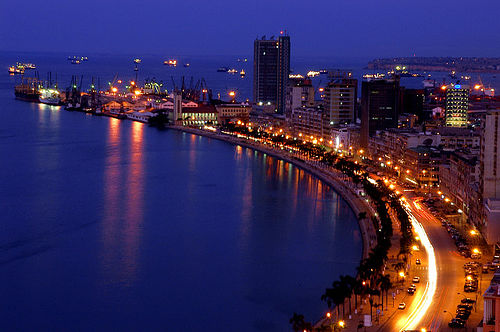
Where is the world’s most-expensive city for expatriates? It’s not notoriously pricey Tokyo. It’s not wallet-shrinking Sydney, Moscow or Oslo. And it’s definitely not surprisingly cheap New York City. Rather, it’s an African seaport you’ve probably never heard of: Luanda, Angola.
This finding from U.S. consulting firm Mercer underscores its annual survey’s purpose: to assess the cost of living around the world so that multinational companies and governments can determine appropriate compensation allowances for their expatriate employees. After all, more than half of oil-rich Luanda’s 5 million residents live below the poverty line.
“Despite being one of Africa’s major oil producers, Angola is a relatively poor country, yet expensive for expatriates since imported goods can be costly,” Barb Marder, senior partner and Mercer’s global mobility practice leader, said. “In addition, finding secure living accommodations that meet the standards of expatriates can be challenging and quite costly.”
Mercer noted in the survey that the difference in cost of various everyday items could be dramatic from country to country. The average cup of coffee, for example, costs about $1.54 in Managua, Nicaragua, while it costs $8.29 in Moscow. A fast-food hamburger meal in Kolkata, India, costs $3.62, compared to $13.49 in Caracas, Venezuela. A ticket to the cinema, meanwhile, can run between $5.91 in Johannesburg and up to $20.10 in London.
Cost of accommodation was another major factor Mercer looked at, and a one-month unfurnished luxury rental in Hong Kong topped the world at about $7,092 — more than 20 times as much as in Karachi, Pakistan. Yet, it was Moscow that crept in just below Luanda as the second-most expensive city for expats, followed by Tokyo, Chad’s capital city of N’djamena, and Singapore.
“Recent world events, including economic and political upheavals, which resulted in currency fluctuations, cost inflation for goods and services, and volatility in accommodation prices have impacted these cities making them expensive,” Marder explained.
Mercer assessed a total of 214 cities across five continents for its 2013 survey, analyzing data from March 2012 to March 2013. Cities were then ranked by the price of housing, transport, food, entertainment and clothing, and ordered on the joint cost of 200 items compared to the benchmark, New York City.
“Given the increasing numbers of business travelers, global ‘commuters’ and longer-term expatriates, companies are keeping a close eye on the cost of living for international assignees in different cities around the world,” Marder said, explaining the purpose of the study. “Organizations need to evaluate the impact of currency fluctuations, inflation, and political instability when sending employees on overseas assignments while ensuring they can facilitate the moves they need to drive the business results by offering fair and competitive compensation packages.”
Nathalie Constantin-Métral, principal at Mercer with responsibility for compiling the survey ranking, said that, overall, cost of living went up across parts of Europe, while it went down in much of Asia. Japan dropped significantly from last year due to a weakening of the yen against the U.S. dollar.
In the Americas, meanwhile, South American cities were the most expensive for expatriates, while Canadian cities moved down in rankings due to a slight decrease of the Canadian dollar against the U.S. dollar. New York remained the most-expensive urban center in the U.S.
“Overall, U.S. cities either remained stable in the ranking or have slightly decreased due to the movement of the U.S. dollar against the majority of currencies worldwide,” Constantin-Métral said. “Yet several cities, including New York, moved up in the ranking due to a rise in the rental accommodation market.”
Recent Comments
ExpatAlien on What Country am I Living … intlxpatr on Yellowstone: Old Faithful to C… Michelle on Yellowstone: Old Faithful to C… Cathy on No Grown-Ups in Charge intlxpatr on Waiting for Snow Wikipedia Donate Button

Amazina


Early Voting in Florida


 Here There and Everywhere