Eid Confusion
After writing that I don’t get a lot of phone calls, my VOIP started ringing. Four times, it was AdventureMan – we always have a lot to talk about. Once, my Mom, who calls just because she can and because the number we got is her area code, so it is like calling next door, and we all like that. Last, one of my friends in Kuwait – we have discovered we can call VOIP to VOIP. It’s like double the trouble – VOIP phones don’t always have the best connection, sometimes they are echo-y, sometimes one person can hear and the other can’t, sometimes you get other people on the conversation with you – so when you talk VOIP to VOIP, you have double the risk of technical difficulties, but still, an cost-per-phonecall that encourages long conversations (if you can hear and understand one another.)
“Has Eid started in Kuwait?” I asked at one point.
“I don’t thing so,” she replied. “I think it starts like Monday or so.”
It’s confusing to me. I know that Ramadan started four weeks ago tomorrow, so it is likely Eid will be 28 days later, like tonight or tomorrow or Sunday. But Kuwait started the Eid holidays on Friday, the official holidays, so that people will have nine full days of Eid celebration. (two weekends and a five day week). I don’t know if it is the same in Qatar.
It is also confusing as to just who gets the Eid holiday. When I lived in Tunis, lo, these many years ago, the entire country got every celebration. Those of us at the Embassy were doubly blessed; we got all the American holidays AND we got all the Tunisian holidays. So did just about everybody; the country shut down. For at least three days, no restaurants were open, no stores were open – you had to know about this in advance and bring in provisions to last until the Eid celebrations were over.
I wonder, did it used to be that way in Qatar? In Kuwait? That everything shut down, at least for the first day of Eid, and often longer?
In Kuwait and in Qatar, occasionally – like the first day of Eid – the stores will be closed a day – some just half a day. So many workers here are non-Muslim that it makes it possible to keep places open without intruding on someone’s celebration of Eid, in fact, I would think being able to go to restaurants and pick up a few items in the stores enhances the Eid experiences. I know most of my friends in Qatar are leaving town, just as I am getting back, beating feet for Europe, for Africa, for the Maldives, celebrating by traveling.
All the same, I am not sure when exactly Eid is expected to start officially, like according to the lunar calendar. Anyone?
Second New Twist on an Old Scam
This one cracks me up – the names make it sound so credible, right? WRONG!
Offer Coming From U.A.E
This letter must come to you as a big surprise,
but I believe it is only a day that people meet
and become great friends and business partners.
I am Mr.Andre Sayegh, Chief Executive Officer with a reputable bank here in U. A. E. I write you this proposal in good faith, believing that I can trust you with the information I am about to reveal to you. I have an urgent and very confidential business proposition for you. On November 6, 2000, an Iraqi Foreign Oil consultant/contractor with the CHEVRON PETROLEUM CORPORATION, MR MOHAMMAD AL NASSER made a (Fixed deposit) for 36 calendar months, valued at US$17,500,000.00 (Seventeen Million Five hundred Thousand Dollars only) in my bank and I happen to be his account officer before I was moved to my present position recently.
Upon maturity in 2003, as his account officer and as well the Planning & Financial officer, it is my duty to notify him on the maturity date so I sent a routine notification to his forwarding address but the letter was returned undelivered. After sometime, I tried sending back the letter, but it was again returned and finally I discovered from his contract employers, Chevron Petroleum Corporation that .Mr. Mohammad Al Nasser died as a result of torture in the hand of Saddam Hussein (former Iraqi President) during one of his trips to his country Iraq, as he was accused of leaking information to the Americans. On further investigation, I discovered that Mr. Al Nasser’s family wife and two sons died during the Gulf War in Iraq and was the reason why he did not declare any next of kin or relation in all his official documents, including his Bank Deposit paperwork in my Bank and did not leave any WILL.
This sum of US$17,500,000.00 have been floating and placed under dormant/unserviceable account by my bank management since no one have heard from the owner since 2003. I wish to let you know that all the investigation I have made so far, my bank management is not aware of it, I am the only one that have the information. With the recent change of government in my country and with their efforts to support the United Nations in checkmating terrorism aid in the U. A. E. By end of this year, the government will pass a new financial control law which will give the government authority to interrogate account owners of above $5,000,000.00 to explain the source of the funds, making sure it is not for terrorism support. If I do not move this money out of the country immediately, by end of the year the government will definitely confiscate the money, because my bank cannot provide the account owner to explain the source of the money.
I cannot directly transfer out this money without the help of a foreigner and that is why I am contacting you for assistance. As his Account Officer to late Al Nasser, coupled with my present position and status in the bank as Head of Business Planning & Financial Control, I have the power to influence the release of the funds to any foreigner that comes up as the next of kin to the account, with the correct information concerning the account, which I shall give you. All documents to enable you claim this fund will be carefully worked out and there is practically no risk involved, the transaction will be executed under a legitimate arrangement that will protect you from any breach of law, beside U. A. E is porous and anything goes. If you accept to work with me, I want you to state how you wish us to share the funds in percentage, so that both parties will be satisfied. If you are interested, contact me as soon as you receive this message so we can go over the details.
Thanking you in advance and May God blesses you. Please, treat with utmost confidentiality. I shall send you copy of the deposit certificate issued to Al Nasser when the deposit was made for your perusal.
I wait your urgent response.
Regards,
Mr.Andre Sayegh
A New Twist on an Old Scam
Got this one – as Intlxpatr – today. Hee heee heee, I grinned thinking of a big check made out to “Intxlpatr” packed in a box marked “old African cloths.”
Good Day!
I have been waiting for you since to come down here and pick your Cashiers Cheque but did not hear from you since that time. So i went to the bank to confirm if the draft is getting close to expire and the Manager of the bank told me that before the draft will get to your address that it will expire. Then I told him to help me and cash the bank draft of $1.5 million to cash payment.
However, The Bank Manager have successfully cashed the draft and packaged your Cash in a Diplomatic Cargo box and had registered it in the FEDEX EXPRESS COURIER COMPANY here in Benin Republic because i am travelling to see my boss and will not come back soon.
You have to contact FEDEX EXPRESS COURIER COMPANY to know when they will deliver your package to your address.
CONTACT FEDEX EXPRESS COURIER COMPANY WITH THE INFORMATION BELOW/
NAME: DR UGO ODILI
CONTACT PHONE NUMBERS: +229-97555256
E-MAIL: ( fedex_ccltd@sify.com)
Please, Send them your contacts information to able them locate you immediately they arrived in your country with your Diplomatic BOX.
This is the information they need from you.
1. YOUR FULL NAME.
2. YOUR HOME ADDRESS.
3. YOUR CURRENT MOBILE NUMBER.
4. YOUR VERIFICATION CODE – (PX002)
Try to contact FEDEX EXPRESS COURIER COMPANY as soon as possible to enable them release your consignment to you. I gave them your delivering address but you have to reconfirm it to them again to avoid any mistake in the delivery.
I have paid for the delivering charges. Also ask them how much the insurance fees will cost you. The only money you have to send to them is their INSURANCE FEE to receive your package which will be a token. I could have paid for the insurance fees, but due to some prevailing circumstance beyond my control.
Note; I didn’t tell FEDEX EXPRESS COURIER COMPANY that it’s money inside the box, I registered it as a package of an African cloths/Family Valuables. This is to avoid delaying or any upfront problem during the delivery, So do not let them know that the package contents money inside until you have received it in your house address, this is the code which you will send to them for verifications (PX002).
You call the Director of the company with this line:+229-97555256
Do let me know as soon as you received your package. Contact me by email as i am travelling out side the country today.
Best Regards,
Mr Melvine Parker (ESQ)
My / Your New Best Friend
Back when I was studying conversational Arabic, sometimes I would slip. I was supposed to say “Ana Taliba” (I am a student) when asked what my profession was, but in my exam, I slipped and said “Ana Taliban” which sent my teachers into gales of laughter. I was so embarrassed.
So Abdul Kareem Talib caught my attention this morning, by his name, but, sadly, I cannot take advantage of his kind offer. He doesn’t even have the courtesy to call me by name! And he includes his phone number, so I encourage any of you with too much time to kill to give him a call and chat him up. His e-mail is also there; for some reason he doesn’t mention he is writing out of Hong Kong.
Dearest
Compliment of the day ,I am Abdul Kareem Talib the son of Lt Colonel Deng Aluk Naeem Talib Of Sudan People’s Liberation Movement (SPLM)led by Late Lieutenant Colonel John Garang Hinga can read moreon: http://www.globalsecurity.org/military/world/para/spla.htm about the war and problems ,having two distinct major cultures–Arab and Black African–with hundreds of ethnic and tribal divisions and language groups, which makes effective collaboration among them a major problem that led to several wars that is still going on now.
I am contacting you for the investment of the sum of US$7,300,000.00 [Seven Million and Three Hundred Thousand United States Dollars] which was inherited by me ,before the unpleasant situation in my country that is going on now, have made up my mind to invest under your directives and financial control.
Please, I need your urgent reply, here is the telephone number you can reach me+66-8-45-666910 and reply by my e-mail.
Awaiting for your respond.
Best Regards.
Abdul Kareem Talib
abdulkareem.talib@yahoo.com.hk
Barnes and Noble Reward
I’ve been so good. I haven’t spent much money at all, I have kept my shopping under control, even though there are things I see in the stores that make my blood run faster and give me the urge to pull out my credit card.
So I rewarded myself. I knew Philipa Gregory had a new book out called The Other Queen and so I allowed myself a trip to Barnes and Noble. I only came out with four books, and one is for someone else! Woooo HOOOOO on me!

A long time ago, I read a book by Katherine Neville called The Eight. It’s kind of like the Da Vinci Code would be if it were written by someone who kept track of his plot thread, researched his topic a little better and had something important to say about how international finance operations are run. I’ve read it more than once, I like it so much, so I am eager to see how this one works out. I like her characters, I like how they develop insight and put the puzzle pieces together.
Philippa Gregory writes total page-turners, and I always hated English history, but she makes it come alive, makes all those historical characters into flesh-and-blood human beings, so I feel like I know them. (Some of them I want to throttle. That’s a good author!)
LeCarre – he is amazing. He is brilliant. Have you read The Constant Gardener? This man has something to say, and what he says is deep, and troubling.
The Will Shortz New York Times Puzzle book is for someone a lot smarter than I am.
Dubai, then Doha Most Expensive
Doha second most expensive city in Mideast
Web posted at: 8/27/2009 2:45:52
Source ::: The Peninsula/ By HUDA N V
DOHA: Doha is the second most expensive city in the Arab world, according to a latest study. The USB, one of the world’s leading financial firms, recently released the 14th edition of its ‘Prices and Earnings’ review which has included Doha for the first time in the list of 73 international cities.
Placed in the 39th position in global ratings, Doha is the second most expensive city in the Middle East after Dubai and before Manama. The rating is based on 122 common goods and services. The study looks at the prices of goods and services, and wages and working hours for 14 professionals in 73 cities round the world.
The study reveals that Dubai has surpassed New York and London which were the biggest financial cities in the world. The finical crisis had lead to fluctuation in the rankings of many cities. London which was the second most expensive in the 2006 review plummeted nearly 20 places, landing in the middle of the Western European rankings. Doha is the most expensive city in the world when it comes to a low-class furnished four bedroom flat. With a monthly rent of $4,210, even posh cities like New York ($4,110) and Dubai ($3,950) come after Doha.
However, in high-class four-bedroom apartments, Dubai is one of the most expensive following New York, Hong Kong and Tokyo. In Dubai, such apartments cost $7,090, whereas in Doha they cost $5,580 and $ 3,400 in Manama.
The average rent in most local houses in Qatar is $1,650, $2,160 in Dubai and $890in Manama. With this Doha and Dubai rank among the top 10 most expensive cities in terms of average rents.
Expenditure on some of the 122 goods and services in Doha came to $2,006, while in Dubai it was $2,522 and in Manama $1,773.
One of the common features of ‘Prices and Earnings’ is the ‘Big Mac index’, which has been a trusty indicator of how long an average wage-earner has to work in order to afford that universal meal in each city. This type of comparison is ideal for products that can be purchased around the world in the same quality — products such as an iPod.
People in Doha had to work more as per this index. To earn a Big Mac, people here had to work 34 minutes, whereas in Dubai people could earn the snack with 18 minutes of work and in Manama with 25 minutes of work. To buy an 8 GB iPod nano, Doha residents would have to labour for 35 minutes, compared to 20 minutes and 23 minutes for those in Dubai and Manama, respectively.
While Zurich in Switzerland paid its employees the most (more than $22 an hour), Dubai paid an average of just $10.10, Doha $5.40 and Manama $6.30. The lowest pay was in Mumbai, where workers received an average of just $1.20 an hour.
Food prices are the highest in Japan, at $710, and Geneva ($660) based on 39 standard western food items. In Doha, food cost $379, in Dubai $426 and in Manama $341. Mumbai had the cheapest foods, costing $153.
Taxi prices were the cheapest in Doha at $3.69 for a five-kilometre ride. In Dubai, the same ride cost $4.27 and in Manama $10.61.
Meanwhile, an evening three-course-meal in a good restaurant in Doha cost $59, ranking it the fourth most expensive place, close behind Dubai where such a meal cost $60.
Also, for a short break, which includes an overnight stay in a first-class hotel and various other services, the city could be the second most expensive after Tokyo. A break in Doha and in London cost $1,000 each, following Tokyo, where it can cost $1,130.
The ultra-liberal economic policies of Qatar and Dubai have created an extremely favourable environment for foreign companies and workers here. However, employees in Middle East work more than their counterparts in other countries. Workers in Doha, Dubai and Manama racked up longer hours, averaging 2,210 per year, 308 more than the global average.
Maggie O’Farrell and The Vanishing Act of Esme Lennox
Maggie O’Farrel’s The Vanishing Act of Esme Lennox is also a book club pick, but oh, what a pick! I remember somewhere reading a review; I might never have picked this book up if I hadn’t needed to read it for the club. And oh, what I might have missed!
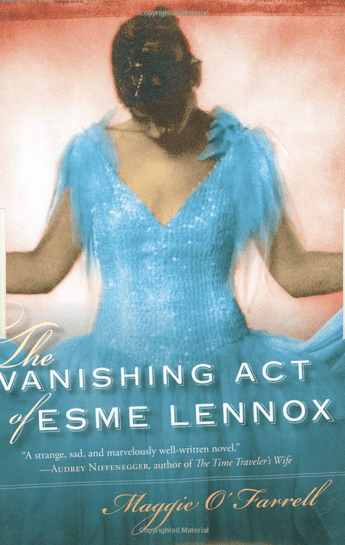
It’s like the scariest book ever written, scary in a Margaret Atwood kind of way, a reminder that women have not had rights for very long, and that those rights are still very fragile. When economies go bottoms-up, when unemployment begins rising, women are often the first to suffer, and women’s rights the first to go. In hard times, men will be preferred hirings, because they have families to support, laws to “protect” women are passed, especially laws which “protect” her finances, meaning gives the power of the money management to some man to do for her, or “protect” her person by requiring that some man accompany her to keep her from dangers. Protection = control. It keeps some smart, thinking women submissive to men who are in every way their inferior.
In Vanishing, Maggie O’Farrel writes of such a woman, Esme Lennox, who is a fey spirit, born in India, with the eyes of an artist. While her “good” sister Kitty obeys the rules, walks the straight and narrow path, Esme is messier. As she grows to adolescence, her eccentricity and her rebellion against the constricts of the life in turn-of-the-century Scotland chafe, she yearns for more room to breathe, intellectually, socially, as her family, her community and her society continues to pressure her to conform.
One of the key events in the book is the death of Esme’s baby brother, of typhoid fever. Abandoned, Esme sits holding her dead brother’s body for three days until her family returns (the baby-keeper also died and the other employees deserted while Esme’s family was away). Esme is devastated, but the focus is on her mother, who is wrought with guilt and isolates herself, and Esme, only a little girl, is forbidden to even say her beloved baby brother’s name. Part of what plays a huge role in this book is society, expectations, and all that is hidden and unspoken – as Esme becomes, a family secret, locked away for sixty years.
Their grandmother swept into the room ‘Kitty,’ there was an unaccustomed smile on her face, ‘stir yourself. You have a visitor.’
Kitty put down her needle. ‘Who?’
Their mother appeared behind the grandmother. ‘Kitty,’ she said ‘quickly put that away. He’s here, he’s downstairs . . . ‘
. . . .
Esme watched from the window-seat as her mother started fiddling with Kitty’s hari, tucking it behind her ears, then releasing it. . . . . Ishbel turned and, catching sight of Esme at the window, said ‘You, too. Quickly now.’
Esme took the stairs slowly. She had no desire to meet one of Kitty’s suitors. They all seemed the same to her – nervous men with over-combed hair, scrubbed hands and pressed shirts. They came and drank tea, and she and Kitty were expected to talk to them while their mother sat like an umpire in a chair across the room. The whole thing made Esme want to burst into honesty, to say, let’s forget this charade, do you want to marry her or not?
She dawdled on the landing, looking at a grim, grey-skied watercolour of the Fife coast. But her grandmother appeared in the hall below. ‘Esme!’ she hissed, and Esme clattered down the stairs.
In the drawing room, she plumped down in a chair with high arms in the corner. She wound her ankles round its polished legs and eyed the suitor. The same as ever. Perhaps a little more good-looking than some of the others. Blond hair, an arrogant forehead, fastidious cuffs. He was asking Ishbel something about the roses in a bowl on the table. Esme had to repress the urge to roll her eyes. Kitty was sitting bolt upright on the sofa, pouring tea into a cup, a blush creeping up her neck.
Esme began playing the game she often played with herself at times like this, looking over the room and working out how she might get round it without touching the floor. She could climb from the sofa to the low table and, from there, to the fender stool. Along that, and then –
She realized her mother was loooking at her, saying something.
‘What was that?” Esme said.
‘James was addressing you.’ her mother said, and the slight flare of her nostrils meant, Esme knew, that she’d better behave or there would be trouble later.
As with many inconvenient women, Esme ends up committed at a loony-bin, and sixty years later, is released into the custody of a grand-niece who never even knew Esme existed.
The thoughts, trials and escapades of three women, Esme, her sister Kitty, and Iris, the grand-niece, intertwine through out the book, and the picture is cloudy at first, blurry, shifting, fragmented The pattern becomes more and more clear as the three threads of thought are woven – ever more tightly – together.
I could not put this book down. Finding out how the picture came together became more important than checking my messages, my blog, or fixing dinner. It was compelling, and resulted in a quick and unforgettable read.
Economic Turnaround Slow
Warren Buffet, one of the richest men in America, and one of the humblest, has written an Op-Ed piece for The New York Times (you can read the entire piece by clicking here) on the tiny signs of economic upturn and what they might forecast for the near and medium future. It makes fascinating reading – solutions come at a cost, and he spells out the costs.
One blogger jumps from this to forecast a turnaround in the real estate market. Not so fast, I think. There is a huge demographic factor, a huge bulge of the population stepping out of the productive work-force and into retirement, a population which has largely lived large – for today – with little thought to the retirement years.
Those who planned, and squirreled away their monies into investments, into businesses – have also been hit hard. Turnarounds take time, and even so, there is a cost. Not all will recover what they have lost.
Many of this aging bulge will be paring down their expectations and paring down their lifestyles. They will be paring down their spending, except for health care. I don’t think we have a clue what that is going to look like.
The Greenback Effect
By WARREN E. BUFFETT
Published: August 18, 2009
Omaha
IN nature, every action has consequences, a phenomenon called the butterfly effect. These consequences, moreover, are not necessarily proportional. For example, doubling the carbon dioxide we belch into the atmosphere may far more than double the subsequent problems for society. Realizing this, the world properly worries about greenhouse emissions.
The butterfly effect reaches into the financial world as well. Here, the United States is spewing a potentially damaging substance into our economy — greenback emissions.
To be sure, we’ve been doing this for a reason I resoundingly applaud. Last fall, our financial system stood on the brink of a collapse that threatened a depression. The crisis required our government to display wisdom, courage and decisiveness. Fortunately, the Federal Reserve and key economic officials in both the Bush and Obama administrations responded more than ably to the need.
They made mistakes, of course. How could it have been otherwise when supposedly indestructible pillars of our economic structure were tumbling all around them? A meltdown, though, was avoided, with a gusher of federal money playing an essential role in the rescue.
The United States economy is now out of the emergency room and appears to be on a slow path to recovery. But enormous dosages of monetary medicine continue to be administered and, before long, we will need to deal with their side effects. For now, most of those effects are invisible and could indeed remain latent for a long time. Still, their threat may be as ominous as that posed by the financial crisis itself.
To understand this threat, we need to look at where we stand historically. If we leave aside the war-impacted years of 1942 to 1946, the largest annual deficit the United States has incurred since 1920 was 6 percent of gross domestic product. This fiscal year, though, the deficit will rise to about 13 percent of G.D.P., more than twice the non-wartime record. In dollars, that equates to a staggering $1.8 trillion. Fiscally, we are in uncharted territory.
Because of this gigantic deficit, our country’s “net debt” (that is, the amount held publicly) is mushrooming. During this fiscal year, it will increase more than one percentage point per month, climbing to about 56 percent of G.D.P. from 41 percent. Admittedly, other countries, like Japan and Italy, have far higher ratios and no one can know the precise level of net debt to G.D.P. at which the United States will lose its reputation for financial integrity. But a few more years like this one and we will find out.
An increase in federal debt can be financed in three ways: borrowing from foreigners, borrowing from our own citizens or, through a roundabout process, printing money. Let’s look at the prospects for each individually — and in combination.
You can read the rest HERE
Recent Comments
intlxpatr on Shampoo Ginger tigerbutterya0c5ff1d… on Shampoo Ginger intlxpatr on British Soldier Kidnapped, Esc… John on British Soldier Kidnapped, Esc… intlxpatr on British Soldier Kidnapped, Esc… Wikipedia Donate Button

Amazina


Early Voting in Florida


