The Camera-Phone Diet
Sometimes AdventureMan will say “Take a photo! You can talk about this place in the blog!” I give him the look that says “get your own blog, AdventureMan.” Like if there is no one else in the restaurant, I might try, IF there is no one watching us. If there are other people I might do it IF I can do it subtly . . . I don’t like to attract attention, and especially if it is a place I like going back to regularly, I don’t want them figuring out who I am.
But now . . . I have a whole other excuse! I think this diet from Real Age is a total hoot! Keeping a food diary is known to help lose weight, but snapping a photo BEFORE you eat helps you think about how much you are eating, keeps you conscious of it . . . who knew? I wonder who thinks these things up?
You can read all about this diet HERE
Try the Camera-Phone Diet
Could your camera phone help you lose weight? One study seems to suggest so.
When people in a small study snapped a picture of everything they ate for 1 week, something interesting happened. They took better stock of their meals — and ate less or ate more healthfully because of it.
Snap Your Way to Slimmer Hips
Just think of it as a digital version of a food diary — but better — because it forces you to think about what you’re eating before you put it in your mouth, instead of after. With written food diaries, it’s too late — people log their choices after the fact. Watch this 60-second video on how to dish up just-right portions.
Worth 1000 Words (and Calories)
In the study, the simple act of taking a picture caused people to pay closer attention to how much they were eating, how diverse their food choices were, or how healthful the food was. And that extra thought and attention actually helped them eat better.
Here are some more slim-down tricks to try:
Pace yourself. Find out how eating slowly can help you eat less.
Be regular. Here’s why you don’t want to skip meals.
Learn to decode labels. Yep, reading is good for weight loss.
Chart your weight loss with this nifty weight loss tracker that lets you see your daily progress.
RealAge Benefit: Maintaining your weight and body mass index at a desirable level can make your RealAge as much as 6 years younger.
Bees and Bee Keeping in Kuwait
Also from the Kuwait Agrifood Website – who knew? Who knew there was a family in Kuwait working to build a viable honey-production culture? I came across this accidentally, and love the site.
Growing up, i remember hearing that people with allergies should eat local honey, it helps build resistance (don’t ask me, I’m not a doctor!) and, in addition, we are all trying to shop and live more locally, so having Kuwait honey is – to me – way cool.
Have you seen honey from this farm in the markets? Can you tell me where?
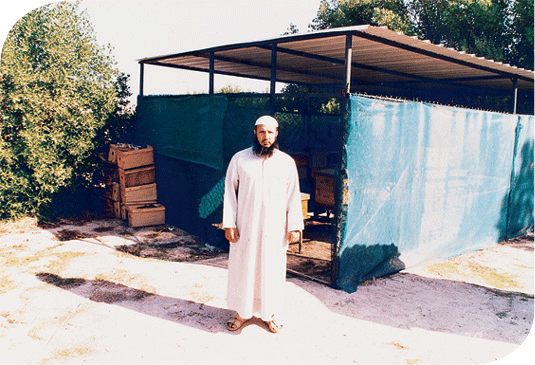
Established in 1996 as a small apiary with 1-15 hives. A year later the apiary was supported with 5 hives imported from Al Yahya Company in Egypt which appeared to be a good start and was of distinguished quality and quantity. That encouraged us to invest in this field and plan to take it as a side job
Ever since that time the apiary grew year after another till the number of hives reached 300 in the year 2002 and it greaw rapidly in the following year till it became 700 hives distributed in different areas of Kuwait
Our production is divided into 3 Seasons. We produce 4 different kinds of honey: These are Cidar honey (main products) lasts from 10/9- 10/11 every year. The second season includes 2 products: flowers honey. (Rhanterium epoposum) and spring honey i.e. flowers of inhabited areas this lasts from 10/3-10/5 every year. The third season started in 10/5- 10/7 and is mainly kina honey
We bread a good kind of bees internationally well known: Crinoboly and Italian, both are originated from AlYahya Company- Egypt. We are producing Italian queens of a very good quality able to adapt with Kuwait environment. A test is being implemented in our apiary upon which we will decide whether we will be able to fill our needs and the needs of local market
We have a specialized team who know how to choose good places, provide wooden hives, import bees and settle it inside the wooden hives and carry out all necessary care such as follow up, supervise, feeding and honey cultivation
FAHAD BIN AJAJ Apiary
Jaber Al-Ali Suburb 7th – block 1 – Street 5
7911796-7192738 7192738 – 7911796 – Tel
e-mail: hunyQ8@yahoo.com
Pecan Pie Muffins
A friend brought these to a meeting the other day. She made them in these really small tins, so one muffin was like three bites. They were SO rich, three bites was enough. . . . except that we couldn’t eat just one, they were SO delicious. Just five ingredients . . . a piece of cake!
Pecan Pie Muffins
SUBMITTED BY: prissycat
Allrecipes.com
“It’s hard to believe there are only five ingredients in these wonderful little muffins! The brown sugar makes them taste like pecan pie.”
Original recipe yield 18 mini muffins
INGREDIENTS
• 1 cup packed light brown sugar
• 1/2 cup all-purpose flour
• 1 cup chopped pecans
• 2/3 cup butter, softened
• 2 eggs, beaten
DIRECTIONS
1. Preheat oven to 350 degrees F (175 degrees C). Grease and flour 18 mini muffin cups or line with paper muffin liners.
2. In a medium bowl, stir together brown sugar, flour and pecans. In a separate bowl beat the butter and eggs together until smooth, stir into the dry ingredients just until combined. Spoon the batter into the prepared muffin cups. Cups should be about 2/3 full.
3. Bake at 350 degrees F (175 degrees C) for 20 to 25 minutes. Cool on wire racks when done.
He he he – I challenge you. Try to eat just one!
The REAL French Aioli Sauce
My beautiful French friend looked at me sadly, considering how to deliver the bad news in the most gracious way possible.
“Yes, Intlxpatr, it is a very delicious garlic mayonnaise, but . . . it is NOT aioli,” she said, regretfully honoring France and all of French tradition. “The real aioli uses potato, and has a totally different texture from this mayonnaise.”
Back a long time ago, I published instructions for making your own mayonnaise, aioli and rouille and it has been one of my all time high statistics grabbers. How embarrasing to be so wrong!
But I am not alone. This morning as I went looking for “real” French aioli, it wasn’t until page 3 I found this recipe, which sounds very close to what I remember eating down in Les Leques, as we stayed in a family hotel on the beach and ate breakfast and dinner with all the French families. Aioli is both the name of a dish – a white fish, usually cod, served with vegetables and a huge bowl of garlic sauce – and also the name of the sauce itself. We adore both.
Here is the recipe I found for REAL French aioli found in a recipe site called Big Oven:
INGREDIENTS
6 Cloves garlic; peeled
1/2 c Pine nuts
3 Potatoes-boiled; peeled
1 Juice of a lemon
1/4 c Olive oil
1 Egg; lightly beaten
INSTRUCTIONS
Combine the garlic and the nuts in a blender or food processor and puree.
Add the potatoes, and puree.
Pour potato mixture into a bowl and, using a wisk, beat in the lemon juice, a bit at a time.
Gradually add the olive oil in a thin stream while continuing to beat so oil combines with potato mixture. When oil has been absorbed, add the egg and beat well.
Giovanni de Bourbon
Most of the other recipes that sound the most authentic start with garlic crushed in a mortar and pestle, ground together with salt, then the oil added drop by drop until a thick mixture is obtained. Those are the basics – where to go from there seems to be evolving away from the original Provencal recipes.
Smoke House BBQ
AdventureMan and I miss two kinds of cuisine living in Kuwait – American BBQ and Vietnamese. When I read on Mark’s blog 248 about the Smoke House, I couldn’t wait to grab Adventure Man and give it a try.
It’s the best American BBQ in Kuwait.
OK, the restaurant itself is small, and not that easy to find, but it is immaculately clean, and there is all the parking in the world. That matters to me.
The service was quick and professional. We already knew about the pie, because we saw it in the display case when we came in, and knew we needed to save room.
We like BBQ, but for us, it is also all about the sides. I adore baked beans, and the baked beans at the Smoke House are very very good. I love potato salad and I love cole slaw, and they had both, and they were both very good. I adore the genuine, very dill pickles that come with the meals.
AdventureMan had the cajun fish and I had the half chicken. They were delicious. We were already stuffed when they brought our order of sweet potato pie. Oh yummmm. The crust is like a sugar cookie, and the filling is perfect. We couldn’t eat it all. It was huge.
I am not critical. I enjoyed all the sauces too much – so many varieties, including the vinegar-y sauce I learned to love in Kansas City and the sweet and hot sauce I love from the Carolinas. I want to go back. I want to try the mashed potatoes and gravy, and the steamed vegetables and the Pecan Pie. I am not a French Fry girl, but these were crispy and very tasty, and I found myself eating even while telling myself “No! No! No!”
I adore ribs, and I hear their ribs are very good. I am just so thrilled that they exist, that someone thought American BBQ would work here in Kuwait. It sure works for me! 🙂
Here is a direct link to the Smoke House Menu.
Here is a map of how to get there, from their website:

It doesn’t have to be magnificent to get my vote – it just has to be good enough, authentic enough American BBQ to fill my need. The Smoke House is a great find.
So now that just leaves Vietnamese . . . anyone?
Mubarakiyya Glimpses and Public Art
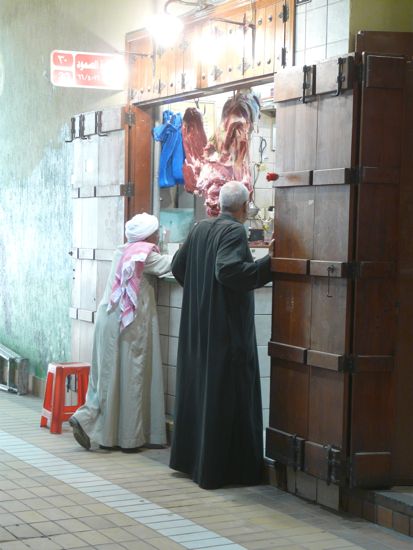
Every time I go to Mubarakiyya, I see something I haven’t seen before. We found some scenes in the meat market – see if you can find them.
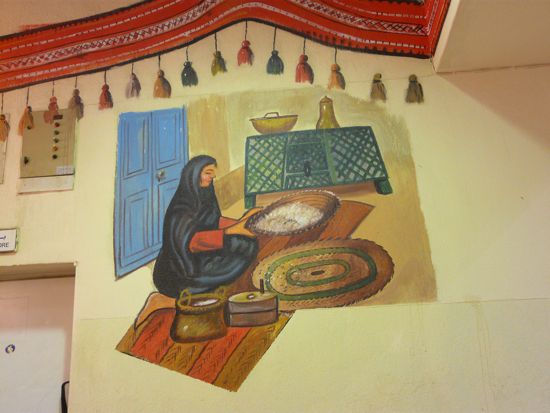
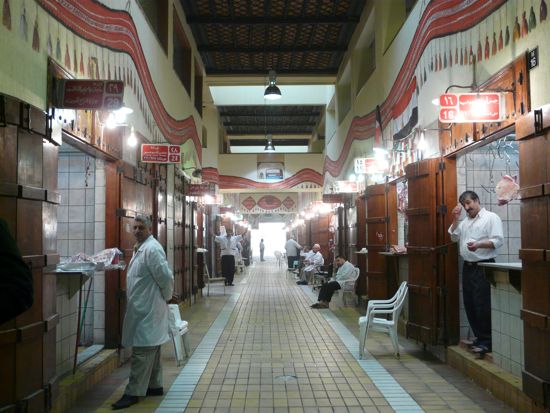
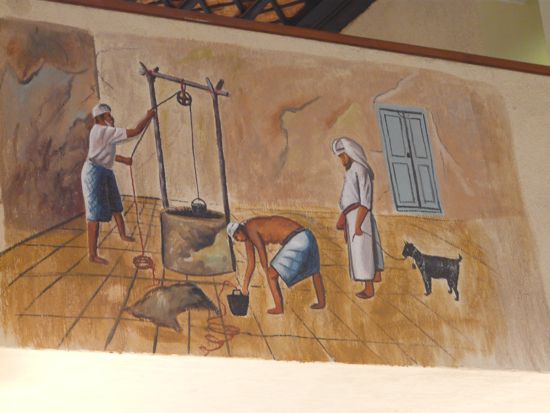





Ansam Enters The Great Kuwait National Holiday Challenge
Woo HOOO on you, Ansam! Thank you for some truly fresh perspectives on Kuwait National Day and Liberation Day:
When I first saw this one, I thought it was the roller-coaster ride in that little park by Jarir Bookstore:

I love this one; it is the draped flag in the middle that captures my heart:

True Kuwait Magic – sushi in the shape of the Kuwait Flag:
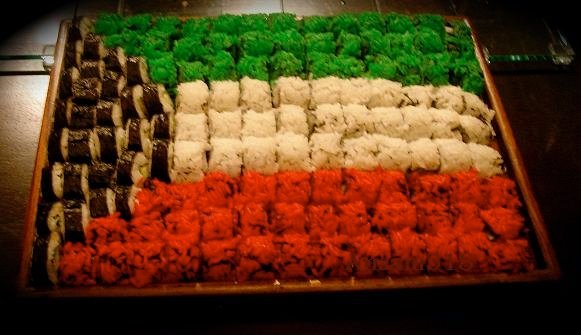
Just awesome:

The Demise of Tanureen
As we were sitting outside, having one of our very best days in Kuwait, eating lunch at Tanureen, we got some very sad news. Our kind old Egyptian waiter told us there is a strong possibility Tanureen will close in May, the land may be used (sigh) for another mall. (Here’s the first review of Tanureen.)
What a great pity. We have enjoyed so many happy hours at Tanureen, so many good meals. It’s one of the treasures of Kuwait, only in Fehaheel.
Here is what we were eating, out in the breezy warm sunlight. Sorry that it is already half eaten by the time I got around to taking photos:
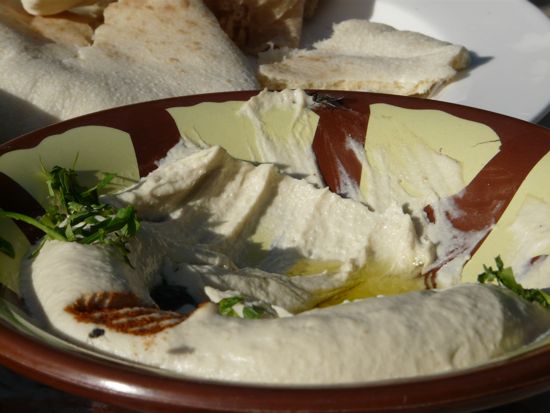
Hummos
Muttabel
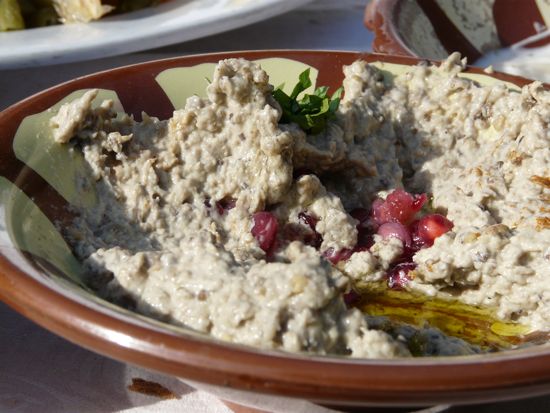

My favorite, baba ghanoosh, especially with pomegranate seeds

Pan-sauteed Hammour

Grilled Shrimp
One of our funniest memories of going to Tanureen was taking Little Diamond, who asked the waiter how the Tanureen salad differed from the Garden Salad. “They are same-same” he replied. Little Diamond’s little eyebrows came together in a frown. “But one is priced at KD 1.500 and the other at KD 1.750?” she continued. “Same-Same!” said the waiter, this time with a little impatience. She ordered one, and we have always wondered what the difference REALLY is, if any.
The weather is perfect for dining out. Go quickly, before the heat sets in, before the Tanureen is no more.
Spoiling Dinner – Malcolm Thompson
An add-on for the Market Magic Challenge, unfortunately not in time for the poll, but a wonderful addition. Thank you, Malcolm Thompson, for helping us see Kuwait through your private lens:
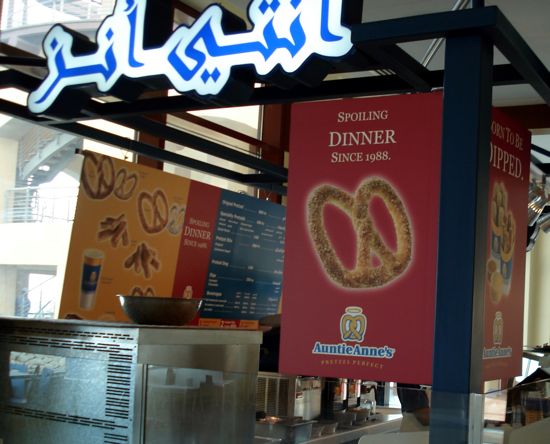
He adds that this was taken in a recent visit to the Al Kout/Manshar Mall Market area. Welcome, Malcolm!
Architecture in Kuwait
Fascinating article in today’s
Arab Times on architectural transitions in Kuwait from a talk given by Salah Abdullah, an expert in the analysis of architectural history, at the Aware Center. This is just an interesting excerpt, but you can read the entire article by clicking on the blue type above.
Old Kuwait
Eng Abdullah also explained the architecture of old Kuwait and how a number of elements have influenced Kuwait in making its buildings and architectural layout what it is today. “In the past city development in Kuwait was completely spontaneous and simply divided. In this it has been similar to many old cities, like London. But what dominated was the Arabic and Islamic culture which is the mainstay of interior designs of many Kuwaiti homes. Building materials were usually taken from nature — sea rock, mud, limestone and gypsum. The shape of old Kuwaiti architecture came to suit the environment and circumstances. Houses were adjacent in a manner that indicated the unity and corporation of the people and streets were usually narrow. Mosques were placed very close to houses, to allow the elderly to walk without trouble.
Construction in the past depended on Kuwaitis themselves. The engineer called ‘ustad’ at that time supervised the buildings and the laborers. They carried rocks, prepared mud bricks and started building. This process was called ‘collective vernacular architecture’. At that time three critical customs were kept in mind when constructing the houses. These included the privacy of women, segregation of guests — male and female — and future family expansion. Therefore to tackle these problems, the family part of the house where women rested was pushed to the back, far away from the street, so it was impossible for anyone passing by to see inside. The family entrance was also separated from the guest entrance. There was also a separate entrance for male and female guests. “The Diwaniya which persists until today also dominated the architectural buildings of the past. Diwaniyas for women were built on the west side of the house and male Diwaniyas on the east side,” explained Eng Abdullah.
I remember moving to Kuwait, I was shown 21 villas, and most of them had a kitchen outside. I was puzzled, then a friend told me that Kuwaitis don’t like the smell of food hanging around inside. What happens is . . . you forget. You get used to things, and after a while, it is like “oh yeh, the kitchen is outside” and you forget that it’s different. Recently, having dinner with Kuwaiti friends, they told us that their kitchen is inside, but they have a separate oven outside for cooking fish, because of the smell. I’ll have to remember that when they come to visit me in Seattle! Don’t cook fish, Intlxpatr! The smell goes all over the house!
Recent Comments
intlxpatr on Shampoo Ginger tigerbutterya0c5ff1d… on Shampoo Ginger intlxpatr on British Soldier Kidnapped, Esc… John on British Soldier Kidnapped, Esc… intlxpatr on British Soldier Kidnapped, Esc… Wikipedia Donate Button

Amazina


Early Voting in Florida


 Here There and Everywhere