WHO report into violence against women: key data
A new report from the World Health Organisation has drawn together data from dozens of studies and found that worldwide, 35% of women have experienced violence – and that the consequences for their and that the consequences for their health can be devastating.

Indian women attend a prayer ceremony for a rape victim. Though rape has become a prominent issue in India, it’s certainly not the only country where violence against women is an issue Photograph: Adnan Abidis/Reuters
Most women know their attackers. 35% of women worldwide have experienced violence and, according to a new report from the World Health Organisation (WHO), that figure only falls to 30% when they studied violence against women that was by intimate partners.
This is the first time that WHO have gathered this worldwide data by pulling together dozens of national and regional studies. Here, we look at which women are most likely to be experience violence and how their health is affected as a result.
Regional differences
Though violence against women is undoubtedly a universal problem, the WHO research suggests that there are regional patterns in its prevalence. It finds that women in Africa are almost twice as likely to experience violence than women in Europe – a particularly striking finding given that ‘women’ are defined in the study as females aged 15 and over.
However, the term ‘Europe’ may be slightly misleading here. Only Europe’s low and middle-income countries are included (from Albania to Ukraine) while countries like the UK and France are grouped together with those from other regions in the ‘High Income’ category.
Types of violence
Violence by an intimate partner and violence by someone other than a woman’s partner are both considered in this report – although the two differ hugely in their prevalence.
The fact that 38% of all murders of women worldwide are committed by intimate partners stands out as one of the most startling figures in the entire report..
Most violence against women worldwide, whether sexual or not, is committed by their intimate partners. In South-East Asia for example, women are almost eight times more likely to experience violence by a current or former partner than someone else. Looking at the ratio between partner and non-partner violence makes these trends more explicit.
Health consequences
The report catalogues the disastrous consequences that violence has on women’s physical, mental and sexual and reproductive health. Many of these are complex and not immediately evident, but their impact is often enormous.
Non-fatal injuries are one of the most direct effects of violence. The report uses the USA as an example where half of women in abusive relationships are physically injured by their partners and that most of them sustain multiple types of injuries – the head, neck and face being the most common, followed by muscular, skeletal and genital injuries.
Several studies identified that women with a history of intimate partner violence are 16% more likely to have a low-birth-weight baby and twice as likely to report having had an induced abortion – nearly half of which globally take place in unsafe conditions. What’s more, when compared with women who have not experienced partner violence, those that have are 1.5 times more likely to acquire HIV.
Every study that looked at the relationship between intimate partner violence and harmful alcohol use found a positive correlation between the two – although substance abuse may also be linked mental health disorders which also increase a woman’s vulnerability to violence.
Depression and suicide was also consistently cited as a severe health consequence of violence against women. Traumatic stress is the mechanism most likely to explain the fact that depression rates are double for women who have experienced violence.
Conflict and violence against women
Several studies have explored how violence against women rises in times of conflict. In March this year Maplecroft, a risk analytics company, analysed the risk of sexual violence in conflict across 15 years using indicators such as the “systematic use of sexual violence as a weapon of war”.
 Click to view full map. Source: Maplecroft 2013
Their findings may shed light on some of the regional trends in violence against women. Of the ten countries where the risk of sexual violence in conflict was highest, seven were in Africa.
The problem has also been recognised by the UN who have a specificcampaign called Stop Rape Now aimed at ending sexual violence in conflict.
Today’s report sheds light on not only how widespread violence against women is – but also the deep effect it has on their health. By highlighting the connection between violence and health, WHO has marked the first step in a public health response.
June 20, 2013
Posted by intlxpatr |
Family Issues, Health Issues, Interconnected, Marriage, Parenting, Women's Issues |
Leave a comment
I don’t know that this has been studied closely, or that there is any evidence supporting the theory, but it is a hilarious theory – blame men for menopause!
By: Tia Ghose, LiveScience Staff Writer
Published: 06/13/2013 05:04 PM EDT on LiveScience
Ladies, here’s one more thing you can blame on men: menopause. At least, that’s according to a new theory.
Women go through menopause because men have consistently preferred younger women in recent evolutionary history, according to a study published today (June 13) in the journal PLOS Computational Biology.Thus, menopause is not evolutionarily advantageous and may be the result of a series of random, harmful mutations that accumulated in women but weren’t acted on by evolution because the women had already reproduced by the time the mutations affected them.
“Our first assumption is that mating in humans is not random with respect to age, which means men of all ages prefer to mate with younger women,” said study co-author Rama Singh, an evolutionary biologist at McMaster University in Canada. “If mating is with younger women, any deleterious mutations which affect women’s reproduction later in life will accumulate because they are not being acted on by natural selection.”
Menopausal mystery
Menopause, in which women stop menstruating and become infertile, has been a long-standing puzzle for biologists: Why would evolution have led to a trait that essentially reduces the reproductive potential of an animal?
Most other animals don’t go through menopause (although killer whales do). Even chimpanzees, humans’ closest living relatives, seem to reproduce into old age in the wild, and males even prefer older females.
Biologists have proposed the grandmother hypothesis to explain the conundrum. The hypothesis holds that menopause allows a grandmother who is done rearing her own kids to help rear the young of her children, thereby increasing the survival odds of her grandkids, and therefore, her genes.
But grandchildren and grandparents share just a quarter of their genes, versus half for children and their parents, so menopause would have to dramatically boost survival of grandchildren to be evolutionarily advantageous. Past studies have shown that maternal grandmothers boost their grandkids’ survival rates, though exactly how much depends on the society.
Younger women
For thousands of years (at least), men have, on average, mated with younger women, Singh said.
That’s because, if all else is equal, “those who reproduce earlier, their genes are passed on faster,” Singh told LiveScience.
So the researchers created a computer simulation to model that preference.
Early on, both men and women in the model reproduced until death. But over time, the model found, men’s preference for youth reduced older women’s odds of reproducing.
Simultaneously, people accumulated random mutations, some of which decreased later-life reproductive ability. But since older women were left out in the cold anyways, those mutations didn’t impact their reproductive success, whereas mutations in men that could reduce late-life reproduction were weeded out. (Men who stopped reproducing at some point in life would produce fewer offspring than those who didn’t, and the late reproducers would outcompete those who stopped breeding earlier.)
Over 50,000 to 100,000 years, the accumulation of all those mutations could have led to universal menopause, the researchers suggest. Menopause would then be another form of aging akin to graying hair or wrinkles.
If later childbearing becomes the norm, as current societal trends suggest, women who can reproduce at older ages might gain an evolutionary advantage, and menopause could, in theory be pushed later, Singh said.But it’s more plausible that technological changes such as fertility treatments will artificially extend women’s ability to reproduce, Singh said.
Questionable assumptions
But the new model might have the causation reversed, wrote Kristen Hawkes, an anthropologist at the University of Utah, who was not involved in the study, in an email to LiveScience.
As human life spans increased, women might have had many healthy years after fertility. As a result, men grew to prefer younger women because older women couldn’t reproduce.
Supporting that hypothesis, female chimpanzees see their egg reserves decline around the same age as human females, Hawkes noted. But unlike humans, they die shortly after this age, whereas humans have decades of healthy life left.
“The preference men have for young partners is a striking contrast with other primates,” Hawkes said. “My guess about that has been it’s a consequence of our life history.”
June 15, 2013
Posted by intlxpatr |
Aging, Circle of Life and Death, Family Issues, Generational, Health Issues, Mating Behavior, Parenting, Relationships, Statistics, Women's Issues | Fertility, menopause |
Leave a comment
A Qatar Mental Health survey shows 1 in 5 Qataris suffering from a mental ailment, commonly depression or schizophrenia, with fewer than 1 in 4 of those afflicted receiving treatment, due to fears of social stigma . . . from the Gulf Times, Qatar.
By Noimot Olayiwola/Staff Reporter
A Mental Health Strategy, which is awaiting the endorsement of the Supreme Council of Health’s executive committee, is expected to be completed this year.
It is being envisaged that the Mental Health Strategy will lead to a reduction in the incidence and severity of mental illness in Qatar, besides increasing the proportion of people with emerging or established mental illness who are able to access the right care at the right time, with a focus on early intervention.
The strategy will also provide the opportunity to increase the ability of people with mental illness to participate in education, employment and training, enhance public education and awareness and thereby reduce the stigma associated with mental ailment, reduce the prevalence of risk factors that contribute to the onset of mental illness and prevent longer-term recovery, and establish Qatar as a centre of academic excellence in mental health research and education.
Speaking on the strategy at an event held recently, Hamad Medical Corporation’s (HMC) General Adult Psychiatry senior consultant and Weill Cornell Medical College in Qatar assistant professor Dr Suhaila Ghuloum said the mental health initiative contributes to the Human Development pillar of Qatar National Vision 2030, which recognises that a healthy mind is as important as a healthy body.
She said a study has shown that around 20% of the country’s population suffers from a form of mental disorder and less than 25% of the people with mental ailments actually receive the care that they need.
Stating that the actual prevalence rate of mental health ailments would soon be published, Dr Ghuloum added that around 20% and 18% of the population also suffered from depression and anxiety disorder, respectively.
The Psychiatry Department is the only facility providing primary, secondary and tertiary care for people with mental illness in Qatar. “We conducted the study on adult patients visiting the primary healthcare centres and found that one in five people here will experience a mental disorder with conditions such as schizophrenia and depression on top of the list,” she said.
According to her, schizophrenia, depression and substance abuse are three of the top five causes of disabilities in Qatar. “A condition like schizophrenia can prevent a child from attending school,” she said.
Dr Ghuloum said social stigma, which is a combination of ignorance and discrimination, is the biggest challenge facing people with mental illness in Qatar.
“Through interaction with some of our patients, we realised that many had delayed getting medical help due to fear of stigma and the negative attitudes of some of the patients themselves, their family members as well as physicians,” she noted.
The official called for comprehensive care for people with mental illness, saying the Psychiatry Department has already started a system that is all encompassing and comprehensive – through primary care – besides providing treatment for some patients on an in-patient basis, who are co-located in general hospitals, as well as community-based services being offered to those in need of long-term care.
“The transformation of Qatar’s mental health services focuses on early intervention and recovery, and will give people a range of options on how to access mental healthcare tailored to their needs. Whether it is in a primary care, community-based or a hospital setting, people with mental health issues will have access to the right care, at the right time and in the right place,” she asserted.
June 12, 2013
Posted by intlxpatr |
Bureaucracy, Cross Cultural, Cultural, Customer Service, Doha, Family Issues, Health Issues, Qatar, Social Issues, Statistics |
Leave a comment
It may not be dementia. It may be a reaction to a medication in the elderly that LOOKS like dementia.
My father was 87, and doing pretty well for a man 87. He still walked on his own, using a walker when he had to, and very rarely, a wheelchair if we were going a long ways. He went into the hospital for a minor surgery. The tube inserted in his hand for the anesthetic became infected. Dad was acting weird, he was having hallucinations, and my sister rightly identified that Dad had a reaction to the diuretic drug Lasix; when they switched him to an alternative, the raving and hallucinations stopped.
He was transferred to a rehabilitation unit, where for two days, they put him back on Lasix. Poor communication between hospital and the rehab facility, plus standardization of drug regimens – they switched him without telling him, or us. Once again, he went loony tunes, and at the same time, his right hand began to swell until it looked like a lobster claw. He kept saying it hurt, and it was big and red, and the rehab people kept saying it would get better.
Dad was rushed to another hospital, one the rehab clinic worked with, and the doctors told us he had a ‘cascade of problems’ and which were the primary three we wanted them to work with?
Get him off the Lasix, first thing, we all agreed, and find a way to have it annotated on any record that he is never to have Lasix. (It did no good; the next hospitalization, back at the first hospital, they gave him Lasix again, which made him crazy and masked all the other symptoms.)
Long story short, there were a cascade of hospital mistakes – not one hospital, two hospitals and the rehab clinic – where miscommunications, inattentions and shortage of trained personnel resulted in a cascade of issues that led to my father’s death later that year. The other lesson learned is that if you go into a hospital, make sure you have a good support system, someone with you who will bravely ask questions, and remind someone if an inappropriate medication is prescribed. You need a family member with you for protection against inattention, mistakes, miscommunications and personnel shortages.
It’s not like there’s anyone to bring a lawsuit against; they were all doing the best they could, but Dad was old. My bet is that he might have lived another couple years, at the very least, had he not gone in for that first non-essential minor surgery. To me, the moral of the story is if you want to live a long life, stay away from hospitals.

Anesthesia Linked to Increased Dementia Risk in Seniors
Exposure to anesthesia has been linked to a 35 percent increase of dementia in patients over age 65, according to a new study.
By Jeffrey Kopman, Everyday Health Staff Writer
FRIDAY, May 31, 2013 — Caregivers and seniors struggling with the dilemmas of elder care have another risk to weigh against potential rewards — senior patients exposed to general anesthesia face an increased risk of dementia, according to research presented at Euroanaesthesia, the annual congress of the European Society of Anaesthesiology (ESA).
Researchers reviewed the medical information of 9,294 French patients over the age of 65. The patients were interviewed several times over a ten year period to determine their cognitive status.
After two years, 33 percent of participants had been exposed to anesthesia. Most of the exposed patients (19 percent overall) were exposed to general anesthesia — a medically induced coma. The rest were exposed to local/locoregional — any technique to relieve pain in the body — anesthesia.
In total, 632 participants developed dementia eight years after the study began. A majority of these patients, 512, were diagnosed with probable or possible Alzheimer’s disease. The remainder had non-Alzheimer’s dementia.
The gap between dementia related to general anesthesia (22 percent) and non-dementia patients (19 percent) was associated with a 35 percent increased risk of developing dementia. This risk was linked to at least one general anesthesia.
“Elderly patients are at an increased risk for complications following anesthesia and surgery,” said Jeffrey H. Silverstein, MD, MS, and vice chair for research at the Department of Anesthesiology at Mount Sinai in New York City. “[They] are particularly prone to postoperative delirium, which is a loss of orientation and attention. Anesthesiologists have been evaluating higher cognitive functions (for example, memory and executive processing) and found that a substantial number have decreases in one or more of these areas after a surgical procedure.”
Researchers hope this study will lead to more awareness for surgeons.
“Recognition of postoperative cognitive dysfunction (POCD) is essential in the perioperative management of elderly patients,” said study author Dr. Francois Sztark, INSERM and University of Bordeaux, France, in a press release. “A long-term follow-up of these patients should be planned.”
Elderly Care: Risk vs. Reward
Senior citizens and their caregivers might be willing to accept an increased risk of dementia if it means getting necessary anesthesia for an important medical procedure. Dementia is a relatively common occurrence in old age: One in three seniors has Alzheimer’s disease or dementia by the time of their death.
But surgery at old age can also carry more severe, and less common, health risks. In fact, simply surviving surgery can be difficult for elderly patients, especially those over the age of 80.
While the numbers vary depending on procedure, researchers have found that mortality risk tied to elective major surgeries increases with age. The risk more than doubles for patients over 80 compared to patients ages 65 to 69.
But other surgery complications are even more common in seniors.
“The major risk for elderly patients following surgery is pneumonia,” said Dr. Silverstein. “Cardiac complications are next most common.”
However, Dr. Silverstein still feels that if surgery is deemed necessary, patients should not fear the risks.
“In theory, only necessary surgery is done,” he said. “Knowing how [patients] reacted to anesthesia and surgery in the past may give them some idea of their postoperative course.”
Last Updated: 05/31/2013
June 3, 2013
Posted by intlxpatr |
Aging, Biography, Bureaucracy, Circle of Life and Death, Community, Cultural, Customer Service, ExPat Life, Family Issues, Financial Issues, Health Issues, Living Conditions, Safety, Survival, Technical Issue, Values |
Leave a comment
I’m not a person who feels a lot of pain. I hardly ever get a headache, rarely get even a paper cut. At one point in my life, when my biliary duct blocked, the doctor gave me pictures and looked at me sternly and said “You could have died, politely waiting out there in the waiting room. When this happens, come in immediately, show the ER people these photos and tell them you need this blockage cleared immediately.”
That one really did hurt, but I’m not much for groaning and writhing in pain, so I didn’t.
Today was a confluence of events. Yesterday, when the air conditioning people were at our house, all day, configuring and installing the new air conditioning system, the terrified and disoriented Qatari Cat spent the day in the large laundry room, with his cat bed and his food and water, and his litter box. It was a long day, and he was alone, and he could hear loud bumps and thuds, and he could smell strange smells, and hear strange voices. Therefore, when let out, he needed to snuggle, closely, to the one he thinks is his mother, i.e. me.
He curled into my arm and purred and cried about his long day and how scared he had been. He was still snuggling, closer and closer, during the night, as I was trying to sleep. He is a good sleeper, doesn’t move around a lot, but when he is snuggled up against me, it is hard to move. Now and then he will snore, or go into kitty-dream state, legs thrumming along and sub-vocal snarling, which can wake me.
Our normal water aerobics instructor was out, and the substitute was wonderful, but we did more repetitions of high kicks, jacks-crunches, and more high kicks; it was a great workout, different from what we are used to.
We really needed to clean our floors after the air conditioning crew, so AdventureMan took all the carpets outside for a good vacuum front and back while I tackled the tile floors throughout the main level of the house. Some of the grime was ground in, this wasn’t one of those quick swish washes but a lot of stoop and scrape, or hands and knees and scrub kind of jobs. While down close, I also noticed the base boards needed a swab, more bending and stooping.
I still had one appointment to go before I could kick back, and while waiting, I noticed my back was a little uncomfortable. By a little uncomfortable, I mean it had my attention, I couldn’t get comfortable. By the time I got home, it had my undivided attention. I know what works for me, back when I had a reaction to a root canal, I discovered Aleve, so I had some on hand.

When I went to take one, I saw this great big capsule. I remembered tiny little blue tablets, sort of ovoid, but I guess I had just grabbed whatever I saw and it happened to be a capsule. Swallowed the capsule.

There is a reason I don’t like taking medicines, and that reason is that because I don’t take a lot of medications, when I do, I can tell. It takes the edge off. I feel slow. I feel a little loopy. I feel tired. And then, by the grace of God, in an hour or so, I feel no pain in my back.
It wasn’t a bad day, just a day with some unexpected conditions. Scrubbing floors is not my favorite thing. In Kuwait and in Doha I had wonderful women who kept my floors sand-free, and sparkling clean. As I clean my floors, I found myself remembering them fondly.
AdventureMan popped his head in the door to tell me how much he likes vacuuming the carpets outdoors, where he can see the intricacies of the patterns. He can see I am grumpy. “I don’t really like cleaning floors!” I grump.
“Let’s hire someone to do it for us!” he responds, and my day suddenly looks a lot brighter. 🙂
May 29, 2013
Posted by intlxpatr |
Aging, Doha, Exercise, ExPat Life, Family Issues, Health Issues, Home Improvements, Kuwait, Living Conditions, Pensacola, Pets, Qatteri Cat |
Leave a comment
Clinically Dead Woman Is Revived After C-Section Birth
Carolyn Buchanan | Posted: May 14, 2013

A pregnant woman in her ninth month was admitted to a hospital in Kuwait with an acute blood pressure condition, suffered cardiac arrest, and was pronounced dead. Doctors rushed to deliver her unborn child. The cesarean section was performed without anesthesia since the mother was presumed dead, and a healthy 6.8 lb baby boy was delivered. Then with one last attempt to revive the 36-year-old Filipina woman, doctors were astonished when she started breathing again.
“This is a scientific miracle at all levels,” hospital manager Dr. Hmoud Al-Zobi told theKuwait Times. Three days later the 36-year-old Filipina (or Pinay) woman named Zuraida remains unconscious at Al-Farwaniya Hospital, but doctors say she is in stable condition and are hopeful that she will return to health.
Zuraida’s husband, Verdadero, remains by her side. “When I visited her today, tears were rolling down her eyes. I felt she could hear me, she could feel my presence and was trying her best to communicate. ”
Said Verdadero, “I brought her to the hospital because she experienced blood and the water discharged at that time. Of course, I knew that she was already in pain and it was about time for her to deliver our second child. I was very happy. But my happiness changed to uncertainty when I heard that she was vomiting blood and was in danger and only a miracle could save her. I prayed hard for her to survive.”
Verdadero is a truck driver who is often away for days in Iraq and elsewhere. He feels lucky that he happened to be in Kuwait when his wife was ready to deliver their baby. “At least I was with her when it all happened and I really pray that she will be okay.”
During pregnancy, it is recommended that women and their doctors keep a close eye onblood pressure. There are many reasons for occasional spikes in blood pressure and most are nothing to worry about (in fact, worry only contributes to elevated levels). But chronic high blood pressure during pregnancy is something that should be monitored and treated to ensure that mother and baby are as healthy as can be.
May 16, 2013
Posted by intlxpatr |
Adventure, ExPat Life, Health Issues, Kuwait |
Leave a comment
Little drops of water, little grains of sand, make the mighty ocean and the beauteous land . . .
Little drops of water, in the form of expressions of international outrage against the sentence of 100 lashings for a 15 year old girl, impregnated by her stepfather, who bore his still-born babe, and was ordered punished by the court system for immorality. A call to express outrage by boycotting travel to the Maldives seems to have gotten the attention of the government. It appears they will try to find a way to avoid this grueling punishment . . . thanks to the attention being paid.
From the English edition of Haveeru Online:
President Dr Mohamed Waheed Hassan Manik on Tuesday urged patience from the international community in the case of the 15 year old alleged rape victim who received a flogging after being convicted of adultery in a separate incident.
The conviction had sparked an international outcry and condemnation from rights groups such as Amnesty International. While an online petition condemning the Maldives over the sentencing has received over two million signatures. The petition, started by New York-based campaign group avaaz.org, calls on President Waheed to intervene and has been signed by over two million users.
“We appreciate the international compassion for this young woman and ask for your patience as this case moves through the judicial system,” President Waheed said in a statement.
“Currently the case is being appealed and I have urged the judiciary to resolve this matter as quickly as possible.”
“This case should never have been presented in the courts and we are working to ensure that cases like this are never brought to the courts again.”
In the statement, President Waheed also assured that the young woman remains under the care of the Gender Ministry and is receiving the appropriate physical and psychological counseling at this time.
“As both the President and as a father, I am fully committed to protecting and advancing the rights of women and girls in the Maldives and throughout the world and share your deep concern about this young victim.”
In its attempt to pressure the Maldives government to overturn the sentence, Avaaz had called for tourism to be boycotted.
“Tourism is the big earner for the Maldives elite, including government ministers. Let’s build a million-strong petition to President Waheed this week, then threaten the islands’ reputation through hard-hitting ads in travel magazines and online until he steps in to save her and abolish this outrageous law,” Avaaz said on its website.
In that regard, President noted that the Maldives is a young democracy working to balance religious faith with new democratic values and asked the international community to support as partners as the country works through this challenge.
“A boycott on tourism will only serve as a setback to the economic opportunities and rights we are all striving to uphold for women, girls and the hardworking Maldivian people in general,” Waheed stressed.
The 15 year old girl who gave birth and buried the baby in Shaviyani Atoll Feydhoo had been sentenced to eight months under house arrest and 100 lashes after the Juvenile Court found her guilty of pre marital sex.
Prosecutors have maintained that the 15 year old was charged with adultery over another case which came to light during the investigation of the buried baby.
The baby born last June was found buried in the bath house of the girl’s home. The child delivered out of wedlock was dead at the time of discovery. Charges have been filed against the 15 year old’s mother and step-father over the deliberate murder of the baby.
May 2, 2013
Posted by intlxpatr |
Bureaucracy, Community, Crime, ExPat Life, Family Issues, Health Issues, Law and Order, Leadership, Living Conditions, Mating Behavior, News, Social Issues |
4 Comments
I have had wonderful women who have worked for me; they were from the Philippines, from Sri Lanka, from India. They worked hard and they didn’t spend their money. They sent their money home to help support mothers, fathers, siblings, children. They had some real horror stories to tell about how they had been treated in prior employment – employers with jealous wives, touchy-feelie employers and their sons, people who seemed to assume that because they were working under their sponsorship, they owned their lives. In Qatar and in Kuwait, Labor law provides for a mandatory day off – except for house-workers. Some work from crack of dawn getting the children ready for school until the last thobe is ironed, late late in the night.
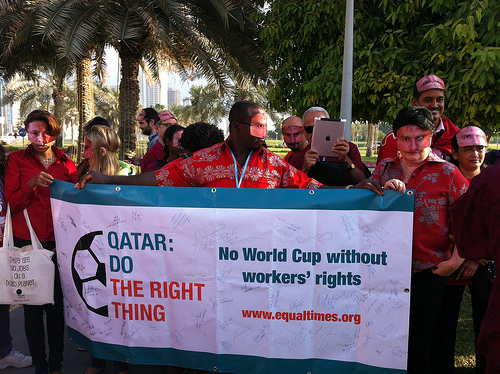
I did a little research. Here is what 38 Euros per month – slave wages – is worth:
$50.13 US Dollars (Minimum wage $7.25/hour + social security)
Qatari Rial 182.52 (Qatar has not set a minimum wage)
Kuwaiti Dinar 14.24 (Minimum wage = 60 KD per month)
From Agence France Presse via AOL News:
Pope Francis on Wednesday condemned as “slave labour” the work conditions of victims of a factory collapse in Bangladesh in which more than 400 people have been found dead, Vatican radio reported.
“A headline that really struck me on the day of the tragedy in Bangladesh was ‘Living on 38 euros a month’. That is what the people who died were being paid. This is called slave labour,” the pope was quoted as saying at a private mass.
“Today in the world this slavery is being committed against something beautiful that God has given us — the capacity to create, to work, to have dignity. How many brothers and sisters find themselves in this situation!” he said.
“Not paying fairly, not giving a job because you are only looking at balance sheets, only looking at how to make a profit. That goes against God!” he was quoted as saying.
“There are many people who want to work but cannot. When a society is organised in a way that not everyone is given the chance to work, that society is not just,” he said.
Copyright (2013) AFP. All rights reserved.
If you have the time for some fascinating reading, it’s all available on the internet at the US State Departments Human Rights website; you can access by clicking here. Read – or skip – the overview, then go to the second column where you can see what is happening in every individual country. I’ve printed out labor excerpts below, but there are also fascinating observations on leadership, government, human rights and human trafficking.
QATAR: Labor Conditions according to
Country Reports on Human Rights Practices for 2012
a. Freedom of Association and the Right to Collective Bargaining
The law does not adequately protect the right of workers to form and join independent unions, conduct legal strikes, and bargain collectively, a situation that made the exercise of these rights difficult. The law provides workers in private sector enterprises that have 100 citizen workers who are18 and older a limited right to organize, strike, and bargain collectively. For those few workers covered by the law protecting the right to collective bargaining, the government circumscribed the right to bargain collectively through its control over the rules and procedures of the bargaining and agreement processes. The labor code allows for only one trade union, the General Union of Workers of Qatar (General Union), which was composed of general committees for workers in various trades or industries. Trade or industry committees were composed of worker committees at the individual firm level.
Noncitizens are not eligible to join worker committees or the national union, effectively banning foreign workers from organizing, striking, or bargaining collectively. The law explicitly prohibits public sector workers or the military from organizing.
Civil servants and domestic workers do not have the right to strike; the law also prohibits strikes at public utilities and health or security service facilities, which include the gas, petroleum, and transportation sectors. Although the law recognizes the right to strike for some workers, restrictive conditions made the likelihood of a legal strike extremely remote. The law requires approval for a strike by three-fourths of a company’s workers committee. The Complaint Department of the Ministry of Labor in coordination with the Ministry of Interior must rule on all industrial disputes before workers can call a strike.
In organizations with more than 30 workers, the law permits the establishment of “joint committees” with an equal number of worker and management representatives to deal with a limited number of workplace issues. Foreign workers may be members of joint labor-management committees. The law offers a means to file collective disputes. If not settled internally between the employees and employer, the Ministry of Labor can be brought in to mediate a solution to such disputes.
The law requires Ministry of Labor approval for worker organizations to affiliate with groups outside the country. The law does not prohibit antiunion discrimination or provide for reinstatement of workers fired for union activity.
Freedom of association and the right to collective bargaining were not respected in practice. The General Union was not a functioning entity. Employees could not freely practice collective bargaining, and there were no workers under collective bargaining contracts. While rare, when labor unrest occurred, mostly involving the country’s overwhelmingly foreign workforce, the government responded by dispatching large numbers of police to the work sites or labor camps involved; the strikes generally ended peacefully after these shows of force. In most cases the government summarily deported the workers’ leaders and organizers. For example, on January 24, 127 Nepali workers were detained after they went on strike to protest low pay; some were later deported.
b. Prohibition of Forced or Compulsory Labor
The law prohibits all forms of forced or compulsory labor, and the government generally enforced the law.
The government made efforts to prevent and eliminate forced labor during the year. The government arrested and prosecuted individuals for labor law violations; two cases each of forced labor and bonded labor were before courts at year’s end. In addition the government closed 15 recruitment firms during the year. The QFCHT and the NHRC conducted several training sessions during the year for migrant laborers to educate them on their rights in the country. The NHRC printed and distributed pamphlets that included pertinent articles of the labor and sponsorship laws in multiple languages to better educate migrant workers on their rights. In addition the Ministry of Labor opened a free legal clinic for low-income migrant workers in March.
There were continuing indications of forced labor, especially in the construction and domestic labor sectors, which disproportionately affected migrant workers. Exorbitant recruitment fees incurred abroad entrapped many workers in long-term debt, making them more vulnerable to being exploited for forced labor. Some foreign workers who voluntarily entered the country to work had their passports and pay withheld, were refused exit permits, and worked under conditions to which they had not agreed. In a critical June report, Human Rights Watch highlighted a number of these problems, including poor living conditions, employers who routinely confiscated worker passports, and a sponsorship system that gave employers inordinate control of workers.
Also see the Department of State’s Trafficking in Persons Report at www.state.gov/j/tip.
c. Prohibition of Child Labor and Minimum Age for Employment
The law sets the minimum age for employment at 16 and stipulates that minors between the ages of 16 and 18 can work with parental or guardian permission. Minors may not work more than six hours a day or more than 36 hours a week. Employers must provide the Labor Department with the names and occupations of their minor employees and obtain permission from the Ministry of Education to hire a minor. The Labor Department may prohibit the employment of minors in jobs judged dangerous to their health, safety, or morals. The government generally enforced relevant laws effectively, and child labor rarely occurred in practice.
d. Acceptable Conditions of Work
There is no minimum wage. The law requires equal pay for equal work in the private sector. The labor law prescribes a 48-hour workweek with a 24-hour rest period and paid annual leave days. Employees who work more than 48 hours per week or 36 hours per week during the holy month of Ramadan are entitled to an overtime pay supplement of at least a 25 percent. The law requires premium pay for overtime and prohibits excessive compulsory overtime. The government set occupational health and safety standards. The labor law and provisions for acceptable conditions of work do not apply to workers in the public sector, agriculture, or to domestic servants.
Responsibility for laws related to acceptable conditions of work fell primarily to the Ministry of Labor as well as the Ministry of Energy and Industry and the Ministry of Health. The government did not effectively enforce standards in all sectors; working conditions for citizens were generally adequate, as government agencies and the major private sector companies employing them generally followed relevant laws. Enforcement problems were in part due to insufficient training and lack of personnel. There were approximately 150 inspectors in the Ministry of Labor. Fear of penalties such as blacklisting, which allows the Ministry of Labor to suspend specific operations, appeared to have had some effect as a deterrent to some labor law violations.
The government took action to prevent violations and improve working conditions during the year. According to foreign diplomats and some individual migrant workers, the Ministry of Labor’s Department of Labor Affairs was perceived to be objective within its mandate when dealing with the nonpayment of wages, health and safety violations, and other labor law violations. The department claimed it resolved 80 percent of the 6,000 complaints filed by workers during the year. The ministry referred 292 cases to the labor courts for judgment. During the first half of the year, the labor courts heard 8,101 cases, of which 813 received final verdicts, 920 received preliminary verdicts, 5,236 were still under review, 1,111 were cancelled, and 21 were linked to existing cases. The courts ordered that companies provide both financial compensation and airline tickets to their country of origin for plaintiffs in 49 cases, financial compensation only in six cases, and airline tickets only in five cases. A limited number of labor complaints were referred to the criminal courts, but statistics were not publicly available.
The Labor Inspection Department conducted monthly and random inspections of labor camps; when it found them below minimum standards, the operators received a warning, and authorities ordered them to remedy the violations within one month. If they did not remedy the violations, the Ministry of Labor blacklisted the company and on occasion referred the matter to the public prosecutor for action. Some cases went to trial. During the year inspectors conducted 46,624 observations of work and labor housing sites. Inspectors found 90 percent of companies were compliant with the administrative aspects of the law, such as timely payment of salaries and work regulations, while 70 percent were found to be compliant with safety standards. The Ministry of Labor issued 7,337 warning notices, 5,245 for health and safety reasons and 2,092 for administrative reasons. There were 377 companies that were issued reports of violations, 231for health and safety reasons and 146 for administrative reasons. Violators faced penalties of up to 6,000 riyal ($1,648) and 30 days’ imprisonment in the most serious cases, but labor observers reported that most safety and health violations were handled through administrative fines or blacklisting. The Ministry of Labor maintained an office in Doha’s industrial area, where most unskilled laborers resided, to receive complaints about worker safety or nonpayment of wages.
Violations of wage, overtime, and safety and health standards were relatively common, especially in sectors employing foreign workers, in which working conditions were often poor. Employers often ignored working hour restrictions and other laws with respect to domestic workers and unskilled laborers, the majority of whom were foreigners. A November survey by Qatar University’s Social and Economic Survey Research Institute found that 90 percent of unskilled laborers worked on average six days per week and 9.3 hours per day. Many unskilled foreign laborers were housed in cramped, dirty, and hazardous conditions, often without running water, electricity, or adequate food. The International Trade Union Confederation (ITUC) has repeatedly reported abusive conditions, including unexplained and work-related deaths, for migrant workers, especially in the construction sector. After an ITUC investigation of working conditions for Nepali workers, the organization alleged that work-related deaths due to problems such as heat exhaustion were wrongly attributed to heart attacks or natural causes.
Domestic workers, who are not protected by the labor law, often faced unacceptable working conditions. Many such workers frequently worked seven days a week and more than 12 hours a day with few or no holidays, no overtime pay, and no effective means to redress grievances.
According to the ITUC and other organizations, foreign workers faced legal obstacles and lengthy legal processes that prevented them from seeking redress for violations and exploitative conditions. The sponsorship law was widely considered the root of these violations. Under the country’s sponsorship system, most employees cannot leave the country without permission and are prevented from switching jobs without a “no objection letter” from their employer. Employees leaving the country without a no objection letter are barred from reemployment in the country for two years.
Kuwait Labor Practices According to
Country Reports on Human Rights Practices for 2012
a. Freedom of Association and the Right to Collective Bargaining
The law protects the right of workers to form and join trade unions, conduct legal strikes, and bargain collectively, with significant restrictions. The law does not apply to public-sector employees, domestic workers, or maritime employees. Discrete labor laws set work conditions in the public and private sectors, with the oil industry treated separately. The law permits limited trade union pluralism at the local level, but there was only one government-authorized federation, the Kuwait Trade Union Federation (KTUF). The law also stipulates any new union must include at least 100 workers, and that at least 15 of the total must be Kuwaiti citizens.
The law provides workers a limited right to collective bargaining, excepting domestic servants, maritime workers, and civil servants. There is no minimum number of workers needed to conclude such agreements.
Public-sector workers do not have the right to strike. Private-sector workers have the right to strike, although cumbersome provisions calling for compulsory negotiation and arbitration in the case of disputes limit that right. Legal strikes require permission from the Ministry of Interior, which was rarely granted. The law does not prohibit retaliation against striking workers or prevent the government from interfering in union activities, including the right to strike.
The law prohibits antiunion discrimination and employer interference with union functions, and provides for reinstatement of workers fired for union activity.
However, the law empowers the courts to dissolve any union for violating labor laws or for threatening “public order and morals,” although a union can appeal such a court decision. The Ministry of Social Affairs and Labor can request the Court of First Instance to dissolve a union. Additionally, the emir may dissolve a union by decree.
Foreign workers, who constitute approximately 85 percent of the workforce, may join unions only as nonvoting members after five years of work in the particular sector the union represents, provided they obtain a certificate of good conduct and moral standing from the government. They cannot run for seats or vote in board elections. Both the International Labor Organization and the International Trade Union Confederation criticized the citizenship requirement for discouraging unions in sectors that employ few citizens, including much of private-sector employment, such as construction.
The government enforced applicable laws, and procedures were generally not subject to lengthy delay or appeals.
Although the law restricts freedom of association and collective bargaining rights, the government did not always enforce these limits. For example, according to KTUF, the government did not consistently enforce the requirement that foreign workers have at least five years working in Kuwait in a specific sector prior to joining a union.
The government also treated worker actions by citizens and noncitizens differently. While citizens and public-sector union leaders and workers faced no government repercussions for their roles in union or strike activities, companies directly threatened noncitizen workers calling for strikes with termination and deportation.
The government did not respect freedom of association and the right to collective bargaining. Worker organizations were generally not independent of the government, and the government interfered in union activities. The government essentially treated licensed unions as parastatal organizations, providing as much as 90 percent of their budgets and inspecting financial records; if a union ceases to exist, the government confiscates its assets.
While the National Trade Union Federation petitioned the government for official recognition during the year, it did not receive a license by year’s end.
b. Prohibition of Forced or Compulsory Labor
The law prohibits forced or compulsory labor “except in cases specified by law for national emergency and with just remuneration,” but the government did not effectively enforce the law.
Forced labor and conditions indicative of forced labor occurred in practice, especially among migrant workers. Such practices were usually a result of employer abuse of the sponsorship system for noncitizen workers. Employers frequently and illegally withheld salaries from domestic workers and minimum-wage laborers.
Domestic servitude was the most common type of forced labor, principally involving foreign domestic workers employed under the sponsorship system, but forced labor in the construction and sanitation sectors also existed. Forced labor conditions for migrant workers included nonpayment of wages, long working hours, deprivation of food, threats, physical and sexual abuse, and restrictions on movement, such as withholding passports or confinement to the workplace. There were numerous media reports throughout the year of domestic workers being abused by their sponsors or sustaining significant injuries while trying to escape from their sponsors; some reports alleged abuse resulted in workers’ deaths. Female domestic workers were particularly vulnerable to sexual abuse. Police and courts were reluctant to prosecute citizens for abuse in private residences.
See also the Department of State’s Trafficking in Persons Report at www.state.gov/j/tip.
c. Prohibition of Child Labor and Minimum Age for Employment
The law prohibits child labor. The legal minimum age for employment is 18 years; however, employers may obtain permits from the Ministry of Social Affairs and Labor to employ juveniles between 15 and 18 years old in some nonhazardous trades. Juveniles may work a maximum of six hours a day with no more than four consecutive hours followed by a one-hour rest period. Juveniles cannot work overtime nor between 7:00 p.m. and 6:00 a.m.
Although it was not extensive, there were credible reports of child labor by domestic servants of South Asian origin and Bidoon children. Some underage workers entered the country on travel documents with falsified birth dates.
Bidoon children as young as seven worked long hours as street vendors, sometimes under dangerous conditions, according to reports by human rights NGOs. Their need to provide for their families often led to poor educational performance or abandoning school.
The government made efforts to enforce the law effectively. Approximately 300 Ministry of Social Affairs and Labor inspectors routinely monitored private firms for labor law compliance, including laws against child labor. Noncompliant employers faced fines or a forced suspension of their company operations. However, the government did not enforce child labor laws in informal sector occupations, such as street vending.
d. Acceptable Conditions of Work
The law sets the national minimum private-sector wage at 60 dinars ($216) per month.
The law limits the standard workweek to 48 hours (40 hours for the petroleum industry), and gives private-sector workers 30 days of annual leave. The law also forbids requiring employees to work more than 60 hours per week or 10 hours per day. The law provides for 13 designated national holidays annually. Workers are entitled to 125 percent of base pay for working overtime and 150 percent of base pay for working on their designated weekly day off.
The government issued occupational health and safety standards. For example, the law provides that all outdoor work stop between 11 a.m. and 4 p.m. during June, July, and August or times when the temperature rises to more than 120 degrees Fahrenheit in the shade.
The law and regulations governing acceptable conditions of work do not apply to domestic workers. The Ministry of Interior has jurisdiction over domestic worker matters.
The Ministry of Social Affairs and Labor was responsible for enforcement of wage and hour, overtime, and occupational safety and health regulations. However, enforcement by the ministry was poor, especially with respect to unskilled foreign laborers.
Approximately 500 labor inspectors monitored private firms. The government periodically inspected enterprises to raise awareness among workers and employers and to ensure they abided by existing safety rules, controlled pollution in certain industries, trained workers to use machines, and reported violations.
The Ministry of Social Affairs and Labor monitored work sites to ensure compliance with rules banning summer work and recorded hundreds of violations during the year. Workers could also report these violations to their embassies, the KTUF, or the Labor Disputes Department. Noncompliant employers faced warnings, fines, or forced suspensions of company operations, but these were often not substantial enough to deter violators.
Workers submitted complaints to the Ministry of Social Affairs and Labor’s Labor Disputes Department; however, the government did not enforce the standards uniformly.
At times the Ministry of Social Affairs and Labor intervened to resolve labor disputes between foreign workers and their employers. The Ministry of Social Affairs and Labor’s labor arbitration panel sometimes ruled in favor of foreign laborers who claimed violations of work contracts by their employers. The government was more effective in resolving unpaid salary disputes involving private-sector laborers than those involving domestic workers. However, during the year the Ministry of Interior’s Department of Domestic Labor Office collected 8,340 dinars ($30,000) owed to 71 domestic workers by their employers.
Foreign workers were vulnerable to unacceptable conditions of work. Domestic servants and other unskilled foreign workers in the private sector frequently worked substantially in excess of 48 hours a week, often with no day of rest.
Since labor standards did not apply to domestic workers, such workers had little recourse when employers violated their rights. There were no inspections of private residences, the workplace of the majority of the country’s domestic workers, nor did the government make significant efforts to address working conditions for these workers. Reports commonly indicated employers forced domestic workers to work overtime without additional compensation. There were frequent reports of domestic workers committing or attempting suicide due to desperation over abuse or poor working conditions.
May 1, 2013
Posted by intlxpatr |
Civility, Community, Cross Cultural, Doha, ExPat Life, Family Issues, Health Issues, Kuwait, Living Conditions, Middle East, Qatar, Social Issues, Statistics, Transparency, Work Related Issues | Human Rights Practices, Labor Law Kuwait, Labor Law Qatar, Pope Francis, slaves |
Leave a comment
Shocking news for everyone with grounds and gardens – we’ve all been using this, not knowing its long term impact on our environment – and on us.

Roundup, An Herbicide, Could Be Linked To Parkinson’s, Cancer And Other Health Issues, Study Shows

April 25 (Reuters) – Heavy use of the world’s most popular herbicide, Roundup, could be linked to a range of health problems and diseases, including Parkinson’s, infertility and cancers, according to a new study.
The peer-reviewed report, published last week in the scientific journal Entropy, said evidence indicates that residues of “glyphosate,” the chief ingredient in Roundup weed killer, which is sprayed over millions of acres of crops, has been found in food.
Those residues enhance the damaging effects of other food-borne chemical residues and toxins in the environment to disrupt normal body functions and induce disease, according to the report, authored by Stephanie Seneff, a research scientist at the Massachusetts Institute of Technology, and Anthony Samsel, a retired science consultant from Arthur D. Little, Inc. Samsel is a former private environmental government contractor as well as a member of the Union of Concerned Scientists.
“Negative impact on the body is insidious and manifests slowly over time as inflammation damages cellular systems throughout the body,” the study says.
We “have hit upon something very important that needs to be taken seriously and further investigated,” Seneff said.
Environmentalists, consumer groups and plant scientists from several countries have warned that heavy use of glyphosate is causing problems for plants, people and animals.
The EPA is conducting a standard registration review of glyphosate and has set a deadline of 2015 for determining if glyphosate use should be limited. The study is among many comments submitted to the agency.
Monsanto is the developer of both Roundup herbicide and a suite of crops that are genetically altered to withstand being sprayed with the Roundup weed killer.
These biotech crops, including corn, soybeans, canola and sugarbeets, are planted on millions of acres in the United States annually. Farmers like them because they can spray Roundup weed killer directly on the crops to kill weeds in the fields without harming the crops.
Roundup is also popularly used on lawns, gardens and golf courses.
Monsanto and other leading industry experts have said for years that glyphosate is proven safe, and has a less damaging impact on the environment than other commonly used chemicals.
Jerry Steiner, Monsanto’s executive vice president of sustainability, reiterated that in a recent interview when questioned about the study.
“We are very confident in the long track record that glyphosate has. It has been very, very extensively studied,” he said.
Of the more than two dozen top herbicides on the market, glyphosate is the most popular. In 2007, as much as 185 million pounds of glyphosate was used by U.S. farmers, double the amount used six years ago, according to Environmental Protection Agency (EPA) data.
April 26, 2013
Posted by intlxpatr |
Circle of Life and Death, Environment, Experiment, Gardens, Health Issues, Living Conditions, Technical Issue, Wildlife |
2 Comments
This boggles my mind – 57 people producing meth in a city with a population of around 50K. These people are driving cars, shopping in grocery stores, all mildly deranged, at best, by the drug they produce. I am delighted they have been arrested and I am appalled to know they were on the streets:

Fifty-seven people allegedly involved in two major meth organizations in Escambia County were arrested this week, federal and state authorities said.
The results of the mass arrests, the result of a seven-month investigation, were announced during a news conference Friday afternoon.
Seventy-six people on various meth-related charges were sought, Sheriff David Morgan said, and more arrests may be made.
Those arrested, many of whom were rounded up by 60 state and federal law enforcement agents that went out Thursday morning, were targeted as part of two major meth cooking and distribution networks located in north Escambia County, sheriff’s narcotics Investigator Kenneth Tolbirt said.
One is called “The Village Group,” is based at Lakeview and Forrest avenues in Cantonment, while “The Ayers Group” is based on Ayers Street in Molino, Tolbirt said.
The organizations had roles ranging from cooks to dealers. Many of those arrested in the past two days work as “smurfs,” and go purchase pseudoephedrine, a medication used to make meth, from drug stores, authorities said.
The bust comes in the wake of 12 people being indicted in federal court on Tuesday for conspiracy to possess and distribute pseudoephedrine.
Morgan refused to say what was confiscated in Thursday’s bust, citing the ongoing need to prosecute the cases.
State Attorney Bill Eddins said he has assigned two assistant state attorneys to oversee the prosecution of the cases.
Bravo to the Escambia County Sherrif’s office for the careful, painstaking work it takes to craft an operation like this and to execute it.
April 20, 2013
Posted by intlxpatr |
Crime, Financial Issues, Health Issues, Law and Order, Pensacola |
Leave a comment





 Here There and Everywhere