Three Cups of Tea
My best-friend-from-college and I were chatting the other day and I asked her “what are you reading?” because we have always exchanged book recommendations back and forth.
“I’m reading a biography of Teddy Roosevelt,” she started, and I groaned, because most of the time biographies don’t interest me that much. “And I am reading Three Cups of Tea . . . “ and I interrupted her (rudely) to exclaim “so am I!”
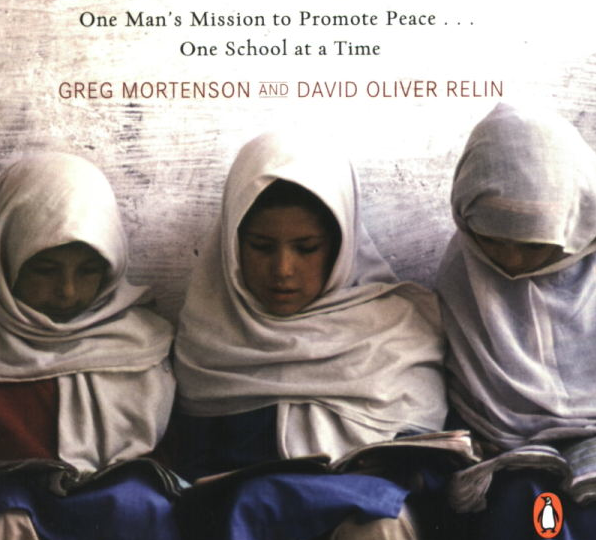
Three Cups of Tea is a must-read in the US. It was actually published in 2006, and has sold more and more books every month, and has been on the New York Times best seller list almost since it was published.
The book begins with a failure. A mountaineer, attempting a climb on K2 runs into problems, including evacuating two severely injured fellow climbers from the mountain. Exhausted, and devastated by his failure to capture the summit, he gets lost on his way back to the base camp, and ends up in a village where the people are very kind to him. He is treated as an honored guest, he regains his strength, and on his last day in the village, learns the children have no school. He rashly promises to come back and build a school for them.
One of the great redeeming features in this book is Greg Mortenson’s endless humility. He has a co-author, to whom he gave a long list of people he could talk with, including all his enemies and people who thought he was crazy. He’s that kind of guy. He talks about his life’s personal failures and his toughest moments, and he moves on.
He doesn’t take credit for the dogged persistence with which he keeps his promise, in spite of daunting obstacles. He doesn’t take any credit for the good will he builds.
Several years ago, I read another book which has changed my life, The Purpose Driven Life (which, by the way, the hardcover is $9.99 and the paperback is $10.19, go figure) in which the basic premise of the book is that we are each created uniquely, individually, by a loving creator, for a purpose. As I read Three Cups of Tea, I thought this man is greatly blessed; he discovered his purpose and nothing kept him from fulfilling it!
The book deserves every single one of it’s Amazon Five Star ratings.
I had a hard time putting the book down. Even though my life is full of other demands, once I had the chance, I spent an entire afternoon finishing this great book.
Greg Mortenson isn’t discouraged that his first school takes three years, and first he has to build a bridge. His second, third and fourth schools take just . . . three months! He has a gift for inspiring others, and people give what they can. The villagers give their time and their efforts, and western supporters donate funds.
By the end of the book, 24 school have been built, in the very poorest mountain villages in Pakistan, where money from the government for education doesn’t trickle at all, until near the end of the book. He doesn’t build the schools himself – he meets with the villagers, they donate a plot. He buys the materials, and together, they all build a school. These villagers are hungry for their children to become educated, to have a chance for a better life. Mortenson learns to focus on the girls.
He learns that as the boys become educated, they leave the villages for the city, but as the girls become educated, they come back, and like yeast, they raise the standard of living for the entire village, providing health care services and information, providing education for the newest crop of children, learning new skills, bringing them back and sharing them.
One of Mortenson’s gifts is that he isn’t interested in changing these mountain people into westerners. He likes them, and he learns from them, just the way they are. He dresses like them, he prays with them, he learns their language, and he has no western agenda for the curriculum in these schools. He also helps the government schools – building an additional room here for an overflowing school, paying a teacher’s salary there – his goal is to educate children. That’s it. No political agenda. The people of the villages love him for it, and give him their full support.
You cannot undertake a project like this without a lot of help. Mortenson had some extraordinary experiences, experiences that to me look like the grace of God, that drew together teams of people to help build and supply his schools.
“I looked at a sign in front of the school and saw that it had been donated by Jean Hoerni, my cousin Jennifer’s husband,” Bergman says. “Jennifer told me Jean had been trying to build a school somewhere in the Himalaya, but to land in that exact spot in a range that stretches thousands of miles felt like more than coincidence. I’m not a religious person,” Bergman says, “but I felt I’d been brought there for a reason and I couldn’t stop crying.”
A few months later, at Hoerni’s memorial service, Bergman introduced herself to Mortenson. “I was there!” she said, wrapping the startled man she’d just met in a bruising hug. “I saw the school!”
“You’re the blonde in the helicopter,” Mortenson said, shaking his head in amazement. “I heard a foreign woman had been in the village, but I didn’t believe it.”
“There’s a message here. This is meant to be,” Julia Bergman said. “I want to help. Is there anything I can do?”
“Well, I want to collect books and create a library for the Korphe School,” Mortenson said.
Bergman felt the same sense of predestination she’d encountered that day at the school. “I’m a librarian,” she said.
After struggling for many years, seeking donors who would help to build a school, Mortenson now has a foundation eagerly supported by many Americans, and especially the mountaineers, who continue to build schools. At the end of the book, the foundation is moving into the poorest sectors in Afghanistan, and building schools there. They have children’s programs in many of the schools in the United States, where children donate pennies to help pay for books for the schools, and for the teacher’s monthly salaries, where salaries are not reaching the teachers. You can donate to the school building fund, teacher’s salaries and books using your credit card, online, at the website Three Cups of Tea. You can order this book there, too, as well as music CD/s and learn more about the work being done.
Melanoma Rates Increase Among Younger Women
This is bad news from The Washington Post. You can read the rest of the article by clicking on the blue type.
By Rob Stein
Washington Post Staff Writer
Friday, July 11, 2008; Page A01
Increasing numbers of younger women continue to receive diagnoses of the most dangerous form of skin cancer even as the rate of new cases has leveled off in younger men, federal health officials reported yesterday.
An analysis of government cancer statistics from 1973 to 2004 found that the rate of new melanoma cases in younger women had jumped 50 percent since 1980 but did not increase for younger men in that period.
“It’s worrying,” said Mark Purdue, a research fellow at the National Cancer Institute, who led the analysis published in the Journal of Investigative Dermatology. “What we are seeing in young adults right now could foretell a much larger number of melanoma cases in older women.”
The new research did not examine the reasons for the trend, but Purdue said it could be the result of such factors as women spending more time outdoors and engaging in indoor tanning. Young women are much more likely than young men to frequent tanning salons, Purdue and others noted.
Wrong, So Wrong
I was wrong, so wrong, and I admit it. I had scanned the news online. When I finally got my hands on a hard copy paper, I discover there IS news, news you don’t find online, and so much of it. Because I can’t copy it online, you will have to bear with my hand-typed-in renditions of the page 2 “In the News” section from the Kuwait Times.
1. Rehab Centers
Kuwait: Dr Haya al Metairi called for establishing a specialized health center to treat and rehabilitate homosexurals. She urged the authorities to impart moral guidance and offer psychological counseling to affected people (sic) instead of incriminating the phenomenon of homosexuality. She said she has already submitted a demand of establishing the center to the parliamentary committee for curbing negative invluences. She also called for the implementation of a draft law to evaluate the degree that the patient is psychologically affected. (sic)
Once diagnosed, appropriate psychological treatments should then be administered accordingly after referring those ailing from sexual deviation to the relevant health centers. She also called for subjecting them to periodic checkups as well as conducting awareness campaigns to expedite their rehabilitation.
Al Metairi urged the Ministry of Health to subject local pharmacies to strict surveillance, reported Al Watan. She said most pharmacies sell banned female hormone inducting drugs over the counter that could fatally endanger the lives of consumers. She said such pills activate female hormones, leading to weakening the male sexual organs. Prolonged use of such drugs transforms a man’s physical appearance to resemble that of a woman and also negatively reduced the power of their sexual organs.
2. Diplomatic Appointments
Kuwait: Undersecretary at the Ministry of Foreign Affairs Khalid Al-Jarallah denied the involvement of wasta in admission tests held for inducting diplomats. He refuted reports that the ministry resorts to wasta, saying “The ministry never subjects itself to pressure from anyone, nor does it accept wasta in any form.”
He said appointing diplomats is a very sensitive issue as this select group represents the country abroad. Speaking on qualifications required to qualify for the posts, he said the maximum age required to qualify for the examinations is 24. No applicant under 24 has ever qualified for the written tests, he added. All candidates then have to mandatorily undergo a series of other appraisals and examinations before being finally accepted as diplomats, reported Al-Wasat. Written exams, which are graded by an expert panel of officials from the ministry are then followed by personal interviews and stringent brain storming sessions while grading the applicants on their personal capabilities.
3. No Blackouts
Kuwait: Fears of impeding electricity outages this summer dominated the Cabinet’s recent weekly meeting, officials said. The Ministry of Electricity and Water Mohammed Al-Olaim briefed the Cabinet with a detailed report on the current situation as well as details of the expected consumption as compared with the actual production.
He assured the Cabinet that he does not expect any electricity outage; scheduled or otherwise. He said the overall situation was under control with production exceeding the state’s consumption. “We are safely within the parameters of the green consumption line.” he added. He however slammed some local dailies of sparking unconfirmed reports of a power crisis, reported Al-Wasat. He said the reason electricity in some areas, was disrupted recently was due to technical snags leading to an overload, resulting from an excessive increase in day temperatures.
He said residents do not have to worry as technicians are on standby around the clock to deal with any contingency that might arise at any given time or place.
4. Donkey Ordered Out
Kuwait: The Minister of State for Municipa Affairs Dr. Fadel Safar saw a donkey grazing on a green patch while travelling through the capital recently. He called municipal officials and snstructed them to clear the mule off, reported Al-Watan. The officials in turn called capital police who arrived and took the animal to the Capital Security Directorate.
Laugh? Or cry?
The Sunshine Vitamin
This is from The Washington Post and you can read the entire article by clicking on the blue type.
Vitamin D deficiency is, ironically, a serious issue for Middle Eastern women who stay out of the sun and who cover – wear abaya, hijab and niqab. The body makes Vitamin D from sunshine – which we have here in the Gulf in great abundance. Even exposing your skin for ten minutes a day in a secluded sunny spot will help your body create the Vitamin D it needs to build your bones and your system.
Some Seek Guidelines to Reflect Vitamin D’s Benefits
By Rob Stein
Washington Post Staff Writer
Friday, July 4, 2008; Page A01
A flurry of recent research indicating that Vitamin D may have a dizzying array of health benefits has reignited an intense debate over whether federal guidelines for the “sunshine vitamin” are outdated, leaving millions unnecessarily vulnerable to cancer, heart disease, diabetes and other ailments.
The studies have produced evidence that low levels of Vitamin D make men more likely to have heart attacks, breast and colon cancer victims less likely to survive, kidney disease victims more likely to die, and children more likely to develop diabetes. Two other studies suggested that higher Vitamin D levels reduce the risk of dying prematurely from any cause.
In response to these and earlier findings, several medical societies are considering new recommendations for a minimum daily Vitamin D intake, the American Medical Association recently called for the government to update its guidelines, and federal officials are planning to launch that effort.
But many leading experts caution that it remains premature for people to start taking large doses of Vitamin D. While the new research is provocative, experts argue that the benefits remain far from proven. Vitamin D can be toxic at high doses, and some studies suggest it could increase the risk for some health problems, experts say. No one knows what consequences might emerge from exposing millions of people to megadoses of the vitamin for long periods.
“The data are intriguing and serve as, no pun intended, food for further fruitful research,” said Mary Frances Picciano, at the Office of Dietary Supplements of the National Institutes of Health. “But beyond that, the data are just not solid enough to make any new recommendations. We have to be cautious.”
The current clash is the latest in a long, often unusually bitter debate. Some skeptics question whether funding by the tanning, milk and vitamin industries is biasing some advocates. Frustrated proponents accuse skeptics of clinging to outdated medical dogma.
“It feels kind of ridiculous working in this field sometimes,” said Reinhold Vieth, a professor of nutritional sciences and pathobiology at the University of Toronto. “Every week, I get interviewed about the next important publication about Vitamin D. But this field remains mired in the muck.”
Vieth is one of a small but vocal cadre of researchers pushing doctors and patients to stop waiting for new official guidelines. Physicians should routinely test their patients for Vitamin D deficiencies, and more people — especially African Americans — should take supplements and increase their exposure to the sun, they say.
“The bottom line is we now recognize that Vitamin D is important for health for both children and adults and may help prevent many serious chronic diseases,” said Michael F. Holick, a professor of medicine, physiology and biophysics at Boston University.
Scientists have long known that Vitamin D is a vital nutrient the skin produces when hit by ultraviolet light from sunlight and other sources. The amount of Vitamin D produced varies, depending on where the person lives, skin pigment, age and other factors. African Americans and other dark-skinned people, and anyone living in northern latitudes, make far less than other groups.
With people spending more time indoors surfing the Web, watching television, working at desk jobs, and covering up and using sunblock when they do venture outdoors, the amount of Vitamin D that people create in their bodies has been falling. Milk and a few other foods are fortified with Vitamin D, and it occurs naturally in others, such as fatty fish, but most people get very little through their diets.
“Humans evolved in equatorial Africa wearing no clothes,” said Robert P. Heaney, a leading Vitamin D researcher at Creighton University in Omaha. “Now we get much less direct sunlight, and so we don’t make nearly as much Vitamin D.”
How Hot is It?
Here is a photo of what it looks like this morning, not quite 7 in the ay-em:

It’s hot. It is so hot that I will need to run to the grocery store any minute now, before it gets too hot. It is so hot, I don’t even sweat, the sweat evaporates right off my body. It is so hot that a crayon left lying on the ground will spontaneously dissolve:

At 0730, it is 97°F / 36°C.
Hot as . . .

Night before last, for the first time, I saw my husband’s temperature gizmo in the car register 50°C – and that was at 8 PM.
In Kuwait, if the temperature registers 50°C, work is supposed to cease. The official temperature gauges on buildings downtown never go above 49°C. But if the temperature outside is still 50°C at 8 at night, wouldn’t you think it would be higher during mid-day?
He had visitors in town the other day, visitors who were so fascinated with the heat that they took photos of his dashboard temperature gauge.
It is unbelievably hot.
Mediterranean diet ‘cuts cancer’
While this is not new news, it is verification of what we know to be true – that using olive oil in place of other oils can reduce your risk of serious disease. From BBC Health News:
Mediterranean diet ‘cuts cancer’
A study of 26,000 Greek people found just using more olive oil alone cut the risk by 9%.
The diet, reports the British Journal of Cancer, also includes higher amounts of fruits, vegetables, cereals, and less red meat.
A separate study found adding broccoli to meals might help men vulnerable to prostate cancer cut their risk.
It shows there are a number of things you can do, and there is no one ‘superfood’ that can stop you developing the disease
The Mediterranean diet came under scrutiny after researchers noticed lower rates of illnesses such as heart disease in countries such as Spain and Greece.
They noticed that people living there generally ate more vegetables and fish, less red meat, cooked in olive oil and drank moderate amounts of alcohol.
The latest study is one of the largest yet to look at the potential impact on cancer of the various parts of this diet.
‘No superfood’
Researchers from Harvard University persuaded thousands of Greek people of various ages to record their food intake over an eight-year-period.
Broccoli may help ward off prostate cancer
Their adherence to the Mediterranean diet was ranked using a scoring system, and the group with the worst score compared with those who followed a couple of aspects of the diet, and those who followed it the most closely. The biggest effect they found – a 9% reduction in risk – was achieved simply by eating more “unsaturated” fats such as olive oil.
But just two changes – eating less red meat, and more peas, beans and lentils, cut the risk of cancer by 12%.
Dr Dimitrios Trichopoulos, who led the study, said: “Adjusting one’s overall dietary habits towards the traditional Mediterranean pattern had an important effect.”
Sara Hiom, from Cancer Research UK, said the research highlighted the importance of a healthy balanced diet.
“It shows there are a number of things you can do, and there is no one ‘superfood’ that can stop you developing the disease.”
Broccoli benefit
The other study suggesting that food had the power to prevent cancer came from the Institute of Food Research in Norwich.
Scientists compared the effects of adding 400 grams of broccoli or peas a week to the diet of men at high risk of prostate cancer – and in the case of broccoli found differences in the activity of genes in the prostate which other studies have linked to cancer.
Their findings raised the possibility that broccoli, or other “cruciferous” vegetables, such as cauliflower and Brussels sprouts, could help prevent or slow down the disease, particularly if the man had a particular gene variant – GSTM1.
Professor Richard Mithen, who led the research, published in the Public Library of Science journal, said: “Eating two or three portions of cruciferous vegetables per week, and maybe a few more if you lack the GSTM1 gene – should be encouraged.”
Professor Karol Sikora, medical director of CancerPartnersUK, said the study was the first time in a properly controlled clinical trial that broccoli had been shown to change the expression of specific genes in the prostate gland.
“Although the observation period was too short and the numbers too small to show that the incidence of cancer actually fell, it is the first clear demonstration that broccoli and presumably other cruciferous vegetables may well reduce cancer risk.”
AIDS and Africa
Listening to BBC yesterday, I learned that in Ghana, men forbid their wives to get HIV testing. If the wife tests positive, it makes public his own shame, carrying HIV, and they don’t want people to know they are infected. They will even resist being treated rather than confess to having HIV.
Recently a Ghanian man divorced his wife for testing positive, even denied he was infected. She states he is the only man she has ever been with. He said she is bringing shame on him, going public.
What tragedy. What folly. Life enhancing, life prolonging drug treatments are available. First, you have to acknowledge you are infected. And, of course, if the women do not get tested, the dreaded disease passes along to the babies.
The newspaper recently published an article that 129 Kuwaitis are HIV positive. I imagine the problems here are similar, that people would prefer it all be kept very private. Is that possible? Is confidentiality respected? Do couples have blood tests before getting married?
Minister Proposes Eliminating Prostitution Entirely
From today’s Al Watan / Daily Star:
Minister vows to eradicate prostitution
KUWAIT: Interior Minister Sheikh Jaber AlـKhaled AlـSabah on Wednesday pledged to eradicate prostitution and close down any brothels in all of Kuwait”s districts. He said that the ministry will not hesitate to take legal action against any person or official who does not accomplish his role in banning such unethical behavior.
“Kuwait”s territory means a lot to us, and I am extremely concerned about the entire country, not just one district,” said AlـKhalid.
Sheikh Jaber said that the ministry intends to launch a major campaign against brothels and prostitution, in order to end such phenomena in Kuwait. ـAgencies
My comment: I commend the Minister, and I admire his resolve. I hate prostitution; I hate the fakery involved, I hate what it does to the prostitutes, their futures, and how it damages family relations.
But how do you stop prostitution? How can you eliminate the supply, when the demand continues? Instead of the pathetic prostitutes and their demented pimps, perhaps the focus should be on the customers who encourage prostitution to exist?
Japan, Seeking Trim Waists, Measures Millions
This article, from The New York Times (you can read the entire article by clicking here) gives me a big grin.
I can’t imagine American lining up because the government says we will have our waists measured, and be expected to meet a certain standard or lose weight and be penalized. Can you imagine Kuwaitis allowing the government to tell them how big their waists can be?
Japan is one of the most law-abiding nations on earth – I guess you have to be, when you have so many people occupying so little space. When you think of the Japanese, you think of politeness, courtesy. Outbreaks of rage are an anomoly.
And the government is right – obesity causes more and more expense down the road because it exacerbates other conditions. But someone’s weight is a very personal thing!
By NORIMITSU ONISHI
Published: June 13, 2008
A poster at a public health clinic in Japan reads, “Goodbye, metabo,” a word associated with being overweight. The Japanese government is mounting an ambitious weight-loss campaign.
Summoned by the city of Amagasaki one recent morning, Minoru Nogiri, 45, a flower shop owner, found himself lining up to have his waistline measured. With no visible paunch, he seemed to run little risk of being classified as overweight, or metabo, the preferred word in Japan these days.
But because the new state-prescribed limit for male waistlines is a strict 33.5 inches, he had anxiously measured himself at home a couple of days earlier. “I’m on the border,” he said.
Under a national law that came into effect two months ago, companies and local governments must now measure the waistlines of Japanese people between the ages of 40 and 74 as part of their annual checkups. That represents more than 56 million waistlines, or about 44 percent of the entire population.
Those exceeding government limits — 33.5 inches for men and 35.4 inches for women, which are identical to thresholds established in 2005 for Japan by the International Diabetes Federation as an easy guideline for identifying health risks — and having a weight-related ailment will be given dieting guidance if after three months they do not lose weight. If necessary, those people will be steered toward further re-education after six more months.
To reach its goals of shrinking the overweight population by 10 percent over the next four years and 25 percent over the next seven years, the government will impose financial penalties on companies and local governments that fail to meet specific targets. The country’s Ministry of Health argues that the campaign will keep the spread of diseases like diabetes and strokes in check.
The ministry also says that curbing widening waistlines will rein in a rapidly aging society’s ballooning health care costs, one of the most serious and politically delicate problems facing Japan today. Most Japanese are covered under public health care or through their work. Anger over a plan that would make those 75 and older pay more for health care brought a parliamentary censure motion Wednesday against Prime Minister Yasuo Fukuda, the first against a prime minister in the country’s postwar history.
Recent Comments
ExpatAlien on What Country am I Living … intlxpatr on Yellowstone: Old Faithful to C… Michelle on Yellowstone: Old Faithful to C… Cathy on No Grown-Ups in Charge intlxpatr on Waiting for Snow Wikipedia Donate Button

Amazina


Early Voting in Florida


 Here There and Everywhere