Saving the Lives of Malnourished Children
I received this e-mail this morning:
Hi there,
My organization, International Medical Corps, has the ability to save the lives
of malnourished children around the world and we just received some very
exciting news. We have been nominated to be one of the Top 25 in American
Express’ Projects, “Saving the Lives of Malnourished Children.” Our project was
chosen out of 1,190 projects and is now eligible to receive up to $1.5 million
to help feed hungry children. Because your blog, here there and Everywhere, has
a loyal following, I thought this would be an issue you would want to share with
your readers. I’ve put together this microsite explaining everything.
http://internationalmedicalcorps.smnr.us/
If you could post about this on your blog it would really help to spread the
message and potentially could save many lives. At the minimum, please vote for
“Saving the Lives of Malnourished Children.” Please let me know either way.
Thanks.
Chessia
—
Chessia Kelley, International Medical Corps
ckelley@imcworldwide.org
http://imcworldwide.org
I googled the organization and it is legitimate. Here is what Wikipedia has to say:
International Medical Corps (known also as IMC) is a global humanitarian nonprofit organization established by volunteer doctors and nurses. The organization provides disaster relief, delivers health care to underserved regions, builds clinics, and trains local health care workers with the goal of creating self-reliant, self-sustaining medical services and infrastructure in places where that had previously been lacking.
IMC’s focuses include primary and secondary health care, prevention and treatment of infectious diseases such as malaria, cholera, dysentery, and HIV/AIDS, supplemental food for malnourished children, clean water and hygiene education, mental health and psychosocial care, and microfinance programs that allow people to earn their own income.
International Medical Corps is a founding member of the ONE Campaign and a member of the Clinton Global Initiative.
Big Blur Sunrise
By the grace of God, I have been up since 5 this morning. Once I stopped jet-lagging, it was no longer so easy to get up and exercise. I have been hating myself, knowing I really NEED this, but not enough to actually do it.
So I prayed. And there I was this morning, wooo hoooo, wide awake at 5. I got up and went to the pool, which was CHILLY, and I exercised. I had a note from my niece, Little Diamond giving me lots of encouragement yesterday – thanks, Little Diamond, I think it worked!
I was waiting for the sun to come up, to take a photo, but all I have is this big grey-yellow blur. Whatever is in the sky – dust? sand? – the sun cannot break through it. At 0600, however, it is still only 88°F / 31°C, and comfortable.
Whatever is in the air is worse now than it was an hour ago. Yesterday, my left eye felt like it had a piece of sandpaper in it; people tell me they get that all same thing all the time, or headaches. Thank God, I don’t have a headache, and today my left eye feels better but my right eye feels a little gritty. What is this???
I have a million projects lined up today, and time to do them! I love it when I get up early; the day has more hours, I get more done!
Hang in there, my fasting friends. Today is supposed to be a little cooler than it has been – only 105° F / 41°C – not the scorching temperatures of earlier in the week, and apparently not the humidity, either.
Sunrise Meditation
Good morning, Kuwait!
I had to go out on the balcony this morning to take the sunrise photo; my windows are so streaked with dust and humidity that I can’t find a place clean enough to shoot through! I got a delightful surprise – the morning was comfortable! For a brief time, as brief as it may be, there is no humidity, and the temperatures are falling. “Falling” in this case means maybe down in the 80’s F., LOL, but comfortable!
Actually . . . it was lovely!

You can see, we have that suspicious dark layer hanging over the horizon, hmmm. . . . .looks suspiciously like pollution. Anyone having trouble breathing?
The verses for today’s meditation are from the Psalm for today, Psalm 62:
Those of low estate are but a breath,
those of high estate are a delusion;
in the balances they go up;
they are together lighter than a breath.
10Put no confidence in extortion,
and set no vain hopes on robbery;
if riches increase, do not set your heart on them.
11Once God has spoken;
twice have I heard this:
that power belongs to God,
12 and steadfast love belongs to you, O Lord.
For you repay to all
according to their work.
Have a great day, Kuwait.
The Scourge of Poverty
For the last several years I have tried to start my day by reading my daily readings in the Lectionary (which is also listed in my blogroll there at the right, so you can click on it any time to see what I am reading) and the daily reading from Forward Day by Day (also on the blogroll list).
I think my days go better when I do. I’m human; there are days when I have forgotten, or gotten caught up in the frenzy of daily life and neglected my readings, but it is my commitment and my habit, and I am fairly faithful to it.
Today’s reading in Forward Day by Day (oops, I can see that it is actually Monday’s reading, but as I write, it is still Monday in the USA where it is homed) has to do with poverty.
I thought I would share it with you because I know from what you share with me that during Ramadan, as you grow closer to Allah/God, that part of the expression of that closeness is giving to the poor. I have read of many different ways in which this is expressed – medical expenses paid, food given in Iftar meals, eyeglasses purchased for the needy, a year’s rent paid for a widow with children – what generosity!
I have worked with the poor. I have known what agony it is to have to choose between making an expensive car repair and getting a dental exam. We kept a pantry full of food for those who could barely make the rent, and had nothing left over for food. These were the working poor, the can-we-make-it-from-month-to-month poor. There is a whole other level, the street poor, with their worldly possessions in a garbage sack, or shredding backpack, who never know if they will get food for the day.
I see people here in Kuwait scouring the beaches for something to throw in the soup to make it nourishing, people who beg just for a little bread.
The problems can be overwhelming.
In Kuwait, one group refuses to be overwhelmed. Every month of the year is devoted to alleviating the suffering of the poor. That group is Operation Hope Kuwait. While you are considering where to make an impact this Ramadan – or any other time of the year when you are feeling thankful and generous – please consider Operation Hope Kuwait. They gather all kinds of resources and distribute them to the poor. They faithfully act as God’s hands here on earth, serving the needs of the most desperately poor and needy. Whatever you give them will be stretched to the maximum; they don’t waste a penny, not a fil. Please, give generously.
Psalm 41. Happy are they who consider the poor and needy! the LORD will deliver them in the time of trouble.
The scourge of poverty can be viewed as a sociological problem, an economic problem, a political problem, or in other ways. The scriptures offer no grand economic theories other than to tell those who have much to share with those who have little. Christ told his disciples that they would always have the poor among them. Given human sin and limitations, the problem will always be somewhat intractable.
But the problem of my heart and how it regards the poor-the problem of my own generosity to the world around me – is not intractable. Economic theory and political allegiance are not the crucial questions before us. How I regard the poor is a matter of deep importance in the relationship of my heart with God. The psalm could not be clearer: happy are those who consider [do good to] the poor. It offers a promise to us as well that God will deliver us when we find ourselves in the day of trouble.
Becoming Kuwaiti and Oatmeal
I’m not a big fan of oatmeal, so when my best-friend-from-college raved about eating oatmeal in the morning, I listened, even though the gag-reflex was about to kick in. She raved about one particular brand – Snoqualamie Falls oatmeal:

And then, she went one better, she sent me a bag of it. I tried it a couple times. It’s still oatmeal.
Where do the skaters come in, you are asking?
Age creeps up on you. With any luck at all, you lose your bad habits along the way, but some of them stick like glue. I am telling you this, because it is Ramadan, and I am guessing you understand a little. Our sermon in church this week and our readings have had to do with temptation, and how if you focus on something – like “I will not think about jellybeans,” then it is all you think about. Our readings tell us to focus on something else, like reading spiritual writings, or becoming actively involved in some activity that takes you mind totally off the temptation.
I think of myself as a skater. When I was an adolescent, I had what I call roller-coaster grades. I would skate along doing the minimum, and then when it was time to get a paper in or study for a final grade, I would pull out all the stops, and I would get the grade I wanted . . . . most of the time. I underachieved just often enough to stick a grain of doubt in my mind that this was the path to success.
Because God has a sense of humor, he gave me a son with the same pattern, and this smart, cheerful, inventive kid did the minimum until grading time, and then he would pull through, while my I watched in horrified fascination. (Have you noticed, you are always tougher on those who exhibit your own shortcomings?)
So, mature as I am, I have developed a lot of self-discipline and patience and persistence through the years, things I call the harder gifts. I learned them from Motherhood, and from dealing with the normal troubles that come through living life, and all that life throws at you.
Or so I thought. This summer, at my well-woman appointment, I gave up my blood samples and received, in return, a lot of bad news.
I am borderline diabetic. I am borderline hypertensive. I am overweight. I have bad cholesterol out of proportion to the good cholesterol.
I’ve been skating close to those readings for years, but coming to Kuwait, I sort of stopped exercising. I haven’t been as physically active as before. I started blogging, which is sedentary to the max. I thought I could skate, but now the grim reckoning has been presented to me.
I really don’t want to go on a medication I will have to take for the rest of my life. I really don’t want to go on a medication that may have side effects no one knows yet because they are so new. To avoid going on medications, the doctor is giving me one year to reduce my weight, and I had to promise to exercise a minimum of 30 minutes 5 days a week. He gave me a long list of foods not to eat, and foods to avoid. Aaarrgh.
Because God is merciful, and knows our needs long before we do, and because he provides generously, I still have my oatmeal, which I have now pulled our and am eating regularly. I eat it Pacific Northwest Style – with blueberries and raspberries, which are also supposed to be good for me.

I found something else in the US that I love, but I can’t find it here – or at least not yet. Have you seen Kashi Pilaf or Kashi breakfast cereal?
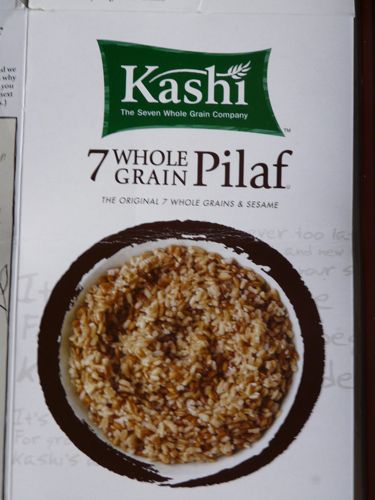
I know I promised not to post any food photos while you are fasting, but oatmeal? To me, oatmeal doesn’t even count, it’s like medicine, like who on earth yearns for oatmeal?
Ramadan Sunrise
Still jet lagging, but not so badly. I can sleep from ten at night until almost 5 in the morning, now, and actually, I kind of like it. I really like being able to use the pool all by myself, no ooglers, everyone asleep, just me and the pool. And then, oh, I really really like watching the sun rise.
This morning, the pre-sunrise was glorious, too:

You know me, I have this thing about the sun reflecting on clouds. In the Pacific Northwest, that happens best at sunset, but here in Kuwait, I have my sunrises. 🙂 This morning’s sunrise, to welcome Ramadan, was sheer beauty:

The weather is cooling more at night – it is only 84°F/ 29°C at 6:30 this morning, but . . . the forecast is for a brutal 118°F / 48°C today, for the first day of Ramadan. Good day for a mid-day nap, if you have that luxury.
May Ramadan be generous to you.
Ramadan for Non Muslims

I am repeating this post from September 13, 2007 because it found so much interest among my non-Muslim friends. We are all so ignorant of one another’s customs, why we do what we do and why we believe what we believe. There is a blessing that comes with learning more about one another – that blessing, for me, is that when I learn about other, my own life is illuminated.

(I didn’t take this photo; it is from TourEgypt.net. If you want to see an astonishing variety of Ramadan lanterns/ fanous, Google “Image Ramadan lanterns” and you will find pages of them! I didn’t want to lift someone else’s photo from Flicker or Picasa (although people do that to me all the time!) but the variety is amazing.)
Ramadan will start soon; it means that the very thinnest of crescent moons was sighted by official astronomers, and the lunar month of Ramadan might begin. You might think it odd that people wait, with eager anticipation, for a month of daytime fasting, but the Muslims do – they wait for it eagerly.
A friend explained to me that it is a time of purification, when your prayers and supplications are doubly powerful, and when God takes extra consideration of the good that you do and the intentions of your heart. It is also a time when the devil cannot be present, so if you are tempted, it is coming from your own heart, and you battle against the temptations of your own heart. Forgiveness flows in this month, and blessings, too.
We have similar beliefs – think about it. Our holy people fast when asking a particular boon of God. We try to keep ourselves particularly holy at certain times of the year.
In Muslim countries, the state supports Ramadan, so things are a little different. Schools start later. Offices are open fewer hours. The two most dangerous times of the day are the times when schools dismiss and parents are picking up kids, and just before sunset, as everyone rushes to be home for the breaking of the fast, which occurs as the sun goes down. In olden days, there was a cannon that everyone in the town could hear, that signalled the end of the fast. There may still be a cannon today – in Doha there was, and we could hear it, but if there is a cannon in Kuwait, we are too far away, and can’t hear it.
When the fast is broken, traditionally after the evening prayer, you take two or three dates, and water or special milk drink, a meal which helps restore normal blood sugar levels and takes the edge off the fast. Shortly, you will eat a larger meal, full of special dishes eaten only during Ramadan. Families visit one another, and you will see maids carrying covered dishes to sisters houses and friends houses – everyone makes a lot of food, and shares it with one another. When we lived in Tunisia, we would get a food delivery maybe once a week – it is a holy thing to share, especially with the poor and we always wondered if we were being shared with as neighbors, or shared with as poor people! I always tried to watch what they particularly liked when they would visit me, so I could sent plates to their houses during Ramadan.
Just before the sun comes up, there is another meal, Suhoor, and for that meal, people usually eat something that will stick to your ribs, and drink extra water, because you will not eat again until the sun goes down. People who can, usually go back to bed after the Suhoor meal and morning prayers. People who can, sleep a lot during the day, during Ramadan. Especially as Ramadan moves into the hotter months, the fasting, especially from water, becomes a heavier responsibility.
And because it is a Muslim state, and to avoid burdening our brothers and sisters who are fasting, even non-Muslims refrain from eating, drinking, touching someone of the opposite sex in public, even your own husband (not having sex in the daytime is also a part of fasting), smoking is forbidden, and if you are in a car accident and you might be at fault, the person might say “I am fasting, I am fasting” which means they cannot argue with you because they are trying to maintain a purity of soul. Even chewing gum is an offense. And these offenses are punishable by a heavy fine – nearly $400 – or a stay in the local jail.
Because I am not Muslim, there may be other things of which I am not aware, and my local readers are welcome to help fill in here. As for me, I find it not such a burden; I like that there is a whole month with a focus on God. You get used to NOT drinking or eating in public during the day, it’s not that difficult. The traffic just before (sunset) Ftoor can be deadly, but during Ftoor, traffic lightens dramatically (as all the Muslims are breaking their fast) and you can get places very quickly! Stores have special foods, restaurants have special offerings, and the feeling in the air is a lot like Christmas. People are joyful!
There were many comments on the original post, and, as usual in the history of Here There and Everywhere, the commenters taught us all more about Ramadan than the original post. If you want to read the original post and comments, you can click HERE.
End of August Sunrise

No, no, it’s no trouble at all to be up for the sunrise, in fact, I have been up for hours. Yes, jet lagging. I thought I had dodged that bullet, but when I awoke, feeling GREAT, thinking it was morning, and checked my clock . . . it was only 2:30. 2:30 ay – em.
I’ve got all the laundry done, dishes washed, I’m all unpacked, and I think I am going to need to go back to bed soon.
I was just thinking, for Kuwaitis coming back, there won’t be a jet lag issue – with Ramadan starting almost immediately, nights and days get turned upside down anyway.
My flight in was a hoot – probably 80% families, Kuwaiti and Omani. Most of the kids were between 8 months and 2 1/2 years, but amazingly well behaved. The flight was packed. Packed. Not a single empty seat. I am guessing this was the big influx trying to get back before school starts and Ramadan starts – double whammy.
Fortunately, KLM seemed to have stocked a lot of kid’s meals, they didn’t mind the toddlers in the aisles, and the flight was relatively quiet – astonishingly so, considering all the kids on board. I have never seen a flight with so many children. The Pre-boarding of the families alone took about 45 minutes. Unaccompanied people like me were stuck in here and there where there was an empty seat.
The poor families; many had hoped for an empty seat next to them, and had to hold the babies and toddler the entire flight. There was a baby in my seat when I boarded, but the parents quickly picked her up and we had a good time chatting during our time together; we even all slept when the baby did. The baby coughed and sneezed on my meal, but I don’t seem to be suffering any ill effects. 🙂
I’m happy to be back in Kuwait. I’ve grown to love Ramadan, and I am looking forward with great anticipation to those magical days when the temperatures begin to drop once again and we can spend time outdoors.
Pilot Sleeping, No Penalty
From yesterday’s Kuwait Times:
KAC head overruled in pilot transfer
Published Date: August 28, 2008
KUWAIT: The Administrative Court has overruled the decision of the chairman of Kuwait Airways Company, Hamd Al-Falah, to transfer a pilot from his normal duties to another department, as well as reducing his salary. Al-Falah took the decision after the pilot allegedly committed a violation when he went to sleep while a flight under his control was returning to Kuwait on auto pilot from another Gulf state, reported.
Despite the need for him to resume control of the plane for landing, the pilot could not reportedly be roused from his sleep and the co-pilot had to land the plane single-handedly. The pilot was subsequently referred for investigation by a committee, managed by an Indian administrative employee of the corporation.
The pilot contested the committee’s decision, approved by the chairman, to transfer the pilot and reduce his salary, particularly since aviation regulations prohibit the imposition of two penalties for one violation or mistake.
A court official revealed that, although the court had cancelled the two penalties, it could not officially cancel the decision to transfer an employee since this comes under the authority of the relevant department. Company regulations state that any employee being reassigned should be transferred to a post at the same level as their former position.
WOOO HOOO! Hope in a Bottle That Works!
Fresh from The New York Times: An Article on Wrinkle Removers, Backed by Science. You can read the entire article by clicking on the blue type.
By NICHOLAS BAKALAR
Published: August 18, 2008
Nostrums that promise to smooth wrinkled skin are a staple of snake-oil salesmen everywhere, but now there is strong evidence that certain kinds of treatment are effective. Over the past decade, researchers have been learning which treatments work, and why.
The key is a growing understanding of the skin’s connective tissue, called the dermal collagen, and a recognition that damage to the mechanical properties of the collagen outside the skin cells, and not necessarily genetic damage to the cells themselves, causes wrinkled skin.
A recent review in The Archives of Dermatology concludes that three anti-aging treatments are proven clinically effective: the topical application of retinol; carbon dioxide laser resurfacing; and injection of hyaluronic acid, a moisture-retaining acid that occurs naturally in the skin. Each depends on the same mechanism, the interaction of skin cells called fibroblasts with the collagen they produce.
“This is an area where there’s a lot of hype and not much substance,” said David J. Leffell, a professor of dermatology and surgery at Yale who was not involved in the review. But, he said, this study is “good science.”
Theory and experiment back these treatments, the authors write. Fibroblasts — connective tissue cells — secrete a complex group of polysaccharides and proteins that creates collagen, which gives the skin shape and elasticity and supports the blood vessels that permeate it. The network of collagen tissue is maintained by its mechanical tension with these skin cells.
Skin deteriorates as it ages, but its exposure to sunlight inhibits the ability of fibroblasts to produce collagen. The hands, face, neck and upper chest all suffer more than unexposed skin, and light-pigmented people wrinkle more readily than others. This damage, the authors write, is essentially an accelerated version of chronological aging. Ultraviolet radiation induces production of the same enzymes that degrade collagen with age.
Collagen fibers last as long as 30 years. But with age and ultraviolet exposure, they deteriorate and fragment, and fragmented collagen impairs the collagen-producing function of the fibroblasts that created it. As the fragmented collagen accumulates, new collagen production declines, the connections between the fibroblasts and the collagen weaken, and the skin, now lacking support, begins to wrinkle.
But there are treatments that counter this process. Topical application of retinol, a form of vitamin A, was the first to be proved useful. Although the molecular pathways are not well understood, retinol causes new collagen to form in chronologically aged skin and in skin damaged by ultraviolet light.
Recent Comments
Kitchen on Isiais: Winding Down intlxpatr on Shampoo Ginger tigerbutterya0c5ff1d… on Shampoo Ginger intlxpatr on British Soldier Kidnapped, Esc… John on British Soldier Kidnapped, Esc… Wikipedia Donate Button

Amazina


Early Voting in Florida


