“Why Do Americans Do This?”
AdventureMan and I were with a group of delegates from Iraq yesterday, taking them on a visit to a variety of Pensacola sites. They are here visiting through the GCCDC, on the IVLP program, studying elections and campaign strategies in the USA.
One stop we make with many delegates is the First Methodist program Serving the Hungry. Two days a week, led by Jerry Vititow and supported by many happy, willing volunteers, they serve a hot lunch to the hungry, varying in numbers but never less than fifty or so.
The delegates learn about the program, then don aprons and serve up the trays. It is often one of the highlights of the trip.
One delegate raises his hand to ask a question.
“We see this everywhere,” he starts, “Americans who are working for nothing and smiling. Why do they do this?” He was genuinely perplexed.
Jerry explained that it wells up from many sources, a yearning to give back some of the blessings we have received, an eagerness to serve those who have less, maybe just an eagerness to serve. “It’s part of what we believe in,” he sums it up.
The delegates had a wonderful time.
MERS Virus Found to be Widespread
Thank you, John Mueller, for this fascinating article from Science NOW:
Middle Eastern Virus More Widespread Than Thought
 Bernard Gagnon/Wikimedia CommonsTrail of infection. Scientists have found MERS virus in camels from Sudan and Ethiopia, suggesting the virus is more widespread than previously thought.
It’s called Middle East respiratory syndrome, or MERS, after the region where almost all the patients have been reported. But the name may turn out to be a misnomer. A new study has found the virus in camels from Sudan and Ethiopia, suggesting that Africa, too, harbors the pathogen. That means MERS may sicken more humans than previously thought—and perhaps be more likely to trigger a pandemic.
MERS has sickened 183 people and killed 80, most of them in Saudi Arabia. A couple of cases have occurred in countries outside the region, such as France and the United Kingdom, but those clusters all started with a patient who had traveled to the Middle East before falling ill.
Scientists have uncovered more and more evidence implicating camels in the spread of the disease. They found that a large percentage of camels in the Middle East have antibodies against MERS in their blood, while other animals, such as goats and sheep, do not. Researchers have also isolated MERS virus RNA from nose swabs of camels in Qatar, and earlier this week, they showed that the virus has circulated in Saudi Arabian camels for at least 2 decades.
Malik Peiris, an infectious disease researcher at the University of Hong Kong, and colleagues expanded the search to Africa. In a paper published last year, they showed that camels in Egypt carried antibodies against MERS. For the new study, they took samples from four abattoirs around Egypt; again they found antibodies against MERS in the blood of 48 out of 52 camels they tested. But the most interesting results came from taking nose swabs from 110 camels: They found MERS RNA in four animals that had been shipped in from Sudan and Ethiopia.
Peiris cautions that it is unclear whether the infected camels picked up the virus in Sudan and Ethiopia or on their final journey in Egypt. Abattoirs could help spread MERS just like live poultry markets do for influenza, he says. “You cannot point the finger exactly at where those viruses came from,” he says. “But I would be very surprised if you do not find the virus in large parts of Africa.”
If so, that changes the picture of MERS considerably. No human MERS cases have been reported from Egypt or anywhere else in Africa, but if camels are infected, they may well occur, says Marion Koopmans, an infectious disease researcher at Erasmus MC in Rotterdam, the Netherlands. “It would be important to look systematically into that,” she writes in an e-mail. “Health authorities really need to test patients with severe pneumonia all across Africa for MERS,” Peiris says.
The researchers were able to sequence the virus of one of the camels almost completely, and it is more than 99% identical with viruses found in people. “I would be very surprised if this virus cannot infect humans,” says Christian Drosten, a virologist at the University of Bonn in Germany. But the virus also shows a few intriguing differences from known camel samples, he says. “We have to analyze this carefully in the next few days, but it looks like this sequence broadens the viral repertoire found in camels,” he says. If the viruses found in camels show more genetic variation than those isolated from humans, that is further strong evidence that camels are infecting humans and not the other way around.
Anthony Mounts, the point person for MERS at the World Health Organization in Geneva, Switzerland, says that it is very likely that human MERS cases occur in Africa. “Wherever we find [infected] camels, there is a good chance we’ll find [human] cases if we look closely,” he says. And humans may be exposed to camels in Africa much more often than in the Middle East: There were about 260,000 camels in Saudi Arabia in 2012, but almost a million in Ethiopia and 4.8 million in Sudan, according to the U.N. Food and Agriculture Organization. The more human cases there are, the higher the risk that the virus will one day learn how to become easily transmissible between people, which could set off a pandemic.
The researchers also looked at the blood of 179 people working at the camel abattoirs for antibodies against MERS virus, but found none. That shows that the virus is only rarely successful in infecting human beings, Peiris says. “What we need to find out now is the reason for these rare transmissions.”
My New Closest Friend: FitBit One
My sister was bouncing around as I stayed at her house in August, and showed me the reason: she was wearing a FitBit. It is tiny, it clips right on to your clothing, and it syncs with your computer – or your smart phone – and helps you see your daily activity level.

You remember the 10,000 Steps program? I wrote about it in 2008? The FitBit counts your steps. It tells you how many flights of stairs you have gone up. (We bought a two story house on purpose, and today my FitBit tells me I am a CHAMP on the stairs. I guess it doesn’t know that going up and down the stairs is just what you do when you have a two story house, but hey, I get credit!) It is so much better than the pedometer, it counts better. It can also monitor my sleep, if I figure it out.
My sister loved this device; claims it keeps her motivated to keep moving, and all the latest studies show that we really, really need to keep moving. It is, literally, a matter of life or death. You move it – or you lose it.
I finally got one. I was kind of reluctant to have this little fitness nanny prodding me all the time, but actually, it is turning out to be more fun than annoying.
Thanks, Sis. Great recommendation.
“You Can’t Put the Manure Back in the Horse”
From Forward Day by Day, a meditation from Hebrews that made me laugh while it instructed me.
Hebrews 12:17. He found no chance to repent, even though he sought the blessing with tears.
“I’m sorry.” For the first thirty years of my life, more often than not, this meant I regretted the personal consequences of what I had done, not necessarily the act or damage. During the last twenty years, I’ve come to see being sorry as distinctly different from regretting.
Most of us have said we’re sorry more times than we could hope to remember, but we are still able to recall events that we truly regret. Chances are that regret brings about change at a higher ratio than does being sorry—a change to ensure the behavior doesn’t happen again.
One of the illustrations that helped me came from an old farmer who used to volunteer at a prison where I was serving time. The discussion was about things done wrong and, with language more colorful than I can use here, he tipped his old dust-and-sweat-streaked cap back on his head and said, “Boys, you can’t put manure back in a horse.”
That was almost twenty years ago, and I wonder if that old man ever realized how much he helped me to begin to learn to live with some things.
Giving Birth to Gun in the South Sudan
This is the newest blog entry from my friend Manyang David Mayar in the South Sudan He visited Pensacola as part of an IVLP program with our Gulf Coast Citizens Diplomacy Council:
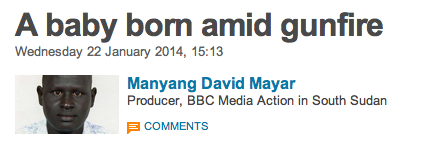

Pregnant women fleeing the fighting in Jonglei state, South Sudan.
I was in the town of Bor when fighting broke out last month in South Sudan. I managed to escape the town despite being shot in the arm. But many other people had a far tougher time – people like Nyiel Magot, nine months pregnant and faced with the awful choice of staying in Bor’s hospital or fleeing into the bush.
Against her doctors’ advice, Nyiel decided to escape the immediate danger, and with her five children, took a narrow path out of town which was packed with people also heading to safety.
But, she told me, with every step she took, she grew weaker and more and more people overtook her.
“I was really tired and the pain became really unbearable,” Nyiel said. “I knew the time had come for me to give birth and I had to get out of Bor immediately to escape the attackers.”
Giving birth in the bush
Later that evening, the pain finally forced Nyiel to stop. Instead of a hospital ward, she found an abandoned grass-thatched house.
Luckily, there was a traditional birth attendant nearby who used her bare hands to help Nyiel deliver a healthy baby boy.
But the cold nights and hot days of December in South Sudan soon started to take their toll on the new born and reports of an imminent rebel attack forced Nyiel and her family to leave their hideout.
They walked for days until they crossed the River Nile and came to a large camp for displaced people in Awerial. And then her baby caught diarrhoea and started to vomit.
He was rushed to a hospital in Juba where, after days of treatment, he recovered.
A child of conflict
It was in the hospital in Juba that I met Nyiel and heard her story – and also learned the name of her little baby.
Nyiel had called him Matuor, the Dinka word for ‘gun’, because he was born amid gunfire.
As the conflict continues in South Sudan, I fear he won’t be the last baby born in the bush with such a name.
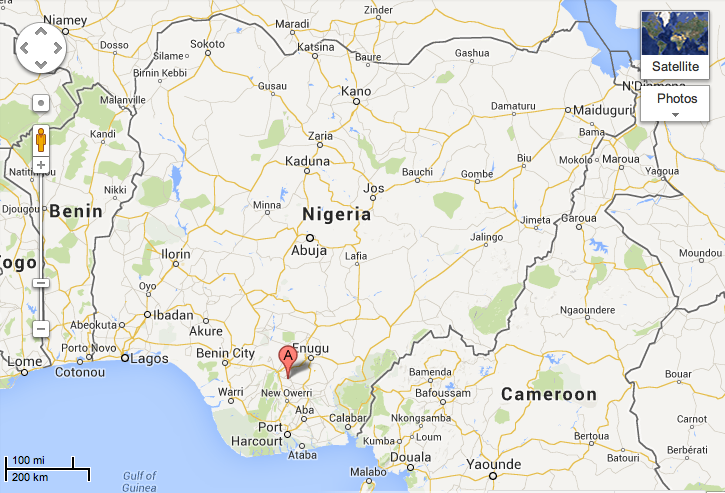
Where is Amichi, Nigeria?
Today the church prays for the diocese of Amichi, in Nigeria:
And we raise our prayers with many for our friend in Texas, hospitalized with a severe bacterial infection.
NZ Speeding Ad Goes Viral
This is a shocking ad; an ad that shocks the viewer into reviewing priorities
Where is Enugu, Nigeria?
Today the church prays for Enugu, in Nigeria:
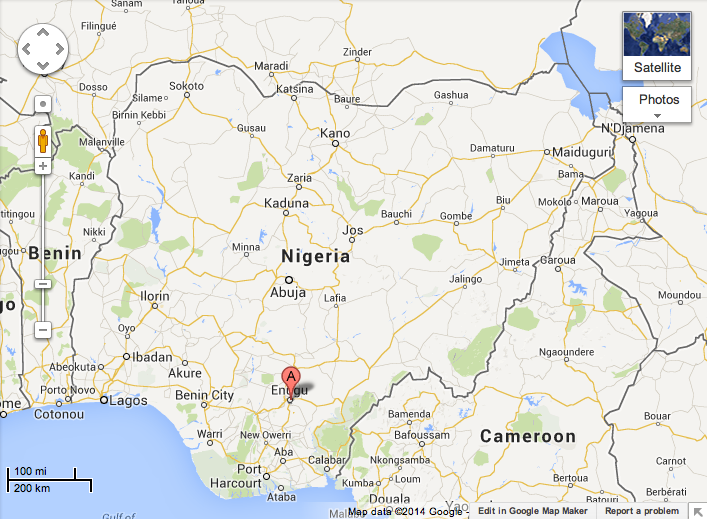
As you pray for the well-being of Enugu, would you also pray for all those places where religion is a cause for strife? Syria, northern Nigeria, the newest country in the world, South Sudan? To me, it is just heartbreaking that those who should be living in peace, working together, are in armed bloody conflict against one another.
A TCK Wedding (Third Culture Kids)
Several years ago, back in my earlier blogging years, a Kuwaiti friend, Amer al Hilaliya wrote a wonderful post: I Am a Third Culture Kid, Are You? He never anticipated the result – comment after comment, some short, some a little bitter, some longer and insightful. The Third Culture Kids know who they are, and are eager to share their insights and experiences – but mostly with other Third Culture Kids, who understand.
Others . . . don’t get it.
This weekend, we went to a wonderful Third Culture Kids wedding. It wasn’t billed that way, but it was so thoroughly that way that I couldn’t stop seeing it. It doesn’t hurt that we are reading the seminal work on Third Culture Kids by David C. Pollock and Ruth E Van Renken called, yep, you guessed it, Third Culture Kids.

It’s almost like reading a whole new book. It has all the Third Culture Kids stories, but has expanded to include third culture kids cousins, like the adult third culture kids, ATCKs (those who have lived a goodly share of their lives in a non-native culture), cross culture adoptees, cross cultural marriages, etc. One of the points they make is that being third culture kids cuts across a lot of boundaries and makes for odd – odd by normal standards – friendships. Once again, across the boundaries – countries, old, young – friendships are determined by a commonality in experiences outside the native culture. It is a fascinating read.
People don’t think of how LONG Florida is, tip to tip, but from Pensacola to Fort Myers is a fuuur piece, as they say, even if it is on an inside curve. Thank God it wasn’t Key West! We thought it would be an eight hour drive, and it turned into thirteen, with heavy traffic from Lake City to Ft Myer.
The wedding was sweet, simple and heart felt. Both sets of parents had done significant missionary work in foreign countries, and the kids were definitely third culture kids. The groom would speak Turkish in his sotto voce asides to his best man, who grew up with him on the streets of Ankara. The bride’s brother read all the greetings and best wishes to the bride from her friends in Hungary – and he read them all in Hungarian.


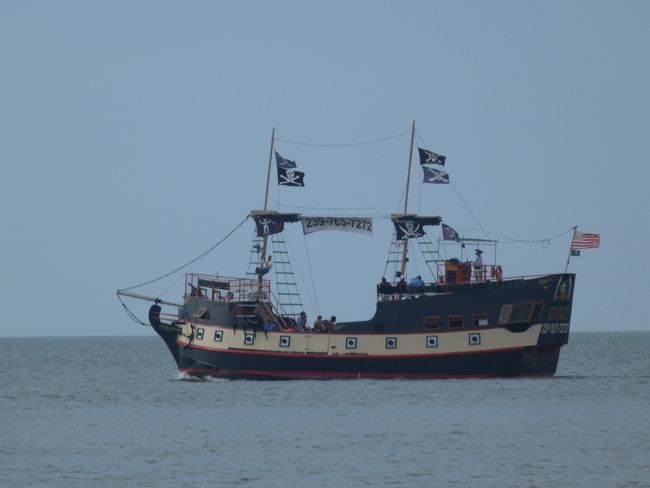
Just as the ceremony started, along came a pirate ship! Some things, you just can’t plan, they just happen.
They all told family stories, and one of them stuck in our hearts because it reflects our own experiences growing up in the Moslem world. The groom, as a young man, came home flustered because a woman on the metro, as he was coming home, noticed he was not wearing an undershirt under his T-shirt, and assumed he was a homeless child. She started talking with all the other passengers, and they marched him off the train to the souks, where they insisted on buying him an undershirt (who knew that you were not properly dressed in Turkey unless you were wearing a sleeveless undershirt?) and also a sweater, to keep him warm on the streets. All this, in spite of the fact that this homeless boy spoke excellent Turkish and kept telling them he had a home! No! No undershirt, he has to be homeless.
Few people in America know the kindnesses we experience living in the Moslem world. It may not always make sense to us – in Tunis, we always wondered if we were getting the annual Eid platter of lamb and couscous showed up because we were thought to be poor or because we were strangers? There has always been a sweetness and generosity to our Moslem neighbors that humbled us. Because of the layering upon layering of these kindnesses, we see Islam, and the Middle East, differently from most of our American friends who have never lived among Moslems. Maybe if we all knew one another a little better, we would have less cause to fear one another, and maybe without all that fear, we could manage a little less hatred.
What is a wedding without babies and children to remind us of the Circle of Life (which AdventureMan calls The Circle of Death). This little one speaks English and Turkish already, and loved the sugar white sands of Ft. Myers Beach and the little seashells, just her size.

As more and more people cross borders, for work, for play, for marriage, for education, as we live in ‘alien’ cultures and learn other ways of thinking, maybe we are growing into an entire world with a larger viewpoint?
A Message of Hope
God had been angry with his people. All the prophets we’ve been reading have warned us of the consequences of our behaviors. And now, a breath of hope, in today’s reading from Zephaniah:
Zephaniah 3:14-20
14 Sing aloud, O daughter Zion;
shout, O Israel!
Rejoice and exult with all your heart,
O daughter Jerusalem!
15 The Lord has taken away the judgements against you,
he has turned away your enemies.
The king of Israel, the Lord, is in your midst;
you shall fear disaster no more.
16 On that day it shall be said to Jerusalem:
Do not fear, O Zion;
do not let your hands grow weak.
17 The Lord, your God, is in your midst,
a warrior who gives victory;
he will rejoice over you with gladness,
he will renew you* in his love;
he will exult over you with loud singing
18 as on a day of festival.*
I will remove disaster from you,*
so that you will not bear reproach for it.
19 I will deal with all your oppressors
at that time.
And I will save the lame
and gather the outcast,
and I will change their shame into praise
and renown in all the earth.
20 At that time I will bring you home,
at the time when I gather you;
for I will make you renowned and praised
among all the peoples of the earth,
when I restore your fortunes
before your eyes, says the Lord.
Recent Comments
ExpatAlien on What Country am I Living … intlxpatr on Yellowstone: Old Faithful to C… Michelle on Yellowstone: Old Faithful to C… Cathy on No Grown-Ups in Charge intlxpatr on Waiting for Snow Wikipedia Donate Button

Amazina


Early Voting in Florida


 Here There and Everywhere