Expat Teacher Murdered In Qatar After Night of Clubbing?
Qatar expats shocked after UK teacher’s suspected murder
 By Yolande KnellBBC News, Doha, Qatar
 Lauren Patterson had gone to a nightclub with a friend before she went missing
The suspected murder of a young primary school teacher from south-east London has deeply upset British expatriates living in the Gulf state of Qatar.
However, two weeks after Lauren Patterson disappeared following a night out in the capital, Doha, officials have given few details about her disappearance.
DNA tests have been carried out on the remains of a body found in a remote area of desert but the results have not yet been released.
At the Newton British School, where Ms Patterson worked, one mother paid tribute to a talented teacher who she said had been a favourite of her little son.
However, staff refused to comment, saying they had been advised not to.
“We’re a small, close-knit community and we’re all in deep shock,” explained headteacher Katherine Dixon. “We are dealing with small children here.”
Security camerasWhen 24-year-old Ms Patterson went out on 11 October she had just returned from a trip home to the UK for her grandmother’s funeral.
She and a female friend decided to go to Club 7 on the seventh floor of the luxury La Cigale Hotel.
It is a popular venue where all nationalities mingle on the dance floor as DJs play ambient house music.
Groups sip cocktails around low tables decorated with colourful, illuminated ice buckets.
Everyone entering the club has their ID checked and they are watched by burly bouncers and security cameras.
It is believed that in the early hours of the morning, the two women left with two local men they knew who had offered to drive them home.
Ms Patterson’s companion was dropped off safely but she went missing.
The alarm was raised by her friend who called the police the next day.
Arrests
Reports say a falconer found a badly burnt corpse shortly afterwards. Two suspects were detained although no details about them have been confirmed.
 Public prosecutor Mohammed Rashed al-Binali says violent crime is “very rare” in Qatar
The case has been referred to the attorney general.
“Violent crime is very rare in Qatar,” public prosecutor, Mohammed Rashed al-Binali told me in his smart office surrounded by shining skyscrapers in central Doha.
“We are continuing to investigate the case. We cannot give more details at the moment but the Ministry of Interior did arrest the suspects within 24 hours.”
Alison Patterson has flown to Doha and is awaiting further news about her daughter.
She told the BBC she would only make a statement “when I feel the time is right and I have received all the information concerning Lauren”.
Meanwhile, the British Foreign Office says it is providing the family with consular assistance.
Qatar, which will host the 2022 World Cup, is generally considered one of the safest places in the Middle East for Westerners.
The tiny, but very wealthy Gulf state, which is the biggest exporter of natural gas in the world, relies heavily on its growing foreign workforce.
It now has some 17,500 British residents. Most are attracted by the high living standards and high tax-free salaries.
Yet work permits can be easily revoked and this makes employees from overseas very wary of upsetting the authorities.
While Qatar has recently supported opposition movements pushing for greater freedom across the Arab world, the nation itself remains very conservative and tightly controlled.
Saudi Arabia Inching Toward Allowing Women to Drive
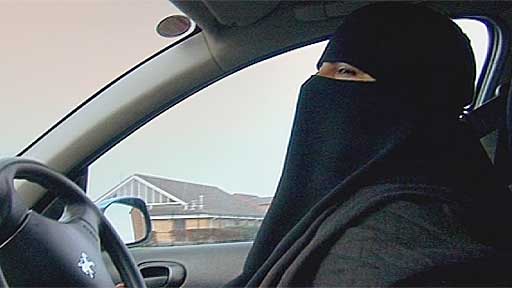
Saudi Arabia is the only country in the world where women are not allowed to drive. There is an irony – there is no law banning women from driving. They do not issue driver’s licenses to women, they arrest women seen driving, and they do not – officially – teach women to drive. Thank God for good fathers and brothers and husbands, who take their daughters, sisters and wives to isolated places and teach them, often for the good of the family in case of an emergency.
Saudi women drive in Europe, in the USA – they drive everywhere except in their own country. The government shows signs of wanting to allow women to drive (officially) but they seem hesitate to stir the wrath of the religious police who believe – based on nothing – that God forbids women to drive. Recently, the head of the Saudi religious police said there is nothing in Islam that forbids a woman to drive. What’s the hold-up guys?
This article is from AOL Auto News, where you can also see a video of a woman driving in Saudi Arabia with cars passing her and waving encouragement:
Saudi Arabian Women To Protest Driving Ban On Oct. 26
Saudi society is slowly inching toward more equality, but driving is still disallowed for women

When Farha was a young girl, about seven years old, her mother told her something that rocked her world: She said women could drive.
For Farha, a 24-year-old writer who has spent her entire life in Saudi Arabia, this was akin to a Western child learning the truth about Santa Claus. She’d only ever seen men behind the wheel in her country, where women are not permitted to drive. The revelation was slightly scandalous, a little bit funny, and totally paradigm-shifting.
It took another two years for Farha (who didn’t want to be identified with her last name due to the sensitivity of the issue in her home country) to decide she would, one day, learn how to drive a car. And, for good measure, she’d learn how to ride a bike. Two modes of transportation that have been banned to women and girls for most of Farha’s lifetime.
On Oct. 26, women in Saudi Arabia will engage in the third protest against the female driving ban by getting behind the wheel anyway. The protest won’t be widely attended, because the vast majority of women in Saudi Arabia don’t know how to drive. There are no driving schools in the Kingdom that cater to females, and state agencies will not issue a driver’s license to a woman.
“Since there is no justification for the Saudi government to prohibit adult women citizens who are capable of driving cars from doing so, we urge the state to provide appropriate means for women seeking insurance of permits and licenses to apply and obtain them,” a petition at the protestor’s web site reads. The web site has been blocked within Saudi Arabia, yet there are still a thousand or so names on the petition. The few women who are adept behind the wheel learned while living overseas, often in the U.S., Canada, or nearby Bahrain or Dubai.
In urban areas, women are chauffeured around by male relatives or paid drivers, or they pay for taxis. In rural areas, the driving ban generally isn’t enforced, and more women drive out of necessity. One woman who was recently videotaped disobeying the ban got support from her fellow (male) drivers, who passed by and gave her the thumbs up, a sign that society may be more willing to accept an eventual change.
Learning to drive
Farha tackled the task of learning to drive first by reading about the process. She edited a story on how to drive for her high school newspaper, and from that she felt she learned quite a bit. Then her father spent some time talking to her about how cars work, and the theoretical aspects of driving. He took her out for a few hours over the course of a few days, letting her drive around their neighborhood in the coastal city of Jeddah. But she never ventured onto the main roads.
She also learned the basics of riding a bicycle, but doesn’t consider herself adept at either skill. When the ban is lifted, she said she’ll sign up for classes at a real driving school.
“I always thought this ban would go away when I was 18,” she told AOL Autos. We connected with her through a publication where Farha wrote, under a pseudonym, about the driving ban. “And I’m still hoping it will be lifted when I am 26.”
“I always thought this ban would go away when I was 18,” Farha said. “And I’m still hoping it will be lifted when I am 26.”
Not driving makes life’s everyday movements difficult. Sidewalks aren’t available, so walking isn’t realistic. Farha’s father has mostly been responsible for driving her and her mother around, but five months ago he got into a car accident and broke his leg. He is currently unable to drive. Farha feels the burden of her father’s injury. If she could drive, she said, she could bring him to doctor’s appointments and help him get out of the house. Instead, the family is home-bound unless they pay someone to bring them places.
Farha has hired a part-time driver to take her to and from work. It costs about 2,000 to 3,000 Saudi riyals (or around $530 to $800) a month for a driver. That’s about the same amount that women make earning minimum wage in Saudi Arabia, prompting many women to just stay home.
“A lot of women don’t feel the incentive to work and hire a driver,” she said. “It doesn’t make any economic sense.”
Some women opt for the public bus system, but that makes women from conservative families feel nervous because it exposes them to strange men – the exact problem the country is trying to avoid by banning women drivers. Taxis run the same problem, putting females into cars with strange men. “It doesn’t make sense,” Farha said.
Farha is considering signing up for a karate class, but she’ll have to pay her driver for more hours or take a taxi to the classes. On top of the class fees, the price of getting to and from karate starts to seem like a silly amount of money, she said.
And she worries she’s spending too much money on herself. She could spend 30 riyals on a taxi each way, or she could donate that money to a family in need. Or spend that money sending school supplies to girls in other countries.
“It’s a difficult decision to make every time,” she said.
One unintended consequence of the rule strikes Farha as incredibly unsafe: Women often let their 13-year-old sons drive them around when they are out of other options. Farha’s observation was backed up by a U.S. intelligence research note made public by Wikileaks, which noted that these young drivers sometimes get into very serious accidents.
Weird, long history
Oddly enough, there isn’t any actual law in Saudi Arabia banning women from driving. In 1991, the late Grand Mufti of Saudi Arabia, Sheik Abdulaziz bin Baz issued a fatwa prohibiting women from driving. A fatwa is different from a government law, in that only followers of the religious leader who issues the fatwa are obliged to follow that law. But given the intertwined nature of Saudi Arabia’s government and its religious leaders, the fatwa took hold. The government agency in charge of issuing driver’s licenses will not issue one to a woman. Saudi Arabia’s court system relies heavily on fatwas from the Grand Mufti.
So, in essence, the religious order became a rule that everyone follows, even though it’s not enforced by the Saudi government. The government just makes it impossible for women to get drivers licenses, and if they catch women driving, they make them sign a pledge promising they won’t do it again.
Abdulaziz bin Baz said at the time that the ban would protect women, because allowing women to drive would put them out in society alone, leaving them to mix with men. If women were stranded by the side of the road due to a flat tire or car problem, they could end up being assaulted or raped by a man who came to help them, argue critics who still uphold the ban.
A reporter for the Christian Science Monitor recalled a 2012 conversation with a man in Saudi Arabia about what would happen if the ban was lifted. “What would happen if a woman got in a car accident, he asked? Then she would be forced to deal with the male driver of the other car, a stranger, with no oversight – a problematic situation in a country where male guardianship of women is deeply entrenched.”
Just last week, a Saudi cleric came under fire for claiming women were damaging their pelvises and causing birth defects by driving. Sheikh Saleh bin Saad al-Lohaidan argued women should put reason ahead of their hearts, because it “could have negative physiological impacts as functional and physiological medical studies show that it automatically affects the ovaries and pushes the pelvis upward.”
Saudi society is slowly inching toward more equality for women. Just this week, four women became attorneys. Earlier this year, women were allowed to work in retail establishments that sell underwear and bras, taking away the embarrassment for women who’d previously had to purchase these items from male salespeople.
Since around 2006, the Saudi government has been indicating it would consider lifting the driving ban if society deems it acceptable for women to drive. Diplomatic cables released by Wikileaks showed the U.S. government has been paying attention to this issue, and putting some pressure on the Saudis to change their ways.
Will of the people?
But it’s clear the Saudi government won’t make any controversial moves: “This has to do with the will of Saudi society,” said Saudi Justice Minister Muhammad Al-Issa in a TV interview in April, according to a translation by the non-profit group MEMRI. “If Saudi society, given its culture, wants women to drive, it’s fine. But if society has any reservation for whatever reason, that’s fine too.”
Farha said she’s holding out hope that the rules will change, as soon as possible. But the change will depend greatly on men’s attitudes.
“More men certainly support it now, but … they have their concerns,” she said. And “some are outright hostile to the idea.”
When she does get her license, Farha said she’d like to try driving a sports car. It doesn’t matter what kind, she just would like to try driving something fun. But she’d rather be able to walk or bike to work, even if she could drive.
“Cars feel suffocating inside,” she said. “But the whole idea is to lift this difficulty for women. I hope it happens soon.”
In sharing this story, and others, with our readers we hope you are inspired to Raise Your Hand for girls’ education, helping us spread the word on this crucial effort.
New Florida Law Bans Texting While Driving
From today’s Pensacola News Journal, where you can read the entire story by clicking here:
TALLAHASSSEE — Florida is joining 40 other states in the U.S. where it is illegal to text and drive.
The ban is one of more than two dozen laws passed by the Republican-controlled Legislature scheduled to kick in on Tuesday. Other new laws include one that gives citizens the right to speak at government meetings.
The prohibition on texting while driving comes after several years of trying by legislators. Previous attempts stalled in the face of House Republican opposition, with conservative members worried about government intrusion into people’s lives.
Some have called the law “watered down” since it is only a secondary offense to read or send a text, email or instant message on a smartphone while driving. That means police have to first stop drivers for another offense like an illegal turn.
Sen. Nancy Detert, R-Venice and the sponsor of the legislation, says it will still act a deterrent — especially among teenagers just starting to drive.
“My whole purpose in the law is just to be able to tell teenagers that texting while driving is against the law,” said Detert, who plans to visit a Sarasota County high school on Tuesday to point out the new ban. “I’m not sure how many of them are going to pull down a copy of the Florida statutes.”
The Department of Highway Safety and Motor Vehicles also plans to target teenage drivers to remind them about the ban. The agency is running a public service announcement in 69 high schools across the state on Tuesday and again on Oct. 15.
The Department of Transportation plans to remind drivers about the ban through its digital billboards along state highways.
Drivers who text take their eyes off the road for almost five seconds, according to the Federal Motor Carrier Safety Administration, which regulates the trucking industry. At 55 mph, a driver can cross the equivalent of a football field while not looking.
There were 256,443 reported crashes in Florida in 2012. In 4,841 of those crashes, a driver had been texting or otherwise using an “electronic communication device” while driving, according to a preliminary report from the Florida Department of Highway Safety and Motor Vehicles.
One Night in Hawali; Cops Book 995 “To Fight Chaos On the Roads”
KUWAIT: Traffic police in the area of Hawalli have set a record by booking 995 drivers and motorcycle riders in a one-day campaign to fight chaos on the roads. “A large team of traffic policemen was deployed in the area to check the extent of discipline and compliance with the law on the roads,” security sources told local daily Al-Rai. “The policemen detained 20 people and impounded their cars. Among them, there were five people who did not have a driving licence, seven who were utterly reckless in their driving, three who staged a race and five who did not have licences to ride their motorcycles,” the sources said. According to the figures he revealed, 23 cars and five motorbikes were impounded in the crackdown conducted on Friday.
Lesser violations included uninsured vehicles, tinted windows, not wearing seat belts and parking in areas for people with special needs, the sources said. Traffic officers in Kuwait have been actively engaged in relentless campaigns to restore order in a sector plagued by a high toll of accident fatalities, reckless driving and non-compliance with administrative procedures. Foreigners who repeatedly broke the law have been deported for endangering lives while citizens have been deprived of their vehicles or licences.
Abdul Fattah Al Ali, assistant undersecretary for traffic and the force behind the campaigns, who had come under attack, mainly from the opposition, for his strong approach towards foreign drivers who commit several traffic offences, said that the trend to end the chaos and impose road discipline would continue.
“I am not an abusive person, but I do apply the law and assume my responsibilities to save lives and protect people from reckless drivers,” he said. “The expatriates who do not respect the law should be sent home. We will deport the irresponsible expatriates who do not respect the laws of the country,” he said. “We have also extended the vehicle impounding period from two to four months and drivers can now be held for 48 hours for the sake of the investigation and the normal procedures.”
The crackdown led the authorities to discover that 20,000 forged driving licences had been issued since 2010. “We have withdrawn 7,000 forged licences, and we are working on tracking down and cancelling all the others,” Al-Ali has said.
He added that expatriates summoned to the traffic directorate should come forth and hand their licences, assuring them that there would be “no questions asked”. However, those who fail to show up to hand back the licences will face forgery charges and will be deported, he said.
Comment: 20,000 forged licenses??? 20,000???
Qatar Congestion Eases (FAIL)
This totally cracked me up; the Qatar Gulf Times publishes an article about how smoothly traffic flowed on the day the Indian schools opened, noting that Arab and Independent schools will open on succeeding days. They published this photo with the article:

Morning rush hour traffic on a Doha street yesterday. PICTURE: Najeer Feroke.
LLLOOOOOLLLLLLLLLLLLLLLL!
Kuwait Traffic Deaths Plunge from 50 to 19 Per Month
From the Kuwait Times, an awesome statistic. In just months, the Al-Ali states the traffic deaths per month have dropped from 50 to 19. That’s incredible:
Traffic chief criticizes ‘non-cooperative’ departments
KUWAIT: Maj Gen Abdulfattah Al-Ali has been credited for positive changes seen on roads around Kuwait ever since he assumed post as Undersecretary Assistant for Traffic Affairs at the Interior Ministry five months ago. The senior official recently said that he did not come up with anything new but merely made sure that the existing laws were enforced. Al-Ali was interviewed by Al-Qabas as he spoke of efforts which have helped reduce traffic violations by 30 percent, cut road deaths and eased traffic jams. “We still have a long way to go because traffic awareness does not happen overnight”, he said, “and there is a lot of work to do before we can reach a level of contentment”.
During the interview Al-Ali criticized several state departments who he accused of being ‘non-cooperative’ with proposals to address the traffic jam problem. “There are ministries who remain unwilling to take simple decisions that can help reduce traffic congestions”, Al-Ali said. He also criticized the Kuwait municipality for allowing contractors to build apartments without allocating enough parking space. He also indicated that efforts to license parking lots with a capacity of 120 vehicles are often rejected. On Tuesday Al-Qabas published figures that Al-Ali mentioned during the interview, including withdrawal of 4,000 driver’s licenses which were obtained through wasta, as well as reducing a monthly rate of issuing licenses from 7,000 to 1,200. The official credited extensive traffic campaigns for reducing the average road deaths from 50 to 19 per month.
The General Traffic Department in the Interior Ministry launched extensive campaigns last April and these have resulted in thousands of traffic tickets, millions of Kuwaiti dinars collected in fines, and the deportation of thousands of expatriate drivers, in addition to firmer penalties against Kuwaiti offenders. No timetable is set for the end of campaigns and Major General Al-Ali has repeatedly indicated that crackdowns will continue as part of the department’s efforts to reduce traffic jams, curb the number of road fatalities and fight traffic offenses. Al-Ali also spoke to Al-Rai daily who quoted his statements yesterday in which he reiterated that fines should be paid to avoid a travel ban and suspension of license.
According to the senior official, the Interior Ministry has so far managed to collect KD 38 million out of KD 41 million it is owed, and withdrew more than 7,000 out of nearly 20,000 forged licenses issued since 2010. Meanwhile, Al-Watan quoted an Interior Ministry source yesterday who blamed state departments for “failure of implementing the General Traffic Department’s plans to reduce traffic”. Speaking on the condition of anonymity, the source stated that unnamed state departments have been ignoring offers to change timings that the traffic departments have been proposing since 2005. Major General Al-Ali attended a meeting last week with officials from the Ministry of Education and the Civil Service Commission, but no consensus was reached to change schools timings ahead of the beginning of the academic year. —
I am an internet fraudsters and a terrorist (suicide bomber)???
Holy Smokes! The head of the FBI writing to me! Accusing me of internet fraud and terrorism (suicide bomber)! All I have to do is wire my service fee to Cletus in Nigeria and all will be well and my record will be cleared. Only $98.00, such a small, reasonable fee to prevent all this mayhem. (LOOOLLL!)
Scammers: Grammar! Usage! Craftsmanship! You can do so much better than this!
Anti-Terrorist and Monetary Crimes Division
Federal Bureau of Investigation
FBI Headquarters in Washington, D.C.
J. Edgar Hoover Building,
935 Pennsylvania Avenue, NW Washington, D.C. 20535-0001
Attention: Beneficiary
This is the final warning you will receive from me. This notice has been sent to
you several times but you ignored it.
I have warned you so many times and you decided to ignore my e-mails because you
believe we have not been instructed to get you arrested, if you fail comply this
time around, then we will first of all send a letter to the MAYOR of the city
where you reside and also instruct the bank to close your account until you
comply with our directives. Note that all your properties will be confiscated by
the Federal Bureau of Investigation. We would also send a letter to the
company/organization where you work and instruct them to issue you a “SACK
LETTER” because a suspect is not supposed to be working for the government or
any private organization.
From our investigations, we discovered that you were the person that forwarded
your identification to internet fraudsters in Nigeria and other countries when
they had a deal with you in regards to the transfer of some illegal funds into
your bank account which is valued at the sum of $10,500,000.00 only. Your ID
which we have in our database has been sent to all the crimes agencies in
America for them to upload you in their website as an internet fraudsters and a
terrorist (suicide bomber). I will also warn people to stop having any dealing
or friendly communication with you anymore. This would have been solved all this
while if you have gotten the NECESSARY TRANSFER DOCUMENT ENDORSED AND SEALED
legally.
I, ROBERT S. MUELLER III, Director of the Federal Bureau of Investigation (FBI)
wish to inform you that there is no more time left to waste because you have
been given enough grace, therefore you have been mandated to comply immediately
you read this e-mail if you don’t want to be arrested. As stated earlier, to
have the document endorsed and sealed without any delay, you must adhere to this
directives to avoid you from blaming yourself at last when we must have arrested
and sentenced you to life imprisonment. Note that all your properties will be
seized and bank account will be confiscated too.
However, I have decided to see how I can be of help to you because I will not be
happy to see you end up in jail and all your properties got confiscated because
your information was used to carry out fraudulent transactions. I called the
EFCC NIGERIA and they directed me to a qualified attorney who can help you get
the process done and when I called the atorney he told me that he will go to the
bank and sign the documents on your behalf and put his “SEAL” on those documents
at the sum of $98 service fee and I believe this process is cheaper for you. Be
informed that I pleaded on your behalf to the board of directors of this agency
to give you till 08/20/2013 to make the payment. Bear it in mind that this is
the only way that I can be able to help you at this juncture. But if you fail to
comply, you will find yourself in a severe field of dilemma.
You need to try as much as you can to send the money today because I have been
informed by the ARREST WARRANT ISSUANCE DEPARTMENT that the warrant of arrest
has been prepared against you and once is being signed by me as the FBI
DIRECTOR, then the arrest will be carried out if you fail to send the money
within the given deadline and we shall apply for litigation against you
immediately. Thereafter, you will appear before the ADMINISTRATIVE DISTRICT
COURT OF WASHINGTON D.C for terrorism, money laundering and drug trafficking
charges. I believe you know that it will be a shameful thing to you and your
entire family. Also it will be announced and published in all the local channels
and newspapers that you are wanted by the FBI. Therefore, you are advised to
make the payment for the signing of the documents immediately you read this
e-mail. Be warned, we are monitoring you from our satellite.
You will have to make the payment through western union money transfer with the
below information then Send the payment details to me as stated below.
NAME: UZOUKWU CLETUS
ADDRESS: LAGOS, NIGERIA
TEXT QUESTION: BETTER
ANSWER: BEST
AMOUNT: $98
SENDER’S FULL NAME:
SENDER’S FULL ADDRESS:
DIRECT PHONE NUMBER:
MTCN:
Do not hesitate to make the payment today with the above outlined information so
that the attorney will go to the paying bank and have all the necessary transfer
documents endorsed on your behalf as soon as you send the money. After all this
process is being carried out, then the transfer of your funds valued at
$10,500,000.00 only which should have been transferred to your bank account
before legally will now take place legitimately and hitchlessly.
Note: As you can see below, all the crimes agencies have been contacted on this
regard and we shall trace and arrest you if you disregard or ignore this
instructions. You have been given a grace till 08/20/2013 to make the payment
for the attorney to endorse the necessary transfer documents on your behalf and
put his “SEAL” on it.
Expecting your anticipated co-operation. You can also contact me here.
rssmusa@aol.com
Yours in service,
Robert S. Mueller III
FBI Director
CC: Canadian Police Association
CC: Central Intelligence Agency (CIA)
CC: GENERAL INTELLIGENCE DEPARTMENT (GID)
CC: Asia Pacific Group on Money Laundering (APG)
CC: Egmont Group
CC: FEDERAL BUREAU OF INVESTIGATION (FBI USA)
CC: European Bank for Reconstruction and Development (EBRD)
CC: Financial Action Task Force (FATF)
CC: International Monetary Fund (IMF)
CC: International Organization of Securities Commissions (IOSCO)
CC: International Banking Security Association (IBSA)
CC: International Air Transport Association (IATA)
CC: Institute de Formation Interbancaire (INSIG)
CC: World Customs Organization (WCO)
CC: Inter-American Development Bank (IADB)
CC: Offshore Group of Banking Supervisors (OGBS)
CC: WORLD CENTRAL BANK (WCB)
CC: NIGERIA POLICE FORCE (NPF)
CC: NORTH YORKSHIRE POLICE (UK)
CC: ECONOMIC FINANCIAL CRIME COMMISSION (EFCC)
Non-Essential State Department Personnel Ordered to Leave Yemen
I know, I know, it is not a funny headline. But here is the thing. People have egos. You might wonder why anyone would stay in the face of a threat so grave. It isn’t by coincidence that so many prisoners were busted out of prison – hundreds in Iraq, in Yemen, also if I remember correctly, in Pakistan.
These countries, under international understandings and agreements, provide security for one another’s embassies. Like WE provide security for the Saudi and the Yemeni and French diplomats in the United States. When a country suffers massive prison breaks, it is only prudent to wonder how well they might be able to protect international diplomats – it’s all security.
But – and here is why a very serious headline can make me laugh so early in the morning – who wants to be “non-essential?” I’ve lived through similar situations; people want to think themselves important – you would be surprised how many people will choose to stay, knowing the dangers, because they want to consider themselves “mission-essential”. 🙂

WASHINGTON — The State Department on Tuesday ordered non-essential personnel at the U.S. Embassy in Yemen to leave the country following the threat by al-Qaida that has triggered temporary shutdowns of 19 American diplomatic posts across the Middle East and Africa.
The department said in a travel warning that it had ordered the departure of non-emergency U.S. government personnel from Yemen “due to the continued potential for terrorist attacks” and said U.S. citizens in Yemen should leave immediately because of an “extremely high” security threat level.
“As staff levels at the Embassy are restricted, our ability to assist U.S. citizens in an emergency and provide routine consular services remains limited and may be further constrained by the fluid security situation,” the travel warning said.
The U.S. Embassy is located in Sanaa, the capital of Yemen.
The State Department on Sunday closed a total of 19 diplomatic posts until next Saturday. They include posts in Bangladesh and across North Africa and the Middle East as well as East Africa, including Madagascar, Burundi, Rwanda and Mauritius.
This is only an excerpt from AOL/Huffpost World News where you can read the rest of the story by clicking the blue type here.
FBI Operation Cross Country Rescues 105 Child Victims
From AOL News/Huffington Post:
The FBI has rescued 105 child sex-trafficking victims, FBI Assistant Director Ronald Hosko announced Monday.
The youngest of the rescued children was 9 years old, according to Reuters.
One underage victim told officials she became involved with prostitution when she was 11, according to CNN.
“Many times the children that are taken in in these types of criminal activities are children that are disaffected, they are from broken homes, they may be on the street themselves,” FBI Acting Executive Assistant Director Kevin Perkins said, according to the network. “They are really looking for a meal, they are looking for shelter, they are looking for someone to take care of them.”
Another victim, identified as “Alex,” told interviewers she became a prostitute at the age of 16, when she felt she had no other options to feed and clothe herself.
“At first it was terrifying,” Alex told interviewers, “and then you just kind of become numb to it. You put on a whole different attitude—like a different person. It wasn’t me. I know that. Nothing about it was me.”
The raids also resulted in the arrests of 150 “pimps” and other individuals, according to an FBI press release.
The rescues were the product of Operation Cross Country, a three-day nationwide initiative to aid victims of underage prostitution.
Operation Cross Country is a part of the Innocence Lost National Initiative, a joint program by the FBI, the Department of Justice and the National Center for Missing and Exploited Children created to fight child sex trafficking in the United States.
Since 2003, the Innocence Lost National Initiative has netted the rescue of more than 2,700 children.
Recent Comments
intlxpatr on Shampoo Ginger tigerbutterya0c5ff1d… on Shampoo Ginger intlxpatr on British Soldier Kidnapped, Esc… John on British Soldier Kidnapped, Esc… intlxpatr on British Soldier Kidnapped, Esc… Wikipedia Donate Button

Amazina


Early Voting in Florida


