Getting it Wrong
With all my years of living abroad, with all the experience I’ve had keeping my head down, observing, and trying to look and act like the locals, you’d think I’d get it right in my own country, right?
Wrong.
Well, most of the time I get it close enough. Sometimes I am overdressed at the Target or Home Depot. Rarely am I underdressed, but today I was. I looked around the church and I was one of very very few women in short sleeves. Almost every woman was wearing a jacket with either full length sleeves or 3/4 sleeves. Oops, I thought. When you are new, you especially need to try to look like those around you. It must be a calendar thing, not a temperature thing, because the temperatures today are back up in the 80’s; that is not long sleeve weather in my book, but it is in the Southern Lady Book.
One week I wore purple shoes – I love my purple shoes. I realized, too late, that they might go a lot of places, but probably not to our church. Oops.
Florida is particularly hard because there are the long-time Floridians and then those who are more newly arrived. I learned this the last time I lived in Florida, when, thanks be to God, I had an old Florida friend who told me all the inside scoop to help me pass. That was about 20 years ago, though, and some of the information has gotten a little outdated. The first rule, though, is not to look like a tourist. No little sundresses – and if you get a sunburn, you should have T-shirt marks on your arms so people will know you’ve been out fishing or working in the garden. No T-shirts with beachy sayings; T-shirts from the Breast Cancer Run or the Junior League Marketplace are OK.
My big dilemma right now has to do with legwear. I overheard some of the younger women in the locker room at aqua aerobics laughing about ‘old lady’ stockings, and I realized they meant nylon stockings. I haven’t worn them for a long time, except for once or twice in Seattle when I was back in the winter and had to go to funerals, but I don’t know what ladies are wearing in the place of nylon stockings. Nylon stockings in Qatar and Kuwait were pretty much irrelevant; when the temperatures are in the 120’s F, you simply don’t bother, wearing nylons is unthinkable.
You almost can’t even find nylon stockings in Florida, and a lot of the women seem to finesse the matter entirely by wearing pants, or not wearing stockings at all, which you can do in the summer, and of course you can wear pants in the winter, but what do you wear in the winter if you want to wear a skirt? It does get cold in Pensacola, and my legs are going to need some protection. I have a good supply of colored tights, which I have seen some younger women wearing, but this is one of those times when I feel like I have been gone from my own culture for too long and I am out of touch.
As I looked around the women at church today, I also had the funny idea that almost every woman in that church would do just fine in Qatar or Kuwait, they are covered to the elbow – and beyond – and they are covered to the knee, at the very least, with clothing that is mostly not too tight. Just as wearing long sleeves seems to be more cultural than weather-driven, covering your hair in the Islamic countries is more cultural than religious. Mohammed, the Prophet, told the women to ‘cover their adornments;’ it was the men who decided that hair is an adornment. My Saudi women friends told me that it originally meant ‘cover your breasts’. It’s cultural, not religious.
Still working out what works – and what doesn’t – in Pensacola. Praying that all my ‘oops’ are little ones.
A Day in Flomaton, Alabama
All we knew when we started the day was that we wanted to explore a little bit north of Pensacola, maybe even up into the part of Alabama that is across the state line to the north (as opposed to the part of Alabama that is across the state border to the west). We thought we were having a very boring day until we wandered into Flomaton, and AdventureMan discovered a railroad museum.
Flomaton is at the very top of the map:

The railroad museum was also an older house, now the museum, and an older 2 room cabin out back, moved from its original location. Here is a recreation of the old front parlor:


The Railroad Collection room:

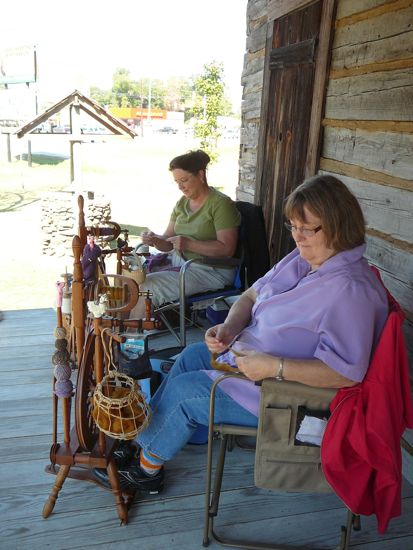
The log cabin was out back of the house, and had two women spinning wool into yarn on the porch, who very graciously allowed me to take their photo:
Inside the log cabin – we were told the couple who lived in this cabin had 12 children; they slept on the floor on pallets at night:


At the museum, there was a flyer about “Back to your hometown weekend” in Alabama, which just happened to be that very weekend. The town was full of returning people, there had been a parade and fireworks the night before (three former homecoming queens told me about this) and there was a street fair to celebrate Home Town Flomaton. 🙂
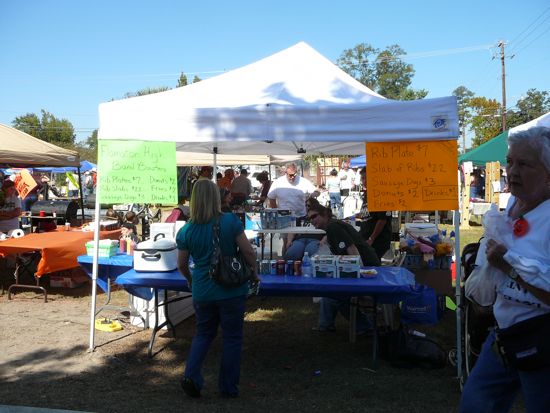
It was nearly lunchtime. We could smell Barbecue. The street fair was just a block away and there was parking right there, right by the fair. It was so much fun:

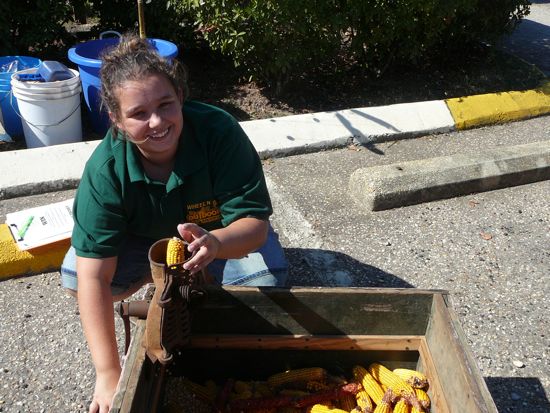
People were so kind and so helpful. This young woman was grinding corn, and we speculated that it must have been a great modern invention, and a real time saver, when it was invented. A woman passing by said she remembers her own mother using the same machine; all the corn was then taken to be ground, and stored in large airtight bottles in a dark ‘keeping room’ with preserves and food to get them through the winter.

This band was playing blues, gospel and country music, and they were pretty good!



As we stood and watched the choir, another woman welcomed us, and told us we really needed to see the new library (it was gorgeous!) and if we hurried, we could catch the Raptor Show at Otter Point. A Raptor Show!


Inside, there was a butterfly house, and several displays of local natural life:

There was also a wonderful hiking trail out over the wetlands, well maintained and beautiful:

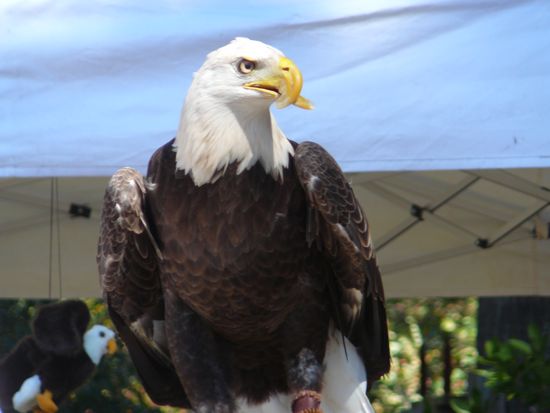
The Raptor presentation was very well done, informative and funny, on many levels. They had a large audience of children, who learned a lot, and also adults like us, who also learned a lot. The bald eagle’s beak is deformed by PCB’s, which, although banned back in the 1970’s, are still present in the environment in quantities high enough to cause birth deformities. The only reason they were able to adopt the bald eagle, a protected species, was that while he can hunt, he cannot tear his food apart with his malformed beak.
It was a day full of gracious hospitality. People were so kind to us, and went out of their way to make us feel welcome and to explain what we were looking at. For a day that started with no clear goal, we felt like we had been abundantly blessed by happening across this beautiful October day in Flomaton, Alabama.
Kid Watches Donated Turtle Get Crunched By Alligator
This is life being stranger than the movies, right here in Pensacola. As the general manager says – What are the chances?
A horrified 8-year-old boy watched as an alligator ate the pet turtle he’d just donated to a Panhandle aquarium.
Brenda Guthrie and her 8-year-old son Colton witnessed Tomalina’s death as the red-eared slider disappeared into the alligator’s jaws at the Gulfarium. When the two looked away from the sight, she said they could hear the crunching of the turtle’s shell.
“He was jumping up and down screaming,” Guthrie said of her son’s reaction. “He was shouting, ‘Oh no alligator, let it go.’ ”
Guthrie said that they decided to donate Tomalina after the turtle outgrew its aquarium. They chose the Gulfarium so that Colton could come back and visit the turtle.
They brought it there Thursday afternoon and watched as workers put the slider into the alligator exhibit, where two other red-eared sliders already live.
Gulfarium officials said that the alligator, Gracie, had just been hand-fed and that the gators normally don’t express interest in the turtles.
“It’s horrible for a little kid to have to see that,” said General Manager Don Abrams. “That’s not unusual to put sliders in the same exhibit. (The alligators) have never eaten a turtle in the exhibit before.
“It’s just Murphy’s law that nature would take over right then,” he added.
Pensacola Symphony a WOW!

When I was just out of university, and not making much money, my one big splurge was season tickets to the Seattle Symphony with my best friend, and oh, what joy we had with those tickets. We were there for the first ever performance of Hovaness’ And God Created Great Whales among other thrills.
AdventureMan and I love music. We have tried season tickets over the years, but at the end of a long work day, we found ourselves dragging, and when you are dragging, you can’t enjoy the performances so much. Many an opera we departed at the intermission, delighted to have seen the sets, but needing our sleep. Now, as ‘retired’ people (there are reasons for those quote marks), we can attend a symphony, stay awake, and have the great luxury of time.
Father Harry Hill at Christs Church told us about the Pensacola Symphony Orchestra at our first meeting, and just in time to call and order season tickets. We’ve been waiting months for our first concert, and what a thrill it was.
The theatre was packed. As a huge surprise to us, once the conductor, Peter Rubardt, entered, the orchestra went directly into a rousing rendition of ‘The Star Spangled Banner’ and all the audience sang lustily along! I’ve never seen this happen at a symphony before, but it was great fun, and gave us a chance to re-arrange our clothes. (The one downside is that the seats at the Saenger theatre are narrow, and I was sitting between two broad-shouldered men, it’s kind of like being in the middle seat in economy class for a three hour flight).
Rubart engages the audience right up front, explaining the context of the music (I was not familiar with any of the three pieces last night), foreshadowing curious elements in the pieces, spots to listen for – his explanations greatly increased my appreciation of the concert. These were the pieces:
Dvořák – Carnival Overture
BRAHMS – Double Concerto
SIBELIUS – Symphony No. 1
We discovered people we are sitting next to go to our church, and even though we are still new in Pensacola, we knew several people attending. That makes it more fun, too.
The orchestra is fine, amazing for a smaller town like Pensacola. Their timing and execution of the pieces seemed spot-on (I say that it ‘seemed’ because I am not an expert, but there were not obvious missed notes or timings, and some of the timings were deliberately not what I would expect). The audience is warm and enthusiastic.
There is plenty of parking. I know that doesn’t sound relevant, but in Seattle, parking could sometimes be a problem, especially when there is another event at the Seattle Center on the same evening. Finding a place to park and then walking to the theatre is easy and relaxing and you don’t have to do a big transition to enjoy the music.
The orchestra has a busy season coming up. You can learn more by visiting The Pensacola Symphony online. We can hardly wait for the next concert. 🙂
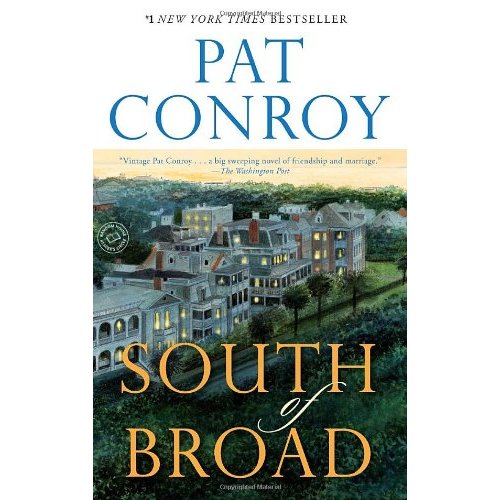
Pat Conroy and South of Broad
I don’t know where to start, telling you how much I like this book. I couldn’t wait for reading time to read it. It never flagged, every page kept me glued. I want you to read it, I want to be able to talk about it with you, but there is so much in this book that I don’t want to spoil it for you.
There are huge themes. There are some very bad people. There are some very good people. Sometimes the very good people can do very bad things, and sometimes the bad people can have some redeeming moments.
We meet the main character as he is about to begin his senior year in college. On the day we meet him, his life changes. Several new people come into his life. Two orphans. A beautiful sister and equally beautiful brother. A black football coach and his son. Three rich kids kicked out of the best private school in town for doing dope.
There are two ‘characters’ who are not people. One is the city of Charleston, SC, and there are entire paragraphs in this book which will make you fall in love, through Pat Conroy’s eyes, with this complicated, beautiful city. Another is Hurricane Hugo, which is as destructive as Charleston is beautiful.
South of Broad covers a time of tumult and change, and you see it through the eyes of of Conroy’s endearing characters. Times changes, society changes and change comes hard for those who stand to lose the most. Conroy deals with segregation, integration, child abuse, suicide, gay sex, economic discrimination, and psychiatric illness, a psycopathic criminal, who happens to be the father of two of this friends, and a hurricane.
For me, what was most engrossing was the complicated question of who is righteous? It’s what I want to talk about with you. Who is most like Jesus? (LOL, give examples) Which characters would you expect think themselves closest to God? Do you think they are? (Be prepared to defend your opinion.) What is a good parent? In this book, who do you think was the best parent?
If you decide to buy this book, please buy a copy with the Reader’s Guide in the back – an interview with Pat Conroy and questions that help you think about the book. I’d like to share with you a segment of the interview which I found so brightly illuminating:
. . . . I found the Parisians rarified, vigilant, hypercritical and fabulous. They had made themselves worthy of the great city they lived in. They oozed style and they ate like kings. . . . The Parisians seem special to both the world and themselves. Then it hit me: My God, they are like Charlestonians.
As I see it, you can take out Charlestonians and substitute Kuwaitis. Or New Yorkers. Or Romans. In fact, just about every society I have visited have their elite, who consider themselves rarified and special, and fight to keep themselves so.
So not only is the book dealing with spiritual righteousness, but also with themes of entitlement and deprivation, bullies and the bullied, parenting, self-fulfillment, and the very real and over-arching theme of friendship and the power of a close circle of friends.
I don’t want to tell you too much. I loved this book. I’m still thinking about it. I hope you’ll read it and think about it, too, and then come back and tell me what you’re thinking. 🙂
“Why Are Barns Painted Red?”
This is what I love about long road trips with AdventureMan. We have hours together in the car, and you just never know where the conversations will go.
We saw a lot of barns. Most of them are red.
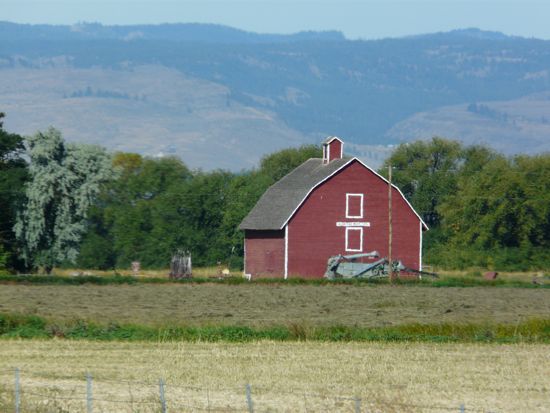
“Why are barns red?” AdventureMan asked. “Like we just accept that barns are red, when we are kids and we are told to draw a barn, we reach for the red crayon, why is that? Why red?”
So we looked it up at the next wireless stop and found the answer on Wiki answers:
Centuries ago, European farmers would seal the wood on their barns with an oil, often linseed oil — a tawny-colored oil derived from the seed of the flax plant. They would paint their barns with a linseed-oil mixture, often consisting of additions such as milk and lime. The combination produced a long-lasting paint that dried and hardened quickly. (Today, linseed oil is sold in most home-improvement stores as a wood sealant).
Now, where does the red come from?
In historically accurate terms, “barn red” is not the bright, fire-engine red that we often see today, but more of a burnt-orange red.
Farmers added ferrous oxide, otherwise known as rust, to the oil mixture. Rust was plentiful on farms and is a poison to many fungi, including mold and moss, which were known to grown on barns. These fungi would trap moisture in the wood, increasing decay.
Regardless of how the farmer tinted his paint, having a red barn became a fashionable thing. They were a sharp contrast to the traditional white farmhouse.
As European settlers crossed over to America, they brought with them the tradition of red barns. In the mid to late 1800s, as paints began to be produced with chemical pigments, red paint was the most inexpensive to buy. Red was the color of favor until whitewash became cheaper, at which point white barns began to spring up.
Today, the color of barns can vary, often depending on how the barns are used.
My dad and grandpa have been farmers their entire lives and they used to tease us kids that the barn was red because it was the most noticeable when the snow was falling sideways and you could barely see because of the sleet and hail.
Just How Emirati Do You Have to Be? (Mixed Marriages)
Thank you, Little Diamond, for sending the article from The National. I totally love this article, and hats off to it’s author, Sultan Al Qassemi.
Mixed marriages bring strength upon strength to the UAE
Sultan Al Qassemi
Not too long ago, I boarded a plane in Dubai bound for the United States. There were a number of Emirati families on board, some of whom I recognised and greeted. After a 14-hour direct flight, we descended from the plane and made our way to passport control.
One Emirati family walked towards the line for US citizens and, in my naivety, I almost told them they were standing in the wrong queue. I hesitated, correctly it turned out. They were American citizens and obliged to stand in the US citizens section.
Many people who hear this story immediately assume that the mother was a foreigner. Not only is that incorrect – the mother is a true-blue Emirati – but she also works in the UAE government.
In the past week, I was reminded of this by an article in The National relating to mixed parentage. The Grand Mufti of Dubai, Dr Ahmed al Haddad, made controversial comments questioning whether there should be restrictions on Emiratis marrying outside their nationality.
In truth,a substantial number of talented Emiratis have been born to mixed marriages, a point that Dr al Haddad’s comments did not seem to take into consideration. According to one person who was present at the panel discussion, Emiratis from mixed marriages may have “mixed loyalties”. So are they Emirati enough?
Well, let us take a look at some of these Emiratis to find out. Ali Mostafa, the director behind City of Life, is the product of a mixed marriage. City of Life, which depicts contemporary life in Dubai in a powerful and realistic fashion, has become an international ambassador for the UAE after opening in Australia and Canada with a screening scheduled in Washington DC. Is its director Emirati enough?
Omar Saif Ghobash and Yousef al Otaiba, the UAE ambassadors to Russia and the United States respectively, both have foreign-born mothers and yet they serve the UAE with as much attention and dedication as any other Emirati ambassador. I have written before about how Mr al Otaiba has worked tirelessly on behalf of the country, in particular on the nuclear 123 agreement with the United States. Mr Ghobash speaks six languages and was heavily involved in bringing New York University to the UAE’s capital. Are they Emirati enough?
Razan al Mubarak is also a product of a mixed marriage. Her late father, like Ambassador Ghobash’s, gave his life for the country. Ms al Mubarak, in her roles as assistant secretary general of the Environment Agency – Abu Dhabi and managing director of the Emirates Wildlife Society, is busy protecting the country’s wildlife on both land and sea. Is she Emirati enough?
At Abu Dhabi’s strategic investment arm Mubadala, the chief operations officer, Waleed al Mokarrab al Muhairi, also happens to be chairman of Yahsat, Advance Technology Investment Company and Cleveland Clinic Abu Dhabi. But perhaps most importantly, he is credited with being “one of the principal architects behind the Abu Dhabi 2030 Economic vision”. And yes, Mr al Mokarrab comes from a mixed family.
Wael Al Sayegh is a writer, poet, translator and founder of the consultancy firm Al Ghaf, which delivers “inter-cultural induction programmes to multinational organisations serving the region”. Mr Al Sayegh has spoken to many multinational corporations about UAE culture and offered a Dubai perspective to foreign news outlets, including the BBC, during recent high-profile criminal cases. Is he Emirati enough?
Sarah Shaw, an Emirati whose biological father is English, currently works at the General Secretariat of the Abu Dhabi Executive Council and is a huge supporter of Emiratisation. Is she Emirati enough?
Other Emiratis from mixed families who have made substantial contributions include the director general of the Dubai World Trade Centre, Helal Saeed al Marri, the film director Nawaf Janahi and the columnist Mishaal al Gergawi, among many others.
There are examples in my immediate circle of Emirati friends who genuinely care about this country, not despite one of their parents being foreign born but perhaps because of it.
Should the UAE, and specifically Dubai, known for being hospitable and welcoming to people of all ethnicities, backgrounds and cultures, make our very own citizens feel unwelcome?
The truth is the UAE is a richer country because of these individuals of mixed backgrounds. What we should concentrate on is strengthening the ties that people have to this great nation. I have previously suggested military service for Emirati high school graduates, cultural immersion and social volunteering as ways to build civic participation.
Frankly, it would be insulting to question the loyalty of Emiratis who are born to a foreign parent. It is also unfair, un-Islamic and ultimately in this case un-Emirati to generalise about people of any background. The Emirates is a vibrant country of many colours – only seeing a single shade excludes too many of its strengths.
(The author, Sultan Sooud Al Qassemi is a non-resident fellow at the Dubai School of Government)
The Edmonds Market

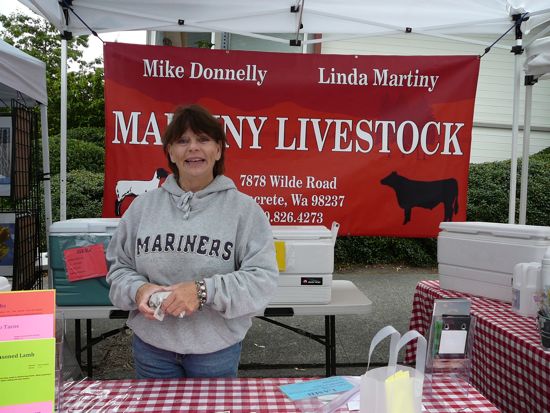
I made a quick round of the market very early, as I wanted flowers to welcome Mom back. First round – maple bars, flowers, farm grown zucinni and carrots, and some lovely farm-raised lamb chops for dinner.

Later, Mom told me about the wonderful Pear and Gorgonzola pizzas made at the market, and after some grocery shopping, I stopped by and ordered the Pear Gorgonzola and the Pizza Fresca, both vegetarian, and, woo hooo, very thin crusted, and baked right there on the street in a special oven they have created:
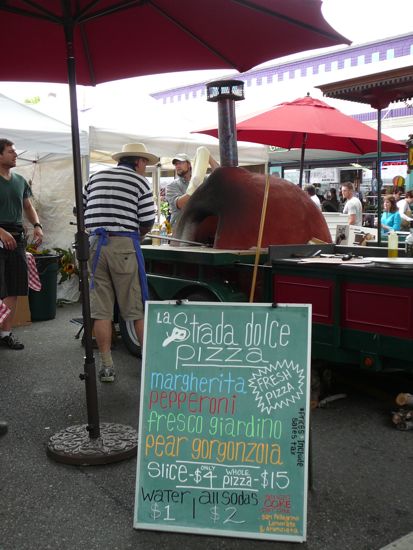
Mom was right. The pizzas were really, really good. We also had enough left over to freeze several slices to microwave on a night when she doesn’t feel like a heavy dinner.
While I was waiting for my pizzas, I visited my favorite soap maker. Last year, I asked for clove soap. AdventureMan and I fell in love with clove soap in Zanzibar, and we have used ever sliver and are yearning for more. This year, she had it! And more! Wonderful soaps, but these two are my favorites:

Sorry there is no photo of the gorgeous finished pizzas, but we gobbled them right up. 🙂
The Edmonds Bakery
I found it. I found the perfect cake. It was nothing like the cakes I auditioned. I found it in my hometown, Edmonds, Washington.
Edmonds is a quiet town, once the sun goes down. On weekends, it can be crowded and lively, and yesterday the sign telling cars lined up for the ferry said the wait would be about two hours. There is a movie theatre, which is small and homey, but plays first run films. It is playing Inception now. Edmonds is full of cool stores – a cheesemonger, several travel stores, home / kitchen wares, and is also home to Rick Steve’s Europe Through the Back Door.
My very first stop is The Edmonds Bakery.
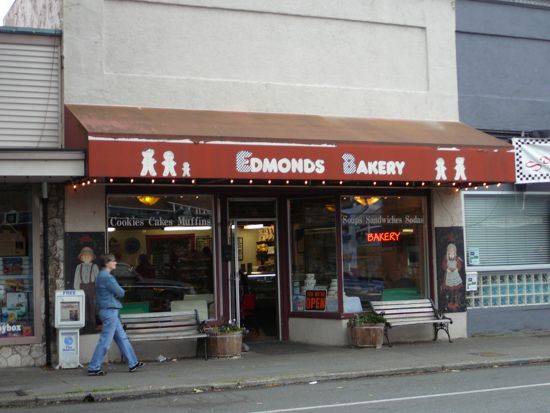
I love this place. I even love that it is closed on Sundays, even when other stores are open, even if it inconveniences me, I love it that they take their day of rest.
Mom is coming home from rehab today. No, no, I know how that sounds, but she has been recuperating from breaking her wrist. It is also her birthday tomorrow, so it is a double celebration, and Mom loves Maple Bars. The Edmonds Bakery makes great maple bars. In fact, they bake all kinds of wonderful treats, cinnamon rolls, pecan rolls, apple danish, snails, twists – every good thing baked with sugar and fat, they make it.


And there in the window, advertising wedding cakes, I found it. I found the perfect cake for September 6th, the blogging anniversary. It’s the one in back, the white one with the black filigree decor. Sort of Spanish looking – it’s the Arab influence. 🙂 I like them both, black and white, whoda thunk, but the filigree wins my heart.

There are booths and tables in the Edmonds Bakery, so if you are exploring Edmonds, or planning to take the ferry over to the Olympic Peninsula, take a minute to go in for a sweet and a cup of coffee. It’s the true taste of Edmonds. 🙂
By the way, if you go early, you will easily find a parking place, even on Saturdays. I went around 8:30, just as the Edmonds Market was cranking up. The weather was foggy and hazy and a mere 70° F / 20°, so take hoodie or a wrap with you. Seattle mornings can be refreshing (AdventureMan might call them chilly.)
The Devil’s Queen by Jeanne Kalogridis
“I need an ESCAPE!” I shouted to AdventureMan, at the end of my rope. So many things going on in my life that are out of my control, I just don’t want to deal with it any more, and I just want to run away and hide. “I’m going out to buy a BOOK!”
I found just the book, The Devil’s Queen by Jeanne Kalogridis.
I don’t know much about the late 1500’s in Europe, do you? At first, reading about this rich, spoiled little girl growing up in Florence, I felt a little impatient with her. All around her people are starving, and she hasn’t a clue. The plague strikes, and people are dying, but she survives. She starves, she suffers cold and fleas and is tossed by fate like a little cork on the water – all before she is 12 years old. Catherine de Medici learns early in life that she has no control over the forces of history and society swirling around her, over who she will love and who she will marry, even over whether she lives or dies. Surviving an attack on her family compound, held prisoner – alone – in nunneries until she is 12 years old – this girl’s life makes mine look peaceable!
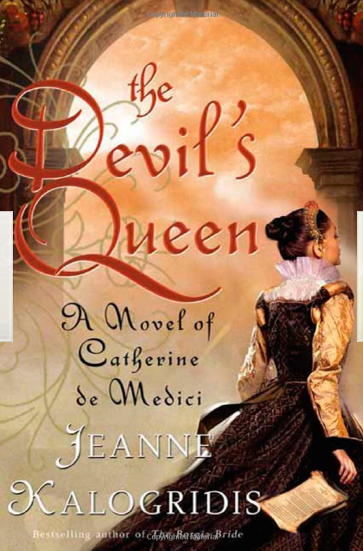
I’m feeling better already.
Kalogridis is no Phillipa Gregory, but she has done her research, and draws us in. By the time Pope Clement betrothes Catherine to Henri of France, we are totally hooked. Thirteen years old, and off to live in a strange country as the bride of a man she has never met. She studies French as quickly as possible, but then again – this is a very bright young woman, who has been trained – by life and by education – to survive.
One of the paragraphs made me laugh out loud – as Catherine enters France, she is aware that her very fashionable Italian clothing is very unfashionable in France. She also notes that all the French women are painfully thin, thin to the point of gauntness, and are whispering behind their hands at her more normal size.
Lack of thinness is the least of her problems. She marries Henri, who is also 14, scared, and not in love with her, and they are expected to consummate their marriage under the eye of the King. Oh aargh! Catherine is on a steep learning curve, mastering French culture, diplomacy, the art of war, court politics and fighting the threat of repudiation the only way she can – with utter humility.
What I like the most about this book is that I feel like I was there with her. She is very human, and also very royal. People who are royal have different ideas than the rest of us, and are entitled in ways we can never imagine. They have obligations we can’t imagine. She makes choices I would never make, and yet the author convinced me that given her circumstances, she does the best she can with the resources at hand.
I also like it that Catherine of Medici was a brilliant and educated woman who held her own in a world where the balance was definitely in favor of being a man, and women were greatly at a disadvantage. While she made some horrifying choices, she had her reasons. This is not a book for the faint hearted; it is very earthy and it feels like an accurate portrayal of the times.
As I read these books, I think, too, how little we appreciate how free women are these days, and how recent that freedom is. Being able to choose our own mates – this is very recent. Being able to inherit and to manage our own money – this is very recent. As I talk with my friends who live in the Arabian Gulf, where marriages can still be based on family alliances, maintaining wealth and power, and where divorce can still equal personal disaster, it no longer seems so alien to me – we have this in our own history. We used to marry by contract, and our husbands had full use of our wealth. We used to be judged by whether we could bear children, how many, how many were sons, and how well we managed our households. We used to die in childbirth, and many of our children didn’t survive their infancy.
If you are looking for a good escape, this is a book that will take you there. It will make your own troubles look small in comparison. This book will keep you engrossed, horrified, and entertained, and, in the end, you might learn something, as I did.
You can find The Devil’s Queen at Amazon.com for a mere $10.40 plus shipping, and yes, I own stock in Amazon.com. LOL, we invest in that which we believe to lasting and important, and books play a large role in our lives. 🙂
Recent Comments
ExpatAlien on What Country am I Living … intlxpatr on Yellowstone: Old Faithful to C… Michelle on Yellowstone: Old Faithful to C… Cathy on No Grown-Ups in Charge intlxpatr on Waiting for Snow Wikipedia Donate Button

Amazina


Early Voting in Florida


 Here There and Everywhere