The Shrink-Wrapped Pensacola Specialty Pawn Shop Car

How cool is this? We saw this car at Taco Rock and loved the optical illusion. We also loved it that the car makes a memorable impression; you’ll think of it and you will think Pensacola Specialty Pawn. It’s an effective ad if you remember who the ad is for 🙂
When we walked inside, AdventureMan asked “Whose car is that with the mobster paint job?” and a guy picking up a take-out order grinned and said it was his. He told us it was a shrink-wrap technique – it’s temporary! When you get tired of it and want to try something else, it just peels off and you put something else on. I think that is so totally cool.
“We’re Moving On . . . ” at Pensacola Beach
Night before last, night a man was shot at the beach at 3:45 in the morning. According to the (very sketchy) details in the Pensacola News Journal, he had been having a fight with his girlfriend, had finished his fight and was then shot three times by a man he doesn’t know and who has no relationship to him. (This is what I understand from reading the paper; it doesn’t make sense to me, but it also says alcohol was involved.)
I only knew about the shooting because I saw a tiny little article about it on the AOL Local news section. When I went to look at it, it was gone.
In this morning’s paper, there is this sketchy description, and then – in several different sections – local are people quoted as saying “we’re moving on.”
OK I get it. We’re a beach community, and this is peak tourist season as folks pour in here from all the Southern states and other countries to enjoy our fabulous sugar-white sand beaches.
Before the tourists had hit the beach, the crime scene tape was down and a beach excavator had carted off the bloody sand.
I do get it. I really do. The season is short and we don’t want to be known as a beautiful beach where people can get shot. It’s a marketing problem.
There is something, however, that sticks in my craw about the swiftness of the moving on, and the barely there press coverage. A man was killed. Maybe he had been drinking. Maybe he had a fight with his girlfriend. Maybe he was at the beach very late (or very early) in the morning. None of these things seem to have anything to do with him having been shot, other than maybe being in the wrong place at the wrong time and the wrong person had a gun and shot him. It seems a little disrespectful, to me, to move on quite so swiftly. A man lost his life. We don’t know why. Maybe we could just take a little time to figure out what happened and to acknowledge his loss?
Good Marketing Campaigns – What’s Your Favorite?
“Red Robin!” I sang, and AdventureMan responded “YUMMMMMMMM!” I had mentioned I am getting ready for my annual hamburger, and he became obsessed with Red Robin and we had to go there. I had the Whiskey River Chicken Salad. If I only have one hamburger a year, I want it closer to the 4th of July. It doesn’t have to make sense to you, but it matters to me. If you only eat one hamburger a year, it has to be a really good hamburger. 🙂
Back to the “YUMMMMMMM!”
Now, that’s good marketing. There is nothing not good about “YUMMMMMMM”
A campaign where you train people to think “YUMMMMM!” every time you hear Red Robin – brilliant!
We love good marketing. We love good ads; we notice good ads and good marketing techniques. We also scorn the bad ones.
Here’s what we love:
Mayhem – the entire series for Allstate, also the Allstate commercials when suddenly the black-guy-who-was-President-in-24’s voice comes out of an unlikely person.
Gecko/Geico – anytime you smile and you remember who the ad is for, that’s a good ad.
“What’s in Your Wallet?” Those hilarious Vikings make the point for Capitol One.
There are ads we like, but they don’t win our awards because while we like them, we can’t remember who they are for. If you can’t remember who an ad is for, the ad isn’t effective.
Campaigns I hate:
COX TV ads, all of them, just dumb.
Direct TV ads, just dumb.
Toilet Paper ads
As you can imagine, AdventureMan and I can have this conversation over a lot of long-distance drives and over a lot of meals.
So – what’s your favorite ad campaign? And why? Worst?
The Hummus Wars
WARNING! This article is long, and will take some time to read! Found it in the AOL/Huffpost:
I wish they would start a Muhammara war; I love the stuff!
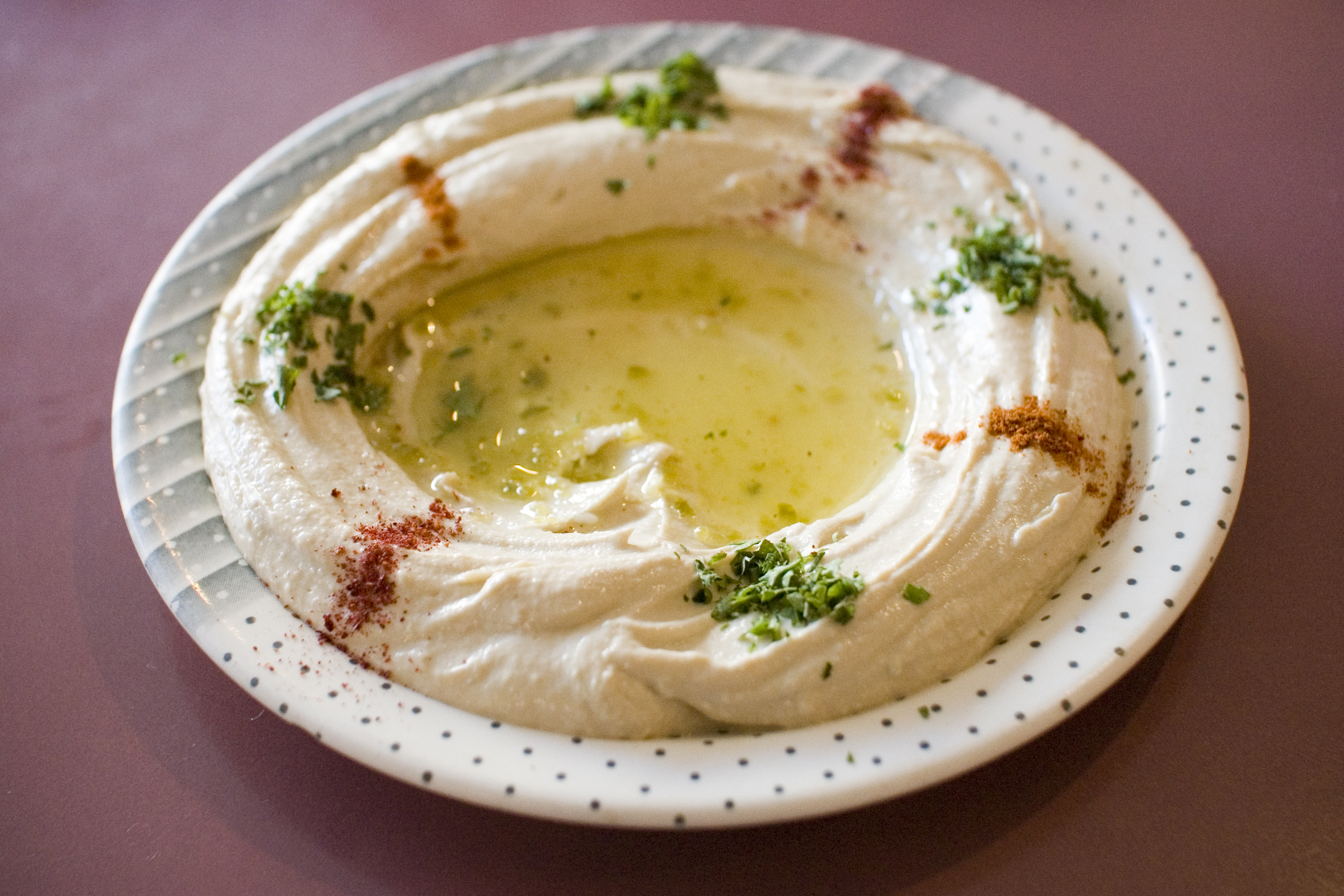

Sabra’s Quest To Push Hummus Mainstream Is About Much More Than Chickpeas
Posted: 06/10/2013 8:04 am EDT | Updated: 06/10/2013 5:01 pm EDT
Last winter, executives from the snack-food empire Frito-Lay invited Ronen Zohar, the Israeli head of America’s biggest hummus company, to watch the Super Bowl from a luxury suite at the Superdome in New Orleans.
For the snack-food industry, the Super Bowl amounts to something like Christmas and every kid’s birthday party wrapped into one, a day on which the average American consumes the caloric equivalent of 20 servings of Utz’s sour cream and onion dip. For Sabra, whose red-rimmed tubs of hummus are increasingly found inside American refrigerators, the stakes were particularly high.
“People are dipping in Super Bowl,” Zohar said. “They are looking for what to dip. Unfortunately they are dipping in the wrong product. But we try to change this. And we are doing okay.”
Around Sabra’s offices just outside New York City, employees are fond of saying that they hope to put their Middle Eastern chickpea dip “on every American table.” Though that mission is far from achieved, the company is off to an impressive start. In the last half-decade, overall sales of hummus have climbed sharply in the United States, with Sabra capturing about 60 percent of the market, according to the Chicago-based market research firm Information Resources, Inc. This spring, Sabra announced an $86 million dollar expansion of its Virginia factory, a move that the company says will create 140 jobs.
As the company’s leader during this stretch, Zohar has overseen a wide-ranging publicity effort aimed at simultaneously coaxing Americans to open their minds to a new taste of foreign origin while downplaying controversial aspects of the product’s provenance. In an age of significant spending by America’s pro-Israel lobby, even chickpeas have been swept into the debate over Israel’s occupation of Palestinian lands, its attitude toward its Arab neighbors and its reliance on American support.
Pro-Palestinian activists have in recent years organized boycotts of Sabra’s Israeli parent company, Strauss, for providing care packages to the Golani Brigade, a branch of the Israeli army that has allegedly committed human-rights abuses in the West Bank and Gaza. Groups in Lebanon have criticized Sabra for reaping the spoils of what they say is an intrinsically Lebanese dish. To quote a saying that has surfaced on the Internet, “First our land, then our hummus.”

Zohar, a blunt-spoken man of 52 who rose through the industry by persuading more Israelis to consume American corn products, dismisses both groups of critics as irrelevant. The Palestinian boycott amounts to mere “noise,” he says. As for the argument that hummus belongs to Lebanon: “I am very happy if Lebanon is going to fight about the hummus and not about anything else.”
Like any businessman, Zohar likes to talk about his product’s promising future. But hummus has a long history. And in the Middle East, history has a way of intruding upon the present, shaping questions about the legitimacy of what Sabra has been adding to the American table.
“The history of this food is that of the Middle East,” writes Claudia Roden, an Egyptian-Jewish cookbook author who has been credited with introducing Middle Eastern food to the West. “Dishes carry the triumphs and glories, the defeats, the loves and sorrows of the past.”
HUMMUS WARS
No one knows for sure how far back the history of hummus goes, but traces of chickpea, the key ingredient, have turned up in Middle Eastern archeological sitesdating to 7,500 B.C. In his bestselling book, Guns, Germs, And Steel, the anthropologist Jared Diamond identifies the chickpea as one of several hardy, nutrition-packed food crops that grew in the Fertile Crescent and enabled its people to develop agriculture and, in turn, cities, armies, systems of taxation and governments.
As civilization spread outward, chickpeas did, too, becoming garbanzos in Spain and chana in India. In the Middle East, they were boiled, mashed and mixed with the sesame paste known as tahini, becoming “hummus bi tahini,” more commonly known as hummus.
In recent years, the growing popularity of hummus has made the dip an object of controversy. Sabra instigated one of the fights at a publicity event in New York in 2007, where it served several hundred pounds of hummus on a plate the size of an above-ground swimming pool, prompting its executives to boast that they had produced the largest dish of hummus in the history of the world.
A year later, an Israeli competitor, Osem, responded by serving 881 pounds of hummus at an outdoor market in Jerusalem. The event took place on Israeli Independence day, or as Palestinians call it, Al Nachbar, The Disaster. A Guinness representative was there to document the victory.
Lebanon entered the fray about a year after that, doubling Osem’s record at a cook-off in Beirut. The chefs, who had been convened by a pair of Lebanese business associations, used spices to decorate what was now the world’s largest hummus plate with a picture of the Lebanese flag. While they were at it, they also broke Israel’s record for the largest bowl of of tabouli, a bulgur and parsley dish. According to The Daily Star of Lebanon, the groups that organized the event had a more grandiose goal than merely notching a volume record: They hoped to promote the idea that the Lebanese had invented both tabouli and hummus.
In the months after that feat, Lebanon and Israel traded shots, with Lebanon delivering what has so far proved the victorious blow, serving 23,042 pounds of chickpea dip at a weekend-long gathering in 2010. On the eve of the event, Ramzi Nadim Shwaryi, a Lebanese TV chef and one of the festival’s coordinators, told the Lebanese press that he and his allies were in it for Lebanon’s honor.
“We will stand together against this industrial and cultural violation and defend our economy, civilization and Lebanese heritage,” he said.
At about the same time the hummus wars were playing out in Lebanon, a group of Palestinian-sympathizers in the United States tried to call attention to Israel’s military activities in the West Bank and Gaza by pressing for boycotts of two Israeli-owned hummus companies — Sabra, and one of its larger competitors, Tribe.
The boycotters identified themselves as supporters of a broader movement called Boycott, Divest and Sanctions. Launched by Palestinian activists in 2005 following failed peace negotiations, the organization aimed to apply economic pressure on the Israeli government to end its 46-year occupation of Palestinian territories.
A YouTube video produced by protesters in Philadelphia who were part of the movement caught the attention of student activists at Princeton and DePaul universities in 2010. They tried to persuade their schools’ dining services to stop offering Sabra. Although they didn’t succeed, activists in the movement are still trying to garner support for their anti-Sabra efforts.
Still, Zohar does not seem particularly distressed by the potential implications for Sabra’s sales.
“The protesters make noise, but they make noise to themselves,” he said. “It doesn’t have any influence on our business.”
THE HUMMUS RELIGION
As the protests played out in the margins, Sabra aimed its product at the American mainstream. It deployed volunteers in trucks to hand out free samples of hummus in cities around the country, and expanded its product line to include more familiar dips, including guacamole and salsa.
It launched a national television ad campaign, exhorting people to “taste the Mediterranean,” and moved its staff in 2011 from an old industrial building across the street from a Queens cemetery to a sleek suburban office park, where the company heads plotted the conquest of the American marketplace in conference rooms named after touristy, exotic destinations like Madagascar and Morocco. (Perhaps unsurprisingly, none of the rooms were named after Lebanon or Israel.)
At the root of Sabra’s success was an influx of corporate money and resources. Strauss, an Israeli snack-food giant, bought half of Sabra in 2005, and Frito-Lay, the snack-food division of Pepsico, entered a joint-partnership agreement with Strauss in 2008. Zohar worked closely with the Frito-Lay people, who had scored a big victory for a foreign dip in the early ’90s, when Tostito’s salsa beat Heinz Ketchup to becomeAmerica’s best-selling condiment.
With Frito-Lay and Strauss’ investments, Sabra built its Virginia factory, where it developed flavors intended to appeal to the average American consumer: Spinach and Artichoke, Pesto, Buffalo Style. As Arabs and Israelis quarreled over the origins of hummus, Sabra was putting out a product that bore about as much resemblance to the authentic dish as a Domino’s BBQ Meat Lovers pie does to a genuine Italian pizza.
In Israel, meanwhile, yet another hummus debate was raging, and although it was the least overtly political of the controversies, it was no less capable of provoking feelings of hostility and anger. As the celebrated British-Israeli chef and food writer Yotam Ottolenghi and his Palestinian-born business partner and co-author Sami Tamimi wrote in the 2102 cookbook Jerusalem, “Jews in particular, and even more specifically Jewish men, never tire of arguments about the absolute, the only and only, the most fantastic hummusia.”
A hummusia is the Israeli equivalent of a New York pizza parlor, a cheap establishment that usually serves only hummus and a few other dishes. But the debates about hummusias are more intense than even the most impassioned pizza threads on Yelp.
“The hummusia fetish is so powerful that even the best of friends may easily turn against each other if they suddenly find themselves in opposite hummus camps,” Ottolenghi and Tamimi wrote. The arguments “can carry on for hours,” they noted, with the debaters delving into the minutia of whether hummus is better served warm or at room temperature, smooth or chunky, topped with fava beans or cumin and paprika, or nothing at all.
In a letter to The New York Times at the height of the hummus wars, Israeli food writer Janna Gur went even further, calling Israel’s fascination with hummus a “religion.” She noted that the most treasured restaurants are invariably owned by Arabs, a phenomenon she traced to the early Zionist settlers who arrived in the Holy Land determined to put the customs of the Diaspora behind them, while embracing a new identity in the Levant. They traded Yiddish for Hebrew, yeshivas for plowshares, and matzoh balls and tsimmis for falafel balls and hummus. “This love affair, that has been going on for decades, shows no signs of dying,” Gur wrote.
Last summer, while traveling in Israel, I visited as many of the hummusias as I could, hoping to come to my own conclusions about the craze. I was joined in this mission by my father, who moved from Israel to New York in the early 1970s and has griped about the quality of America’s hummus offerings ever since. Like many Israelis, he looks down not just on corporate hummus brands like Sabra and Tribe, but also on local shops that package their own hummus in take-out containers. As far as he is concerned, the religion of hummus forbids packaging of any kind.
In the Middle East, hummus is served fresh from the pot, on a big communal plate dripped with olive oil and sprinkled with paprika and cumin. The plate has to be big enough and flat enough so that you can comfortably wipe up the hummus with a pita, an activity that my father refers to as “swiping.” He insists that hummus should have a subtle, earthy flavor, and disdains spicy hummus, lemony hummus, hummus with chipotles, hummus with artichoke, hummus with basil, sun-dried tomato or spinach, and most of all, the dip referred to as “black bean hummus.”
As he has pointed out many times, hummus is the Arabic word for chickpea; by definition, hummus made of black beans isn’t hummus.
In Israel, my father and I ate at Abu Hassan, a bare-tabled hummus den in the seaside town of Jaffa, where the staff starts serving early in the morning and shuts down the shop after the pot runs out, often in the early afternoon. We wandered the narrow streets of Jerusalem’s Old City, past the pilgrims crowding into the Church of the Holy Sepulcher, until we reached a tiny hummus shrine adorned with black-and-white pictures of people sharing a meal at the shop sometime in the 1930s.
One day we drove to a city in Palestine’s West Bank known for its tahina factories and uprisings. By law, Israelis are forbidden from entering the Palestinian territories, except to travel to the Jewish settlements, but we felt that no hummus pilgrimage would be complete without a trip to Nablus.
At the checkpoint, an Arab cab driver pulled over and said he hoped, for our own sake, that we wouldn’t enter the city in our Israeli rental car. We thanked him and drove past the Israeli guards, through the rounded hills studded with olive trees. My father grew quiet. When he’d first traveled those hills, in 1967, he was in a tank, pushing forward toward the Jordan River as thousands of Palestinian refugees streamed down the sides of the road. The Six-Day War had broken out and the Israeli army had conquered the Palestinian villages.
After a while we reached the outskirts of Nablus, parked and made our way through the maze-like casbah, to a dim, windowless hummus restaurant with electrical wires hanging from the ceiling. A teenage boy strolled into the room with an unmarked bottle of olive oil, tipping it onto people’s plates. After a few minutes of “swiping,” my father announced that this was the best hummus he’d tasted on the trip — though he also remarked that the excitement of entering forbidden territory had enhanced the flavor. By that point I knew that my hummus palate wasn’t refined enough to discern the subtle differences between the various hummusia offerings, but I liked them all better than any hummus I’d ever had in America.
Toward the end of our stay, we traveled to the fertile hills of the Galilee region, where an Arab chef named Husam Abbas had been garnering praise for his gourmet take on Arab food, defying a number of Israeli assumptions about Palestinian culture.
Abbas, who has been described as a leading figure of Israel’s Slow Food movement, broke ground at his chain of high-end restaurants by showing Israelis that Arab cuisine isn’t just hummus and kebab. His specialties include a spicy watermelon salad with diced mustard stems and stuffed summer squash in a tomato bisque, and he uses produce grown in fields that his family has tended, by his account, for 1,700 years.
Abbas met us by the side of the road in his pickup truck and led us into his fields. A gruff man with a leathery face, he tramped down the leafy aisles with a cigarette lodged in his mouth, stooping to gather purple-tipped string beans, young cantaloupes that looked more like cucumbers, several kinds of summer squash, and beautifully misshapen heirloom tomatoes.
Later, in the dining room of one of his restaurants, he explained that when the growing season ends, he and his children go into the hills to gather wild herbs with names like “olesh” and “aqab” and “hobeza.” The herbs grow only locally and only in the winter.
“But because hummus is dry, it can be used throughout the year,” he said.
When I asked how he accounted for the dip’s popularity, he kept his answer short: “Low cost, high calorie.” He seemed a little annoyed at the need to deliver this dictum.
FLAVOR HOUSE
As Sabra strives to make its chickpea dip as popular as bagels, burritos and other foreign-born fixtures of the American diet, it is employing a flavor palette that would test the limits of acceptability in the Middle East.
One recent day, Mary Dawn Wright, Sabra’s executive chef, stood before an array of hummus containers at the company’s Virginia factory, discussing these techniques. She popped open a tub labeled Asian Fusion.
“Israelis would never ever think it’s considered to be hummus,” she admitted.
A glistening spoonful of some brightly colored carrot and ginger mixture distinguished the dip from anything you’d find in a hummusia. Sabra collaborates with outside “flavor houses,” whose scientists also help develop classic American products like Doritos, she explained.
Asian Fusion is just one of more than a dozen flavors that Sabra has invented in its effort to convert more Americans to hummus, and Wright was almost certainly correct in her frank assessment of what Israelis might think of them. Even Zohar didn’t bother to feign enthusiasm for Sabra’s Buffalo Style flavor. “I detest it,” he said.
But for Zohar, and presumably for the rest of Sabra’s executives, personal feelings about the flavors are as irrelevant as hummus’ place of origin. What matters are the cravings of the average American consumer, and Zohar seems to think that no American is beyond the company’s reach.
At the Superbowl, he noticed that many of the tailgaters were eating Louisiana fare — “all kinds of crabs and shrimps, whatever it is.”
He didn’t see any hummus containers amid the jambalaya and gumbo.
“Maybe in New Orleans they are eating hummus not as much as people in New York are eating hummus,” he said recently. “But give us two years. They are trying it, and when they try it they become a lover.”
Mobile Botanical Garden Plant Sale: Plantasia
AdventureMan and I had one of the sweetest days of the year – nice cool sunny morning, heading into a warm afternoon as we got up early to head over to the Mobile Botanical Gardens Annual Plant Sale.
They do a GREAT job. Starting with publicity, ads in the Pensacola News Journal and information sent out to all the regional gardening clubs and extension centers raising the level of awareness and creating a buzz. Everyone wants to go.
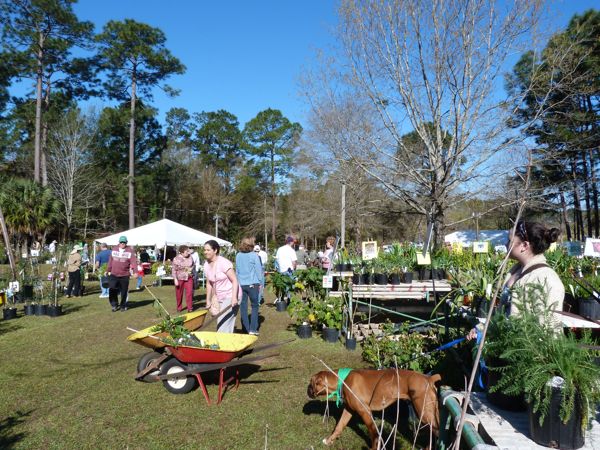
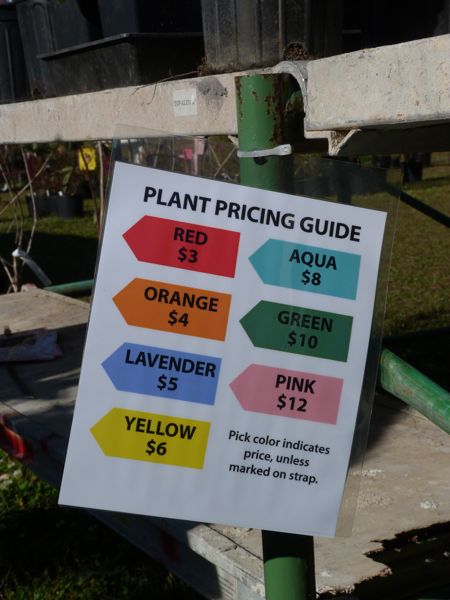
You get there, and parking is well organized and handy to the sales area. Signage is great – ENTER HERE! EXIT ONLY! PERRENIALS! ROSES! SHADE PLANTS! TREES! And great signs telling you how each plant is color coded and you know immediately what the price is:
Lots and lots of healthy looking plants. We knew what we wanted and found it quickly, except for the ones that were already sold out. Check-out was friendly – and fast. There was an exit strategy; people with large purchases could leave plants, drive into a pick up zone and have them loaded up. It was an amazingly efficient and well-run operation. Perfect weather, great selection of healthy plants, well-organized and efficient – it doesn’t get much better.
Well done, Mobile.
Fresh Market Opens In Pensacola
People have been excited ever since the announcement was made that Fresh Markets was opening a store in Pensacola. Although it is one of the smaller Fresh Markets, if there is anything carried by Fresh Market that is not in Pensacola, and you want it, they can bring it in for you. 🙂
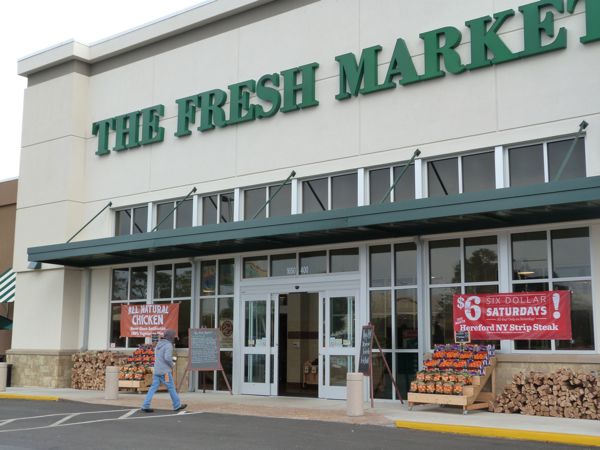

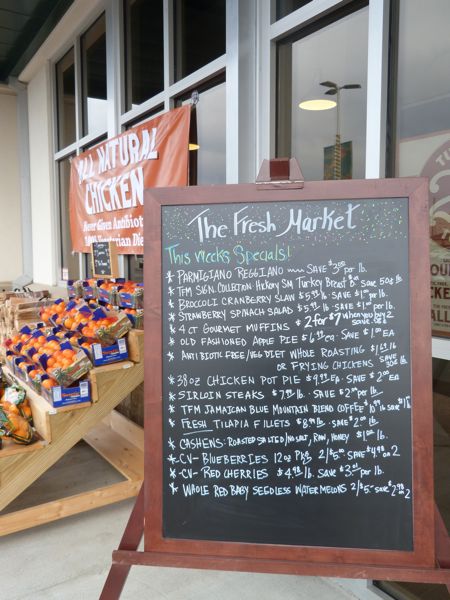
It’s a wonderful shopping experience. Think about it – we live like kings, better than the nobility of medieval Europe. We have indoor plumbing (if you’ve ever had to use an outhouse in a cold country like Alaska, you will have a greater appreciation for indoor plumbing all your life), we have hot water, we have heat and air conditioning, we have more than enough clothing for any season. We live so high on the hog as to be wasteful and oblivious to our own wastefulness. Oops, I digress.
We have access to abundant fresh food. Even without Fresh Market, we have markets with clean, fresh vegetables, fresh sanitary meats and poultry, and goods in – and out – of season.
What is the height of luxury? Service. Beautiful displays. People who know their product and talk about it lovingly. It’s kind of like Disney does groceries; it’s a lot of fantasy, and probably a level of goods that goes beyond need into just-a-little-over-the-top, but isn’t it the nature of being a human to be looking for something novel and just a little better than the product you loved last week?
Fresh Market is a little like the Food Market at Herrod’s or Selfridges in London, all these little boutique-y spaces, with people who seem to love what they are doing and are happy to be of service. Publix does it well; Fresh Market takes it to a whole new level.
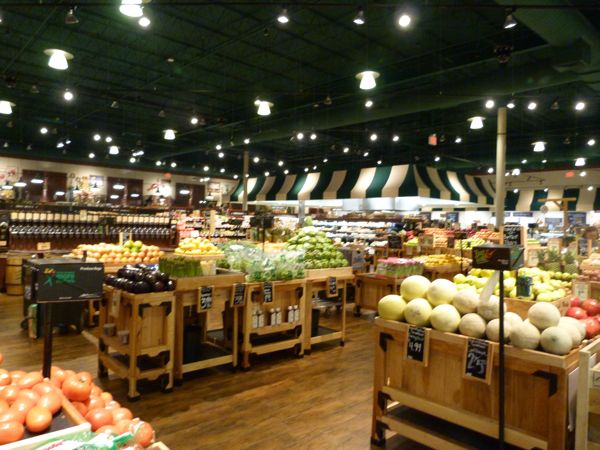
The Flower Market:

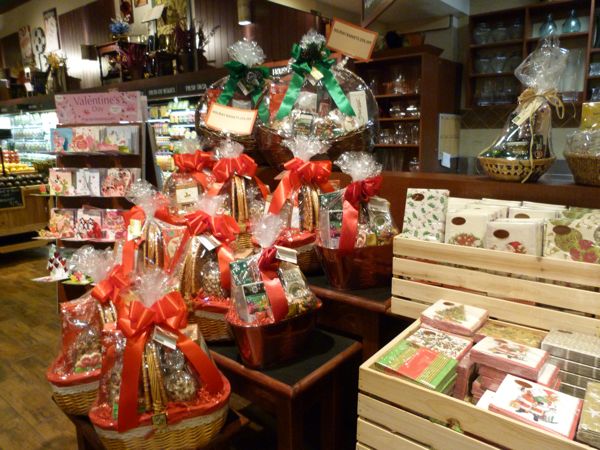
Gift Baskets:
Fresh Veg Displays (artichokes!)

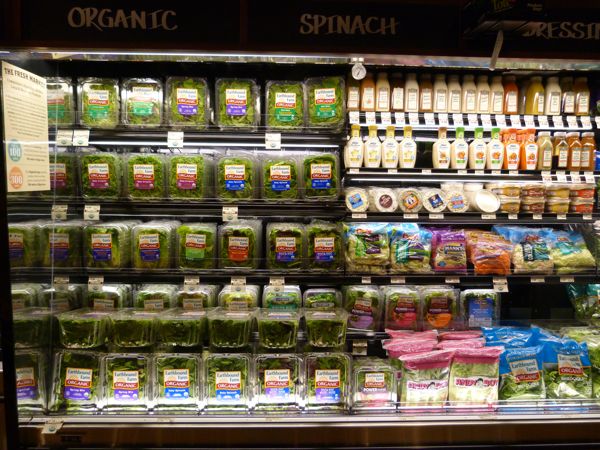
What catches the eyes:


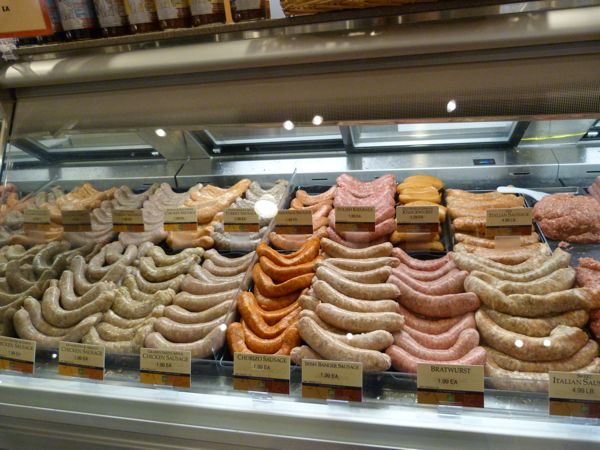
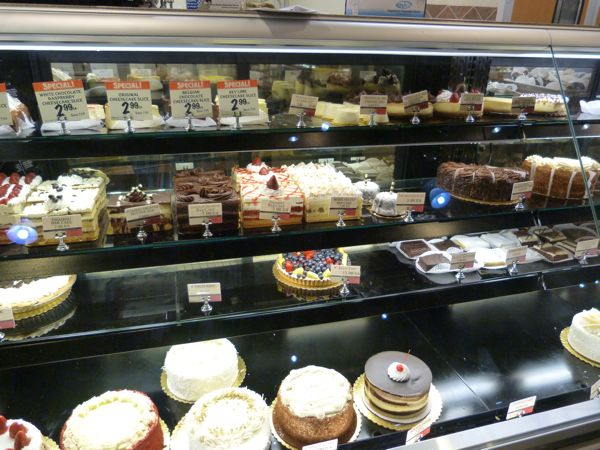
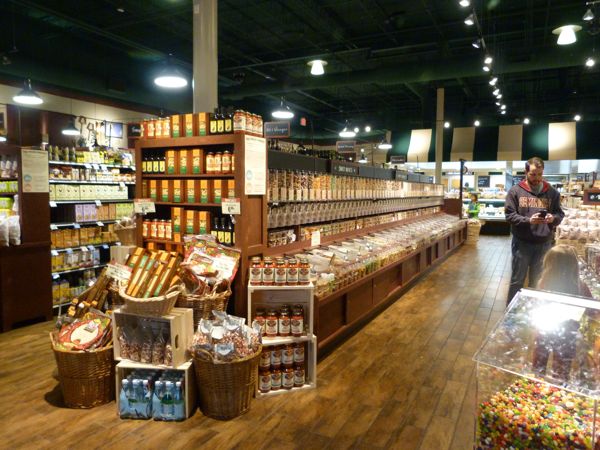
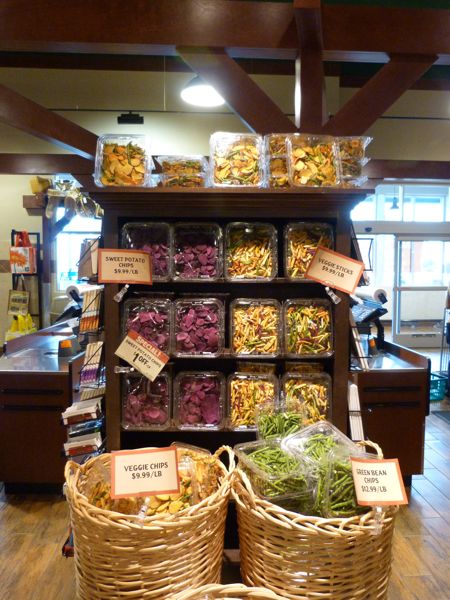
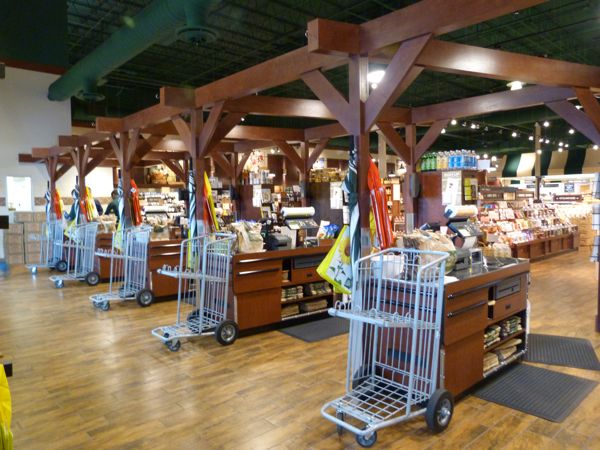
There is a very large section dedicated to quick foods – sandwiches made to order, prepared soups, salads, pizzas, cheeses, cold cuts, and deli items with lots of salads. We particularly loved the seafood display, and AdventureMan was mesmerized by the dessert selections.
All in all, Fresh Market makes grocery shopping less of a chore and more of a little vacation. For the best experience, get there on a week-day, or at opening – 0900 – on the week-end, so you don’t have to fight for parking in a crowded parking lot shared with the new Marshall’s, Ulta, Stein Mart, etc.
Food Trends for 2013
Found this on AOL News/Kitchen Daily.com
FOOD TRENDS FOR 201
KITCHEN DAILY 11/25/12
The Sterling-Rice Group recently announced its predictions for 2013’s top ten food trends. The list was compiled by the group’s culinary council, which is made up of chefs, restaurateurs and foodies, and it included the following:
Sour Foods -Tart and bitter flavors, such as fermented cherry juice and vinegars will take the stage.
Healthy Dining Out – Chefs will work behind the scenes to make your meals healthier by using ingredients like brown rice and vegetable stock.
Asian Comfort Foods – Thai, Vietnamese and Korean flavors will work their way into traditional American menu items.
Vegetables as Main Dishes – Veggies will take over entrées–options such as cauliflower steaks and squash noodles are becoming more common.
Kid-Friendly Versions of Adult Foods – Kids’ menus will focus less on hot dogs and grilled cheese and more on fruits, grains and authentic Asian flavors.
Local Artisans – American artisan shops will become destinations for foodies that used to travel to Europe for exotic flavors.
Individualized Servings – Menus will offer singular servings for perfectly-sized meals.
Savory Fruit – Chefs will be less interested in sugary tastes than in adding savory touches to their recipes.
All-Inclusive Menus – No diner will be left behind as restaurants offer options to accommodate all eaters.
Popcorn – Popcorn will be the snack of 2013–it will pop up in all types of food!
Discover Relaxing Riyadh
I still get ads from Jazeera airlines, although I no longer live in Kuwait and have asked them for three years to take my name off their mailing list. I have unsuccessfully unsubscribed like fifteen times; now I just have it all sent to spam.
But today, as I was looking over the spam to be sure I wasn’t emptying my box of anything important, I saw this:
Discover Relaxing Riyadh – استمتع بعطلتك في الرياض

LOL – Relaxing Riyadh. A group of the ad guys must have been rolling on the floor when they created that one . . . Or maybe they meant that apart from the spine-tingling traffic, there isn’t a whole lot going on in Riyadh, especially on the social scene . . .
The Customer from Hell at Target
Me. Today I was the customer from hell at Target.
I like Target. I like it that you can find just about anything you need there. I usually look for a deal, or a good price on things, but when I just need something, I just go buy it at Target. I also like their ad campaign, it’s a little camp but very colorful and always has cool products featured.
So today I went in for hair color stuff. I found it, but then I also found a display containing packages of two together, and it costs a lot less. It says Buy Two for Less!
Yes! Yes! I am buying two! I always buy at least two so I don’t have to go shopping that often; holdover from my days of buying six months worth when I was living in Kuwait and Qatar. It doesn’t go bad, and you have it when you need it.
None of the cellophaned two-packs have the color I need, so I take the ones I need and the two pack to the cashier, and I explain I want the special “Buy Two and Save” price, and she says “Whoa! That’s beyond me!” and sends me to the customer service counter.
At the customer service counter they explain to me that this is a special deal to encourage customers to buy more than one; they buy two and get a special deal. I agree with them, and isn’t this great, I want to buy two! Well no, they explain, Target pays a different price for the package than for the singles, so they can’t sell the singles two for the same price as the two bundled together.
Wait. These are the exact same product. EXACT. Except that these two wrapped in cellophane are 2 for $11.99, and the two exact same product I want to buy are priced at $7.99 EACH. So I am supposed to pay $5 MORE to buy two single ones? Something is not right with this picture. I ask to see a supervisor.
I am quiet and mannerly. I have a secret weapon – it is called pleasant persistence. They keep explaining to me that I can’t buy what I want at the special price and I just smile at them and politely explain how it doesn’t make sense. They are telling me in their explanations to “PLEASE GO AWAY!” and I am smiling and politely telling them in my own way that I am not going anywhere, and I want my product at the two-for price.

Finally, the supervisor says to sell it to me at the two-for price. As she is ringing it up, the customer service rep says “this happens all the time, not with hair products but with all kinds of products when we have the bundle price and the single price.” I suggest she mentions it to management, and that it costs a lot in time and in customer frustration and customer service frustration, and she says “it wouldn’t help.”
I still like Target. I imagine there are a lot of customers who give up and walk away. Not me. It doesn’t make sense to me to pay $5 more for something that they WANT you to buy two of . . .
Recent Comments
ExpatAlien on What Country am I Living … intlxpatr on Yellowstone: Old Faithful to C… Michelle on Yellowstone: Old Faithful to C… Cathy on No Grown-Ups in Charge intlxpatr on Waiting for Snow Wikipedia Donate Button

Amazina


Early Voting in Florida


 Here There and Everywhere