‘Lost Boy’ Casts Vote for Independence
I found this today on NPR News and it delights me for a number of reasons. For one thing, I didn’t know David Eggars (you remember him from Zeitoun) had helped with the writing of ‘What Is The What?’. Second, who knew that any of these kids would survive? Survive, write a book, thrive, go back to the Sudan, give to the country – and vote. Every now and then in this sad world you hear a good story. This is one.
January 10, 2011
During Sudan’s civil war, in which some 2 million people died, Valentino Achak Deng fled to Ethiopia on foot. Separated from his family for 17 years, Deng is one of Sudan’s so-called Lost Boys, children who were orphaned or separated from their families during the brutal war.
Now, voting is under way in Southern Sudan in a referendum that is expected to split Africa’s largest country. Among those voting this week are the Lost Boys, including Deng, whose life became a best-selling novel in America and who has returned to his homeland to build a school.
After a peace agreement between north and south, Deng returned to Juba, the capital of Southern Sudan, in 2006. He says when he got there, the place was still a wreck.
“On some of these roads, you could see old war tanks. On some of these roads, in some neighborhoods you could see the bones and skulls of dead people,” he recalls now, driving around Juba.
Now, as Southern Sudan appears headed for independence, Deng is optimistic — and Juba looks a lot better. Paved roads, now lined with hotels and restaurants, arrived for the first time in 2007.
Juba is a booming city, one of incredible contrast: Barefoot women selling piles of gravel by the side of the road sit next to a Toyota dealership.
Peace is spurring investment and consumer demand. Juba’s growth is driven by Southern Sudan’s oil revenue as well aid from foreign governments and nongovernmental organizations.
Deng grew up in a tiny village called Marial Bai. In the 1980s, northern bombers and Arab militias came.
“They bombed Marial Bai, destroyed it, killed everything, burned crops and livestock,” he says.
Deng was there when the fighting came. He says he “ran away with the rest.” He was 9 years old.
Deng joined thousands of Lost Boys, who spent months trekking across Sudan to refugee camps in Ethiopia. His experience is captured in What Is the What, a novel by Dave Eggers, which reads like a modern-day story of Job.
The boys, some naked, march across an unforgiving landscape, facing Arab horsemen, bombing raids, lions and crocodiles.
Deng eventually resettled in the U.S., where he attended college and was mentored and sponsored by ordinary Americans.
In 2007, he returned to start a high school in Marial Bai, where there was none.
“We have 250 students. Our annual budget now stands at about $200,000 because the school is free,” he says.
The school is funded by Deng’s private foundation. He says most donations come from Americans touched by his story and the plight of Southern Sudan.
Deng, now 32, has just cast his vote for independence. He says that for a Sudanese child of war, his life’s journey is almost inconceivable.
“I never imagined I would be the person I am right now,” he says.
Aung San Suu Kyi Released
Halleluja!
 YANGON, Myanmar (Nov. 13) — Myanmar’s military government freed its archrival, democracy leader Aung San Suu Kyi, on Saturday after her latest term of detention expired. Several thousand jubilant supporters streamed to her residence.
(You can read the entire story on AOL News
Kuwait 1990
Thank you, Little Diamond, for spreading the news. This should be an amazing program.
From the Al Jazeera site:
On August 2, 1990, the Iraqi army invaded the emirate of Kuwait, which Saddam Hussein, the then Iraqi president, had declared Iraq’s 19th province.
The occupation of Kuwait may have only lasted seven months, yet the memory of it remains strong, not least in the minds of the children of that conflict.
At the end of the school year of 1990, students in an international school in Kuwait said their final farewells as they headed off for the summer holidays. Many of them would never meet again.
Al Jazeera’s Nashwa Nasreldin was one of those whose family was forced to relocate following the invasion.
Twenty years on, she returns to Kuwait, the country of her birth, along with a group of her classmates as they organise a reunion to find out what happened to their friends – and their school – during the war that separated them.
Kuwait: The class of 1990 can be seen from Monday, August 2, 2010 at the following times GMT: Monday: 1900; Tuesday: 0600; Wednesday: 0300; Thursday: 1400; Friday: 0600; Saturday: 1900; Sunday: 0300.
Panhandle Politicians
One of the things I liked best about living in Kuwait was the lively press. When the press has freedom – and freedom is always relative – people have to be more careful about what they do. Here, on a daily basis, the Pensacola News Journal has a crime section where they run crime news AND they list the daily felony arrests – who, what and where. I love it that they name names.
When I opened the paper this week, I thought I was back in Kuwait. There is a race for an open seat in the House of Representatives, and one candidate has just been arrested for trafficking drugs. Another candidate and his wife were videotaped sneaking out and stealing their opponent’s campaign signs. LLLOOOLLL. This is hilarious:
People think there are such huge differences between our countries. . . and yet we breed the same politicians, the religious fundamentalists, the ‘get-rich-quicks-by-lining-my-pockets’ kind of guys, the developers . . . it’s almost as if when you run for office, there has to be something wrong with you. It’s a sad day for democracy when these are our candidates. What a difference technology is making – it can help keep us honest.
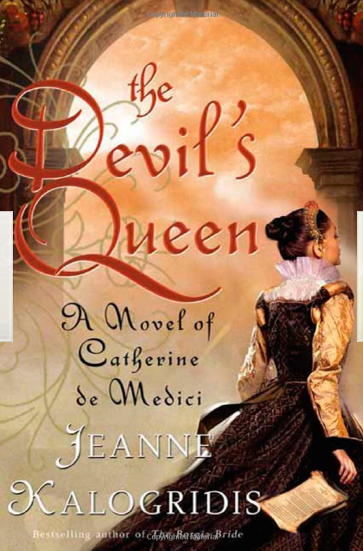
The Devil’s Queen by Jeanne Kalogridis
“I need an ESCAPE!” I shouted to AdventureMan, at the end of my rope. So many things going on in my life that are out of my control, I just don’t want to deal with it any more, and I just want to run away and hide. “I’m going out to buy a BOOK!”
I found just the book, The Devil’s Queen by Jeanne Kalogridis.
I don’t know much about the late 1500’s in Europe, do you? At first, reading about this rich, spoiled little girl growing up in Florence, I felt a little impatient with her. All around her people are starving, and she hasn’t a clue. The plague strikes, and people are dying, but she survives. She starves, she suffers cold and fleas and is tossed by fate like a little cork on the water – all before she is 12 years old. Catherine de Medici learns early in life that she has no control over the forces of history and society swirling around her, over who she will love and who she will marry, even over whether she lives or dies. Surviving an attack on her family compound, held prisoner – alone – in nunneries until she is 12 years old – this girl’s life makes mine look peaceable!
I’m feeling better already.
Kalogridis is no Phillipa Gregory, but she has done her research, and draws us in. By the time Pope Clement betrothes Catherine to Henri of France, we are totally hooked. Thirteen years old, and off to live in a strange country as the bride of a man she has never met. She studies French as quickly as possible, but then again – this is a very bright young woman, who has been trained – by life and by education – to survive.
One of the paragraphs made me laugh out loud – as Catherine enters France, she is aware that her very fashionable Italian clothing is very unfashionable in France. She also notes that all the French women are painfully thin, thin to the point of gauntness, and are whispering behind their hands at her more normal size.
Lack of thinness is the least of her problems. She marries Henri, who is also 14, scared, and not in love with her, and they are expected to consummate their marriage under the eye of the King. Oh aargh! Catherine is on a steep learning curve, mastering French culture, diplomacy, the art of war, court politics and fighting the threat of repudiation the only way she can – with utter humility.
What I like the most about this book is that I feel like I was there with her. She is very human, and also very royal. People who are royal have different ideas than the rest of us, and are entitled in ways we can never imagine. They have obligations we can’t imagine. She makes choices I would never make, and yet the author convinced me that given her circumstances, she does the best she can with the resources at hand.
I also like it that Catherine of Medici was a brilliant and educated woman who held her own in a world where the balance was definitely in favor of being a man, and women were greatly at a disadvantage. While she made some horrifying choices, she had her reasons. This is not a book for the faint hearted; it is very earthy and it feels like an accurate portrayal of the times.
As I read these books, I think, too, how little we appreciate how free women are these days, and how recent that freedom is. Being able to choose our own mates – this is very recent. Being able to inherit and to manage our own money – this is very recent. As I talk with my friends who live in the Arabian Gulf, where marriages can still be based on family alliances, maintaining wealth and power, and where divorce can still equal personal disaster, it no longer seems so alien to me – we have this in our own history. We used to marry by contract, and our husbands had full use of our wealth. We used to be judged by whether we could bear children, how many, how many were sons, and how well we managed our households. We used to die in childbirth, and many of our children didn’t survive their infancy.
If you are looking for a good escape, this is a book that will take you there. It will make your own troubles look small in comparison. This book will keep you engrossed, horrified, and entertained, and, in the end, you might learn something, as I did.
You can find The Devil’s Queen at Amazon.com for a mere $10.40 plus shipping, and yes, I own stock in Amazon.com. LOL, we invest in that which we believe to lasting and important, and books play a large role in our lives. 🙂
Woe to You!
We had a priest in Germany, a priest we dearly loved. He told us about how growing up, he would go to church with his Mom and after the sermon, she would say “I hope all those sinners were listening this morning!” AdventureMan and I sometimes say that after church, knowing full well that ‘those sinners’ is us.
It’s hard to read the scriptures for this morning, because Jesus is talking to religious people, and telling us that often the better we think we are, the farther we have to go.
Lord, clean us from the inside!
Matthew 23:13-26
13 ‘But woe to you, scribes and Pharisees, hypocrites! For you lock people out of the kingdom of heaven. For you do not go in yourselves, and when others are going in, you stop them.* 15Woe to you, scribes and Pharisees, hypocrites! For you cross sea and land to make a single convert, and you make the new convert twice as much a child of hell* as yourselves.
16 ‘Woe to you, blind guides, who say, “Whoever swears by the sanctuary is bound by nothing, but whoever swears by the gold of the sanctuary is bound by the oath.” 17You blind fools! For which is greater, the gold or the sanctuary that has made the gold sacred? 18And you say, “Whoever swears by the altar is bound by nothing, but whoever swears by the gift that is on the altar is bound by the oath.” 19How blind you are! For which is greater, the gift or the altar that makes the gift sacred? 20So whoever swears by the altar, swears by it and by everything on it; 21and whoever swears by the sanctuary, swears by it and by the one who dwells in it; 22and whoever swears by heaven, swears by the throne of God and by the one who is seated upon it.
23 ‘Woe to you, scribes and Pharisees, hypocrites! For you tithe mint, dill, and cummin, and have neglected the weightier matters of the law: justice and mercy and faith. It is these you ought to have practised without neglecting the others. 24You blind guides! You strain out a gnat but swallow a camel!
25 ‘Woe to you, scribes and Pharisees, hypocrites! For you clean the outside of the cup and of the plate, but inside they are full of greed and self-indulgence. 26You blind Pharisee! First clean the inside of the cup,* so that the outside also may become clean.
It’s Easy To Tell a Spy
This story interests me because I grew up in Cold War America, and when I was going to high school in Germany, we were surrounded by propaganda urging us always to be careful about anything we said, in public or even in private.
“It’s easy to tell a spy” the public service announcements would go, and show someone in a cafe, or in line waiting for a bus, or in the library giving out information on where her husband or father was deployed or when such and such a unit was going to the border, and a nefarious person writing it down to send back to their leaders, always the dreaded Russians.
They’re back. Did they ever go away?

NEW YORK -Nine people charged with operating as Russian spies entrenched in American suburbia were making long-shot bids to be released from jail pending trial Thursday, even as authorities scoured a Mediterranean island for an alleged co-conspirator who disappeared after he was granted bail.
Hearings were set for federal courts in Boston, New York and Alexandria, Va., for all but one of the 10 people arrested over the weekend by federal authorities in the United States.
Police searched airports, ports and yacht marinas Thursday to find an 11th person who was arrested in Cyprus but disappeared after a judge there freed him on $32,500 bail. The man, who had gone by the name Christopher Metsos, failed to show up Wednesday for a required meeting with police.
Authorities also examined surveillance video from crossing points on the war-divided island, fearing the suspect might have slipped into the breakaway north, a diplomatic no-man’s-land that’s recognized only by Turkey and has no extradition treaties.
In the U.S., Donald Heathfield and Tracey Foley, of Cambridge, Mass., were scheduled to appear Thursday at a federal court in Boston. Mikhail Semenko, Michael Zottoli and Patricia Mills, all of Arlington, Va., were set for a hearing before Magistrate Judge Theresa Buchanan in U.S. District Court in Alexandria. Defendants Richard Murphy, Cynthia Murphy, Juan Lazaro and Vicky Pelaez were to go before a judge in New York.
All have been charged with being foreign agents. Officials said the suspects will all eventually be transferred to New York, where the charges were filed.
Not due in court Thursday was Russian beauty Anna Chapman, the alleged spy whose heavy presence on the Internet and New York party scene has made her a tabloid sensation. She was previously ordered held without bail.
Eight of the suspects were accused by prosectuors of being foreign-born, husband-and-wife teams who were supposed to be Americanizing themselves and gradually developing ties to policymaking circles in the U.S.
Most were living under assumed identities, according to the FBI. Their true names and citizenship remain unknown, but several are suspected of being Russians by birth.
Heathfield claimed to be a Canadian but was using a birth certificate of a deceased Canadian boy, agents said in a court filing. His wife, Tracey Foley, purported to be from Canada, too, but investigators said they searched a family safe deposit box found photographs taken of her when she was in her 20s that had been developed by a Soviet film company.
Juan Lazaro had said he was born in Uraguay and was a citizen of Peru; he was secretly recorded by the FBI talking about a childhood in Siberia, according to court documents.
Two, Chapman and Mikhail Semenko, were Russians who didn’t attempt to hide their national origin, FBI agents said, but they had a similar mission: blend in, network and learn what they could.
Britain’s Foreign Secretary William Hague said the U.K. was investigating whether Foley might have used a forged British passport. The British spy agency MI5 is also investigating the extent to which Foley and Chapman had links to London, and will likely seek to find out whether either attempted to recruit British officials as informants.
There is evidence that at least some of the alleged agents had success cultivating contacts in the business, academic and political worlds.
The criminal complaint alleges that either Heathfield or Foley sent messages to Moscow talking about turnover at the CIA that was supposedly “received in private conversation” with a former congressional aide. Other messages described Heathfield establishing contact with a former high ranking U.S. national security official, and with a U.S. researcher who worked on bunker-busting nuclear warheads.
Moscow thanked Cynthia Murphy for having passed along “very useful” information about the global gold market and instructed her to strengthen ties with students and professors at Columbia University’s business school, where she was getting a degree, according to the FBI.
Among other things, the Russians wanted “detailed personal data and character traits w. preliminary conclusions about their potential to be recruited by Service,” according to one intercepted message.
Clare Lopez, senior fellow at the Center for Security Policy and a professor at the Centre for Counterintelligence and Security and a former operations officer for the CIA, said the alleged plotters might have someday been able to produce valuable information, if left in place long enough.
“Their value is not just in acquiring classified information,” she said. “There’s a lot that goes on that’s not simply stealing secrets and sending them back to Moscow.”
Metsos was charged with supplying funds to the other members of the ring.
Cypriot Justice Minister Loucas Louca on Thursday admitted that a judge’s decision to release him on bail “may have been mistaken” and said authorities were examining leads on his possible whereabouts.
“We have some information and we hope that we will arrest him soon,” Louca told reporters, without elaborating.
Cyprus has for decades been a hotbed of espionage intrigue as spies converge on the eastern Mediterranean island at the crossroads of Europe, Africa and Asia.
More recently, former CIA agent Harold Nicholson, in prison for espionage, recruited his 24-year-old son Nathaniel to meet with Russian agents in cities around the world from 2006 to 2008 to collect money owed by his former handlers. One of those cities was the Cypriot capital, Nicosia.
Heartache in Pensacola
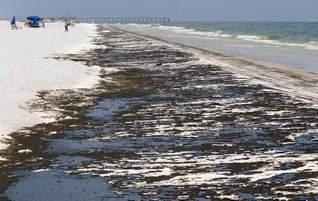
It’s a beautiful full moon over the oil soaked beaches of Pensacola. There is a beach advisory against children on the beach, against pregnant women or people with weak immune systems being on the beach. The surf is contaminated with oil and VOC, which is volatile organic compounds, whatever that means, it is bad.


Emir Pardons Saudis for Failed Coup Attempt in Qatar
Has there ever been any other mention of the failed coup attempt? Is the the one that was purported to have taken place late last summer?
Emir pardons Saudi prisoners
The Peninsula
Doha: In response to a desire by the Custodian of the Two Holy Mosques King Abdullah bin Abdulaziz of Saudi Arabia, the Emir H H Sheikh Hamad bin Khalifa Al Thani has issued an Emiri decision pardoning a number of Saudi nationals sentenced for their involvement in the failed coup attempt to destabilise security and stability in Qatar.
Those released left the country yesterday accompanying the Saudi Deputy Commander of the National Guard for Executive Affairs, Prince Mit’ib bin Abdulaziz, an official source at the Foreign Ministry said in a statement.
The Saudi king later expressed his profound appreciation of the Emir’s decision. The king praised the strong relations of kinship and good neighbourliness that bind the people of the two countries.
Recent Comments
ExpatAlien on What Country am I Living … intlxpatr on Yellowstone: Old Faithful to C… Michelle on Yellowstone: Old Faithful to C… Cathy on No Grown-Ups in Charge intlxpatr on Waiting for Snow Wikipedia Donate Button

Amazina


Early Voting in Florida


 Here There and Everywhere