Gulf History Source
Thank you, Kinan, for bringing this website to our attention yesterday on the Kuwait boats blog entry. I had been to the site before, while looking up information on Gulf Architecture. The blogger writes from a particularly Qatar point of view, but what he learns and documents applies greatly to all the countries along west side of the Arabian Gulf. And I am adding him to my blogroll.
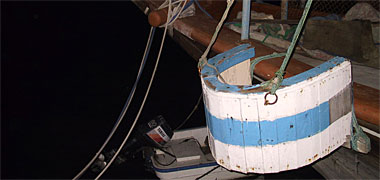
I love this man’s attention to detail. I have lifted a photo from his page on Arab Gulf boats. This is the typical toilet on the bigger old boats. It is called a zuli. Ugh!
The website is catnaps.org and if you click here, it will take you to his fascinating and fairly thorough website on Arabian Gulf boats. If you click here, you will find a long article on Gulf Architecture but he has an entirely separate entry for Islamic Architecture. It is not easy reading, but it is not something you will be tested on at the end of the hour, either. It’s just a great opportunity to learn more about a subject you never considered.
On his About page, the author tells us his name is John Lockerbie and:
In addition to working in the areas of project management, architecture, planning and urban design I have taught architecture, graphic design and presentation. I have had a wide scale of design involvement ranging from the exciting design worlds of crockery, cutlery, glass and napery, rising in scale through other aspects of graphic, interior, architectural and urban design to strategic planning. I have also been lucky enough to have worked in change management and primary education.
On a hot, lazy day when you have nothing better to do, you can spend a couple hours getting lost on his website, and come away a more knowledgable person for having done so.
Again, thank you Kinan, for a truly GREAT weblink.
No Accounting for Taste
My Mother once joked that the definition of good taste was someone whose taste agreed with your own. Her house is all smooth, modern, elegant lines, while mine is all old, antique and semi-antique. She has clean lines and clear surfaces, and I am guessing that to her, my decor is cluttered. (Not that she criticizes me.) We just have different tastes.
My husband and I also have different tastes. Often, his eye will alight on something, say like a Masai shield 7 feet long, and he will say “wouldn’t that be great in our house?” and my response is “yes! In your den!” He calls his den The Adventure Man Museum, and says that the only thing the Tarek Rejab has on him is that they have had a couple more decades of collecting. But he is still working on it!
He LOVES these trees. He keeps threatening to buy a couple for our yards back home. I mention little things like shipping expenses. . . . or maybe he is pulling my leg – ya think?
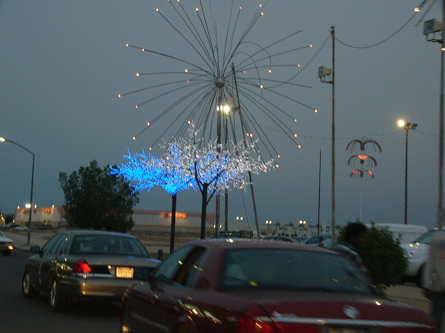

So far, we agree that they look great in context. I am not so sure they would do so sell in a rainy climate.
And this is what I love:
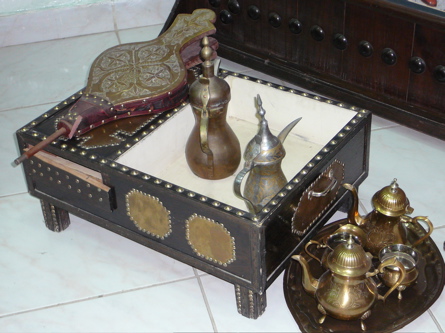
You used to find these everywhere in the Gulf, even in the cities you would find them in the diwaniyyas. This is the only one I have seen since I came to Kuwait, and it is in a museum. I remember being out in the beit-as-shar in the desert (for my non-Arabic speaking friends: tents, literally, House of Hair because the tenting was woven of goat and camel hair.) I remember the sound of the metal clanging as the coffee was ground in the morter, I remember the smell of the wood fire when the coffee was brewing, and I remember the coffee being poured through branches that kept (some of) the grounds out. I miss that ceremony; I miss the sounds and smells and taste, because out in the desert coffee tastes different. It wasn’t that long ago – but I never see them anymore.
Do you?
Souk Mubarakiyya Art Fun
It’s no secret. I love the Souk Mubarakiyya, and I love all the handicrafts shops, the jewelry shops (it’s no sin! It’s also a handicraft!) and the food stalls. I even love the fish market, and the dark, seedy shisha place that looks like it is out of some bad movie.
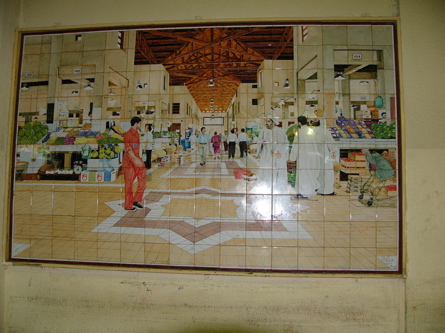
Here is one of my favorite pieces of public art in the market. Not because it’s good, it isn’t. but it is a lot of fun. When you take guests to the souk, you can position one of your guests in front of the woman, and it looks like he/she is part of the market scene.

Magical Droplets says she is inspired, and has grabbed her camera to start shooting.
It’s summer. Not a lot going on . . . so here is my challenge to you, Kuwait Bloggers. Grap your camera. Show us the beauty you see, the beauty of your community, show us the beauty of Kuwait, even in the scorching, crispy heat of a Kuwait summer.
And please come back here and tell us when you’ve posted, so my non-Kuwaiti readers can also click through to take a look at what you see. Keep your camera handy – you never know when a perfect photo will come up.
Kuwait Beauty (2)
Public art in the Souk Mubarakiyya parking:

Mubarakiyya Market:
The Marina Crescent:
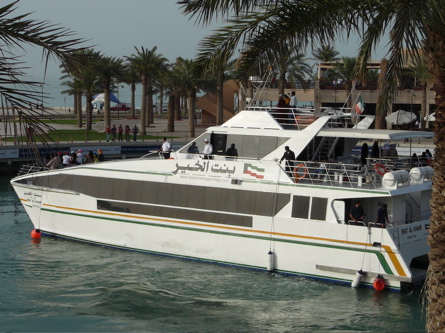
Kuwait Beauty
“If you but have the eyes to see . . .”
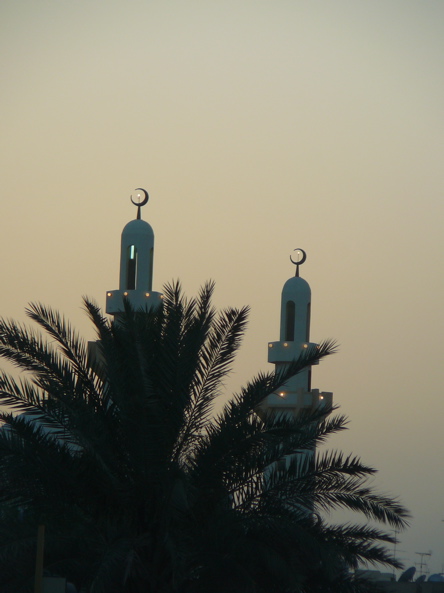
There is great beauty in Kuwait. Here is the spire of a mosque I found in Hawalli when I got lost. (Yes, people look at me like I am out of my mind when I stop and take photos of these things they see everyday.)
Here is detail from the spire:
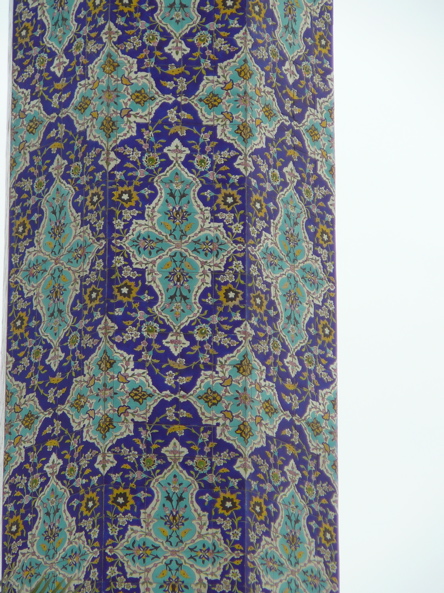
Here is an old-fashioned meshrabiyya window at the home standing over the Tarek Rajab Museum. Who can believe that such a museum treasure is open to the public for free, thanks to the graciousness of a private family, who sees the beauty in the Gulf Heritage, collects and preserves it.

Here is the globe near the entrance to Kuwait University, reminding us always that we are all connected in this world:

Dusk is my favorite time in Kuwait – the glare of the sun softens, and the colors glow:
Power Stations in Kuwait
I love public art. My little village in the US holds an annual Arts Festival, and part of the proceeds from this highly successful festival goes to fund public art. You can see some examples here: Public Art – October
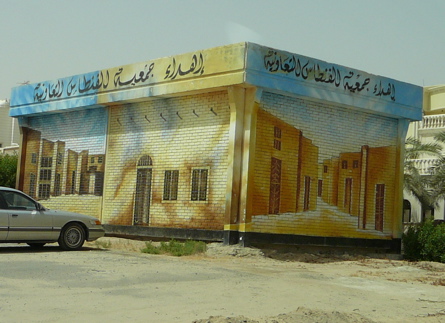
Kuwait also has public art. I believe these squatty, square, non-descript buildings are power relay stations – and look what they have become! Once you start seeing them, you see them everywhere, and every one is different.
I love it that they are whimsical, and that some artist gets paid to design and paint all these stations! They reflect a respect and reminder for Kuwaiti traditions.


Recent Comments
ExpatAlien on What Country am I Living … intlxpatr on Yellowstone: Old Faithful to C… Michelle on Yellowstone: Old Faithful to C… Cathy on No Grown-Ups in Charge intlxpatr on Waiting for Snow Wikipedia Donate Button

Amazina


Early Voting in Florida


 Here There and Everywhere