Risk Taking Men Found Less Attractive
Risk-taking men ‘not attractive’ from BBC Health News.
Women are not attracted to dare-devil men, US researchers believe.
Men thought the opposite sex would be attracted by risky stunts such as bungee jumping and fast driving, a study of 48 men and 52 women found.
But in contrast, women said it was a turn-off, claiming they preferred more cautious people for partners.
However, the team from the University of Maine in Orono said those who took risks for the thrill were likely to be respected by fellow men.
Lead researcher Dr William Farthing said: “Men thought women would be impressed by pointless gambles, but women in fact preferred cautious men.”
However, Dr Farthing said women were attracted to men with a high-status, so if the risk-taking meant a man was respected by his friends they could then become attractive.
During the research, reported in New Scientist magazine, the young people were all given a series of scenarios to choose from, including saving someone’s life and fast driving.
The participants were asked to decide which they found more attractive.
The majority of women choose an altruistic action, rather than a thrill-seeking scenario.
Dr David Lewis, a member of the British Psychological Society, said in many ways the findings were not surprising.
“Previous studies have show that women are attracted to someone who acts in an altruistic way. Saving someone’s life shows a degree of empathy and sensitivity, and this is an attractive trait in men.
“On the other hand men see risk-taking as a particularly macho characteristic.
“Social norms are important and our society attaches weight to men expressing their macho qualities.
“But I think what you would find is that as men get older, they become less prepared to take risks.
“When you decide to do something you attach a cost-benefit to it, and when men are older the priorities they place on things change.”
Something in the Way She Moves . . .
From BBC Health News.
Attraction ‘determined by walk’
There really is something in the way she moves, according to researchers.
An hourglass figure has long been perceived to be the ideal figure for a woman to have.
But New York University researchers have found that to be found attractive, a woman had to move in a feminine way – swaying her hips.
Men, the Proceedings of the National Academy of Sciences paper found, were more attractive if they moved with a “shoulder swagger”.
The waist-hip ratio has long been thought to be key to Western perceptions of attractiveness, with a small waist and bigger hips the ideal combination.
Marilyn Monroe, and now Beyonce and Jennifer Lopez are famous examples of women with that figure.
Its popularity may be down to media images, or because Western women do not need to have strong and muscular bodies in order to carry out manual labour, unlike women in developing countries.
But the US research suggests they would never have achieved their sex symbol status if they did not move in the right way.
Not just measurements
The team carried out a series of studies involving over 700 participants who were shown a variety of animations and videos of people moving.
Some showed shadow figures, where it was not possible to see if it was a man or a woman, while others obviously showed a man or a woman.
No matter which format was being used, the participants rated women or “female” figures as more attractive if their hips swayed as they walked, while men were more attractive if they had the characteristic shoulder movement.
The research also confirmed the waist-hip ratio assumption, with women’s attractiveness being rated higher if their waist-hip ratio was small and men’s being higher if their’s was large.
But Kerri Johnson and Louis Tassinary who led the research, say their work shows attractiveness is not as simple as the difference between two measurements.
Writing in PNAS, the researchers said: “The body’s shape and motion provoke basic social perceptions, biological sex and gender – ie masculinity or femininity respectively.
“The compatibility of these basic precepts predicts perceived attractiveness.”
The team say their findings only apply to Western cultures, and other societies will judge attractiveness depending on their most prized feminine and masculine traits.
Dr George Fieldman, principal lecturer in psychology at Buckinghamshire Chilterns University College said: “This is quite plausible.
“It’s the movement which attracts, and not just the waist-hip ratio per se.”
He added: “It would be interesting to see what the ideal combination of measurements and wiggle is.”
The Wire
A couple years ago our son started talking to us about The Wire. He always puts us on to really interesting series. The Wire is an HBO series, like Rome

Season 1 starts with a new unit being set up to interdict the drug trade in Baltimore. Season 2 re-unites the team to combat illegal imports and illegal importation of sex slaves out of Eastern Europe and Asia. Season 3, my favorite season of all, is back to the drug trade, but with a difference.
In Season 3, one police district changes the rules. They clean up their neighborhood and send all the drug traders and sex trade workers to one area. The area doesn’t legalize crime – not exactly – but the police leave that area alone. As they explain it to the primary drug dealers, it’s a little like Amsterdam. The homies don’t understand; they call it “Hamsterdam”. I laugh everytime I hear it.
The series doesn’t focus strictly on the police – we get to go inside to watch how the drug dealers organize and divide up the city. We learn how drug lords use big business management modules to streamline their supply and demand, and to stay ahead of the police technology. And they are masters at manipulating the judicial system.
There is brutality. There is sex. There is love and there is betrayal. Sometimes, it isn’t easy to tell who the “good” guys are. There are bad guys who show decent values and there are police and politicians on the take. You get the impression it is probably pretty real stuff. In one season 3 episode, a policeman is shot in the line of duty, and they hold a wake in an Irish pub. They are all very very drunk, and vomiting out in the streets. It isn’t pretty.
And all the same, when each season ends, we can hardly wait for the next one. It is gripping drama, vintage HBO cutting edge production. It keeps you on the edge of your chair. You can read more about The Wire at it’s HBO site, where I just learned that The San Francisco Chronicle calls The Wire “the best television show of the year.”
Fat Impairs Fertility?
Today’s (March 10) Kuwait Times
Fat lovers face slimmer chance of parenthood
PARIS: Love handles might help couples get a better grip but all that excess fat could dampen their chances of having a baby, a new study has shown. Researchers monitoring nearly 48,000 couples in Denmark between 1996 and 2002 found that when both parents were clinically obese, the risk of waiting more than a year before conceiving nearly tripled. The odds improved somewhat when the prospective parents were simply overweight, but even they had to persist in their efforts longer than their leaner counterparts. Obesity could even have a demographic impact in countries where the problem of fat has taken on epidemic proportions, said the study published this week in the British Journal of Human Reproduction
“If obesity is a cause of sub-fecundity . . . this reduced capacity to reproduce could become a serious health problem.” said lead author Cecilia Ramlau-Hansen, an epidemiologist at Aarhus University in Denmark, in an interview. “The heavier the population gets, the more problems we would see with infertility,” she said. Earlier research had already established a clear link between too much fat and levels of fertility hormones. In women, excess body fat has a negative impact on ovulation and conception; in men, it is linked with decreased semen quality and the level of reproductive hormones.
But this is the first study, which looked at the conception rate among obese couples, who are increasingly common. In the United States, 30 percent of the adults – some 60 million people – are clinically obese, according to the US National Center for Health Statistics. Within certain demographic groups, such as African-Americans, the rate is even higher. In Europe, Britain tops the list with 23%, nearly twice the rate in Germany, where 12% tip the scales into obesity, according to the Organization for Economic Cooperation and Development.
The benchmark for obesity is the body-mass index, defined as one’s weight in kilograms divided by the square of one’s height in meters. A BMI from 18.5 up to 25 is considered in the healthy range, from 25 up to 30 is overweight, and 30 or higher is obese. The authors add a word of caution, saying they did not know how often the couples in their study had sex.
“We cannot exclude that infrequent intercourse has delayed conception in overweight and obese couples,” they say, delicately. In other words, more fat may mean less sex . . . so the fertility problem could lie elsewhere.”
Raise Your Voices
My blogging friend Hilaliya raised HIS voice in an article entitled Kuwait ‘Ministry Of Communications’ Attempts To Extort Internet Users and found an elaborated article on the Ministry of Communication ban. You can read his rant, and go to the Arab Times article by clicking here.
It FEELS Personal
A good friend who is also a psychologist often talked about how things FEEL personal even when they are not.
• When your best friend betrays your deep dark secret to another friend because she lacks self confidence and it made her feel important for a couple seconds
• When your young wife sleeps with your brother because after two babies she wants to feel exciting and attractive and young again
• When your brother uses drugs again, after you paid for rehab and he swore up and down he would never never use again
• When your father divorces your mother and leaves her to raise the kids alone
• When your oldest friend in the world stops returning your calls and communicating with you and you later learn that she if fighting a losing battle with cancer
• When your aging husband buys a small red convertible and turns you in for a younger model, too, because he wants to think he’s hot
• When your internet phone service is declared illegal and gets shut down to spare “government wastage”

In every case above, the situation has more to do with personal issues than with you, but man, it sure FEELS personal. The fact that is doesn’t have to do with you is almost insulting, because the impact can be so painful.
And so it is with internet service. This morning, I was missing internet service for a while. It happens sometimes, but rarely longer than three-four minutes. This time it went on and on. Of course my first reaction is “oh no! Am I being penalized for having written about internet phone service being blocked???” But no, this time it wasn’t all about me. It was just an outage, and – for now – just temporary. Alhamdallah!
But this policy is going to impact on all of us painfully. Please, please raise your voices. You know better than I do where it will be the most effective. It’s important that we be able to communicate with our family and friends in a reasonably priced way. The internet phones don’t hurt anybody. Let’s keep them legal.
Women in Pakistan
Last but not least from today’s Kuwait Times are two articles from recent news in Pakistan, both involving women and the men who (seem to) own them:
Police Seek Pakistanis Pressing Woman to Hand Over Her Daughter
Karachi: Police are seeking ten men, including several tribal elders, accused of pressuring a Pakistani woman to hand over her teenage daughter as payment for a 16 year old poker debt, officials said yesterday.
In the latest case highlighting how conservative customs threaten women’s rights in Pakistan, Nooran Umrani alleges that despite paying off her late husband’s debt of 10,000 Pakistani rupees, she was threatened with harm if she failed to hand over her daughter, Rasheeda. The 17 year old was to be surrendered as a bride for the son of Lal Haider, the man who won the card game years before, Umrani told reporters . . . Police said yesterday that the mother and daughter were in their protection and that an investigation was opened against Haider, his son, and eight others. . .
Nooran said her husband was a gambler who ran up the debt at a poker game when Rasheeda was 1 year old. He promised Haider that he would get Rasheeda in lieu of payment when she grew up, Nooran said. . . .
President General Pervez Musharraf has vowed to give women more rights in line with his policy to project Pakistan as a moderate, progressive Islamic nation. In December, Musharraf signed into law a bill that makes it easier to prosecute rape cases in the courts, and the country’s ruling party recently introduced a bill to outlaw forced marriages, including under tribal custom in which woman are married off in order to settle disputes.
My comment: The debt was paid. And what was the father thinking?? giving away his daughter to cover his debts? I can’t wrap my mind around it.
Pakistani Sells Wife’s Kidney to Buy Tractor
Karachi: Pakistani police have arrested two men after a village woman complained that her husband and relatives had sold one of her kidneys in order to buy a tractor, police said yesterday. Although her kidney had been removed 18 months earlier, the woman named Safia only learnt it was missing after seeking treatment for a urinary tract problem in January. “She had said she was three months pregnant when her husband, Shakeel Ahmed beat her and then took her to the hospital for treatment,” said Mohammad Akram, duty officer at Noushera Jadeed police station in Punjab province. “But at the hospital, her husband, in connivance with three other people, sold her kidney to buy the tractor,” he said. Unlike many other parts of the world, including neighboring India, there is no law in Pakistan banning the trade in organs. Poverty-ridden Pakistanis living in rural areas sell their kidneys to pay off debts or raise money for their families. Sick but wealthy Pakistanis, and foreigners from the Gulf, Britain and Canada flock to private hospitals in Pakistan for kidney transplants, made possible by these donors.
My comment: Seems his wife is just another revenue-raising resource to Shakeel Ahmed. If asked, she might have even agreed, but it would be nice to be asked, not to discover it 18 months later. The news article says he was arrested. I wonder if he committed a crime under Pakistani law?
Donna Leon: Read and Savor
When I tell you about Donna Leon, I am really introducing you to a friend. I can’t remember when we met, but I can tell you that I seek her out whenever I can. Just listing her books, I realized there were several I hadn’t seen and I ordered them immediately, from the Amazon re-sellers.
“Why the resellers?” you are asking. Donna Leon is not that easy to find, in the United States. Some of the books in her series seem to have been printed only in the UK, which is a pity, because The Donna Leon books really need to be read in order.
While they can be a quick read, they are better read slowly and savored. It’s not that hard. Her humor is subtle, sometimes even sly. Commissario Guido Brunetti, her main character, lives in Venice. He has a family, a sweet wife – Paola, and a daughter and a son. He eats Venetian meals, he lives in an illegal Venetian apartment, he has a glass of wine or two with his lunch. It helps to read the books in order, as his children grow from childhood to teen-agers, and to grow older with him as he solves his cases.
But in Donna Leon’s books, solving the cases is not the goal. As often as not, even while Brunetti solves the case, justice is not served. The books are about the living conditions and social realities of life in Venice, and in Italy. The books are about painful subjects – child prostitution, traffic in women, blood diamonds and African immigrants, and about art fraud and Mafia crime and big business. And the book is about Venetian and Italian interconnections, so that some crimes just disappear, some evidence just disappears, and Brunetti’s dunderhead of a boss tells him to just look the other way.
While each book is deceptively short, and written in clear, simple language, the books are richly complex, weaving a myriad of details into each page.
Thanks to Donna Leon, I know what it is like on a cold, rainy day in Venice, when the water rises and you have to try to walk on raised boards to get where you are going. I know what it is like to have a family emergency and the police vaporetto is in use elsewhere and to try to figure out the fastest way to run home, crossing bridges, grabbing a taxi, complicated by the canal system and tourist infestations in Venice. I know when policement get together for lunch in Venice, you don’t talk business until AFTER you have finished your exquisite pasta with truffles, accompanied by a glass or two of the fabulous house wine. Donna Leon has taken me there.
In Death and Judgement, the book I just finished, Brunetti is called by a police sergeant who has arrested a former police sergeant and wants Brunetti to come to the station. Brunetti’s conversations with the arresting sergeant always require a lot of patience:
(Brunetti) “Did the people in Mestre tell you to make out an arrest report?”
“Well, no, sir,” Alvise said after a particularly long pause. “They told Topa to come back here and make a report about what happened. The only form I saw on the desk was an arrest report, so I thought I should use that.”
“Why didn’t you let him call me, officer?”
“Oh, he’d already called his wife, and I know they’re supposed to get one phone call.”
“That’s on television, officer, on American television,” Brunetti said, straining towards patience.
We’ve all been there. Dealing with those who think they understand, and their understanding is . . . imperfect.
In another part of this book, in which the major issue is the big business of trafficking in women for prostitution, Brunetti is having a conversation with his wife:
Paula pulled gently on his hand. “Why do you use them?”
“Hum?” Brunetti asked, not really paying attention.
“Why do you use whores?” Then, before he could misunderstand, she clarified the question. “Men, that is. Not you. Men.”
He picked up their joined hands and waved them in the air, a vague, aimless gesture. “Guiltless sex, I guess. No strings, no obligations. No need to be polite.”
“Doesn’t sound very appealing,” Paola said, and then added “But I suppose women always want to sentimentalize sex.”
“Yes, you do.” Brunetti said.
Paola freed her hand from his hand and got to her feet. She glanced down at her husband for a moment, then went into the kitchen to begin dinner.
If you are reading that interchange too quickly, too superficially, you will totally miss the significance of the last sentence. If you have been married a long time, you will totally understand that a whole lot happened. This is one of the things I love about Donna Leon.
Death at La Fenice
Death in a Strange Country
Dressed for Death
A Venetian Reckoning
Acqua Alta
The Death of Faith
A Noble Radiance
Fatal Remedies
Friends in High Places
A Sea of Trouble
Willful Behavior
Uniform Justice
Doctored Evidence
Blood From a Stone
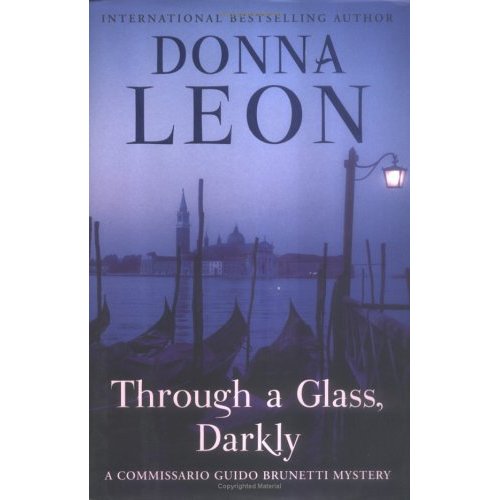
Through a Glass Darkly
Washington Post Contest
This was sent to me by a good friend: These are entries to A Washington Post competition asking for a two line poem. The contest was to have the most romantic first line, and the least romantic second line.
My darling, my lover, my beautiful wife:
Marrying you screwed up my life.
I see your face when I am dreaming.
That’s why I always wake up screaming.
Kind, intelligent, loving and hot;
This describes everything you’re not.
Love may be beautiful, love may be bliss,
But I only slept with you ‘cause I was pissed.
I thought that I could love no other –
That is until I met your brother.
Roses are red, violets are blue, sugar is sweet and so are you.
But the roses are wilting, the violets are dead, the sugar bowl’s empty and so is your head.
I want to feel your sweet embrace;
But don’t take that paper bag off your face.
I love your smile, your face and your eyes –
Damn, I’m good at telling lies!
My love, you take my breath away.
What have you stepped in to smell this way?
My feelings for you no words can tell,
Except for maybe “Go to hell.’
What inspired this amorous rhyme?
Two parts vodka, one part lime.
“Was That Funny?”
When my son was little, he went through a time when he would make up jokes and tell us, and watch our reaction and ask “was that funny?” He wanted desperately to catch on to humor, but humor is a whole new way of thinking, and he was only four or five years old.
We started with riddles, I think, jokes in which words had more than one meaning, and then we moved on to knock knock jokes. But when he first started making jokes, he started with pure nonsense.
Around eight, we introduced him to Shel Silverstein, a brilliant poet, who writes books for kids that are also a joy for adults.

(photo courtesy of Amazon.com.)
Where The Sidewalk Ends
Light in the Attic
Falling Up
We all loved Shel Silverstein. Our son would read the poems aloud to us as we zipped around the back streets of Europe. We never got tired of him. His poems are funny to both children and adults “One Sister for Sale” “The King Who Loved Peanut Butter” . . . and sometimes poignant, or even sad.
Slowly, slowly, our son built up a huge repetoire of humor. Today, he is one of the funniest men I know, albeit most of his wit is very dry, and sometimes . . . I don’t always get it.
And that doesn’t begin to tackle the problem of “what is funny” crossing national and cultural boundaries! I think you have really arrived in a language when you can tell a joke in another language, and the native speakers find it funny.
Recent Comments
ExpatAlien on What Country am I Living … intlxpatr on Yellowstone: Old Faithful to C… Michelle on Yellowstone: Old Faithful to C… Cathy on No Grown-Ups in Charge intlxpatr on Waiting for Snow Wikipedia Donate Button

Amazina


Early Voting in Florida


 Here There and Everywhere