Amazing Dubai
Today AOL’s Money section has an article on “Amazing Dubai. It starts off:
The Wonders of Dubai
“As one of the seven emirates that make up the oil-rich United Arab Emirates, Dubai has attracted world-wide attention through some mind-boggling, innovative real estate projects.
Sit back and peruse our photo gallery of some of the most amazing construction being done in the world today.”
You can access the article and the fabulous photos by clicking HERE.
Porn For Women
My son and I were chatting in the Barnes and Noble when he got a weird grin on his face, stood up, and plucked a book from the shelf opposite where we were sitting.
Porn for Women was the title, and the book is authored and published by the Cambridge Women’s Pornography Cooperative and Susan Anderson (Paperback – Mar 1, 2007)
Here is the cover – for all my women friends – isn’t that a total turn on???

I flipped through the book – available through Amazon.com for $11.01, but could you get it through Kuwaiti customs with a title like that? – and found this second shot that nearly made me swoon . . .
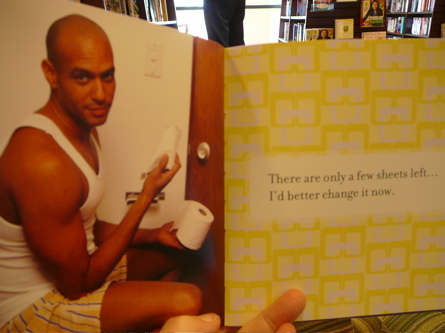
Women are SO clever! And no one knows better than women what turns women on!
Bad Laws Encourage Breaking the Law
Going to university in Seattle, I did a paper on Washington State “Blue Laws” and how they were repealed. In Washington State, they have some really cool ideas that encourage citizen participation – one is called the initiative, and the other is called the referendum.
What this means is that citizens, just common, ordinary citizens like you and me, can gather support and signatures, and initiate proceedings to get a proposal on the ballot, in front of all the voters. They can also refer an existing law to the voters to get it repealed (made not a law anymore.) It’s hard work – but citizens do it all the time.
I just used my internet phone to change my car reservation, because KLM has “delayed” my flight by one night. I broke the law. It’s a bad law, and I am not by nature a law-breaking kind of person.
I also break the law by bringing in real vanilla flavoring when I enter Kuwait. Yes, it contains alcohol. I only use it for cooking, and I never serve it to Moslems. I have alcohal-free vanilla, too, that I use for when I cook for Moslems, but it doesn’t taste the same.
I probably bring in books and DVD’s that I am not supposed to, although I have never seen a list telling me what books might not be allowed. Most of my books are about ideas, and yes, ideas can be a dangerous thing.
Bad laws force normal law-abiding people to break the law.
(This does not apply to speed limits, which are good laws, and if they were obeyed, would save hundreds of lives in Kuwait every year. Think of every life as something precious, a resource, and you will see that disobeying the speed limits is like throwing resources down the drain.)
I know this entry is really all over the map, but I have all this angry energy and I don’t have anywhere to expel it. If I could, I would kick KLM all over Kuwait for what they have done. They have robbed us of one day with our son and his wife and I am really really angry. They didn’t even tell us, just changed the reservation. One flight was “delayed” 24 hours, so all the passengers on the next flight were also “delayed”. That’s not a DELAY! You cancelled a flight! And now you are going to have hundreds of angry passengers, angry phone calls, and people PO’d at KLM. Shoddy way to do business.
Blue Light Special
Back in the United States, there is a store, K-mart, that from time to time makes an announcement:
Attention, K-mart shoppers. We have a blue light special for the next fifteen minutes on (vacuum cleaners/ school supplies / men’s clothing / holiday wrapping / . . .ad infinitum) on Aisle whatever.
So when I saw this at the local co-op, I just had to grin:

“Woh ist der bahnhof?” Revisited
Today, in the co-op I was looking for toilet paper, because we were perilously low. In the diaper section I found three women workers (when did women start working in the co-ops? I really like it!) who wanted to help.
“Ana ashuf . . .” I started off (I am looking for) but I don’t know how to say toilet paper, so I said “toilet paper”.
Blank faces. I’m trying to think of a way to say it in Arabic, roundabout, but all I can say, weakly is to repeat “toilet paper”.
Blank faces. But kind, patient, so I say it again.
The light goes on.
“Ah! Toi LET paper!” she says, with the accent on the second syllable.
“Yes!” I say, as she leads me there, continuing to correct me: “Toi LET paper, Toi LET paper.”
Chocolate: The Newest Truth
I heard this tidbit on today’s Good Morning America – Good news for chocolate lovers!
And Now Some Good News from the AAAS: Chocolate in Medicine, Tractors in Space
By John Tierney From the New York Times blogs.
I just spent five days at the Woodstock of science, the annual meeting of the American Association for the Advancement of Science. The theme at this year’s meeting, in San Francisco, was “sustainability” — not the most sprightly topic. But in between the lectures on environmental degradation, there were some cheerier discussions. A couple of my favorites:
The healing power of chocolate. The researchers weren’t quite ready to call chocolate a health food — they cruelly reminded the audience of its fatty content — but they did have good news about the flavanols found in cocoa (particularly some dark chocolates).
Norman Hollenberg of Harvard Medical School has documented that central American Indians who consume large quantities of cocoa have low rates of hypertension and of vascular dementia (caused by restriction of blood flow in the brain). At the AAAS meeting, he reported on a experiment showing people given flavanol-rich cocoa enjoyed a “a significant increase” in cerebral blood flow. “We hope,” he noted, “to explore the potential of flavanol-rich cocoa in preventing or ameliorating the vascular dementias.”
Another researcher, Ian Macdonald of the University of Nottingham, scanned the brains of women who’d been given flavanol-rich cocoa. He found it increased “cerebral blood flow to gray matter.” He and Dr. Hollenberg didn’t urge listeners to go out and gorge on chocolate, but they did raise the possibility of flavanols being used to help aging brains, perhaps being administered in the form of vitamins. Let’s hope these vitamins are the chewable variety.
Ultrametabolism and Kuwait Diet
I used to be thin. Really thin. Actually, I have been really thin several times in my life, but, *sigh* no longer.
This morning as I was picking up my e-mail, this review on AOL caught my eye. Dr. Mark Hymon is one of the AOL Wellness Coaches, and he has written two books, one called Ultrametabolism, about using your built in genetic strengths to lose weight and maintain the weight loss naturally, and one called Ultraprevention about foods to eat (and not to eat) to contribute to overall wellness and good health.
If you’ve been reading me for a while, you will know that I can be a little cynical.
What I like about Dr. Hymon’s approach is that it makes sense.
Diets that totally eliminate foods you love just aren’t going to work. Give up pasta for the rest of your life? I don’t think so. But what Dr. Hymon asks us to do is to eat mostly non-processed, or minimally processed foods. He says that the processed foods have components that the body doesn’t even recognize as food, and that’s why after eating things like Twinkies, Mars bars, packaged crackers, etc. we still feel hungry – our bodies don’t recognize what we have eaten as food.
Here is what Dr. Hymon suggests (this is from the AOL Health and Fitness section):
How to use what you eat to tell your DNA how to slim you down and live a healthier life.
Day 1. Clean out your cabinets, refrigerator and freezer. Get rid of packaged items filled with processed fats and sugars. Check the lable – if it says “hydrogenated oil” or “high fructose corn syrum” get rid of it.
Day 2. Go shopping for whole foods. Find a farmer’s market in your area for fresh produce and schedule visits in your calendar weekly or biweekly over the next few months. At the grocery, choose items from the “perishable perimeter” of the store, instead of items in the center aisles where processed foods lurk.
Day 3. Change your oil! Throw out old oils, which can become rancid quickly. Replace vegetable oils like safflower and canola with extra-virgin olive oil and make it your primary oil for cooking and salad dressings.
Day 4. Visit a health food sotre. Leave there with 10 new items you’ve never tried before. Bulk-purchase whole grains, legumes and nuts. Look for new whole grain cereals, breads and snacks without processed additives, fats, sugars or preservatives. And remember: just because it’s in a health food store, doesn’t mean it’s good for you. Read the labels of any packaged foods you buy.
Day 5. Choose Eggs! Choose organic eggs farmed with omega-3 fats. Make yourself a spinach omelet for breakfast. Eggs are a good source of protein. You can enjoy as many as eight a week.
Day 6. Become wild about fish. Find a local fishmonger or educate yourself by talking to your local grocer. Or learn more about which fish are best to eat by visiting www. ultrametabolism.com. Print out a primer to bring with you when you shop.
Day 7. Prepare some healthy snacks for when you’re on-the-go. Pack a small zipper bag with a few servings of almonds or walnuts. One handful equals a serving.
Day 8. Don’t go thirsty. By now, you’ve tossed the sodas. Bring out the blender and learn to make high protein, no sugar smoothies. Experiment with crushed ice and fresh fruits. You can even make frozen nut cubes by soaking nuts overnight, blending them and then freezing them with a bit of water or milk in ice cube trays. Your smoothie will be creamy and full of good fats and proteins.
As I did his online mini-seminar, I found myself thinking “everything this Dr. Hymon is recommending is the way Kuwaitis USED TO eat.” And I also found myself thinking what a wealth of opportunity we are living amidst, here in Kuwait, where we can go to any market and buy FRESH fish, really fresh, right off the boats, in the local fish markets. We can buy fresh meats, and fresh vegetables, lots of them grown right here in Kuwait. We can buy fresh eggs. even fresh chicken when not under threat of Avian Flu. Kuwait is a paradise for exactly this kind of diet.
Not only do we have access to fresh, locally grown foods, but the cost is so much less than processed foods on the shelves. He is talking about lentils and grains commonly available here in those big sacks, down in the Souk Mubarakiyya, as well as in the co-ops and the Sultan Centers.
This isn’t anything new, eating low on the food chain, eating fresh, but it does strike me as a diet that particularly works in Kuwait, and a kind of diet that you can live with for the rest of your life, because it doesn’t make changes in your life that you can’t live with. Like he does tell us to give up soda, one of the main contributors to obesity in the world today. As you get older, carbonated beverages aren’t that hard to give up because they also give you heartburn, so just another reason to steer clear of all those unwanted calories the body can’t identify as food.
He didn’t say anything about chocolate . . . but I have ordered both books from Amazon.com hoping that the dark, semi-sweet, barely processed chocolate that I love will also be “just what the doctor ordered.” Meanwhile . . . I hear a spinach omelet calling my name!
“Woh ist der bahnhof?”
One of our family jokes is about how when you go to live in Germany, for some reason, one of the first phrases you learn isn’t “guten tag” or “Wiegehts” (hello! / how are you?) but “where is the train station?” And it is particularly hilarious because even if you ever say it exactly right (or so you think) no one can understand what you are saying. And if they DO understand – they start giving you directions with elaborate hand signals.
Germans are very precise. They won’t just point in a general direction, they will use all kinds of words for left, right, straight ahead, and my personal favorite “gegenuber” which means catty-corner, or diagonally across from something, all words that the beginner doesn’t have a clue. So even if you successfully ask for directions, you can’t understand the answer.
Most of the time, however, you will ask “woh ist der bahnhof” several times, as the response is continually “wie, bitte?”, the polite way of sayinh “WHAT??” and then finally they will get this “aha!” and they will say “Oh! Woh ist der bahnhof?!” and it sounds exactly like what you have been saying for the last five minutes.
I had a “woh is der bahnhof” experience here in Kuwait. I was searching for a souk I had heard about. I asked some of my friends – where is the souk Watiniya? I experienced that two seconds of total blank non-response that always feels like two days, and then one of them laughed and said “oh, she means the souk Watiya” and they told me where it was.
But I’m getting smarter. It wasn’t the part where I added the extra syllable that confused them. It was the fact that I used the soft “t” and not the hard “t”. It’s a small thing, but enough to make me dance for joy – I can hear the difference!
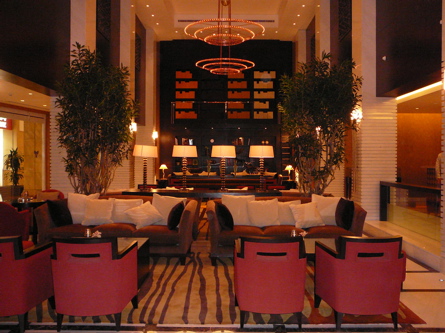
Manshar Mall: Rotana Hotel Open
One day it was not open – and then it was! I haven’t seen any announcements for the Rotana, but it is indeed open for business. There are signs all over Fehaheel indicating the Rotana Hotel’s whereabouts, but those have been up for months.
And – the Villa Moda signs are back up, indicating they will be opening soon. Interesting. Wonder when “soon” will be?
Last but not least – Al Kout and Al Manshar appear to be related, at least architecturally. Why have they not connected the two with a walking bridge from the top floor? Crossing that road is deadly! And parking in the Al Manshar Mall parking lot is severely limited.
And why so much security? There are security guards everywhere, and they are very very firm (my big smile did not sway them) about NOT taking photos.
The very cool thing about Al Manshar Mall is that there are a lot of small shops; it has a very souk-y feel about it, and they aren’t the shops you find in all the usual (ho hum) malls.
And there is a small but very very busy Chili’s.

Offices Full of Germs: Women the Worst
From – I am not kidding – The Nigerian Tribune.
(A recent) study pointed out that for a woman, her office desk may harbour far more bacteria than the workplace restroom and the office desk of men. In fact, women have three to four times the number of bacteria in, on and around their desks, phones, computers, keyboards, drawers and personal items than men do, the study by University of Arizona Professor Charles Gerba found. Gerba, a Professor of Soil, Water and Environmental sciences, tested more than 100 offices on the UA campus and in New York, Los Angeles, San Francisco, Oregon and Washington, D.C. in a study commissioned by the Clorox Co.
The researchers swabbed the offices of 59 women and 54 men in New York City, Los Angeles, San Francisco, Oregon, and Washington, D.C. They sampled eight sites in each office: the phone, desktop, computer mouse, computer keyboard, exclamation key on the computer keyboard, pen, bottom of desk drawer, and handle of desk drawer. The researchers also swabbed workers’ personal items at the office, including personal digital assistants (PDAs), women’s purses and makeup cases, and men’s wallets and found women have more germs on their office desks than men.
“I thought for sure men would be germier,” Gerba said. “But women have more interactions with small children and keep food in their desks. The other problem is makeup.” The tendency is high to doubt this statement. But much as a woman’s desks may typically look cleaner, the germs are likely to be more abundant. Cosmetics and hand lotions make prime germ-transfer agents, Gerba said. Makeup cases also make fine germ homes, along with phones, purses and desk drawers. Food in desk drawers also harbour lots of microorganisms, and it is more abundant among female office workers to have food in their desks and munch while on an assignment, on the computer or even picking a call.
Then, they tend to be around children more often than men, and we all know how easily kids transmit germs. And finally, they use makeup, which tends to absorb germs. Then it rubs off the face or gets scattered by brushes and sponges. The news was not all negative for females though. Gerba in the study found the worst office germ offender is men’s wallets. The back pocket is nice and warm; it’s a great incubator for bacteria. Another hot spot for bacteria in men’s offices: the personal digital assistant.” Men tend to play with their palm pilots more, thinking they’re playing video games or something,” Gerba said.
The top three bacteria hot spots in women’s offices, in order of germs amount : Makeup case, phone, and purse and in men’s offices starting from the highest to the least: Wallet, personal digital assistant and phone. Though a similar study by the Clorox Company, a manufacturer of disinfectant in February 2006, reported that in a study of nine office-based jobs, teachers had the work space with the highest amount of germs and lawyers had the least, Gerba said everyone should arm their office with a germ arsenal that includes: disinfectant wipes, disinfectant spray, paper towels and fruit (for drawer).
According to Gerba, people should clean cell phones and desk phones to get rid of bacteria. “You need to use a disinfectant wipe, or spray disinfectant on a paper towel, and clean the phone off. Never directly spray disinfectant cleaner on phone,” he said. “Do not use soap and water — that just pushes the germs around.” “We recommend that you use a wallet or purse that can be easily wiped off — like leather. A fabric bag is harder to clean and just holds more germs.”
Finally, Gerba said office knickknacks and accessories should be given the same thorough cleaning as everything else , explaining that “people tend to touch and pick up the germs on their desks. It’s a vicious cycle of germs transferring from hands to objects to desks. Hand sanitizers are great in eliminating the transfer of germs from your hands.” The level of germs on office desktops and telephones came in gender neutral; women had three to four times more germs on their keyboards and computer mice than their male counterparts. Desk drawers at women’s desks contained seven times more germs than men’s. Surprisingly, the research showed that the average office desktop has 400 times more bacteria than the average office toilet seat.
What Gerba found among the bacteria was coliform — intestinal bacteria generally found in human waste — on the restroom handles and faucets, in the kitchen sink and sponge, and even in candy basket. That “indicates to me somebody’s not washing his or her hands after coming back from the bathroom,” Gerba said.
That’s why Gerba found hundreds of thousands of bacteria on hot spots like a printer button and the button for the first floor in the elevator, touched by hundreds of fingers each day. Even though none of the bacteria Gerba found was life-threatening, they could lead to more colds and flu.
Prof Oluwole Adebo, a cardiothoracic surgeon commenting said this is a study Clorox, maker of a disinfectant commissioned and is motivated at helping them sell more of their products.” Without being in an office, the surface of our hand picks up germs throughout the day, but you don’t get infected by them because the skin is a barrier against germs. Some of the germs are not in a state to infect, especially in places that are dry and hot, but where humid, it can incubate bacteria. So when you are to eat, wash your hands because there are bacteria on your hands. These bacteria are not in a position to harm us and therefore these is no reason to clean with disinfectants.
“America is full of studies like that. They study everything and make money out of it. The fact is this, in the air you breathe in, there are bacteria in it. Do you sterilize it? No, the body is sufficient to keep the germs at bay. It is all out to pursue people to buy their product”, he concluded.
My Comment: Remember Lies, Damn Lies and Statistics where we talked about who structures the survey? It works the same for studies. The sponsor of this study is Clorox, who make Clorox bleach and multiple cleaning disinfectants. It is in their interest for Professor Gerba to find a very germy environment. The more disinfectants we buy, the higher their profits soar. Prof Oluwole Adebo is right! Germs are everywhere, and we survive, and even develop immunities to them. This study is purely to sell more Clorox products by convincing us we have an epidemic of uncleanliness.
On the other hand . . . it may be time to clean out the make up case and throw away that candy bar . . . 🙂
Recent Comments
Kitchen on Isiais: Winding Down intlxpatr on Shampoo Ginger tigerbutterya0c5ff1d… on Shampoo Ginger intlxpatr on British Soldier Kidnapped, Esc… John on British Soldier Kidnapped, Esc… Wikipedia Donate Button

Amazina


Early Voting in Florida


