In the Headlights: Added to the Blogroll
I don’t remember how I came across this blog, at some time in December, but I remember laughing my head off. After two months, I find that she still delights me every time I visit. Today at In the Headlights (a reference to a common English phrase “deer in the headlights” meaning that wild-eyed-I -don’t-know-what-to-do-next-so-I’ll-just-stand-here-frozen look) Riannan shares an e-mail from a friend with curmudgeonly rules for 2007, and earlier on the page, shares a site where you can have mittens, etc. knit out of your pet’s lost hair! Dying laughing.
(And no, she is not a relative of mine. I don’t know her! I just like her blog!)
This woman comes across some of the most amazing things. She, like me, is all over the map – salsa dancing, books, great recipes (the latest was Oven Baked Sesame Scallops, oh yum!), stories about friends, some of the funniest signs I have ever seen, and screwball ideas. She can give your day a lift.
Cosmetic Danger: Repeated Usage
Women are always looking for cosmetic magic – I call it “Hope in a Bottle”. We are promised wrinkle-free skin, wonderful large lucious lips that never lose their color, potions that will make blemishes disappear, and fragrances that will get our man. Right.
Just before leaving Seattle, I hit the Lancome center at the local Nordstroms and stocked up. The dear woman there always gives me some little sample sizes to use on my long flights. I was telling my good friend about picking up some “hope in a bottle” and she said “oh, that sounds like something I need to try! Where do you get it?” We had a good laugh about that.
In the AOL section on Money and Finance today is a report about chemicals in your cosmetics. What shocked me is that the US uses many chemicals that the European Union has banned in their cosmetics. The article tells about how loosely the US is monitoring chemical additives in cosmetics – nail polishes, skin cremes, deodorants – chemicals that we are putting on our bodies every day, and no one knows the consequences of long term usage.

The report is from Consumer Reports.org, a highly regarded watchdog of American consumer products. Their magazine reports monthly on cars, appliances, drugs, children’s toys, and deceptive packaging.
What You Should Know About Chemicals in Your Cosmetics
You slather, spray, and paint them on and rub them in. Cosmetics are so much a part of your daily regimen that you probably never think twice about them. If they’re on store shelves, it seems reasonable to figure that they’re safe to use, despite those unpronounceable ingredient lists.
But at least some of what’s in your cosmetics might not be so good for you. One example is the family of chemicals known as phthalates (pronounced THAL-ates), which may be linked to developmental and reproductive health risks. The industry says phthalates are safe, but some companies have dropped them in response to public concern. Essie, OPI, and Sally Hansen, for example, are removing dibutyl phthalate (DBP), which is used to prevent chipping, from nail polishes. Other big-name brands that have reformulated products to remove some phthalates include Avon, Cover Girl, Estée Lauder, L’Oréal, Max Factor, Orly, and Revlon.
Take a Whiff of This
If you’re trying to cut back on phthalates, however, sticking with these brands may not make much of a difference. You’ll find phthalates in too many other personal-care products, including body lotions, hair sprays, perfumes, and deodorants. The chemicals are used to help fragrances linger and take the stiffness out of hair spray, among other reasons. They’re also in detergents, food packaging, pharmaceuticals, and plastic toys. And they have turned up in our bodies.
Although phthalates show up in so many places, they’re often absent from labels because disclosure is not always required. That’s the case with fragrances. We tested eight fragrances and although none of the products included phthalates in its ingredient list, they all contained the chemicals. Some were made by companies that specifically told us their products were free of phthalates, and two even say as much on their Web sites.
Getting your nails done or spritzing on your favorite perfume obviously isn’t going to kill you. But the health effects of regular long-term exposure, even to small amounts, are still unknown.
Makeup wakeup call
Phthalates, a family of chemicals used in cosmetics, may pose significant health risks but:
· They’re found in perfumes, nail polishes, and other products we use every day.
· Scientists say they’re found in our bodies as well.
· In many cases, they’re not listed on labels, so they can be difficult to avoid.
· Some manufacturers are removing them from their products, but the FDA has not restricted their use.
Companies that have eliminated phthalates are no doubt getting the message that people are paying more attention to ingredients. But public concern isn’t the only factor driving the reformulations. Another reason is a European ban. Although the U.S. has outlawed just eight cosmetic ingredients, the European Union has banned more than 1,000. (emphasis mine) For companies that make cosmetics, complying with E.U. rules makes good business sense. It’s more efficient to sell the same product worldwide. It’s also good PR. About 380 U.S. companies have publicly pledged their allegiance to cosmetic safety by signing the Compact for Global Production of Safe Health & Beauty Products, under which they voluntarily pledged to reformulate globally to meet E.U. standards.
The reformulation trend is likely to gain further momentum from the California Safe Cosmetics Act of 2005, which took effect only this year. Manufacturers that sell over $1 million a year in personal-care products in the state must report any products containing a chemical that is either a carcinogen or a reproductive or developmental toxic agent. Among those that must be disclosed are the phthalates DBP and di(2-ethylhexyl) phthalate (DEHP). California plans make this information public, possibly on the Web, so some companies may choose to remove rather than report the ingredients.
Guinea pig nation
Despite the laws, pacts, and reformulations, questions about safety remain. Cosmetic industry critics argue that the Food and Drug Administration has not told companies what “safe” means, leaving them to make their own decisions. In fact, with cosmetics, the government generally takes action only after safety issues crop up.
Take the case of Rio hair relaxers. In December 1994, the FDA warned against two products sold through infomercials after consumers complained about hair loss, scalp irritation, and hair turning green. Rio announced that it would stop sales but there were reports that it continued to take orders. The California Department of Health then stepped in to halt sales and in January 1995, the U.S. Attorney’s Office in Los Angeles filed a seizure action. By then, the FDA had received more than 3,000 complaints. Rio later reformulated and renamed its products.
The Rio case illustrates how holes in the government’s cosmetic regulatory system can hurt consumers. The industry essentially regulates itself. The Cosmetic Ingredient Review panel, made up of physicians and toxicologists and funded by the industry’s leading trade group–the Cosmetic, Toiletry, and Fragrance Association (CTFA)–assesses ingredient safety. Another industry group reviews fragrances and helps create safety standards. But manufacturers aren’t obligated to do anything with this information.
“We’re working on the honor system when it comes to cosmetics safety,” says Jane Houlihan, vice president for research at the Environmental Working Group (EWG), a research and advocacy group. “In the absence of federal standards, we have a huge range of safety in the products we buy every day.”
The FDA has made efforts to improve its ability to spot problems and issue warnings. The agency now has a computerized database, called CAERS, that collects reports of problems such as allergic reactions. Complaints can be sent via the FDA Web site or by calling a district office. But Amy Newburger, a dermatologist at St. Luke’s-Roosevelt Hospital Center in New York City and a former member of the FDA’s General and Plastic Surgery Devices Panel, says her experiences make her wonder about the system’s effectiveness. In one case, she filed a report by phone and on the CAERS system after she and several of her patients got a rash with blisters after using an anti-aging treatment. It wasn’t until a year later, in November 2006, that the FDA sent an e-mail asking her to complete some forms, she says. The FDA responds that it doesn’t provide information or feedback to people who file complaints. It simply routes them to the appropriate office for evaluation. The FDA says it may also send reports to companies.
So what are the risks?
Scientists know very little about how repeated exposure to small amounts of phthalates in cosmetics may affect your health, if at all. But some studies suggest that the chemicals are present in our bodies.
In 2005, the federal Centers for Disease Control and Prevention reported that it had found breakdown chemicals from two of the most common cosmetic phthalates in almost every member of a group of 2,782 people it examined. A separate study published in the journal Environmental Health Perspectives (EHP) in 2005 showed that men who used the most personal-care products, such as after-shave and cologne, had the highest urinary levels of a breakdown product of diethyl phthalate (DEP).
In rodent studies, phthalates have caused testicular injury, liver injury, and liver cancer. We found no such clear hazards in human research. But we did find studies suggesting that phthalates may be associated with other health issues, including the following four examples from one source alone, EHP, which is a leading journal published by the National Institutes of Health. In 2000, EHP published a small study that said elevated blood levels of phthalates were associated with premature breast development in young girls. Another report in 2003 found that men with higher concentrations of two phthalate breakdown products in their urine were more likely to have a low sperm count or low sperm motility. A study published in 2005 said women with higher levels of four phthalate compounds in their urine during pregnancy were likelier to give birth to boys with smaller scrotums. And a 2006 report cited low testosterone levels in male newborns exposed to higher levels of phthalates in breast milk.
Experts in the industry and the government are aware of such reports but say there is no cause for alarm. The FDA, for instance, concluded after a thorough review of the literature that “it’s not clear what effect, if any, phthalates have on health.” And the CTFA, the industry trade group, notes that government and scientific bodies in the U.S. and Canada have examined phthalates without restricting their use in cosmetics. After the 2005 report linking phthalate exposure to smaller scrotum size, in particular, the trade group said, “The sensational and alarming conclusions being drawn from this single study are completely speculative and scientifically unwarranted.”
Even companies that have dropped phthalates from products say they are safe. “This policy is driven by a wish to allay public concern and does not reflect concern with the safe use of the ingredients,” Avon said after announcing that it would cut DBP from its product line. John Bailey, the CTFA’s executive vice president for science, says ingredients like DBP in nail polish are simply not a hazard in such small amounts.
On the other side are some environmental and public-health advocates who say possible carcinogens and reproductive toxins do not belong in cosmetics, no matter how small the amount. “We take issue with the idea that a little bit of poison doesn’t matter, because safer alternatives are available,” says Stacy Malkan, communications director of Health Care Without Harm. “Companies should be making the safest products possible, instead of trying to convince us that a little bit of toxic chemicals are OK.” While the scientific jury is still out, we at ShopSmart believe it makes sense to reduce your exposure to phthalates, especially if you’re nursing, pregnant, or trying to become pregnant.
1906
This was a forward I received today. I don’t know where the statistics come from, so I can’t verify. If true, it is pretty amazing what a difference 100 years can make.
The year is 1906.
One hundred years ago.
What a difference a century makes !
Here are some of the U.S. statistics for the Year 1906
************************************
The average life expectancy in the U.S. was 47
A three-minute call from Denver to New York City cost eleven dollars.
There were only 8,000 cars in the U.S., and only 144 miles of paved roads.
The maximum speed limit in most cities was 10 mph.
Alabama, Mississippi, Iowa , and Tennessee were each more heavily populated than California .
With a mere 1.4 million people, California was only the 21st most populous state in the Union .
The tallest structure in the world was the Eiffel Tower !
The average wage in the US was 22 cents per hour.
The average U.S. worker made between $200 and $400 per year .
A competent accountant could expect to earn $2000 per year,
a dentist $2,500 per year,
a veterinarian between $1,500 and $4,000 per year,
and a mechanical engineer about $5,000 per year.
More than 95 percent of all births in the U.S. took place at HOME
Ninety percent of all U.S. doctors had NO COLLEGE EDUCATION !
Instead, they attended so-called medical schools, many of which were condemned in the press AND the government as “sub-standard.”
Sugar cost four cents a pound.
Eggs were fourteen cents a dozen.
Coffee was fifteen cents a pound.
Most women only washed their hair
once a month,
and used borax
or egg yolks for shampoo.
Canada passed a law that prohibited poor people from
entering into their country for any reason.
The Five leading causes of death in the U.S. were:
1. Pneumonia and influenza
2. Tuberculosis
3. Diarrhea
4. Heart disease
5. Stroke
The American flag had 45 stars. Arizona , Oklahoma, New Mexico, Hawaii, and Alaska hadn’t been admitted to the Union yet.
The population of Las Vegas, Nevada, was only 30 !!!!
Crossword puzzles,
canned beer,
and ice tea
hadn’t been invented yet.
There was no Mother’s Day
or Father’s Day.
Two out of every 10 U.S. adults couldn’t read or write.
Only 6 percent of all Americans had graduated from high school.
Marijuana, heroin, and morphine
were all available over
the counter
at the local corner drugstores.
Pharmacists said,
“Heroin clears the complexion, gives buoyancy to the mind, regulates the stomach and bowels, and is, in fact, a perfect guardian of health.”
Eighteen percent of households in the U.S. had at least one full-time servant or domestic help.
There were about 230 reported murders
in the ENTIRE U.S.A. !
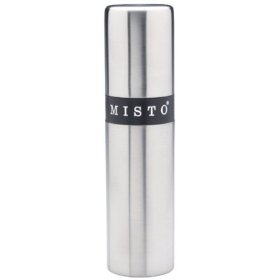
I’d Be Lost Without It: Misto Sprayer
Seven years ago, my nephew, Global Man, gave this little tool to my sister for Christmas. I had never heard of it, and so he showed me how it worked. WOW.
We are firm believers in olive oil. And firm believers in food with less processing and chemical additives, rather than more.
He showed me you you put the oil in, maybe half a cup, and screw the top back on. How you pump the brushed aluminum cap up and down five or six times to achieve pressure inside, then just press the button and out comes a VAPOR of olive oil. The vapor is so fine, that I use it now for almost everything.
It took me a while. I was afraid the taste of olive oil would detract in some recipes, but the vapory film of oil laid down is so fine that it goes undetected in every but the very most refined recipes.
Instead of the spray cans you buy in the stores, full of chemical aerosols to make the oil spray, it uses air – imagine! And it allows you to use your very favorite olive oil all the time, so your cooking gets all the added benefits of olive oil, but so finely sprayed as to spare the calories.
I love this tool. It is available in better (walk-in) cooking stores, also from Amazon, and other mail order cooking supply stores. William Sonoma has one called QuickMist; looks like the same tool. I’d be lost without it.
More Chilis!
We just got back from Fehaheel, where we ate at the new Chili’s at the Al Manshar Mall. It’s always a debate – brave the traffic on Gulf Road to the Towers or brave the traffic going south to Fehaheel. Tonight we thought we would take a chance, see if the new Chili’s had opened there. We can always hit Paul’s at Al Kout as a fallback.
It was open! It’s only been open for a week, and they haven’t made any big announcements while they break in the new serving crew. The food was reliably good – we had the bottomless chips and salsa, and my husband had the Bacon Cheeseburger while I had the Chicken Ceasar – good. Quick, well served, and good.
The manager tells us another group of the Chili’s restaurants – Johnny Carino’s, Chili’s and (something else) will also be going into the Kuwait Magic Mall in 2007. Takes a little of the pressure off the Towers Chili’s.
The Rotana Hotel hasn’t opened at the Al Manshar Mall, nor has the Villa Moda, but the parking is already dismal. And the traffic in Fehaheel is nearing the same aggressiveness and gridlock as in Salmiyya. You CAN park across the busy road at Al Kout Mall and brave the crossing to Al Manshar with no cross walks or lights to help you.
Santa’s Wish List: Cookbooks
You might think I love to cook. You would be very wrong.
I had a great friend for many years, one of those Southern gals with a last name first name, and when one day I told her of my secret guilt – that cooking wasn’t FUN for me, she said “what we do, every day, is SURVIVAL cooking. We just meet the expectation of getting a meal on the table. That doesn’t have to be fun, it just has to be done.”
That’s pretty much what I do, and why I have been giving you all these great recipes. The truth about the recipes I am giving you is that most of them are EASY and they taste good. A few require special equipment and mastering a new skill, but it’s like swimming – once you’ve done it, it’s easy. There is nothing complicated about the recipes I am sharing with you – they are ones I use, too!
Books About Food and Eating
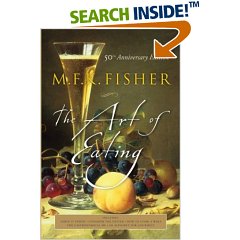
First I will share with you two books available through third party vendors at Amazon. The first is Food Lover’s Companion (A Comprehensive Definition of Over 4000 Food, Wine and Culinary Terms) by Sharon Tyler Herbst, which is available starting at $14.93, and the second is M.F.K Fisher’s The Art of Eating, also available through Amazon at $11.53. The Companion is invaluable when someone uses a term for a cooking technique or ingredient you don’t know; it has words for everything! My husband reads this book sometimes just for fun and is always sharing new information he has learned. The MFK Fisher book is just plain fun reading about food, full of information and anecdotes and stories, written in an enormously readable way.

Beginner Cookbooks
The first cookbook I used was the McCalls Cookbook – no longer in print. It had photos of how do do the things I found so intimidating, and that is where I got my earliers Christmas cookie recipes – the Russian Tea Cakes and the Candy Cane Cookies. The second was The Joy of Cooking, which I mentioned in an earlier blog entry. What is good about these books is that they keep it really simple. In Joy, they give you a long theoretical section, which you can read if you have the time, and which helps, but at the beginning it isn’t always easy to even understand the basics. That takes time. Then you can go back and read later and go “Aha! Now I understand!”
Cookbook Secrets
Actually, I love reading cookbooks. I have a huge collection. And almost all of them are Junior League Cookbooks. So here’s the secret – when you are looking for cookbooks, look for ones where women who contribute have to put their names. If their name is on the recipe, you can trust that the recipe will work, and that it will be one of their best recipes – they don’t want to be embarrassed!
The majority my cookbooks are from the South. And narrowing it down even further, most of my favorites come from Louisiana or Georgia.
The first one I ever bought was Talk About Good! And oh, it WAS good!
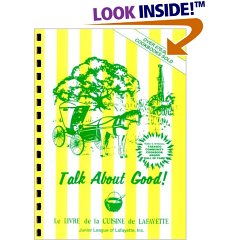
These recipes use ingredients like real cream and real butter and lots of salt. Southern people have some of the lowest life-expectancy rates in the United States – I suspect their eating habits have a lot to do with it. But if it isn’t a habit to eat so richly, every now and then it just tastes SO GOOD to use these ingredients. You will also notice that it has what they call a “plastic comb” binding. That means when you open it up to follow a recipe, it will lie flat. That’s a really good thing!
My second favorite is Quail Country, by the Junior League of Albany, Georgia. You would really have to scour the book stores to find this out-of-print classic, because so few people would ever want to part with it. Another gem is The Fort Leavenworth Collection, if you can get your hands on it – again, yard sales, used book stores would be your best bet.
There is a wonderful group of stores in the USA called Half Price Books. If books are not being bought as gifts, if you plan to just read a book and pass it along, or if you like to have a few on hand to pass along because you think they are so great, Half Price Books is a great place. They have the most obscure books, books you never thought you would see again. Many of their books are new, but remaindered (left over from book stores that couldn’t sell the, or from publishers who published too many copies) so they are sold at half price. They will also buy used books from you, but to me, they offer so little that I would just as soon give them away. (No, I don’t own stock in Half Price Books.)
There are some other fabulous Junior League cookbooks – the California Heritage Cookbook, the Seattle Classics, and there are other cookbooks produced by churches and charities that also have “real people” recipes that are drop-dead good. I remember once sharing a recipe for Chocolate Cheesecake from Seattle Classics. My friend told me she made it for Christmas dinner, but everyone was too full to eat dessert. But she said all night she heard doors opening and closing, as people snuck down to the kitchen to slice a little of the cheesecake and eat it, and in the morning, only a fragment was left!
Seeking out the best cookbooks can make every vacation an adventure. I have cookbooks from Kenya and Tunisia, Qatar, Jordan and Saudi Arabia . . . all full of great recipes, recipes with names attatched. I wish you a grand adventure seeking out cookbooks that will thrill your heart. Happy Hunting!
Stocking Your Kitchen
When my husband and I married, he took me grocery shopping. Bags and bags later, I said “we have to come back for spices.” He thought to himself “salt. pepper. How complicated can that be?” only to see another whole bag appear. He discovered a love of cooking, and cooks much fancier, more complicated dishes than I do. I still laugh at the day when he thought spices were just salt and pepper.
Here is the list I made for the newlyweds and independants in our family. What would you add? What are your staples in the kitchen?
Staples for Your Pantry
small cans of tomato paste
whole tomatos, 16 oz cans
tomato sauce, 16 oz. cans
artichoke hearts, 16 oz. can
evaporated milk
powdered milk
Dream Whip
olive oil
cider vinegar
red wine vinegar
balsamic vinegar
canned tuna
1 can crab (opt)
1 can smoked salmon (opt)
1 can shrimp (opt)
1 can chunk pineapple
1 can some kind of fancy fruit juice concentrate – raspberry, pomegranate, etc. (mix with soda water for a “drink” when unexpected guests drop in)
1 package nice crackers
1 pkg chocolate chips
Soups – cans, packages
bouillon cubes (chicken, beef, veg)
Saltines (for queasy stomach and when there is no bread good with PB or tuna)
Baking Staples
flour (NOT self-rising)
fine white sugar
brown sugar
baking powder
baking soda
vanilla flavoring
almond flavoring
lemon flavoring
red food coloring
green food coloring
Spices
salt
pepper
cinnamon
thyme
sage
basil
marjoram
oregano
cumin
chili
cilantro
parsley
turmeric (makes things yellow)
Spices II Only if you are into cooking:
saffron
coriander
cardomon
ginger
cloves
Pasta
spaghetti noodles
lasagne noodles
stars/alphabets (small noodles)
penne noodles (for stronger sauces)
Freezer
cheddar cheese
mozarella cheese
hamburger
chicken breasts
leftover ham
leftover turkey
1 stick real butter
frozen spinace
frozen peas
individual biscuits
Refrigerator Basics
Milk
Eggs
Ketchup
sweet pickle relish
Mayonnaise
Butter spread
Pillsbury Crescent Rolls (trust me)
cheddar cheese
Horseradish
Mustard (basic everyday yellow)
Really good French Mustard (opt)
jalepeno’s (if you use them)
Soda water (removes stains)
capers (opt)
sour cream (opt)
cream cheese (opt)
jam and jelly (your favorites)
chocolate syrup
tomato pesto (jazzes things up)
Thai chili sauce
soy sauce
Patricia Wells, France and Fallot Mustard
As I was scrambling through the Salmiyya Sultan, looking desperately for a few good ingredients on Thanksgiving morning, I stopped short in sheer wonder. There, on the shelves, here in Kuwait, were mustards by Edmond Fallot.
Monsieur Fallot makes the best mustards in the entire world. One year, we did a “French” turkey, slivered with a thousand slices of garlic carefully placed in a thousand tiny slits just under the turkey skin. It was magnificent. We served the turkey that year with a variety of Monsieur Fallot’s mustards.
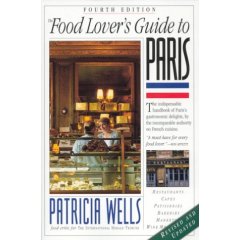
We lived in Germany, and we often travelled to France for a couple weeks at a time, exploring different regions. We used lots of books, but the three we used most often for France were Patricia Wells Food Lover’s Guide to France, Patricia Wells Food Lover’s Guide to Paris, and a book published annually called Europe’s Wonderful Little Hotels and Inns.
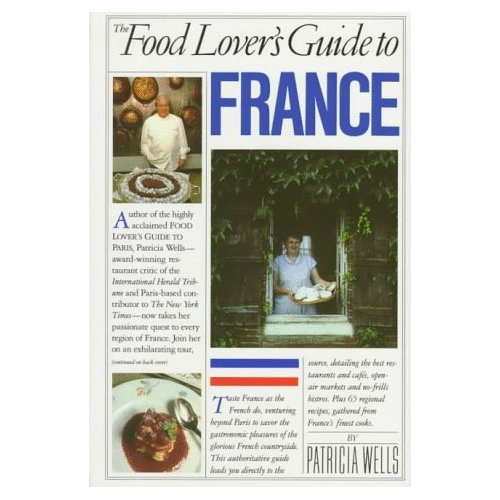
We didn’t have a lot of money, but what we lacked in money, we made up in energy, optimism and research. We found wonderful places to stay, fabulous meals and affordable side trips. We lunched out of charcouteries and boulangeries, we dined demi-pension in Michelin “Red R’s” (good local food at reasonable prices.) We found ourselves in the Burgundy area again and again, and Patricia Wells led us to Monsieur Fallot’s mustard factory in Beaune. Click there for a virtual visit to his factory in preparation for your real time, in person visit.
As I stood there, transfixed, in the Sultan Center, I was back in Beaune, travelling in France with some history and “foodie” friends, and we made a special stop at M. Fallot’s factory, whose address was listed in the original Food Lover’s Guide to France I was using then. I am guessing he has asked NOT to have his address given any more, maybe he had too many visitors like us. We couldn’t get enough of his mustards – we stayed and watch him filling jars with many different kinds, and bought at least one of each variety. His mustard is the gold standard of mustards. Worth a trip to Beaune.
Except you don’t have to go to Beaune – you can find M. Fallot in the Sultan Center in Salmiyya, or in William-Sonoma if you are in the U.S. and in other parts of the world where you find fine condiments.

The latest edition I could find of the Food Lover’s Guide to France was 1987, for $1.99 used, through Amazon. The latest edition I could find of Food Lover’s Guide to Paris was 1999, and the cost, used, was $9.99, again through Amazon. (Disclaimer/Disclosure: yes. I do own stock in Amazon. Help me keep Amazon stock high, please. 🙂 ) I imagine some of the information in both books is outdated, restaurants have closed, newer, haute-er places are open, but I would still say they are worth the price.
Both guides list market days for various arrondisement/towns/villages, and for that alone, they are worth the price. Wells describes local specialities, and best of all, Wells is deliciously readable. Even if you don’t have a trip to Paris or France in your near future, Wells’ books are fun to read, and full of wonderful, valuable information.
The most recent edition I can find of Europe’s Wonderful Little Hotels and Inns on Amazon is 2003, but I know there are more recent editions because mine is 2004. It is edited by Adam & Caroline Raphael, and has hotels listed throughout Europe, not just France, although the lion’s share of hotels listed ARE in France. They range from budget to unbelievable luxury – and the twist is, this book is made up solely of recommendations from customers. Someone has to recommend the hotel, another has to second the recommendation, and readers keep the postings up to date. We have found some truly memorable hotels using this guide, hotels full of charm but affordable for the region. Most of the hotels were awesome. Even used, even outdated, one good hotel stay at a charming but reasonably priced hotel will pay the cost of the book.
Second – Get Organized
Here’s what you need for this step – paper, pen, phone, e-mail, WOM (word of mouth). Figure out who you want to spend Thanksgiving with. Give them a call. If they sound genuinely disappointed because they have visitors from out-of-town, tell them to bring their visitors – Thanksgiving is a great holiday for flexibility. (We usually have more than one table going, one for the kids, too, or several mixed up)
Our book says that we are to entertain strangers, that sometimes when we welcome strangers, we welcome angels without knowing it. Sometimes a stranger adds the most amazing memory.Our first married Thankgiving, we had a soldier join us who would soon be leaving the military. We still remember his delight and amazement at being included. We’ve never fogotten him – he added so much to that day.
When someone asks what they can bring – have some ideas ready! It’s usually safe to ask someone to bring a dessert – or drinks – or dinner rolls. If they have something else in mind, unless it is totally outlandish, say “yes” and just roll with it. It’s part of the fun.
Outline what you want to serve – finger foods before dinner, dinner – courses if you are including soup, dessert and coffee (in the same room? move to another room?)
Make a grocery list. Do the major shopping now, so you have everything you need. Go with what is available – for example, last night in the fish market, I saw the most amazing, huge shrimp, and the man told me they are from Kuwait. Believe me, we will have shrimp cocktail on our menu this year!
Figure out how you want the table(s) and check your linens to be sure what you need is clean and ironed. Make sure the silver is polished, the crystal washed and sparkling. Do this now! You don’t want to have to worry about this close to Thanksgiving. Give yourself the gift of time, by doing the little things in advance that can throw you off course if you let it go to the last minute. We want you to be thankful on Thanksgiving, happy and relaxed and delighted to see your friends – and that takes some preparation and work ahead of time.
(My preference is to set up a buffet table – that way people can eat what they want and pass on what they don’t want, without being conspicuous. You know, like you may adore creamed onions, and the kids will hate them! It’s OK. They’re kids. It’s Thanksgiving.)
Take another deep breath – honestly, this is going to be fun.
Big Diamond and Little Diamond
Today is my last day here, before I leave to go back to Kuwait. This morning, I packed everything except what I am wearing today and tomorrow. I know myself too well. I have to go to one of my favorite stores today to buy my father some soft cotton gardening gloves. I will have to face one last temptation.
No, I did not make it out of the store without buying something for myself. It’s the smell. . . You walk into a hardware store and something in the air gets to you. I love hardware, I love new bathroom ideas (glass block makes me shiver in anticipation) and oh! a new magic tool! A storage solution! Hardwood flooring! New countertop options. . .! New shades of paint! steel wool! Oh! Oh! Oh! The problem is I know I still have a little room in my suitcase. . .Yes, I am a hardware junky.

My sister, Big Diamond, is in town and called me to ask if we could have lunch together with her daughter, Little Diamond. They like Vietnamese food too – I have to have one last portion of Vietnamese salad rolls with shrimp, and a “small” bowl of vegetarian Pho. I picked them up nearby. I know you have a lot of curiousity about me and my family. Here is my sister and her oldest daughter:
Recent Comments
Kitchen on Isiais: Winding Down intlxpatr on Shampoo Ginger tigerbutterya0c5ff1d… on Shampoo Ginger intlxpatr on British Soldier Kidnapped, Esc… John on British Soldier Kidnapped, Esc… Wikipedia Donate Button

Amazina


Early Voting in Florida


