Sometimes there is no one to blame, not even a way to blame yourself and things just go off track. We had such an experience coming to Baton Rouge, a sweet drive on a beautiful day.
We had called the day before to tell them we would not be arriving that day, but we had already paid for the room and we asked them to hold it, that we would arrive the next day. After five hours on the road, we were eager for a chance to settle in and relax before AdventureMan headed off to his afternoon sessions.
The room wasn’t ready. The room we had paid for, and expected to be held, was not held. We were on the “wait list”, the snippy, disrespectful girl at the executive desk told AdventureMan as I circled the crowded parking lot, desperately seeking a spot. I curse you, big ass trucks who park over the line! I curse you, arrogant drivers who take two spaces when you park!
AdventureMan calls me; you do not want a call from AdventureMan when things haven’t gone his way and he cannot make his will dominate the situation. We decide the best strategy is to go to lunch.
(see entry for Ninfa’s Mexican restaurant)
After lunch, we try again, softly talking with the desk clerk, Scott, who is helpful. He takes pity on us, and finds us a room which is ready, and accommodates us. He soothes us. AdventureMan heads off for his garden talk and I head off on a reconnaissance mission – I have seen there is a huge mall nearby with a Macy’s. I find it, and some other wonderful places for the next day’s adventures, and then, on my way home, I get another call from AdventureMan.
He is fuming. I hadn’t answered his call because I was driving, no matter, he kept calling and texting “call me!” until I could find a red light and call him.
He heard loud chords of a band starting up. Very loud. He went to the band and casually asked them how long they would be playing, and was told from six to ten. He went to the desk and asked for a room change, and was told the hotel was full. (He also mentioned that he was SO glad to have been helped earlier, as there was a huge line waiting for rooms at 4.)
“We need to change hotels!” he started and told me the whole story.
“I’m almost there!” I responded, but it took me another ten minutes to find a parking place.
By the time I got to the room, he had calmed down – a little – and had found a wonderful place to go for dinner. We heard a few chords – actually not bad – and headed out for a wonderful dinner at Al Basha’s, and it was a total mood changer 🙂
When we got back, the band was blasting, and we are one of the nearest rooms to the band, and the hotel is full of people around our age, but the truth is, the band was pretty good, and we had some shows we like on cable, and they really did quit at ten, well before we turned out the lights.
When things go not-quite-right – and that happens to everyone – I just sigh and say “every monkey gets his turn in the barrel;” I guess it’s sort of karmic, but bad things happen, they happen to everyone. This was not earth-shaking bad, just annoying, not going smoothly bad. We will never stay in this hotel again, even if the conference is held here again; there are lovely hotels nearby in Baton Rouge.
AdventureMan and I are not even typical of our generation. Living overseas, living in so many countries, we just got used to paying in cash. In our early years, even countries like France had more places that didn’t take credit cards than places that did. When it comes to buying gas in France, you’d better have a bucketful of cash 😉
But even those in our generation tend to pull out their credit cards for meals out, so this week AdventureMan asked wait staff percentages of who paid cash and who paid with cards. The most common answer was around 85% paid with a card.
I can understand. The restaurants/stores don’t have to keep as much money on hand for change, so it is easier on them, and those who pay with a card can track their expenses. Part of me laughs and says I think we don’t want to track our eating-out expenses, and another part thinks that because we pay cash, we probably don’t indulge in extras so often, which, for us, is a good thing. If we have dessert, we normally split it.
I do remember how wonderful it was to be able to pay all the tolls on the toll roads in France with a credit card, how wonderfully easy it was to use my credit card and the ATM’s in Kuwait and Qatar and Saudi Arabia – for some reason, it was like they were years ahead of the USA in banking technology, and banking by phone. But even there, in the smaller shops, you needed cash.
Hey, millennial! Yes, you there, standing in line at the Starbucks (SBUX) counter, tapping away on your smartphone, with the button-like doodads growing into your earlobes — put away that debit card.
No, don’t worry. No one’s going to nag you about buying a cup of overpriced coffee. We all have our vices. And you’re still basking in the fresh glow of youth. At least your vices won’t hurt you as much as they’d hurt us old codgers.
But the way you’re buying your coffee — you’re doing it wrong. And you’re not alone.
Paper or Plastic?
According to a recent survey by CreditCards.com, only about 1 in 3 American consumers currently uses a plastic card — credit or debit — when buying something that costs $5 or less. Most folks still pay with cash for such small purchases, with folks ages 65 and up having the greatest fondness for paying with greenbacks (82 percent).
But when it comes to the Millennials, 51 percent use plastic to pay for such purchases.
There’s only so much cash that will fit in your wallet, and if you limit yourself to paying in cash — you eventually run out. Old folks like me, whose memories aren’t what they used to be (and maybe never were), like this “automatic” check on spending. And as a result, CreditCards.com reports that the older a consumer is, the more likely he or she is to pay for small purchases in cash than to pull out a plastic card.
Not All Plastic Is Created Equal
Among plastic cards, nationally, consumers are about twice as likely (22 percent) to use a debit card to pay for a small purchase as to put the purchase on credit (11 percent). When the data is broken down by age group, it turns out that millennials are even more fond of debit cards than the average shopper. Consumers ages 18 to 29 use debit cards more often than any other age group when making small purchases.
But here’s the thing: Debit and credit cards may be nearly equal in their convenience of use when shopping for small items (eliminating the need to carry weighty pockets, jingling with unwanted coins). But they’re not at all equal in the financial benefits they convey to a consumer.
To cite the most obvious example, credit cards often offer you “rewards” for using them. With card companies charging retailers fat interchange fees for every transaction they process, they can afford to pay you generously when you “choose plastic.” Airline miles; “points” redeemable for cash back, account credits, merchandise, and gift cards; and just plain cash-back offers, as high as 5 percent, all make the choice between credit and debit a bit of a no-brainer. (Granted, some debit cards offer rewards of their own — but they’re rare, hard to find and usually much less generous.)
But rewards are only the most obvious monetary benefit of choosing credit over debit. Consider: When you pay for a purchase — large or small — with a debit card, that money is almost immediately deducted from your account.
What Warren Buffett Thinks
In contrast, a charge placed on a credit card is a debt that doesn’t come due — and needn’t be paid — until your credit card bill is sent to you. Depending on the date of purchase and the due date on your credit card bill, you may not have to pay that bill for as long as a month — which means you may be able to hang on to your money, and collect interest on it at your bank, for that time. (Super-investor Warren Buffett calls this concept of using someone else’s money, and collecting interest on it for your own benefit, “free float,” and deadpans that his business partner “Charlie and I find this enjoyable.”)
Granted, with the ultra-low interest rates that banks are paying on checking accounts these days, free float isn’t as profitable as it used to be — probably only pennies per credit card billing cycle. But still, free money is free money. Are you going to turn it down because you’re not being offered enough free money?
Of course, you do need to remember to pay your credit card bill on time, so as not to get hit by late fees. But as long as you can manage that, a credit card isn’t really a card you use for taking out long-term credit at all. It’s a pay-once-a-month debit card — that pays you free money every month.
The High Cost of Not Buying on Credit
Another advantage: CreditCards.com quotes Martin Lynch, director of education of the Cambridge Credit Counseling Corp. of Massachusetts, noting that “debit cards … can’t be reported to the credit bureaus and, thus, they don’t build [up] credit [ratings].” Building up a strong credit rating is crucial to a young person looking to buy his or her first car or to secure a mortgage on a starter home.
Getting charges and on-time payments, onto your credit report — to establish a track record as a reliable borrower — is therefore a good thing. It’s something you want to do as often as possible, and using a credit card to pay for small purchases is a great way to build up your credit report quickly.
Melinda Opperman, senior vice president of community outreach at Springboard Nonprofit Consumer Credit Management Inc., another expert interviewed by CreditCards.com, echoes the sentiment: “We like the idea of using credit cards frequently for small, manageable expenses. This gives users the benefit of an active credit history, but leaves them with monthly bills that are small enough to pay off in full, so they don’t have to pay any interest.”
Suffice it to say, any idea that’s supported by professional credit counselors, and by the world’s third richest man, is one that millennials would be well advised to take to heart.
Motley Fool contributor Rich Smith has no position in any stocks mentioned, and hasn’t used a debit card in years. The Motley Fool recommends and owns shares of Starbucks. To read about our favorite high-yielding dividend stocks for any investor, check out our free report.
Our grandson is back in swimming lessons, and I have to admit, it is one of my favorite things to do with him. I get to pick him up at school and get him ready, then shower him down and take him home. During all that we have the most amazing conversations, and we laugh a lot, too. Yesterday he did something new, something he called “bicycling in the water” that we used to call “treading.” He had never done it before, and he was good at it. There are days when you are greatly blessed, if you only have the eyes to see it.
AdventureMan and I are having too much fun! We are in the midst of planning two smaller trips, and one larger trip. We call back and forth from office to office – “Have you looked at this place? It gets great reviews!” or “You could book that motel where I stayed when I went there with the birding group!”
The first trip we will take will be in conjunction with a conference AdventureMan will attend, and then we will head on into the southwestern wilds of Louisiana, tracking the Cajun Nature Trail, ending up in Houma after several days. We love knockin’ around with our binos and cameras on the backroads, love the moodiness of James Burke Country, True Detectives, the pure idiosyncratic nature of southern Louisiana.
The next trip will be in the other direction, back to a birding area through which the birds travel south when winter sets in.
The third – back to France! Wooo HOOOOOO!
Fall is kicking in in Pensacola, AdventureMan is out mulching and trimming up the garden, taking out a summerload of weeds, and I am grinning at a lowering utility bill. Even a few degrees difference make a giant reduction in the need for the A/C. I am smiling more; the humidity is lifting and I can feel cool temperatures around the corner. My favorite time of the year!
Language changes, and usage changes, and one of the differences I heard on this trip was an increasing use of the word “Perfect!”
We had eaten at Mooses Tooth (see below) and we wanted to change up the pace for our last night in Anchorage, finishing with really really good seafood in Anchorage. We decided on The Bridge, and we decided to make reservations.
“I’d like a reservation for two at seven o-clock” I said and the lady taking the reservation said “Perfect!”
She asked our name and I told her and she said “Perfect!”
Our name is perfect? That we gave her our name is perfect? That she wrote it down perfectly?
I told her we would see her at seven and she said . . . well, you can guess what she said:
“PERFECT!”
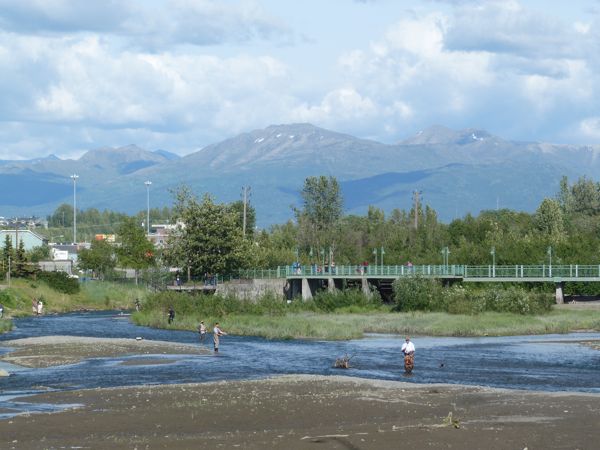
It took us a missed exit and some driving around to actually find The Bridge, and oh, what fun. It is in the downtown most part of downtown Anchorage, on the banks of the river, spanning the river.
There are a lot of parking lots with limited parking, limited to like two hours because they have so many people wanting to fish in this river. At seven at night, this river was PACKED. The river was packed with people, fishing! They had gorgeous weather, and the fish were biting.
And this is a view of a part of the interior. There are a variety of seating areas; this area was for those who had reservations. There was seating on a patio, but this is a very brightly lit place on a hot, sunshiney day, and I am glad to be inside, out of the hot sun, hot sun at seven at night – it’s the equinox.
We loved this restaurant, and while we had many wonderful experiences on this trip, this would be one of my first choices going back. It’s a little off the beaten trail, (although we saw two tables of eight reserved for Orvis fisherpeople) and the people who worked there seemed to really love working there. At least half of the people were from Anchorage.
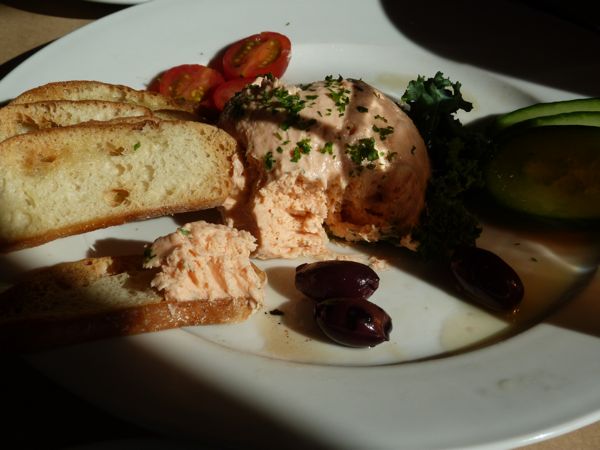
We ordered the Smoked Salmon Pate, not realizing we would also get more pate with our bread. The Bridge is like that; it gives you more than you expect. Sorry for the high contrast photos; there is a lot of bright sun I am working with here.
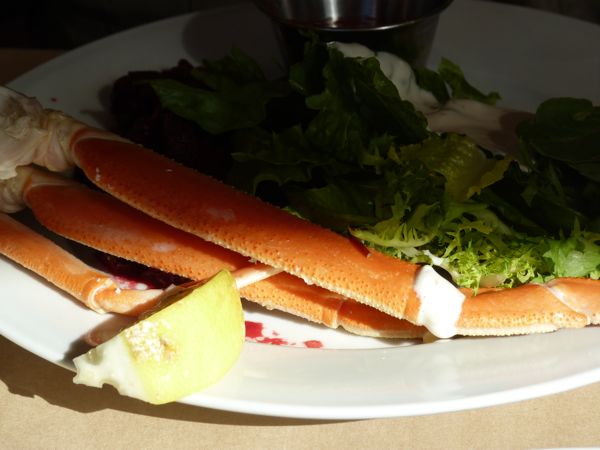
AdventureMan also ordered crab legs, not realizing they came on the appetizer buffet you get with the full meal, which we ordered. We ordered too much food for our last night in Anchorage, when it didn’t make sense to take food back with us.
The Bridge has a fabulous appetizer buffet.
For his main course, AdventureMan had the grilled halibut, which he says was the best on his entire trip:
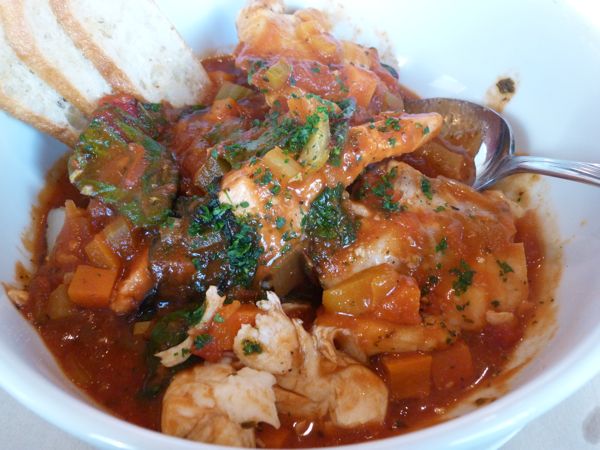
And I could not resist ordering The Bridge’s Alaska Cioppino – I am a sucker for Cioppino, and this was exquisite.
They also had rhubarb crisp as a dessert, but I could not even think about eating another bite. Next time I hit The Bridge, I will start with the Rhubarb Crisp 🙂
The Bridge is only open for the summer season. It is a total WOW.
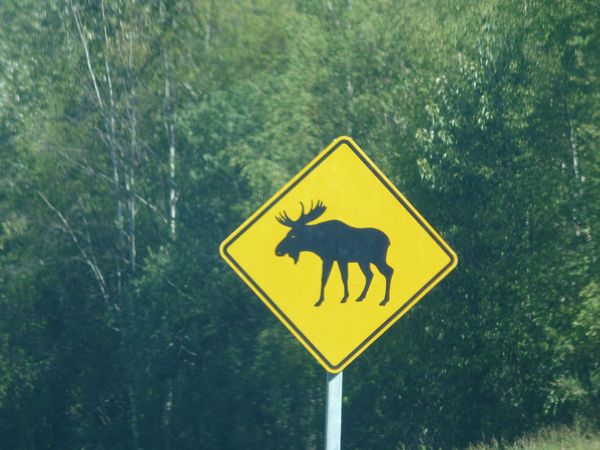
Moose crossing signs are everywhere; hitting a moose is a lot like hitting a camel, not good for your car and not good for the moose:
We didn’t expect much from the Golden Palace on Tudor, near our hotel, and we were delighted at the quality of the meal. It was wonderful and spicy, and the flavors shone!
Fascinating article from Digg, saying Russian press has totally different spin on the Shooting down of Malaysia Air Flight 17. All part of a big Western plot . . .
When it was the Soviet Union and they told such whoppers, even their own citizens didn’t believe them. Now that they have access to cable news, and other inputs through the internet, how can they hope to pass this one along as truth?
JULY 20, 2014
The Russian Public Has a Totally Different Understanding of What Happened to Malaysia Airlines Flight 17And it’s more of a problem than you think.
Did you know Malaysia Air Flight 17 was full of corpses when it took off from Amsterdam? Did you know that, for some darkly inexplicable reason, on July 17, MH17 moved off the standard flight path that it had taken every time before, and moved north, toward rebel-held areas outside Donetsk? Or that the dispatchers summoned the plane lower just before the crash? Or that the plane had been recently reinsured? Or that the Ukrainian army has air defense systems in the area? Or that it was the result of the Ukrainian military mistaking MH 17 for Putin’s presidential plane, which looks strangely similar?
Did you know that the crash of MH17 was all part of an American conspiracy to provoke a big war with Russia?
As the crisis surrounding the plane crash deepens and as calls for Vladimir Putin to act grow louder, it’s worth noting that they’re not really getting through to Putin’s subjects. The picture of the catastrophe that the Russian people are seeing on their television screens is very different from that on screens in much of the rest of the world, and the discrepancy does not bode well for a sane resolution to this stand-off.
But in Russia, television—most of it owned or controlled by the Kremlin—is trying to muddy the water with various experts who insist that there is no way that an SA-11 missile system could possibly have downed a plane flying that high. And, mind you, this is not part of a larger debate of could they, or couldn’t they; this is all of Russian television and state-friendly papers pushing one line: the pro-Russian separatists we’ve been supporting all these months couldn’t have done this. Watching some of these Russian newscasts, one comes away with the impression of a desperate defense attorney scrounging for experts and angles, or a bad kid caught red-handed by the principal, trying to twist his way out of a situation in which he has no chance.
And that’s when they’re not simply peddling conspiracy theories, which have become a kind of symbiotic feedback loop between state TV and the most inventive corners of the Internet. The best of the bunch is, of course, an elaborate one: MH17 is actually MH370, that Malaysia Airlines flight that disappeared into the Indian Ocean. According to this theory, the plane didn’t disappear at all, “it was taken to an American military base, Diego-Garcia.”
Then it was taken to Holland. On the necessary day and hour, it flew out, bound for Malaysia, but inside were not live people, but corpses. The plane was flown not by real pilots; it was on autopilot. Or take-off (a complicated procedure) was executed by live pilots, who then ejected on parachutes. Then the plane flew automatically. In the necessary spot, it was blown up, without even using a surface-to-air missile. Instead the plane was packed with a bomb, just like the CIA did on 9/11.
The theory also notes that the passports of victims at the crash site all look brand new even though there was an explosion and a fire. “That is, the passports were tossed in [after the crash].” And, most damingly, all the victims’ Facebook pages were created in one day and the media is not showing any of the victims’ families, just the crash site. Though this is not true of Western media, Russian television has not featured any of this. “There’s very little talk about the human cost of this catastrophe,” says independent television analyst Arina Borodina, formerly of the prominent Russian dailyKommersant. “Instead we’re seeing these unbelievable versions. For example, that someone had actually been hunting for the president or that some of the locals saw parachutists coming down from a height of 30,000 feet.”
But though it may look unconvincing to us in the West, that is because we have seen and read other things that contradict it. The Russian media space has become so uniform and independent voices so cowed and marginalizedthat there is no counterweight and, when there’s no counterweight, if you repeat a thing often enough, it becomes the truth.
This isn’t an innocent you-say-tomato moment; this is a very problematic development. The result of all this Russian coverage is that Russians’ understanding of what happened is as follows. At best, the crash is an unfortunate accident on the part of the Ukrainian military that the West is trying to pin on Russia, which had nothing to do with it; at worst, it is all part of a nefarious conspiracy to drag Russia into an apocalyptic war with the West. So whereas the West sees the crash as a game-changer, the Russians do not see why a black swan event has to change anything or they want to resist what they see is a provocation. To them, after a few days of watching Russian television, it’s not at all clear what happened nor that their government is somehow responsible for this tragedy. And the more we insist on it, the less likely the Russians are to agree.
Floriana Fossato, a longtime scholar of Russian media, says that this, coupled with the media’s conscious use of the Soviet language of crisis—“traitors,” “fascists,” “fifth columns”—quickly brings to the surface the psychological demons of a society massively traumatized by the 20th century, traumas that society has never adequately addressed. The result, she says, is a kind of collective PTSD-meets-Stockholm Syndrome.
In Russians’ view, “Americans have recreated the situation where they have excuse for intervention,” Fossato says. “No one admits that they are afraid, but they are. They are panicked. And they are right in being afraid because theyknow what happened, and they know there must be an answer to what is going on. And so they lock onto Putin for protection. This is why they don’t turn to Putin and ask him to do something.”
But in addition to the Russian public not clamoring for decisive action from Putin, there is a far more serious problem. As David Remnick noted in hiscolumn on the crash of MH17, Putin has become prisoner to his own propaganda machine, much as he’s become prisoner of the rebels he thought were doing his geopolitical dirty work in Ukraine.
After Putin’s ascent, media became the flexible element that could be readjusted for any twist or turn of the political rudder. “Today, it’s the opposite,” says Gleb Pavlovsky, a political consultant who helped Putin win his first election and was a Kremlin advisor for years afterwards. “It’s almost impossible to turn the rudder of the picture that’s formed on television because it would mean losing the audience they formed in this year” of sword-brandishing and imperialistic conquest.
This audience is now fired up and brandishing its own swords, and the propaganda apparatus, much like the rebels in eastern Ukraine, has rolled on an on, fed by inertia and paranoia, reproducing and magnifying itself with each newscast. The sensationalized newscasts are now neck-and-neck, ratings-wise, with the sitcoms. “It keeps people in a traumatized state,” Pavlovsky says. “It’s notable in media metrics, and in conversations with people. They lose their sanity, they become paranoid and aggressive.”
This has had a noticeable impact on the ruling class, Pavlovsky says, which has to watch this stuff in order to stay au courant. And they become less sane as a result, too, which limits their ability to adequately assess a situation such as this and devise a good way out of it.
“It’s noticeable that the Kremlin is much more tempered than Russian TV but can’t change it,” Pavlovsky says. “It’s fallen into a trap, so it’s now trying to function within the strictures of this picture.” He cites the example of the PR contortions the Kremlin had to use just to announce that it would not send troops into eastern Ukraine. “In this seemingly controlled media, any rational political arguments of the state have to be hidden and packaged in idiotic, jingoistic rhetoric,” Pavlovsky says.
None of this looks very good for the West, which is clearly hoping that MH17 is the thing that will bring Putin to his senses and get him to agree to some kind of off-ramp, or, at least, a deescalation. But that’s hard to do if neither your public nor your political class see it as a game-changer or as anything that should force Russia to end this game.
“Of course it gets in Putin’s way. He has to be the hero of this TV material, he’s not free from it anymore,” says Pavlovsky. “I have a feeling not very comfortable right now.”
Who knows why we book a hotel we do? Most of the time, I go to TripAdvisor, and see what other people like. Normally, we eliminate larger hotels and look for something smaller and more private. If we are going to stay in a chain we usually go to a Marriott Residence Inn. This Springhill Suites was one of the top rated, and while it was not near the airport, we knew it was an easy drive to the airport, so we booked.
When we arrived, we found we really like Anchorage. AdventureMan said it reminds him a lot of Seattle; it still has a lot of buildings that look about a hundred years old, and then a lot of sprawling growth, with mountains in the distance and a great shoreline and harbor.
The hotel room they had given us was on the first floor, so we asked for something higher. The room they gave us was lovely, but right by the elevator, so we went in to give it a try before we accepted. It was silent. The rooms are SO well insulated we didn’t even hear other doors opening and closing. It was QUIET.
It was also uncluttered, beautiful and serene. We had wifi and we had a working area and a small kitchen area with a fridge, microwave and even paper plates and utensils supplied, along with, thank God, a coffee maker.
The toilet had its own separate compartment, and the washbasin and beautiful huge shower were in another separate room. We overlooked a small lake where people were walking around, running around and walking their dogs. It was lovely. Off in the near distance, we had mountains. We really liked the room.
As we were leaving for dinner that night, I noticed that the bus had an interesting marking:
We don’t know if the bus was owned by the Inupiat people, or they own this Marriott hotel franchise, which is very near the Alaska Native Hospital, but many of the workers were Alaska Natives. (There is a difference; I am a Native Alaskan, i.e. I was born there, but I am not an Alaska Native, who are the original inhabitants. Sometimes, on government forms, I am tempted to check the block for Alaska Native, but . . . I resist. I overcome that little mischevous demon who leads me into temptation.)
The last time we were in Homer, we tried to get into The Mermaid, which was near the Driftwood Inn, but it was full, and worse – fully reserved. We had not made reservations. I wasn’t going to make the same mistake this year, but as they do, things had changed, The Mermaid was under new management and the people who had created it’s huge success were at another restaurant, The Little Mermaid. So we made a reservation at The Little Mermaid and hoped for the best.
Oh my.
It is about as opposite to Captain Patties as can be. While both emphasize great fresh seafood, The Little Mermaid is more experimental.
We were really glad we had made reservations. There is a bar, very small, and then there are like four booths and maybe three more bar stools at a counter in the room to the right.
This is the exterior:
This is the blackboard, posted to the left as you enter, actually in the bar area which overlooks the harbor:
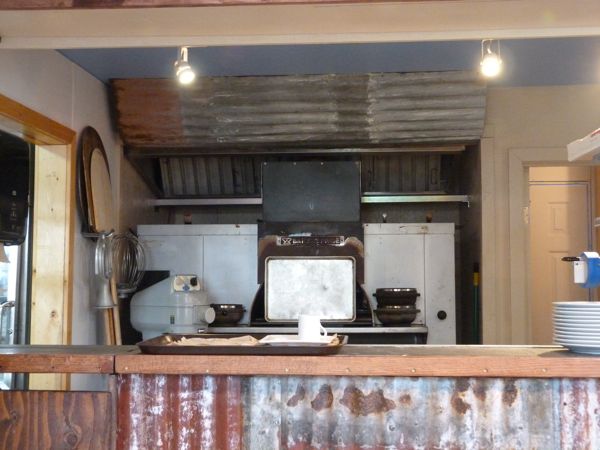
And this is a view into the kitchen:
A view of the interior where the booths are:
Our appetizer, Halibut Balls with Teriyaki Sauce. This was absolutely delicious, and I have never seen halibut presented this way before:
Now the sad part. When our meals came, I forgot to take any more photos. AdventureMan had Kodiak Scallops, which were very simple and absolutely delicious. I had a Brazilian Stone Bowl, a big (stone) bowl of Alaskan seafood in a coconut milk liquid, boiling hot and it stayed hot; it was novel and unforgettable and delicious. As we were waiting for our meals, the waitress came and asked me if we could wait just a couple minutes more; they had a fresh batch of mussels in and would like to throw a few into my dish, would I mind waiting?
We had seen the man walk from the harbor into the restaurant, carrying a big bag of freshly caught mussels. Of course I would wait!
For me, this was one of our best meals of the trip, and if you go to Homer, be sure to make a reservation at The Little Mermaid, out on Homer Spit. This is also where the locals go; it is a very popular place, deservedly.
. AdventureMan has wanted to go there forever, it’s one of the highlights of Homer. I have wanted to go ever since I saw the book on Pratt Museum Quilts; they are incorporated throughout the museum.
The Pratt Museum is a WOW. It is beautiful, for one thing, all woods and stone, a beautifully crafted, cared for museum. We happened in at a relatively quiet time and had time to talk with the volunteer at the desk, who sold me several raffle tickets for this year’s quilts. I really want to win it; it has blueberries all over it. I suppose I could do a blueberry quilt, but this one is already done!
They also have a super gift shop, with lots of gift ideas, many locally produced by local artists. You know how it is with tourists, there are a lot of places that sell schlock. When you want a step up, go to a museum gift shop. I used to buy my blank cards at the Tarek Rajab museum in Kuwait, beautiful cards with silver bedouin and Arabic jewelry, or doors of old Kuwait, old Oman, etc. Lovely, artistic cards.
This is one of the permanent exhibit quilts. It may have been on the bottom floor, with the marine exhibits. Things got crazy after our quiet visit with the volunteer; a large group of students came in, maybe eighth grade, with all the chaos and laughter kids that age engender. We hurried ahead of them to the exhibits, and there are a LOT of exhibits.
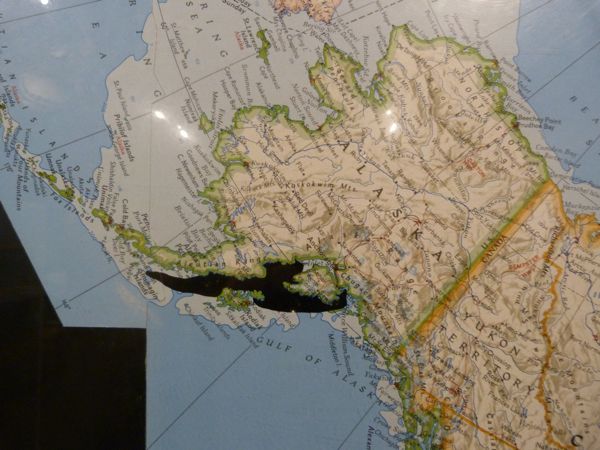
This was a map of the Exxon Valdez oil spill, from which Alaska is still recovering. We learned something interesting, and that is that as horrible as the spill has been for the environment, it put Alaska on the map, raised awareness, and that is when the tourists really started pouring in, maybe like to see the splendors of Alaska before they are destroyed by oil spills or climate change.
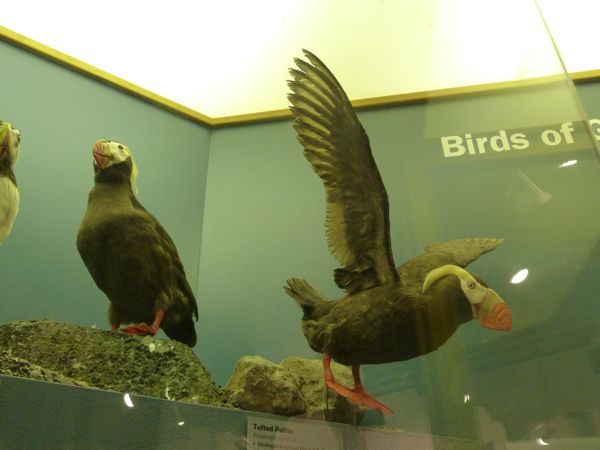
These are some of the Alaska birds you can see on the Kenai peninsula, including, I think, a puffin 🙂
The Pratt has so many clever and original exhibits. I loved the film presentation on how the First Nation peoples catch, smoke and store salmon. If there is ever a zombie apocolypse and I have to survive, now I know how to prepare and keep salmon over long stretches of time by smoking it and drying it in strips. And protecting it from bears, who love salmon.
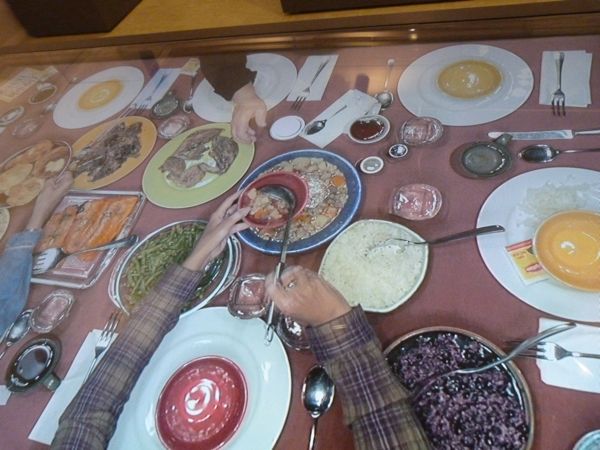
This presentation was like a table, but the movie was on the table. There were foods, and it was like we were the people eating. Someone would pass a dish and explain a little about what it was, like whale blubber or seaweed something. As much as I like to try new things, some of what they had on the table was stuff I would cut into very tiny pieces and push around the plate so it looked like I had tried some but I didn’t. I loved the presentation; so interactive.
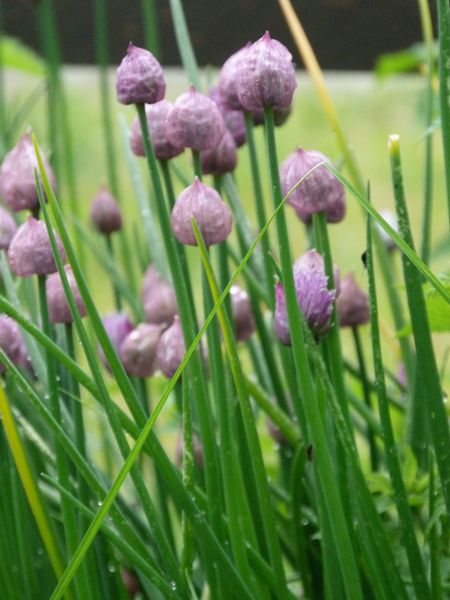
Although there were a lot of really good exhibits, we sort of hurried through once the crowd arrived. We did spend a good amount of time in the garden outside, where I laughed at myself. I learned a lot about myself this trip, why I love the colors I love (mostly greens – blues – purples and why I don’t like a lot of yellow or red in a garden. Almost everything in this garden was blue -purple – fuchsia with just a smattering of tiny yellow flowers, not a speck of red, except muted in some of the foliage, which was mostly shades of green. AdventureMan laughed, too, as it is the bane of his gardening existence that I want the bright red Turk’s Heads and the big yellow Cassia where I can’t see them.
An entire day, free to do whatever we want, and it is clear, no rain, even some sun sparkling through. We know what we want to do; we want to find Skyline Drive.
We wouldn’t have even known about Skyline except that AdventureMan found a book in the Driftwood Inn lobby about Quilts at the Pratt Museum, and as I read the commentary from women who had worked on their annual lottery quilt, I discovered many of them mentioned coming to Homer and living on Skyline Drive. Skyline is up the hill – way up the hill – from Homer. You can see the sun glint off windows up there, but we hadn’t thought to go there.
One of the women mentioned that people came to Homer in the 70’s full of hopes and dreams and moved into abandoned homesteads up on Skyline, and a whole community evolved, focused on self-reliance and sustainable living.
You can kind of see it in this map:
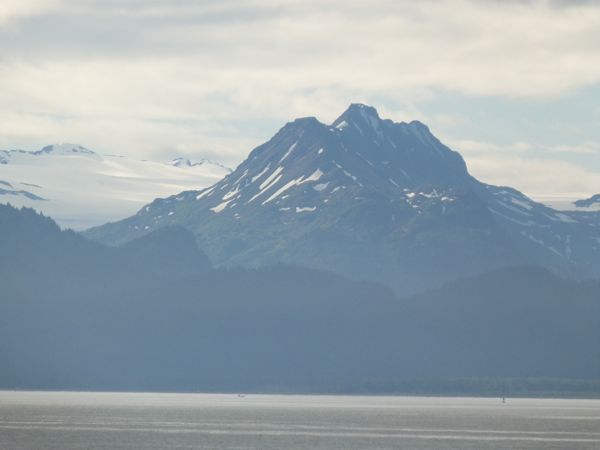
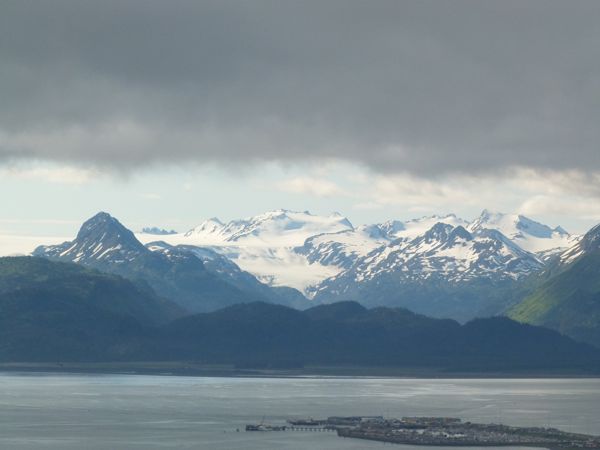
The scenery was spectacular. We started on the Diamond Ridge road, which you actually catch outside of Homer, and then continued on Skyline. Most of the houses we saw had views to die for – forest and bay, endless mountains and glaciers. The drawback is that during snowy season, it could be difficult to get into town, and if you lose electricity, you could find yourself very cold and very isolated.
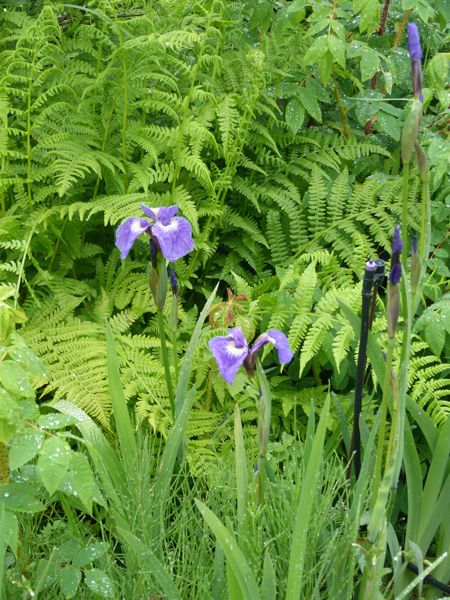
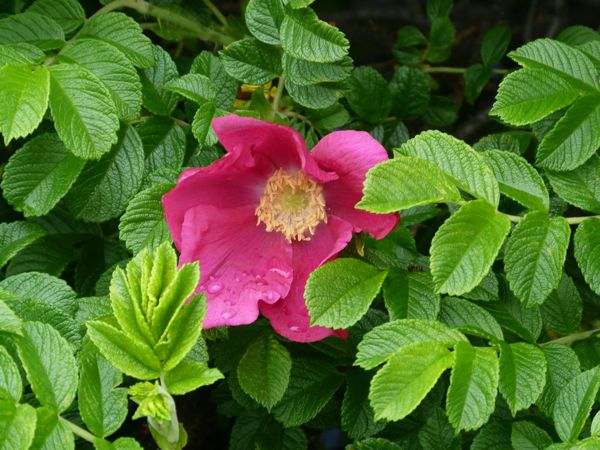
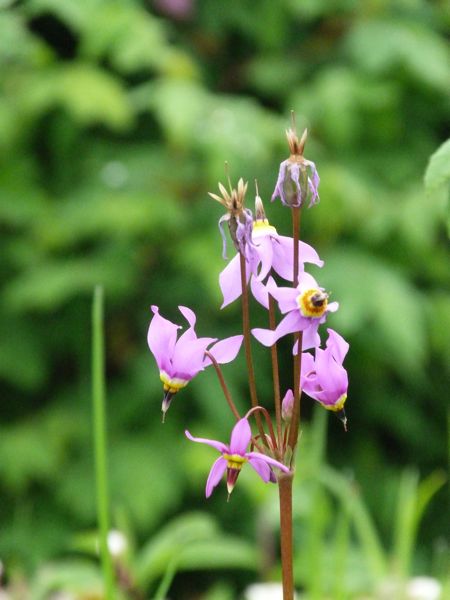
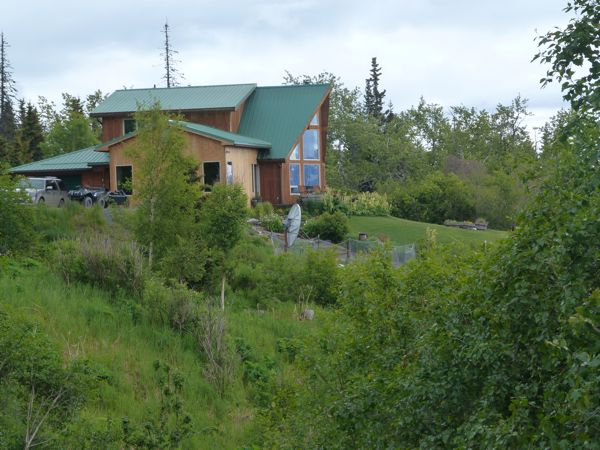
We ended up on East End Road, drove to the end, and then took the Old East End highway for a while, looking at wildflowers and scenery. I found this house which I thought would be a good house to live in – close enough to Homer, but still on a quiet road, lots of acreage, nice garden spot, and look at those floor to roof windows to capture the view. Gorgeous location, nicely thought through house.





















 Here There and Everywhere
