Reports of Sexual Assault Increasing in India: Warning Issued
Another Woman Who Should Have Known She Was in the Wrong Place? She’s in her hotel room – near the Taj Mahal . . . is this another case of being in the wrong place in India? You’re not safe in your own hotel room? The manager of the hotel comes to your room to wake you for a wake-up call???
20 March 2013
Tourist balcony jump: Hotel manager and guard in court
A hotel manager and guard accused of sexually harassing a British tourist who jumped from a hotel balcony to escape have appeared in court in Agra.
A lawyer acting for hotel manager Sachin Chauhan said his client denied the charge and he had been trying to wake the woman up because she had asked for an early morning call.
The 31-year-old British woman was injured after jumping on Tuesday.
The Briton has been giving her statement at the court.
Initial reports suggested the woman told police she asked for a wake-up call at 04:00 local time and was offered a massage by the hotel owner when he knocked on her door.
She said the man would not leave so she locked the door and jumped from her balcony to the level below, injuring her leg, before fleeing the hotel.
On Tuesday, a spokesman for the British High Commission in India said UK consular officials in Delhi had spoken to the woman and local police.
The Foreign Office recently updated its advice for women visiting India, saying they should use caution and avoid travelling alone on public transport, or in taxis or auto-rickshaws, especially at night.
It added that reported cases of sexual assault against women and young girls were increasing and recent sexual attacks against female visitors in tourist areas and cities showed that foreign women were also at risk.
Police arrested six people following an alleged gang rape of a Swiss tourist in Madhya Pradesh state last week.
The woman was attacked with her husband as they camped in woodland near a village in Datia district.
The arrests came as India’s politicians prepared to debate a new law against rape, following the outcry over the fatal assault on a female Delhi student last year.
START with Sea of Poppies, by Amitav Ghosh

I recently wrote a book review on River of Smoke, by Amitav Ghosh, which held me spellbound, so riveting that I had to order Sea of Poppies, which is actually the first volume of the trilogy. I had heard a review of River of Smoke on NPR and although it was written as the second volume in a trilogy, it can be read as a stand-alond.
Yes. Yes, it can be read as a stand-alone, but it is so much easier, I can state with authority, if you read them in order. Once I started Sea of Poppies, I also discovered an extensive glossary in the back, several pages, a list of the words, annotated with suggested origins, and it adds so much color to an already brilliantly colored novel. Much of both novels uses words from many cultures, and words that have been formed by another culture’s understanding of the words (some hilarious). If you like Captain Jack Sparrow, you’re going to love the polyglot language spoken by ship’s crews from many nations trying to communicate with one another. It can be intimidating, but if you sort of say the words out loud the way they are written at the beginning, you begin to find the rhythm and the gist of the communication, just as if you were a new recruit to the sea-going vessels of the early 1800’s. I loved it because it captured the difficulties encountered trying to say the simplest things, and the clever ways people in all cultures manage to get around it, and make themselves understood.
Sea of Poppies starts in a small Indian village, with one of the very small poppy gardens, planted on an advance from an opium factory representative, thrust upon the small farmer, with the result that most small Indian farmers converted their entire allotment from subsistence foods to poppies. Ghosh walks us through an opium processing factory, which is a little like walking through the circles of hell. We meet many of the characters we will follow in River of Smoke, and learn how this diverse group bonded into one sort of super-family through their adventures – and misadventures – together.
It is an entirely engrossing work. Sea of Poppies was short listed for the Man Booker award, and was listed as a “Best Book of the Year” by the San Francisco Chronicle, Chicago Tribune, Washington Post and The Economist. The theme is the opium trade, leading to the Opium Wars, with China, and is a chilling indictment of how business interests manipulate a population’s perceptions of national interests to justify . . . well, just about anything, in the name of profit.
The theme is woven through human stories so interesting, so textured, so compelling, that you hardly realize you are reading history and learning about the trade, cultures, travel, clothing, traditions, religions, food, and motivations as you avidly turn the pages.
I can hardly wait for the third volume. Get started now, so you’ll be ready for it when it comes out!
New Virus in Middle East Kills 50% Victims
I found this on WeatherUnderground News this morning. What scares me is that there may be more victims, many more, shepherds who work with goats, laborers, people thought to have very bad colds, maybe even pneumonia, who don’t have the kind of money to fly to London to be diagnosed. If one man spread it to two family members, imagine how many people he had contact with on that airplane flying to London.
LONDON, Feb 27 (Reuters) – The emergence of a deadly virus previously unseen in humans that has already killed half those known to be infected requires speedy scientific detective work to figure out its potential.
Experts in virology and infectious diseases say that while they already have unprecedented detail about the genetics and capabilities of the novel coronavirus, or NCoV, what worries them more is what they don’t know.
The virus, which belongs to the same family as viruses that cause the common cold and the one that caused Severe Acute Respiratory Syndrome (SARS), emerged in the Middle East last year and has so far killed seven of the 13 people it is known to have infected worldwide.
Of those, six have been in Saudi Arabia, two in Jordan, and others in Britain and Germany linked to travel in the Middle East or to family clusters.
“What we know really concerns me, but what we don’t know really scares me,” said Michael Osterholm, director of the U.S.-based Center for Infectious Disease Research and Policy and a professor at the University of Minnesota.
Less than a week after identifying NCoV in September last year in a Qatari patient at a London hospital, scientists at Britain’s Health Protection Agency had sequenced part of its genome and mapped out a so-called “phylogenetic tree” – a kind of family tree – of its links.
Swiftly conducted scientific studies by teams in Switzerland, Germany and elsewhere have found that NCoV is well adapted to infecting humans and may be treatable medicines similar to the ones used for SARS, which emerged in China in 2002 and killed a tenth of the 8,000 people it infected.
“Partly because of the way the field has developed post-SARS, we’ve been able to get onto this virus very early,” said Mike Skinner, an expert on coronaviruses from Imperial College London. “We know what it looks like, we know what family it’s from and we have its complete gene sequence.”
Yet there are many unanswered questions.
Spotlight on Saudi Arabia, Jordan
“At the moment we just don’t know whether the virus might actually be quite widespread and it’s just a tiny proportion of people who get really sick, or whether it’s a brand new virus carrying a much greater virulence potential,” said Wendy Barclay, a flu virologist, also at Imperial College London.
To have any success in answering those questions, scientists and health officials in affected countries such as Saudi Arabia and Jordan need to conduct swift and robust epidemiological studies to find out whether the virus is circulating more widely in people but causing milder symptoms.
This would help establish whether the 13 cases seen so far are the most severe and represent “the tip the iceberg”, said Volker Thiel of the Institute of Immunobiology at Kantonal Hospital in Switzerland, who published research this month showing NCoV grows efficiently in human cells.
Scientists and health officials in the Middle East and Arab Peninsular also need to collaborate with colleagues in Europe, where some NCoV cases have been treated and where samples have gone to specialist labs, to try to pin down the virus’ source.
“One Big Virological Blender”
Initial scientific analysis by laboratory scientists at Britain’s Health Protection Agency (HPA) – which helped identify the virus in a Qatari patient in September last year – found that NCoV’s closest relatives are most probably bat viruses.
It is not unusual for viruses to jump from animals to humans and mutate in the process – high profile examples include the human immunodeficiency virus (HIV) that causes AIDS and the H1N1 swine flu which caused a pandemic in 2009 and 2010.
Yet further work by a research team at the Robert Koch Institute at Germany’s University of Bonn now suggests it may have come through an intermediary – possibly goats.
In a detailed case study of a patient from Qatar who was infected with NCoV and treated in Germany, researchers said the man reported owning a camel and a goat farm on which several goats had been ill with fevers before he himself got sick.
Osterholm noted this, saying he would “feel more comfortable if we could trace back all the cases to an animal source”.
If so, it would mean the infections are just occasional cross-overs from animals, he said – a little like the sporadic cases of bird flu that continue to pop up – and would suggest the virus has not yet established a reservoir in humans.
Yet recent evidence from a cluster of cases in a family in Britain strongly suggests NCoV can be passed from one person to another and may not always come from an animal source.
An infection in a British man who had recently travelled to Saudi Arabia and Pakistan, reported on Feb. 11, was swiftly followed by two more British cases in the same family in people who had no recent travel history in the Middle East.
The World Health Orgnisation says the new cases show the virus is “persistent” and HPA scientists said the cluster provided “strong evidence” that NCoV, which like other coronaviruses probably spreads in airborne droplets, can pass from one human to another “in at least some circumstances”.
Despite this, Ian Jones, a professor of virology at Britain’s University of Reading, said he believes “the most likely outcome for the current infections is a dead end” – with the virus petering out and becoming extinct.
Others say they fear that is unlikely.
“There’s nothing in the virology that tells us this thing is going to stop being transmitted,” said Osterholm. “Today the world is one big virological blender. And if it’s sustaining itself (in humans) in the Middle East then it will show up around the rest of the world. It’s just a matter of time.”
Defending the World Against Bland Food
One of our life dreams came true when we were able to visit Avery Island and the McIlhenny Company. Tabasco sauce is on every table in almost every restaurant in the South, right along with the salt and pepper. When AdventureMan was serving in VietNam, soldiers had a tiny bottle of Tabasco in each ration, to spice up the food. The quote “defending the world against bland food” gave me a big grin. Rest in Peace, Paul C.P. McIlhenny. (This is from AOL News/Huffpost today)

Paul C.P. McIlhenny Dead: CEO Of Tabasco Company Dies At 68
AVERY ISLAND, La. — Paul C.P. McIlhenny, chief executive and chairman of the board of the McIlhenny Co. that makes the trademarked line of Tabasco hot pepper sauces sold the world over, has died. He was 68.
The company, based on south Louisiana’s Avery Island, said in a statement that McIlhenny had died Saturday. The statement, released Sunday, credited McIlhenny’s leadership with introducing several new varieties of hot sauces sold under the Tabasco brand and with greatly expanding their global reach.
McIlhenny was a member of a storied clan whose 145-year-old company has been producing the original world-famous Tabasco sauce for several generations, since shortly after the Civil War. The statement said McIlhenny joined the company in 1967 and directly oversaw production and quality of all products sold under the brand for 13 years.
Under his management, the company experienced years of record growth in sales and earnings, according to the company.
McIlhenny also worked to develop an array of items that could be marketed and emblazoned with the Tabasco logo: T-shirts, aprons, neckties, stuffed toy bears, and computer screensavers, the Times-Picayune of New Orleans noted. The newspaper first reported the death and noted that McIlhenny was an executive with a keen sense of humor, quipping days before he reigned as Rex, the King of Carnival, for Mardi Gras in 2006: “We’re defending the world against bland food.”
The Times-Picayune said he had taken up the post of company president starting in 1998 before adding the title of CEO two years later. It added that his cousin, Tony Simmons, took over as president last year.
“All of McIlhenny Company and the McIlhenny and Avery families are deeply saddened by this news,” said Tony Simmons, president of McIlhenny Company and a McIlhenny family member, in the company’s statement.
He added: “We will clearly miss Paul’s devoted leadership but will more sorely feel the loss of his acumen, his charm and his irrepressible sense of humor.”
The statement said McIlhenny led the way on new brand merchandising, taking an instrumental role in the company’s catalog business of licensed merchandise. He also was a driving force behind the growing global reach of Tabasco products, today sold in more than 165 countries and territories.
The company said McIlhenny, at the time of his death, was also a company director. He was a sixth-generation member of the family to live on Avery Island and among the fourth generation to produce the Tabasco brand sauce on Avery Island, where patriarch Edmund McIlhenny had founded the company in 1868.
Born on March 19, 1944, he grew up in New Orleans and spent much of his childhood moving between New Orleans the family compound on Avery Island, according to The Times-Picayune.
Reports noted he also had been an impassioned board member of America’s Wetland Foundation because of his longtime interest in preserving south Louisiana coastlines crumbling under the onslaught of decades of erosion.
Attorney Edward Abell called his friend McIlhenny “a well-known figure.”
“It really kind of puts us on the map here,” Abell said, “because the Tabasco products are known all over the world.”
Pensacola Saturday, January 19th
This was a busy and fun Saturday, starting off with a productive and satisfying meeting for AdventureMan, followed by a chat in my office, during which he drifted off and snoozed for an hour while I culled my iPhoto program. Then we headed for the Fill a Bowl for Manna event, where you pay your $30 entry, pick a hand crafted bowl and proceed to eat soups from a great variety of generous Pensacola supporters. Such a wonderful variety of soups, and also – such a great support from the Pensacola community:
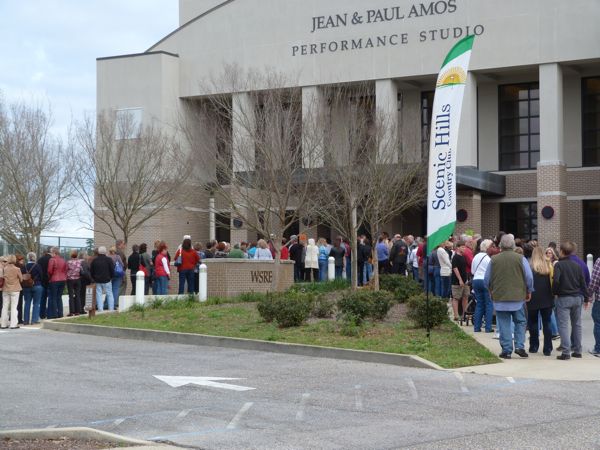
The lines were long, even if you had tickets in advance, but everyone was patient and good humored about waiting their turn.
From soup, we headed downtown to visit the African Art collection on display at the Pensacola Art Museum. First, we had to dodge all the colorful walkers in the Mardi Gras Run, Walk, DRAG with Color, people colored green, gold, and/or purple like the folk in the festival in India, then we had to find a parking place, dodging the police and fire people busy cleaning the streets from the chalk. The water was running green!

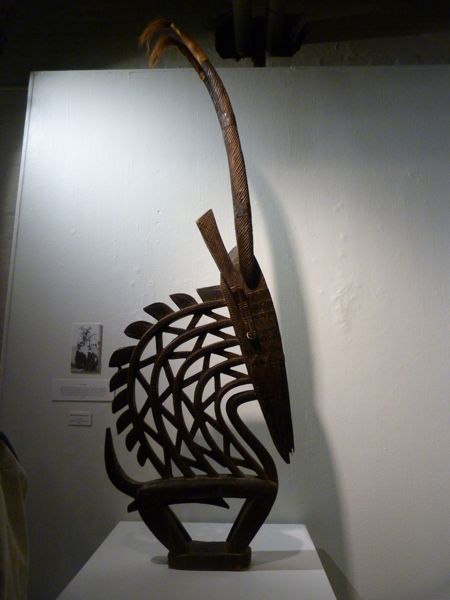
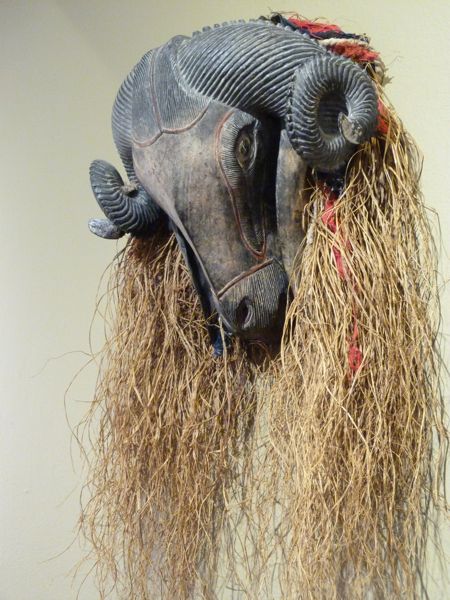
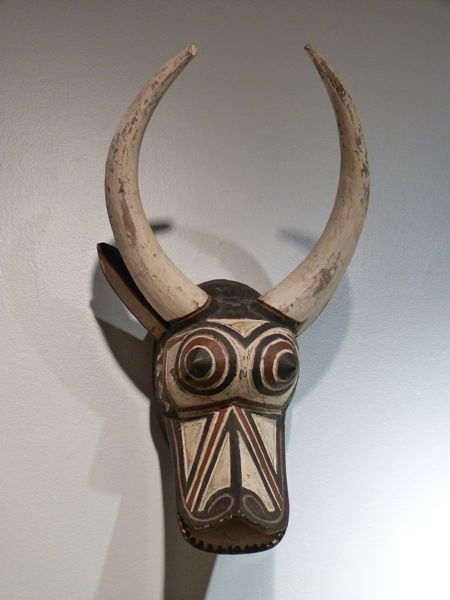
The African Art exhibit was a collection from a family who had lived in Western Africa and brought back fabulous pieces. Truly, the detail and artistry we were able to see close-up just blew us away:
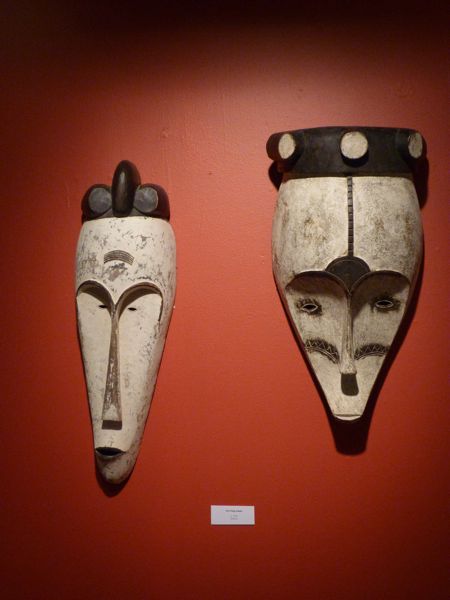
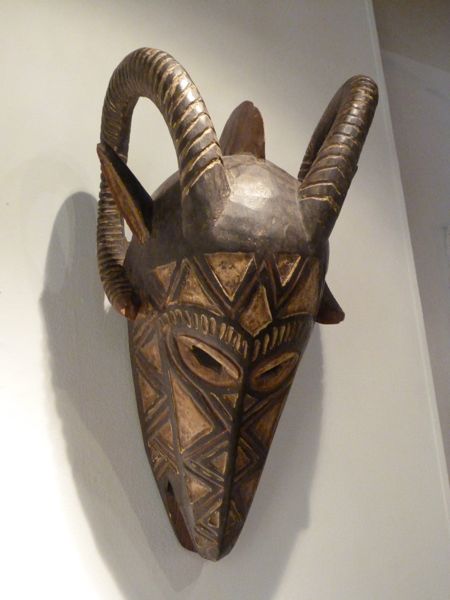
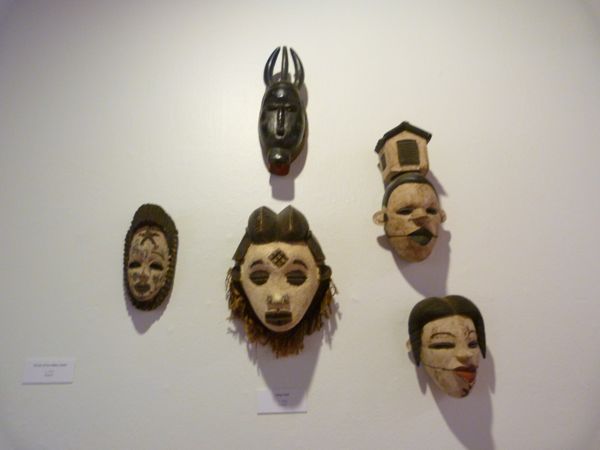
These were so different from the other masks presented, clearly a different tribal group, different aesthetics. I called them the zombie masks for their very grey, formless, chaotic nature, and the black circle eyes:
The textiles on the walls were not identified, but we immediately recognized this sizzling textile as identical to a bedspread we had on our bed at the Grumeti Camp when we were there on the Following the Great Migration trip we took with CC Africa, now called And Beyond:

(This is not in the Pensacola Art Museum; this is our bed in the Grumeti Camp, where you can see the bedcover folded at the end; same amazing cloth:)


Late lunch at our favorite go-to local deli, the East Hill Market, and home – a very satisfying day altogether.
Luxurious Blessing
I was making a salad to go with today’s lunch and remembered AdventureMan warning me we were just about out of roasted pecans, and needed more. It is a cool – almost cold – rainy rainy day in Pensacola, a perfect day for cranking up the oven to roast some pecans. We still have a wealth of pecans from a generous donation made by my dear daughter-in-law’s Texas aunt, who has a heart as big as Texas.
As I roast the pecans (425°F for about 10 minutes) the house becomes fragrant with that luxurious smell. I am transported back to Kuwait, where I remember paying a fortune for a small packet of pecans I needed to bake a pecan pie. Normally, we didn’t even bother looking at the prices, but the price on those pecans was so high I really had to think about buying them, it’s like paying an extortionist. But I needed pecans. I paid.
Now, we have this luxurious blessing of pecans, and not just pecans, but these fresh, fragrant, tasty Texas pecans, and as they roast, they are blessing my entire house with a rich roasty fragrance. It doesn’t take much to make me happy. This wonderful aunt gave us this wealth of pecans, and the gift just keeps on giving and giving, through the Christmas season, well into January – and we still have pecans left. I’ve paid a lot more and gotten a lot less joy from a purchase. I think of this wonderful woman and her gift every time we use them.

Yes, I roasted a lot of pecans, because we sprinkle them on all kinds of things, and that roasted flavor just enriches everything they touch. Yes, they keep in an air-tight container, for as long as it takes for us to eat them, which can be two or three weeks.
And here is the salad, post-pecans but pre-salad dressing:

It’s another luxurious blessing. About twelve years ago, when we had a posting in Germany, we packed everything into storage and just bought what we needed to live with. As days go by, however, you – or I, anyway – just need a few little things to make life nice. You pick up a few gorgeous dessert plates here, a few Christmas ornaments there . . . some cookie sheets, just a little extra, and before you know it, life is no longer so simple. To help keep it simple, I mostly bought things I could just leave behind when we left the country to head to the next country, or I transported things home in those big bags we used to be able to take on the transoceanic flights. I ended up having to rent a storage locker in Seattle for all the treasures I accumulated in our second round of overseas living, LOL.
The first year we were living once again in Germany, as we were buying some wardrobe units, I spotted two salad / serving bowls at IKEA. They aren’t costly porcelain, they are just ceramic bowls, but I love the shape, and inside each one are two beautiful purply-blue irises. I looked at them and loved their conception, their design. I pointed them out to AdventureMan, and then promptly forgot them. Because he is a very smart man, I found them under the Christmas tree a few months later, and was thrilled to recognize them. We have both treasured them ever since.
With each subsequent move, I carefully wrapped those bowls and used them again and again at each posting. We pull them out all the time, these bowls are a perfect size for a salad-to-share or a side dish, and to this day, they look like new. It makes me laugh; I’ve had much more expensive dishes which were not so long for this world; these are go-to serving bowls, and still look brand new.
So today I am feeling extraordinarily thankful for the great luxury of pecans, the wonderful aroma of their roasting, and the great blessing of serving them in a bowl which gives us joy every time we use them.
Birding at St. Mark’s National Wildlife Refuge

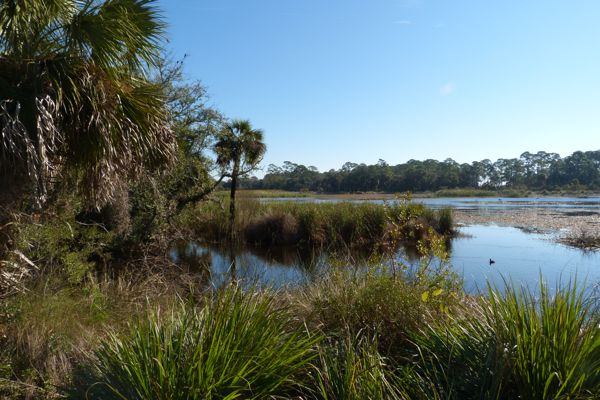
Some mornings, I am astonished at how wonderful it is to live in a place where we have the luxury to set aside wide tracts of lands to preserve our natural heritage. St. Mark’s National Wildlife Refuge evokes that response in me. It’s even more astonishing that because a couple years ago I bought a lifetime Senior Pass, getting into the national parks is free – for the rest of my life. What a great country we live in. 🙂
It is a cold and frosty morning as we load up to head out to St. Marks for some serious bird watching and photographing. Serious, that is, for AdventureMan, who actually does birding trips with other serious birders. I am a bird-appreciator, as in I know what a cardinal is, and a blue jay. I can pretty well recognize a buzzard. Hey, show me a painting and I can probably tell you who painted it, but birds . . . not so much.

I love being outdoors in Florida on a wonderful clear cool day with fabulous conditions for taking photos. I love just wandering along some of the birding trails and seeing what we can see. It’s an amazing place; in some of the areas where we stopped to wander, it reminded me of places we like to go in Africa, of Zambia, of Namibia, of Botswana . . . some of the habitat is so alike, I can almost hear those tectonic plates creaking apart, drifting, and wonder how much of the flora is directly related to African flora.
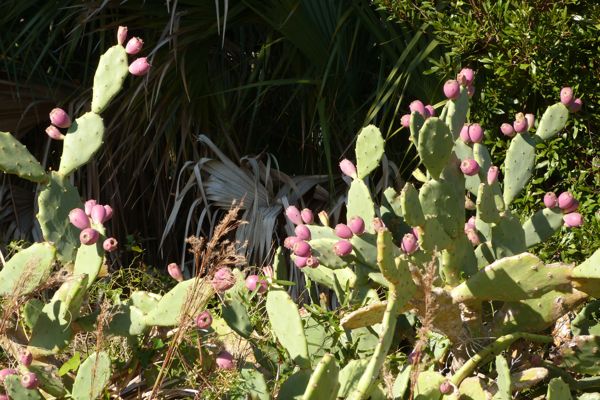
We had these in Tunisia; we called them Prickly Pear, and the Tunisians used them for borders to separate their lands. They also made jam with the prickly pears, and they skinned the leaves and fried up the meat from inside the thick prickly pear leaves. I think what a great border they would make in Pensacola, but a very unfriendly border. Good for keeping away thieves and burglers, but not very attractive, and not very welcoming . . . but very very African:
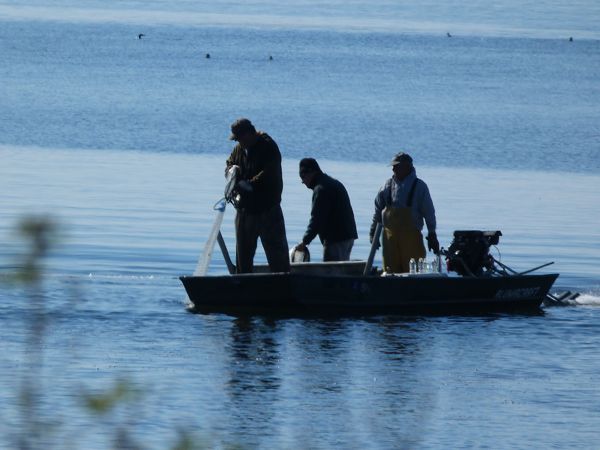
Some fishermen, probably setting some crab traps near the shore:

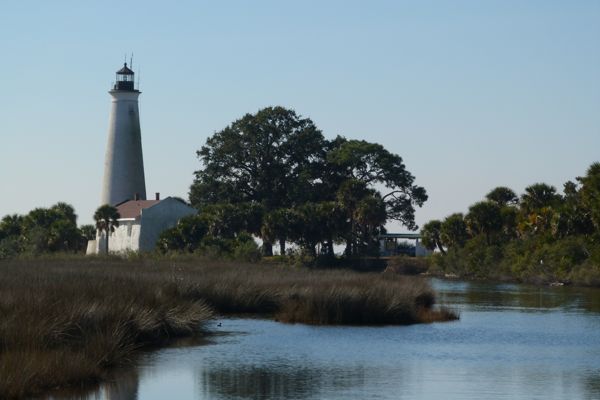
The St. Mark’s lighthouse:


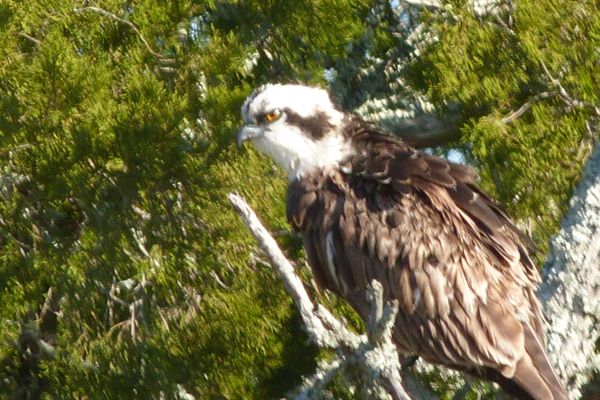




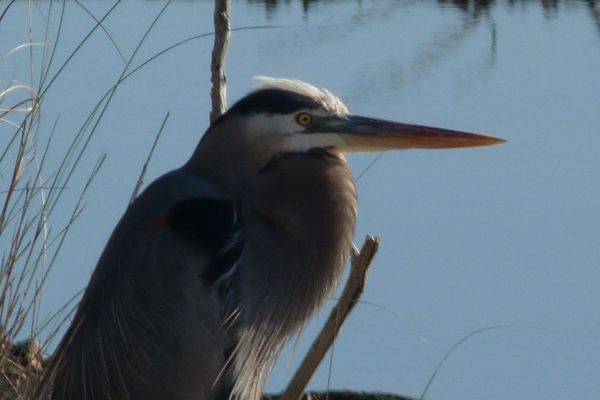
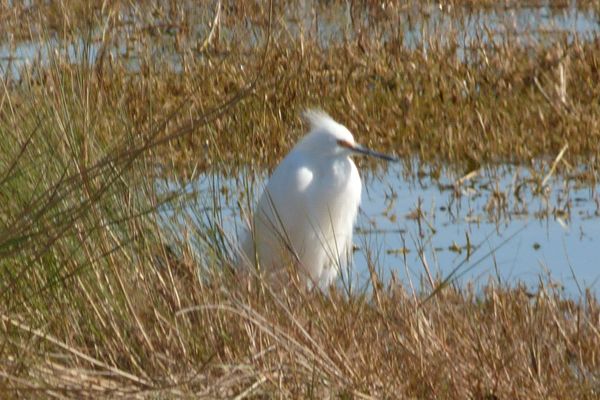
Every now and then you have a lucky moment, and I happened to shoot this heron just as he had a wiggling sparkly fish in his beak, just before he swallowed it. I admit it, I wasn’t trying. If I had been trying, I could never have gotten it just at the right moment:


Some very clever park person went around and made all the deer crossing signs into Rudolph signs, LOL!

The park is full of very serious-faced people carrying HUGE lenses on cameras attached to seriously sturdy tripods, lenses meant to capture the details of the pinfeathers, cameras to document a rare sighting. These people don’t talk about ducks, they talk about Merganzers and Koots, and the rarely seen such-and-such, and I just listen and keep my mouth shut while my head spins.
For me, it’s enough to see these wonderful creatures, free of fear, safe in their migrations. It’s enough to have a cool day, a great day for walking, and NO mosquitos. It’s a great day for my kind of birding, which is very non-serious to be sure.
Wakulla Springs Boat Trip
At Wakulla Springs, everything is separate. Like the entrance fee goes to the State. The Wakulla Lodge is run by some corporation with a state contract, I am guessing, and the Wakulla Boat Rides are another separately run concession. If you are staying at the Lodge, or booked for the lunch buffet at the Lodge, you get into the Edward Ball Wakulla Springs State Park for free, instead of paying the $6/vehicle entrance fee.
The boat trip is half the fun. On hot days in the park, you can swim right in the same spring as the manatees, but on chilly winter days – take the boat trip. We took the boat trip twice, it is so much fun, and because we love the late afternoon light. I will share my photos of some of what we saw on the hour long trip below; warning you that trying to get a shot of an underwater manatee is not such an easy thing to do. You may have to use a little imagination to see the manatee 🙂 but I swear, it is there.
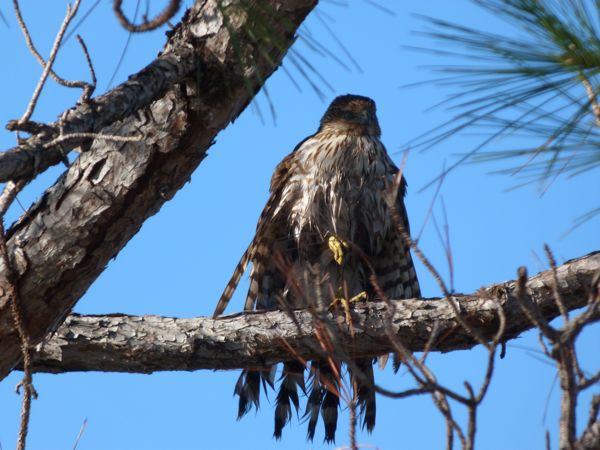
These are leathery buzzards, wintering in Wakulla Springs:

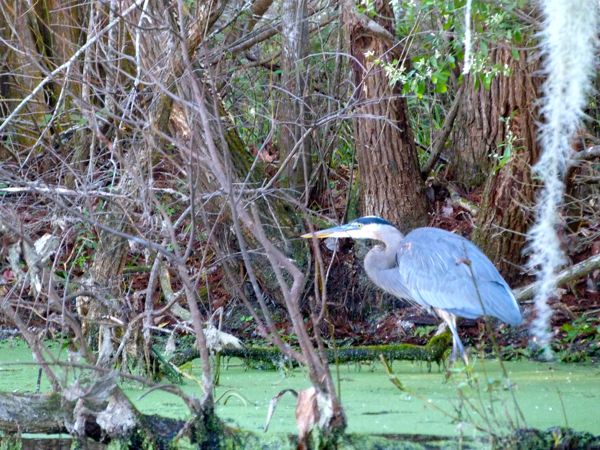
Great Blue Heron:
Little ducks called Koots:

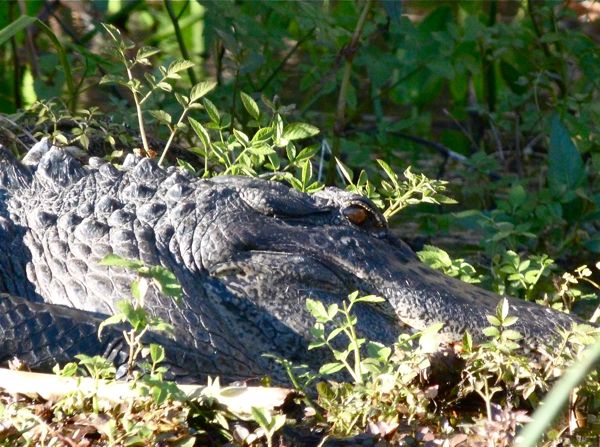
Sunning Gator:

Close up of Gator skin:

Close up Gator head – he was so cold he didn’t even care about the boat being near, he just wanted to soak up as much sun as he could before it set:
Wakulla Springs Cypress:

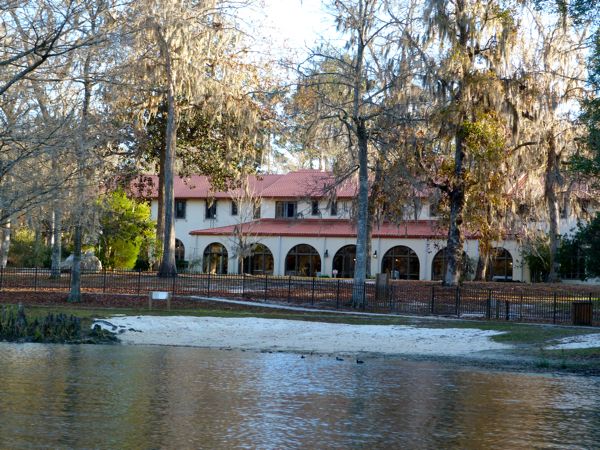
The Wakulla Springs Lodge from the Springs:
Old fashioned swimming platform:

Buzzards roosting:

Turtle soaking up some sun:

Anhinga drying out his wings:

Merganzer Duck – don’t you love his helmeted head?

OK, there it is, the Manatee, otherwise known as a sea cow, a siren, and a sea slug – about the size of a small whale or a very large shark:

The Black Bean in Wakulla Springs and Tallahassee, FL

So we’ve arrived in Wakulla, to be received rudely at the hotel, turned away until the 3:00 pm check-in, the restaurant closed as we were trying to check in, and there is a part of every human being that wonders if this is going to be the story of our trip.
And then, to save the day, we find The Black Bean.
We drove to the nearby crossroads, where I saw a sign to a restaurant to which we did not go, but we turned left, up 363 and saw an all-day breakfast buffet place with a sign saying “Pork Fat is Where It’s At” (no, no, it’s true, how could I make that up?) and I am praying “Please Lord, find us someplace else, please Lord” and we keep going. AdventureMan says “should I turn around?” and I see a sign just a little up and say “let’s go up there and turn around if it’s nothing.”
As we get closer, we see a big sign for Jerry’s Bait Shop and my heart sinks. But as we turn in to turn around, we see the sign for The Black Bean Cuban Food, and my prayer is answered. Yes!
As it turns out, this is not the REAL Black Bean, which is in Tallahassee, but this is the Black Bean Express, their outpost, for people on the run, going down to St. Marks to go birding, heading out in their boats, etc. The menu is almost the same, just a few things less.
We both ordered the same thing, which we never do, but the Habanero Pork BBQ just sounded so good, and oh, man, it was. It was SO good. We didn’t know how much sandwich there was going to be, we could have shared one, but no, we didn’t know, and we ordered the fabulous black bean soup, too, and we couldn’t eat it all.


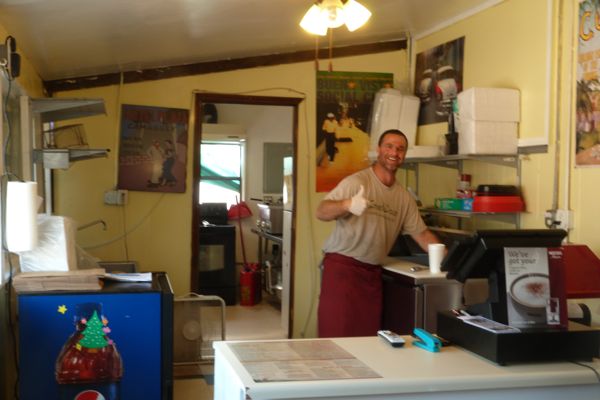
This is one of the owners, who fixed these fabulous sandwiches. He told us about their breakfasts, so we decided to come back the next day, but when we came back the next day, they were not open and we saw on the sign that the breakfast is only Friday, Saturday and Sunday at the Black Bean Express.
We went back around lunch and had their grilled chicken wrap, which – smarter now – we split, and we also split a red beans. You can read more about them HERE. We met the other owner (the are married to one another) and as we ate, we decided that rather than enjoy another perfectly uninteresting dinner at the Lodge, we would bet another sandwich, and split it for dinner along with some trail mix and water we already had with us.
The Black Bean saved the day. The food was so good; we even stopped for breakfast on our way out toward Tallahassee, having the biscuit sandwiches. I never knew Cuban food could be SO good, so tasty. It was fast, convenient, close to the Lodge, and very tasty. Let’s see, pay a lot more money for uninspired food at Wakulla Lodge, or pick up something at The Black Bean . . . . ? I don’t have to give it two seconds thought! Life is too short! It’s a Wakulla Red R! (Michelin Red R’s are given for good local foods at reasonable prices)
In the adjoining bait shop; a huge box full of live crickets, eeeeeeek!

And a guard dog, Zorah:

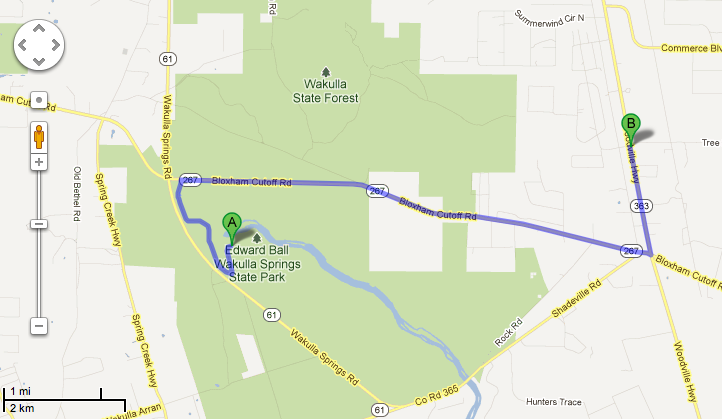
Here is how to get to The Black Bean Express, in Wakulla Springs. There is another, larger Black Bean in Tallahassee:
Recent Comments
intlxpatr on Shampoo Ginger tigerbutterya0c5ff1d… on Shampoo Ginger intlxpatr on British Soldier Kidnapped, Esc… John on British Soldier Kidnapped, Esc… intlxpatr on British Soldier Kidnapped, Esc… Wikipedia Donate Button

Amazina


Early Voting in Florida


