When I lived in Kuwait and Qatar, I was appalled by the way rapes were treated, it was like this huge wave of abductions and violations, and nothing was done. As it turns out, things are changing a lot slower in my own country than I thought. This new film, The Hunting Ground, is by the same person who documented violence and rape in the US military, spurring then Secretary of Defense Leon Panetta, a truly decent man, to put the fear of God into the military leaders who were covering up the many rapes and blaming the victims. We have the same problem on college campuses.
There is only one cure. We have to raise our sons to respect women. We have to continue raising the bar for equality in our country until women have equal access to jobs, health treatment, legal proceedings, etc. Films like The Hunting Ground are painful, and at the same time, help us to face, and to overcome our societal short comings.
I love it that this film is “giving voice to those who have no voices;” that these courageous women speaking out have bravely named their rapists and described their circumstances. It can’t be comfortable, but it is their right. I am proud that they are not intimidated by fear of the ‘blame the victim’ mentality they have endured on their college campuses. When did colleges and universities begin placing money-making and winning teams before the well-being of their students?
New film gives chilling account of sexual assault on college campuses
Sexual assaults on college campuses have reached alarming levels and the issue has drawn the attention of Congress and even President Obama himself. The latest research indicates that one in five college women will be sexually assaulted and as many as 90% of reported assaults are acquaintance rapes. It is believed that more than 100,000 college students will be sexually assaulted during the current school year. Nowhere is the deck stacked more against sexual assault victims than in college athletics. In just the last few years alone there have been cases at Florida State, Michigan, Oregon, Vanderbilt andMissouri.
All of this is a backdrop to a harrowing new film that premiers in theaters on Friday in New York City and Los Angeles. The Hunting Ground is a jarring exposé that shines a bright light on the epidemic number of sexual assaults taking place on college campuses each year.
The Hunting Ground features a group of survivors who faced harsh retaliation and harassment for reporting that they had been raped. The film focuses on institutional cover-ups and the brutal backlash against survivors at campuses such as Harvard, Yale,Dartmouth, the University of North Carolina at Chapel Hill, USC and the University ofCalifornia-Berkeley, among others.
Some of the most vexing stories featured in the film involve women who were assaulted by athletes. While The Hunting Ground isn’t all about sports, the most dramatic moment in the film occurs two-thirds of the way through when the woman who accused former Florida State quarterback Jameis Winston—who after a strong showing in last week’s Combine is projected by many to be the No. 1 pick in this spring’s NFL draft—appears and tells her story publicly for the first time. The woman, who is named in the film but SI.com has chosen to protect her identity, is shown on camera and gives her life-changing account of what she says happened the night in December 2012 she left a Tallahassee bar with Winston.
Photo: Getty Images
A high school honor student who planned to attend medical school, the woman is articulate and attractive. She looks like the girl next door, a person you would trust to babysit your children. It is uncomfortable to watch—yet impossible to look away—when she describes being beneath Winston on his bathroom floor, repeatedly telling him “no” before being physically overpowered.
“We’re grateful it’s the first time people will get to hear [her] story,” said The Hunting Ground director Kirby Dick. “It’s her first-hand testimony. Up to this point it hasn’t been in a public space.”
The woman’s parents also appear in the film. Her father talks about driving to Tallahassee Memorial Hospital with his wife to be with their daughter hours after the incident.
There is nothing easy about retelling these stories for the world to see. But the attorney for the woman who says she was raped by Winston, John Clune, said his client decided to break her silence in the film because she felt it was the right venue to tell her story.
“The film was a once-in-a-lifetime opportunity,” Clune said. “The work by these filmmakers is nothing less than groundbreaking. It took tremendous courage, but our client and all of the incredibly brave women in the film have advanced the cause of rape survivors everywhere.”
The Hunting Ground also examines a sexual assault accusation against a Notre Damefootball player in 2010. Tom Seeberg, whose daughter committed suicide after she says she was sexually assaulted by a Fighting Irish starter, tells a heartbreaking account of school officials thwarting the investigation into his daughter’s complaint. A former Notre Dame police officer reveals that he and his colleagues were not allowed to approach or question an athlete on athletic properties.
The film also mentions rape cases involving football players at Missouri and Vanderbilt, as well as basketball players at Oregon.
The testimonials of rape survivors are wrapped between raw footage that is both gut-wrenching and disturbing. A small mob of unruly fraternity pledges at Yale are captured on film outside a freshman dorm for women, chanting: “No means yes. Yes means anal.” All the while a guy with a bullhorn is shouting: “Louder.”
In another scene we see drunken frat boys spilling out of a house where there is a sign out front that says: “THANKS FOR YOUR DAUGHTERS.” It’s enough to outrage any parent with a daughter heading off to college.
The film is directed by Dick and produced by Amy Ziering, the team behind the Oscar-nominated film The Invisible War, which revealed systemic sexual assaults and cover-ups within the U.S. military. That movie prompted Secretary of Defense Leon Panetta to announce significant policy changes and inspired the passage of the Military Justice Improvement Act.
Dick and Ziering started looking into the situation on college campuses shortly after the release of The Invisible War. “We were astonished that the problem was as serious in higher education as it was in the military,” Dick said.
Full disclosure: I appear in The Hunting Ground as an expert. Two of the cases in the film—Lizzy Seeberg’s alleged assault at Notre Dame and running back Derrick Washington’s sexual assault of a student at the University of Missouri—are featured in my book The System: The Glory and Scandal of Big-Time College Football, which I wrote with 60 Minutes correspondent Armen Keteyian.
Some of my research is also featured in the film, including the statistic that student-athletes are responsible for 19% of the reported sexual assaults on campus, despite the fact that they comprise just 3.3% of the male student population. Those figures arose from a first-of-its-kind study I conducted with researchers at the University of Massachusetts in the mid-90s when we were granted access to judicial affairs records and police reports at colleges across the country.
Photo: Don Juan Moore/Getty Images
Over the past 20 years I have researched hundreds of cases of sexual assault involving athletes. During that time I’ve interviewed countless sexual assault victims. The thing I found most telling was what prosecutor Willie Meggs did not say in the film. Meggs was asked if he thought a rape took place in Winston’s apartment. It was a perfect opportunity for the man who chose not to prosecute Winston to say no. Instead, he said something “bad” happened in that apartment that night. He just didn’t have sufficient evidence to prove it.
That’s not unusual. That’s typical. Only about 20% of rapes reported to the police in the U.S. are prosecuted. Yet at least 92% of reported sexual assault claims are found to be true. The problem is that date rape cases are very difficult to prove beyond a reasonable doubt, especially when alcohol is involved and the incident occurs in the perpetrator’s apartment, dorm or hotel room. The doubts raised by those factors are amplified when the accused is a star athlete.
The greatest achievement of The Hunting Ground is that it empowers rape victims to team up with each other and come forward. It’s fair to say that for the first time in many years, women like Jameis Winston’s alleged victim have powerful allies.
By the time the NFL draft takes place in May, the film will be in theaters around the country, the name of Winston’s accuser will be everywhere and more details about the night in question will likely come out. All of this brings to mind the legal maxim caveat emptor, which essentially is a warning that means let the buyer beware.
Jason Licht, the general manager for the Tampa Bay Buccaneers, ultimately has to decide whether to use the first pick on Winston. He’s on record saying: “This is the most important pick, potentially, in the history of the franchise.”
Memo to Licht: Watch The Hunting Ground.
The ramifications in this instance are equally big for the NFL, whose image took a beating over the last year after Ray Rice was caught on tape knocking out his then-fiancé in an elevator. The controversy erupted after Commissioner Roger Goodell imposed a two-game suspension without bothering to obtain and watch the video.
Memo to the Commissioner: Watch The Hunting Ground.
No matter what happens with Winston, the film succeeds in its main goal: to shine a light on sexual assault on college campuses. It’s an important issue that isn’t going away, and if something drastic isn’t done immediately, it will only get worse.
Jeff Benedict is a lawyer and has written five books on athletes and violence against women, including Public Heroes, Private Felons: Athletes and Violence Against Women, and Out of Bounds: Inside the NBA’s Culture of Rape, Violence and Crime.
The good news is that Saudi women know better. They don’t buy this line any more than we do. They visit America, they go to school in America. And oh yes, they DRIVE in America. The second part of the good news is that the younger generation buys this line a whole lot less than our parent’s generation, and change is coming. It’s coming faster than this historian thinks.
Saudi Historian Says U.S. Women Drive Because They Don’t Care If They’re Raped
Saleh al-Saadoon claimed in a recent TV interview that women can be raped when a car breaks down, but unlike other countries, Saudi Arabia protects its women from that risk by not allowing them to drive in the first place, according to a translation posted online by the Middle East Media Research Institute.
“They don’t care if they are raped on the roadside, but we do,” al-Saadoon said on Saudi Rotana Khalijiyya TV.
“Hold on. Who told you they don’t care about getting raped on the roadside?” asked the host, a woman who is not named in the transcript.
“It’s no big deal for them beyond the damage to their morale,” al-Saadoon replied. “In our case, however, the problem is of a social and religious nature.”
Two other guests on the show — a man and a woman — appeared to be in shock over his comments. Al-Saadoon said they were out of touch.
“They should listen to me and get used to what society thinks,” al-Saadoon said.
Since the rape argument didn’t seem to be convincing anyone, al-Saadoon tried another approach, claiming that women are treated “like queens” in Saudi Arabia because they are driven around by the men of the family and male chauffeurs. That led the host to ask if he wasn’t afraid that women might be raped by their chauffeurs.
Al-Saadoon agreed.
“There is a solution, but the government officials and the clerics refuse to hear of it,” he said. “The solution is to bring in female foreign chauffeurs to drive our wives.”
That caused the female host to laugh and cover her face with her palm.
“Female foreign chauffeurs?” she said. “Seriously?”
Sometimes, out of nowhere, comes a wallop, even a good wallop. Yesterday came such a startling change. The itinerary looked ordinary, do-able, nothing inspirational, but all get-the-job-done.
My group had a great weekend. They got to sleep, they got to walk on the beach, they got to eat a great meal or two. They had fabulous weather, a chance to chill and to integrate all the information we are piling on them, and a chance to walk away for a little while. They love Pensacola. Who wouldn’t, when the weather hits around 70° and the beach is white and the sky is blue?
First, we hit our volunteer experience, working at Manna to sort donations, making sure all the items were within acceptable expiration dates. At first, I wasn’t sure this group was going to “get” volunteering, but in a very short time, they were all focused and working hard, and working efficiently. As they sorted, other volunteers drove up in SUV’s, in big cars, in vans and we all helped unload. By the end of their experience, the warehouse manager said “You have processed enough food for over 1,000 people!” and complimented them. They glowed. None of them are from countries with a tradition of volunteerism, and this was a new – and thrilling – experience for them. It always gives me a thrill to see that light go on, to see oneself as part of something larger, organic, to see how connected we all are and to love being a part of something good, sharing. It thrilled my heart.
We ate lunch together downtown, and talked about events going on in each country, about the weekend, about their experiences. We bought coffee – oh! the universal need for caffein! – and headed on to our next appointment, which featured environmental issues and complex ways governments interact to combat the problems and enforce the regulations. It was a tough slog. These relationships are so complex that most of us don’t even think about it. These delegates have work to do; they are here to solve problems in their own countries, and they are persistent and dogged about getting solutions that they can apply in their own bureaucracies. It is a delight to see people so committed to solving problems that seem . . . almost unsolvable.
It is also inspiring, to me, to learn so much about Pensacola, in this job. When I was working on my Masters, I studied heroism, among other things. What I am loving about these office and field visits is that my education continues, and I see heroes at every level of bureaucracy, holding back the evil forces of laziness, corruption, and cronyism. And, sustaining my initial findings about heroes, heroines and heroism, they don’t even see themselves as heroes. They say, as all heroes do, “I am/was just doing my job.” They think anybody would do it. (They are wrong.)
At our very last appointment, I was thinking I would probably cut the day short. The speaker had given out information, the delegates had bags to pack, and all of a sudden, a spark, and an explosion! The good kind!
One delegate could not believe the head of this agency could maintain an important list with integrity. He kept drilling down on the structure, the details of how things worked (all the delegates were keen on the details of how the structures of organizations and bureaucracies worked to accomplish their missions) and where there were openings for corruption.
She was explaining how her employees were constantly trained, and how the agency was monitored to ensure fairness and an adherence to procedure. The delegates, all from countries where bureaucracies function differently, kept pressing her. Is there never anyone taken out of turn? Never?
“If I did that, I would lose my job,” she replied.
What followed was one of the most exciting hours of discussion I have ever experienced, as delegates from five different countries frankly compared their own challenges and experiences, and with great intensity tried to figure out how bureaucracies could function without corruption.
We tried to explain that we, also, are not immune from corruption, and cronyism, but that the combination of training and monitoring helps keep agencies within the boundaries, as best it can. Transparency doesn’t come overnight; we are still trying to achieve it.
As I listened, I could not stop grinning. These are young leaders, and the leaders of tomorrow. They admire what they see in our country. They want to bring trust into their own governments, but how do you create trust? How do you build trust? How do you maintain trust?
I don’t know those answers. And yet the process is working; the discussion was so inspiring, so heartfelt, and they had built enough trust in one another to share their challenges, without having to maintain that artificial facade that lack-of-trust builds.
Their liaison said “You will each have to find your own path; it won’t look exactly like the US path because it has to be a fit with your own culture.”
When I left the group, I told them “You are the best group I have worked with, ever.” There is a part of me that wanted to be a part of that discussion, because they were still deep in that discussion as we parted. My role had ended; I had done what I do.
And today, I am still grinning. I love this job, I love the people it brings me into contact with, international and local. I feel so blessed.
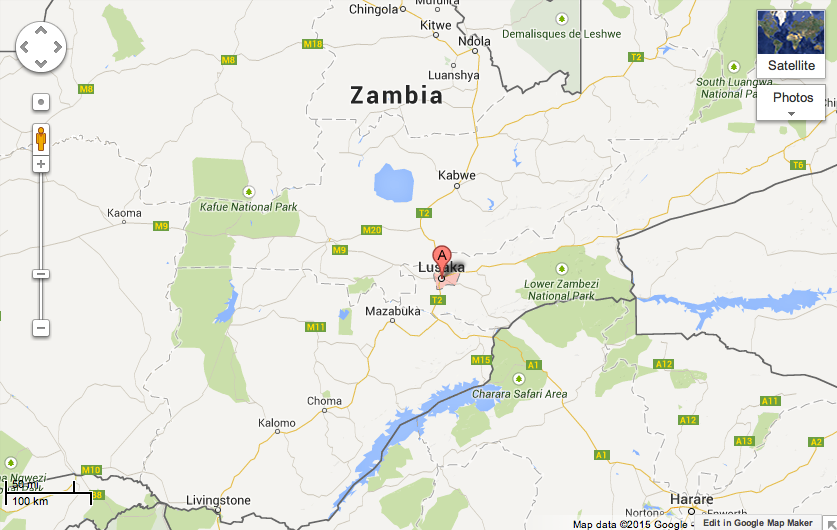
Today the church prays for the diocese of Lusaka, and I smile as I pray for my Zambian friends. We have stayed in Lusaka several times, and visited schools and clinics in remote parts of Zambia. Zambia is an amazing country – something like 70 different peoples and languages, and training in all the schools to help them learn how to live together.
One young Zambian told us that when they come into contact, it is normal to feel strange; the “other” doesn’t speak the same dialect, may be a traditional enemy, is just different, uncomfortable. They are trained to ask “What is it like where you live?” and to listen to the response.
I have used that phrase so many times; it is so useful. When you listen to an “other” talk about his or her life, you connect. You find similarities, and differences, and you learn the joys and challenges of this different life. It is a wonderful question. I used it the first time in Zambia, at a dinner with a lot of people we didn’t know. The woman next to me seemed stuffy, but sometimes that can be shy, so I asked “What is it like where you are from?” and she looked at me with concern and said, very sharply, “What do you mean?” I said “what is your life like, tell me about what you do in a day?” and she said “That is a very odd question!” but she went on to tell me about her life, her country house and her passion for riding. By the end, we were having a great conversation.
May God bless you richly, Zambia. May your peoples live together in God’s peace!
Today, on AOL News, a report on the ravaging of two villages in Nigeria by Boko Haram, with satellite images showing the carnage and destruction as survivors tally more than 2,000 dead. The craven Nigerian Army claims the losses are more like 200.
Meanwhile, of the almost 300 girls kidnapped a year ago by Boko Haram, 219 are still missing. Those who returned, returned by escaping. No one rescued them. The remainder are likely “married” to their captors, slaves to the household and many of them are probably pregnant. To be pregnant by a Boko Haram soldier creates a severe social problem if they are ever freed or rescued – the family cannot marry off an impure daughter. The children of these unions face a desolate future, wherever they are.
The world watches when terrorists wreak havoc in Paris, thousands crush the cretins who kill in the name of God, but no-one lifts a finger to help these small villages in Northeast Nigeria, beset by destructive vermin.
JOHANNESBURG (AP) — Large areas of Nigerian towns attacked by Islamic extremists were razed to the ground in a widespread campaign of destruction, according to satellite images released Thursday by Amnesty International.
Amnesty International said the detailed images of Baga and Doron Baga, taken before and after the attack earlier this month, show that more than 3,700 structures were damaged or completely destroyed.
The images were taken Jan. 2 and Jan. 7, Amnesty International said. Boko Haram fighters seized a military base in Baga on Jan. 3 and, according to witnesses, killed hundreds of civilians in the ensuing days.
Daniel Eyre, Nigeria researcher for the human rights group, said in a statement that the assault on the two towns was the largest and most destructive of all the Boko Haram assaults analyzed by Amnesty International.
The group said interviews with witnesses as well as local government officials and human rights activists suggest hundreds of civilians were shot; last week, the human rights group noted reports of as many as 2,000 dead. The Nigerian military has cited a figure of 150 dead, including slain militants.
Nigeria’s home-grown Boko Haram group drew international condemnation when its fighters kidnapped 276 schoolgirls from a boarding school in northeast Chibok town last year. Dozens escaped but 219 remain missing.
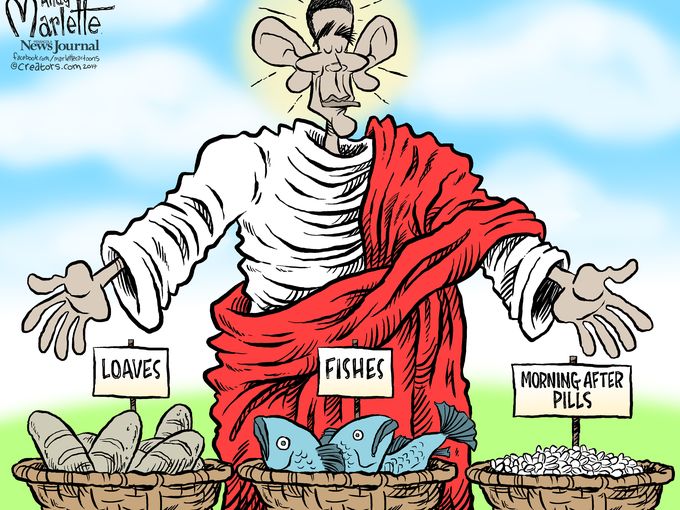
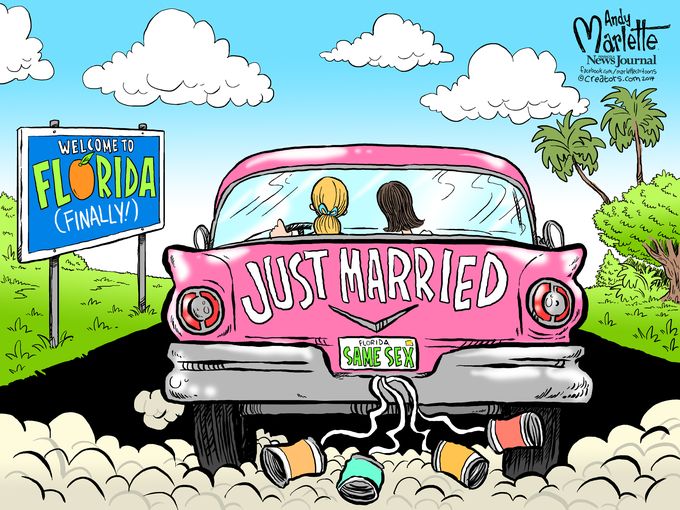
In our country, in the West, open discussion is a part of life. Your point of view may be ignorant, or repugnant to me, but I will defend to the death your right to express your opinion. One of the great weapons of freedom of speech is humor. It’s hard to maintain a dignified moral high-ground when one of the cartoonists piques with a cartoon showing the emperor has no clothes. Or at least the emperor has flaws, as do we all.
Pensacola is blessed with such an editorial cartoonist, Andy Marlette. Andy Marlette is controversial, and in a state with lax gun laws and pistol-packin-mamas, he risks his life daily, skewering the pomposity of us all. Occasionally, he is outrageous. Occasionally, he is offensive. That’s OK. If an editorial cartoonist isn’t skewering someone, or all of us at once, he isn’t doing his job. His job is to elicit discussion.
I have lived for so long in Moslem world that I take a risk now, offending my Moslem friends, by printing the cartoon of Mohammed weeping. It’s the cartoon that touched me to the bone. I have listened and learned in the Moslem world, and I have never met with hatred. The Mohammed I have read about in the Qu’ran and in hadith, and heard about in legend and stories from my Moslem friends portrayed a prophet who, like Jesus, was all about loving and serving the one true God. He would weep at what has been done in his name, as Jesus weeps for us, when we kill others in his service.
I think you have to be careful when seeking spiritual advisors, and Rick Warren has never led me down a wrong path. In his own life, he sets a fine example of what a walk with Christ looks like. He is humble, compassionate, and full of encouraging and challenging scriptural advice. Today’s Daily Hope devotional is below – what great advice; it keeps you safe and it keeps you on the right path.
Jan 6, 2015
When You’re Under Attack, Just Rest
by Rick Warren
“You prepare a table before me in the presence of my enemies. You anoint my head with oil; my cup overflows.” Psalm 23:5 (NIV)
Our civilization is losing its civility. The world is getting ruder! One of the things that’s causing that is the Internet, because it allows people to hide behind the screen and say things online that they would never have the courage to say to others face to face.
All those people are doing is revealing the smallness of their hearts. Great people make people feel great, but small people belittle people. People who belittle others have a little knot for a heart, and they make fun of others because they think it will make them feel better.
How do you handle rude people? You don’t. You let God handle them. You let God be your defender.
King David was a pro at this. He knew what it meant to be attacked emotionally, verbally, and physically. As a young man, he was anointed by Samuel to be the next king of Israel, but he spent two years running from his predecessor, who wanted to kill him. He hid in caves while being criticized constantly behind his back.
Yet David never said a bad word against the king. He never retaliated, because God was preparing him to be the king after his own heart.
David says in Psalm 23:5, “You prepare a table before me in the presence of my enemies. You anoint my head with oil; my cup overflows” (NIV).
David was recognizing God’s goodness to him. God would anoint his head with oil, which says to the world, “This is my guy! Back off! This is going to be the next leader.” David’s cup overflowed, which meant God kept blessing him and blessing him, even when others attacked him.
Does it sound like David was stressed out? No! He didn’t have to use up all his energy defending himself because he trusted God to be his defender.
It takes a lot of faith and humility to rest and trust God when you’re under attack, when you’re misunderstood, when rumors are spreading about you and people are saying things about you online. When that happens, everything in you wants to rise up and do something about it.
But you are most like Christ when you remain silent under attack. Jesus was constantly attacked, yet he never retaliated, even on his way to the cross. He remained silent before his accusers because he had entrusted himself to the care of the Father.
“So if you are suffering in a manner that pleases God, keep on doing what is right, and trust your lives to the God who created you, for he will never fail you” (1 Peter 4:19).
Talk It Over
Why is it important to you to have the last word?
What is the physical result of entrusting your defense to God? How does it affect your health?
If you have to speak to your attackers, what do you think God wants you to say?
Earlier this fall, a Michigan prosecuting attorney began making the rounds of metro Detroit high schools letting kids know that increasingly normal behavior – sexting – could land them in jail for a long time.
Oakland County Prosecutor Jessica Cooper stepped up her education efforts after nearly three dozen Rochester area teens faced felony charges after circulating nude photos on their cell phones.
Cooper backs reform of laws that require Michigan prosecutors to charge sexting teens under the same statutes intended to prosecute pedophiles.
But in the meantime, she wants kids to be aware of the serious legal consequences of activity that a study by the American Academy of Pediatrics found is a “normal” part of adolescent sexual development.
And because they don’t want their parents to know what they’re up to as they click away on cell phone screens, they’ve developed their own shorthand to keep them in the dark.
A Denver television station tested – and stumped – several parents to determine if they could crack the codes their children use when they’re texting or sending online messages on their phones.
A detective with the Jefferson County District Attorney’s Office told Denver television station KMGH that parents may be missing some red flags “because they don’t know the lingo or the language.”
Here’s a list of commonly used terms:
8 – it means ate, can also refer to oral sex
9 – Parent watching
99 – Parent gone
1337 – Elite, leet or L337
143 – I love you
1174 – the meeting place, meet at
420 – Marijuana
459 – I love you
53X – Sex
ADR – Address
AEAP – As Early As Possible
ALAP – As Late As Possible
ASL – Age/Sex/Location
BROKEN – hung over from alcohol
CD9 – Code 9 (parents are around)
C-P – Sleepy
F2F – Face-to-Face
GNOC – Get Naked On Cam
GYPO – Get Your Pants Off
HAK – Hugs And Kisses
ILU – I Love You
IWSN – I Want Sex Now
KOTL – Kiss On The Lips
KFY or K4Y – Kiss For You
KPC – Keeping Parents Clueless
LMIRL – Let’s Meet In Real Life
MOOS – Member Of The Opposite Sex
MOSS – Member Of The Same Sex
MorF – Male or Female
MOS – Mom Over Shoulder
MPFB – My Personal F*** Buddy
NALOPKT – Not A Lot Of People Know That
NIFOC – Nude In Front Of The Computer
NMU – Not Much, You?
P911 – Parent Alert
PAL – Parents Are Listening -or- Peace And Love
PAW – Parents Are Watching
PIR – Parent In Room
POS – Parent Over Shoulder or Piece Of Sh**
pron – Porn
Q2C – Quick To Cum
RU/18 – Are You Over 18?
RUMORF – Are You Male OR Female?
RUH – Are You Horny?
S2R – Send To Receive
SorG – Straight or Gay
TDTM – Talk Dirty To Me
WUF – Where You From
WYCM – Will You Call Me?
WYRN – What’s Your Real Name?
We are thankful for so much, for God’s great abundance in our lives, and when I read today’s message on Forward Day by Day, I felt even more thankful. Zero sum game is the way most of us see life. You win, I lose; I win, you lose. With an attitude of Thanksgiving, we all win.
THURSDAY, November 27 Thanksgiving Day
2 Corinthians 9:8 And God is able to provide you with every blessing in abundance, so that by always having enough of everything, you may share abundantly in every good work.
Wherever this day finds you, I suspect you are thinking about thankfulness. Maybe your cup is overflowing with blessings, and you can’t stop thanking God for your many blessings. Maybe you’ve been through a harrowing season, and you are just thankful for being alive. Or maybe life has not lived up to your expectations, and you are struggling to find something for which to be thankful. It seems to me that thankfulness is one of those things that doesn’t run out. It’s the opposite of a zero-sum game, where one person wins and the other loses.
God invites us into an ever-present abundance, where we don’t have to worry about running out. The same is true for our thankfulness of those blessings. The more thankfulness we share, the more we receive—and the more others have as well. The truth of God’s good world is that there is enough. There’s enough for us to have what we need, and there’s enough for us to share.
Pray for the Diocese of Kericho (Kenya)
Ps 65; Deuteronomy 8:7-18; 2 Corinthians 9:6-15; Luke 17:11-19
Again, from the Lectionary readings for today, the devastation of gossip and slander, particularly appropriate during this season of vitriolic campaign ads, each more disgusting than the next:
Sirach 28:14-26
14 Slander* has shaken many,
and scattered them from nation to nation;
it has destroyed strong cities,
and overturned the houses of the great.
15 Slander* has driven virtuous women from their homes,
and deprived them of the fruit of their toil.
16 Those who pay heed to slander* will not find rest,
nor will they settle down in peace.
17 The blow of a whip raises a welt,
but a blow of the tongue crushes the bones.
18 Many have fallen by the edge of the sword,
but not as many as have fallen because of the tongue.
19 Happy is one who is protected from it,
who has not been exposed to its anger,
who has not borne its yoke,
and has not been bound with its fetters.
20 For its yoke is a yoke of iron,
and its fetters are fetters of bronze;
21 its death is an evil death,
and Hades is preferable to it.
22 It has no power over the godly;
they will not be burned in its flame.
23 Those who forsake the Lord will fall into its power;
it will burn among them and will not be put out.
It will be sent out against them like a lion;
like a leopard it will mangle them.
24a As you fence in your property with thorns,
25b so make a door and a bolt for your mouth.
24b As you lock up your silver and gold,
25a so make balances and scales for your words.
26 Take care not to err with your tongue,*
and fall victim to one lying in wait.