This is disgusting. We’ve all known it’s true. The warrior culture protects those cowards who impose themselves sexually on both men and women. God willing, things will change. It’s already started, with the relieving of those in power who have imposed themselves on women who came forward with their complaints. Let there be more, until this culture is wiped clean of their disgrace.
Rape isn’t about sex. It’s about power. Rape is a personal violation.
It’s time for the good men and women in the military to police this up, to stop the outrage. Expose those bullies and cowards who prey on others.
Military Sex Abuse Investigation: Documents Reveal Chaotic Punishment Record
AP
by RICHARD LARDNER and YURI KAGEYAMA
TOKYO (AP) — At U.S. military bases in Japan, most service members found culpable in sex crimes in recent years did not go to prison, according to internal Department of Defense documents. Instead, in a review of hundreds of cases filed in America’s largest overseas military installation, offenders were fined, demoted, restricted to their bases or removed from the military.
In about 30 cases, a letter of reprimand was the only punishment.
More than 1,000 records, obtained by The Associated Press through the Freedom of Information Act, describe hundreds of cases in graphic detail, painting a disturbing picture of how senior American officers prosecute and punish troops accused of sex crimes. The handling of allegations verged on the chaotic, with seemingly strong cases often reduced to lesser charges. In two rape cases, commanders overruled recommendations to court-martial and dropped the charges instead.
Even when military authorities agreed a crime had been committed, the suspect was unlikely to serve time. Of 244 service members whose punishments were detailed in the records, only a third of them were incarcerated.
The analysis of the reported sex crimes, filed between 2005 and early 2013, shows a pattern of random and inconsistent judgments:
—The Marines were far more likely than other branches to send offenders to prison, with 53 prison sentences out of 270 cases. By contrast, of the Navy’s 203 cases, more than 70 were court-martialed or punished in some way. Only 15 were sentenced to time behind bars.
—The Air Force was the most lenient. Of 124 sex crimes, the only punishment for 21 offenders was a letter of reprimand.
—Victims increasingly declined to cooperate with investigators or recanted, a sign they may have been losing confidence in the system. In 2006, the Naval Criminal Investigative Service, which handles the Navy and Marine Corps, reported 13 such cases; in 2012, it was 28.
In two cases, both adjudicated by the 1st Marine Aircraft Wing, the accusers said they were sexually abused after nights of heavy drinking, and both had some evidence to support their cases. One suspect was sentenced to six years in prison, but the other was confined to his base for 30 days instead of getting jail time.
Taken together, the cases illustrate how far military leaders have to go to reverse a spiraling number of sexual assault reports. The records also may give weight to members of Congress pushing to strip senior officers of their authority to decide whether serious crimes, including sexual assault cases, go to trial.
“How many more rapes do we have to endure to wait and see what reforms are needed?” asked Sen. Kirsten Gillibrand, D-N.Y., chair of the Senate Armed Services personnel subcommittee. She leads a vocal group of lawmakers from both political parties who argue that further reforms to the military’s legal system are needed.
Air Force Col. Alan Metzler, deputy director of the Defense Department’s Sexual Assault Prevention and Response Office, said the department “has been very transparent that we do have a problem.” He said a raft of changes in military law is creating a culture where victims trust that their allegations will be taken seriously and perpetrators will be punished.
The number of sexual assault cases taken to courts-martial has grown steadily — from 42 percent in 2009 to 68 percent in 2012, according to DOD figures. In 2012, of the 238 service members convicted, 74 percent served time.
That trend is not reflected in the Japan cases. Out of 473 sexual assault allegations within Navy and Marine Corps units, just 116, or 24 percent, ended up in courts-martial. In the Navy, one case in 2012 led to court-martial, compared to 13 in which commanders used non-judicial penalties instead.
The authority to decide how to prosecute serious criminal allegations would be taken away from senior officers under a bill crafted by Gillibrand that is expected to come before the Senate this week. The bill would place that responsibility with the trial counsel who has prosecutorial experience.
Senior U.S. military leaders oppose the plan.
“Taking the commander out of the loop never solved any problem,” said Sen. Lindsey Graham, R-S.C., the personnel subcommittee’s top Republican. “It would dismantle the military justice system beyond sexual assaults. It would take commanders off the hook for their responsibility to fix this problem.”
Gillibrand and her supporters argue that the cultural shift the military needs won’t happen if commanders retain their current role in the legal system.
“Skippers have had this authority since the days of John Paul Jones and sexual assaults still occur,” said Lory Manning, a retired Navy captain and senior fellow at the Women in the Military Project. “And this is where we are.”
___
Lardner reported from Washington. Associated Press writer Leon Drouin-Keith in Bangkok and AP researcher Rhonda Shafner in New York contributed to this report.
Thank you, John Mueller, for forwarding me this story. We lived in luxury, next to a vacant lot where a few laborers lived with next to nothing. They were the lucky ones, but lived in fear of being caught without passports (their sponsors held their passports) and without any papers. The Indian and Nepalese were treated like animals, not like human beings. They are a means to and end, and treated as a resource, without humanity:
Boarding the bus back to their accommodation camp November 19, 2013
STANDING UP FOR THE LITTLE GUY
Azfar Khan: Laboring for Labor
February 07, 2014By Laura Secorun Palet
Share on facebookShare on Facebook Share on twitterShare on Twitter Share on emailEmail
Why you should care
Because migrant workers finally have an advocate worthy of their wants and needs in a place that believes they deserve none of the above.
Defending the little guy is a stance old as time, but you wouldn’t think the glitzy world of professional soccer would need that kind of advocate. But for the people who work so that others can play in new stadiums and watch from secure bleachers, it’s an entirely different story. And it’s the story being told by migrant workers in Qatar who are helping the city prepare for the world’s largest sports competition in 2022.
Cue Azfar Khan, a Pakistani native living in an increasingly unstable Lebanon because he sees an even greater threat facing the regions’ migrant workers.
“Sorry about the bad connection. There has been an explosion in the neighborhood,” Khan says in a surprisingly relaxed tone over the phone.
When you do something like this, it’s not only about the job — it has to be personal.
The senior migration specialist for the International Labour Organization (ILO) in Beirut, Khan monitors and advises Arab states on how to protect workers’ rights. He is talkative and cheerful, even in the face of bombs and sectarian violence.
Azfar Khan
“The security situation is pretty dire,” he says plainly.
If Khan doesn’t sound overly concerned about explosions, it’s because he’s focused on helping the countless immigrant workers who don’t make the headlines. As their champion, he is counseling the Qatar government on how to host the World Cup without violating any more international labor laws.
Working conditions in the region are “pathetic,” Khan says. He believes the kafala system — a traditional sponsorship scheme that binds each migrant worker to a single employer — is incompatible with modern-day labor because it puts workers in a very vulnerable situation.
Last year alone, 185 Nepalese workers — the single largest group of laborers in Qatar and also the lowest paid — died during the construction of the World Cup infrastructure. More than half, some as young as 16, died of heart attacks or workplace accidents, often after enduring 12-hour days and sharing unsanitary lodgings.
Surprisingly enough, Qatar has ratified most conventions on labor rights, which means all exploitative practices are technically illegal. But rules mean nothing if they’re not enforced.
”People with a little bit of assistance can do a better job about improving their lives than paternalistic policymakers.”
“The problem is an extreme lack of political will,” says Khan. “For example, Qatar has signed the convention on the elimination of forced labor but still allows the practice of withdrawing workers’ passports, which easily leads to forced labor.”
Source: Narendra Shrestha/EPA/Corbis
Nepalese domestic migrant worker Om Kumar Chaudhary, aged 23, fixes a goods lift at a 60 feet high construction building in Kathmandu, Nepal, December 16, 2013.
The Qatari government thinks Khan’s concerns are exaggerated, insisting, according to the Emir, that the country is “on the right track” and “truly committed to treating all workers fairly.”
Yet Qatar refuses to sign one convention — the very one Khan considers most crucial: the freedom of assembly and association. “Without any organization to adequately represent their interests, no matter how much we discuss, we are going to have problems,” he says.
And if you thought it was just a regional issue, think again. This unwillingness to take action is not unique to the Gulf states. According to Khan, “Labor law doesn’t get much attention anywhere, whether it is in developing countries or in developed ones.”
Pushing countries to implement these laws without the momentum of political will is like pushing water uphill, but Khan perseveres in his quest with modesty and conviction.
“I know that what I can do will not be earth shattering, but at least it is a cog in the wheel,” he explains.
Khan is himself a former immigrant who moved to Canada with his mother and sister from his native Pakistan at age 14. Raised in a household partial to Sufi philosophy, he was instilled with a sense of social justice from an early age.
“We were told that we had a commitment to people, and I guess championing the underdog was implicitly part of this teaching,” he says.
Source: Amnesty International/Corbis
Migrant worker sitting on a bunk bed in his accommodation in Qatar.
While in Canada, Khan’s dreams of cricketing stardom turned to aspirations of fighting for social justice. He studied economics at McGill University, specializing in development economics before moving to the U.K. and completing his Ph.D. on the impact of international migration on rural Pakistan. In the 1970s and ’80s, Khan noticed how many Pakistanis moved to the Gulf countries to earn money to send home and became concerned about the trend’s long-term effects.
In 1995, Khan started working for the ILO, where he promotes legal and social protection for migrant workers — a dream endeavor, but far from easy. A crucial part of his task is raising awareness among international organizations as well as the governments he already counsels. He thinks institutions should do more to empower those they seek to protect and stop viewing the poor as just another statistic.
What we really need are good institutions that will protect the workers like the unions used to.
Which explains why working face to face with people is Khan’s favorite part of the job. While running experimental community workshops in the region of Kochi, India, he realized “that people with a little bit of assistance can do a better job about improving their lives than paternalistic policymakers sitting in high offices can.” Grassroots work has become just as important to him as presenting reports in well-appointed meeting rooms.
Source: Fadi Al-Assaad/Reuters/Corbis
View of Doha city, under construction
The key to moving things in the right direction, he asserts, is public support — and Khan isn’t shy about using the media to get politicians’ attention. In Ukraine in 2003, for example, he surveyed how the restructuring of enterprises promoted by liberal policies was affecting workers’ security. The morning after he shared his results with the press, the issue was discussed in parliament, and his recommendations were adopted by the government.
Information is useful, Khan notes, but taking action is a whole other matter. “So what we really need are good institutions that will protect the workers like the unions used to,” he adds.
Unfortunately Khan’s work is as slow going as it is important, but he’s more than willing to put in the effort. Any moves toward social justice are worthwhile, he says, “regardless of the size.”
Khan’s genuine love of people seems to be the secret behind his boundless enthusiasm. After 20 years of working for the ILO, he will soon be forced to retire, but he plans to keep fighting for the proverbial little guy.
“When you do something like this, it’s not only about the job — it has to be personal. Do you believe in it or don’t you believe in it?” he asks rhetorically.
Spend a minute with Khan, and you too will believe.
A computer generated image shows the stadium to be built in Al-Wakrah.
As it turns out, by accident, we were pretty close when I took that photo. When you look on Google maps, you will see, off East End Road, a road called Kilcher road. Makes sense to me that would be where at least some of the Kilcher clan live.
Do you watch Alaska The Last Frontier? It is a reality show, and kind of hokey. Like I grew up in Alaska, I’ve been in Homer, it’s not like they are Little Town on the Prairie. They are just miles away from a wonderful grocery and department store, hardware stores, some very nice restaurants, sweet summer market – they have doctors and veterinarians, they are not out in the wilderness where their only access is the weekly bush pilot – if he can get in through the wildly blowing snow-storm, if you catch my drift.
And yet . . . Sunday evening comes around and I have to get my fix. I am addicted. Yes, they are hokey, but I guess it is a kind of quixotic hokeyness I like. They hunt, and they eat the meat they hunt. I grew up that way, and what I just hate are hunters who hunt because they think it makes them big men, especially if they hunt farmed animals. The Kilchers shoot animals they can eat. They even eat bear, which, if you’ve ever eaten bear (shudder) takes a lot of something – red wine, spices, barbecue sauce – to cover up that gamey taste.
They hunt to fill the freezers to have meat through the winter, but they also build things, and have all kinds of guy-toys – bulldozers, cranes, snowmobiles, tractors, ATV’s. They build bridges, a huge garage – you know, manly Alaska sorts of things 🙂
The women garden, keep cattle, milk cows, knit, raise chickens for eggs, do a lot of the fishing – I admire that. I think it is a good thing to stay close to the earth, even having to figure out how to get water from the spring into your cabin (pretty nice cabin, spectacular view.)
They camera work and editing are amazing. Mostly they edit out the most modern conveniences – we can tell they are ‘on the grid’, i.e. they have electricity, because the lighting is electric, but they pretty much crop out any appliances, and any other nearby homes, the Homer spit – LOL – the Homer Spit is about the most prominent natural feature in Kachemak Bay, and you never even see it on Alaska The Last Frontier.
So it’s a little deceptive. I can live with that. I admire the Kilcher family for their commitment to doing their best to be self-sustaining, good neighbors, while bowing to the inevitable convenience of buying Levis and flannel shirts at the Safeway down the road. No, they don’t show us those things; it probably wouldn’t have so many followers if they did. It’s still a lot of fun following the series, and I am guessing – hoping – that the season finale will feature a new birth, and a new member of the Kilcher family.
I have one suspicion, based on having lived in Alaska for many years when I was a kid. Alaskans love Hawaii. Every year, the Discovery Channel films the Kilchers from spring thaw to hard freeze of winter . . . I am betting your find the Kilcher family on the beaches in Hawaii during at least a part of those long hard winters 😉
AdventureMan came into the room where I was reading and handed me this book. “Will you read this?” he asked, and there was a note in his voice that sounded a little aggrieved.
“What’s up?” I asked. “You sound a little peeved.”
“I read this,” he said. “I thought it was pretty good, but when I read the reviews on Amazon, some people called it ‘trivial’,” and I could see he was embarrassed that something he thought was pretty good others believed was of little importance.
Big mistake, Adventureman.
I might read a little of the reviews when deciding whether to buy a book or not, because I won’t remember it when it comes time to actually read the book or review the book, but I never, NEVER read the reviews as I am reading or before I review a book. And, truthfully, I don’t really care what this reviewer says or that reviewer says. Sometimes I read a New Yorker review of a book and I think “that reviewer has her own filter and can’t see beyond her framework” or “Wow! That reviewer saw some things I’d like to see!” Sometimes I will read a review and then read the book and think that the reviewer really missed the mark, positively or negatively, it could be either way.
Reviews are opinions. We all have them. Some you might agree with, some you might not, but don’t let them touch you, or your experience with the book. We are each unique, and see through a unique lens!
First, it delighted me that I read this just after I read Babayaga, because I ejnoy Paris, and delight in walking Paris, and in Babayaga and in All the Light There Was, people do a lot of walking in Paris. So much so in All the Light There Was that I ran down to my little map collection for the Paris maps and would track the heroine through Paris. It was fun.
Although All the Light There Was is called a novel, I don’t think it is. As I read it, I thought it was highly biographical or autobiographical, based on a diary or diaries. The significant details – how the mama stockpiled food just as war was announced and all the places she stored it, including under the bed, the clothing they wore, the sweaters they knit, the indignities they endured, and the risks they bravely took against the occupying Germans – it doesn’t sound made up to me, it sounds like a story someone has told from that time.
The details are so strong – the bicycle tires that are treasured because if they go flat, that is the end of the last transport they have, the dresses that have become too big because people have eaten too little – these details sound like voices to me.
So I would not call this book trivial. This book captures a moment in time, it’s a snapshot. The characters don’t have a lot of depth, the events don’t have a lot of texture, but I do know what occupied Paris ate during the last years of the occupation (turnips) and the ambivalence with which Paris viewed their Jewish citizens. In this war-time Paris, Kricorian captures well Pastor Martin Niemoeller’s poem about When They Came for Me:
In Germany, they came first for the Communists, And I didn’t speak up because I wasn’t a Communist;
And then they came for the trade unionists, And I didn’t speak up because I wasn’t a trade unionist;
And then they came for the Jews, And I didn’t speak up because I wasn’t a Jew;
And then . . . they came for me . . . And by that time there was no one left to speak up.”
Many in Paris were happy to see the Jews go, happy it wasn’t them. Kricorian tackles this issue indirectly, with a light but inescapable hand.
One of the things that was shocking to both of us what that when Maral’s ancient Auntie Shakeh died, and we see the tombstone – she is 35 years old. We knew she and Maral’s parents had escaped the Turkish efforts to eradicate the Armenians in Turkey, but because we are seeing the story through Maral’s eyes, her parents and aunt seem ancient, whereas in today’s terms, they are very young adults.
Don’t read the reviews, AdventureMan! Read the book, take from the book what you will, enjoy your own experience. Write your own reviews!
Digg started sending me articles, I don’t know why, but every now and then something turns up truly interesting. This is a Pew Research Center Study found in Slate Online Magazine:
Charted: How People in Seven Muslim Countries Believe Women Should Dress
By Joshua Keating
As the chart above, created by the Pew Research Center, goes, there’s quite a bit of variation over what constitutes proper dress for women in the Islamic world. The data for the chart come from the Middle Eastern Values Survey conducted by the University of Michigan’s Institute for Social Research. (Several hundred people comprising what the researchers describe as a nationally representative sample in terms of education, religion, and social class were polled in each country. The gender breakdown was close to 50–50 in each of them.)
As you’ll see, the majority overall said that a woman should completely cover her hair but not her face. The majority in conservative Saudi Arabia favored the face-covering niqab, while relatively liberal Lebanon and Turkey had the highest support for no covering at all. (Hijabs are still prohibited for women in a number of jobs in Turkey.)
Overall, Tunisia had the highest number of respondents (56 percent) saying it is “up to a woman to dress whichever way she wants.” Only 14 percent of Egyptians agreed. Interestingly, given that it has the most stringent legal dress codes of any country sampled, 47 percent of Saudis said women should be able to dress how they wish.
We had no idea when we left home this morning that when we got to the school, all the parking spaces would be full and it would be almost impossible to find a seat in the auditorium. It was only 8:45 in the morning, and it was only the Pre-K 3’s who would be performing.
We had forgotten – Pensacola is like the Middle East. Family first, and time off for a Christmas Pageant – well, of course!
Pensacola is not like Seattle, or any of the larger cities. While spread out, it is only around 50,000 people, and the worst traffic is never that bad, not if you’ve driven in Amman, or Seattle, or Qatar, or Kuwait. You may not have to stop while the shepherd and his sheep cross the road, but you can get to downtown Pensacola from almost any part of the city in under 15 minutes.
The parking spaces were GONE. The auditorium was PACKED. Friends were greeting friends, all dressed in the reds and greens of Christmas time.
And then the children marched in, and it was barely controlled bedlam as these young stars spotted parents and grandparents and yelled “Grandpa! Here I am!” and angels and sheep and shepherds and wise men all were carefully lined up to sing their songs and tell us the Christmas Story as only 3-years-old can. Oh, it was not to be missed!
We love it that Pensacola is not a city with a lot of rushing about; people have time to go see their children in the school Christmas pageant, that the teachers take the time to herd these cats so that they can sing the songs, do the motions, and probably, if asked, give a rough outline of what happened on that first Christmas.
It’s all a matter of priorities. Pensacola, like our homes in the Middle East, places a high value on family activities, family time, and a balance of work and family where family time has a cherished place.
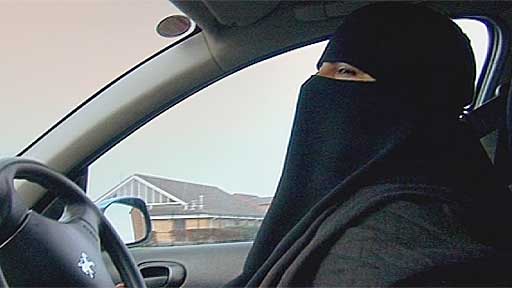
KUWAIT: A Kuwaiti woman was arrested in Saudi Arabia after she was caught driving in the kingdom where ultraconservative laws ban women from taking the wheel. According to a Khafji police report, the woman was caught driving a Chevrolet Epica on the ‘Sitteen Road’ in front of a hotel in the area located near the border with Kuwait, while a Kuwaiti man was in the passenger’s seat. The woman told the officers that the man was her father, adding that he is diabetic and cannot drive and that she had to take him to the hospital for treatment. The woman remains in custody pending investigations.
Saudi authorities have warned women of legal measures if they defy a long-standing driving ban in the kingdom. At least 16 women were stopped by police last Saturday and were fined and forced along with their male guardians to pledge to obey the kingdom’s laws, as more than 60 women said they defied the ban.
A growing number of men are quietly helping steer the campaign, risking their jobs and social condemnation in the conservative kingdom. Some of the men have even been questioned by authorities, and one was detained by a branch of the Saudi Interior Ministry – a move that sent a chill through some of the activists working to put women behind the wheel. In the run-up to last weekend’s protest, men played a key role in helping wives, sisters and female friends to enjoy what they believe is a fundamental right. Since the campaign was launched in September, they have produced videos of women driving and put them on social networks. They have helped protect the female drivers by forming packs of two or three cars to surround them and ward off potential harassment. And some have simply ridden as passengers with the women as they run their daily errands.
By A Saleh
I love it that this writer specified that this movement to allow women to drive in Saudi Arabia – where there is no law forbidding women to drive – is supported by husbands, brothers, fathers who want them to be able to drive. Most of the people discussing it in the US think the men don’t want the women to drive. I laugh, and say “they DO drive!” They drive all over the world, including Saudi Arabia, only in Saudi Arabia they have to disguise themselves as men, or drive out in the deserts. Their brothers, husbands and fathers teach them to drive. Time is on their side, their day is coming. Let’s hope women driving means fewer 12 and 13 year old boys behind the wheels, driving their Mums.
When I looked for it on Google Maps, it didn’t have any information. When I went to The South Sudan and then googled Terekeka, it came up with a reference, and I had to go to this website to find it – they had a map.
The organization who put up the map, Harvesters Reaching Nations, has two locations in the southernmost part of South Sudan, the newest nation on earth. They are building hospitals, and taking in orphans. If I hadn’t gone looking, I would never have heard of the good works they are doing, saving lives, changing lives.
This is what they say:
We currently serve more than 190 orphans in two locations in South Sudan – Yei and Terekeka. Our school in Yei provides a Christian education to more than 500 students. In addition to our school-age orphans, more than 400 children from surrounding villages attend our school.
The Harvesters campus in Yei consists of 90 acres of land donated by the South Sudan government. Since our beginning in 2001, we have built homes, dorms, classrooms and other facilities within a fenced-in campus. We use the land we own beyond the fencing for planting and growing corn, tomatoes and other vegetables for use in the orphanage.
Harvesters’ campus in Terekeka, South Sudan opened in 2010. At this campus, we currently provide care for 44 orphans, but will grow to 80 in the near future. We have built homes, dorms and a clinic within a five acre, fenced-in campus. Additional facilities, including a church and school classrooms, will be built in the near future as the needs and resources dictate.
To do this, they sold everything they owned, and moved to the South Sudan, and used the proceeds from selling everything to build the hospitals and schools. I bet they are the happiest they have ever been, and the most thoroughly engaged in life they have ever been.
Saudi Arabia is the only country in the world where women are not allowed to drive. There is an irony – there is no law banning women from driving. They do not issue driver’s licenses to women, they arrest women seen driving, and they do not – officially – teach women to drive. Thank God for good fathers and brothers and husbands, who take their daughters, sisters and wives to isolated places and teach them, often for the good of the family in case of an emergency.
Saudi women drive in Europe, in the USA – they drive everywhere except in their own country. The government shows signs of wanting to allow women to drive (officially) but they seem hesitate to stir the wrath of the religious police who believe – based on nothing – that God forbids women to drive. Recently, the head of the Saudi religious police said there is nothing in Islam that forbids a woman to drive. What’s the hold-up guys?
Saudi Arabian Women To Protest Driving Ban On Oct. 26
Saudi society is slowly inching toward more equality, but driving is still disallowed for women
When Farha was a young girl, about seven years old, her mother told her something that rocked her world: She said women could drive.
For Farha, a 24-year-old writer who has spent her entire life in Saudi Arabia, this was akin to a Western child learning the truth about Santa Claus. She’d only ever seen men behind the wheel in her country, where women are not permitted to drive. The revelation was slightly scandalous, a little bit funny, and totally paradigm-shifting.
It took another two years for Farha (who didn’t want to be identified with her last name due to the sensitivity of the issue in her home country) to decide she would, one day, learn how to drive a car. And, for good measure, she’d learn how to ride a bike. Two modes of transportation that have been banned to women and girls for most of Farha’s lifetime.
On Oct. 26, women in Saudi Arabia will engage in the third protest against the female driving ban by getting behind the wheel anyway. The protest won’t be widely attended, because the vast majority of women in Saudi Arabia don’t know how to drive. There are no driving schools in the Kingdom that cater to females, and state agencies will not issue a driver’s license to a woman.
“Since there is no justification for the Saudi government to prohibit adult women citizens who are capable of driving cars from doing so, we urge the state to provide appropriate means for women seeking insurance of permits and licenses to apply and obtain them,” a petition at the protestor’s web site reads. The web site has been blocked within Saudi Arabia, yet there are still a thousand or so names on the petition. The few women who are adept behind the wheel learned while living overseas, often in the U.S., Canada, or nearby Bahrain or Dubai.
In urban areas, women are chauffeured around by male relatives or paid drivers, or they pay for taxis. In rural areas, the driving ban generally isn’t enforced, and more women drive out of necessity. One woman who was recently videotaped disobeying the ban got support from her fellow (male) drivers, who passed by and gave her the thumbs up, a sign that society may be more willing to accept an eventual change.
Learning to drive
Farha tackled the task of learning to drive first by reading about the process. She edited a story on how to drive for her high school newspaper, and from that she felt she learned quite a bit. Then her father spent some time talking to her about how cars work, and the theoretical aspects of driving. He took her out for a few hours over the course of a few days, letting her drive around their neighborhood in the coastal city of Jeddah. But she never ventured onto the main roads.
She also learned the basics of riding a bicycle, but doesn’t consider herself adept at either skill. When the ban is lifted, she said she’ll sign up for classes at a real driving school.
“I always thought this ban would go away when I was 18,” she told AOL Autos. We connected with her through a publication where Farha wrote, under a pseudonym, about the driving ban. “And I’m still hoping it will be lifted when I am 26.”
“I always thought this ban would go away when I was 18,” Farha said. “And I’m still hoping it will be lifted when I am 26.”
Not driving makes life’s everyday movements difficult. Sidewalks aren’t available, so walking isn’t realistic. Farha’s father has mostly been responsible for driving her and her mother around, but five months ago he got into a car accident and broke his leg. He is currently unable to drive. Farha feels the burden of her father’s injury. If she could drive, she said, she could bring him to doctor’s appointments and help him get out of the house. Instead, the family is home-bound unless they pay someone to bring them places.
Farha has hired a part-time driver to take her to and from work. It costs about 2,000 to 3,000 Saudi riyals (or around $530 to $800) a month for a driver. That’s about the same amount that women make earning minimum wage in Saudi Arabia, prompting many women to just stay home.
“A lot of women don’t feel the incentive to work and hire a driver,” she said. “It doesn’t make any economic sense.”
Some women opt for the public bus system, but that makes women from conservative families feel nervous because it exposes them to strange men – the exact problem the country is trying to avoid by banning women drivers. Taxis run the same problem, putting females into cars with strange men. “It doesn’t make sense,” Farha said.
Farha is considering signing up for a karate class, but she’ll have to pay her driver for more hours or take a taxi to the classes. On top of the class fees, the price of getting to and from karate starts to seem like a silly amount of money, she said.
And she worries she’s spending too much money on herself. She could spend 30 riyals on a taxi each way, or she could donate that money to a family in need. Or spend that money sending school supplies to girls in other countries.
“It’s a difficult decision to make every time,” she said.
One unintended consequence of the rule strikes Farha as incredibly unsafe: Women often let their 13-year-old sons drive them around when they are out of other options. Farha’s observation was backed up by a U.S. intelligence research note made public by Wikileaks, which noted that these young drivers sometimes get into very serious accidents.
Weird, long history
Oddly enough, there isn’t any actual law in Saudi Arabia banning women from driving. In 1991, the late Grand Mufti of Saudi Arabia, Sheik Abdulaziz bin Baz issued a fatwa prohibiting women from driving. A fatwa is different from a government law, in that only followers of the religious leader who issues the fatwa are obliged to follow that law. But given the intertwined nature of Saudi Arabia’s government and its religious leaders, the fatwa took hold. The government agency in charge of issuing driver’s licenses will not issue one to a woman. Saudi Arabia’s court system relies heavily on fatwas from the Grand Mufti.
So, in essence, the religious order became a rule that everyone follows, even though it’s not enforced by the Saudi government. The government just makes it impossible for women to get drivers licenses, and if they catch women driving, they make them sign a pledge promising they won’t do it again.
Abdulaziz bin Baz said at the time that the ban would protect women, because allowing women to drive would put them out in society alone, leaving them to mix with men. If women were stranded by the side of the road due to a flat tire or car problem, they could end up being assaulted or raped by a man who came to help them, argue critics who still uphold the ban.
A reporter for the Christian Science Monitor recalled a 2012 conversation with a man in Saudi Arabia about what would happen if the ban was lifted. “What would happen if a woman got in a car accident, he asked? Then she would be forced to deal with the male driver of the other car, a stranger, with no oversight – a problematic situation in a country where male guardianship of women is deeply entrenched.”
Just last week, a Saudi cleric came under fire for claiming women were damaging their pelvises and causing birth defects by driving. Sheikh Saleh bin Saad al-Lohaidan argued women should put reason ahead of their hearts, because it “could have negative physiological impacts as functional and physiological medical studies show that it automatically affects the ovaries and pushes the pelvis upward.”
Saudi society is slowly inching toward more equality for women. Just this week, four women became attorneys. Earlier this year, women were allowed to work in retail establishments that sell underwear and bras, taking away the embarrassment for women who’d previously had to purchase these items from male salespeople.
Since around 2006, the Saudi government has been indicating it would consider lifting the driving ban if society deems it acceptable for women to drive. Diplomatic cables released by Wikileaks showed the U.S. government has been paying attention to this issue, and putting some pressure on the Saudis to change their ways.
Will of the people?
But it’s clear the Saudi government won’t make any controversial moves: “This has to do with the will of Saudi society,” said Saudi Justice Minister Muhammad Al-Issa in a TV interview in April, according to a translation by the non-profit group MEMRI. “If Saudi society, given its culture, wants women to drive, it’s fine. But if society has any reservation for whatever reason, that’s fine too.”
Farha said she’s holding out hope that the rules will change, as soon as possible. But the change will depend greatly on men’s attitudes.
“More men certainly support it now, but … they have their concerns,” she said. And “some are outright hostile to the idea.”
When she does get her license, Farha said she’d like to try driving a sports car. It doesn’t matter what kind, she just would like to try driving something fun. But she’d rather be able to walk or bike to work, even if she could drive.
“Cars feel suffocating inside,” she said. “But the whole idea is to lift this difficulty for women. I hope it happens soon.”
In sharing this story, and others, with our readers we hope you are inspired to Raise Your Hand for girls’ education, helping us spread the word on this crucial effort.
Mr. Taliban, did you see Jon Stewarts interview with Malala? (See below) All she wants is an education. She wants an education for herself, but also for all children in Pakistan. Your children, too! She wants them to have that opportunity, that’s all. And she has paid the price for her courage speaking out, and she bravely continues to state the obvious – there is nothing in Islam against educating women.
MIRANSHAH, Pakistan: The Pakistani Taliban Thursday said teenage activist Malala Yousafzai had done “nothing” to deserve a prestigious EU rights award and vowed to try again to kill her.
The European Parliament awarded the Sakharov human rights prize to the 16-year-old, who has become a global ambassador for the right of all children to go to school since surviving a Taliban murder attempt.
Malala survived being shot in the head by a TTP gumnan on October 9 last year and is seen as a leading contender for the Nobel Peace prize, to be announced on Friday.
“She has done nothing. The enemies of Islam are awarding her because she has left Islam and has became secular,” Tehreek-e-Taliban Pakistan (TTP) spokesman Shahidullah Shahid told AFP by telephone from an undisclosed location.
“She is getting awards because she is working against Islam. Her struggle against Islam is the main reason of getting these awards.”
He repeated the TTP’s threat – made numerous times in recent months -try again to kill Malala, “even in America or the UK”.
Malala and moved to Britain in the wake of the shooting for treatment and to continue her education in safety.
Feted by world leaders and celebrities for her courage, Malala has addressed the UN, this week published an autobiography, and could become the youngest ever Nobel Peace Prize laureate on Friday.
Her autobiography “I am Malala”, written with journalist Christina Lamb, has gone on sale in Pakistan and Shahid warned the Taliban would target bookshops stocking it.
“Malala is the enemy of Islam and Taliban and she wrote this book against Islam and Taliban,” he said. (AFP)








 Here There and Everywhere