Changes in the Air
“It’s still hot,” I said as we were coming out of the movie, “but can you feel a change in the air? Even though it’s hot, the air is changing, the light is changing – you can feel hints that Fall is coming . . . ”
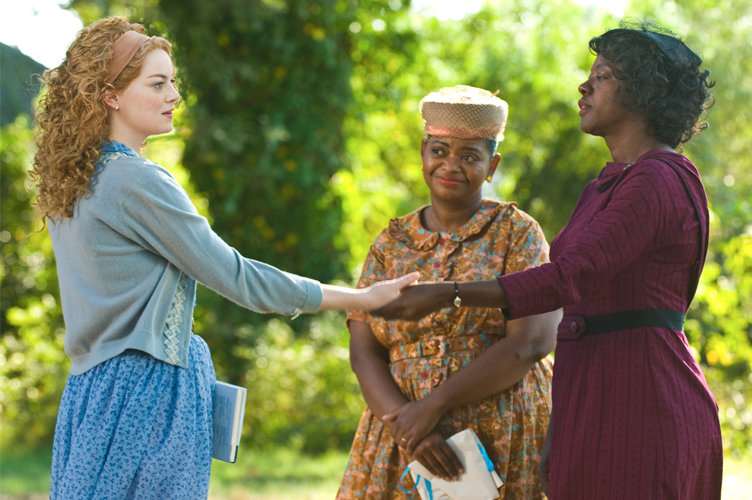
We had just been to see “The Help,” and if you haven’t seen it yet, you need to make plans to see it soon. It is a really good movie, which will make you laugh, and cry, and remember that it wasn’t so long ago in our country when it took place. (You can read my review of the unforgettable book here.)
The movie is a serious movie, and at the same time, I loved the attention to detail – the hair, the fashions, the manners – all very 50’s, even though it is the 1960’s in Jackson, Mississippi.
I remember reading this book in Qatar, just after I had moved back there from Kuwait. The Kuwait book club also read White Tiger and Half of a Yellow Sun, all of which had domestic service as at least part of the theme. It’s another one of those cultural things we all have in common – how do we treat the people who work for us? How do they see us? Who is raising our children and teaching them values?
In the Gulf, there are horror stories in the papers of servants who never receive their wages, or who work 16 hours a day, sun-up to sun-down, with never a day off. The families who take good care of their servants never make the papers, but I have seen good and caring relationships, lasting many years, between employers and employees. We’re glad we saw this movie, which sticks closely to the book. For a fuller experience – read the book.
Meanwhile, the temperature early this morning was below 69° F, which means that my tomatoes will begin setting once again and we may have a good crop coming before the cold sets in. I noticed, to my horror, I have a decent crop of weeds trying to establish themselves while it is too hot for me to go out and do battle with them. Some of my tomatoes actually continued producing even during the hottest days of the summer; I’m going to have to plant more of those next year. The golden pear and the red pear tomatoes are producing merrily; the bigger tomatoes have stopped – I hope temporarily.
Cultural Issues as Qatar races Towards 2022 World Cup
In the same issue of The Peninsula (Qatar), this author addresses cultural sensitivity when it comes to dress, but includes some intriguing mistakes. He (or she) states that all women are required to ‘veil their faces’ in Saudi Arabia, which is untrue. There is no law requiring women to cover their faces. Custom drives many – but not all – Saudi women to cover their faces. Western women are asked to cover their hair and to wear an abaya, and must do so when going off compounds or out of their hotels, but no one is required to cover their face.
The Issue: Is Qatar ready for 2022? Well, the country is all set to launch mega infrastructure projects worth billions of dollars in order to have facilities in place to host the coveted event.

But the key question being asked by many is whether the conservative Qatari society is ready to take in its stride the cultural shock that the preparations for the event and it being actually held here would trigger.
With no less than half-a-million international soccer fans expected to descend on the Qatari soil in 2022, Qatar must build the requisite mindset — and not just physical infrastructure — to be able to absorb the social and cultural tremors such an avalanche of people from different ethnicities and cultures would cause.
Or, will the Qatari society rise in rebellion against the onslaught, especially as Western values and traditions are seen gradually overshadowing local customs and the way people dress up and behave in public?
Already, there is widespread fear in the Qatari community about their identity being diluted due to the sheer size of the expatriate population. Official estimates suggest that out of a total of 1.7 million people living in Qatar, an incredible 1.5 million are foreigners. This means that some 90 percent people in the country are non-Qatari.
Since expatriates come from all over the world (unconfirmed reports suggest there might be people from more than 80 nationalities living here) the threat to Qatari identity and culture is real, say social analysts.
Some, though, argue that since Qatar is a small country with a tiny population, its people must pay the social price for development and prosperity. “Given the situation, you can’t have both—prosperity and identity. You must compromise and choose between the two,” says another social analyst not wanting his name in print.
Concerns in the Qatari community about its age-old culture and identity being compromised due to the ever-rising numerical preponderance of foreigners, are growing.
Rising indebtedness in the community due to limited income and growing consumerism has been relegated to the background as fears deepen over the local customs and folklore falling prey to what seems to be unstoppable intrusion of foreign cultures.
There is immense hostility in the Qatari community towards the way foreigners, especially young women, dress up. Foreign cultures have already reached Qatari homes with children being largely raised by foreign maids.
“Things are still under control since we can influence our children, but we are helpless when it comes to stopping outside influences that are causing damage to our society,” says a Qatari requesting anonymity. “The most harmful outside influences are TV and foreigners living in our midst.”
Objections are raised to young non-Qatari women, particularly Westerners, wearing skirts and sleeveless tops.
A number of Qatari mothers have expressed ire and want the state to intervene and ‘discipline’ young non-Qatari women who dress up ‘indecently’ in public. The mothers say they fear that their daughters might ape such negative behaviour.
There are some Qatari women, though, who see the media (read: foreign TV stations) posing a bigger threat than foreign women wearing skirts and sleeveless tops here in public.
Says Wisam Al Othamn, a lecturer at Qatar University: “It’s necessary to monitor the media, not foreign women.”
There are others, though, who feel that dressing up in public is one’s freedom and choice, so no one should impose restrictions.
Qatari social websites are filled with comments from people talking about threats to their identity. Some have called for setting up a ‘religious police’ to especially monitor young foreign women dressing up ‘indecently’ in public.
The commentators argue that Saudi Arabia has such a police and it is compulsory for every woman, whether local or foreigner, Muslim or non-Muslim, to veil her face in public.
But there are others who laud Qatar for the freedom people have in personal matters such as dressing up in public, and claim that foreigners here dress up decently if comparisons are made with neighbouring countries like Bahrain and Dubai.
There are still others who favour Qatar forcing foreign women to veil their faces while in public. They argue that since countries like France and Belgium have banned Muslim women from using face veils in public, Qatar and other Muslim countries should take counter measures and force all women, whether Muslim or non-Muslim, to cover their faces while moving in public.
An interesting comment on the way Qatari women dress is from a man writing on a local social website. He suggests that there is nothing like Qatari attire for women. Abaya is used by women in Yemen, Iraq and Syria, so it has come here from these countries.
As for naqab or full face and body veil, it did not exist in Qatar until 20 years ago, suggests the man. “So there is nothing called Qatari dress for women,” he says.
There are some who find fault with some schools having co-education and say Qatari girls tend to ape their foreign peers from these schools.
There is ire in sections of the Qatari community over the schools’ regulator, the Supreme Education Council (SEC), giving the freedom to schools on imparting lessons in Qatari history, language (Arabic) and religion.
Writing on social websites, some commentators are critical of the SEC and say that since land, history, language and religion are the four pillars of a society’s cultural identity, the schools must impart lessons in these subjects.
“It’s surprising why the SEC has not made the teaching of these subjects compulsory in schools. It’s a step that would destroy the Qatari identity,” wrote an angered commentator.
About language, the commentator quoted a famous Qatari writer, Dr Mohamed Al Kubaisi, as saying that it is only through their version of English language (different from the British English) that the Americans have built their identity and are dominating the world by popularising it (American English).
Another commentator said he saw the SEC move as a step aimed at diluting the Qatari identity. He even suggests that some teachers are opposing the SEC’s decision individually.
“Go to Germany and France and if you don’t speak the local language you wouldn’t get a response,” the commentator said, hinting that everyone in Qatar must speak the local language, Arabic.
Social analysts believe that Qatar faces a huge challenge over the coming 11 years (during the run-up to the 2022 event) in its struggle to maintain its cultural identity, and much of the onus will be on the Ministry of Awqaf and Islamic Affairs and the Ministry of Interior.
Talk of a dress code being imposed by the Interior Ministry is going on for a while with analysts wondering if at all it would see the light of day. Despite opposition to foreign women dressing up ‘indecently’ in public, there are some in the Qatari community who say they believe a dress code is unwanted and how people dress up in public should better be left to them, respecting their freedom.
There are some in the community, though, who want the government to act and impose a dress code, particularly as the number of foreigners in the country is quite high. Moreover, the fact that the foreigners come from so many nationalities makes it necessary to have some code in place to help protect Islamic values, they argue.
“If not a dress code, it should be accepted in principle by everyone living in the country that one must dress up decently to respect local customs and values,” says a community source.
“It’s normal for a country to have some say in matters like how people, especially women, dress up in public. This will in no way tantamount to curbing individual freedom,” he insists.
Analysts say that the Ministry of Interior introduced the concept of community policing sometime ago with this vision in mind. The entire concept of community policing where the law-enforcement agencies actively coordinate with different expatriate communities as well as civil societies and the locals is based on the idea of how to help protect and preserve Qatari identity and culture in the midst of threats being posed by the swelling population of foreigners in the country.
The focus of the effort (community policing) is on helping preserve basic social and religious values, knowledgeable sources say. Critics, however, maintain that the effort having been launched quite a while ago, is yet to yield results.
Thelma and Louise in Saudi Arabia
An editorial cartoon from my friend Grammy, in Texas, from today’s paper:

Adaobi Tricia Nwaubani: I Do Not Come to You by Chance
This book, the first novel from Adaobi Tricia Nwaubani, is hilarious, with moments of pathos, and a fresh point of view.
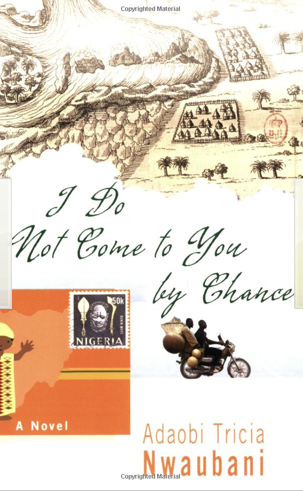
Amazon.com recommended it to me as I was busy buying books by author Chimamanda Ngozi Adichie; I thought ‘OK, I’ll read a series of Nigerian books as part of my summer reading.
Young Kingsley Ibe is the family’s first born male, and with that status goes many privileges – and responsibilities. After graduating with a Masters in Chemical Engineering, he has no success in his search for a job with an oil company in Nigeria, and consequently loses the love of his life, Ola, to another who has secure employment.
Worse, his retired father has a stroke, and the family discovers that with all the fees required, they haven’t enough for his continued care, so Kingsley must approach his uncle, Boniface Mbamalu, more familiarly known as Cash Daddy, for funds to transfer his father to a long term care facility, and, later, for his father’s funeral.
Serious Kingsley’s eyes nearly pop as he sees the life his uncle is living, cars, women, designer watches, shoes, suits and all the trappings of new wealth. Soon, his uncle makes a convincing case for Kingsley coming to work for him, the better to help out his family of mother, brothers and sister, now that he is the senior male in the family.
Kingsley discovers he has a gift for the work – which is writing 419s, those scam letters which I frequently publish in this column. I loved being on the inside, learning how strong possibility e-mail addresses are netted, how response e-mails are massaged – not unlike fund raising techniques by charitable organizations in the US. Kingsley’s education helps him achieve enormous financial success in a very short time – but he finds that all the cash and designer goods in the word do not solve his problems nor make him happy.
I learned a lot about how successful many of these scammers are, and how the money made is spread throughout the Nigerian communities. The author takes a balanced view, balancing the way the cash makes life easier for people – a lot of people, because the rich man has many obligations to his community, balanced against the disgust, and sick fear felt by his religious mother and aunt, and his one time girlfriend, when they learn the work he is doing. They are disappointed that a man of such promise has sunk to making so much money in a dishonest way. The book also does not deal sympathetically with those who have given or lost money to the scammers, nor, in my opinion, does the ending satisfy.
This is one of the funniest parts of the book – a group of Nigerian scammers is about to meet with a representative of a major US investment firm. He thinks he will be meeting with the Nigerian Minister of Transportation to discuss building a new airport; the reality is that Cash Daddy, in disguise, will be pretending to be the minister. Kingsley protests that Cash Daddy looks nothing like the minister, and Cash Daddy responds:
“Let me tell you something . . . Me, I really like these oyibo people. They’re very very nice people. See how they came and showed us that the ground where we’ve been dancing Atilogwu has crude oil under it. If not for them, we might never have found out. But Kings,” he dragged in his dangling foot and sat up in the tub, “white man doesn’t understand black man’s face. Do you know tht I can give you my passport to travel with . . . Even if your nose is ten times bigger than my own, they won’t even notice?”
It was a fascinating book. I understand better now why 419 scams work. (419 is the section of the Nigerian criminal code making scam e-mails a crime; thus the crime is called ‘a 419’) There are some very funny and very insightful moments in the book. It is no where near the level of literature that you experience with Chimamanda Ngozi Adichie, but there is more humor, and the book shows a more modern day Nigeria. Not a bad summer read, but not great literature.
Jeannette Walls: Half Broke Horses
About a month ago, I picked this up off the stack of “Read Me’s” . . . ummm . . . errr . . . one of the stacks of “Read Me’s.” (If there is some sort of emoticon for mild embarrassment, insert it here; one of my fatal flaws is acquiring book I WANT to read and having more books than I have time to read.)

I think Amazon recommended Half Broke Horses to me, and I didn’t know why. They keep track of what I buy and make recommendations, which over the many years I have been using Amazon.com to buy books has become more and more relevant to the kinds of things I actually buy and read. So I bought Half Broke Horses, and another one recommended by the same author, then put them in the stack. It is only because I had read whatever I put on top of them that I ended up reading.
I casually started reading, without a lot of anticipation. The first chapter starts off in the early early days of our country, in the wilds of West Texas, as a girl and her younger brother and sister are out checking the cows, who suddenly go crazy, even jumping over fences which under almost every circumstance successfully pen them in. The young girl recognized something strange was going on and figured it was a flash flood coming, got her siblings up in the tree and keeps them awake all night, as the flood hits, hoping the tree will hold and not wash away.
What is your first thought, reading that? Mine was – Where are her parents?? No one is out searching for them?
The next day, the flood recedes enough for them to make their way home back to a primitive dwelling hollowed out in the high side of a riverbank, dirt floors, dirt crumbling down on them, dark, small, smokey. Yes, there is a mother and a father, and they love their children, but these are very different times. These are hard times, where there is no grocery store, no nearby doctor, where babies die and children have fatal accidents all the time. Life can be short and brutal. The kids have some schooling, mostly at home, they learn to read and write and add and subtract, so they can keep track of home related business. They also work hard, every child has work around the ranch that needs doing, and work comes first or the family won’t survive.
The heroine, Lily Casey Smith, is a real person, the grandmother of the author, Jeannette Walls. This is called a true-life novel. From all the stories she heard about her grandmother growing up, and from knowing her grandmother, and from all the legends about her grandmother she was able to verify, she built a skeleton, and then filled it in with conversations and even a few events that she had to imagine.
Lily Casey left her family at 15 to ride her horse 25 days across Texas to take a teaching job in a one-room schoolhouse. (My jaw dropped, too!) After several years of teaching, she goes to Chicago to become educated and licensed as a teacher, marries, annuls the marriage, returns home, finds a teaching job, races horses, marries again, has children, has a huge ranch, loses the huge ranch, manages a huge ranch . . . her story is bigger than life, but so is the person of her grandmother, who never falls apart, but looks life in the eye and copes with it. Better than coping, she dominates.
Her major opponents are tough economic times, and dramatic and devastating weather conditions. Rain can fail to fall for months, cattle can die in an unexpected cold snap. At the best of times, you have enough to eat and a roof over your head.
I never wanted the book to end, and, in a sense, it didn’t. Jeannette Walls big best seller, The Glass Castle, takes up with just a little overlap where Half Broke Horses leaves off.
Here is what I loved: I loved the voice of Lily Casey Smith. She’s the kind of woman I want for a friend. She’s smart. She has a sense of how things work in the world. She experiences tragedies, but she doesn’t let them hurt her self-confidence. She can be beaten, but she always gets up again. She’s a problem solver. She never once lets being a woman get in the way of being the person she was born to be. She overcomes. She doesn’t sugar coat; she tells it as she sees it. And you know you can count on what she says to be the truth as she believes it. I truly hated for this book to end.
You can find this book at Amazon.com used under a dollar to new hardcover around $15. It is worth every cent.
Alexander McCall Smith and The Saturday Big Tent Wedding Party

Just back from a wonderful two day trip to Botswana, visiting my dear and beloved friend Precious Ramotswe, who owns the #1 Ladies Detective Agency. For her, I make an exception to the paperback book rule (buy paperbacks because hard covers can hurt you if you fall asleep and they fall over) and get on the pre-publication order list so that Amazon will send me the book as soon as it comes out.
The Saturday Big Tent Wedding Party arrived Wednesday night. My husband was expecting a friend, and when the doorbell rang I thought “oh my, he is really early!” but it was the UPS guy, who had left a book-sized package on my doorstep. I had just finished an easy but fun book (The Map Thief by Heather Terrell) and was at odd ends as to what to read next, and this was an easy answer. As my husband drank Arabic coffee and sweet sweet Arabic tea, and ate delicate Middle Eastern treats downstairs, I got to start The Saturday Big Tent Wedding Party.
You know the books. They aren’t difficult to read, but while you are reading, you are transported to another world. Precious Ramotswe’s Botswana is not a world without problems, but the solutions to the problems are often found in softer gentler ways, ways that would seem counter-intuitive in our culture, but make total sense when you are raised in Botswana. There is a value placed on peaceable interaction, and maintaining relationships, on forgiveness, and going to extra mile. It’s a sweet world, and a great escape.
As usual, there are several intertwining plot lines with ingenious and unexpected solutions. I suspect that is what keeps me glued to this series – I cannot anticipate the solutions. That, and the gentleness of her outlook, the sweetness of life in Botswana, and the dignity and integrity of McCall’s primary characters.
I don’t know how McCall manages to keep the series fresh, but he avoids the formulaic and I find each book a treat. My favorite part of this book is how Mma Potokwane manages to wangle and invitation to Mma Makutsi’s wedding:
Mma Potokwane noticed the other woman’s uncertainty. “Yes,” she continued. “There’s that problem. And then there’s another problem. Problems come in threes, I find, Mma. So the next one – Problem number two, so to speak – is the cooking of food. You know what I find, Mma, it is this: the people doing the cooking never have enough pots. They say they do, but they do not. And right at the last moment they discover that there are not enough pots, or, more likely, the pots they have are too small. A pot may be big enough to cook your meat and pap at home, just for a family, but do not imagine that it will be big enough to cook for a couple of hundred people. You need big, catering-size pots for that.”
She was now warming to her theme. “And the third problem is the food itself. You may think that you have enough for the feast, and you may be right when it comes to the meat. People usually have enough meat – often rather too much, in fact. But they forget that after their guests have eaten a lot of meat, they need something sweet, and often they have made no arrangements for that. A wedding cake? Yes, but there will only be one small piece of that for each guest – usually not enough. So people find themselves wishing that they had had the foresight to get a supply of ordinary cake for the guests to eat with their tea. And where is this cake? Not there, Mma.”
Mma Ramotswe glanced at Mma Makutsi; this was not the way to speak to a nervous bride, she thought. “I’m sure that everything will work out well,” she said reassuringly. “And if there are any problems, they will surely just be small ones – nothing to worry about.”
Mma Potokwane looked doubtful. “I hope so,” she said. “But in my experience, it never works out like that. I think it’s better to be realistic about these things.”
Mma Makutsi picked up her pencil to add something to her list. “You said something about pots, Mma. Where would I be able to get these big, catering-size pots?”
Mma Potokwane examined her fingernails. “Well, we have them at the orphan farm. Each of the house mothers has a very large pot. I’m sure that we could do something . . . ”
Run to your bookstore and buy The Saturday Big Tent Wedding Party!
Recent Comments
intlxpatr on Shampoo Ginger tigerbutterya0c5ff1d… on Shampoo Ginger intlxpatr on British Soldier Kidnapped, Esc… John on British Soldier Kidnapped, Esc… intlxpatr on British Soldier Kidnapped, Esc… Wikipedia Donate Button

Amazina


Early Voting in Florida


