Mediterranean Diet Cuts Heart Attacks, Strokes and Deaths by 30%
What I love about the report of this study is that all the related researchers have gone to a Mediterranean diet – see the end of this article 🙂 I found this article at the New York Times.

About 30 percent of heart attacks, strokes and deaths from heart disease can be prevented in people at high risk if they switch to a Mediterranean diet rich in olive oil, nuts, beans, fish, fruits and vegetables, and even drink wine with meals, a large and rigorous new study has found.
The findings, published on The New England Journal of Medicine’s Web site on Monday, were based on the first major clinical trial to measure the diet’s effect on heart risks. The magnitude of the diet’s benefits startled experts. The study ended early, after almost five years, because the results were so clear it was considered unethical to continue.
The diet helped those following it even though they did not lose weight and most of them were already taking statins, or blood pressure or diabetes drugs to lower their heart disease risk.
“Really impressive,” said Rachel Johnson, a professor of nutrition at the University of Vermont and a spokeswoman for the American Heart Association. “And the really important thing — the coolest thing — is that they used very meaningful endpoints. They did not look at risk factors like cholesterol or hypertension or weight. They looked at heart attacks and strokes and death. At the end of the day, that is what really matters.”
Until now, evidence that the Mediterranean diet reduced the risk of heart disease was weak, based mostly on studies showing that people from Mediterranean countries seemed to have lower rates of heart disease — a pattern that could have been attributed to factors other than diet.
And some experts had been skeptical that the effect of diet could be detected, if it existed at all, because so many people are already taking powerful drugs to reduce heart disease risk, while other experts hesitated to recommend the diet to people who already had weight problems, since oils and nuts have a lot of calories.
Heart disease experts said the study was a triumph because it showed that a diet was powerful in reducing heart disease risk, and it did so using the most rigorous methods. Scientists randomly assigned 7,447 people in Spain who were overweight, were smokers, or had diabetes or other risk factors for heart disease to follow the Mediterranean diet or a low-fat one.
Low-fat diets have not been shown in any rigorous way to be helpful, and they are also very hard for patients to maintain — a reality borne out in the new study, said Dr. Steven E. Nissen, chairman of the department of cardiovascular medicine at the Cleveland Clinic Foundation.
“Now along comes this group and does a gigantic study in Spain that says you can eat a nicely balanced diet with fruits and vegetables and olive oil and lower heart disease by 30 percent,” he said. “And you can actually enjoy life.”
The study, by Dr. Ramon Estruch, a professor of medicine at the University of Barcelona, and his colleagues, was long in the planning. The investigators traveled the world, seeking advice on how best to answer the question of whether a diet alone could make a big difference in heart disease risk. They visited the Harvard School of Public Health several times to consult Dr. Frank M. Sacks, a professor of cardiovascular disease prevention there.
In the end, they decided to randomly assign subjects at high risk of heart disease to three groups. One would be given a low-fat diet and counseled on how to follow it. The other two groups would be counseled to follow a Mediterranean diet. At first the Mediterranean dieters got more intense support. They met regularly with dietitians while members of the low-fat group just got an initial visit to train them in how to adhere to the diet, followed by a leaflet each year on the diet. Then the researchers decided to add more intensive counseling for them, too, but they still had difficulty staying with the diet.
One group assigned to a Mediterranean diet was given extra-virgin olive oil each week and was instructed to use at least 4 four tablespoons a day. The other group got a combination of walnuts, almonds and hazelnuts and was instructed to eat about an ounce of the mix each day. An ounce of walnuts, for example, is about a quarter cup — a generous handful. The mainstays of the diet consisted of at least three servings a day of fruits and at least two servings of vegetables. Participants were to eat fish at least three times a week and legumes, which include beans, peas and lentils, at least three times a week. They were to eat white meat instead of red, and, for those accustomed to drinking, to have at least seven glasses of wine a week with meals.
They were encouraged to avoid commercially made cookies, cakes and pastries and to limit their consumption of dairy products and processed meats.
To assess compliance with the Mediterranean diet, researchers measured levels of a marker in urine of olive oil consumption — hydroxytyrosol — and a blood marker of nut consumption — alpha-linolenic acid.
The participants stayed with the Mediterranean diet, the investigators reported. But those assigned to a low-fat diet did not lower their fat intake very much. So the study wound up comparing the usual modern diet, with its regular consumption of red meat, sodas and commercial baked goods, with a diet that shunned all that.
Dr. Estruch said he thought the effect of the Mediterranean diet was due to the entire package, not just the olive oil or nuts. He did not expect, though, to see such a big effect so soon. “This is actually really surprising to us,” he said.
The researchers were careful to say in their paper that while the diet clearly reduced heart disease for those at high risk for it, more research was needed to establish its benefits for people at low risk. But Dr. Estruch said he expected it would also help people at both high and low risk, and suggested that the best way to use it for protection would be to start in childhood.
Not everyone is convinced, though. Dr. Caldwell Blakeman Esselstyn Jr., the author of the best seller “Prevent and Reverse Heart Disease: The Revolutionary, Scientifically Proven, Nutrition-Based Cure,” who promotes a vegan diet and does not allow olive oil, dismissed the study.
His views and those of another promoter of a very-low-fat diet, Dr. Dean Ornish, president of the nonprofit Preventive Medicine Research Institute, have influenced many to try to become vegan. Former President Bill Clinton, interviewed on CNN, said Dr. Esselstyn’s and Dr. Ornish’s writings helped convince him that he could reverse his heart disease in that way.
Dr. Esselstyn said those in the Mediterranean diet study still had heart attacks and strokes. So, he said, all the study showed was that “the Mediterranean diet and the horrible control diet were able to create disease in people who otherwise did not have it.”
Others hailed the study.
“This group is to be congratulated for carrying out a study that is nearly impossible to do well,” said Dr. Robert H. Eckel, a professor of medicine at the University of Colorado and a past president of the American Heart Association.
As for the researchers, they have changed their own diets and are following a Mediterranean one, Dr. Estruch said.
“We have all learned,” he said.
Maldives Rape Victim Sentenced to 100 Lashes for PreMarital Sex
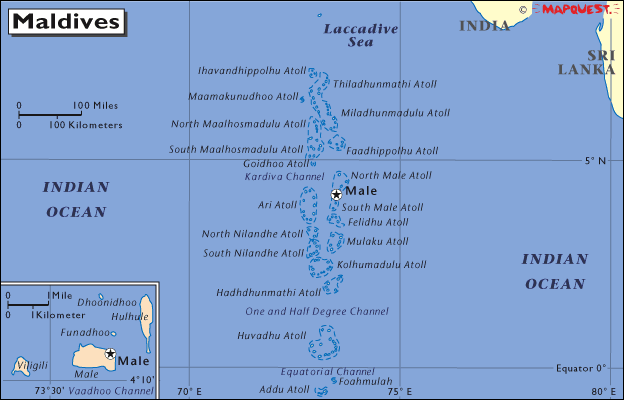
Where are the Maldives Islands?
Raped by her stepfather, impregnated against her will, her stepfather killed the baby, and now, sentenced by Sharia law to 100 lashes for pre-marital sex. How can this be justice? (This is from BBC News)
Maldives girl to get 100 lashes for pre-marital sex
By Olivia Lang
BBC News
A 15-year-old rape victim has been sentenced to 100 lashes for engaging in premarital sex, court officials said.
The charges against the girl were brought against her last year after police investigated accusations that her stepfather had raped her and killed their baby. He is still to face trial.
Prosecutors said her conviction did not relate to the rape case.
Amnesty International condemned the punishment as “cruel, degrading and inhumane”.
The government said it did not agree with the punishment and that it would look into changing the law.
Baby death
Zaima Nasheed, a spokesperson for the juvenile court, said the girl was also ordered to remain under house arrest at a children’s home for eight months.
She defended the punishment, saying the girl had willingly committed an act outside of the law.
Officials said she would receive the punishment when she turns 18, unless she requested it earlier.
The case was sent for prosecution after police were called to investigate a dead baby buried on the island of Feydhoo in Shaviyani Atoll, in the north of the country.
Her stepfather was accused of raping her and impregnating her before killing the baby. The girl’s mother also faces charges for failing to report the abuse to the authorities.
The legal system of the Maldives, an Islamic archipelago with a population of some 400,000, has elements of Islamic law (Sharia) as well as English common law.
Ahmed Faiz, a researcher with Amnesty International, said flogging was “cruel, degrading and inhumane” and urged the authorities to abolish it.
“We are very surprised that the government is not doing anything to stop this punishment – to remove it altogether from the statute books.”
“This is not the only case. It is happening frequently – only last month there was another girl who was sexually abused and sentenced to lashes.”
He said he did not know when the punishment was last carried out as people were not willing to discuss it openly.
Defending the World Against Bland Food
One of our life dreams came true when we were able to visit Avery Island and the McIlhenny Company. Tabasco sauce is on every table in almost every restaurant in the South, right along with the salt and pepper. When AdventureMan was serving in VietNam, soldiers had a tiny bottle of Tabasco in each ration, to spice up the food. The quote “defending the world against bland food” gave me a big grin. Rest in Peace, Paul C.P. McIlhenny. (This is from AOL News/Huffpost today)

Paul C.P. McIlhenny Dead: CEO Of Tabasco Company Dies At 68
AVERY ISLAND, La. — Paul C.P. McIlhenny, chief executive and chairman of the board of the McIlhenny Co. that makes the trademarked line of Tabasco hot pepper sauces sold the world over, has died. He was 68.
The company, based on south Louisiana’s Avery Island, said in a statement that McIlhenny had died Saturday. The statement, released Sunday, credited McIlhenny’s leadership with introducing several new varieties of hot sauces sold under the Tabasco brand and with greatly expanding their global reach.
McIlhenny was a member of a storied clan whose 145-year-old company has been producing the original world-famous Tabasco sauce for several generations, since shortly after the Civil War. The statement said McIlhenny joined the company in 1967 and directly oversaw production and quality of all products sold under the brand for 13 years.
Under his management, the company experienced years of record growth in sales and earnings, according to the company.
McIlhenny also worked to develop an array of items that could be marketed and emblazoned with the Tabasco logo: T-shirts, aprons, neckties, stuffed toy bears, and computer screensavers, the Times-Picayune of New Orleans noted. The newspaper first reported the death and noted that McIlhenny was an executive with a keen sense of humor, quipping days before he reigned as Rex, the King of Carnival, for Mardi Gras in 2006: “We’re defending the world against bland food.”
The Times-Picayune said he had taken up the post of company president starting in 1998 before adding the title of CEO two years later. It added that his cousin, Tony Simmons, took over as president last year.
“All of McIlhenny Company and the McIlhenny and Avery families are deeply saddened by this news,” said Tony Simmons, president of McIlhenny Company and a McIlhenny family member, in the company’s statement.
He added: “We will clearly miss Paul’s devoted leadership but will more sorely feel the loss of his acumen, his charm and his irrepressible sense of humor.”
The statement said McIlhenny led the way on new brand merchandising, taking an instrumental role in the company’s catalog business of licensed merchandise. He also was a driving force behind the growing global reach of Tabasco products, today sold in more than 165 countries and territories.
The company said McIlhenny, at the time of his death, was also a company director. He was a sixth-generation member of the family to live on Avery Island and among the fourth generation to produce the Tabasco brand sauce on Avery Island, where patriarch Edmund McIlhenny had founded the company in 1868.
Born on March 19, 1944, he grew up in New Orleans and spent much of his childhood moving between New Orleans the family compound on Avery Island, according to The Times-Picayune.
Reports noted he also had been an impassioned board member of America’s Wetland Foundation because of his longtime interest in preserving south Louisiana coastlines crumbling under the onslaught of decades of erosion.
Attorney Edward Abell called his friend McIlhenny “a well-known figure.”
“It really kind of puts us on the map here,” Abell said, “because the Tabasco products are known all over the world.”
A Night of Booming Thunder
As I opened my Lectionary this morning, the first Psalm is Psalm 57 which begins:
Be merciful to me, O God, be merciful to me,
for in you my soul takes refuge;
in the shadow of your wings I will take refuge,
until the destroying storms pass by.
I just had to laugh.
The lightning and thundering started last night around 10:00. Electrical storms are nothing new to the Pensacola area, but this one went on ALL NIGHT. It was like a front rolled in and got stuck over Pensacola. I woke up later this morning, having been awake around four for a couple hours, just listening. These were close, “BOOM – boom – booom – BOOM!” and loud. Even with the window coverings, you could see flashes of light in the bedroom.
As I lay awake, I thought about how the voice of God must have that deep, resonant, authoritative BOOM of thunder and I wondered what that voice might be trying to say to Pensacola or – oops! – to me.
This morning, that voice is still rumbling off in the distance, with no guarantee it won’t be back to scold us thunderously.
Kuwait Independence / Kuwait Liberation Congratulations
LOL, I actually congratulated Kuwaitis about a month ago when I thought I had missed the date and . . . I did! I missed it by a month! I was too soon!
So now it is really here – February 25 – 26. Congratulations, and we wish you well. We wish you resolution to your challenges of leadership and infrastructure issues. If you’ve noticed; it’s not like these are challenges unique to Kuwait; the flip-side of democracy can be logjams and stalemates, and then, suddenly, it can all shift and flow. We wish you some shift and flow after years of logjam.

Endless Rain in Pensacola

“I am so thankful we had such good weather when our house guests were here,” I said to AdventureMan. Not only was it raining steadily as we headed home from the commissary, but we had thunder and lightning early in the morning, and it meant no water-aerobics class – pools are not a safe place to be when there is a thunderstorm outside.
“And I am thankful to have a garage.” he added, and I totally agree. When you have a big load of groceries is not a great time for a rain storm if you are toting them inside, pelted by a pouring rain.
We thought of all the places we have lived. I thought of all the groceries we have toted. Probably, for me, the worst was in Kuwait, where we had underground parking (very nice protection from the heat and merciless sun) and you had to take groceries and other shopping up in an elevator. We’ve lived in many countries, however, with no garage at all, and carried groceries inside through all kinds of weather.
And the rain keeps coming down . . . .
Putting TEETH into Anti-Rape Solutions :-)
Thank you, Hayfa, you always find the most amazing articles. What I love about this one is that if everything is where it is supposed to be, nobody gets hurt. Only invasive behavior results in . . . .lets hope excruciating pain 🙂 It also gives an attacker something else to focus on. This invention is a public service.
Rape-aXe: The Anti-Rape Condom
This is so brilliant! An anti-rape female condom invented by Sonette Ehlers.… A South African woman working as a blood technician with the South African Blood Transfusion Service, during which time she met and treated many rape victims. The device, known as The Rape-aXe, is a latex sheath embedded with shafts of sharp, inward-facing microscopic barbs that would be worn by a woman in her vagina like a tampon. If an attacker were to attempt vaginal rape, their penis would enter the latex sheath and be snagged by the barbs, causing the attacker pain during withdrawal and (ideally) giving the victim time to escape. The condom would remain attached to the attacker’s body when he withdrew and could only be removed surgically, which would alert hospital staff and police. This device could assist in the identification and prosecution of rapists.


A medieval device built on hatred of men? Or a cheap, easy-to-use invention that could free millions of South African women from fear of rape, in a country with the world’s worst sexual assault record?
Dubbed the “rape trap”, trademarked “Rapex”, the condom-like device bristling with internal hooks designed to snare rapists has re-ignited controversy over South Africa’s alarming rape rate, even before plans for its production were announced in Western Capethis week.
Some say the inventor, Sonette Ehlers, a former medical technician, deserves a medal, others that she needs help.
The device, concealed inside a woman’s body, hooks onto a rapist during penetration and must be surgically removed.
Ms Ehlers said the rape trap would be so painful for a rapist that it would disable him immediately, enabling his victim to escape; but would cause no long-term physical damage and could not injure the woman.
Some women’s activists call the device regressive, putting the onus on women to address a male problem.
Charlene Smith, an anti-rape campaigner, said it “goes back to the concept of chastity belts” and would incite injured rapists to kill their victims.
“We don’t need these nut-case devices by people hoping to make a lot of money out of other women’s fear,” Ms Smith said.
But Ms Ehlers contends that South Africa’s rape problem is so severe women cannot wait for male attitudes to improve.
“I don’t hate men. I love men. I have not got revenge in mind. All I am doing is giving women their power back,” Ms Ehlers said. “I don’t even hate rapists. But I hate the deed with a passion.”
The United Nations says South Africahas the world’s highest per capita rate of reported rapes – 119 per 100,000 people. Analysts say the total, including unreported rapes, could be nine times higher.
Ms Ehlers sees her invention as particularly attractive to poorer black women, because they often walk long distances through unsafe areas to and from work. She foresees women inserting the device as part of a daily security routine.
She said a majority of women surveyed said they were willing to use the device, which will go into production next year and sell for one rand (20 cents).
Ms Ehlers said she was inspired after meeting a traumatised rape victim who told her, “If only I had teeth down there.”
The Magnolia on Cervantes in Pensacola
We consistently hear good things about The Magnolia, a little boutique restaurant tucked in between a dog grooming establishment and a do-it-yourself laundry at the corner of Perry and Cervantes, in East Pensacola. What we hear, over and over, is how good the food is, so finally, we decided to give it a try.

Parking is limited in back, with crabby householders reminding you NOT to block their driveway, can’t say that I blame them. Several businesses share the parking area, and some of those parking are excess from Jerry’s, across the street, so things can fill up fast. It’s a busy corner, with Jerry’s, My Favorite Things, Taste of India, Magnolia’s, all together, and Georgio’s, Horizen, Cazadores and New York Nicks just steps away . . . there is always something to eat in this neighborhood.
Magnolia has an impressive bar, and seven or eight tables. They are friendly and welcoming, and you feel comfortable the moment you walk in. We saw a good selection of beers and wines, not overwhelming, but – as the new in word says – “curated.”

Our friends were right about the food. Every single thing we ate was full of flavor. We started with the Mushroom Soup; thank goodness I remembered to take a photo before eating every single bite! It was lush and woodsy, heavy with flavor in a light broth.

AdventureMan had the Hummingbird Sandwich (Hummus, goat cheese, sundried tomatoes & house-made olive salad on Italian) which he said was totally YUMMY:
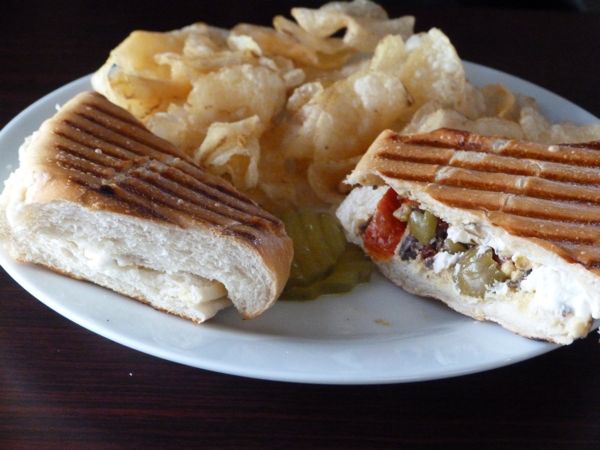
I had the Almost Famous Rosemary Chicken Salad (Hummus, goat cheese, sundried tomatoes & house-made olive salad on Italian) served on Ritz crackers. Whoda thunk it would be such a dynamite combination? It was! Delicious!

We don’t often have dessert, but because everything had been SO good, when the owner recommended the Tres Leches, we succumbed. Oh my. Real rum, real cream and some delicious cake. Very clever, very unusual, very delicious.
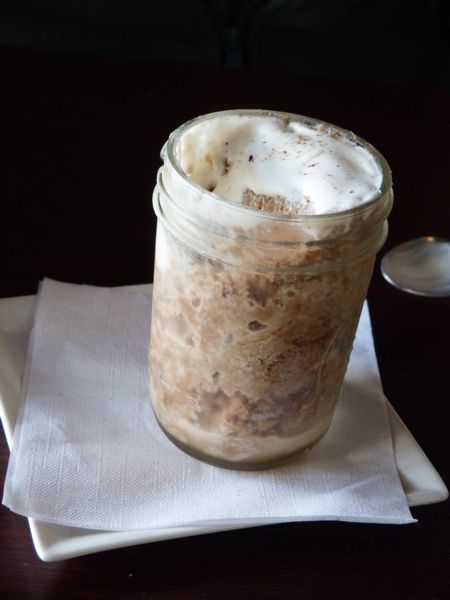
We will go back again in a heartbeat – there are so many other things on the menu we want to try.
Benedryl / Diphenhydramine Linked to Delirium and Alzheimer’s
One of the big impacts of being long term expats is that as you move from country to country, you also move from doctor to doctor. We managed by getting most of our health care while back in the US, but for those things that can’t be scheduled, we had to see local doctors. No one followed our cases. We knew we were paying a price, and determined that it would be a priority when we retired to find good health care. We were determined to find a doctor who would be a partner in keeping us fit and healthy.
We found a really great doctor, a young guy who really keeps up with things. He gave us complete exams, then started us on rounds of other exams, those annoying tests like colonoscopies, mammograms, lung function, etc.
We’re doing well. To my great surprise, however, he told me at our last visit that I needed to give up my nightly Benedryl capsule.
I’ve always been a light sleeper. I took this news with dismay, but I gave up Benedryl. I was afraid I wouldn’t be able to sleep, but I find I sleep just fine without it. It took some time to make the adjustment; Benedryl had helped me bridge those wakeful times between sleep cycles. Now, I sleep differently, but I sleep.
It occurred to me that I never looked it up online, so this morning I did. This is from a US News and World Report article in 2011:

By Steven Reinberg
HealthDay Reporter
THURSDAY, June 4 (HealthDay News) –Older people taking common over-the-counter drugs for pain, cold symptoms or help with sleep may increase their risk for cognitive impairment, including delirium, University of Indiana researchers report.
These drugs include Benadryl, Dramamine, Excedrin PM, Nytol, Sominex, Tylenol PM and Unisom.
All of these over-the-counter (OTC) drugs contain benadryl (diphenhydramine), a molecule that blocks the neurotransmitter acetylcholine. Acetylcholine is essential for normal functioning of the central and peripheral nervous systems, the researchers explained.
“Before taking any medication prescribed by your doctor or an OTC medication, make sure there is no negative impact of this medication on your brain,” said lead researcher Dr. Malaz Boustani.
His group analyzed data from 27 prior studies on the relationship between anticholinergic effects and brain function, as well as looking into anecdotal data. The team found a consistent link between anticholinergic effects and cognitive impairment in older adults.
“Any OTC medication with the term ‘PM’ will indicate the presence of benadryl, which is bad for the brain,” Boustani concluded.
He noted that the effects of benadryl can add up, so the more medications you take that contain benadryl the worse it may be for cognition. “There is a relationship with the number of medications and the burden on your aging brain,” the researcher said.
People aged 65 and older who take these medications also run the risk of developing delirium, Boustani said. Delirium is a decline in attention-focus, perception and cognition, or “acute brain failure,” as Boustani calls it. Delirium typically increases the odds of dying or being institutionalized, he said.
In addition, taking these medications for 90 days or more may triple your risk of developing Alzheimer’s disease, Boustani said.
Given the risks, older adults should look for drugs that don’t contain benadryl, he said.
“A lot of these medications are not recognized for these side effects,” he contended. “It’s time for the FDA to start taking this negative impact of these medications on the aging brain seriously.”
The report is published in the May online issue of the Journal of Clinical Interventions in Aging.
According to Boustani, researchers in brain pharmacoepidemiology at Indiana University’s Center for Aging Research is conducting a study of 4,000 older adults to see if the long-term use of medications with anticholinergic effects is associated with the development of severe cognitive impairment, such as Alzheimer’s disease.
Dr. Clinton Wright, an associate professor of neurology at the Miller School of Medicine at the University of Miami, agreed that more study is needed to assess the effects of these drugs on the brain.
“These findings don’t surprise me at all,” Wright said. “People tend not to think of their OTC medications as medication, but any medication that has anticholinergic effects can affect people’s cognition.”
Wright believes the drugs should carry a warning of this potential side effect.
Deborah G. Bolding, a spokeswoman for GlaxoSmithKline, the maker of Sominex, defended the product and said it complies with all current FDA regulations. However, she would not comment specifically on whether diphenhydramine is associated with an increased risk of delirium in older adults.
“Sominex is a mild sleep aid designed to help individuals through periods of nervous tension or stress, which are accompanied by sleeplessness. It has been proven safe and effective in medical tests when taken as directed, and has been safely used by millions of satisfied customers,” Bolding said.
“For all formulations, Sominex’s active ingredient is diphenhydramine hydrochloride. This is marketed under a final FDA monograph as an over-the-counter sleep aid,” she added.
Auction Navajo First Phase Chief’s Wearing Blanket Game Changer
You’ve got to watch this video for the best thing that will happen to you all day. Just when you think you hit bottom, something wonderful can happen. It happened to this man, who had lost a lower leg in an accident, was living on $800 plus disability and wondering how he was going to survive. (Thank you, Hayfa, for sending this!)
Published on Jul 11, 2012
This stunning Navajo First Phase Chief’s Wearing Blanket made headlines when it sold for 1.8 million dollars at John Moran Auctioneers’ June 19th sale in Southern California, smashing the previous world record of $522,500 for a similar blanket. An example of the rarest type of the earliest phase of Navajo blankets, it emerged from obscurity when it was brought into Moran’s free appraisal clinic by a man whose family handed it down through the generations, casually using it around the house. The sale of this museum-quality treasure has dramatically changed his life, and made auction history.
Video from JohnMoranAuctions:
Recent Comments
ExpatAlien on What Country am I Living … intlxpatr on Yellowstone: Old Faithful to C… Michelle on Yellowstone: Old Faithful to C… Cathy on No Grown-Ups in Charge intlxpatr on Waiting for Snow Wikipedia Donate Button

Amazina


Early Voting in Florida


 Here There and Everywhere