New Study Shows Taking Folic Acid Cuts Autism Risk 40%
I heard this yesterday on NPR and found this article today on the Huffpost/AOL News. The critical factor is that a woman needs to be taking folic acid supplements BEFORE she gets pregnant:
With autism now affecting one in 88 children in the U.S., many parents are searching for any step they can take to help lower their child’s risk of developing the disorder. A new Norwegian study joins a small but growing body of research that suggests a simple, low-cost option already exists: Taking folic acid during the earliest stages of pregnancy could lower a child’s odds of developing autism by nearly 40 percent.
“This is a relatively inexpensive way that parents can take action to possibly prevent risk of tube birth defects and autism,” Alycia Halladay, senior director for environmental and clinical Sciences for the advocacy group Autism Speaks, told The Huffington Post. Halladay did not work on the new study, which was published online in the Journal of the American Medical Association on Tuesday.
Researchers analyzed a sample of more than 85,000 children born in Norway between 2002 and 2008 to study the effect of taking a folic acid supplement — typically between 200 and 400 micrograms per day — from one month before a woman got pregnant to two months after. Some .10 percent of children whose moms took folic acid supplements were diagnosed with autism, compared to .21 percent of those whose moms did not — which is equal to 39 percent lower odds.
The study does not establish a cause and effect relationship between the vitamin and subsequent autism, and its authors do not know why folic acid may have a protective effect. Study researcher Pal Suren of the Norwegian Institute of Public Health told HuffPost that folic acid is critical to the synthesis of DNA, which could play some role in the connection. Folic acid may also affect how certain genes are turned on and off in the body, he hypothesized, saying it was “not biologically implausible” that folic acid supplementation has certain epigenetic effects.
The new study also raises questions about how much folic acid may be needed to lower autism risk, as well as what form it must come in.
“We do not know how other dosages would have affected the risk of autism, or whether it matters if folic acid is taken as single tablets or as part of a prenatal multivitamin supplement,” Suren said.
The researchers took steps to ensure that the decreased risk was not just because women who took folic acid were also engaged in other healthy behaviors. To control for that, they looked at fish oil use (assuming women who took fish oil were also likely to be healthy in other ways) and found no link between lower autism risk.
Since the early 1990s, groups like the Centers for Disease Control and Prevention and the U.S. Public Health Service have recommended that all women of childbearing age take 400 micrograms of folic acid daily to help prevent neural tube defects — birth defects of the brain and spinal cord including spina bifida and anencephaly. Since folic acid was added to the grain supply in 1998, the U.S. has seen a 26 percent decrease in those neural tube disorders, according to figures compiled by the March of Dimes.
The possibility of a link between folic acid consumption and lower autism risk is far more preliminary. A 2011, California-based study in the journal Epidemiology found that mothers of children with autism were less likely to have taken a prenatal vitamin in the three months before pregnancy or in the first month after getting pregnant, suggesting that so-called “periconceptional” use of prenatal vitamins may reduce autism risk. In the U.S., prenatal vitamins typically include between 400 and 800 micrograms of folic acid.
But folic acid is by no means a magic pill, experts caution. The fact that rates of autism diagnosis have skyrocketed in the past several decades despite more and more women taking folic acid shows how complex the origins of autism are. The exact causes of the disorder, which is characterized by social and communication difficulties and repetitive behaviors, are still unknown.
“This is one way that risk may be reduced, but this isn’t the only way,” said Halladay. “It’s an inexpensive way to potentially reduce the risk of autism, but there are a number of risk factors — genetics and other environmental factors — that solidly contribute to risk.”
The Church Remembers Absalom Jones
Imagine the difference that diligence and persistence and cheerful good humor made in the life of Absalom Jones, imagine all the lives he touched, imagine the obstacles and brutal life he experienced and overcame on his life’s journey. It is truly humbling to see what this saint achieved:

The Liturgical Calendar: The Church Remembers
Today the church remembers Absalom Jones, Priest, 1818.
Pastor Absalom Jones was reared a domestic slave on a plantation in Delaware. His charm, wit, and sincerity gained for him the affection of all who knew him. He was able to save enough pennies, given to him as tips, to purchase for himself a primer, a spelling book, and a New Testament. This was the beginning of an insatiable quest for knowledge which was to occupy much of his life.
When he was sixteen years old his mother, five brothers, and one sister were sold, and he was taken to Philadelphia with his master. The more stimulating environment of the city, added to a desire to correspond with his mother, resulted in an intensified effort to learn. He went to night school and also studied theology under Bishop William White (see July 17), from whom he eventually received holy orders. He married, bought a house and land, and finally, at age thirty-seven,he was granted his freedom. Finding that Philadelphia’s “white” churches were not truly open to him or his people, he founded the African Episcopal Church of St. Thomas.
He was an exemplary pastor and an able student of Holy Scripture and human nature. He had found Our Lord and in his Name had overcome seemingly insurmountable odds. Jones bore witness, with his life, to the truth that all people are bearers of God’s image.
Give us strength to overcome those things that separate us, Lord Christ, that we may see your likeness in all people. Amen.
All Who Exalt Themselves Will be Humbled . . .
Today’s Ash Wednesday reading the Lectionary is a great reading for a season of introspection and meditation:

Luke 18:9-14
9 He also told this parable to some who trusted in themselves that they were righteous and regarded others with contempt: 10‘Two men went up to the temple to pray, one a Pharisee and the other a tax-collector. 11The Pharisee, standing by himself, was praying thus, “God, I thank you that I am not like other people: thieves, rogues, adulterers, or even like this tax-collector. 12I fast twice a week; I give a tenth of all my income.” 13But the tax-collector, standing far off, would not even look up to heaven, but was beating his breast and saying, “God, be merciful to me, a sinner!” 14I tell you, this man went down to his home justified rather than the other; for all who exalt themselves will be humbled, but all who humble themselves will be exalted.’


Something Gold For Chinese New Year: Happy China

“Happy New Year!” I called out to my Chinese friend in Aqua Aerobics.
“Happy New Year!” she shouted back, puffing just a little.
“Are you going out to celebrate?” I asked, with my find-a-good-Chinese-restaurant-agenda coming out.
“Yes, with a bunch of friends!” she responded.
“Where are you going?” I asked, genuinely curious as to where REAL Chinese people would eat real Chinese food in Pensacola.
“Happy China, over on Mobile Highway,” she told me.
I haven’t had really good Chinese food since leaving Kuwait, where we ate in a little dingy restaurant where a lot of Chinese people also ate. The food was not dumbed down, not at all.
“Will he fix you something special?” I wondered, and she replied that he would, several dishes, ordered ahead, for their large party.
So today, AdventureMan and I struck out to find the Happy China, and we did, to celebrate Chinese New Year, and it was good. I intended to order from the menu, but the buffet looked pretty good, so we decided it would be a way to get an overview. There were many many seafood items, and a noodle bar where you put together a noodle dish and then put it in warm broth to warm it all up. It was fun, the food was really good, and I look forward to going back and ordering off the menu.



On our way out, as we paid the very reasonable bill, I asked if they ever had any of the cats with the raised paws in white china with the colored paint. She said sometimes, but that they fly off the shelves.
“This year we have these ones, in gold, because it is the year of the Snake, you want something in gold,” she instructed me. I kinda liked the glitzy gold anyway, and they were $2.99, LOL, a small price for welcoming wealth into our household. The cat whose right paw is raised welcomes wealth, the left paw raised welcomes children, which are a different kind of wealth 🙂 and are also welcome in our household, our own son and other people’s children, not more for me, please!


First Gator on Dauphin Island

“That’s my very first gator!” our friend said, watching the reptile sun himself on the side of the big pond in the Audubon Bird Sanctuary. We had taken the very short hike out to see the gators and the turtles, and any birds who might be migrating through this gorgeous February day between storms.



(That’s not a stick; it’s a turtle head sticking out of the water 🙂 )
We had a great day for a drive and a ferry boat ride. The car ferry only handles maybe thirty cars max on the trip across Pelican Bay from Dauphin Island to Gulf Shores. It cuts off a long long trip back into Mobile and around the huge Mobile Bay, and takes us along the beach back into Pensacola.






February is a great time of the year to walk these areas and to take a day trip. We had a wonderful day, mild temperatures and calm waters – altogether a great adventure, counting in our unforgettable stop at Smokey Dembo’s Smokehouse en route along Douphin Island Parkway.
Smokey Dembo’s BBQ Outside Mobile, AL
We had endured water aerobics, quickly dressed and hung up our swim clothes, and driven to Mobile en route to Dauphin Island with our visiting friends from Norfolk, old travel buddies and long time friends from Germany. As we left I-10. heading south toward the Island, we are starving, and all we see are McDonalds, Arby’s, fried chicken and Asian buffets.
“No! No!” we wail, and hold out for something better.
As soon as we saw it, we all knew. This was IT:

Look at that cow’s head! You take one look, and you know this place is going to be an original. Little did we know . . .
As we drove into the parking, we asked some people leaving how the food was. “Excellent! The best!” they said, and other people leaving chimed in saying “You won’t be sorry.”
As we walked in, we were greeted by “Smokey” Dembo himself, who said “I saw you taking photos outside, don’t you want a photo with me in it?”
Yes! Yes! I do! I do!

Smokey, as it turns out, is our kind of guy. Former military, from this small little town outside of Mobile, his dream was to own a place just like this, with his father, who taught him how to grill. One day, shortly after he retired, he was driving his daughter to soccer practice and he saw a for sale sign on this building, and on his way back, stopped – and made a deal. That was 11 years ago, and he’s never looked back. This is a happy man, living his dream.
He spends Monday, Tuesday and Wednesday marinating and preparing his meats. He is only open Thursday, Friday, Saturday (maybe Sunday, I can’t remember. Or maybe not; Sunday may be for church. Actually, you’d better call, because I might have gotten it all wrong. I KNOW he is open on Fridays and Saturdays, and I know he serves breakfast on Thursdays and Fridays, but the rest is foggy . . . . )
The aromas of BBQ are killing us; we have to order right away:


As we are waiting for the food, we continue to talk with Smokey and to learn about his restaurant. He has a wonderful wall, a tribute to his family and his family history:


I apologize. We were starving. When the food arrived, we totally forgot to take any photos at all, not a single photo of the boneless BBQ pork, nor of the potato salad nor of the cole slaw, nor of the baked beans. Although we are a very talky bunch, when the food came, we ate in awed silence. It was so GOOOOOOOD.

We cannot wait to see Smokey again. This is some fine BBQ. 🙂
Green Tea Fights Dementia
Green Tea Could Aid Fight Against Dementia, Study Suggests
PA | Posted: 06/02/2013 11:18 GMT | Updated: 06/02/2013 11:18 GMT

Chemicals in green tea and red wine may block the brain damage caused by Alzheimer’s disease, an early study suggests.
Scientists targeted a process that allows harmful clumps of protein in the brain to kill off neurons.
Using purified extracts of the chemicals EGCG in green tea and resveratrol in red wine, they were able to stop nerve cells from being harmed.
The findings, published in the Journal of Biological Chemistry, could pave the way for new drugs to treat Alzheimer’s, say the researchers.
Lead scientist Professor Nigel Hooper, from the University of Leeds, said: “This is an important step in increasing our understanding of the cause and progression of Alzheimer’s disease.
“It’s a misconception that Alzheimer’s is a natural part of ageing; it’s a disease that we believe can ultimately be cured through finding new opportunities for drug targets like this.”
Alzheimer’s is characterised by a build-up of amyloid-beta protein in the brain which clumps together to form toxic, sticky balls.
The amyloid balls latch on to molecules called prions on the surface of nerve cells. As a result, the nerve cells start to malfunction and eventually die.
“We wanted to investigate whether the precise shape of the amyloid balls is essential for them to attach to the prion receptors, like the way a baseball fits snugly into its glove,” said Dr Jo Rushworth, another member of the Leeds team.
“And, if so, we wanted to see if we could prevent the amyloid balls binding to prion by altering their shape, as this would stop the cells from dying.”
Previous research had shown that the red wine and green tea compounds are able to reshape amyloid proteins.
When they were added to amyloid balls in a test tube, the toxic clumps of protein no longer harmed human and animal brain cells.
“We saw that this was because their shape was distorted, so they could no longer bind to prion and disrupt cell function,” said Prof Hooper.
“We also showed, for the first time, that when amyloid balls stick to prion, it triggers the production of even more amyloid, in a deadly vicious cycle.”
The next step for the team is to uncover exactly how the amyloid-prion interaction destroys neurons.
Prof Hooper added: “I’m certain that this will increase our understanding of Alzheimer’s disease even further, with the potential to reveal yet more drug targets.”
Dr Simon Ridley, from the charity Alzheimer’s Research UK which part-funded the study, said: “Understanding the causes of Alzheimer’s is vital if we are to find a way of stopping the disease in its tracks.
“While these early-stage results should not be a signal for people to stock up on green tea and red wine, they could provide an important new lead in the search for new and effective treatments. With half a million people affected by Alzheimer’s in the UK, we urgently need treatments that can halt the disease. That means it’s crucial to invest in research to take results like these from the lab bench to the clinic.”
“If Her Eyes are Seditious . . . “
Sheik Abdullah Daoud, Saudi Cleric, Says Even Young Girls Should Be Entirely Covered
02/04/13 04:17 PM ET EST AP
RIYADH, Saudi Arabia — A Saudi cleric says even girls who have not yet reached puberty should be covered from head to toe, citing instances of child molestation in the ultraconservative kingdom and elsewhere.
Sheik Abdullah Daoud made the remarks on the satellite channel al-Majd. He says many viewers watching the program had probably come across instances of sexual harassment as children.
He is not affiliated with the government nor considered a senior sheik.
Judge Mohammed al-Jazlani, a senior sheik, said Monday that such talk denigrates Islam and may push non-Muslims to view Islam negatively. He urged Saudis to ignore unofficial fatwas, or edicts.
Separately, a spokesman for Saudi Arabia’s religious police said online that the force can oblige a woman to cover her face “if her eyes are seditious.” He did not elaborate.
Why is no one protecting Saudi Arabia’s child brides?
The support of the Saudi monarchy and its apologists in the west means the barbaric practice of child marriage is unchallenged
Ali al-Ahmed
guardian.co.uk, Tuesday 8 November 2011 05.00 EST
Atgaa, 10, and her sister Reemya, 8, are about to be married to men in their 60s. Atgaa will be her husband’s fourth wife. Their wedding celebrations are scheduled for this week and will take place in the town of Fayaadah Abban in Qasim, Saudi Arabia.
The girls are getting married because their financially struggling father needs the money that their dowries will provide: young girls of this age can fetch as much as $40,000 each.
Many readers might be shocked at this news. How can it be legal? The answer is that Saudi Arabia has no minimum age for marriage, and it is perfectly legal to marry even an hour-old child.
Three Saudi ministries share the blame for allowing and facilitating child marriages. The health ministry is tasked with conducting genetic tests for couples considering marriage. Saudi law requires potential brides and grooms to provide certificates of genetic testing before marriages can officially proceed.
The justice ministry regulates the marriage process and issues licences. And the interior ministry registers families and documents the relationships between family members. It is also the most powerful government agency; it has authority over all other ministries and can direct their activities at will.
As with many pernicious practices, child marriage would not exist without tacit support and approval from the country’s leadership. Far from condemning child marriage, the Saudi monarchy itself has a long history of marrying very young girls.
Sarah, who is now a brilliant Saudi doctor, told me she was barely 12 when the late prince Sultan proposed to her after seeing her walking at a military base where she had lived with her father. Luckily, her father had the wits to claim that she was chronically ill, at which point the proposal was swiftly rescinded.
Camel festivals, held at his time of the year in Saudi Arabia, witness the practice called akheth (“taking”) in which girls aged 14 to 16 are “gifted” to the usually elderly members of the monarchy for a few days or weeks. This practice, reminiscent of the infamous droit du seigneur in medieval Europe, is maintained to this day with the monarchy’s protection.
Saudi Arabia has probably the highest number of child marriages in the Middle East and yet there has been almost no international outrage or objection directed at the practice. I have personally sent two letters to Ann Veneman, the director of United Nations Children’s Fund (Unicef), regarding the Saudi practice and asking her to make her views on the issue public, as she did with Yemen.
Instead, Unicef lauded Saudi efforts to protect child rights and even honoured Prince Naif, whose interior ministry is one of the departments overseeing child marriages. So no wonder the Saudi monarchy feels confident that such a practice can continue.
The US government has been similarly indifferent to the plight of child brides in the kingdom. In April 2009, I wrote to William Burns, the undersecretary of state, regarding the case of Sharooq, 8 – also from Qasim. I never heard back from him.
At a public conference, I asked a former senator, Chuck Hagel (seated next to Prince Turki al-Faisal, a former head of Saudi intelligence), if he personally or the US would accept the friendship and alliance of a family that allows child marriage. The answer was nothing short of shocking: “We cannot decide for other countries what is appropriate or not,” he said.
So far, no UN body, such as Unicef or the human rights council, has issued a single statement condemning child marriages in Saudi Arabia [see footnote]. In fact, not one country has made a statement in the human rights council on this issue, and not a single western government has asked the Saudi monarchy to stop the practice. The ugly tradition of child marriage thus continues with the help of the monarchy and its apologists in the west.
If any governments, especially in the west, are seriously concerned with this barbaric and medieval practice, they should ban the heads of Saudi justice, interior and health ministries from entering their countries. If this action were taken against government leaders facilitating crimes against children we would soon see a resolution of this issue.
Saudi Arabia must be pressured to set a minimum age for marriage and save children like Atgaa and Reemya.
• This footnote was added on 15 November 2011. Unicef would like to make clear that a statement was issued in 2009 by Ann Veneman, then its executive director, expressing deep concern about child marriage in Saudi Arabia.
The Orphanmaster by Jean Zimmerman
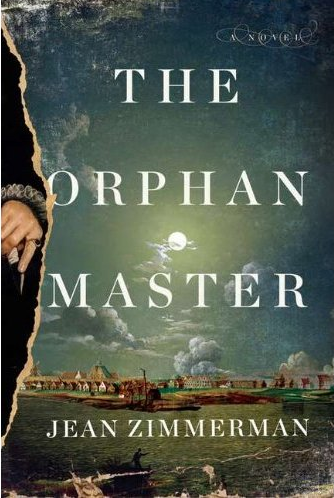
The Orphanmaster is another National Public Radio recommendation for people who like historical fiction, which I really do. I remember being a kid, and yawning my way through history, memorizing dates, it all seemed so irrelevant. Discovering historical fiction was like a light going on in a dark room for me – clever authors have found ways to illuminate events otherwise beyond my comprehension or worse – events I have a hard time making myself care about.
Suddenly, the times are right now and relevant when the right author handles it, and it isn’t always easy to get it right. I have a few very favorite authors – Philippa Gregory, Zoe Oldenberg, Sharon Kay Penman, Jean Plaidy, Edward Rutherford – authors who do a lot of research before they ever sit down to write a novel, and from whom you can learn a lot. They get the nature of the dialogue right, they get the customs, traditions and mind-sets right, and they get it right when a person is born ahead of his or her time in terms of the challenges they face.
I couldn’t put Orphanmaster down. It has to do with an era in American history which barely gets a paragraph in many history books, when the Dutch had a colony on what is now Manhattan Island, and trading posts up what is now the Hudson, into what is now New York. It was New Amsterdam, and many of the street names in modern day New York reflect their Dutch origins.
The Orphanmaster‘s main character is not the Orphanmaster. He is a supporting character to the main character to a girl orphaned at 15, daughter of a Dutch man and wife who were not rich, but who did all right. They had a business, they traded, Blandine learned many things before they died, leaving her an orphan. She was determined to be what would now be an “emancipated minor,” but until she turned 16, she was semi-legally under the responsibility of the Orphanmaster, who sort of kept hands off and sort of watched out for Blandine. She lives on her own and is a successful trader, in her early twenties. She is also a very clean housekeeper, and has plans to grow her trading business, and has a serious suitor she intends to marry.

Orphans start disappearing, and we discover a monster, a witiga, is on the loose. Blandine, and her new friend Drummond, are intrigued and disturbed by the disappearance of orphans, and the bloody, ritualistic mutilations of the orphans by the legendary Witiga.
It’s well written. You want to keep reading and keep reading because you want to know how it ends and how they are able to solve the problem.
It’s not one of the best books I’ve ever read for one reason – the author had the main characters talk as if they were modern people, using modern language, like ‘stuff.’ There was great openness between Blandine and her male friends. Blandine made all her own decisions, made her own arrangements and had full freedom, going where she wanted, doing what she wanted. The author explains it as part of the Dutch system, where some women had a lot of freedom, but I have a really hard time believing in a Dutch colony in the late 1600’s that any woman had the freedom Blandine had. There are parts of the novel where I am reading fast because I want to know what happens next and I get stopped up because Blandine says or does – or even THINKS – in a way that is very modern, and I just can’t buy it.
We are who we are. There are many smart women. Most women through the centuries have had to learn to maneuver in whatever societal constrictions they have been allowed. I suspect there were a lot of societal restrictions in New Amsterdam, and Blandine’s freedom to take off with only her male servant, to run off and live with a man not her husband (even though they are both escaping death sentences), to live an unescorted life . . . I just have a hard time buying it. I know how restricted women are even to day. Four hundred years ago, women were more restricted, and worse, we bought into it. We didn’t have a lot of choices.
So I like this book, and I think there is a lot of information that is true of the settlement of New Amsterdam, I loved the geography and the physical descriptions, I loved the maps included, I loved the descriptions of food and living conditions. I do not buy the heroine, not for one minute. I do not believe, in that historical context, she would have been possible.
Christ Church Antique Fair 2013
More people attending the Preview, more tickets sold, more people buying up antique linens, jewelry and silver . . . I think we’ve turned a corner on the economy. People seem to be feeling more optimistic, seem to be less concerned about buying a small luxury 🙂 I never see any pearling boxes, or Arabic calligraphy . . .


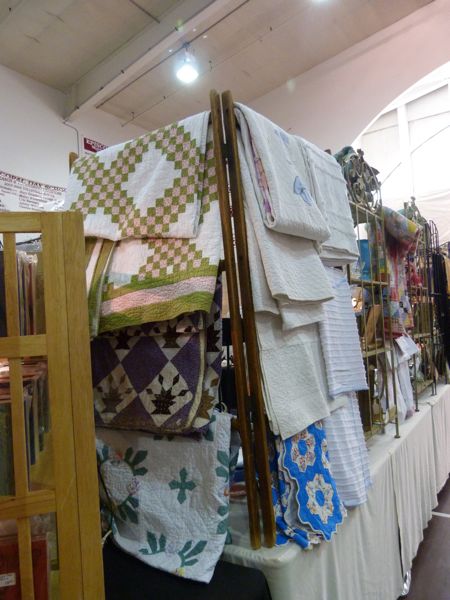


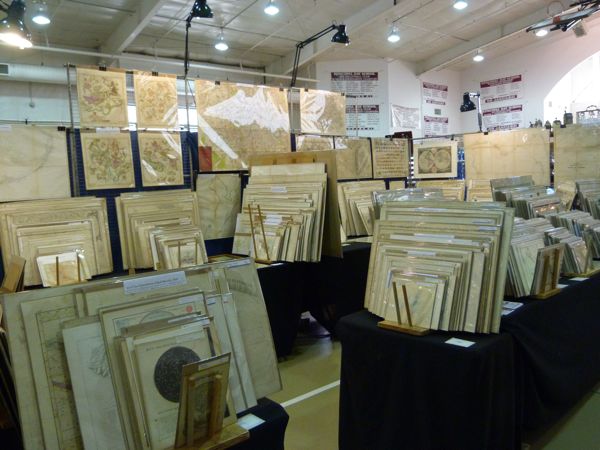
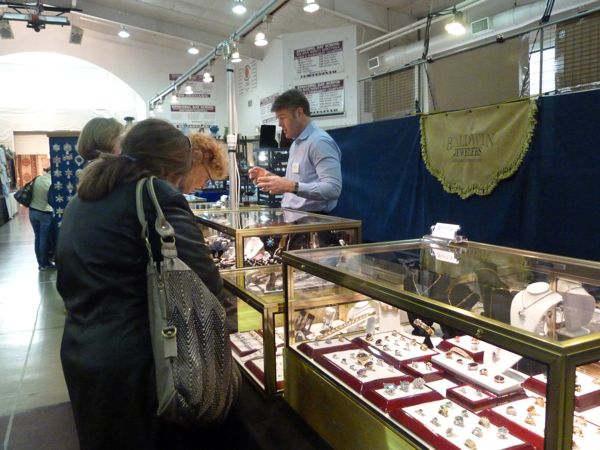
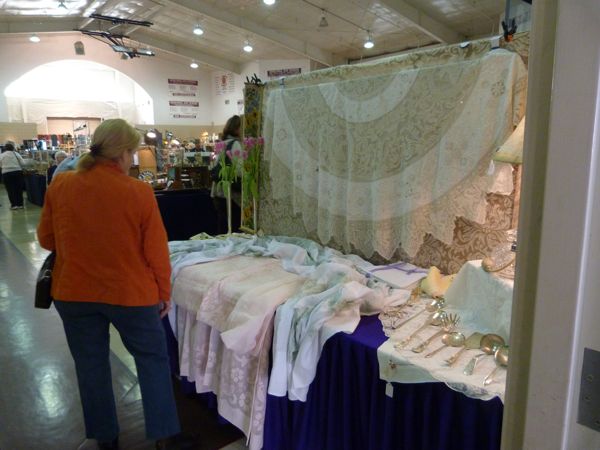
Christ Church has sponsored this Antique Fair for 56 years now; it is well-respected and well-attended by antique-loving Pensacolians. It raises a majority of the money the church uses to support charities in the communities, and all the labor is lovingly performed by the Episcopal Church Women, who toil and prepare for this event for months. It is open today (Saturday) until five, and from 11 – 3 on Sunday, February 3rd. Admission is $7.
Recent Comments
ExpatAlien on What Country am I Living … intlxpatr on Yellowstone: Old Faithful to C… Michelle on Yellowstone: Old Faithful to C… Cathy on No Grown-Ups in Charge intlxpatr on Waiting for Snow Wikipedia Donate Button

Amazina


Early Voting in Florida


 Here There and Everywhere