Farewell Dar al Thaqafa
We were sitting in a meeting when two friends rushed in, full of news of the fire down at the Souk al Diraa / Souk al Asseiri, familiarly known as The Fabric Souks. Our friend’s car had been near where the blaze broke out and they had been stuck while the firemen refused to allow her near her car, and finally they moved it out of the way for her, covered with ash and dirty water, but otherwise unharmed.
We all waited breathlessly to hear if the fabric souks were harmed. They weren’t. For such a big blaze, such a long-lasting fire, no lives were lost, no one was hurt, as far as anyone knows.
But in this morning’s paper, I see that while the fire started out a small fire, somehow, it was not contained, and in the clutter and chaos of the older souks, it grew, fed by stacks of stored goods and rubbish.
One of the victims was an old friend of mine – the Dar al Thaqafa. Little Diamond and I would often find treasures there, books you couldn’t find anywhere else. There are other bookstores in this chain, but this one, this Dar al Thaqafa was THE oldest bookstore in Doha, stocking school supplies, children and adult fiction and non-fiction, textbooks and obscure Islamic scholarly works. It was a quiet place, an old fashioned book-store, tucked behind the very tacky toy vender where I once bought both a dancing Osama bin Laden and a dancing Saddam Hussein.
We are sorry to see this old friend go. (They gave me permission to take these photos)

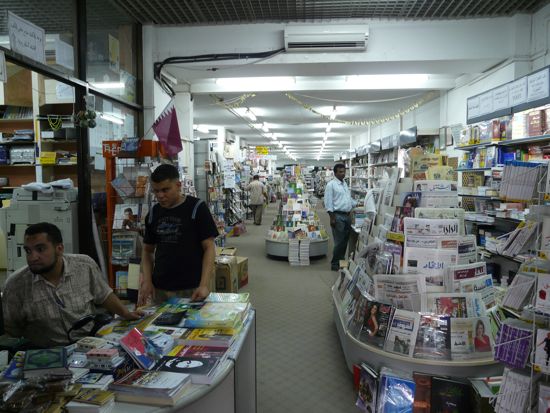
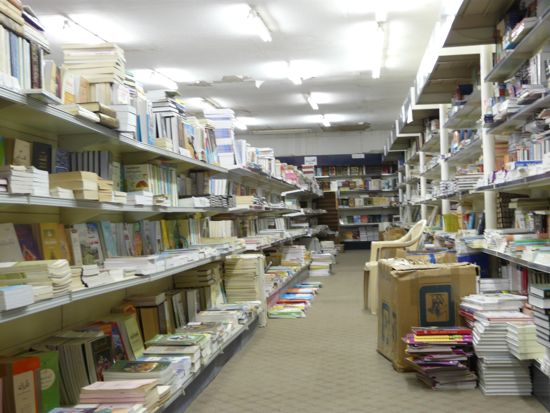
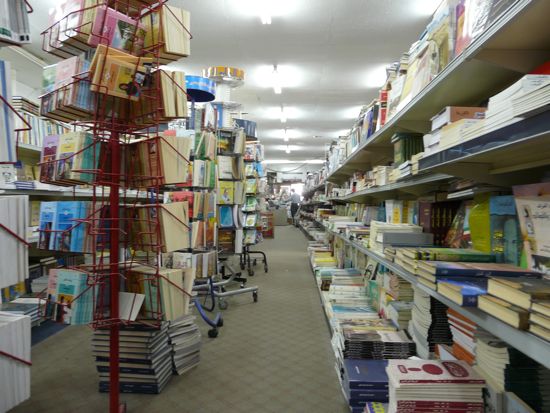
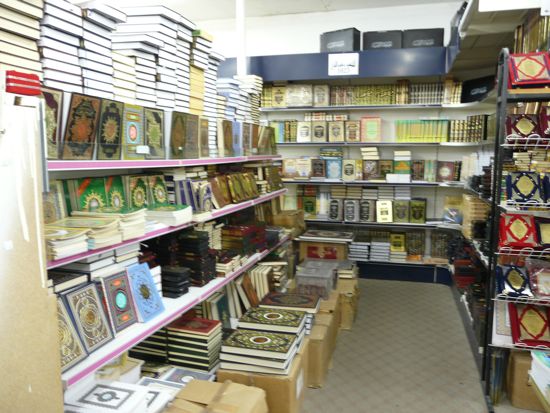

The area was full of small merchants, most of whom I suspect could ill-afford this loss of merchandise and income. I took a photo of an alleyway in the area of the fire (taken in July)

Grossing out the World
I admit it. I failed. I only got 5 out of 11. See how you can do:
http://www.fekids.com/img/kln/flash/DontGrossOutTheWorld.swf Dining Out in the World
Tests your knowledge of eating etiquette around the world. 🙂
Home Foreclosures: The Storm That’s Yet to Come
This is just an excerpt from a much longer article I found on the AOL Money and Finance Site which you can access to read the entire article, and find others like it, by clicking on the blue type.
Experts are saying that there is a turn-around. I believe it, I also see the improving signs, but the wreckage will remain, and may even get worse, for some time to come in the real-estate markets.
Home foreclosures move up-market as discounting pushes prices down
Lita Epstein
A greater number of foreclosures are hitting the high-end real estate markets in 2009 as price discounting continues to throw more and more properties underwater. It’s like a self-fulfilling prophecy: As some homeowners see their homes’ values drop below the balances due on their mortgages, they give up trying to save their homes.
Zillow’s chief economist, Stan Humphries, found that while high-end markets accounted for only 16 percent of foreclosures in 2006, by July 2009, 30 percent of foreclosures hit the top third of homes. “That means that top-tier homes make up almost twice the proportion of foreclosures as they did just three years ago,” Humphries wrote on his blog.
Foreclosures are no longer a primarily subprime problem. While in 2006 about 55 percent of foreclosures came on subprime loans, in 2009 subprimes represent just 35 percent of foreclosures, another 35 percent are in the middle tier and 30 percent are in the top tier. The primary contributing factor is higher delinquency rates in Prime, Alt-A and Option ARM mortgage products.
According to the Amherst Security Group, this problem won’t go away any time soon, because:
• Loans are transitioning into delinquency/foreclosure at a rapid pace, but moving out at a slow pace;
• Cure rates are low. In other words, fewer people are paying their past-due amounts and getting back on track.
• Loans are taking longer to liquidate. In other words, the length of time between the start of the foreclosure process and the point when the lender gets control of the property is growing.
The Amherst Mortgage Insight report notes that there are currently 7 million homes in a shadow market — homes that are either in delinquency or in foreclosure, but not yet on the market. This number translates into 135 percent of a year of existing home sales, which means that whatever numbers you’re seeing now about homes sales, they don’t truly reflect the storm that’s yet to come.
Shifting Weather Patterns
Last week, we had our first days under 100°F/38°C.
Last night, AdventureMan shivered and moved close to me.
“I’m cold” he said pitifully, putting his cold feet up against me.
It’s OK. I’m used to it. He is often cold, and I radiate heat. We pile the covers up on him and I sleep with just a sheet. I can’t sleep if I am too hot.
“There’s another quilt out on the loveseat” I tell him, referring to a piece of furniture about twenty steps away.
“Will you go get it for me?” he asked, his voice quavering.
We’ve been married a long time. I’m on to his tricks.
“No,” I laughed, “If you want another blanket, you have to go get it.”
“I don’t want to leave the bed,” he complained, and snuggled closely to me to absorb my heat.
This morning, at 0700, it is not even 80°F. Wooo HOOOOOO! There is still some humidity, but the afternoons are balmy, and there are evenings you can sit outside and drink coffee. Wooo HOOOO, my favorite season – Outside Season!
Too Much Food
AdventureMan and I have lived more years outside our own country than inside it. We have lived on-and-off in the Middle East for more than 30 years. You’d think we would know everything by now, but we are still delighted to discover new things and to learn from the culture in which we are living.
Our Kuwaiti friends were good about letting us peek inside the culture, telling us stories of family life “before oil” and Kuwait traditions. Like women aren’t supposed to eat too much when they to to someone’s house for dinner or the people will say “do you think she has never seen food before?”
On the other hand, it is shameful not to provide enough food, so you always prepare way more than the group invited can possibly eat, like in ten years.
Sometimes a lot of the food goes to waste, but I have also discovered these wonderful plastic bags and tin trays found in every supermarket in the Middle East. What doesn’t get eaten now – gets eaten. I admit it, I am a lazy wife. I don’t like cooking big meals when it is just the two of us, so I love being able to pull something out of the freezer and have it all heated up and fresh for dinner.


It also makes me feel very ecological to have food in the freezer, ready to fix, and to know that not a lot went to waste. We are learning from our son and his sweet wife, and all the young adults in our family, who are WAY more ecologically aware than we ever were, and we thought we were pretty good, the generation who invented recycling.
AdventureMan used to bring home people for dinner, mostly guys from out of town in town for a short time who needed a home-cooked meal. We always had food in the freezer, something I could pull out on short notice.
One time, I made beef burgundy. When I went to serve it, I looked for the cheesecloth bundle of spices and couldn’t find it. I looked and looked, and then I figured I must have taken it out earlier and forgot I’d done it. Then, during dinner, one of the men had a very puzzled look on his face – he was chewing on the spices ball! I was SO embarrassed, but they all just laughed, thank God.
Fruit Crisps – Desserts (English: Crumbles)
There are two reasons to make fruit crisps. One, there is no better way to let ripe fruit star, take center stage, just when it hits its peak. Second – oh, it is SO easy.
Here is the original recipe I use:
Apple Crisp
From Mary Cullen’s Northwest Cook Book, 1946
Crisps are wonderful when made with fresh fruit, and not so much trouble as a pie requiring crusts. Here, the topping is delicious, and easy.
5 cups apples
1/2 cup butter
1 cup sugar
3/4 cups all purpose flour
1 teaspoon cinnamon or nutmeg
Peel, core and slice apples and place in a greased baking dish or cassarole. Using a pastry blender, work together the butter, sugar, salt, flour and spices. Pack closely around apples. Bake in 425 degree oven for 45 – 50 minutes. Serve with whipped cream.
Berry Crisp
Substitute berries for apples. If berries are very tart, sprinkle with 1/2 cup sugar mixed with 1/2 cup flour before covering with crumb mixture.
Rhubarb Crisp
Use diced rhubarb in place of apples. Mix 1/2 to 1 cup sugar and 1/2 cup flour with rhubarb before placing in baking dish.
This time I made peach crisp:
You put the fruit in a buttered pie / tart plate:

You sprinkle the topping on, pat it down, and bake. Yes, it is that easy.
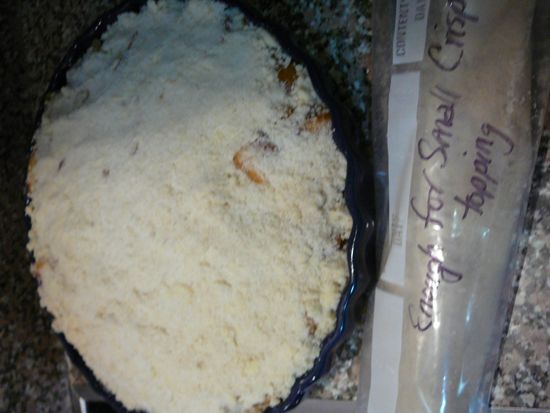
No, no end photo, sorry. It disappeared too quickly!
(In the Pacific Northwest, these are called Crisps. My English friend tells me that in England, they are called Crumbles.) So Easy.
Crab Cakes in Doha
We wanted to have a light dinner at home to welcome our house guests, and then take them on a night-tour of Doha. I remembered the wonderful Crab Cakes my friend and her daughter made in Seattle, and I was determined to have . . . well, I knew it wouldn’t be the same, but something LIKE those crab cakes.
So I found the best crab I could buy in Doha, and made up the crab cakes. Wrong crab. Wrong breading – I couldn’t find any panko (I know there is panko in Doha, I just know it, but I couldn’t find it when I was looking for it!) so I whirled up some lime Tostito chips in the food processor and used those.
They were actually pretty good, when I first made them. Not the same, not Pacific Northwest Dungeness Crab, but not bad.
This is four cans of crab meat – you can find the recipe for Crab Cakes by clicking on the blue type; I already printed it back in August or September.

The crushed tostitos weren’t bad for breading, but you only use a little, on the outside, to help them firm up for cooking:

I served them with Plum Sauce, which also wasn’t as good as the fresh home-made plum sauce my friend’s daughter made:

They were OK. If I didn’t know what Pacific Northwest Crab tasted like, fresh out of the ocean and steamed right away, I probably would have thought they were pretty good. I’m not going to make them again here.
Reminder: Blog Action Day Thursday 15 October 209
Hey Everyone,
Blog Action Day is this Thursday, October 15!
We’re excited to report that more than 5000 bloggers have already registered from 126 countries, with more signing up each day.
If you haven’t registered yet, it is not too late. Sign up here: http://www.blogactionday.org/en/blogs/new
Once you’ve signed up all you need to do is write a post about climate change this Thursday. We’ll have a live feed of all your posts on our homepage so you can track the conversation.
But, you may be asking, what am I going to write about?
We’re here to help. Climate climate impacts nearly all aspects of our lives, from business and technology to food, transportation and travel. Here’s a list of ideas and places to look for inspiration when deciding what to post on Thursday.
Food: Agricultural production around the world is responsible for nearly as much greenhouse gas emissions as all forms of transportation put together, so it shouldn’t be surprising that the food choices we make have a big impact on the climate. Read more and check out a few explanatory videos here.
Travel: More than 30 top travel blogs are participating in Blog Action Day. Check out who’s blogging and get ideas for writing about the connection between travel, geography, transit and climate change.
Events: If you want to write about what people around the world are doing locally to take action on climate change, check out our friends at 350.org. They’re organizing an International Day of Climate Action around the world on October 24. You can also check out their tools specifically for bloggers. For more events and actions to write about, go to: http://blogactionday.org/en/takeaction.
Business: Take a look at our post on 5 Ways Climate Change Will Change Business in the 21st Century to get some ideas of where climate change will have a big impact, and opportunities for the business sector.
Politics: It’s hard to ignore the connection between climate change and politics — from international negotiations to local and domestic policy debates. We’ve profiled some of the best political blogs participating in Blog Action Day this year where you can brush up on the inside information.
None of these topics fit your interest? We just put up a blog post with a longer list of topics and how they connect to climate, including design, technology, family, health and more. Take a look and add your ideas in the comments for everyone to see.
How you write about the way climate change affects our lives is up to you. The most important thing is that you participate so that together, we can help create an expanding global conversation about one of the most important issues we face.
Thanks so much,
Robin Beck
Lead Organizer
Blog Action Day 09: Climate Change.
Boiled Cole Slaw Dressing
We really do love cole slaw, but we find that there are some cole slaws we love more than others. Neither AdventureMan nor I are big into mayonaiss-y cole slaws, we find we like vinegary cole slaws better. Probably we like vinegary ones better because many many years ago a wonderful friend gave us this recipe for cole slaw dressing, and it is our hands down favorite.
When I first came to Qatar and wanted to make this dressing, I looked everywhere for poppy seeds, only to be told that they are ILLEGAL in Qatar, I guess they think we are all going to get high on poppy seeds or something. I was told poppy seeds are legal in Kuwait, but as hard as I looked, I never found any. I will admit, from time to time I have to bring some back with me, just so I can make this Cole Slaw Dressing.
It is sweet – and tart. I also use it on cucumbers, and I like it even better!
1/2 cup sugar
1/3 cup vinegar
1 teaspoon salt
1 cup oil
1 Tablespoon poppy seed
1 teaspoon dry mustard
1/2 teaspoon onion juice (I use grated onion)
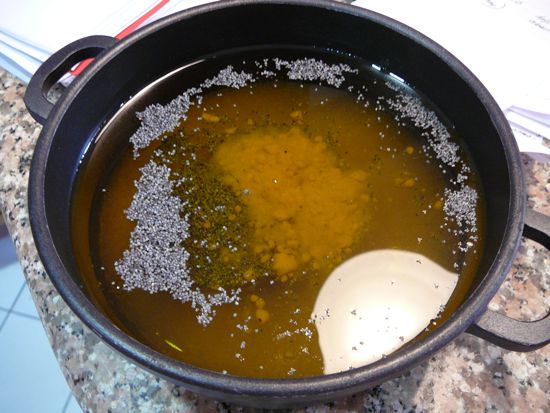
Bring all to a boil. Cool before using. Enough for one medium large head of cabbage. (Slice cabbage into thin shreds.) I also don’t let the dressing get too cool; I like the way it wilts the cabbage a little.
Driving Safety to Improve in Kuwait
I used to read a lot of science fiction. I can’t always remember the stories, but sometimes the concepts stick with me. I remember one story about a guy who gets to the future to discover nobody is as bright as they are in our time. One of the things they do to prevent the not-so-bright drivers from hurting themselves is to make the cars very rubbery and very slow, but the cars all make whoooooshing noises like they are going really really fast, so all the drivers are happy.
Kuwait loses a lot of young men, particularly, but also young women, to car accidents. Many pedestrians in Kuwait lose their lives, some stepping right in front of cars.
From today’s Arab Times: Kuwait
Strategy needed to counter hike in Kuwait’s road accidents: minister
KUWAIT CITY, Oct 11: Making our roads safer is in the interest of the nation’s progress as most of the deaths in traffic accidents involve youngsters and children, who are the future of our nation, said Kuwait’s Minister of Interior Sheikh Jaber Khaled Al-Sabah on behalf of HH the Prime Minister Sheikh Nasser Al-Mohammed Al-Sabah at the International Conference on Traffic in Kuwait Sunday.
The conference, held under the patronage of the prime minister at Holiday Inn Hotel, was organized by Kuwait Society for Traffic Safety, and was attended by delegates from the US, Turkey, UAE, Bahrain, Saudi Arabia, Lebanon, Jordan and other countries. Some of them also gave lectures. The Deputy Minister of Interior of Ukraine, Brigadier Oleksandr Savchenko, was a special guest at the conference.
The interior minister stressed the need for strategies to tackle the crisis of increasing road accidents in Kuwait based on the experiences of countries that have successfully handled the issue. “The lessons learnt from the conference must be implemented in Kuwait and all the government departments must cooperate with one another for bringing about positive changes in this direction.”
He also urged people from all walks of life to contribute to make roads safer “as it is the responsibility of the whole community.”
In the key note address, the chief of Kuwait Society for Traffic Safety said that road accidents in Kuwait have taken away more than 300,000 lives in the past, and caused severe disabilities. “The average age of those dying in accidents is 20. Between 1995 and 2008, more than 5000 people lost their lives in traffic accidents in Kuwait.”
Giving further statistics, he noted that 2.5 percent of Kuwait’s GDP is lost in accidents, “while in countries like the US it is only 0.1 percent of their GDP.
“According to WHO’s report, there are over 2 million accidents taking place every year, incurring losses to the tune of $2 billion.
“Kuwait Society for Traffic Safety will be soon launching a five-year program in Jan 2010 to bring about a change in the attitudes of people towards driving.”
Prof Fernand Cohen of Drexel University, USA, was the first speaker at the conference. He spoke on the topic, “How much can technological advancement increase traffic safety?”
He began by saying that the issue of traffic safety begins with man’s attitude. “To change traffic safety, we have to address that issue first.”
Prof Cohen said that technological advancement can reduce traffic accidents by up to 32 percent. He based his arguments on reliable studies in the field. “When you compare this percentage against the total number of accidents in the US every year, 5.8 million, it makes a significant difference.
“Basic safety features like seat belts and airbags have all become a standard feature in our cars, and have contributed to making our cars safer. But we have to go beyond that.”
Estimate
The professor mentioned studies estimate that deaths due to traffic accidents in the US will go down to 25,000 by 2020. “In 2004, the total number of road kills in the US was 43,000.
“We are moving more and more towards hybrid navigation system in car involving man-machine interaction. The car will make up for the shortfalls in the driver.
The professor said that the new technological approach to making roads safer must have a preventive rather than a punitive approach. “The focus should be crash avoidance technology. There should also be ‘Psychological Impact Technology.’
The emerging technologies, he noted, “looks at solutions such as a visual or audio alert signal for corrective action to avoid an imminent crash. There could be measures to make the car intervene and apply brakes when needed.”
Under crash avoidance technology, the professor presented technologies such as blind-spot detection, which provide greater visibility to drivers. “Rear view cameras can eliminate threat to pedestrians, children or animals while a car is backing.
“Lane Departure Warning can tell you if you are too fast to change lanes. It can prevent you from wandering out of lane.
Monitors
“The Wake-You-Up feature monitors a driver’s eyes, heart rate and other factors and gives a signal if the driver shows a tendency to fall asleep.”
He also touched upon other technologies such as sensors to indicate approaching vehicles, monitors to check tyre pressure, adaptive headlights that turn when the car is negotiating a curve and rollover prevention systems among others.
The professor then discussed technologies that can be incorporated on the road to make driving safer: warning signs prior to the red lights to warn cars to slow down; sensors at red lights to measure the speed of an oncoming car and prolong the duration of the signal if need be to allow a speeding car to pass; and encouraging drivers to drive at a particular speed, which would allow them to have green lights at every signal.
Some of the other topics handled during the conference were: The Lebanese Experience in Traffic Awareness; State of Road Safety Research in the US; Traffic Strategy for Kuwait.
By Valiya S. Sajjad
Arab Times Staff
Recent Comments
intlxpatr on Shampoo Ginger tigerbutterya0c5ff1d… on Shampoo Ginger intlxpatr on British Soldier Kidnapped, Esc… John on British Soldier Kidnapped, Esc… intlxpatr on British Soldier Kidnapped, Esc… Wikipedia Donate Button

Amazina


Early Voting in Florida


