Salafi Led Crowd Attacks American Embassy in Tunis
Have you been watching the attack on the Embassy in Tunis?” my Mom asked as we were chatting. She and Dad had visited us in Tunis when we were stationed there. Dad rented a car, and then turned it back in when the driving was too scary for him. Mom let out the waists in all her dresses so they would be loose and flow-y in the hot September of Tunisia.
No, no I hadn’t been watching, I’d had a busy morning.
My memories of the Embaassy in Tunis are so sweet. Just off Place Pasteur, and pretty much everyone knew everyone. In the autumn months, the tiny embassy commissary sold avocados from one of the embassy employee’s trees, great huge avocados – not available any where else in Tunisia.
We lived near The Butcher with the Blue Awning, in Mutuelville, We lived in a villa surrounded by a family with 12 children, around our ages, who adopted us and especially me and our son. The women took me everywhere; it was one of the most memorable postings of my life. They took me to a local hairdresser to get ready for a wedding party; the style he gave me for the evening is a style I wear to this day, I loved it so much, sort of 1930’s French retro. There was one supermarket, and mostly it had canned tuna, canned tomatoes and sometimes fresh milk. We took our own containers to the olive oil man, and stood in line when a fresh shipment arrived. He would weigh our container, fill it, weigh it again and charge by the weight. Some of the best, freshest olive oil I have ever tasted and cooked with, and so inexpensive.
My heart breaks that this sweet embassy would be attacked. Salafist led, of course. When they cannot win the votes of the hearts and men, they resort to violence. AYB! AYB! (Shame! Shame!)
Tunisia Embassy Protest: Black Smoke Seen Rising Above Building
By BOUAZZA BEN BOUAZZA 09/14/12 05:43 PM ET
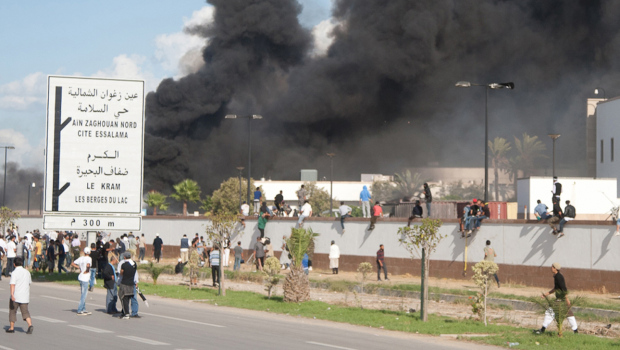
TUNIS, Tunisia — Violent protests outside the U.S. Embassy in Tunis against an anti-Muslim film were met with tear gas and gunshots Friday, leaving two people dead, around 40 others injured and plumes of black smoke wafting over the city.
Several dozen protesters briefly stormed the U.S. Embassy compound in Tunisia’s capital, tearing down the American flag and raising a flag with the Muslim profession of faith on it as part of the protests. Protesters also set fire to and looted an American school adjacent to the embassy compound and prevented firefighters from approaching it. The school appeared to be empty and no injuries were reported.
Earlier, several thousand demonstrators had gathered outside the U.S. Embassy, including stone-throwing protesters who clashed with police, according to an Associated Press reporter on the scene. Police responded with gunshots and tear gas. Police and protesters held running battles in the streets of Tunis. Amid the unrest, youths set fire to cars in the embassy parking lot and pillaged businesses nearby.
The state news agency TAP, citing the health ministry, said both of those killed were demonstrators, while the injured included protesters and police. Two of the injured were in critical condition, the health ministry said.
A Tunisian employee of the U.S. Embassy who had an injured leg was taken out on a stretcher to an ambulance. It wasn’t immediately clear if there were any other injuries. Embassy officials did not respond to calls and emails.
The group that breached the U.S. Embassy’s outer wall was eventually pushed back outside by a huge deployment of police and special forces. As night fell, the crowd of protesters outside the embassy dwindled to a handful.
The al-Wataniya 1 television station said the presidential guard also intervened and escorted the U.S. ambassador and about 80 embassy personnel away from the site to safety.
Crowds angry over an anti-Muslim film ridiculing the Prophet Muhammad have assaulted U.S. embassies across the Middle East.
The degree of violence in Tunisia surprised many and raised new questions about the direction of the country, where an uprising last year forced out its longtime president and set off pro-democracy revolts across the Arab world. A once-banned Islamist party came to power in elections last year, but the moderate government has struggled to quell protests by increasingly vocal ultraconservative Muslims known as Salafis.
By Tarek Amara
TUNIS, Sept 14 (Reuters) – At least two people were killed and 29 others were wounded on Friday when police fought hundreds of protesters who ransacked the U.S. embassy in Tunisia in their fury over a film denigrating the Prophet Mohammad, state television said.
Tunisian President Moncef Marzouki condemned what he called “an attack against the embassy of a friendly nation”.
Tunisia expects Washington to guarantee around a fifth of the $2.2-2.5 billion its needs to borrow next year to help its economy recover after its revolution last year overthew its veteran leader and triggered the Arab Spring uprisings.
A Reuters reporter saw police open fire to try to quell the assault, in which protesters forced their way past riot police into the embassy.
The protesters smashed windows, hurled petrol bombs and stones at police from inside, and started fires in the embassy and the compound. A black plume of smoke rose from the building.
One protester was seen throwing a computer out of a window, while others walked away with telephones and computers.
A Tunisian security officer near the compound said the embassy had not been staffed on Friday, and calls to the embassy went unanswered. A Reuters reporter saw two armed U.S. soldiers on the roof.
Health Minister Khalil Zaouia told state media at least two people died and 29 were injured, revising down an earlier toll from state television which said three died and 28 had been wounded.
The protesters, many of whom were Islamic Salafists, also set fire to the nearby American School, which was closed at the time, and took away laptops and tablet computers.
The protests began after Friday prayers and followed a rallying call on Facebook by Islamist activists that was quickly endorsed by the local faction of the Islamic militant group Ansar al-Sharia.
FLAG BURNED
An Interior Ministry spokesman said police were hunting Saif-Allah Benahssine, the leader of the Tunisian branch of Ansar al-Sharia to interrogate him about the incidents. Better known under the alias Abu Iyadh, Benahssine is also a prominent figure in Tunisia’s Salafist movement.
Libyan officials suspect the Libyan branch of Ansar al-Sharia of being behind an attack in Benghazi in which four Americans, including the U.S. ambassador to Libya, were killed on Tuesday.
The moderate Islamist Ennahda movement, which heads the Tunis government, had advised Tunisians against participating in the protest against the crude, low-budget film, made in California and trailed online, which portrayed the Prophet engaged in vulgar and offensive behaviour.
“The (Tunisian) government does not accept these acts of aggression against foreign diplomatic missions,” said a statement read on state television. It said Tunisian authorities were “committed to ensuring the safety of foreign diplomatic missions”.
Hundreds of protesters wielding petrol bombs, stones and sticks had charged at the security forces protecting the embassy before jumping a wall to invade the compound.
“Obama, Obama, we are all Osamas,” they chanted, in reference to the slain al Qaeda leader, Osama bin Laden.
The protesters pulled down the U.S. flag flying over the embassy, burned it, and replaced it with a black flag emblazoned with the Shahada, the Islamic declaration of faith.
Riot police finally drove the protesters from the embassy and the compound, and a Reuters reporter saw them arresting around 60.
The compound was cordoned off by police, soldiers and members of the elite presidential guard, but clashes continued in the el-Aouina district across a highway from the smart Auberge du Lac neighbourhood where the embassy is located.
Marzouki, in an address broadcast on state media, said he had spoke to U.S. Secretary of State Hillary Clinton and condemned the attack as “unacceptable considering its implications on our relations with” Washington.
“This attack is part of a wider plan aimed at stoking hatred between the people,” he said.
US Ambassador Killed by Angry Mob in Libya
Most people who die heroic deaths don’t wake up in the morning thinking “today I will do something heroic.” Most people who die heroic deaths end up dead because they make a choice to do the right thing.
Some minor film maker made a film mocking the prophet Mohammed. Under our system, it was his right; a man (or woman) can say what they think, even if another disagrees with it. It doesn’t mean the film is accurate, it doesn’t make it a good film; he had an idea and he made a film. The film – or even the idea of the film – is causing outrage, and attacks on US Embassies in Islamic countries. Ambassador Chris Stevens personally went to the consulate site to make sure his people got out safely while the consulate was under attack by an angry mob. He lost his life in the effort. May he rest in peace.
I’ve never liked crowds, and even less when a crowd is excited, or angry, and becomes a mob. There is something about doing things as a large group that anesthetizes thinking; mobs do horrendous things that any one individual acting within the mob would never do. Group-think is dangerous thinking; you need disagreement and dissent to rein in rash actions.
From today’s Huffpost:
TRIPOLI, Libya — The U.S. ambassador to Libya and three American members of his staff were killed in the attack on the U.S. consulate in the eastern city of Benghazi by protesters angry over a film that ridiculed Islam’s Prophet Muhammad, Libyan officials said Wednesday.
They said Ambassador Chris Stevens was killed Tuesday night when he and a group of embassy employees went to the consulate to try to evacuate staff as the building came under attack by a mob guns and rocket propelled grenades.
The three Libyan officials who confirmed the deaths were deputy interior minister for eastern Libya Wanis al-Sharaf; Benghazi security chief Abdel-Basit Haroun; and Benghazi city council and security official Ahmed Bousinia.
The State Department said Tuesday that one American was killed in the attack. It has not confirmed the other deaths.
The attack on the Benghazi consulate took place as hundreds of protesters in neighboring Egypt scaled the walls of the U.S. Embassy in Cairo and tore down and replaced the American flag with a black Islamic banner.
The attacks in Benghazi and Cairo were the first such assaults on U.S. diplomatic facilities in either country, at a time when both Libya and Egypt are struggling to overcome the turmoil following the ouster of their longtime authoritarian leaders, Moammar Gadhafi and Hosni Mubarak, in uprisings last year.
The protests in both countries were sparked by outrage over a film ridiculing Muhammad produced by an Israeli filmmaker living in California and being promoted by an extreme anti-Muslim Egyptian Christian campaigner in the United States. Excerpts from the film dubbed into Arabic were posted on YouTube.
Stevens, 52, was a career diplomat who spoke Arabic and French and had already served two tours in Libya, including running the office in Benghazi during the revolt against Gadhafi. He was confirmed as ambassador to Libya by the Senate earlier this year.
Before Tuesday, five U.S. ambassadors had been killed in the line of duty, the last being Adolph Dubs in Afghanistan in 1979, according to the State Department historian’s office.
___
Michael reported from Cairo. Associated Press writer Matthew Lee in Washington contributed to this report.
African Sweet Potato Peanut Soup
This is another wonderful recipe I found on allrecipes.com. My sweet daughter-in-law told me about allrecipes.com, and once I signed up, they started sending me recipes every day. Not all of them are of interest to me, but most of those I have tried have been really good.
We LOVE this soup. It is delicious, and easy to fix. While it is an African recipe, we find that many of the most delicious Southern dishes are similar to African dishes, probably because there were so many African ex-pats brought to the USA and settled in the South a few hundred years ago. Their legacy lives on in Southern cookbooks.
African Sweet Potato and Peanut Soup
Ingredients
• 1 tablespoon good olive oil
• 1 large onion, chopped
• 6 cloves garlic, minced
• 2 teaspoons minced fresh ginger root
• 2 teaspoons ground cumin
• 2 teaspoons ground coriander
• 1 teaspoon ground cinnamon
• 1 pinch ground cloves
• 3 medium tomatoes, chopped
• 1 1/2 pounds sweet potatoes, peeled and chopped
• 1 carrot, peeled and chopped
• 4 1/2 cups chicken broth
• 1 teaspoon salt
• 1/4 cup chopped unsalted dry-roasted peanuts
• 1 pinch cayenne pepper
• 2 tablespoons crunchy peanut butter
• 1 bunch fresh chopped cilantro
1. Heat the oil in a large saucepan over medium-high heat. Saute the onion 10 minutes, until lightly browned. Mix in the garlic, ginger, cumin, coriander, cinnamon, cayenne and cloves. Stir in the tomatoes, sweet potatoes, and carrot, and continue to cook and stir about 5 minutes.
2. Pour chicken broth into the saucepan, and season the mixture with salt. Bring to a boil, reduce heat, and simmer 30 minutes. Add peanut butter.
3. Remove the soup mixture from heat. With a blender wand, blend the soup and peanuts until almost smooth. Stir in fresh cilantro. Serve hot.
Ominous Signs in Libya; Shrines Destroyed
I’ve been watching for news out of Libya, and have been surprised at how little there has been – and then this. This is not a good sign. This is not Libyan; this is outside influence. Similar destructions are going on in Mali; an intolerant branch of Islam beieves saints shrines to be idolatry. From today’s AOL /Huffington Post News:

TRIPOLI, Libya — Attackers bulldozed a Sufi Muslim shrine and mosque in the Libyan capital on Saturday, one day after hardliners razed a similar shrine and library elsewhere in the country.
It was not immediately clear who was behind Saturday’s attack, the third on a Sufi shrine in Tripoli in recent months, although officials have blamed past vandalism on Islamic hardliners, some of whom are followers of the ultraconservative Salafi doctrine.
Libya is a deeply conservative Muslim nation, and Islamists were heavily repressed under longtime dictator Moammar Gadhafi, who was captured and killed in October after an eight-month civil war. Since then, there has been a string of attacks on shrines across the country belonging to Muslim sects.
The campaign appears to be aimed mainly at shrines revered by Sufis, a mystical order whose members often pray over the tombs of revered saints and ask for blessings or intervention to bring success, marriage or other desired outcomes. Hard-line Salafi Muslims deem the practice offensive because they consider worshipping over graves to be idolatry.
Libya’s Grand Mufti, Sheik Sadek al-Ghariani, condemned the vandalism and said it was the government’s responsibility to protect the graves.
“No group outside of the government should use weapons and it is the responsibility of the government to provide security and prevent religious strife and division,” he said in a statement Saturday.
Resident Abdullah Zakaria said he saw the bulldozers destroy the Sufi tombs Saturday morning. Hours later a group of men bulldozed a mosque in the same area that also contained tombs.
Security officials closed the road leading to the shrines and mosque but did not intervene to stop the men from attacking the mosque hours later. Police were seen instead protecting a nearby hotel.
Interim President Mohammed el-Megarif said in a televised speech Saturday called the actions “unacceptable” and vowed the perpetrators would be prosecuted. He also called on citizens and the security services to be more vigilant in preventing disruptive behavior.
Following the civil war, Libya has been largely without a military or police force and has relied on disparate militias to provide security and protect government installations.
Libyan writer Fathi Bin Eissa, a Sufi, said he had hoped the police would investigate who ordered past desecration of the shrines and wanted answers as to why security forces moved to protect the hotel, but did nothing as the mosque was being bulldozed before their eyes.
A security official said the police were ordered only to ensure violence does not break out.
Other attacks have taken place in the past against shrines in the eastern cities of Darna and Benghazi.
More recently, extremists on Friday bulldozed one of Libya’s most important Sufi shrines and Sufi libraries in the city of Zlitan, 90 miles (145 kilometers) southeast of Tripoli.
Security officials say the attackers took advantage of deadly clashes between tribes in Zlitan this week to attack the more than 500-year-old shrine and library.
All officials spoke on condition of anonymity because they were not authorized to release the information.
FBI has My Money, oh NO!
LOL, from today’s spam, don’t you totally love it? If it were real, I would have to pay so much in taxes! Please, someone, mess with this scammer. Check out the grammar, punctuation and message:
From: AGENT JASON GALE Wfhhm6I@soleil.ocn.ne.jp / gale.jason@fbi.gov
Federal Bureau of Investigation Intelligence Field Unit
J. Edgar Hoover Building
935 Pennsylvania Avenue, NW
Washington, D.C.
I am Special Agent Jason Gale from the Federal Bureau of Investigation (FBI) Intelligence Unit, we Intercepted two consignment boxes at JFK Airport, New York, the boxes were scanned but found out that it contained large sum of money ($4.1 million) and also some backup documents which bears your name as the Beneficiary/Receiver of the money, Investigation carried out on the diplomat that accompanied the boxes into the United States, said that he was to deliver the fund to your residence as overdue payment owed to you by the Federal Government of Nigeria through the security company in the United Kingdom.
Meanwhile, we cross check all legal documents in the boxes but we found out that your consignment was lacking an important document and we cannot release the boxes to the diplomat until the document is found, right now we have no other choice than to confiscated your consignment.
According to Internal Revenue Code (IRC) in Title 26 also contain reporting requirement on a Form 8300, Report of Cash Payment Over $10,000 Received in a Trade or Business, money laundering activity may violate 18 USC §1956, 18 USC 1957, 18 USC 1960, and provision of Title 31, and 26 USC 6050I of the United States Code (USC), this section will discuss only those money laundering and currency violation under the jurisdiction of IRS, your consignment lacks proof of ownership certificate from the joint team of IRS and IRC, therefore you need to reply back immediately for direction on how to procure this certificate to enable us relieved the charge of evading the law on you, which is a punishable offense in the United States.
You are required to reply back within 72hours or you will be prosecuted in a court of law for money laundering, also you are instructed to desist from further contact with any bank(s) or person(s) in Nigeria or the United kingdom or any part of the world regarding your payment because your consignment has been confiscated by the Federal Bureau here in the United States.
Yours In Service,
Agent Jason Gale
Regional Deputy Director
Intelligence Field Unit
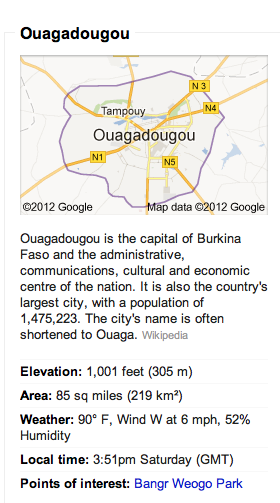
Welcome from Ougadougu
I am sharing this scam with you today because it makes me smile. When we had our embassy assignments, one of the Department of State people told me that you had to behave, or you would be sent to Ougadoudu 🙂 Don’t you love that name?

Nigeria Wants Looted Art Works Back
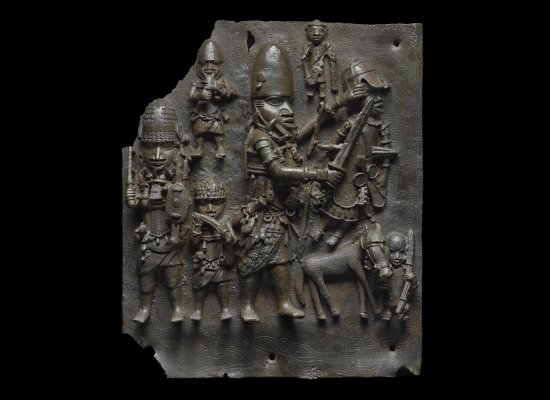
The National Commission for Museums and Monuments, the governmental body in Nigeria that regulates the nation’s museum systems, is demanding the return of 32 artifacts recently acquired by the Museum of Fine Art in Boston. Consisting of various bronze and ivory sculptures looted during the Benin Massacre of 1897, the Director-General of the commission, Yusuf Abdallah Usman, states that the pieces were illegally taken by the British Expedition as spoils of war.


The MFA in Boston acquired the pieces last month as a gift from New York banker and collector Robert Owen Lehman, who purchased the Benin pieces in the 1950s and 1970s. But the pieces were originally looted by British soldiers in the late 1890s, following the Benin massacre of 1897. In a statement made by Usman, the commission stated: “Without mincing words, these artworks are heirlooms of the great people of the Benin Kingdom and Nigeria generally. They form part of the history of the people. The gap created by this senseless exploitation is causing our people, untold anguish, discomfort and disillusionment.”
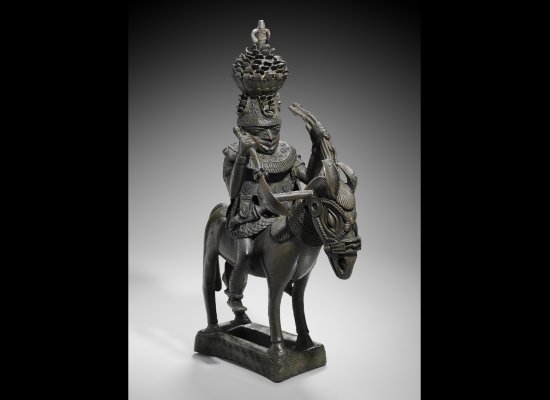
According to Huffington Post blogger and Princeton art history professorChika Okeke-Agulu, the laws governing cultural heritage in the United States are lenient toward museums holding works like those from the Benin Court. Commenting on the ethical imperatives associated with the looted art acquisitions, he has stated that “calls for the resolution of the problem caused by British looters of Benin royal art collection will not go away — especially now that Nigerian/world-citizen voices have learned to harness the popular power of the Internet to demand action.”

Scam for today: Libya
In my e-mail this morning, another scam letter, this one purporting to be Libyan money. (If I were a scammer, I would hope I would write a scam letter which made more sense):
Greetings
I’m sorry that this mail will come to you as a surprise, my name is Mr.Chris Allen and I’m the personal assistant to Former Libyan oil Chief Shukri Ghanem whose body was found dead in the Danube river near Vienna recently.During his office days I was sent for a mission in Accra Ghana to lodge a huge amount of money in the tune of $26million united state dollars with a private security firm for safe keeping/investment purpose, the fund in question belongs to Libyan investment authority (L.I.A).
Now this is where I am seeking for your assistance to help me secure/stand as the beneficiary of the estate related documents shall be transferred to your name as sole beneficiary for an investment in your country terms/modalities shall be discussed upon your reply, If you are to be trusted regards to confidentiality.
Once we open communication I will provide you with more details.
Expecting your urgent response.
Chris Allen
global.a2016@att.net
Zambia Black and White
I suspect this is true of most people, and I suspect this due to the fact it is true of me and was true of the three people with whom I traveled – even if you buy a new camera months before a major trip, you spend a lot of time on the trip exploring what your camera can do. You’d think that we would spend some major time educating ourselves before we go, but life intrudes, with demands and time consuming errands, and the focus just isn’t on learning your camera and its capabilities.
For me, the truth is even worse. AdventureMan gave me the new Lumix for Christmas, and I took a few photos with it, and really used the earlier Lumix with which I am now very familiar. I could always count on it to get great shots.
There are two things I love about this camera. I used to carry a big huge Nikon everywhere – Kenya, Tanzania, Botswana, Nabimia – backpack full of lenses and cleaning supplies, having to change lenses, and often not having enough light. . . the Lumix fits in my purse, and is easily cleaned. You don’t switch lenses; it has a lot of versatility, and it takes photos in very low light. In fact, I often have two in my purse; I bought a smaller one for everyday-in-a-hurry photos. I use it when you might use your phone camera.
This time, early on, I discovered the Scenic mode: sunset. It allowed me to shoot exactly what I was seeing, those stunning colors of the African sunset (LOL, during burning season, the atmosphere is full of particulate, and that gives it those amazing colors.)

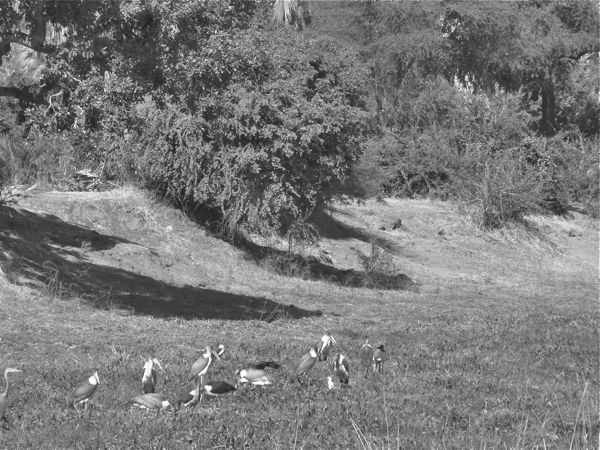
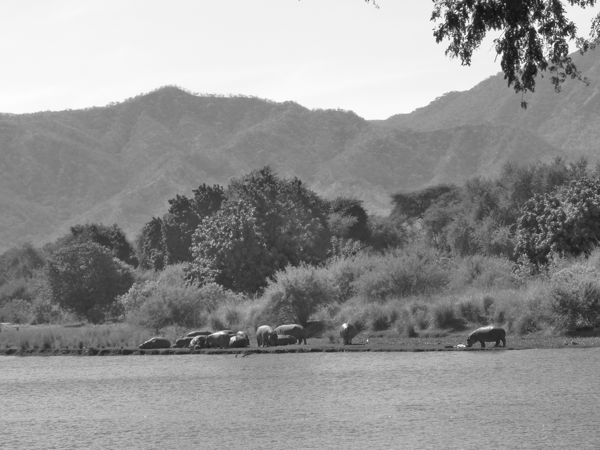
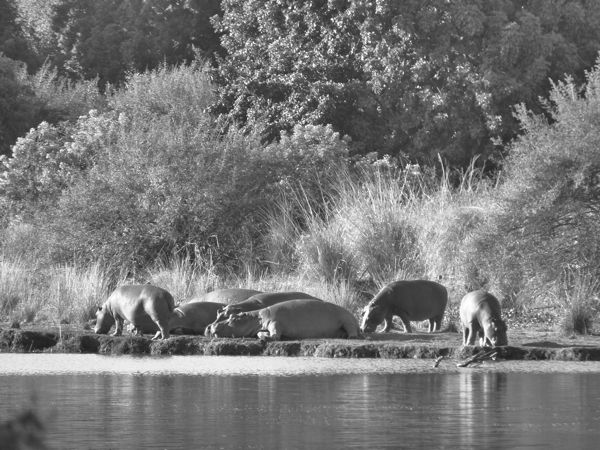
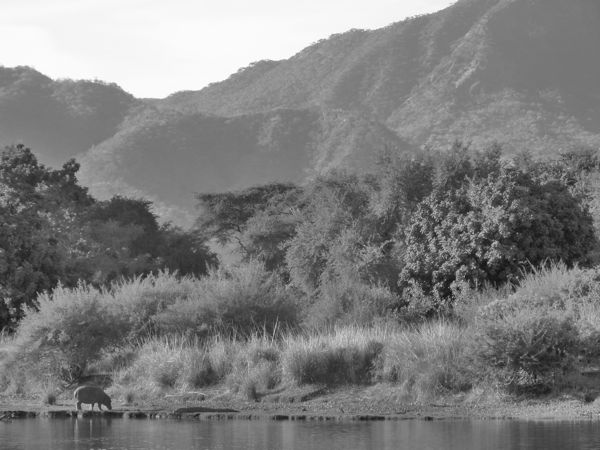
At Nsefu Camp, the oldest Robin Pope Camp, they have decorated with old black and whites, and there is a romance to some of those very old photos that intrigued me. I have a wall in my office, a wall no one else can see, and I think it would be fun to have a romantic Africa series, black and white, so I decided to use my Color Mode: Dynamic Black and White. It gave me exactly what I was looking for, and I also learned that to get that old time look, I needed NOT to use the zoom, but to take the photos in context.
The bright sun, reflecting off the tusks, the backs of the hippos, the water, palm leaves, contrasting with the deeper darks of the green bushes, trees and foliage, is what makes them pop. I took a lot of mediocre shots; I won’t bore you with them, it’s a lot like the leopard, bad things can happen, or there just isn’t enough contrast to make it a good photo.
These are the ones I am enjoying. I’ll probably choose 4 – 6 of them to have printed 🙂
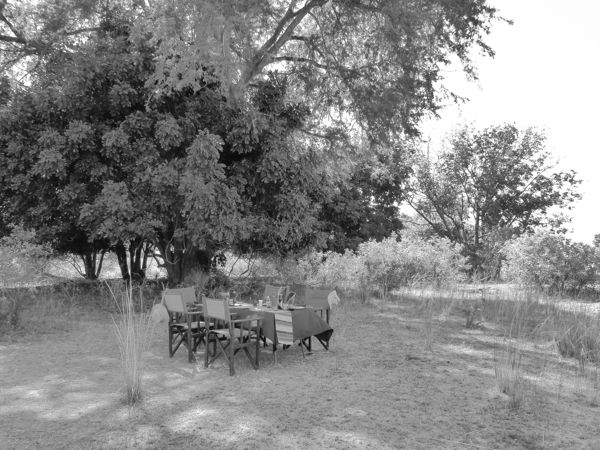
This is where we had coffee/tea in Chongwe; doesn’t it look early 1900’s to you?





I love this one; I think it is a matter of perspective:
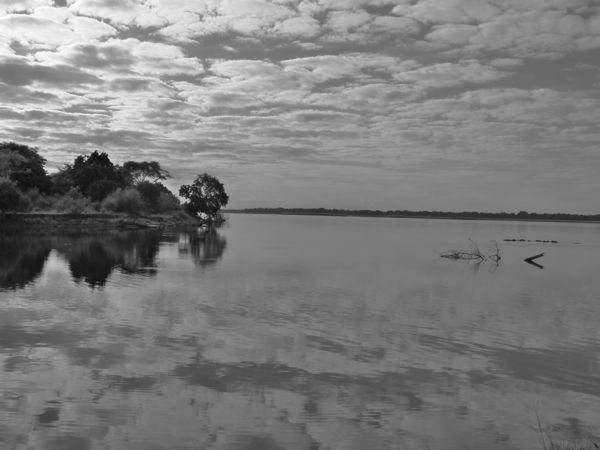
It sounds funny, but it helps to be a quilter. When you are doing a quilt, you have to have a focus, and you need contrast to make the quilt effective.
Departing Chongwe River Camp
Oh! What luxury! To sleep in until 0615 and to watch the sun rise from my bed, hearing the Egyptian Geese, the hippo, the Fish Eagle- and across the river, from the Lower Zambezi River Park, the sound of the roaring lion, one last thrilling morning at Chongwe River Camp.
I dress quickly once I am up – it’s not yet 0630 – but the mornings are chill in late June, and we have learned to lay our clothes out so we can jump into them soon after we arise, so as to keep warm. We are dressed to travel today, so many flights, so many people. . .
Although it is chilly, it is not cold this morning, and there is no wind. When we look out, there is this perfect reflection:

Victor joins us for breakfast, and CJ, and . . . we hate to leave. We are packed on time, our bags go, but we linger. . .
Victor says it’s time to go, he wants to take us by the Chongwe River Lodge – we had asked to see it. It is a marvel, sort of Gaudi-on-the-Chongwe, all natural materials and space, all privacy and perfect for family or a group of friends. There are four bedrooms with King sized beds, and more beds can be moved in to each room or the common rooms, if you really want to fill the house. 🙂
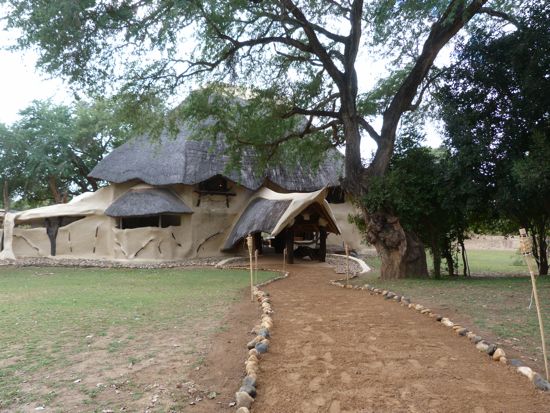

We head out to the landing strip; we can hear the plane coming in, but here is what is cool – the plane is for us! If he dawdle, he will wait! LOL, we don’t dawdle, we are there to check in – check in is the pilot asking if we are the passengers, and we can go whenever we are ready. Oh, I could get so used to this 🙂


The check in counter:
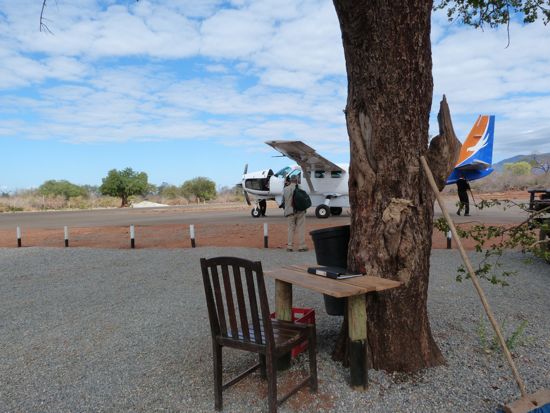
A few last photos with Victor, promises to write, we scramble aboard. Sigh. Farewell, Chongwe River Camp Adventure . . .

Recent Comments
intlxpatr on Shampoo Ginger tigerbutterya0c5ff1d… on Shampoo Ginger intlxpatr on British Soldier Kidnapped, Esc… John on British Soldier Kidnapped, Esc… intlxpatr on British Soldier Kidnapped, Esc… Wikipedia Donate Button

Amazina


Early Voting in Florida


