The Good Husband of Zebra Drive
In Alexander McCall Smith’s newest book about Mma Ramotswe, it is a time of transition and unease. Unthinkable things happen. Mma Makutsi quits her job as Mma Ramotswe’s assistant detective, and Charlie, the apprentice, quits to start his own taxi service. Mr. J.L.B. Matekoni feels a restless urge to try out his detecting skills and everything is in turmoil.

And underneath, amazing things happen. When you think differently, there is room for change, and forgiveness.
With Mma Makutsi back in her usual place, the heavy atmosphere that had prevailed that morning lifted. The emotional reunion, as demonstrative and effusive as if Mma Makutsi had been away for months, or even years, had embarrassed the men, who had exchanged glances and then looked away, as if in guilt at an intrusion into essentially female mysteries. But when the ululating from Mma Ramotswe had died down and the tea had been made, everything returned to normal.
“Why did she bother to leave if she was going to be back in five minutes?” asked the younger apprentice.
“It’s because she doesn’t think like anybody else,” said Charlie. “She thinks backwards.”
Mr. J.L.B. Matekoni, who overheard this, shook his head. “It’s a sign of maturity to be able to change your mind when you realize that you’re wrong,” he explained. “It’s the same with fixing a car. If you find out that you’re going along the wrong lines then don’t hesitate to stop and correct yourself. If, for example, you’re changing the oil seal at the back of a gearbox, you might try to save time by doing this without taking the gearbox out. But it’s always quicker to take the gearbox out. If you don’t, you end up taking the floor out and anyway, you have to take the top of the gearbox off, and the prop shaft too. So it’s best to stop and admit your mistake before you go any further and damage things.”
Charlie listened to this – it was a long speech for Mr. J.L.B. Matekoni – and then looked away. He wondered if this was a random example siezed upon by Mr. J.L.B. Matekoni, or if he knew about the seal he had tried to install in the old rear-wheel-drive Ford. Could he have found out somehow?
In another place, Charlie has just told Mma Ramotswe of his plans to start the No. 1 Ladies Taxi Service:
For a minute or two, nobody spoke. Mma Ramotswe was aware of the sound of Charlie’s breathing, which was shallow, from excitement. We must remember, she thought, what it is like to be young and enthusiastic, to have a plan, a dream. There is always a danger that as we went on in life we forget about that; caution – even fear – replaced optimism and courage. When you were young, like Charlie, you believed that you could do anything, and, in some circumstances at least, you could. . . . .
“I will tell all my friends to use your taxi,” she said. “I am sure you will be very busy.”
And oh yes, in the midst of all this, three mysteries get solved – a case of inventory gone missing, a case of a string of inexplicable hospital deaths, and a case of a husband potentialy gone astray.
GREAT summer reading, deceptively simple. You find yourself mulling over the situations, the responses and the outcomes, and trying out new ways of thinking. Give it a try – you don’t have to read the whole series to enjoy each volume.
This eighth book in the series is available from Amazon.com for a mere $12.70. It makes great summer reading.
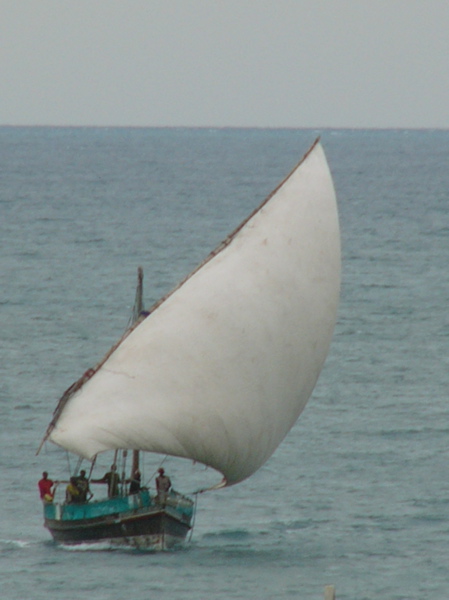
Zanzibar for Magical Droplets
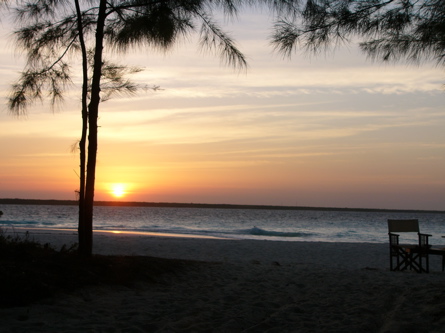
Magical Droplets asked for shots of Zanzibar, one of our very favorite places to relax.
So near, who would think this tropical paradise would be so close? Most flights from here go through Dubai or Abu Dhabi to Dar as-Salaam, but sometimes you can find a flight that goes Muscat – Zanzibar direct. So you get to go to two really cool places instead of just one.
If Oman is fusion Arabian, influenced by Africa and India, than Zanzibar is fusion African, with heavy Arabian, Indian and British influences. We stay at the Zanzibar Serena, only because we never seem to be able to get into Emerson and Green’s, a very funky hotel, every room different (and nice and large) and where you try to be for sundowners on the roof. It’s tradition.
To get away from everything, we stay at Mnemba Island, which has only one hotel on the whole island, run by CCAfrica. You have your own bungalow, which is as big as a small house, and all the privacy in the world. You can even have all your meals in your bungalow – your butler brings them. They do daily diving trips, and they have their own marine reserve with more fish than I have ever seen in one place, even an aquarium. The food is fresh and fabulous. You are treated as a cherished house guest. They tell you when you land that you will not need your shoes the entire time on the island, and you won’t believe them (the first time) but it’s true! The weather stays in the high 80’s (F) year round.
CCAfrica specializes in maintaining a low ecological profile while providing all this luxury. The bungalow is full of locally crafted goods, and the small gift shop is full of locally produced soaps, papers, textiles, crafted items. . .It isn’t easy to get reservations, as it is a great favorite with post-safari travellers and with honeymooners.
For us, the greatest luxury of all is privacy. Mnemba Island is paradise. Ahhhhhh. . . .Zanzibar . . .


Zanzibar Serena

Mnemba bungalow

Check Your Labels
On May 24, BBC reported on fake toothpastes found in Panama and the Dominican Republic. Today’s news has them found in four states in the United States. The boxes LOOK like Colgate, but have spelling mistakes that give them away. They claim to be made in South Africa, but they include diethylene glycol, the same compound found in the fakes earlier, and it is believed to be coming out of China. This is one time you REALLY REALLY want to be sure you are not buying a knock-off.
Colgate finds fake toothpaste in 4 states
Company says counterfeit products may contain poisonous chemical; fake products can be identified by misspellings on label.
June 14 2007: 6:19 AM EDT
LONDON (CNNMoney.com) — Fake “Colgate” toothpaste that may contain a poisonous chemical has been found in four states, Colgate-Palmolive said Thursday.
Colgate said the fake toothpaste may contain diethylene glycol, which the company never uses in its toothpaste. The company said it is working with the FDA to locate the source of the counterfeiting.
The fake toothpaste has been found in discount stores in New York, New Jersey, Pennsylvania and Maryland, the company said.
The fake products aren’t manufactured or distributed by Colgate-Palmolive (Charts, Fortune 500) and can be identified because they say they are manufactured in South Africa or have misspellings on the label.
Comment: If this is happening in the US, where the Food and Drug Administration is careful about what is allowed to be sold, then we had better be doubly careful in Kuwait, where so much is imported from China. China appears to be cutting corners on quality across the board, and their short cuts could kill us.
Marriage – A Great Adventure
I remember the day we looked at each other in astonishment, the day we realized we had lived with each other longer than we had lived with our own parents. We think of family cultures as the culture we grew up in, but in our years together, we have created our own family culture, haven’t we?
We chose one another, in itself, a great adventure. We chose a life full of change and risk. We stacked the obstacles against our survival as a couple, and yet we prevailed, by the grace of God.
We laugh at how young we were to have made such a lifelong commitment. We laugh at how we walked into parenthood – no, RAN into parenthood, joyfully, with no clues as to the huge responsibilities, the agonies as well as the intense delights.
Happy Anniversary, Adventure Man. I thank God for our marriage, and our partnership.
These are for you.
Morning in the bush

Picnic Stop
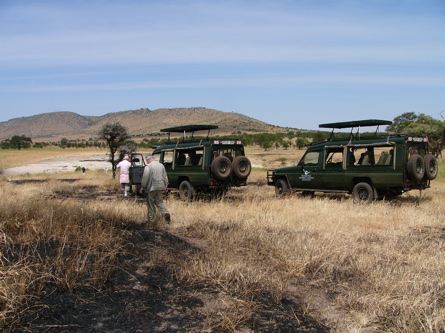
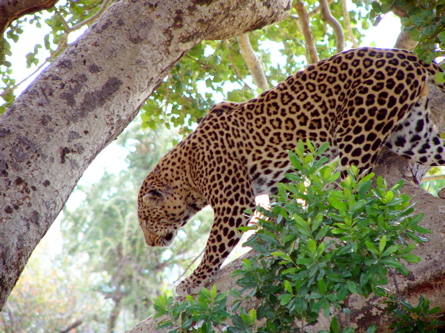
The thrill of the chase
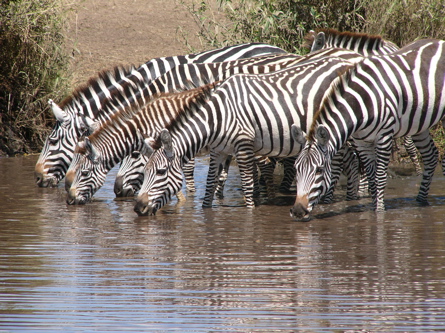
The Great Migration
Zanzibar
New Google Earth Hi Res
New high resolution:
Canada:
Whistler, BC; Waterloo & Toronto, Ontario; Nanaimo, BC; and Fort Saskatchewan, AB
England: Base 50cm coverage of nearly entire country, and Avon
Germany: Cities/Regions of Greifswald, Trier, Köln, Stuttgart, Bonn, Oldenburg, Rostock, Saarbrücken, Hamburg, Hannover, and Ritterhude
Austria: Villach region
France: Cities of Caen, Dijon, Metz, St Etienne, Toulouse and Rouen
Spain: Valencia Andorra
US: Imperial County (CA); Yellowstone National Park (WY); Galveston/Houston (TX); Peterborough (NH); Cheyenne (WY); Burke, Wake, and Cabarrus Counties (NC); Racine and Kenosha Counties (WI); Washington, DC; St Paul (MN); and the State of Alabama
Japan: City/Regions of Kochi, Asahikawa, Koriyama, Miyazaki, Nagano, Utsunomiya, Akita, and Toyama
Large Digital Globe (60cm) update includes areas in Sudan, expanded Africa, Australia, Mexico coverage and smaller areas of coverage in Asia, Polynesia, South America, Canada, Europe, Middle East plus some interesting islands in Antarctica and Greenland.
Updated Imagery:
Americas:
Bogotá, Columbia; Mission Viejo (CA, US); Hillsborough County (FL, US)
EU: Dublin, Ireland
Middle East/Africa: Beirut, Lebanon and Tripoli, Libya
Asia: Hong Kong and Manila, Philippine
Updated Terrain:
Western US 10m, Canary Islands 10m
Google Earth Adds New Layers
Google earth, according to OogleEarth has just added some new layers, one in particular of which highlights what is going on in Dharfur, and ties it to the United States Holocaust Memorial Museum, which tracks deaths, attacks, and refugees in the Dharfur region.
Many thanks to my source at GoogleEarth and greetings, Earthling! (I love saying that!)
Mediawatch: Covering the new Darfur default layer in Google Earth
Wednesday, April 11, 2007 (10:38 UTC)
Hundreds of media organizations carried news about the new Darfur layers in Google Earth — and that’s just in English. In Sweden alone, over 40 papers ran the news (an example). In the US, many local news organizations and papers ran the AP or Reuters story. Here’s a rundown of links to some of the larger and/or more interesting ones, with some observations at the end:
Using their own correspondents: The Los Angeles Times (business), BBC (front page feature), CNET (front page, and as a top headline for media 2.0), CNN (technology), Washington Times (business), PC World, ABC News (world news) and a good article/blog in Wired.
Reuters: Australia’s The Age (under technology), New Zealand Herald (world news), The Australian (world news) and Scientific American (science news).
AP: Seattle Post Intelligencer (business), MSNBC (technology), The Guardian (world news), Sydney Morning Herald (technology), the Houston Chronicle (markets), Seattle Times (world news), CBS News (technology), Baltimore Sun (world news), Washington Post (technology), San Jose Mercury News (breaking news), San Francisco Chronicle (business), Denver Post (world news), International Herald Tribune (Americas??) and the Sudan Tribune (which is a great resource for Darfur news, it turns out — pity they don’t have RSS).
AFP: Times of India (world news), iAfrica (technology) and Baku Today (technology).
IDG News service: IT World and InfoWorld.
What’s interesting is that there is no consensus among news editors as to where such a story belongs: Is the story’s most important news component the fact that there is a genocide being perpetrated in Darfur (world news), that new technologies are being employed to educate people about Darfur (technology), or that Google is involved (business)? In a sense, the situation in Darfur is not itself a “news” story, in that we all already (should) know what’s going on there. (If anything, the news is that it’s getting worse at the moment, and people I know who work there are doing so without much hope of a resolution anytime soon.) But putting the story in the technology section relegates it to a spot not followed by the people that the technology is most aiming to reach.
I think this is above all a story about how new technology is letting us all be witnesses to a genocide in progress, and how that raises our own responsibilities — so perhaps this is a story best also told in the glossy Sunday newspaper magazines, read when people have more time to play with Google Earth and where there is more room for long-form stories about larger technology trends coupled to humanitarian crises such as Darfur, but also Katrina/New Orleans and the Pakistan quake from 2005. How about it, New York Times?
My opinion: This has got to be one of the greatest blogs on earth. And he emphasis added in the above paragraph is mine.
Mosquito Magnet
I am a mosquito magnet. Adventure Man and I go to Africa almost yearly, on safari, sometimes walking, and we love it. But oh, the price I pay! Two or three times a day, I have to tend my wounds – putting antihistimine creams on my bites, which swell and throb and itch until it nearly drives me crazy.
In Tanzania last year, I had no sooner put some serious DEET on when a TseTse fly landed on me and bit me – right where I had just sprayed the repellent!
So every step scientists take to develop a repellent which will truly repel, I applaud.
Mosquitoes Target Exhaled Breath
The mechanism mosquitoes use to zero in on their targets has been discovered by scientists in New York. It is already known that the insects are very sensitive to carbon dioxide in exhaled breath.
Now a team led by Rockefeller University has found that they sense the gas using protein receptors in the structure extending from their jaws.
Writing in Nature, they say the discovery could aid the fight against insect-born diseases, such as malaria.
Read the rest of the article at BBC Health News.
I’m not ready to stop breathing! But maybe they could develop a gum I could chew that would mask the carbon dioxide I exhale?
Offices Full of Germs: Women the Worst
From – I am not kidding – The Nigerian Tribune.
(A recent) study pointed out that for a woman, her office desk may harbour far more bacteria than the workplace restroom and the office desk of men. In fact, women have three to four times the number of bacteria in, on and around their desks, phones, computers, keyboards, drawers and personal items than men do, the study by University of Arizona Professor Charles Gerba found. Gerba, a Professor of Soil, Water and Environmental sciences, tested more than 100 offices on the UA campus and in New York, Los Angeles, San Francisco, Oregon and Washington, D.C. in a study commissioned by the Clorox Co.
The researchers swabbed the offices of 59 women and 54 men in New York City, Los Angeles, San Francisco, Oregon, and Washington, D.C. They sampled eight sites in each office: the phone, desktop, computer mouse, computer keyboard, exclamation key on the computer keyboard, pen, bottom of desk drawer, and handle of desk drawer. The researchers also swabbed workers’ personal items at the office, including personal digital assistants (PDAs), women’s purses and makeup cases, and men’s wallets and found women have more germs on their office desks than men.
“I thought for sure men would be germier,” Gerba said. “But women have more interactions with small children and keep food in their desks. The other problem is makeup.” The tendency is high to doubt this statement. But much as a woman’s desks may typically look cleaner, the germs are likely to be more abundant. Cosmetics and hand lotions make prime germ-transfer agents, Gerba said. Makeup cases also make fine germ homes, along with phones, purses and desk drawers. Food in desk drawers also harbour lots of microorganisms, and it is more abundant among female office workers to have food in their desks and munch while on an assignment, on the computer or even picking a call.
Then, they tend to be around children more often than men, and we all know how easily kids transmit germs. And finally, they use makeup, which tends to absorb germs. Then it rubs off the face or gets scattered by brushes and sponges. The news was not all negative for females though. Gerba in the study found the worst office germ offender is men’s wallets. The back pocket is nice and warm; it’s a great incubator for bacteria. Another hot spot for bacteria in men’s offices: the personal digital assistant.” Men tend to play with their palm pilots more, thinking they’re playing video games or something,” Gerba said.
The top three bacteria hot spots in women’s offices, in order of germs amount : Makeup case, phone, and purse and in men’s offices starting from the highest to the least: Wallet, personal digital assistant and phone. Though a similar study by the Clorox Company, a manufacturer of disinfectant in February 2006, reported that in a study of nine office-based jobs, teachers had the work space with the highest amount of germs and lawyers had the least, Gerba said everyone should arm their office with a germ arsenal that includes: disinfectant wipes, disinfectant spray, paper towels and fruit (for drawer).
According to Gerba, people should clean cell phones and desk phones to get rid of bacteria. “You need to use a disinfectant wipe, or spray disinfectant on a paper towel, and clean the phone off. Never directly spray disinfectant cleaner on phone,” he said. “Do not use soap and water — that just pushes the germs around.” “We recommend that you use a wallet or purse that can be easily wiped off — like leather. A fabric bag is harder to clean and just holds more germs.”
Finally, Gerba said office knickknacks and accessories should be given the same thorough cleaning as everything else , explaining that “people tend to touch and pick up the germs on their desks. It’s a vicious cycle of germs transferring from hands to objects to desks. Hand sanitizers are great in eliminating the transfer of germs from your hands.” The level of germs on office desktops and telephones came in gender neutral; women had three to four times more germs on their keyboards and computer mice than their male counterparts. Desk drawers at women’s desks contained seven times more germs than men’s. Surprisingly, the research showed that the average office desktop has 400 times more bacteria than the average office toilet seat.
What Gerba found among the bacteria was coliform — intestinal bacteria generally found in human waste — on the restroom handles and faucets, in the kitchen sink and sponge, and even in candy basket. That “indicates to me somebody’s not washing his or her hands after coming back from the bathroom,” Gerba said.
That’s why Gerba found hundreds of thousands of bacteria on hot spots like a printer button and the button for the first floor in the elevator, touched by hundreds of fingers each day. Even though none of the bacteria Gerba found was life-threatening, they could lead to more colds and flu.
Prof Oluwole Adebo, a cardiothoracic surgeon commenting said this is a study Clorox, maker of a disinfectant commissioned and is motivated at helping them sell more of their products.” Without being in an office, the surface of our hand picks up germs throughout the day, but you don’t get infected by them because the skin is a barrier against germs. Some of the germs are not in a state to infect, especially in places that are dry and hot, but where humid, it can incubate bacteria. So when you are to eat, wash your hands because there are bacteria on your hands. These bacteria are not in a position to harm us and therefore these is no reason to clean with disinfectants.
“America is full of studies like that. They study everything and make money out of it. The fact is this, in the air you breathe in, there are bacteria in it. Do you sterilize it? No, the body is sufficient to keep the germs at bay. It is all out to pursue people to buy their product”, he concluded.
My Comment: Remember Lies, Damn Lies and Statistics where we talked about who structures the survey? It works the same for studies. The sponsor of this study is Clorox, who make Clorox bleach and multiple cleaning disinfectants. It is in their interest for Professor Gerba to find a very germy environment. The more disinfectants we buy, the higher their profits soar. Prof Oluwole Adebo is right! Germs are everywhere, and we survive, and even develop immunities to them. This study is purely to sell more Clorox products by convincing us we have an epidemic of uncleanliness.
On the other hand . . . it may be time to clean out the make up case and throw away that candy bar . . . 🙂
Egypt blogger jailed for ‘insult’
From BBC News:
An Egyptian court has sentenced an internet blogger to four years’ prison for insulting Islam and the president.
Abdel Kareem Soliman’s trial was the first time that a blogger had been prosecuted in Egypt.
He had used his weblog to criticise the country’s top Islamic institution, the al-Azhar university and President Hosni Mubarak, whom he called a dictator.
A human rights group called the verdict “very tough” and a “strong message” to Egypt’s thousands of bloggers.
Mr Soliman, 22, was tried in his native city of Alexandria. He blogs under the name Kareem Amer.
A former student at al-Azhar, he called the institution “the university of terrorism” and accused it of suppressing free thought.
The university expelled him in 2006 and pressed prosecutors to put him on trial.
During the five-minute court session the judge said Soliman was guilty and would serve three years for insulting Islam and inciting sedition, and one year for insulting Mr Mubarak.
Egypt arrested a number of bloggers who had been critical of the government during 2006, but they were all freed.
“This is a strong message to all bloggers who are put under strong surveillance that the punishment will very strong,” Hafiz Abou Saada of the Egyptian Human Rights Organisation told Associated Press.
Recent Comments
Cathy on No Grown-Ups in Charge intlxpatr on Waiting for Snow intlxpatr on Waiting for Snow Abou Tabblouleh on t… on Waiting for Snow Abou Tabbouleh on in… on Waiting for Snow Wikipedia Donate Button

Amazina


Early Voting in Florida


 Here There and Everywhere