For All Young Parents: I Salute You
Every time I see this commercial, it gives me a big grin. These little babies and children need so much attention, and we applaud the loving care their parents put into cherishing them, sustaining them, nurturing them, civilizing them, educating them, exercising them, and sharing with them until they can care for themselves.
Young parents, you are doing the toughest job in the world. We see you. We see your sacrifices, and the effects of sleep deprivation, we see you giving, giving, giving to those who cannot give back, and we are in awe of your loving patience to your children.
I also love it that men are also featured prominently as caregivers 🙂
Rest in Peace, Qatari Cat
His name was Pete. He died last night. The operation was a success, but the shock to his system caused his kidneys to fail. We are grieving, and having a very very bad day.


We are heartsick.
This little cat was a blessing to us for 11 years. He came to us a skittish little street cat in Qatar. While AdventureMan worked long hours, he kept me company, helping me quilt, entertaining my friends, almost always in the same room or close by. When AdventureMan would come home, he would play hide-and-seek with him and adored AdventureMan with all his little heart. I was the Mama; AdventureMan was the FunGuy.
He was not such a little cat; he was only a kitten in his own mind. He was a very long cat, and appeared much bigger than he really was because of his length, and his big long fur, which made him a fluffy cat. He was polite, always greeting us when we came in, and talking to us when we were sitting together.
He leaves a great hole in our hearts. Rest in Peace, Sweet Kitty.
Scam Death Notice: A New Low in Scams
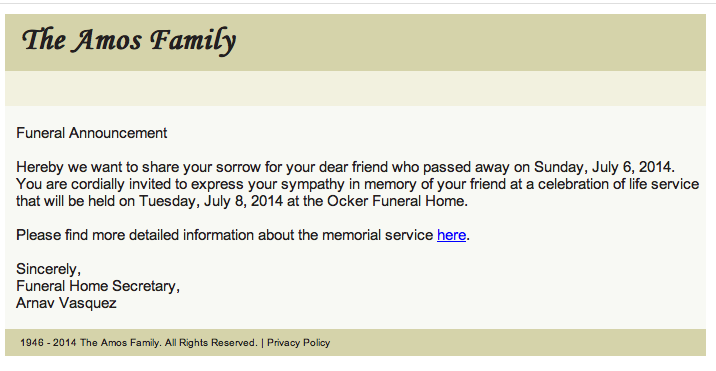
Today I got this. It’s a common name; it’s entirely possible I know someone of that name, but I have never seen a notice like this, official, impersonal, and not mentioning the specific name of the deceased. It smells. No. It stinks.
The Hanger at the Wharf in Juneau
First, we really love eating at the Hanger at the Wharf. So does just about everyone else. Twice, we got really lucky. It is easier getting a table if you are just two people, and it is easier getting a table if you eat early. As we are still on Pensacola tummy time, we are in luck. As the Celebration 2014 parade ended, we zipped straight over and as larger groups waited, we were immediately shown to a table for two.
No wonder The Hanger is so popular. The food is terrific and this is the view – straight down the Gastineau channel with Douglas and the cruise ships. As the sun slides behind the mountain, it is a stunning view:

Some hardier souls were eating outside on the deck. I used to be this hardy, but my years in the Middle East have softened me, made me not so good at eating in cool and drafty places, even in the middle of the Alaskan summer.

Inside The Hanger: great, courteous, friendly and efficient employees

Every table taken, the bar is packed, and people are waiting in the hallway to be seated:

My halibut tempura:

AdventureMan’s halibut burger and fries:

We liked the food and atmosphere so well that we went back a second time during the ceremonial dances and were happy to see a lot of the dancers eating there, too. I had the first mate’s plate, with salmon and halibut and a berry chutney and AdventureMan had grilled halibut. We both left happy. We would go there again in a heartbeat.
There is only one little thing about The Hanger that makes me uneasy, and it has nothing to do with The Hanger. When I was a little girl, living across the channel, I would watch for my Dad to come home – this was the airport for the amphibious planes, Alaska Coastal Airlines (now part of Alaska Airlines) and Ellis Airlines. When his plane would land, we would all rush to the car and drive like crazy across the bridge to pick him up (no cell phones then, LOL). So I still feel a little frisson and feel the ghosts of the past when I eat there.

Worst Places in the World to Work
From AOL Huffpost Business:
Where are the worst places on the planet to be a worker?
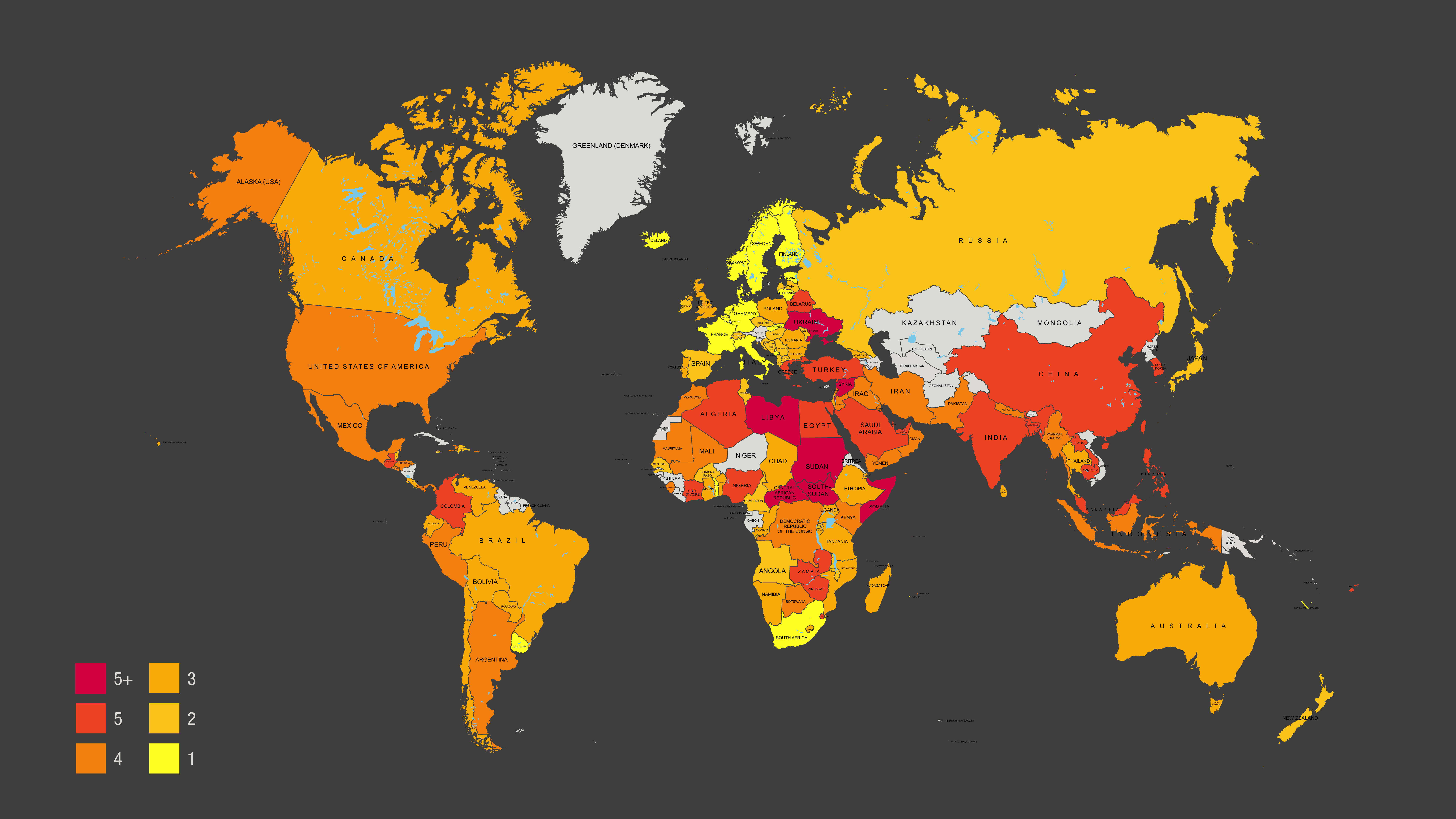
A new report by the International Trade Union Confederation, an umbrella organization of unions around the world, sheds light on the state of workers’ rights across 139 countries. For its 2014 Global Rights Index, the ITUC evaluated 97 different workers’ rights metrics like the ability to join unions, access to legal protections and due process, and freedom from violent conditions. The group ranks each country on a scale of 1 (the best protections) to 5 (the worst protections).
The study found that in at least 35 countries, workers have been arrested or imprisoned “as a tactic to resist demands for democratic rights, decent wages, safer working conditions and secure jobs.” In a minimum of nine countries, murder and disappearance are regularly used to intimidate workers.
Denmark was the only country in the world to achieve a perfect score, meaning that the nation abides by all 97 indicators of workers’ rights.
The U.S., embarrassingly, scored a 4, indicating “systematic violations” and “serious efforts to crush the collective voice of workers.”
“Countries such as Denmark and Uruguay led the way through their strong labour laws, but perhaps surprisingly, the likes of Greece, the United States and Hong Kong, lagged behind,” wrote ITUC general secretary Sharan Burrow in a statement about the report. “A country’s level of development proved to be a poor indicator of whether it respected basic rights to bargain collectively, strike for decent conditions, or simply join a union at all.”
Here’s a look at the world rankings. Darker shades represent worse protects for workers. A score of 5+ means that active conflicts, like those in Syria or Sudan, block any legal protections for workers.
Greece, Italy Have the World’s Most Overweight Kids
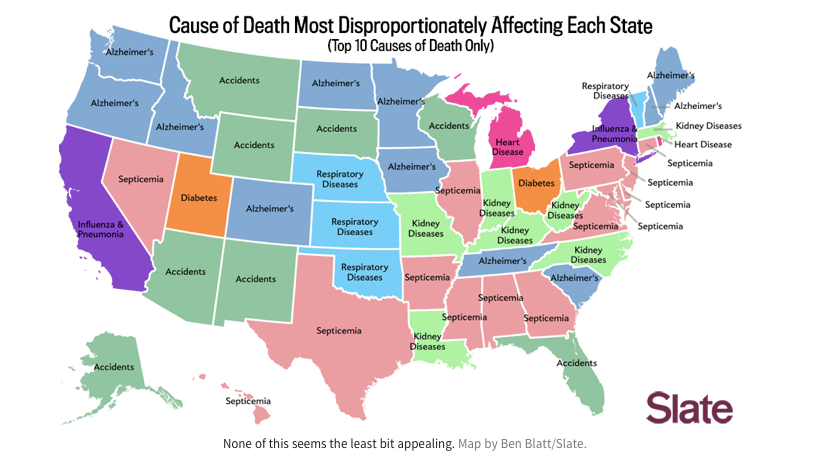
Most people know that the United States has a childhood obesity problem. Less well known is that according to the latest data from the OECD is that we are not actually the world leaders in experiencing this issue. It’s Greece and Italy who have the most overweight kids:

This may not jibe with a lot of hype about the benefits of the Mediterranean diet but it turns out that said diet may no longer be especially popular in Greece and Italy. In 2008, Josef Schmidhuber of the UN Food and Agricultural Organization said traditional eating patterns in southern Europe had “decayed into a moribund state” and drastically increased their overall calorie intake and especially consumption of animal fat, salt, and sweeteners.
One Third of World Now Clinically Obese
From AOL News/ Huffpost:
By MARIA CHENG
LONDON (AP) — Almost a third of the world is now fat, and no country has been able to curb obesity rates in the last three decades, according to a new global analysis.
Researchers found more than 2 billion people worldwide are now overweight or obese. The highest rates were in the Middle East and North Africa, where nearly 60 percent of men and 65 percent of women are heavy. The U.S. has about 13 percent of the world’s fat population, a greater percentage than any other country. China and India combined have about 15 percent.
“It’s pretty grim,” said Christopher Murray of the Institute for Health Metrics and Evaluation at the University of Washington, who led the study. He and colleagues reviewed more than 1,700 studies covering 188 countries from 1980 to 2013. “When we realized that not a single country has had a significant decline in obesity, that tells you how hard a challenge this is.”
Murray said there was a strong link between income and obesity; as people get richer, their waistlines also tend to start bulging. He said scientists have noticed accompanying spikes in diabetes and that rates of cancers linked to weight, like pancreatic cancer, are also rising.
The new report was paid for by the Bill & Melinda Gates Foundation and published online Thursday in the journal, Lancet.
Last week, the World Health Organization established a high-level commission tasked with ending childhood obesity.
“Our children are getting fatter,” Dr. Margaret Chan, WHO’s director-general, said bluntly during a speech at the agency’s annual meeting in Geneva. “Parts of the world are quite literally eating themselves to death.” Earlier this year, WHO said that no more than 5 percent of your daily calories should come from sugar.
“Modernization has not been good for health,” said Syed Shah, an obesity expert at United Arab Emirates University, who found obesity rates have jumped five times in the last 20 years even in a handful of remote Himalayan villages in Pakistan. His research was presented this week at a conference in Bulgaria. “Years ago, people had to walk for hours if they wanted to make a phone call,” he said. “Now everyone has a cellphone.”
Shah also said the villagers no longer have to rely on their own farms for food.
“There are roads for (companies) to bring in their processed foods and the people don’t have to slaughter their own animals for meat and oil,” he said. “No one knew about Coke and Pepsi 20 years ago. Now it’s everywhere.”
In Britain, the independent health watchdog issued new advice Wednesday recommending that heavy people be sent to free weight-loss classes to drop about 3 percent of their weight. It reasoned that losing just a few pounds improves health and is more realistic. About two in three adults in the U.K. are overweight, making it the fattest country in Western Europe.
“This is not something where you can just wake up one morning and say, ‘I am going to lose 10 pounds,'” said Mike Kelly, the agency’s public health director, in a statement. “It takes resolve and it takes encouragement.”
Study Highlights Health Risks Specific to Women
This was fascinating to me because most of the research on aging has been done on males. Most medicinal dosages are based on male tests, and males respond differently to medications than females. Here are some results from a study done on only females. From AOL EveryDay Health:

For most of medical history, scientific research had largely been conducted on white men, which makes it pretty difficult to know how to treat conditions that affect other populations, particularly women. Take menopause: For years, doctors prescribed long-term use of hormones estrogen and progestin to help women manage symptoms during and after menopause because it helped women feel better. But in 1991, researchers wanted a definitive answer as to whether hormones used to ease menopause’s symptoms were helping women more than they were hurting them. So, the National Institutes of Health launched the largest study ever focused exclusively on women to answer that question.
Dubbed the Women’s Health Initiative (WHI), the research project recruited 68,132 postmenopausal women to participate. They were divided into groups, some taking just estrogen, some taking estrogen and progestin, and some taking placebos. After over a decade of observation, the researchers stopped the trials early, in 2002 and 2004, because it was so clear that hormones posed serious health risks to the women. However, researchers have continued to follow up with these women in the years since, and have also tested other health interventions on the group, including low-fat diets and taking vitamin D and calcium. In 1998, an observational component of the WHI launched, with another 93,676 participants, to study even more aspects of women’s health. Much of the data collected over the years is now accessible to other researchers, too.
This has created a glut of women-specific health information that has paid off in big ways. In fact, the findings from the WHI have prompted a net economic return of $37.1 billion dollars, or $140 for each dollar that was spent on the trial itself, according to a new paper published in the Annals of Internal Medicine. That’s because the results have led to better treatment and care for millions of women, decreasing healthcare spending and increasing quality of life.
Here are some of the most important WHI findings:
1. You probably shouldn’t take hormones for longer than you have to. Long-term use of estrogen and progestin increases the risk of breast cancer, heart attack, stroke, and blood clots, though it decreased the risk of hip fractures and colon cancer in the main WHI trial. While these results have caused doctors to largely stop prescribing long-term hormone replacement, individuals are encouraged to make a personal decision based on their own risk factors. For example, if a woman has a very low family history of breast cancer and cardiovascular disease, but a high risk of colon cancer and osteoporosis, she may choose to take the hormones, which are thought to be safe when prescribed for just a short time around menopause, to manage symptoms. They may also extend the life expectancy for women who have had hysterectomies, the data revealed, so be sure to talk to your doctor about your specific needs.
2. Low-fat diets are good, but not enough to reduce your risk of some cancers or cardiovascular disease. The researchers asked some of the participants to eat a low-fat diet, and then compared how this affected their risk of various diseases. They found that a low-fat diet alone was not enough to significantly impact women’s risk of cardiovascular disease, breast cancer, orcolorectal cancer, according to the results published in JAMA. The researchers concluded that more dramatic lifestyle changes, including increased exercise, might be necessary to affect risk of developing these diseases.
3. Taking vitamin D and calcium may not be worth it. Some of the women in the study were given calcium and vitamin D supplements, while others were not. The results showed that the supplements did increase the bone density in the hip, but they didn’t significantly decrease the number of hip fractures the women experienced. Nor did taking the supplements lower the risk of colorectal cancer, according to the paper published in the New England Journal of Medicine. They did, however, increase the risk of kidney stones.
4. Ditch diet soda. Post-menopausal women who reported drinking two or more diet sodas per day had a higher risk of heart attack, stroke, and other heart problems, research from the WHI showed. While the researchers couldn’t show a direct connection, there are plenty of other reasons to avoid fake sugar.
5. If you’re at high risk for melanoma, aspirin might help. Researchers analyzed the data from the WHI observational study, and found that women who took aspirin regularly had a 20 percent lower risk of melanoma than women who did not. The correlation was strong — the longer the women took the drug, the lower their risk. Aspirin comes with its own benefits (preventing subsequent heart problems) and harms (increased risk of bleeding), so talk to your doctor before adding it to your routine.
Pregnant Sudanese Woman Sentenced to Death for ‘Apostasy’
She is also charged with adultery, for marrying a Christian man and (gasp) having sex with him. Now pregnant with her second child, Mariam claims she has never been a Muslim, was raised Christian, but the judge is applying new and strict Sharia laws.

As you might guess, I do not usually use Fox News as a news source, but this is an update on a story I am following:
International outrage grows for Sudanese woman sentenced to death for apostasy
Published May 16, 2014FoxNews.com
Meriam Ibrahim and Daniel Wani married in a formal church ceremony in 2011. The couple has an 18-month-old son, Martin, who is with Meriam in jail.
International outrage is mounting over the death sentence a Sudanese judge ordered for the pregnant wife of an American citizen — all because she refuses to renounce her Christian faith.
Meriam Ibrahim, 26, was sentenced Thursday after being convicted of apostasy. The court in Khartoum ruled that Ibrahim must give birth and nurse her baby before being executed, but must receive 100 lashes immediately after having her baby for adultery — for having relations with her Christian husband. Ibrahim, a physician and the daughter of a Christian mother and a Muslim father who abandoned the family as a child, could have spared herself death by hanging simply by renouncing her faith.
“We gave you three days to recant but you insist on not returning to Islam,” Judge Abbas Khalifa told Ibrahim, according to AFP. “I sentence you to be hanged to death.”
But Ibrahim held firm to her beliefs.
“I was never a Muslim,” she answered. “I was raised a Christian from the start.”
Ibrahim was raised in the Christian faith by her mother, an Orthodox Christian from Ethiopia. She is married to Daniel Wani, a Christian from southern Sudan who has U.S. citizenship, according to sources who spoke on condition of anonymity.
“I was never a Muslim. I was raised a Christian from the start.”
– Meriam Ibrahim
The cruel sentence drew condemnation from Amnesty International, the U.S. State Department and U.S. lawmakers.
“The refusal of the government of Sudan to allow religious freedom was one of the reasons for Sudan’s long civil war,” Rep. Chris Smith, R-N.J., chairman of the House congressional panel that oversees U.S. policy in Africa, said in a statement. “The U.S. and the rest of the international community must demand Sudan reverse this sentence immediately.”
Amnesty International called the sentence a “flagrant breach” of international human rights law and the U.S. State Department said it was “deeply disturbed” by the ruling, which will be appealed.
Khalifa refused to hear key testimony and ignored Sudan’s constitutional provisions on freedom of worship and equality among citizens, according to Ibrahim’s attorney Al-Shareef Ali al-Shareef Mohammed.
“The judge has exceeded his mandate when he ruled that Meriam’s marriage was void because her husband was out of her faith,” Mohammed told The Associated Press. “He was thinking more of Islamic Shariah laws than of the country’s laws and its constitution.”
Ibrahim and Wani married in a formal ceremony in 2011 and have an 18-month-old son, Martin, who is with her in jail. The couple operate several businesses, including a farm, south of Khartoum, the country’s capital. Wani fled to the United States as a child to escape the civil war in southern Sudan, but later returned. He is not permitted to have custody of the little boy, because the boy is considered Muslim and cannot be raised by a Christian man.
Sudan’s penal code criminalizes the conversion of Muslims into other religions, which is punishable by death. Muslim women in Sudan are further prohibited from marrying non-Muslims, although Muslim men are permitted to marry outside their faith. Children, by law, must follow their father’s religion.
Islamic Shariah laws were introduced in Sudan in the early 1980s under the rule of autocrat Jaafar Nimeiri, whose decision led to the resumption of an insurgency in the mostly animist and Christian south of Sudan. An earlier round of civil war lasted 17 years, ending in 1972. In 2011, the south seceded to become the world’s newest nation, South Sudan.
Sudanese President Omar Bashir, an Islamist who seized power during a 1989 military coup, said his county will implement Islam more strictly now that the non-Muslim south is gone. A number of Sudanese have been convicted of apostasy in recent years, but they have all escaped execution by recanting their faith. Religious thinker and politican Mahmoud Mohammed Taha — a vocal critic of Nimeiri — was sentenced to death after his conviction of apostasy and was executed at the age of 76 in 1985.
Ibrahim’s case first came to the attention of authorities in August, when members of her father’s family complained that she was born a Muslim but married a Christian man. They claimed her birth name was “Afdal” before she changed it to Meriam. The document produced by relatives to indicate she was given a Muslim name at birth was a fake, Mohammed said.
Ibrahim refused to answer the judge when he referred to her as “Afdal” during Thursday’s hearing.
Ibrahim was initially charged with having illegitimate sex last year, but she remained free pending trial. She was later charged with apostasy and jailed in February after she declared in court that Christianity was the only religion she knew.
The US-based Center for Inquiry is demanding that all charges against Ibrahim be dropped, saying the death sentence is a clear violation of the International Covenant on Civil and Political Rights, which forbids persecution or coercion of religious beliefs and the right to marry.
“Religious belief must never be coerced and free expression must never be punished, through threat of imprisonment, violence, or any other means,” the group wrote in a letter to Sudan’s UN ambassador, H.E. Hassan Hamid Hassan. “This cannot go unanswered, and the world will not stand for it.”
Fox News’ Joshua Rhett Miller and The Associated Press contributed to this report.
Recent Comments
intlxpatr on Shampoo Ginger tigerbutterya0c5ff1d… on Shampoo Ginger intlxpatr on British Soldier Kidnapped, Esc… John on British Soldier Kidnapped, Esc… intlxpatr on British Soldier Kidnapped, Esc… Wikipedia Donate Button

Amazina


Early Voting in Florida


