Sabille Shop
I love sabilles. Sabilles are localized charity, “in a dry and thirsty land” they are provided by generous souls that the thirsty might have cool, fresh water to refresh thenselves in the heat of the day. You will see them at mosques, along city streets, in every neighboorhood. They come in fanciful shapes; if you type “sabille” into the HT&E search window, you will see more. I love the Kuwait Liberation Tower ones, and also the water-tower wannabes, but I also like the ones that look like old castles or old doors or jugs. I love it that people go to the trouble to make something utilitarian interesting, even artistic.
Recently, I found a shop in the Wafa Mall that sells sabilles:
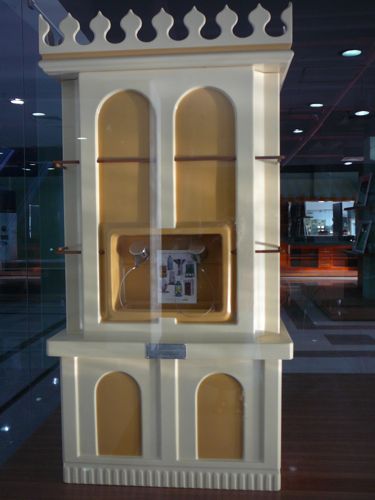
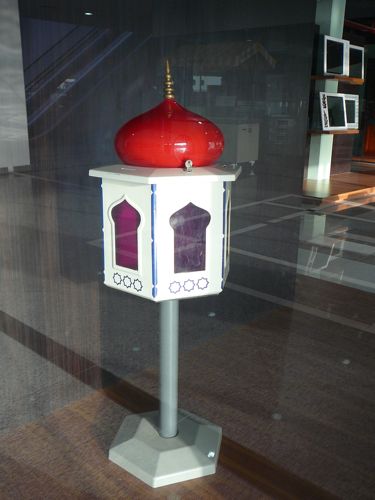
The shop is called Fine Things, and also has some fancy presentation boxes and this, which looks like a mail box to me, but might be for collecting charitable donations, or . . . ? I might be totally wrong. Your guess is as good as mine:
I like this tiny little mall because it has commercial kitchen supply shops with all kinds of display cases and things you don’t find very often. There is also a mattress shop; I always laugh when there is a family shopping there for mattresses because the parents don’t say “NO!” to their kids, so the kids are JUMPING ON THE MATTRESSES! The salesmen seem unable to ask the parents to make them stop.
History of Architecture in Old Kuwait City (2)
I love this book. It is such a treasure. For those of you who have ever wondered about the construction of old Gulf dwellings, this book is a MUST have – so much detail, so much to help us understand what we are seeing.
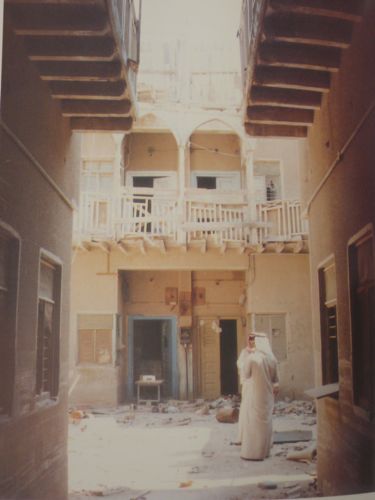
More from author Saleh Abdulghani Al-Mutawa, Architect:
House design and location specified unity existing in the Kuwaiti society. In old times, the poor livednear the rich, where no differences between them. The only difference was that the houses of the rich were vast. Ordinary Kuwaiti house, occupied by the majority of Kuwaitis, consisted of a vast courtyard, surrounded by many rooms, and a hallway secured privacy to the family by separating the house from the street. In that architectural design, the courtyard ventilated the house to find it cool at night and after sunset. This was due to the exchange of radiation between the floor of the courtyard and the outer space. At night the house became cool and sleep was comfortable. During summer, the majority of Kuwaitis prefer to sleep in the courtyard or on the roof. Usually, there is a room on the roof used to store mattresses in or sometimes for napping. A small bath is usually located beside that room. . .
Walls were built of rock and mud, and decorated internally with white gypsum. Ceilings consisted of rows of jandal (trunks), basajeel (bamboo) and manqour (straw mats), covered with a 30cm or a 40cm layer of mud. In winter, when rain was heavy, that layer should be attended to and maintained by adding more mud. Houses of the rich used gypsum for protection. When wood was used in fixing the ceilings, thejandal was only 4 m long, and for the wide rooms they used square pieces of wood of 6m. The floor was covered with mud, then with tiles which was imported from neighboring countries. To let the water flow from the roofs, they used the wooded marazims (gutters) which extended from the roofs to the outside. In the houses there were wells for supplying the underground water, and there were pools to store water in.
As regards the houses of the rich, they were divided into a number of courtyards, each serving a certain purpose. There was a courtyard used to include a Diwaniya for male guests, consisting of a large room annexed with other buildings needed to accomodate the servants or for other purposes.
The other courtyard was located for family female members, including a number of rooms and bathrooms. A third courtyard was used as a kitchen, including the kitchen, storage room for fuel and a store room for the different kinds of food. There were more courtyards for the animals: goats, cows, horses. Kuwaiti houses also had a “baqadeer” (wind tower) which was a natural air-conditioner, not one Kuwaiti house was without it.
Where Things Go?
This last week I had a lot of shopping to do, and specific things I was looking for. I pretty well know where to look for what I am seeking now, in spite of the fact that the grocery stores here have a different logic than the logic I am used to.
It’s not a right or wrong thing; it is a different cultures thing. I had the same issues when I would be looking for things in the German supermarkets, or the French supermarkets, or even shopping in Florida supermarkets as opposed to West Coast supermarkets.
I was looking for chopped pimentos, (AdventureMan has a yearning for a Southern staple called Pimento Cheese) which I sort of found and sort of didn’t. What I eventually found, in the condiment section, with the pickles, was canned roasted peppers, which I then chopped into tiny pieces.
Most of the time, I don’t have any trouble finding pimentos, but for some reason, the last month or two, I haven’t been able to find them until today. Usually, if I am going to find pimentos, I find them in the same section with tomato paste, hot pepper paste, and spicy Indian pickles. Condiments like mustards, mayonnaises, steak sauces, ketchups and baby foods are all up on top of the frozen foods. (See! I don’t KNOW why!) Today, I actually found them in the American pickle section. I don’t know why.
In the dairy department, there isn’t a yoghurt section, or a milk section, there is a KDD Dairy section and an Al Marai Dairy section, and (there are more) today none of the sections had sour cream, and in fact, they didn’t think they had ever had sour cream although I buy it there all the time.
At this point, I have bought so much “just in case I never see it again, ” that I can’t get a single thing more in my freezer.
There is a deli section, where they sell fresh soft cheese, a huge variety of olives, and big flats of eggs, 30 at a time. In the bread section, they also sell potato chips and taco chips. Soda crackers are sold mixed in with what we think of as cookies, sweet biscuits. Cat food is sold next to the baby food and bottled water. Go figure!
After a while, you just kind of know, you kind of get used to it.
The market we used to go to in France was about 1/3 wine, 1/3 fresh vegetables, cheeses, meats and terrines, and the remaining 1/3 was regular groceries!

(Not my photo. I found it at about.com GoFrance)
Shrimp Or Clam Salad
This is a great salad to take to a potluck / covered dish lunch. It can be made with either clams of shrimp, and can be made more or less spicy by the addition of Tabasco sauce.
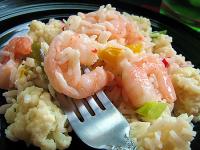
Shrimp / Clam Salad
3 cups freshly cooked hot rice
3 -4 Tablespoons Miracle Whip or Mayonnaise
2 Tbls cocktail sauce (or ketchup + horseradish)
2 -3 chopped green onions
i stalk chopped celery
1/2 cup chopped sweet pickle
12 – 16 oz cooked frozen shrimp
or
2 cans whole clams, drained (use the clam liquid as part of the water for cooking the rice)
Cook rice, add solid ingredients (no need to thaw shrimp if rice is hot). Add sauces and very little pepper to the rice. Stir, cover and refirgerate until cold. Serve on lettuce leaves, if serving individually.
Hummos Wa Burghul

Do you see that black stone dish on the table, the one that has a dish in it called Hummos wa Burghul (Chickpeas and Cracked Wheat?)
I am trying to find a recipe to make it. Please, if you are Syrian or Jordanian, and you know how to make this, or maybe you have a mom or an aunt who knows how to make this, would you please share your recipe with me?
I found one recipe, for a Burghul Pilaf, from a 1959 Lebanese cookbook. It calls for 1 1/4 lbs of butter. (!!! AACK !!!) I remember it really did taste buttery, it was really yummy, but that sure seems like a lot of butter!
It was delicious. I’d really like to try to make it, if someone out there can help me out.
Party Planning
I was idly contemplating a party, and wondering if I should think about Mardi Gras (think Jambalaya, bread pudding, and honky-tonk beads) or Chinese New Years (order in a bunch of Chinese Food, hang up some good luck signs, and some Rats – this will be the year of the Rat) and I thought I would check the dates.
Holy Smokes! Gras! Mardi Gras is February 5th, Lent starts February 6th and Chinese New Year starts February 7th!
Celebrating Chinese New Year on a Thursday night is cool (Thursday night in Kuwait is like Friday night where the weekend is Saturday/Sunday) but not so cool when everyone has just started fasting and spiritual examination. Lent is not like Ramadan; Lent is more spare, it’s introspective, it’s kind of like Danish modern, less is just LESS!
(I think I had better go for Mardi Gras.)
If YOU want to celebrate Chinese New Years, Here is where you can find out about what you need to eat for Good Luck in the new Chinese year like when you eat noodles, don’t cut them because long noodles signify long life, a whole fish signifies togetherness and abundance, and whatever you do, don’t eat tofu, which is white, and unlucky, signifying death and misfortune!

Inheritance of Loss

Most of the time, if I don’t like a book, I won’t even bother telling you about it. This book, The Inheritance of Loss, by Kiran Desai, is an exception for one reason – it IS worth reading.
Inheiritance of Loss showed up on the book club reading list for the year, and I ordered it. I read the cover when the book came, and it didn’t sound that good to me, so I read other books instead. The next time it came to mind was when a friend, reading the book, said she was having trouble with it, and asked me if I had started it. This friend is a READER, and a thinker. It caught my attention that she would have problems reading a book, so I decided to give it a try.
This is a very uncomfortable book. The characters live in the shadow of the Himalayan mountains. The most sympathetic character is a young orphaned girl, sent to live with her grandfather. With each chapter, we learn more about all the characters, how they came to be here, what they think, what their lives have looked like.
The author of this book has a very sour look on life. She has snotty things to say about every character. You can almost feel her peering around the corner, eyes slit with evil intent. She is that vicious neighbor who comes by and never says anything nice about anybody, and when you see her talking with your neighbor, you get the uneasy feeling she could be saying something mean about you, and she probably is.
The book covers a wide range of topics – Indian politics, Ghurka revolts, English colonization, Indian emigration to the US and UK, everyday vanities and pride in petty things, how people destroy their own lives, how people can be cruel to one another, oh it’s a great read (yes, that is sarcasm).
At the same time, this vicious unwelcome neighbor has a sharp eye for detail. You may not like what she is telling you, but you keep listening, because you can learn important tidbits of information from her. In my case, I learned a lot about how life is lived in a small mountain village in India, the struggles of illegals in America and how class lines are drawn, ever so finely, when people live together. I learned a lot about the legacy of colonialism, and the creep of globalization. This unwelcome neighbor has a sharp tongue, always complaining, and yet . . . some of her complaints have merit.
I don’t believe there was a single redeeming episode in the book. There was not a paragraph to feel good about. I am glad to be finished with the book – but, yes, I finished it, I didn’t just set it aside in disgust, or give it away without finishing.
Here is the reason I am telling you about this book – as uncomfortable as this book is to read, I have the feeling, upon finishing, that ideas and images from this book will stick with me for a long time. I have the feeling that it contributes to my greater understanding of how things work, how people think differently from other people, and on what levels we are very much the same.
Here is an excerpt from the book, at a time during which the Judge is a young Indian, studying in England:
The new boarding house boasted several rooms for rent, and here, among the other lodgers, he was to find his only friend in England: Bose.
They had similar inadequate clothes, similar forlornly empty rooms, similar poor native’s trunks. A look of recognition had passed between them at first sight, but also the assurance that they wouldn’t reveal one another’s secrets, not even to each other.
. . . Together they punted clumsily down the glaceed river to Grantchester and had tea among the jam sozzled wasps just as you were supposed to, enjoying themselves (but not really) as the heavy wasps fell from flight into their laps with a low battery buzz.
They had better luck in London, where they watched the changing of the guard at Buckingham Palace, avoided the other Indian students at Veeraswamy’s, ate shepherd’s pie instead, and agreed on the train home that Trafalgar Square was not quite up to British standards of hygiene – all those defecating pigeons, one of which had done a masala-colored doodle on Bose. It was Bose who showed Jemubhai what records to buy for his new gramophone: Caruso and Gigli. He also corrected his pronunciation: Jheelee, not Giggly. . . .
This it was that the judge eventually took revenge on his early confusions, his embarrassments gloved in something called “keeping up standards,” his accent behind a mask of a quiet. He found he began to be mistaken for something he wasn’t – a man of dignity. This accidental poise became more important than any other thing. He envied the English. He loathed Indians. He worked at being English with the passion of hatred and for what he would become, he would be despised by absolutely everyone, English and Indians both.
I consider this a review, and not particularly a recommendation. I read the book, I finished the book and I learned from the book. I didn’t like the book. I recommend it only as a challenge, for people who like to read and stretch their minds in new directions.
Baked Apples – So Simple, So Good!
Cold weather is the perfect time for baked apples. Apples are good for you, cinnamon is good for you, the smell as they are cooking is divine, and the heat from the oven is welcome in these cold winter evenings. 🙂
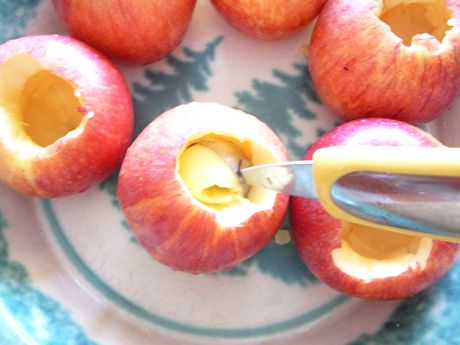
I slice a little bit off the bottom for the apples, so they will sit flat in the dish – not too much, just a little:

Use a knife to take out a cone from the core, then use a melon-ball maker to scoop the seeds out of the center of the apple. Don’t go through the bottom if you can help it. If you do, it’s not a big deal, but try not to.
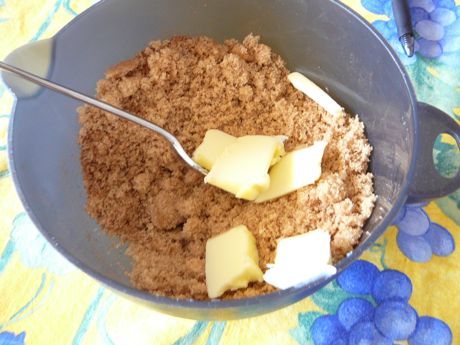
Mix up about a cup of brown sugar with about 1/2 teaspoon of cinnamon and some small pieces of real butter – you can use a fork to break the butter up and mix it into the sugar. It doesn’t have to be well mixed, some lumps are OK, you just want small pieces of butter.
Stuff apples with cinnamon butter, pack firmly into each apple cavity, and top with a small pat of butter:

Bake at 180 degrees C. or 350 degrees F. for 50 minutes.
This is how they look coming out of the oven:

Put each apple into a bowl, spoon sauce over apple, then top with a big dab of whipped cream:
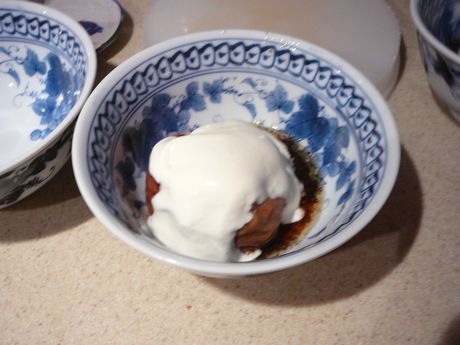
This whipped cream is whipped with confectioner’s (powdered) sugar and a drop of vanilla flavoring. YummmmmY!
Jambalaya
We had friends in for dinner last night, and it was perfect Jambalaya weather. Nights are cold, and you want something that will warm you up and “stick to your ribs.”
“What is this?” my Kuwaiti friend asked, and I told him it was machboos if it were made in New Orleans, which made him laugh.
Like machboos, the recipe is infinitely variable. A lot of times, you put in what you have. Here is what I used, and it was delicious!
1 chopped onion
1 chopped green (or red) sweet pepper
Sautee together in olive oil and a little butter for richness.
Sautee 2.5 cups of rice in more olive oil and butter with 1 Tablespoon Tony Cochere’s Cajun Seasoning (available at the Sultan Center)
Add five cups liquid, made up of 3 packets of tomato paste (like the small cans we use in the US) plus chicken broth plus any liquid from the shrimp), bring to a boil, turn down and let simmer for 40 minutes or until rice has absorbed most of the liquid)
Add:
1 or 2 chopped tomatoes, for texture and color
1 cup chopped artichoke hearts
1 cup chopped chicken
1 smoked beef sausage (in the US this might be pork) chopped into pieces, or you could use a packet of the “Little Smokies” you can find at Sultan Center), pre-cooked
1 lb (500 grams) great big Kuwaiti shrimp
Stir in and let sit five minutes to heat all ingredients and so flavors blend.
Serve! This feeds six people generously, and up to twelve if other dishes are also served – salads, vegetables, etc.
Swedish Pot Roast
You don’t think of fine cooking when you think of Sweden, and yet this pot roast is one of my family’s all time favorites. It has a unique flavor, sweet and rich, and you need a pressure cooker to fix this. It is old fashioned, but the taste is amazing. It’s a great January kind of meal, served with potatoes and maybe some Rot Kohl / Red Cabbage.
3 lb. beef pot roast (7 bone preferred) or chuck or brisket
1 t. nutmeg
1 t. cinnamon
1/2 t. ginger
2 t. salt
1/8 t. pepper
2 T. cooking oil
1 cup water
2 onions, sliced
4 bay leaves
1 clove garlic, crushed
1/2 cup brown sugar
1/2 cup red wine or vinegar
Combine nutmeg, cinnamon, ginger, salt, pepper; rub into meat.
In pressure cooker, brown meat on both sides.
Add onion, garlic, brown sugar and water, wine and bay leaves. Close cover of pressure cooker, place regulator on vent pipe and cook 35 minutes with regulator rocking slowly. Let pressure drop.
4 – 6 servings over egg noodles, or cooked potatoes.
Recent Comments
intlxpatr on Shampoo Ginger tigerbutterya0c5ff1d… on Shampoo Ginger intlxpatr on British Soldier Kidnapped, Esc… John on British Soldier Kidnapped, Esc… intlxpatr on British Soldier Kidnapped, Esc… Wikipedia Donate Button

Amazina


Early Voting in Florida


