Woo HOOO, Q8Dutchie: The Great Kuwait National Holiday Challenge
Don’t you love it? All these different view, what the eyes are seeing? People around the world who have never been here are catching a glimpse of the two day – and in this case, because it was added on to a week-end, a four-day extravaganza of a holiday, for Kuwait National Day and Kuwait Liberation Day.
Thank you, Q8Dutchie, for sharing your eyes with us!
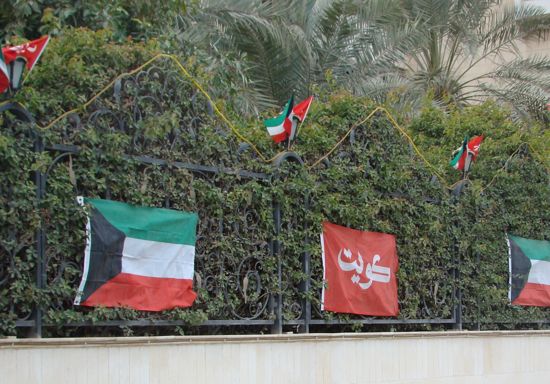


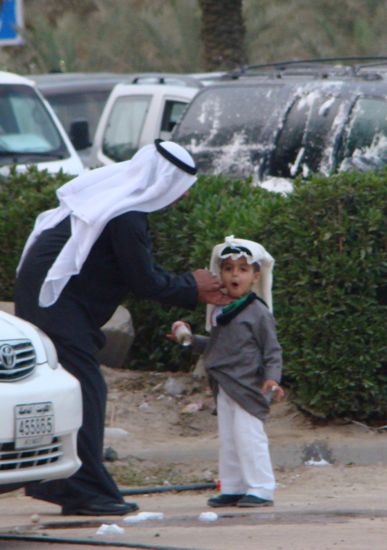

The best photo of all I can’t share – Q8Dutchie’s child, covered head to toe with foam, eyes gleaming and grinning from ear to ear/ 🙂
“I’m Melting! I’m Melting!”
At our church this weekend, our priest was making a point, using water, and he sprinkled various members of the congregation, to a series of “eeeeekks!”
I was reminded of several years ago – we had bought a new house, and our church has a special ceremony of blessing for a residence. As the priest carefully points out, he/she is not actually blessing the house, but blessing the inhabitants – nonetheless, every room has a special prayer, and the priest sprinkles a little holy water in each room.

more animals
As he sprinkled the water in one room, some hit my youngest sister, Sparkle. I watched her struggle not to do it, but she couldn’t resist.
“Ohhhh, I’m melting, I’m melting!” she cried out, like the Wicked Witch of the West in The Wizard of Oz.
Thank God, the priest was a good friend. He paused, looked at me and said “she is YOUR sister?” I nodded. He sighed, before continuing, and said “why am I not surprised?”
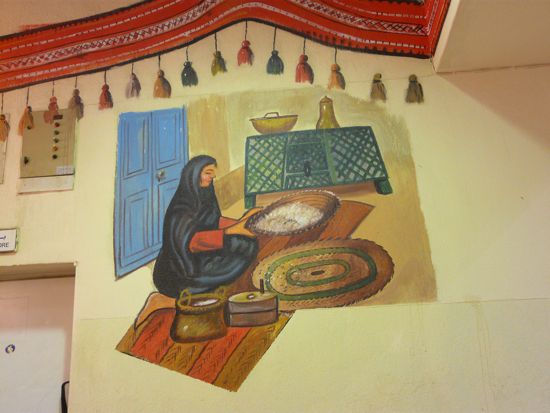
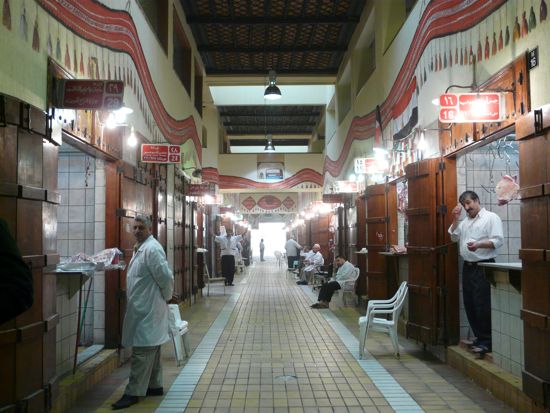
Mubarakiyya Glimpses and Public Art
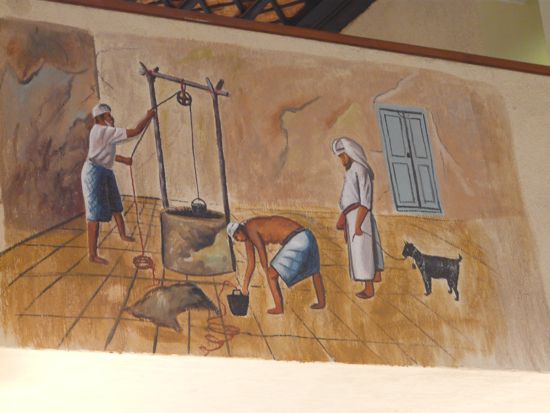
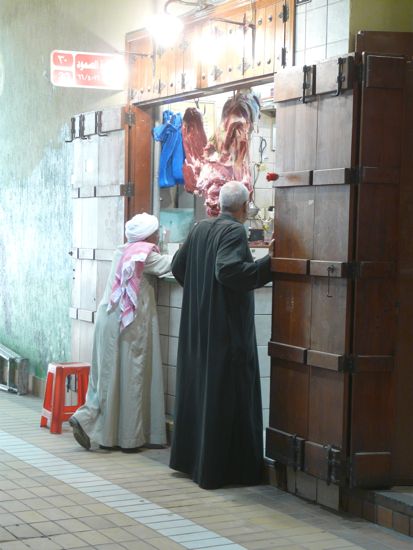
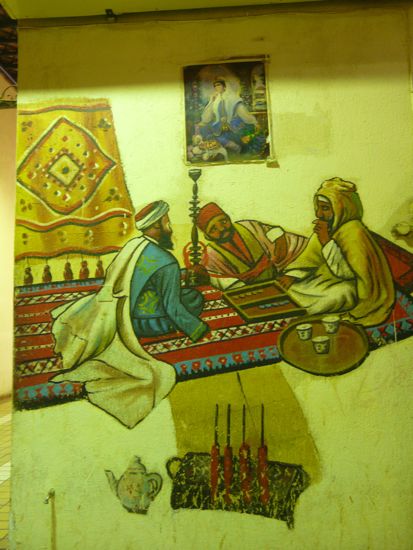
Every time I go to Mubarakiyya, I see something I haven’t seen before. We found some scenes in the meat market – see if you can find them.




Dewey: The Small-Town Library Cat Who Touched the World
I’ll admit it, I was looking for a quick read, and after resisting this book for months, I picked it up. As much as I love cats, I am not that much into cute, nor am I particularly sentimental, and I don’t like having my emotions manipulated. Just one look at the adorable cat on the cover told me it was going to be one of those slick, fairly superficial feel-good kind of books.
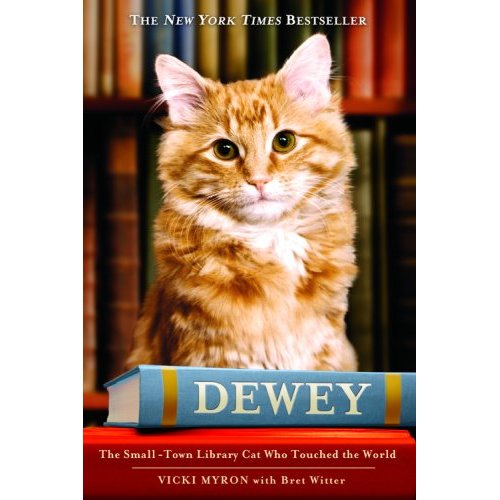
See what I mean? Just look at that cover. Look how that cat just looks right into your eyes. This book is going to suck you in.
This book was a surprise. Yes, it was touching. Yes, it was about a tiny little kitten who almost died, stuffed in a below freezing book-return box in an northern Iowa country library in the middle of one of the coldest nights of the year, and yes, he ends up living in the library for almost 20 years and brightening the life of the people who come into the library. Yes, Dewey is adorable, and funny, and loveable. Yes, the book is an easy read.
It is also, surprisingly, an uncomfortable read. It is not overly sentimentalized. It is also the story of a woman, Vicky Myron, who grew up on one of the northern Iowa farms, and she tells us about the quality of a life that is no longer available in America, how the safe, secure, intertwined family life of rural Iowa has greatly disappeared. The hard times we are working our way through in 2009 is an echo of hard times suffered in rural America, as small farms are gobbled up by the more efficient super-farms, owned by conglomerates, not by families.
She tells us about her physical struggles with a disastrous childbirth, and its two year aftermath, and she tells us about how her marriage to a lovable alcoholic died, almost without her being aware it was dying. She doesn’t spare herself, as she discusses her problems, as a single mother, on welfare, trying to get a college education and raising her daughter, who couldn’t wait to move away from her. She talks about her challenges remodeling an old cement reading library into a modern, airy information resources center serving the town and the surrounding community, at the same time she is working on her Masters in Library Science. She describes her challenges dealing with the town bureaucracy. It is not always comfortable, or feel-good reading. It takes the book out of the superficial, and gives you something to think about.
Intertwined in all of this is Dewey Readmore Books, the cat who comes to live in the Spencer, Iowa, library, and who is eventually featured on TV shows around the world. He responds to requests that he pose, that he perform, he seems to know who needs a little love and is quick to give it – he is a great main character. For me, some of it was also uncomfortable, kind of a stretch – like that the cat would be in the window waving to her every morning when she came to work. Well . . . maybe . . . I’ve almost always had cats in my life, and few have every shown such consistent loyalty. Cats are . . . well, cats. It’s the way God made them. 😉
What I love is that this book is about libraries, and the amazing (mostly) women who run them. These librarians have had a huge influence on my life, and the life of AdventureMan, challenging us to explore outside our boundaries and supporting our aspirations, recommending new ideas and new ways of serving their communities. Librarians are part of the backbone of America.
I read this book in just a few hours. It just isn’t that complicated or challenging; it is an easy read. It has been a #1 New York Times bestseller, and copies of the book are still selling strongly. It currently ranks #105 in all time book sales on Amazon.com – can you imagine how many books that must be? The book is sweet, but #1? I can only imagine so many people are buying and reading it because it looks like 1) a Feel-Good book and 2) an easy read.
Eliot Pattison: Beautiful Ghosts
It almost always takes me a little while to get into Eliot Pattison’s books, and I can figure out why. He sets you down right in the middle of something going on, so you start off a little confused. You can read each of his Inspector Shan Tao Yun books as a stand-alone, but it helps to have read them in order – as I have.

Even though I have read them in order, I still find myself disoriented each time I start a new book. New names, a new situation, and it takes a few pages to get back in the rhythm of thinking about things in a new way. Within thirty pages, I am in a new world, and I am totally addicted. When I am reading one of the Inspector Shan Tao Yun books, I can hardly wait to get back to the book. My household chores suffer, my projects suffer – even AdventureMan suffers, as I seek to return to Tibet, the Tibetan Monks and the world of Chinese bureaucracy.
One of the things I love in this book – we saw a hint of it in the last book I reviewed, Bone Mountain – is that the worst of the bad characters can have a hint of humanity, and develop a full-blown redemption, as we are watching happen with the prison warden, Captain Tan. The process continues in Beautiful Ghosts. In this book, Pattison strikes several additional chords – he combines a good mystery with art, art thefts, public art and a little bit of history, a family reunion, father-son problems, and a lot of action. I’m a happy reader.
In Beautiful Ghosts, a murder happens, but it is hard to understand, at first, who was murdered, why the murder was committed, where the murder was committed as well as who committed the murder. One answer leads to another, and ultimately, to long buried treasures and long kept secrets.
A great tickle, for me, is that in this book Inspector Shan Tao Yun goes to my home town, Seattle, which he finds very strange, and grey and rainy. Pattison describes Chan’s bewilderment at how Americans live, and as Chan leaves Seattle, he comments on how he has not seen the sunshine in his entire time visiting there, working in co-ordination with an FBI office trying to track down some missing and stolen Tibetan art pieces, stolen from the hidden monasteries by corrupt Chinese bureaucrats.
Shan still stood, studying the strange buildings and the dozens of people who were wandering in and out of the open doorways off the huge main hall. There were shops, he realized, dozens of shops, two floors of shops. When he looked toward Corbett, the American was already ten feet in front of him. Shan followed slowly, puzzling over everything in his path. Adolescents walked by, engaged in casual conversation, seemingly relaxed despite the brass rings and balls that for some reason pierced their faces. He looked away, his face flushing, as he saw several women standing in a window clothed only in underwear. He saw more, nearly identical women, in another window adorned in sweaters and realized they were remarkably lifelike mannequins. One of the sweaters was marked at a few cents less than three hundred dollars, more than most Tibetans made in a year.
“Why did you bring me here?” Shan asked, as Crobett led him into a coffee shop and ordered drinks for both of them. “This place of merchants.”
“I thought you’d want to see America,” Corbett said with an odd, awkward grin, gesturing to a table, then sobored. “And this is where Abigail worked, before getting the governess job. People here knew her, told me stories about her, made her real for me.”
. . . .
Shan began to marvel at the rain itself. Beijing was a dry place, most of Tibet a near desert. He had not experienced so much rain since he was a boy, living near the sea. There were many qualities of American rain, and many types of rain clouds. One moment they were in a driving rain, like a storm, the next in a shower, the next in a drizzle that was little more than a thick fog. Once the water came down so violently, in such a sudden wind, that it struck at the car horizontally. . . .
You learn so much reading Eliot Pattison, more than I can absorb! There are detailed art works, there are geographic features, there are Buddhist customs, there are bureaucratic networks, there are mysteries of Chinese history and dynasties. There are tribal customs and learning to think like Tibetan monks.
Eliot Pattison is a gifted and poetic writer. If you like mysteries that turn out to be very complicated and which teach you a lot about a culture you have never experienced (or would like to learn more about) I would suggest you start at the beginning. These are the books about Inspector Chan in chronological order:
Skull Mantra
Water Touching Stone
Bone Mountain
Beautiful Ghosts
Underwear Uproar in Saudi Arabia
There is an article today on BBC News (you can read the entire article by clicking here) on the underwear uproar in Saudi Arabia – that to buy underwear, women have to deal with male clerks. And more – there is nowhere to try on a bra to make sure you get the right fit! You have to pay, go to the public restroom, try it on and bring it back if it is not right.
One of the most amazing things to me, besides having only men selling underwear in Saudi Arabia, was the fact that the most amazing lingerie was in the most public windows. My favorite I-would-love-to-take-this-photo moments was watching abayed and niqabed women standing next to some of the tiniest, most sexy underwear you could imagine.
i know you think we are looser in the west, but you would laugh to know how restrained we really are. For the most part, we just don’t discuss underwear.
And have you noticed – in the United States, the mannekins don’t have nipples? I was shocked the first time I saw mannekins in Europe and the Middle East – the females had nipples! I had to look away! We are prudish in funny ways, in ways you can’t begin to imagine, and in ways we don’t even realize until we are confronted with our own what-we-think-is-normal.
I cannot imagine men in the ladies lingerie section. I buy all my underwear back in the US; I am too shy to buy underwear from a man! In Kuwait, they have females selling La Perla, very nice underwear, but most of the really good ready-made clothing in Kuwait is for size 00 – 2 girls – not for grown up women. It’s just easier buying my “unmentionables” discreetly on my trips back home. I carry a list. Most of us do. 😉
Here is the article:
Saudi lingerie trade in a twist
By Stephanie Hancock
BBC News, Jeddah
It would be bizarre in any country to find that its lingerie shops are staffed entirely by men.
But in Saudi Arabia – an ultra-conservative nation where unmarried men and women cannot even be alone in a room together if they are not related – it is strange in the extreme.
Women, forced to negotiate their most intimate of purchases with male strangers, call the situation appalling and are demanding the system be changed.
“The way that underwear is being sold in Saudi Arabia is simply not acceptable to any population living anywhere in the modern world,” says Reem Asaad, a finance lecturer at Dar al-Hikma Women’s College in Jeddah, who is leading a campaign to get women working in lingerie shops rather than men.
“This is a sensitive part of women’s bodies,” adds Ms Asaad. “You need to have some discussions regarding size, colour and attractive choices and you definitely don’t want to get into such a discussion with a stranger, let alone a male stranger. I mean this is something I wouldn’t even talk to my friends about.”
In theory, it should be easy enough to get women to staff lingerie shops, but parts of Saudi society are still very traditional and don’t like the idea of women working – even if it’s just to sell underwear to each other.
Rana Jad is a 20-year-old student at Dar al-Hikma Women’s College, and one of Reem Asaad’s pupils and campaign supporters.
“Girls don’t feel very comfortable when males are selling them lingerie, telling them what size they need, and saying ‘I think this is small on you, I think this is large on you’,” she says.
“He’s totally checking the girls out! It’s just not appropriate, especially here in our culture.”
Kuwait Independence / Liberation Holiday Treat
My friends, run to the nearest newsstand and pick up a copy of today’s Arab Times. On page 3, one of Kuwait’s most eminent bloggers, Amer al Hilal, has a full page article; his diary as a soldier during the Liberation.
It is an awesome article. He brings the liberation period, with its thrills and challenges, to life. He is a very readable writer, and his story is compelling. Now! Right now! Go read the paper! Its YOUR history!
#1 Entry: NWB – Great Kuwait Liberation Day Challenge
OK, OK, the rest of you might as well just give up. It will be really, really hard to find more adorable children than these celebrating Independence and liberation! Thank you, NWB!
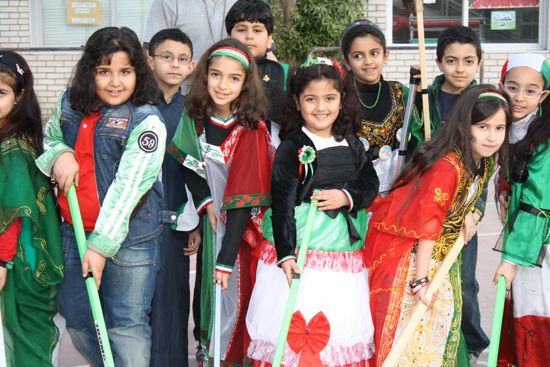
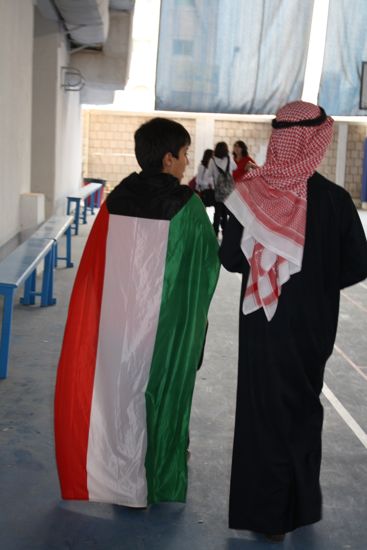
Just kidding – the children are adorable AND I want more entries!


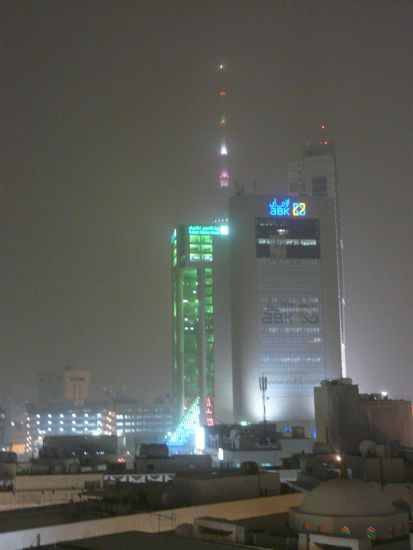
Recent Comments
Kitchen on Isiais: Winding Down intlxpatr on Shampoo Ginger tigerbutterya0c5ff1d… on Shampoo Ginger intlxpatr on British Soldier Kidnapped, Esc… John on British Soldier Kidnapped, Esc… Wikipedia Donate Button

Amazina


Early Voting in Florida


