Celebrating Sainte Mary Magdalene
From today’s Forward Day by Day:
TUESDAY, July 22 Saint Mary Magdalene
John 20:18. Mary Magdalene went and announced to the disciples, “I have seen the Lord.”
The information about Mary Magdalene tantalizes the imagination. A Jesus groupie in an age when decent women did not leave home to follow itinerant men. One from whom seven demons, by Luke’s count, were exorcised. A woman of such low status that she was free to stand unchallenged at the crucifixion site. It is no wonder that, like other women who do not fit into boxes of conventional understanding, she is defined in terms of sex. By declaring her a prostitute, imagination satisfies the Bible’s thin facts and the human desire for predictability. She has become a sex symbol in every sense of the word.
In seeing her this way, we miss the single piece of information that connects Mary to us all: gratitude. She followed Jesus because he cast out the seven demons. Jesus gave her new life and hope, a fact she never forgot and carried as her banner through thick and thin. If one or more of the demons in her had a sexual manifestation, it does not matter to the bottom line. Mary Magdalene is witness to the power of gratitude, a power available to our lives as well as hers.
PRAY for the Church of Jerusalem and The Middle East and the Diocese of Egypt with North Africa and the Horn of Africa
Today the Church remembers Saint Mary Magdalene.
When Is Eid Al Fitr 2014?
Today as I checked WeatherUnderground, I saw that the new moon is expected July 26th. However, when I checked About.com, it says that Eid al Fitr will start around July 28.
Maybe even though the moon is new, it cannot be seen as early as the 26th?

Question: When is Eid Al-Fitr 2014?
Eid Al-Fitr is a holiday marking the end of Ramadan, the month of fasting which is one of the greatest religious observance in Islam. What is the date for Eid Al-Fitr in 2014?
Answer: Eid Al-Fitr is expected to be on or around July 28, 2014.
Note: The exact dates of Islamic holidays cannot be determined in advance, due to the nature of the Islamic lunar calendar. Estimates are based on expected visibility of the hilal (waxing crescent moon following a new moon) and may vary according to location.
Rehab, An Unlikely Hero
I love this story. When you start reading the bible, you come across the most human of our race, you have the dramas of sibling rivalry, disobedience, and murder, the heartbreak of childlessness, slavery, and terrible loss, you have marriages and wars . . . the full spectrum of human behavior is there. And you have Rehab, a prostitute, who has heard of this God, but is not a Hebrew. She will help them in return for safety for her family. All who shelter in her small apartment, protected by a red ribbon (or rope), live.
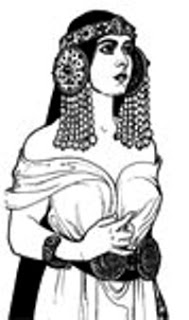
In a later chapter of the bible, we learn how Rehab figures in the family line of Jesus.
Joshua 2:1-14
2Then Joshua son of Nun sent two men secretly from Shittim as spies, saying, ‘Go, view the land, especially Jericho.’ So they went, and entered the house of a prostitute whose name was Rahab, and spent the night there. 2The king of Jericho was told, ‘Some Israelites have come here tonight to search out the land.’ 3Then the king of Jericho sent orders to Rahab, ‘Bring out the men who have come to you, who entered your house, for they have come only to search out the whole land.’
4But the woman took the two men and hid them. Then she said, ‘True, the men came to me, but I did not know where they came from. 5And when it was time to close the gate at dark, the men went out. Where the men went I do not know. Pursue them quickly, for you can overtake them.’ 6She had, however, brought them up to the roof and hidden them with the stalks of flax that she had laid out on the roof. 7So the men pursued them on the way to the Jordan as far as the fords. As soon as the pursuers had gone out, the gate was shut.
8 Before they went to sleep, she came up to them on the roof 9and said to the men: ‘I know that the Lord has given you the land, and that dread of you has fallen on us, and that all the inhabitants of the land melt in fear before you. 10For we have heard how the Lord dried up the water of the Red Sea* before you when you came out of Egypt, and what you did to the two kings of the Amorites that were beyond the Jordan, to Sihon and Og, whom you utterly destroyed. 11As soon as we heard it, our hearts failed, and there was no courage left in any of us because of you. The Lord your God is indeed God in heaven above and on earth below. 12Now then, since I have dealt kindly with you, swear to me by the Lord that you in turn will deal kindly with my family. Give me a sign of good faith 13that you will spare my father and mother, my brothers and sisters, and all who belong to them, and deliver our lives from death.’ 14The men said to her, ‘Our life for yours! If you do not tell this business of ours, then we will deal kindly and faithfully with you when the Lord gives us the land.’
No matter who we are, no matter what we have done, the love of God follows us everywhere, with the free gift of salvation, if only we see it, as Rehab did, and ask for it. God is great!
“The Love of Many Will Grow Cold”
Towards the end, as Jesus talks about the end-of-times, he says that because of lawlessness, the love of many will grow cold. (Deep sigh) We even have a name for it now, compassion fatigue, where good people get tired of trying and giving in the face of so much need. In Pensacola, we have children dying from negligence, young men dying from street violence, many dying from car accidents, and many suicides. It is stunning and it is discouraging.
Jesus tells us to hang in there, not to give up. Only with his help can we hope to do this.
This is from our Lectionary Readings for today:
Matthew 24:1-14
24As Jesus came out of the temple and was going away, his disciples came to point out to him the buildings of the temple. 2Then he asked them, ‘You see all these, do you not? Truly I tell you, not one stone will be left here upon another; all will be thrown down.’
3 When he was sitting on the Mount of Olives, the disciples came to him privately, saying, ‘Tell us, when will this be, and what will be the sign of your coming and of the end of the age?’ 4Jesus answered them, ‘Beware that no one leads you astray. 5For many will come in my name, saying, “I am the Messiah!”* and they will lead many astray. 6And you will hear of wars and rumours of wars; see that you are not alarmed; for this must take place, but the end is not yet. 7For nation will rise against nation, and kingdom against kingdom, and there will be famines* and earthquakes in various places: 8all this is but the beginning of the birth pangs.
9 ‘Then they will hand you over to be tortured and will put you to death, and you will be hated by all nations because of my name. 10Then many will fall away,* and they will betray one another and hate one another. 11And many false prophets will arise and lead many astray. 12And because of the increase of lawlessness, the love of many will grow cold. 13But anyone who endures to the end will be saved. 14And this good news* of the kingdom will be proclaimed throughout the world, as a testimony to all the nations; and then the end will come.
All Who Exalt Themselves Will Be Humbled
Today’s Gospel reading makes me squirm; it does not come naturally to me, a first-born, to be humble. I love being special. I love to be honored, to be given a seat of honor, to get that upgrade. And I think I am very human, so I imagine the reaction this radical teaching received among his own people, and among the scribes and Pharisees who also loved being special . . .
Matthew 23:1-12
23Then Jesus said to the crowds and to his disciples, 2‘The scribes and the Pharisees sit on Moses’ seat; 3therefore, do whatever they teach you and follow it; but do not do as they do, for they do not practise what they teach. 4They tie up heavy burdens, hard to bear,* and lay them on the shoulders of others; but they themselves are unwilling to lift a finger to move them. 5They do all their deeds to be seen by others; for they make their phylacteries broad and their fringes long. 6They love to have the place of honour at banquets and the best seats in the synagogues, 7and to be greeted with respect in the market-places, and to have people call them rabbi. 8But you are not to be called rabbi, for you have one teacher, and you are all students.* 9And call no one your father on earth, for you have one Father—the one in heaven. 10Nor are you to be called instructors, for you have one instructor, the Messiah.* 11The greatest among you will be your servant. 12All who exalt themselves will be humbled, and all who humble themselves will be exalted.
Zombies and Me and Romans
A very long time ago, I loved scary movies, and then a friend told me to see ‘Night of the Living Dead’ and scary movies lost all their charm for me. I was young, to get to my job I walked eight blocks to the bus stop, and I was living in Seattle, where early morning is still very dark. Rationally, I know zombies of the kind in ‘The Night of the Living Dead’ do not exist; irrationally, those were eight long dark blocks and my heart jumped with every movement caught out of the corner of my eye.

Why is it that zombies are so terrifying to me? I have always thought it was because they exemplify the worst in us, the kinds of things we do when we are in mobs fueled by passion and violence, or even smaller groups where we go places and do things we would never do on our own.
As I read todays Lectionary readings, however, I realized that the reasons zombies have such a visceral horror for me is that they are the hidden me, the appetites and hungers I won’t even acknowledge to myself; the urge to kill when someone treats me rudely or cuts me off in traffic, the appetites I yearn to indulge, zombies epitomize everything we are without the saving grace of a loving God.
Romans 8:1-11
8There is therefore now no condemnation for those who are in Christ Jesus. 2For the law of the Spirit* of life in Christ Jesus has set you* free from the law of sin and of death. 3For God has done what the law, weakened by the flesh, could not do: by sending his own Son in the likeness of sinful flesh, and to deal with sin,* he condemned sin in the flesh, 4so that the just requirement of the law might be fulfilled in us, who walk not according to the flesh but according to the Spirit.* 5For those who live according to the flesh set their minds on the things of the flesh, but those who live according to the Spirit* set their minds on the things of the Spirit.* 6To set the mind on the flesh is death, but to set the mind on the Spirit* is life and peace. 7For this reason the mind that is set on the flesh is hostile to God; it does not submit to God’s law—indeed it cannot, 8and those who are in the flesh cannot please God.
9 But you are not in the flesh; you are in the Spirit,* since the Spirit of God dwells in you. Anyone who does not have the Spirit of Christ does not belong to him. 10But if Christ is in you, though the body is dead because of sin, the Spirit* is life because of righteousness. 11If the Spirit of him who raised Jesus from the dead dwells in you, he who raised Christ* from the dead will give life to your mortal bodies also through* his Spirit that dwells in you.
Ramadan Kareem and Ramadan for Non-Muslims

I wrote this post in 2007, when I was living in Kuwait. It has become an annual tradition to repeat it.
Ramadan will start soon; it means that the very thinnest of crescent moons was sighted by official astronomers, and the lunar month of Ramadan might begin. You might think it odd that people wait, with eager anticipation, for a month of daytime fasting, but the Muslims do – they wait for it eagerly.
A friend explained to me that it is a time of purification, when your prayers and supplications are doubly powerful, and when God takes extra consideration of the good that you do and the intentions of your heart. It is also a time when the devil cannot be present, so if you are tempted, it is coming from your own heart, and you battle against the temptations of your own heart. Forgiveness flows in this month, and blessings, too.
We have similar beliefs – think about it. Our holy people fast when asking a particular boon of God. We try to keep ourselves particularly holy at certain times of the year.
In Muslim countries, the state supports Ramadan, so things are a little different. Schools start later. Offices are open fewer hours. The two most dangerous times of the day are the times when schools dismiss and parents are picking up kids, and just before sunset, as everyone rushes to be home for the breaking of the fast, which occurs as the sun goes down. In olden days, there was a cannon that everyone in the town could hear, that signalled the end of the fast. There may still be a cannon today – in Doha there was, and we could hear it, but if there is a cannon in Kuwait, we are too far away, and can’t hear it.
When the fast is broken, traditionally after the evening prayer, you take two or three dates, and water or special milk drink, a meal which helps restore normal blood sugar levels and takes the edge off the fast. Shortly, you will eat a larger meal, full of special dishes eaten only during Ramadan. Families visit one another, and you will see maids carrying covered dishes to sisters houses and friends houses – everyone makes a lot of food, and shares it with one another. When we lived in Tunisia, we would get a food delivery maybe once a week – it is a holy thing to share, especially with the poor and we always wondered if we were being shared with as neighbors, or shared with as poor people! I always tried to watch what they particularly liked when they would visit me, so I could sent plates to their houses during Ramadan.
Just before the sun comes up, there is another meal, Suhoor, and for that meal, people usually eat something that will stick to your ribs, and drink extra water, because you will not eat again until the sun goes down. People who can, usually go back to bed after the Suhoor meal and morning prayers. People who can, sleep a lot during the day, during Ramadan. Especially as Ramadan moves into the hotter months, the fasting, especially from water, becomes a heavier responsibility.
And because it is a Muslim state, and to avoid burdening our brothers and sisters who are fasting, even non-Muslims refrain from eating, drinking, touching someone of the opposite sex in public, even your own husband (not having sex in the daytime is also a part of fasting), smoking is forbidden, and if you are in a car accident and you might be at fault, the person might say “I am fasting, I am fasting” which means they cannot argue with you because they are trying to maintain a purity of soul. Even chewing gum is an offense. And these offenses are punishable by a heavy fine – nearly $400 – or a stay in the local jail.
Because I am not Muslim, there may be other things of which I am not aware, and my local readers are welcome to help fill in here. As for me, I find it not such a burden; I like that there is a whole month with a focus on God. You get used to NOT drinking or eating in public during the day, it’s not that difficult. The traffic just before (sunset) Ftoor can be deadly, but during Ftoor, traffic lightens dramatically (as all the Muslims are breaking their fast) and you can get places very quickly! Stores have special foods, restaurants have special offerings, and the feeling in the air is a lot like Christmas. People are joyful!
There were many comments on the original post, and, as usual in the history of Here There and Everywhere, the commenters taught us all more about Ramadan than the original post. If you want to read the original post and comments, you can click HERE.
This year, Ramadan in the Northern Hemisphere will be one of the hottest, least comfortable ever. Imagine, having to refrain from all food and drink, from swimming, from smoking, from dawn to dusk for an entire month. People still have to work, although at some work sites, hours are reduced. Driving will be horrible, especially toward dusk when people are starving and eager to break the fast.
May God grant his mercy to all those fasting in 2014, may your fast be blessed. may the All Merciful and All Generous listen to your prayers; may the hours of fasting pass quickly and pleasantly, and may you enjoy the blessings of family closeness and religious insights.
Where is Lokoja, Nigeria?
Today the church celebrates the Birth of John the Baptist, whom the Moslems call Yahyah, and who has a much-visited tomb in the Ummayyad Mosque in Damascus, Syria. The church also prays today for the diocese of Lokoja, Nigeria, which is just south of Abuja, from where 300 girls were kidnapped by Boko Haram, people who believe girls should not be educated. Most of those girls are still missing. Three hundred girls . . . Lokoja . . . John the Baptist . . . Syria . . . so much need for prayer. . . The reading is from Forward Day by Day.

TUESDAY, June 24 The Nativity of Saint John the Baptist
Isaiah 40:11. He will feed his flock like a shepherd; he will gather the lambs in his arms, and carry them in his bosom, and gently lead the mother sheep.
So much of our scripture is violent and distressing, yet there are many passages like this, full of comfort and assurance that the trouble is over. Others might look at it and say, “Your God is violent and terrible, and the reassurances are flat and silly.”
Maybe that’s true. I tend to look at them more as descriptions of how we experience our lives rather than declarations of God’s nature. Our lives are difficult and often catastrophic—earthquakes, malaria, civil wars, and dangerous militias, to name only a few issues—and our lack of control means we blame God for it. But I don’t think God acts that way. And in the face of catastrophe, we say meaningless things: “Everything happens for a reason.” That’s no comfort at all.
Isaiah speaks peace to his people, trying his hardest to take their pain seriously and to offer the truth that everything will be okay in the end. When it’s not okay, it’s not yet the end. That “okayness” might be justice here or it might be eternal life, but this present trouble is not the end of the story.
PRAY for the Diocese of Doko (Lokoja, Nigeria)
Today the Church remembers The Nativity of Saint John the Baptist.
Ps 85 or 85:7-13; Isaiah 40:1-11; Acts 13:14b-26; Luke 1:57-80
41 Years on the Road Less Taken
We’ve had an unconventional road, AdventureMan and I, with all our moves, and most of our lives spent outside our own country. We celebrate 41 years this weekend, and AdventureMan asked me where I wanted to go.
“How about Alaska?” I joked, since we have a trip planned there, and we will be going to lots of fun places. He’s used to my answers, my non-sequitors. He asked me if I wanted a diamond, and I laughed and said, “no, just let me buy houses.” We’ve done well.
“No! To eat on our anniversary!” AdventureMan protests, knowing I can draw a celebration out for days or even weeks.
He named off a couple really nice restaurants and I said “I want to go out to Nine Mile Road.”
He just laughed. We both love this little seafood restaurant he discovered, the Seafood Platter Deli, sometimes called the Gulf Coast Seafood Deli. It is unique, the food is fantastic, it’s this genuine little place not like any other place I have ever been. It has a podium by the huge chalkboard menu on the wall, and on the podium is a book where clients write their prayer requests. Every morning, before they open the restaurant, the staff prays together.
I am awed by this. It blows me away. We live in such earthly times; few people are really focused on practicing their faith. We are all so tempted by the bread and circuses offered by our consumer-driven culture.
The last time we were there, they had added new doors to the kitchen. No, I wouldn’t want them in my house, but for a seafood restaurant? They are perfect, somebody went to a lot of trouble to make these doors.

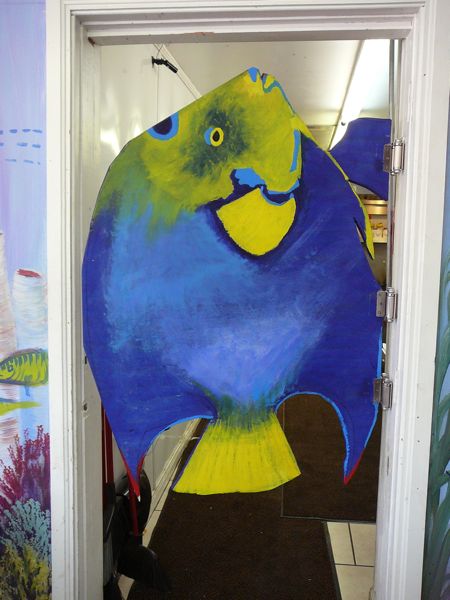
“I was hoping you would want to go there,” AdventureMan admitted, and we grinned. There’s a reason we’ve been married this long; we take the road less travelled – together.

Revolutionary Government: South Africa
AdventureMan and I have a soft spot for South Africa, not the least of which for the dramatic and radical way they transformed from apartheid government to democratic government. It is not to say South Africa has been without problems – there are still problems. But the manner in which they confronted and dealt with their past and then moved on allows change to happen, change in the heart.
Today’s meditation from Forward Day by Day:
FRIDAY, May 30
Psalm 85:3. You withdrew all your wrath; you turned from your hot anger. (NRSV)
But for the grace of God and the work of extraordinary leaders such as Nelson Mandela and Desmond Tutu, the fall of apartheid in South Africa could have been marked by one of the worst bloodbaths ever seen.
The incendiary ingredients were all present: a repressive minority regime that ruled by violence, fear, and fiat over a majority population denied fundamental human rights and forced to live a subservient existence.
There was upheaval, but the nation never fell into anarchy as it radically changed its government, thanks largely to the Truth and Reconciliation Commission.
Chaired by Tutu, then the Anglican Archbishop of Cape Town, the commission held hearings throughout the country. Victims told their stories of torture, killing, and degradation, sometimes confronting the accused.
The goal was not vengeance or justice but truth-telling to clear a path for healing. Powerful emotions were released. There were tearful confessions and apologies. There was forgiveness. The people of South Africa managed to turn from their hot anger and begin building a new nation.
Can we do the same? Where can we forsake our anger for the liberating power of forgiveness?
Recent Comments
ExpatAlien on What Country am I Living … intlxpatr on Yellowstone: Old Faithful to C… Michelle on Yellowstone: Old Faithful to C… Cathy on No Grown-Ups in Charge intlxpatr on Waiting for Snow Wikipedia Donate Button

Amazina


Early Voting in Florida


 Here There and Everywhere