219 Girls Remain Missing; Nigerian Villages Beset by Boko Haram
Today, on AOL News, a report on the ravaging of two villages in Nigeria by Boko Haram, with satellite images showing the carnage and destruction as survivors tally more than 2,000 dead. The craven Nigerian Army claims the losses are more like 200.

Meanwhile, of the almost 300 girls kidnapped a year ago by Boko Haram, 219 are still missing. Those who returned, returned by escaping. No one rescued them. The remainder are likely “married” to their captors, slaves to the household and many of them are probably pregnant. To be pregnant by a Boko Haram soldier creates a severe social problem if they are ever freed or rescued – the family cannot marry off an impure daughter. The children of these unions face a desolate future, wherever they are.
The world watches when terrorists wreak havoc in Paris, thousands crush the cretins who kill in the name of God, but no-one lifts a finger to help these small villages in Northeast Nigeria, beset by destructive vermin.
JOHANNESBURG (AP) — Large areas of Nigerian towns attacked by Islamic extremists were razed to the ground in a widespread campaign of destruction, according to satellite images released Thursday by Amnesty International.
Amnesty International said the detailed images of Baga and Doron Baga, taken before and after the attack earlier this month, show that more than 3,700 structures were damaged or completely destroyed.
The images were taken Jan. 2 and Jan. 7, Amnesty International said. Boko Haram fighters seized a military base in Baga on Jan. 3 and, according to witnesses, killed hundreds of civilians in the ensuing days.
Daniel Eyre, Nigeria researcher for the human rights group, said in a statement that the assault on the two towns was the largest and most destructive of all the Boko Haram assaults analyzed by Amnesty International.
The group said interviews with witnesses as well as local government officials and human rights activists suggest hundreds of civilians were shot; last week, the human rights group noted reports of as many as 2,000 dead. The Nigerian military has cited a figure of 150 dead, including slain militants.
Nigeria’s home-grown Boko Haram group drew international condemnation when its fighters kidnapped 276 schoolgirls from a boarding school in northeast Chibok town last year. Dozens escaped but 219 remain missing.

You can find much more information in this article on BBC News/Africa.
Where is Lafia, Nigeria?
Today the church prays for Lafia, Nigeria, which is near Abuja, in the part of Nigeria where Boko Haram runs rampant, and where over 250 girls were kidnapped from their school in 2014. Some few escaped, most were married off to poor young Boko Haram soldiers into hardship and near-slavery. Boko Haram does not believe in educating women. The Nigerian government at one point announced that Boko Haram had agreed to return the girls, but nothing happened. The Nigerian military and police do nothing to get them back.

My Christmas Day 2014
It’s been a great day.
Like every great day, there have been a glitch or two.
I did something very funny, I gave AdventureMan a FitBit for Christmas. He is setting it up now. He loves medals and badges, and I know he will love looking at what the FitBit tells him about how many steps he is taking and how he is sleeping at night. I know he is going to have fun with this, and it makes me smile. Oddly, the FitBit site was down most of the day for scheduled maintenance. Wouldn’t you think that a lot of people would be getting FitBits for Christmas and would want to get started? They are back up now, though.
One of the glitches for me today was that I was scrambling a little this morning to get Christmas dinner prepared in advance so I could just have it all in the oven ready for when we were going to eat. I had five minutes while the dinner rolls cooked, so I ran upstairs to dress and comb my hair, ran down the stairs again and only hours later – like five hours – discovered I had forgotten to move the FitBit so I DIDN’T GET CREDIT FOR ALL THOSE STEPS! Oh aaarrgh.
Small potatoes in the larger scheme of things.
We had a wonderful day, all in all, a day of peace and joy and delight in family. All our years of living overseas have made us grateful for the comfort of time spent together.
I see on WeatherUnderground that Kuwait and Qatar are having wonderful weather; I always loved the winters there:

Tomorrow I have a job, a painting job, painting my adorable little granddaughters bedroom a color called Bubble. Just the thought makes me smile.

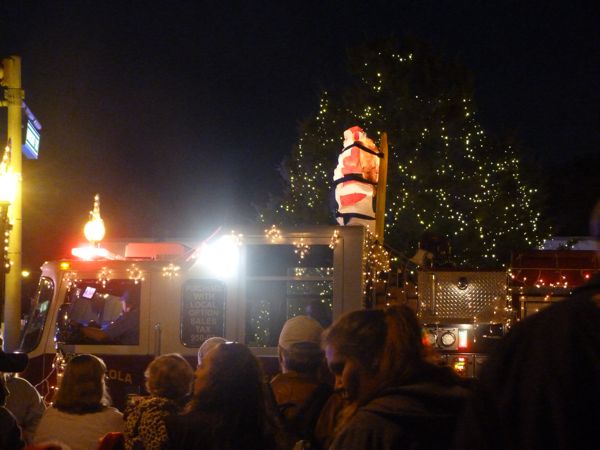
Pensacola Christmas Parade
Why do they groan? Why do they grumble and look annoyed when I say it’s time for the Christmas Parade?
Once they get there, they have the best time! Who wouldn’t? It’s all noise and flash, great floats and loud bands, dancing in the street, dancing on the sidewalk, seeing all our friends from church and school and waving to friends on the floats – throwing BEADS!
Even 1 year old baby N totally gets into the beads! “Beads! Beads!” she shouts and holds out her hands. She marvels at their sparkle as they hang around her neck.
Here is what I love about Pensacola. It’s been a bad month, with Ferguson, with New York, and in Pensacola 50,000 people gather peacefully and party on the streets. It’s New Orleans with our clothes on, it’s Christmas/Mardi Gras Family Style. We dance, we party, we jump for those beads – and then we pass them along to the children. It’s a long, happy parade, with every school marching band and Mardi Gras group, a local radio station or two, the homeless, the counter culture, drinks in open containers, church groups, neighborhood meet-ups, Jesus is there, with Mary and Joseph – it’s all cool.
When the parade ends, we all go home. Peacefully.
Some may grumble, but for me, they show up, every year, and we celebrate a family tradition, the Pensacola Christmas Parade.

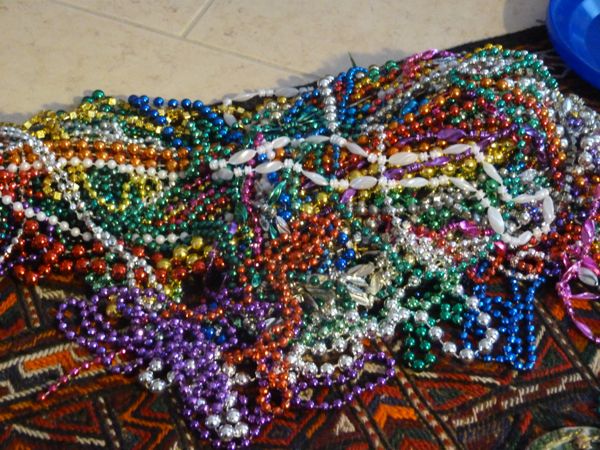
AdventureMan and his helper went down early Sunday morning and pulled a great Bead harvest out of the trees. Little grandson Q carefully sorted them into piles for his friend Chris, his mama and daddy, his two other sets of grandparents and for his room upstairs in our house.
ISIS in Mosul Unable to Sustain Economy
From AP via Kuwait Times:
High prices, shortages pressure IS – Black markets abound – Strict social laws bad for business
 BAGHDAD: Saadi Abdul-Rahman was recently forced to pull his three children out of school in the Iraqi city of Mosul, where Islamic State militants have ruled with an iron fist since June. The cost of living has soared there, and the family is barely able to make ends meet, even after putting the kids to work. “We are not able to pay for cooking gas, kerosene and food,” laments the 56-year-old retired government worker. “The situation in Mosul is miserable.”
The economy in the self-styled “caliphate” declared by the Islamic State group bridging Iraq and Syria is starting to show signs of strain. Prices of most staples have more than doubled as coalition airstrikes make it difficult for products to move in and out of militant strongholds, leading to shortages, price-gouging and the creation of black markets.
Resentment has grown among residents under the rule of the extremists, who initially won support with their ability to deliver services. In the early days of its rule, the Islamic State group subsidized food and gas prices through the wealth it accumulated from oil smuggling, extortion and ransom demands. They sold their smuggled oil at a discount – $25 to $60 a barrel for oil that normally cost $100 a barrel or more, according to analysts and government officials.
But in recent weeks, prices have soared in militant-held cities. Items like kerosene, used for heating and cooking, are in short supply, while others, such as alcohol and cigarettes, strictly banned by the group, are making a comeback at higher prices on the black market. Smoking is a punishable offense in militant-held Mosul. But at a warehouse on the outskirts of the city, cigarettes, as well as hard-to-come-by essentials like kerosene, can be found at hugely inflated prices on a black market run by the extremists. There, a pack of cigarettes sells for 30,000 dinars – the equivalent of $26 – more than double the pre-caliphate price, according to residents who spoke on condition of anonymity for fear of reprisals.
‘Unsustainable Economy’
The militants “are developing an unsustainable economy,” said Paul Sullivan, an expert on Middle East economies at the National Defense University in Washington. “Eventually the costs of keeping the subsidies and price controls going will overpower their smuggling funds, which are also used for offensive and defensive actions. They can collect taxes, extort money, and so forth,” he said. “But that will likely not be enough in the long run to keep such an unbalanced economic system going.”
In the Syrian city of Raqqa, the extremists’ so-called capital, the breakdown of security along the border with Iraq in areas under Islamic State control has led to flourishing trade with Mosul. Trucks are also able to access the city from Turkey, allowing for a steady supply of fruit and vegetables, wheat and textiles. However, the cost of living has surged since US-led airstrikes began in September, and power and water cuts grew more frequent, residents said.
In addition, the strict social laws imposed by the group have been very bad for business, said Bari Abdelatif, an activist in the Islamic State-controlled town of al-Bab in Syria’s northern Aleppo province. But, he said, foreign fighters were bringing with them lots of hard currency, making up somewhat for the shortfall. Last month, Abu Bakr Al-Baghdadi, the leader of the Islamic State group, decreed the minting of gold, silver and copper coins for the militants’ own currency the Islamic dinar – to “change the tyrannical monetary system” modelled on Western economies. But trade in most militant-held cities continues to be in Iraqi dinars and US dollars.
The start of winter has led to serious shortages of gasoline and kerosene. The official price for a liter of gas in government-controlled areas of Iraq is 450 dinars (40 cents) – but in Mosul, it sells for four times that. Two hundred-liter barrels of kerosene are now sold in Mosul for 250,000 dinars ($220), versus the official price of 30,000 dinars. In the western Iraqi city of Fallujah, under militant control for almost a year, residents have started cutting trees for firewood because kerosene is in such short supply. The city is surrounded by government troops and near-daily shelling often make parts of town too dangerous to visit.
Food and fuel prices have risen sharply as a result – a 50-kilo sack of rice costs 75,000 dinars ($65), up from 10,000 ($9) three months ago. A cylinder of cooking gas goes for 140,000 dinars ($115). That has put many staples out of reach for Abdul-Rahman and his family in Mosul, even with the additional money brought in by his sons, who left school to drive a taxi and work in a restaurant.
Decline in Business
A number of factors are driving the shortages and price hikes, according to residents in Mosul and Fallujah, the group’s biggest Iraqi strongholds. The militants have imposed a tax on vehicles entering their territory, leading to a decline in business. Deliveries are also subject to militant theft, and coalition airstrikes and military operations make many roads impassable. As a result, the trip from the Turkish border to Mosul took four hours prior to the militant takeover. Now, a delivery truck can spend as much as a week traveling the same road, and will pay a tax of as much as $300 for entry into Mosul, residents said.
According to Luay Al-Khateeb, director of the Iraqi Energy Institute and a visiting fellow at the Brookings Doha Center, the population of the areas under Islamic State control in Iraq and Syria is 6.5 million to 8 million people. “They need 150,000 barrels (of crude) a day just to meet local consumption,” he said. “And that is the bare minimum to meet the demands for transportation, bakeries, power generation. That doesn’t mean they have access to such supply,” he added.
Last month, the militants shut down cell phone service in Mosul, claiming that residents were tipping off US-led airstrikes to their whereabouts. Cell signals have not been restored, causing the city to come to a virtual standstill. Workshops, factories and markets are closed and bitterness is growing among business owners. “Most money-transfer operations are done by mobile calls,” said Osama Abdul-Aziz, the owner of a money-transfer office in Mosul. “We have the option of using the Internet, but this method is very slow and sometimes the Internet does not work at all, which causes big delays to our work.” At Mohammed Abdullah’s shop in Mosul, the pile of cell phone scratch cards is growing higher by the day. “Our business and means for living are in ruins now,” he said. – AP
Texting Terms Teens Don’t Want Parents to Know
Earlier this fall, a Michigan prosecuting attorney began making the rounds of metro Detroit high schools letting kids know that increasingly normal behavior – sexting – could land them in jail for a long time.
Oakland County Prosecutor Jessica Cooper stepped up her education efforts after nearly three dozen Rochester area teens faced felony charges after circulating nude photos on their cell phones.
Cooper backs reform of laws that require Michigan prosecutors to charge sexting teens under the same statutes intended to prosecute pedophiles.
But in the meantime, she wants kids to be aware of the serious legal consequences of activity that a study by the American Academy of Pediatrics found is a “normal” part of adolescent sexual development.
And because they don’t want their parents to know what they’re up to as they click away on cell phone screens, they’ve developed their own shorthand to keep them in the dark.
A Denver television station tested – and stumped – several parents to determine if they could crack the codes their children use when they’re texting or sending online messages on their phones.
A detective with the Jefferson County District Attorney’s Office told Denver television station KMGH that parents may be missing some red flags “because they don’t know the lingo or the language.”
Here’s a list of commonly used terms:
8 – it means ate, can also refer to oral sex
9 – Parent watching
99 – Parent gone
1337 – Elite, leet or L337
143 – I love you
1174 – the meeting place, meet at
420 – Marijuana
459 – I love you
53X – Sex
ADR – Address
AEAP – As Early As Possible
ALAP – As Late As Possible
ASL – Age/Sex/Location
BROKEN – hung over from alcohol
CD9 – Code 9 (parents are around)
C-P – Sleepy
F2F – Face-to-Face
GNOC – Get Naked On Cam
GYPO – Get Your Pants Off
HAK – Hugs And Kisses
ILU – I Love You
IWSN – I Want Sex Now
KOTL – Kiss On The Lips
KFY or K4Y – Kiss For You
KPC – Keeping Parents Clueless
LMIRL – Let’s Meet In Real Life
MOOS – Member Of The Opposite Sex
MOSS – Member Of The Same Sex
MorF – Male or Female
MOS – Mom Over Shoulder
MPFB – My Personal F*** Buddy
NALOPKT – Not A Lot Of People Know That
NIFOC – Nude In Front Of The Computer
NMU – Not Much, You?
P911 – Parent Alert
PAL – Parents Are Listening -or- Peace And Love
PAW – Parents Are Watching
PIR – Parent In Room
POS – Parent Over Shoulder or Piece Of Sh**
pron – Porn
Q2C – Quick To Cum
RU/18 – Are You Over 18?
RUMORF – Are You Male OR Female?
RUH – Are You Horny?
S2R – Send To Receive
SorG – Straight or Gay
TDTM – Talk Dirty To Me
WUF – Where You From
WYCM – Will You Call Me?
WYRN – What’s Your Real Name?
Thanksgiving at the Sunset Inn
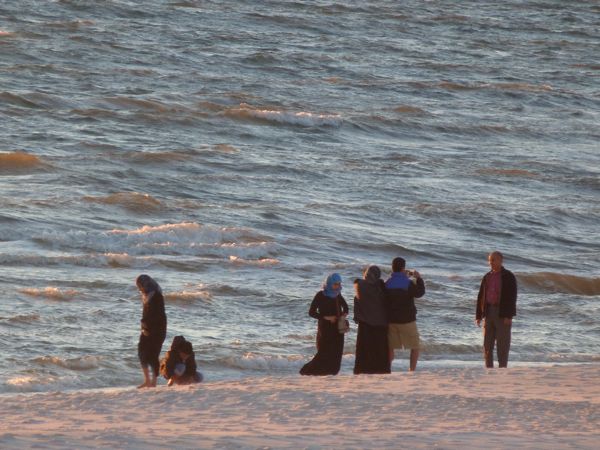
Back in Panama City for our annual gathering with our sweet daughter-in-law’s family, we check in at the Sunset Inn on a glorious day in late November. The view that greets us thrills our hearts:

There aren’t too many people staying at the beach, go figure, it’s Thanksgiving and families are gathering, but this is a GREAT time to be here. We have a full kitchen, so I can still roast my garlic-broccoli, make my Mom’s Cranberry Salad and make the topping for the Soused Apple Cake all while having the door wide open and listening to the waves roaring to the shore. This is one of my happiest places on earth.
These small surf boards give a lot of pleasure on smaller waves:

I thought I was back in Kuwait, overlooking the family park in Fintas:

I can see things slipping a little at the Sunset Inn, carpets not being replaced, linens getting thinner from so many washings, small repairs not being made – and I know our days there are numbered. Sigh. What they can’t replace in the personal character of the management – I can run down and beg a couple pieces of tinfoil to cover my broccoli; it is their motel, they manage it personally. There are countless soulless condos and motel rooms in Panama City Beach, but only one Sunset Inn.
Brother’s BBQ
It’s getting close to Christmas, and AdventureMan had asked that I take a ride with him to check out Earth Products, and then have lunch with him at Brother’s BBQ. Between you and me, AdventureMan is purely a sucker for BBQ, but he took me to Tudo’s for lunch yesterday, my Pensacola comfort food, and it isn’t a struggle for me to enjoy a good BBQ, so I was happy to make him happy today. 🙂
It’s what I love about AdventureMan. He totally gets me. He grumbles now and then about how hard I am to buy for. He tells our friends “she doesn’t want diamonds, just picks out a house now and then.”
But today’s trips to Earth Products was totally worth it. Earth Products has all kinds of landscaping supplies, including glorious pots! Not the pots you find in the big box stores, but pots that remind me of the Middle East. Great big pots. Urns. Pots that might have stored olive oil in another life, or hidden Ali Baba’s thieves. Pots with elephants on them. Wonderful pots, just exactly the pots for my front porch and the rosemary bushes I want. I almost danced with glee at the number of wonderful pots.
It is a wonderful day, not too hot, not too cold and when we get to Brother’s BBQ, we decide to sit outside.

Sitting outside has an additional benefit – they are in the process of preparing the chicken and the brisket. They are smoking it right now. The aromas are heavenly.
The porch is a very friendly place to sit, we discover. It’s amazing how many people have discovered Brothers BBQ. They are close to the Navy Base, and have a lot of loyal military customers, but they also have a lot of local and corporate customers, and retired folk popping by. They have dining in, they have carry-out, and they also cater. There is a large area for eating outside, as well as on the porch.


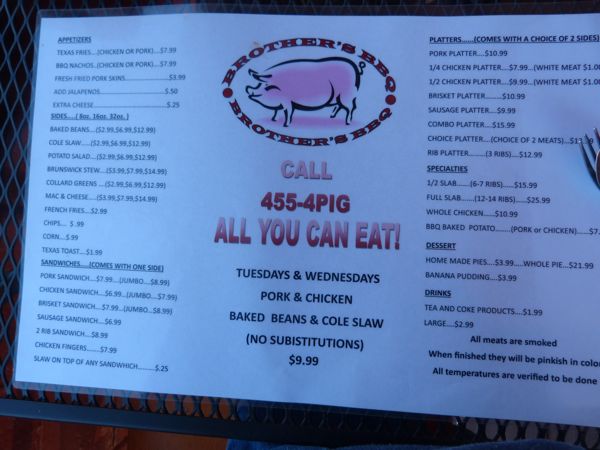
You can see what they offer on your placemat:
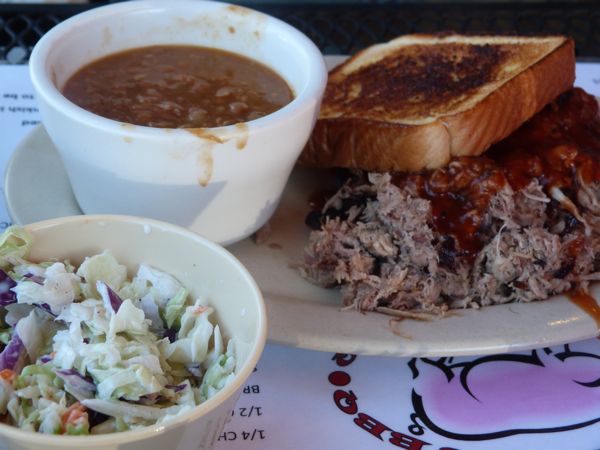
AdventureMan ordered his usual – BBQ Pulled Pork, with beans and coleslaw:
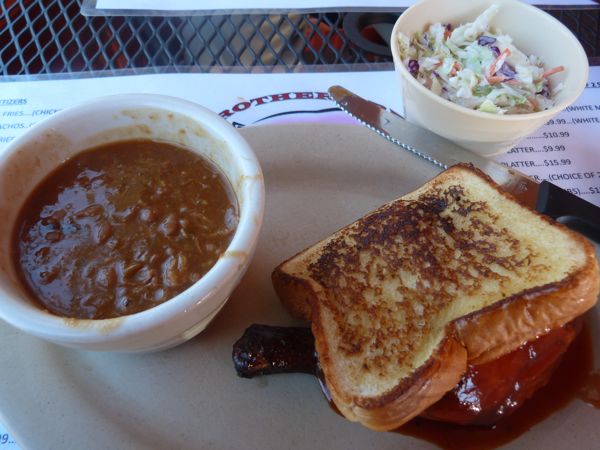
I ordered my usual, a dark quarter BBQ chicken, with beans and slaw:
It was excellent. Give it a try when you are on the west side of town. You can’t miss them, they are where you find the huge column of mouth-watering smoke just off Gulf Beach Highway:
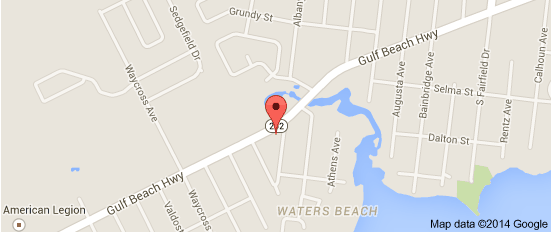
3309 Gulf Beach Hwy, Pensacola, FL 32507
(850) 455-4744
Protein Tau Alzheimer Key?
This is hopeful news from AOL Healthnews My family has a history of living long; my Mother is 92 and still has all her marbles. Staving off dementia is as key as keeping your body fit if you live to be a ripe old age.
Is a Protein in the Brain Key to Alzheimer’s?
By Dennis Thompson, HealthDay News
The malfunction of a protein, tau, is the likely culprit behind Alzheimer’s. When it malfunctions, brain cells die, a study finds.
Monday, November 03, 2014
Malfunction of a key brain protein called tau is the likely culprit behind Alzheimer’s disease and other forms of dementia, a new study in mice concludes.
Neurons — highly specialized nerve cells in the brain — appear to die when tau malfunctions and fails to clear the cells of unwanted and toxic proteins, explained Charbel Moussa, head of the Laboratory for Dementia and Parkinsonism at Georgetown University School of Medicine, in Washington, D.C.
This means drugs that replace the function of tau in these brain cells are likely to slow the progression of Alzheimer’s, he said.
“A strategy like this will give us hope that we can delay or stabilize the disease progression,” Moussa said.
Tau has long been a prime suspect in the search for the cause of Alzheimer’s disease. The brains of Alzheimer’s patients wind up clogged with twisted protein threads made of tau, particularly in regions important to memory.
But researchers have been at a loss to explain why tau might cause Alzheimer’s, and whether the tangles of tau are more important than another hallmark of Alzheimer’s, plaques made of a protein called amyloid beta that fill the spaces between the brain’s nerve cells.
Moussa said his experiments with mice have shown that tau works to keep neurons naturally free of amyloid beta and other toxic proteins.
When tau malfunctions, the neurons begin to spit amyloid beta out into the space between the brain cells, where the protein sticks together and forms plaques, he said.
“When tau does not function, the cell cannot remove the garbage,” Moussa said. The result is cell death, he explained.
Tests on the brain cells of mice revealed that removing all tau impaired the neurons’ ability to clear out amyloid beta, according to findings published Oct. 31 in the journal Molecular Neurodegeneration. But if researchers reintroduced tau into brain cells, the neurons were better able to remove accumulated amyloid beta from the cells.
Moussa said his study suggests the remaining amyloid beta inside the neuron destroys the cells, not the plaques that build up outside. The mouse experiments also showed that fewer plaques accumulate outside the cell when tau is functioning.
Malfunctioning tau can occur as part of the aging process or due to genetic changes. As people grow older, some tau can malfunction while enough normal tau remains to help clear the garbage and keep neurons alive. “That explains the confusing clinical observations of older people who have plaque buildup, but no dementia,” Moussa explained in a Georgetown University news release.
In this study, Moussa also explored the possible use of a cancer drug called nilotinib to force neurons to keep themselves free of garbage, with the help of some remaining functional tau.
“This drug can work if there is a higher percentage of good to bad tau in the cell,” added Moussa, whose work was funded in part by a grant from Merck & Co., the pharmaceutical company.
Heather Snyder, director of medical and scientific operations for the Alzheimer’s Association, said Moussa’s findings are interesting but not conclusive.
“They’re saying that tau may have an earlier role than we currently know. That’s as far as I would go,” Snyder said. “We still don’t know how all the pieces come together.”
Snyder said new imaging technology that allows doctors to track tau buildup in a person’s brain over time may help solve this question in the future.
Also, experts say, results of animal experiments don’t necessarily apply to humans.
But Dr. Ronald Petersen, director of the Mayo Clinic Alzheimer’s Disease Research Center, said the new study adds to the growing evidence that “the role of tau is fundamental in the disease process.”
“Developing therapeutics for tau is a high priority,” Petersen said. “Not easy, not simple, but it could be very fruitful.”
Baton Rouge Strangeness
Baton Rouge was a city we really wanted to like, and there are so many things about Baton Rouge we DO like. While we were there, however, every single day, we experienced a little bit of bad JuJu, a little bit of strangeness. By the grace of God, it was ameliorated by the goodness and kindness of others, but it was just strange.
First, I have to tell you I am not a huge fan of shopping, but every now and then when I find the right thing, I know it and I buy it. When I found Trader Joe’s, I knew just what to buy, quality products we love. Then, I headed out to Macy’s, a store we do not have in Pensacola.
The Mall is huge, but it was early in the morning, I got a great parking spot, and although I had ended up far from Macy’s, I enjoyed the stroll. This is the first thing I saw, and it delighted my heart.


What is not to love about this menagerie of zoo animals for little children to ride through the mall? Children HATE mall shopping, but this is a game changer 🙂
I actually didn’t find anything I loved at Macy’s, but I did find two very classic T-shirts I knew I could use, nicely made, so I went to buy them and the cashier asked if I wanted to use my Macy’s card. I said “sure” but it turns out because I hadn’t used it in a while, I had to re-instate it, and when you do that, you get 20% off all day and the next day, plus a WOW card that gives you more discounts, plus another 20% off when they bill you. Holy mole, sign me up! But even though I looked, I really didn’t see anything else I wanted.
Back at the hotel, I told AdventureMan about this hot deal and talked him into going back to Macy’s with me. He looked, but he also didn’t find anything he liked, and then I found the children’s section, ummmm, errrrr . . . .. grandchildren’s section, and there were all kinds of things I liked a lot, and Christmas is coming, so lets get a little dollar-cost-averaging going. (AdvntureMan is rolling his eyes.)
When I went to pay, the patient salesgirl rang everything up, and then had to call some number because my total was high, and then asked me to show my driver’s license. I knew I had it, because I had it earlier when I re-instated my card. So I dug. It wasn’t there. I dug some more, I looked and looked, but no card. I was so embarrassed. The patient clerk held all the grandchildren clothes while I went downstairs where I had shown my card earlier, and sure enough, there it was. Thank God! What if we hadn’t gone back to the Mall? Months go by where I never show that card, and months from now I wouldn’t have known where to find it. I felt like my guardian angel was sitting on my shoulder. And it still felt like strangeness.
When I went back upstairs to the cashier, I showed the drivers license, and she called the security number again, and he asked me all kinds of questions, places I lived years ago, what cars are associated with my accounts, it was totally strange, and AdventureMan is looking bullish, steam coming out of his nostrils, stamping and huffing and puffing (he is hungry). Finally, he tells the cashier I am OK, and she rings me up, very apologetic. I told her it is just the times we live in, and honestly, I want security to be tough on people who might pretend to be me, so it was just a minor inconvenience. But just another little piece of Baton Rouge strangeness, little things that could eat away at happiness and well being if you let them . . . .
Recent Comments
ExpatAlien on What Country am I Living … intlxpatr on Yellowstone: Old Faithful to C… Michelle on Yellowstone: Old Faithful to C… Cathy on No Grown-Ups in Charge intlxpatr on Waiting for Snow Wikipedia Donate Button

Amazina


Early Voting in Florida


 Here There and Everywhere