The ExPat Dilemma
A short while back, I told you about a book I read and loved, Cutting For Stone. You know it is a really good book when, months later, you are still thinking about it.
What I am thinking about today is how the main character writes about when he got to New York, and was homesick for Ethiopia, a country where he was born, but was always an expat. He spoke several Ethiopian dialects, he ate Ethiopian foods, he was affected by Ethiopian politics – but he was never Ethiopian. He was an Indian expat, working in Ethiopia, with Ethiopians, but always an expat.
He is in the US, and is desperately homesick for Ethiopia, and at the same time, he wryly notes that he is homesick for a country-not-his-own.
We’ve been away from Kuwait for two years now, but every now and then I am disoriented, missing Kuwait. It is hot now, for one thing, and it is so hot on some days that it feels like Kuwait. There are times my mind slips, and I am crossing the street near the Afghani shops, heading into the Mubarakiyya.
Today I am working on a new quilt, and I need a purple. I see just the right one, lurking on my purples shelf, and as I unfold it, a note falls out, from my good friend, and it says “(Intlxpatr) With love I dye this for you.”

I never cry, or hardly ever. I’m not crying now. I am in that fragile state where I COULD cry, my throat is a little thick and my eyes are a little watery, and I never saw it coming. It totally caught me by surprise.
I miss my friend. I miss Kuwait. I am home, and yet, I am homesick for a country-not-my-own, and a life I used to have.
Answered Prayer: Please Lord, Don’t Let it be a Muslim
In the aftermath of the horrific events in Norway, I was praying along with all my immigrant friends – “Please, Lord, don’t let it be a Muslim.” It wasn’t. Just another hater, this one has blue eyes and blonde hair and seems to be a Christian conservative. This one hates for his own reasons. It doesn’t matter much what those reasons are, does it, to the grieving families whose children were slaughtered, or the grieving nations whose peace is destroyed?
The 32-year-old Norwegian man who allegedly went on a shooting spree on the island of Utoya has been identified as Anders Behring Breivik, according to multiple reports.
The Daily Mail and Sky News were among those to report the suspect’s name. According to witnesses, the gunman was dressed as a police officer and gunned down young people as they ran for their lives at a youth camp.
Police said Friday evening that they’ve linked the youth camp shooting and Oslo bombing. Breivik is believed to have acted alone.
Norwegian TV2 reports that Breivik belongs to “right-wing circles” in Oslo. Swedish news site Expressen adds that he has been known to write to right-wing forums in Norway, is a self-described nationalist and has also written a number of posts critical of Islam.
A Twitter account for Breivik has surfaced, though it only has one post, this quote from philosopher John Stuart Mill: “One person with a belief is equal to the force of 100 000 who have only interests.” The tweet was posted on July 17.
On a Facebook account that Norwegian media outlets have attributed to Breivik, he describes himself as having Christian, conservative views. He says he enjoys hunting, the games World of Warcraft and Modern Warfare 2, and lives in Oslo. He also lists political analysis and stock analysis as interests.
Ramadan for Non-Muslims 2011
Ramadan is coming, coming with a vengence, it is almost here. Ramadan is expected to start with the sighting of the new moon on August 1st. I am feeling happy – a friend has asked me to help her find special Eid dresses for her daughter returning to Saudi Arabia. I know what she is looking for, and I am at a loss as to where they might be found. I will check tomorrow with friends who have lived in Pensacola for a long time and see what they have to suggest.

Meanwhile, as is my annual tradition, I will reprint an article I wrote in September 2007, Ramadan for Non Muslims. Even better, go back to the original Ramadan for Non Muslims and read the comments – I’ve always learned the best information from my commenters. 🙂
Ramadan for the Non Muslim
Ramadan started last night; it means that the very thinnest of crescent moons was sighted by official astronomers, and the lunar month of Ramadan might begin. You might think it odd that people wait, with eager anticipation, for a month of daytime fasting, but the Muslims do – they wait for it eagerly.
A friend explained to me that it is a time of purification, when your prayers and supplications are doubly powerful, and when God takes extra consideration of the good that you do and the intentions of your heart. It is also a time when the devil cannot be present, so if you are tempted, it is coming from your own heart, and you battle against the temptations of your own heart. Forgiveness flows in this month, and blessings, too.
We have similar beliefs – think about it. Our holy people fast when asking a particular boon of God. We try to keep ourselves particularly holy at certain times of the year.
In Muslim countries, the state supports Ramadan, so things are a little different. Schools start later. Offices are open fewer hours. The two most dangerous times of the day are the times when schools dismiss and parents are picking up kids, and just before sunset, as everyone rushes to be home for the breaking of the fast, which occurs as the sun goes down. In olden days, there was a cannon that everyone in the town could hear, that signalled the end of the fast. There may still be a cannon today – in Doha there was, and we could hear it, but if there is a cannon in Kuwait, we are too far away, and can’t hear it.
When the fast is broken, traditionally after the evening prayer, you take two or three dates, and water or special milk drink, a meal which helps restore normal blood sugar levels and takes the edge off the fast. Shortly, you will eat a larger meal, full of special dishes eaten only during Ramadan. Families visit one another, and you will see maids carrying covered dishes to sisters houses and friends houses – everyone makes a lot of food, and shares it with one another. When we lived in Tunisia, we would get a food delivery maybe once a week – it is a holy thing to share, especially with the poor and we always wondered if we were being shared with as neighbors, or shared with as poor people! I always tried to watch what they particularly liked when they would visit me, so I could sent plates to their houses during Ramadan.
Just before the sun comes up, there is another meal, Suhoor, and for that meal, people usually eat something that will stick to your ribs, and drink extra water, because you will not eat again until the sun goes down. People who can, usually go back to bed after the Suhoor meal and morning prayers. People who can, sleep a lot during the day, during Ramadan. Especially as Ramadan moves into the hotter months, the fasting, especially from water, becomes a heavier responsibility.
And because it is a Muslim state, and to avoid burdening our brothers and sisters who are fasting, even non-Muslims refrain from eating, drinking, touching someone of the opposite sex in public, even your own husband (not having sex in the daytime is also a part of fasting), smoking is forbidden, and if you are in a car accident and you might be at fault, the person might say “I am fasting, I am fasting” which means they cannot argue with you because they are trying to maintain a purity of soul. Even chewing gum is an offense. And these offenses are punishable by a heavy fine – nearly $400 – or a stay in the local jail.
Because I am not Muslim, there may be other things of which I am not aware, and my local readers are welcome to help fill in here. As for me, I find it not such a burden; I like that there is a whole month with a focus on God. You get used to NOT drinking or eating in public during the day, it’s not that difficult. The traffic just before (sunset) Ftoor can be deadly, but during Ftoor, traffic lightens dramatically (as all the Muslims are breaking their fast) and you can get places very quickly! Stores have special foods, restaurants have special offerings, and the feeling in the air is a lot like Christmas. People are joyful!
Credit Card Blues
“Because your name and card number are on file with us, it is possible that your card information has been compromised. While we employ the strongest encryption processes, it is possible that a motivated and persistent hacker could access your information. For this reason, we suggest that you inform your credit card company and explore the possibility of closing your current card and starting another.”

I don’t even have a pit in my stomach this time when I get this message. This is our third change in one year on one card. One of the changes was due to our card company shifting its business to another company, but two were due to possible compromises of our information, which had nothing to do with anything we had done except to use our credit card.
In Saturday’s paper, we read that there has been a huge shift in the restaurant business. An owner said that ten years ago cash customers and credit card customers were about 50/50, but now, 90% of all customers use credit cards. (We’re in the 10% who use cash, but it’s because of all our years living overseas.)
The new cards have arrived, and I spent the day going to all the sites that bill me automatically, and monthly, and to my car rental people, and airline reservations people . . . all those automatic charges that would bounce if I didn’t get the correct new number to them. Even as I am sending out all this information, I cannot help but be aware that 1) It is the companies storing my information that make me so vulnerable, and 2) in some cases, there are no alternatives. Credit cards are the accepted way of paying these days.
It’s been a long journey. I remember my first eye-opening experience; I was back from Qatar, re-opening a mobile phone account and I handed the sales person a hundred dollar bill, and she just gaped. “No one ever pays in cash anymore,” she said, “I don’t even know what to do!” As it turned out, they didn’t have change, so I had to charge it, but it went against my grain – we use our cards, but selectively, and pay them off in full every month.
And we only really use one card. We have a couple back ups, but we never use them.
I can’t help but feel that we are all increasingly vulnerable by our reliance on the credit card system. Hackers are the least of the problem – I also worry about those heaps of paragraphs in 2 pt type that we have to ‘read’ and sign, because do you really read them? I know I scan them, but there are words in those agreements designed (I believe) to make you tired of reading, big words, lots of them strung together. They probably have some meaning, but although I am not stupid, reading financial disclosure statements makes my head spin.
What kind of vulnerability do we have to our banks with these cards?
What are our obligations that we don’t even know about?
While we were waiting for our cards, I had three pre-orders with Amazon.com that failed. I wrote to them, suggesting that because I was a good customer, a shareholder, and a faithful buyer with them almost from the very beginning, that maybe they could send them anyway (especially the new Song of Ice and Fire volume by George R.R. Martin, A Dance With Dragons,) but no, they would not. This is not the Amazon.com I used to know, who sent me a coffee cup for being a faithful customer, back in 1997. No, I had to zip up the road to Barnes and Noble, the old fashioned way.
On the other hand, our mail-order-pharmacy people were just great. I had an automatic order and when I explained the problem and that we were waiting for our new cards to arrive, the customer service lady just laughed and said “We’ll send it out and bill you later.” How very very civilized. (ExpressScripts – YAYYYYY)
I used to know my credit card number by heart. We had the same card for almost 20 years. I even memorized my next card, but not this one. I have little faith it will be good for all that long.
An Old Dented Bucket
THIS IS NOT MY STORY. 🙂 This is from my long time friend Kit Kat who passed it along to me and I loved it so much I want to share it with you:
THE OLD DENTED BUCKET
Our house was directly across the street from the clinic entrance of
Johns Hopkins Hospital in Baltimore . We lived downstairs and rented
the upstairs rooms to out-patients at the clinic.
One summer evening as I was fixing supper, there was a knock at the
door. I opened it to see a truly awful looking man. “Why, he’s hardly
taller than my 8-year-old,” I thought as I stared at the stooped,
shriveled body. But the appalling thing was his face, lopsided from
swelling, red and raw.
Yet his voice was pleasant as he said, “Good evening. I’ve come to
see if you’ve a room for just one night. I came for a treatment this
morning from the eastern shore, and there’s no bus ’til morning.”
He told me he’d been hunting for a room since noon but with no
success, no one seemed to have a room. “I guess it’s my face …. I
know it looks terrible, but my doctor says with a few more treatments
..”
For a moment I hesitated, but his next words convinced me: “I could
sleep in this rocking chair on the porch. My bus leaves early in the
morning.”
I told him we would find him a bed, but to rest on the porch.. I went
inside and finished getting supper. When we were ready, I asked the old
man if he would join us. “No, thank you. I have plenty.” And he held
up a brown paper bag.
When I had finished the dishes, I went out on the porch to talk with
him a few minutes. It didn’t take a long time to see that this old man
had an oversized heart crowded into that tiny body. He told me he
fished for a living to support his daughter, her 5 children, and her
husband, who was hopelessly crippled from a back injury.
He didn’t tell it by way of complaint; in fact, every other sentence
was preface with a thanks to God for a blessing. He was grateful that
no pain accompanied his disease, which was apparently a form of skin
cancer. He thanked God for giving him the strength to keep going…
At bedtime, we put a camp cot in the children’s room for him. When I
got up in the morning, the bed linens were neatly folded and the little
man was out on the porch.
He refused breakfast, but just before he left for his bus, haltingly,
as if asking a great favor, he said, “Could I please come back and stay
the next time I have a treatment? I won’t put you out a bit. I can
sleep fine in a chair.” He paused a moment and then added, “Your
children made me feel at home. Grownups are bothered by my face, but
children don’t seem to mind.”
I told him he was welcome to come again.
And, on his next trip, he arrived a little after 7 in the morning. As a
gift, he brought a big fish and a quart of the largest oysters I had
ever seen! He said he had shucked them that morning before he left so
that they’d be nice and fresh. I knew his bus left at 4:00 a.m. And I
wondered what time he had to get up in order to do this for us.
In the years he came to stay overnight with us, there was never a time
that he did not bring us fish or oysters or vegetables from his garden.
Other times we received packages in the mail, always by special
delivery; fish and oysters packed in a box of fresh young spinach or
kale, every leaf carefully washed. Knowing that he must walk 3 miles to
mail these, and knowing how little money he had made the gifts doubly
precious.
When I received these little remembrances, I often thought of a
comment our next-door neighbor made after he left that first morning.
“Did you keep that awful looking man last night? I turned him away!
You can lose roomers by putting up such people!”
Maybe we did lose roomers once or twice. But, oh!, if only they could
have known him, perhaps their illnesses would have been easier to bear.
I know our family always will be grateful to have known him; from him
we learned what it was to accept the bad without complaint and the good
with gratitude to God.
Recently I was visiting a friend, who has a greenhouse, as she showed
me her flowers, we came to the most beautiful one of all, a golden
chrysanthemum, bursting with blooms. But to my great surprise, it was
growing in an old dented, rusty bucket. I thought to myself, “If this
were my plant, I’d put it in the loveliest container I had!”
My friend changed my mind. “I ran short of pots,” she explained, “and
knowing how beautiful this one would be, I thought it wouldn’t mind
starting out in this old pail. It’s just for a little while, till I can
put it out in the garden.”
She must have wondered why I laughed so delightedly, but I was
imagining just such a scene in heaven.
“Here’s an especially beautiful one,” God might have said when he came
to the soul of the sweet old fisherman. “He won’t mind starting in this
small body.”
All this happened long ago – and now, in God’s garden, how tall this
lovely soul must stand.
The LORD does not look at the things man looks at. Man looks at the
outward appearance, but the LORD looks at the heart.” (1 Samuel 16:7b)
Freedom Greater Factor than Wealth in Happiness
Fascinating study, I found it today on AOL Health News
Freedom More Important to Happiness Than Wealth, Study Finds
Personal independence, autonomy trump money in data from more than 60 countries.
SUNDAY, June 19 (HealthDay News) — Personal independence and freedom are more important to people’s well-being than wealth, a new study concludes.
Researchers at the Victoria University of Wellington in New Zealand analyzed the findings of three studies that included a total of more than 420,000 people from 63 countries and spanned nearly 40 years.
Their key finding: “Money leads to autonomy, but it does not add to well-being or happiness.”
The studies looked at data from three different psychological tests familiar to therapists:
The General Health Questionnaire, which measures distress in terms of anxiety and insomnia, social problems, severe depression and physical symptoms of mental distress, such as unexplained headaches and stomach aches.
The Spielberger anxiety inventory, which evaluates how anxious respondents feel at a particular moment.
The Maslach Burnout Inventory, which screens for emotional exhaustion, depersonalization and lack of personal accomplishment.
The analysis revealed “a very consistent and robust finding that societal values of [freedom and autonomy] were the best predictors of well-being,” wrote psychologists Ronald Fischer and Diana Boer in an American Psychological Association release.
“Furthermore, if wealth was a significant predictor alone, this effect disappeared when individualism was entered,” they added.
“Our findings provide insight into well-being at the societal level,” the researchers concluded.
The study appears in the Journal of Personality and Social Psychology.
Doha Debates and Where Are You From?
The Baked Salmon Dijon for last night’s dinner took a little longer to cook because Joe Patti’s cuts the salmon steaks so thick (we cook two, split one and freeze the other for another night), so while I was waiting, I flipped around and found WSRE’s Doha Debate coverage.
Who knew?
I didn’t know I could still watch the debates in Pensacola! This one was about whether or not Egypt should postpone elections in the interest of forming a more representative democracy. The vote was 84% in favor; the two young supporters carried the house. 🙂 This was the March debate and you can hear the entire 48 minutes by clicking here.

The winning female debater used a slogan I had not heard, but I love, because it is graphic and memorable – “we do not want a fast-food democracy that brings only indigestion.” The younger debaters want to scrap the entire constitution and re-write it, claiming the current structure needs to be thoroughly revised in order for democracy to have a chance of success.
I love it that these issues have a forum for debate in Doha.
Following the debate was a cringe-worthy video about asking people where they are from. His point was that when he is asked where he is from, and he answers ‘The Bronx,’ people say “No, where are you REALLY from?’ and the implication is racist. He says it is the same as saying that his color is darker, therefore he is not like us, so he must not be from around here.
I’ve asked that question. Never meant it to be insulting, but I will stop now. Or I will only ask those with a slight accent, maybe. Wherever we have lived, we have been asked that question – but then, in Kuwait and Qatar, most of the work force is not Qattari or Kuwaiti. Even in Germany, however, where we might look a lot like them, we are asked where we are from. It used to be a courteous way of showing interest, or initiating a conversation.
One time in Doha, a local man asked me about my breeding, LOL. I told him I was a product of the American melting pot, and from the earliest settlers to the latest, my family includes just about a little of everything. We were at the veterinarian’s office, and I knew the purity of his dog’s blood lines mattered, and probably his own, but I also felt a little insulted, and I haven’t forgotten it. Doesn’t science teach us that diversity in blood lines is a good thing?
We are in the middle of a heat spell in Pensacola, early this year, and because we haven’t gotten anywhere near the normal rainfall, there are also wildfires. The firefighters are struggling to put out the fires, and also fighting heat exhaustion. AdventureMan is out watering all our new plantings, and our tomatoes, every morning, God bless him, because when the temperatures go high, I just want to stay inside.
The Mainstay in Saxonburg (Pennsylvania) B&B
Part of the sheer exhilaration of our recent trip was the three day stay at The Mainstay, In Saxonburg. It didn’t hurt that all the rooms were taken for the same wedding party, and that we all got along so well. Three of the four couples were friends who had gotten to know one another when we all lived in Doha, Qatar, together, and the fourth couple had visited in Doha, so we all had that in common, as well as our friendship with the wedding family.

We got there early, and thought we would just find out what time we could check-in, but the house manager, James Stanek, welcomed us right in. We has reserved the Safari room, mostly because I really wanted AdventureMan to be happy about being on this trip, and the room was really a lot of fun.


Even the bathroom had lions and giraffe, carried out the Safari theme. The rooms were immaculately clean, always a good thing, and the beds were comfy with really good sheets. We all slept great.
The best part about the Mainstay was that it was a very welcoming B&B. While it is elegantly and tastefully decorated, you don’t get the feeling “don’t touch!” “don’t sit here!”, quite the opposite. We often gathered in the library; watched the news, all us nerdy geeks and our computers keeping up with the world first thing in the morning, coffee cups in hand. One day it rained, and the library was a great place to just hang out while we figured out how to spend the day. AdventureMan spent some time reading in the gathering room, close enough to join in if there was a lively conversation; far enough away to be able to read without breaking concentration.


For me, one of the best parts, too, was the house dog, Buddy. I’m an early riser, and I like to get my exercise early in the day so I can slack off the rest of the day. (Actually, exercise tends to help me not slack off; it gives me more energy.) Buddy was always polite, never pushy, but when he heard the word “walk” he was right there for me, eager to keep me company. There is just something wonderful about having an eager dog to walk, as he checks out all the fascinating smells in the neighborhood.
The Mainstay in Saxonburg is a short drive north of Pittsburgh, Pennsylvania, and minutes away from Armstrong Farms, a party site for weddings, family reunions and gatherings of all kinds.
Perfect Pensacola Evening
After weeks of early and sultry heat, Pensacola has had a spell of cooler weather, nights down into the 50’s and even high 40’s, and days in the mid 70’s – and not humid. Great weather for working in the garden or going to a park, weather that just makes you want to be outside.
Last night we went to a meeting of the Gulf Coast Diplomatic Council at a beautiful home out in Gulf Breeze, with a view of the water that goes forever. As you walk in, you can smell wood – or at least I can. I grew up with houses that used a lot of wood, and I love the smell. The heart of the house was a kitchen – dining room – sitting area with that forever view.
It was a lively group. The group only gets together a couple times a year, but what a fun group – all people who are willing to host foreign visitors when they come to Pensacola. I am guessing one of the reasons that Pensacola gets so many groups (besides those glorious sugar-white sand beaches, and the multicolors of the Gulf, and all the seafood and palms and balmy weather) is that the GCDC has developed a sterling reputation with visitors, and the Department of State is happy to send them to a place where they will get such a warm reception.
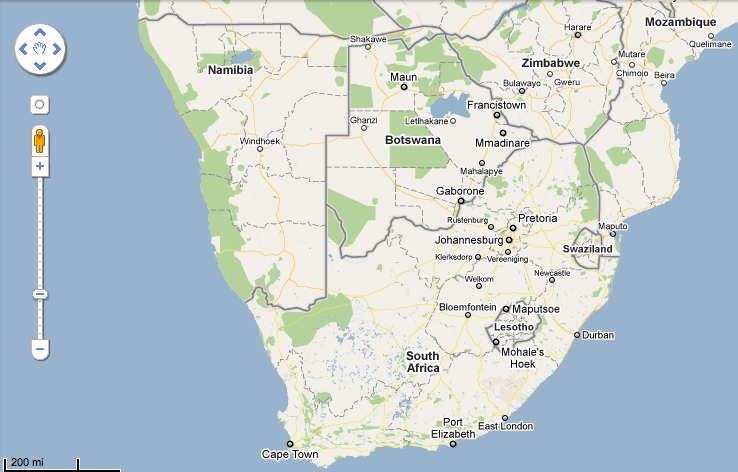
Attending also were some delegates from other countries. We spent some time with a Namibian farmer, who wants to find market outlets for poor rural women in Namibia. We spent two weeks in Namibia – it seems a lifetime ago – and loved our time there. We made a circuit of the country, from the farms in the east to the great Etosha game park, to the Demaraland, and down the Skeleton coast to Sossossvlei, where we climbed the mountainous sand dunes. It was a great adventure for us, and we have such happy memories of Namibia, and our delegate was so happy to meet people who had spent time in her country, We had a great visit with her and a great time altogether.
There were mountains of food available, but you know how awkward it is to be talking with people and they ask you a question just as you have taken a bite of something that needs to be chewed and swallowed before you can answer? We passed on the food so we could focus on the conversations. In the back of our minds, too, we knew we were close to one of our favorite places, Flounders, so we popped over there for a bowl of chowder, grilled grouper po’ boy (AdventureMan) and grilled shrimp Ceasar (me). The evening was perfect – no humidity, temperature perfect, slight breeze but not too hot or too cold – perfect.
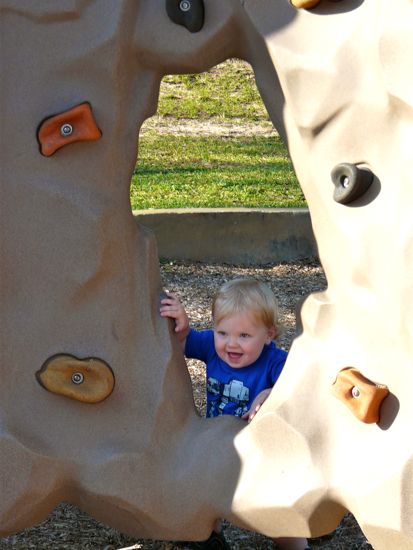
This weekend we are taking care of Happy Baby while our son and his wife head off to a family wedding. Happy Baby is fifteen months old, and a live wire. So much energy and no inhibitions! You have to watch him every minute. He loves climbing, but he has no sense of danger. It takes both of us to keep up with him! He is so much fun to be around, that although it will be exhausting, it will also be a lot of fun.
The Minority Prayer

I listen to National Public Radio in my car and in my project room. I finally figured out how to stream WUWF, my local station. Until today, unless I wanted to use my wind-up radio, I had to stream KUOW in Seattle, or NPR which I like because it has so much BBC.
I am really delighted to figure out how to stream WUWF, because it has a lot of local news and events I might miss streaming one of the other stations, and I also like hearing who the sponsors are, so I can tell them how much I enjoy National Public Radio.
So today I am listening to Talk of the Nations, a segment on Pakistani-Americans, and this particularly articulate young lawyer mentions ‘the Minority Prayer.
Do you know what that is? I didn’t. But I laughed when he explained it, because we have prayed it so often living overseas . . .
He was talking about when attending a Muslim-American Lawyers National meeting, and how the buzz spread that Osama Bin Laden had been killed, and how they all sent up a quick minority prayer – “Please, Lord, don’t let it be Pakistan where he was found” – and of course, it was Pakistan. He was very wry, and I enjoyed listening to what he had to say. At the same time, I was grinning. I cannot count the number of times we have heard rumors – in Germany, in Kuwait, in Qatar, in Tunisia, in Jordan – and prayed . . . “Please Lord, don’t let it be the USA who did this . . . ”
It’s very much an expat’s prayer.
If you want to listen to the interview yourself, you can find it here.
Recent Comments
Kitchen on Isiais: Winding Down intlxpatr on Shampoo Ginger tigerbutterya0c5ff1d… on Shampoo Ginger intlxpatr on British Soldier Kidnapped, Esc… John on British Soldier Kidnapped, Esc… Wikipedia Donate Button

Amazina


Early Voting in Florida


